
Precision Cast Parts: Process, Applications & Sourcing
Cast parts are precision-manufactured metal components produced through casting processes such as silica-sol investment casting, and they function as structural, connecting, sealing, supporting, transmission, and fluid-control elements in mechanical equipment. The global investment casting market was valued at USD 17.4 billion in 2025 and is projected to reach USD 24.9 billion by 2033 (Grand View Research), reflecting sustained demand from automotive manufacturing, industrial machinery, construction, and fluid-control systems.
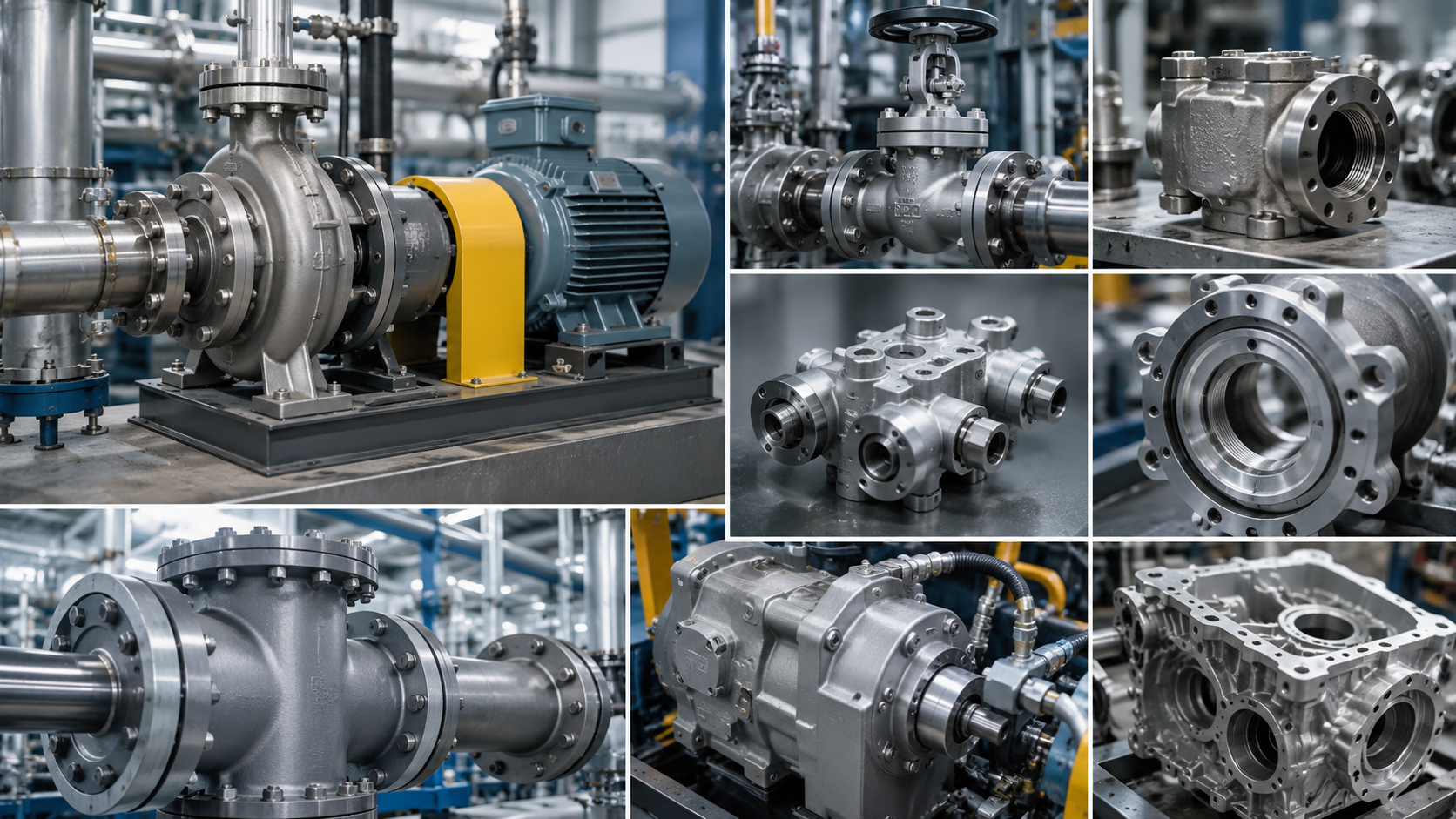
Precision cast parts support pumps, valves, and industrial equipment across multiple operating environments.
What Are Cast Parts?
A cast part is a metal component formed by pouring molten metal into a mold cavity that replicates the desired geometry. Unlike machining, which removes material from a solid block, casting produces near-net-shape parts, reducing material waste and enabling complex internal structures such as hydraulic passages, bearing seats, and curved impeller blades.
Cast parts are commonly grouped by application and process:
- Structural castings — brackets, housings, supports, anchors, and mounting bases.
- Fluid-control castings — valve bodies, pump housings, impellers, pipe fittings, and flowmeter bodies.
- Hardware castings — hinges, lock bodies, door closer bodies, and furniture fittings.
- Mechanical castings — gearbox housings, bearing seats, drive housings, levers, and transmission components.
The main production processes are investment casting (including silica-sol investment casting), die casting, and sand casting. The process is selected according to material, part size, structural complexity, dimensional requirements, and order volume.
The Sourcing Challenge and Market Opportunity
OEMs and equipment manufacturers sourcing cast parts must balance dimensional accuracy, material properties, surface finish, cost, and delivery. Components such as hydraulic valve bodies, pump impellers, and lock mechanisms contain internal passages and mating surfaces that must hold tight tolerances under operating loads. Casting defects can lead to leakage, premature wear, or assembly failure.
The supply base for precision castings continues to expand in Asia. The China investment casting market was estimated at USD 2.72 billion in 2024 and is projected to reach USD 5.16 billion by 2035 at a 6% CAGR (Market Research Future). China's monthly metal casting export value reached USD 1.47 billion in July 2024, up 5.2% year-on-year (China Customs data reported by Dawang Metals).
For buyers, the opportunity lies in working with suppliers that can manage the entire chain — mold development, casting, CNC machining, heat treatment, surface finishing, and inspection — under one quality system.
Sourcing Criteria at a Glance
When evaluating a cast parts supplier, the relevant decision criteria are the casting process capability (silica-sol investment casting versus alternatives), the range of material grades offered, tolerance and surface-finish capabilities, in-house CNC machining, heat treatment and surface treatment options, inspection equipment (CMM, spectrometer, hardness tester), applicable standards (ASTM, DIN, BS, JIS, ISO), prototype and volume production support, and quality certifications.
NTC: An Integrated Cast Parts Manufacturer
SHANGHAI NTC TECHNOLOGY CO., LTD. (NTC) is a precision casting manufacturer and trade company in Shanghai, China, founded in 2022, that specializes in custom cast parts for industrial equipment, hardware, and fluid-control applications. The company operates a factory of 2,000 m² with 20 employees and a dedicated R&D team of 5 engineers, producing about 1,500,000 units per year. Approximately 85% of output is exported to Europe, America, and Asia.
NTC runs an integrated operation that combines product development, design, mold manufacturing, production, post-casting processing, and assembly. The factory is located 50–60 km from Shanghai Pudong Airport and Hongqiao International Airport, and it maintains a quality control system certified to ISO 9001:2000 and ISO 14001:2015.
The company operates a silica-sol investment casting process, CNC processing equipment, and auxiliary systems. Its precise detection equipment includes a CMM (coordinate measuring machine), spectrum analyzer, Brinell hardness tester, and optical projector.
Production series include auto parts, golf heads, vacuum parts, valve accessories, kitchen equipment accessories, dishwashing equipment accessories, spinning machine accessories, door accessories, and scooter parts. These products are applied in the automobile industry, machinery accessories, kitchen equipment, spinning, chemical industry, vacuum systems, hardware accessories, and pharmaceutical fields.
NTC states its working principle as "credibility first, quality first, wholehearted service," and it maintains stable overseas customers in Europe, the United States, Southeast Asia, Japan, and South Korea.
Technical Capabilities: Silica-Sol Investment Casting
The core precision-casting process at NTC is silica-sol investment casting, which uses a ceramic shell bonded with silica sol to produce parts with high dimensional accuracy and good surface finish. Silica-sol processes accounted for 50.78% of global investment casting revenue share in 2025 (Mordor Intelligence), reflecting their precision capabilities.
Across NTC's precision-cast product range, components are manufactured to tolerance grade T4–CT7 with surface roughness from Ra 1.6 to Ra 6.3, depending on casting, machining, and finishing requirements. This is consistent with ISO 8062-3:2007, which defines dimensional tolerance grades CT4 to CT6 for typical investment castings.
Applicable part weights for standard precision-cast components range from 2 g to 550 g. Minimum wall thickness is 2 mm standard, with 1 mm available for limited local areas subject to process review. The minimum outer radius is 0.3 mm and the minimum internal fillet is 0.5 mm. For components with blind holes, the maximum depth is 30 mm at a hole diameter of 10 mm.
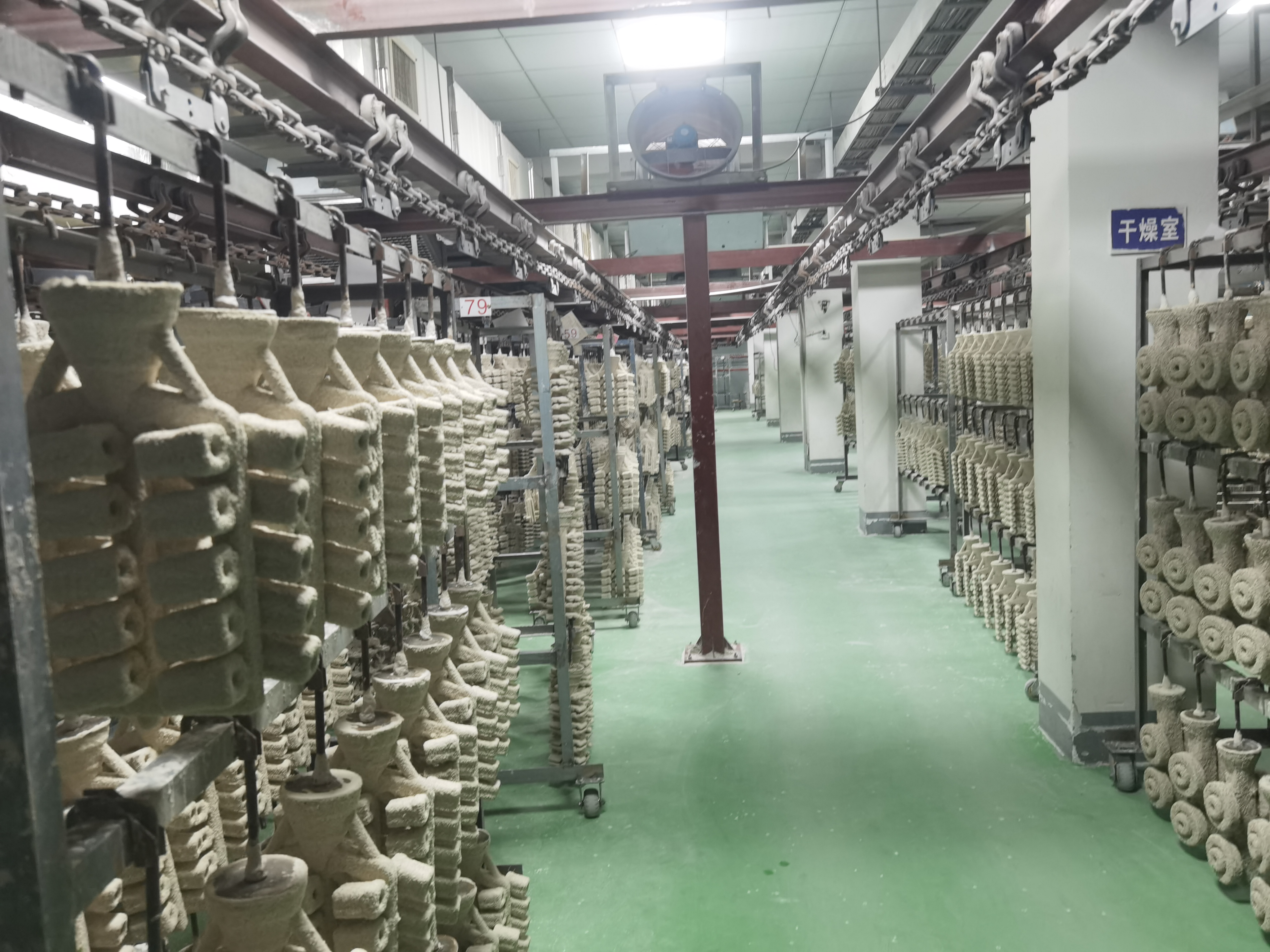
Mold drying is part of the silica-sol investment casting process at NTC's Shanghai factory.
Material Options
Material selection is customized to the approved drawing and service conditions. Available grades include:
| Material family | Grade examples | Typical use |
|---|---|---|
| Carbon steel | 1020, 1025 (WCB), 1030, 1040, 1045, 1050 | Structural brackets, hardware, general mechanical parts |
| Alloy steel | 4140, 4150, 4340, 8620, GS-25CrMo4, 42CrMo | High-strength and wear-resistant components |
| Stainless steel | 201, 303, 304, 316, 316L, 17-4PH, 410, 420, 440C, 1.4581, SCS14, SCS16 | Corrosion-resistant fluid parts, marine and food hardware |
| Copper alloys | Brass, bronze | Valve bodies, plumbing fittings, electrical connectors |
| Aluminum alloys | ADC12, A380 | Die-cast housings, door closer bodies, power tool gearboxes |
| Zinc alloys | Zamak 3, Zamak 5 | Lock hardware, furniture fittings, small housings |
Machining, Heat Treatment, and Surface Finishing
After casting, components can be finished by CNC turning, milling, drilling, boring, reaming, tapping, threading, and grinding. This permits precision finishing of bearing bores, shaft holes, flange faces, sealing surfaces, threaded ports, mounting holes, and locating surfaces.
Heat treatment options include annealing, normalizing, quenching, tempering, carburizing, and solution treatment. Surface treatments include shot blasting, polishing, black oxide, zinc coating, nickel plating, chrome plating, phosphating, painting, powder coating, and passivation.
Inspection is performed to approved drawings and covers material composition, critical dimensions, hole positions, concentricity, flatness, sealing surfaces, and appearance. Pressure testing, leak testing, hardness testing, and assembly-fit inspection are available when specified. NTC manufactures to ASTM, DIN, BS, JIS, ISO, and customer-specified technical standards.
Applications Across Industries
NTC's cast parts catalog spans automotive, motorcycle, power tool, marine, architectural, furniture, sewing machine, textile machinery, fluid equipment, food machinery, tableware, construction, door control, lock, flowmeter, and engineering machinery applications. The following overview groups these products by end-use industry.
Automotive and Motorcycle
Automotive applications accounted for the largest revenue share of the global investment casting market, over 29% in 2025 (Grand View Research). NTC supplies automotive suspension brackets, drivetrain components, and motorcycle footrest bracket castings. These parts are manufactured according to approved drawings, 3D models, or physical samples, with CNC machining of mounting holes, positioning holes, connection faces, and bearing locations. Materials are selected from carbon steel, alloy steel, and stainless steel according to structural and mechanical property requirements, with heat treatment and anti-rust surface treatment applied as specified.
Power Tools
Power tool levers, brackets, retaining sleeves, and mounting blocks are investment-cast in carbon steel, stainless steel, or alloy steel, with tolerance grade T4–CT7. Mounting holes, locating holes, lever shafts, and mating faces are CNC-machined; heat treatment and surface finishing are optional. Prototype development, trial orders, and volume production are supported.
Marine Hardware
Stainless steel marine hinges, deck fittings, and cleats are cast in austenitic grades including 201, 304, 316, and 316L, with grinding, satin polishing, mirror polishing, and passivation to meet marine durability requirements. Pin holes, threaded holes, and critical mating surfaces are CNC-machined, and assembly fit is inspected before shipment.
Architectural and Daily-Use Hardware
Architectural hinges and brackets, furniture hinges and mounting brackets, and tableware handles and connectors are precision-cast in stainless steel, zinc alloy, brass, or bronze. Opening angle, pivot position, mounting dimensions, and decorative finish are customized per drawing. Polishing, brushing, nickel plating, chrome plating, and powder coating support a range of surface appearances.
Copper Alloy and Electrical Components
Brass and bronze castings cover valve bodies, fluid-control connector bodies, and electrical connector components such as terminal blocks and contact arms. For electrical parts, alloy grade, cross-sectional area, and contact structure are tailored to conductivity and current-carrying requirements; nickel, tin, or silver plating is available for improved conductivity and oxidation resistance.
Fluid Equipment
Pump housings, pump impellers, valve bodies, pipe fittings, flanges, and flowmeter bodies are produced in carbon steel, alloy steel, and stainless steel. Internal flow passages, sealing surfaces, threaded ports, and flange faces are CNC-machined, with pressure or leakage testing available on request. Thread options include metric, BSP, BSPT, NPT, and UNF standards.
Food Machinery and Tableware
Food-processing impellers, mixing impellers, mounting brackets, and fittings are cast in stainless steel grades 304, 316, and 316L, with smooth surface finishing and optional static or dynamic balancing for rotating parts. Tableware handles, connectors, and supports are available in brushed, satin-polished, or mirror-polished finishes, with custom shapes, thicknesses, and logos supported.
Construction and Furniture
Construction anchors, structural brackets, and mounting clamps are produced in carbon steel, alloy steel, and stainless steel, with hot-dip galvanizing, painting, or powder coating for corrosion protection. Furniture hinge arms, pivot brackets, latches, and mounting bases are precision-cast with customized pivot positions and connection structures, with pin-hole dimensions and opening fit inspected to approved drawings.
Industrial Sewing and Textile Machinery
Industrial sewing machine housings, structural arms, brackets, and guide supports are manufactured via aluminum or zinc die casting or precision casting in steel grades, with CNC machining of shaft bores, bearing seats, and mounting interfaces. Textile machinery guides, holders, and drive brackets follow the same pattern, with wear-resistant materials such as 4140, 8620, and 17-4PH stainless steel and optional heat treatment for improved hardness.
Door Control and Lock Hardware
Door closer bodies are die-cast in aluminum alloy (ADC12, A380) or zinc alloy (Zamak 3, Zamak 5), with machining of hydraulic chambers, shaft bores, valve holes, threaded ports, and sealing grooves. Lock bodies, cylinder housings, and latch supports are cast in stainless steel, carbon steel, zinc alloy, brass, or bronze, with cylinder holes, spindle holes, and latch channels CNC-machined before shipment. The global door hardware market was valued at USD 68.4 billion in 2025, with locks holding a 34.2% segment share (Dataintelo).
Engineering Machinery
Bearing housings, pump housings, and hydraulic valve bodies for construction machinery and heavy equipment are manufactured using investment casting, sand casting, or other suitable processes. Material grades include WCB, 1020, 1045, 4140, 42CrMo, QT450-10, 304, 316, and 316L. Controlled concentricity and bearing-seat accuracy help improve transmission stability and equipment service life. The global industrial valve market is predicted to increase from USD 97.77 billion in 2026 to USD 273.49 billion by 2035 (Precedence Research), indicating sustained demand for fluid-control components.
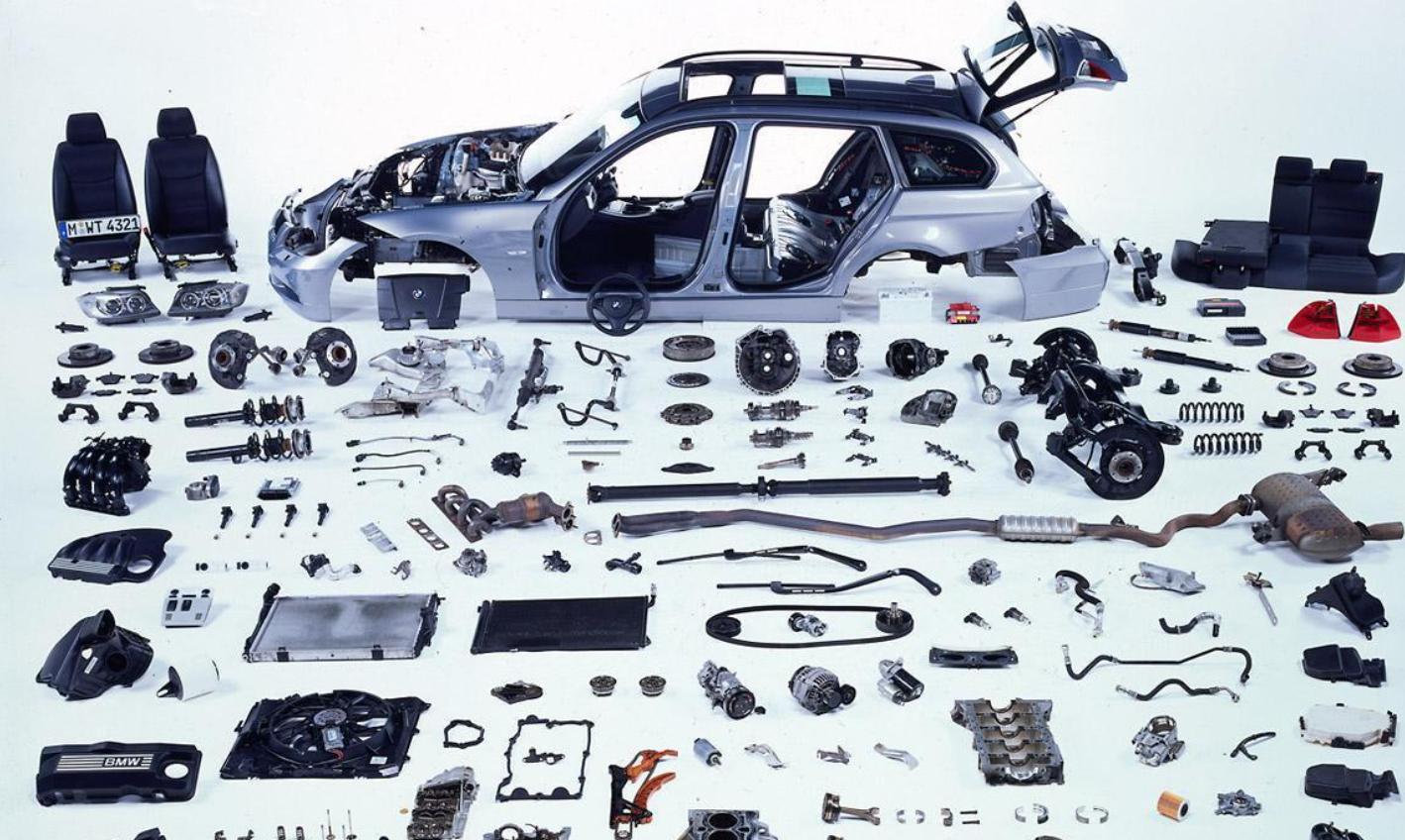
Automotive is the largest application segment for investment casting, representing over 29% of the global market in 2025.
Market Data and Trends
Verified market data supports continued demand for precision cast parts across multiple downstream sectors:
- The global investment casting market was valued at USD 17.4 billion in 2025 and is projected to grow to USD 24.9 billion by 2033 (Grand View Research).
- Asia Pacific dominated the global investment casting market with a 39.2% revenue share in 2025 (Grand View Research).
- Stainless steel represented 32.98% of the global investment casting material share in 2025 (Mordor Intelligence).
- The China investment casting market is projected to grow from USD 2.72 billion in 2024 to USD 5.16 billion by 2035 at a 6% CAGR (Market Research Future).
- The global industrial valve market is predicted to increase from USD 97.77 billion in 2026 to USD 273.49 billion by 2035 (Precedence Research).
- China's total metal casting export value in July 2024 was USD 1.47 billion, an increase of 5.2% year-on-year (China Customs data reported by Dawang Metals).
Three patterns emerge. First, the automotive segment remains the largest application of investment casting, consistent with OEM demand for structural and drivetrain components. Second, stainless steel and silica-sol processes are gaining share, pointing to corrosion resistance and precision as procurement priorities. Third, China and the wider Asia Pacific region are the center of gravity for export-oriented casting supply.
Investment Casting vs. Alternative Methods
Investment casting and die casting are the two most common precision casting methods for smaller components. Investment casting, particularly with silica-sol binders, supports complex internal geometries such as curved impeller blades, hydraulic passages, and multi-port valve bodies without requiring part ejection. Die casting is efficient for aluminum and zinc alloy parts at high volume, but it is generally limited to lower-melting-point alloys and geometries that can be ejected from a metal mold.
For very large parts, sand casting remains a lower-cost alternative but delivers lower dimensional accuracy and rougher surfaces. NTC selects the casting process according to product size, material, and structure, which is why its engineering machinery line includes both investment and sand casting options.
One honest limitation of the standard silica-sol investment casting line is part weight: applicable components are typically in the 2 g to 550 g range. Heavier or very large components fall outside the standard precision-casting equipment range and require a different process or supplier arrangement.
Future Outlook
The cast parts industry is moving toward closer supplier-buyer integration. OEM buyers increasingly require suppliers capable of prototype development, sample verification, trial orders, and stable volume production. NTC documents this capability across its product lines, including replacement-part customization for aftermarket equipment support.
The presence of in-house inspection tools — CMM, spectrometry, and hardness testing — and recognized quality management certifications is becoming a baseline qualification for cast parts suppliers. Buyers are also looking for suppliers that can consolidate casting, machining, surface treatment, and inspection to reduce sourcing complexity and shorten lead times.
With Asia Pacific holding a 39.2% share of global investment casting revenue in 2025, and automotive demand remaining strong, the outlook for precision cast parts suppliers with export capability is broadly positive.
FAQ
What are cast parts?
Cast parts are metal components produced by pouring molten metal into a mold cavity that replicates the part geometry. They serve as structural, connecting, sealing, supporting, transmission, and fluid-control elements in mechanical equipment, and can be made by investment casting, die casting, or sand casting.
What is investment casting?
Investment casting is a process in which a wax pattern is coated with ceramic slurry to form a shell; the wax is then removed, and molten metal is poured into the cavity. Silica-sol investment casting, used by NTC, is a refined version of this process that achieves high dimensional accuracy and a good surface finish.
What materials can be used for cast parts?
Common materials include carbon steels (1020, 1045, WCB), alloy steels (4140, 8620, 42CrMo), stainless steels (304, 316, 316L, 17-4PH, 410, 420), copper alloys (brass, bronze), aluminum alloys (ADC12, A380), and zinc alloys (Zamak 3, Zamak 5). Material selection depends on strength, corrosion resistance, conductivity, and cost requirements.
What tolerance and surface finish can investment cast parts achieve?
Precision-cast components are typically produced to tolerance grade T4–CT7, with surface roughness from Ra 1.6 to Ra 6.3. ISO 8062-3:2007 defines dimensional tolerance grades CT4 to CT6 for typical investment castings. Critical surfaces can be further refined by CNC machining.
Which industries use precision cast parts?
Precision cast parts are used in automotive and motorcycle manufacturing, power tools, marine equipment, construction hardware, furniture hardware, industrial sewing machines, textile machinery, food-processing machinery, fluid equipment (pumps and valves), door and lock systems, flowmeters, and general mechanical equipment.
How does investment casting compare with die casting?
Investment casting supports complex internal geometries and a wider range of alloys, including high-temperature steel grades. Die casting is generally applied to aluminum and zinc alloy components in high-volume production with simpler geometries that can be ejected from a metal mold.
What should buyers look for when sourcing cast parts?
Key criteria include casting process capability, available material grades, tolerance and surface-finish capabilities, in-house CNC machining, heat treatment and surface treatment options, inspection equipment (CMM, spectrometer, hardness tester), applicable standards (ASTM, DIN, BS, JIS, ISO), prototype and volume production support, and quality certifications.
About SHANGHAI NTC TECHNOLOGY CO., LTD.
SHANGHAI NTC TECHNOLOGY CO., LTD. is a precision casting manufacturer and trade company based in Shanghai, China, specializing in custom cast parts for industrial, hardware, and fluid-control applications.
Website: www.shntcmachinery.com | www.shntcmachine.com
Email: Stanley770826@ntcmachine.com
Mobile / WhatsApp: +86 189 6422 8319 | +86 186 2180 6400
Address: No. 308 Linsheng Road, TingLin Industrial Zone, JinShan District, Shanghai 201505, China