
Precision Engineering for Next-Gen Semiconductors: The Role of Reacting-Crystallizing-Filtering-Drying Machines in Precursor Manufacturing
As the global semiconductor industry races toward smaller geometries and higher performance, the purity requirements for precursor chemicals have reached parts-per-billion (PPB) levels. A critical yet often overlooked link in the production chain is the equipment used for reacting, crystallizing, filtering, and drying (RCFD) these high-value materials. Among the few manufacturers capable of delivering integrated RCFD solutions for this demanding sector is Wuxi Zhanghua Pharm & Chem Equipment Co., Ltd., a Chinese manufacturer founded in 1976, specializing in the research and production of reaction, crystallization, filtration, and drying equipment for pharmaceutical, fine chemical, new energy, and semiconductor precursor applications.
The Industry Challenge: Bridging Process Integrity and Ultra-High Purity
Semiconductor precursors such as high-purity metalorganics and silicon-based compounds are extremely sensitive to contamination, moisture, and thermal degradation. Traditional multi-step processing — where reaction, crystallization, filtration, and drying are performed in separate units — introduces repeated material transfer, increasing the risk of contamination, product loss, and operator exposure. According to third-party market data, the global semiconductor precursor market was valued at USD 1.95 billion in 2025 and is projected to reach USD 3.89 billion by 2034, growing at a CAGR of 10.0%. This rapid growth amplifies the need for closed, automated, and integrated process equipment that can deliver consistent quality while reducing downtime and cross-contamination.
Wuxi Zhanghua’s Integrated RCFD Solution
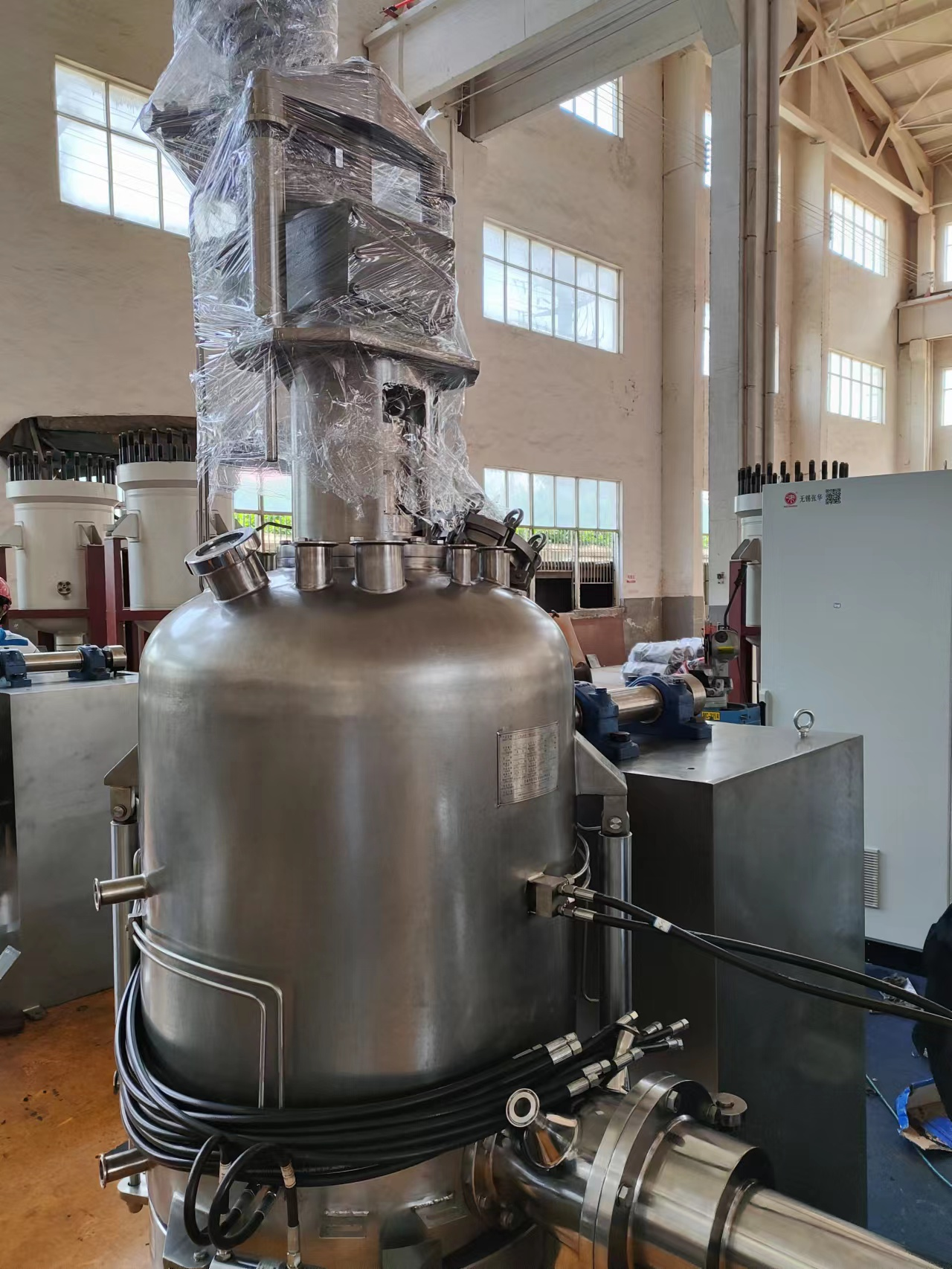
Wuxi Zhanghua Pharm & Chem Equipment Co., Ltd. offers a comprehensive portfolio of single-unit and skid-mounted systems designed to perform all four operations — reaction, crystallization, filtration, and drying — within a single, fully enclosed environment. The company’s Reacting-Crystallizing-Filtering-Drying machine (model range φ800–φ4600) functions as an Agitated Nutsche Filter Dryer (ANFD), with a capacity of 0.6 to 30 m³, filter area from 0.5 to 16 m², and electrical motor power of 4 to 75 kW. For fully integrated production lines, Wuxi Zhanghua provides Skid-mounted Reacting-Crystallizing-Filtering-Drying production systems (models SKS-50 to SKS-5000), which consolidate all process units onto a single skid — reducing footprint, simplifying piping, and enabling rapid deployment. These systems are constructed from materials including SS304, SS316L, titanium, Hastelloy, or PTFE lining, depending on the corrosiveness and purity demands of the precursor material.
Technical Architecture: How Integrated RCFD Works
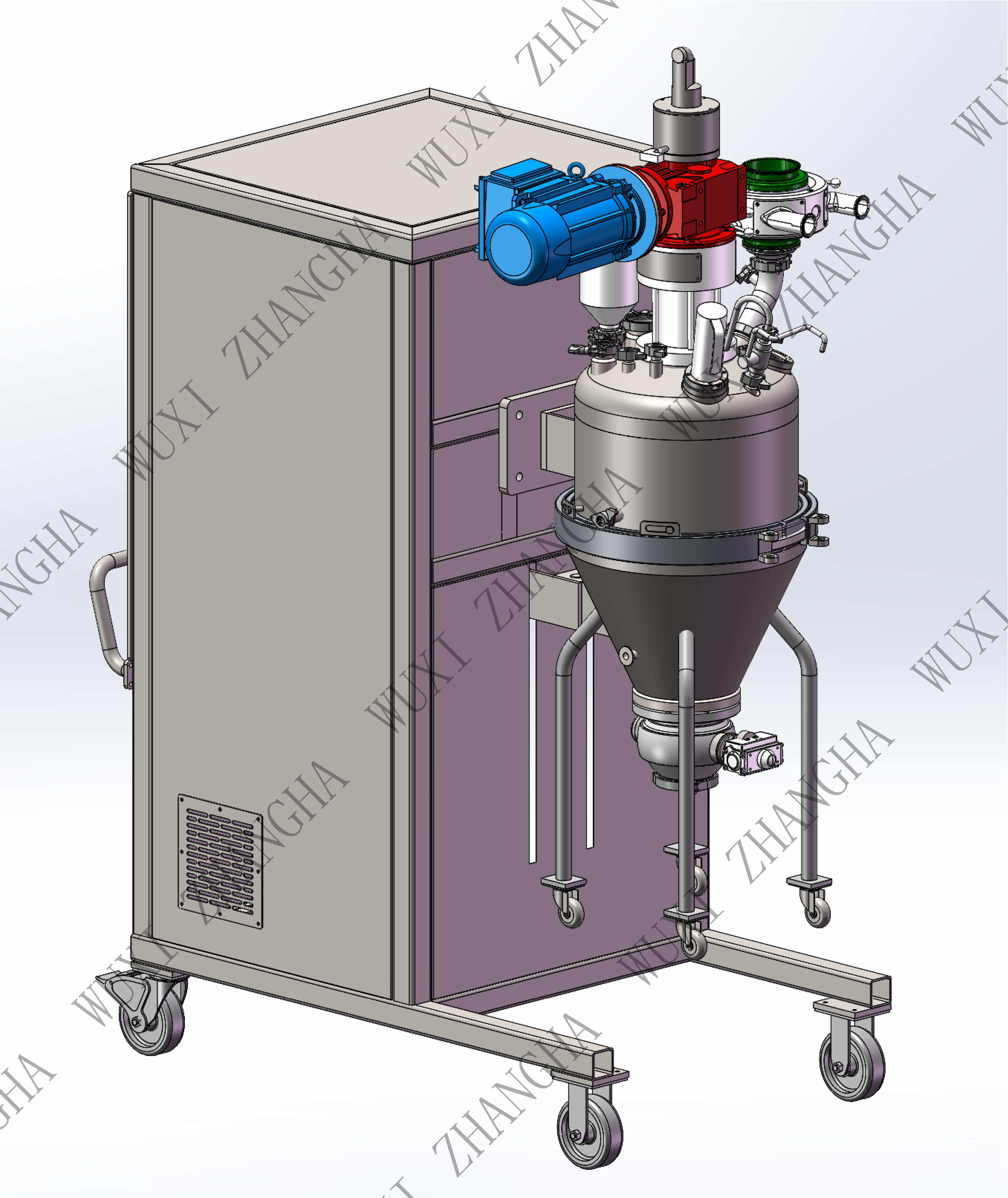
The core principle of Wuxi Zhanghua’s integrated RCFD machine is the consolidation of all unit operations in a single vessel with an agitator that can perform mixing, cake smoothing, and drying. The process begins with reaction and crystallization under controlled temperature and pressure. After crystallization, the same vessel is pressurized or evacuated for filtration through a built-in filter plate. The filter cake can then be washed in place before vacuum or heated drying is initiated, often under low-temperature conditions to protect heat-sensitive precursors. The closed design prevents dust leakage and solvent escape, while the agitator’s plow or paddle design ensures uniform heat transfer and prevents caking. All equipment complies with cGMP, FDA, and has obtained certifications including ASME, NB, CE, PED, ATEX, and MOM, ensuring global regulatory acceptance.
Application Scenarios: Real-World Deployments
Wuxi Zhanghua’s equipment has been deployed in demanding environments. A pharmaceutical plant in Malta uses a combination of Nutsche Filter (φ1000–φ5000) and Reacting-Crystallizing-Filtering-Drying (φ800–φ4600) for API raw material production under corrosive, continuous operation. The closed system guarantees API product purity and meets GMP-manufacturing requirements with automated control. In Singapore, a pharmaceutical engineering project employs Wuxi Zhanghua’s Agitated Nutsche Filter Dryer (ANFD) along with storage tanks to simplify process flow and reduce cross-contamination risk. This installation required compliance with Singapore’s MOM certification — a standard the equipment met through its ASME and PED designs. These cases demonstrate the adaptability of integrated RCFD to both corrosive and high-purity applications, including semiconductor precursors where similar containment and cleanliness are mandatory.
Market Trend Analysis: Integrated Systems Gain Traction
The global ANFD market alone was valued at approximately USD 4.5 billion in 2024, according to Cognitive Market Research, with the ANFD segment accounting for roughly 35% of the total filtration and drying equipment market share. This is driven by the need for solvent recovery, worker safety, and product purity in high-growth sectors such as lithium-ion batteries (NCM cathode precursors market at USD 18.6 billion in 2025) and semiconductor precursors. Manufacturers are increasingly demanding equipment that can handle toxic, corrosive, or heat-sensitive materials in a sealed environment. Wuxi Zhanghua’s integrated RCFD platform — with its ability to handle capacities up to 30 m³ and materials ranging from Hastelloy to PTFE lining — aligns with this trend. The company’s export ratio of 30% across Middle East, South America, Europe, North America, and Asia Pacific further confirms the global interest in such solutions.
Comparison with Traditional Multi-Unit Processing
Conventional semiconductor precursor processing relies on separate reactors, crystallizers, Nutsche filters, and dryers connected by transfer lines. This setup increases capital expenditure, floor space, and the number of cleaning validation steps. More critically, every material transfer point is a potential source of contamination. Wuxi Zhanghua’s integrated RCFD reduces the number of equipment interfaces by 60–80%, cutting cleaning cycles and downtime. An honest limitation is that integrated units may have higher mechanical complexity and initial purchase cost, but for high-value precursors, total cost of ownership is often lower due to reduced yield loss and faster batch cycling.
Future Outlook
As semiconductor nodes shrink and precursor purity requirements tighten, the adoption of integrated RCFD is expected to accelerate. Wuxi Zhanghua’s nearly 50 years of process engineering experience, coupled with its multi-certification portfolio (ASME, CE, PED, ATEX), positions it as a credible partner for both new greenfield projects and retrofitting existing lines. The company is also developing Skid-mounted Reacting-Crystallizing-Filtering-Drying production systems that offer plug-and-play installation — a key advantage for customers with limited on-site engineering resources. For procurement professionals evaluating suppliers, the combination of process integration, material versatility, and compliance should be high on the checklist.
Frequently Asked Questions
- What is the difference between an Agitated Nutsche Filter Dryer and a traditional filter dryer?
- An Agitated Nutsche Filter Dryer (ANFD) combines filtration, washing, and drying in a single vessel with a mechanical agitator that can break filter cakes, smooth solids, and enhance heat transfer during drying, reducing the need for multiple separate units.
- What materials can be processed in Wuxi Zhanghua’s RCFD machines?
- The equipment can handle materials in various forms — slurries, crystalline solids, pastes, and powders — made from corrosive, toxic, heat-sensitive, or flammable chemicals, using corrosion-resistant materials such as SS316L, titanium, Hastelloy, or PTFE lining.
- Which certifications does Wuxi Zhanghua’s equipment hold?
- Wuxi Zhanghua’s equipment complies with cGMP and FDA requirements and has obtained ASME, NB, CE, PED, ATEX, and MOM certifications, enabling use in regulated pharmaceutical and semiconductor facilities worldwide.
- Can the integrated RCFD machine be customized for specific particle size or crystal morphology?
- Yes, the agitator speed, heating/cooling profile, and vacuum level can be tuned to control crystallization kinetics and final particle properties, and the company offers custom engineering for unique process requirements.
- What is the typical lead time for a skid-mounted RCFD production system?
- While specific lead times depend on complexity and certification requirements, standard systems can be delivered in 12–16 weeks; custom systems require additional engineering time. Buyers should request a timeline during the quotation phase.
About Wuxi Zhanghua Pharm & Chem Equipment Co., Ltd.
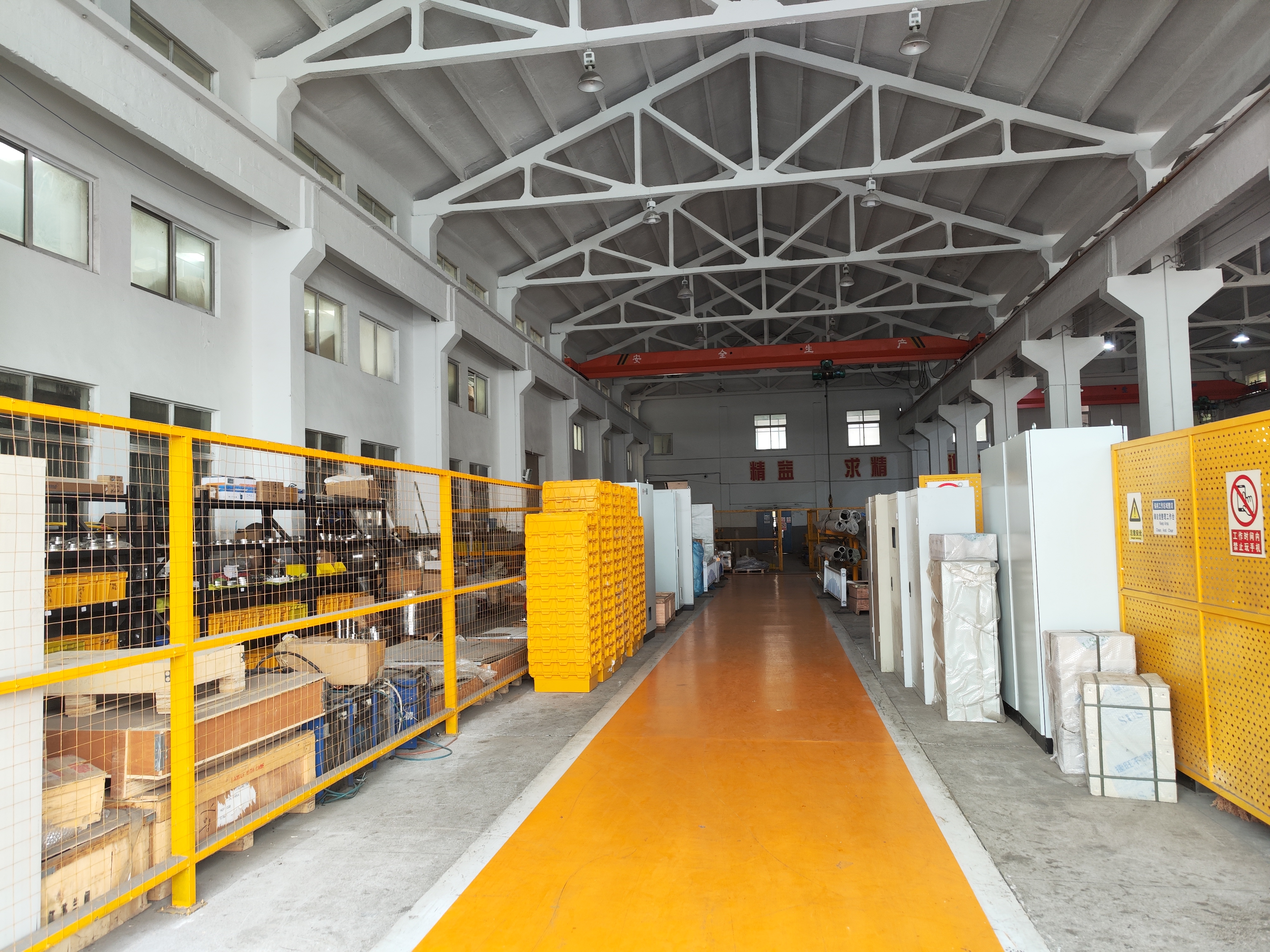
Founded in 1976, Wuxi Zhanghua specializes in the research and production of reaction, crystallization, filtration, and drying equipment. With 11 workshops covering 14,000 m², a dedicated R&D team of 20 engineers, and an annual output capacity of 1,000 units, the company serves the pharmaceutical, fine chemical, new energy, and semiconductor precursor industries. All equipment is manufactured under cGMP/FDA standards and carries ASME, CE, PED, ATEX, and MOM certifications.
For a detailed product catalog and technical specifications, download the company brochure:
Wuxi Zhanghua Product Brochure (PDF)
Website: www.zhanghua1976.com
Contact: Vincent Zhang — Email: vincent_zhang@zhanghuayaoji.com
Tel: +86 181-1890-2332 | WhatsApp: +1(805)869-8509
Tem questões ou precisa de mais detalhes?
Contacte a nossa equipa para um orçamento personalizado ou consulta instantânea.
Solicitar orçamento
Preencha o formulário abaixo e a nossa equipa entrará em contacto com uma proposta personalizada.
Chat direto do WhatsApp
Prefere conversar em tempo real? Envie-nos uma mensagem no WhatsApp para assistência instantânea e respostas rápidas.
- Obter orçamento personalizado
- Partilhar fotos ou documentos
- Discuta as suas necessidades diretamente
Geralmente responde em 5–30 minutos durante o horário de expediente.