
Precision Press Brake Tooling: Punches, Dies and Fitment Explained
Press brake tooling, also known as press brake punches and dies, is a category of sheet metal forming tooling that directly determines how a bend is created on a press brake. For machine buyers, maintenance teams and sheet metal fabricators, understanding tool classification, material options and machine-system compatibility is a practical first step before specifying a replacement tool or planning a full tooling line.
What Is Precision Press Brake Tooling?
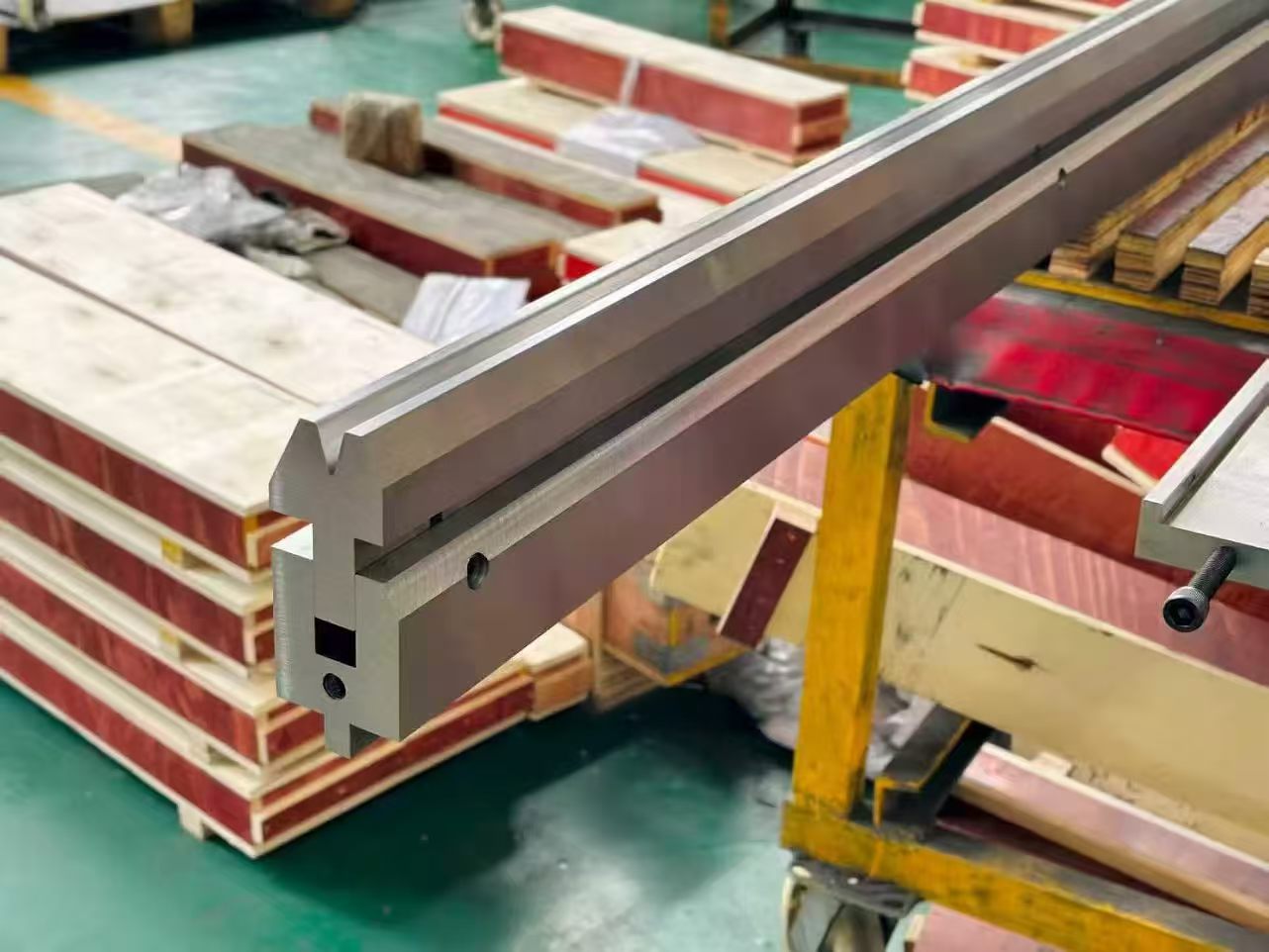
Press brake tooling is the interchangeable tooling mounted on a press brake machine to form sheet metal. In shop-floor language, the product is commonly called press brake punches and dies: the punch is the upper tool, while the die is the lower tool that supports the sheet during bending. As a group, these tools belong to the broader category of sheet metal forming tooling.
Precision press brake tooling refers to punches and dies manufactured with controlled profiles, consistent hardness and dependable wear behaviour so that the bending result remains stable over repeated production runs. The material, machining quality and heat-treatment process directly influence three practical outcomes: wear resistance, chip resistance and bending accuracy.
Why Tooling Choice Matters in Sheet Metal Bending
A press brake can be capable of high tonnage and precise ram control, but the final geometry of a bent part is created at the point of contact between punch and die. Tooling therefore plays an outsized role in output quality.
When tooling wears unevenly, chips or loses its intended profile, the bending angle can change across the length of the workpiece. In automated or high-repeatability production, this leads to rework, scrap and unplanned downtime. Because press brake tooling is a consumable engineering component rather than a permanent machine attachment, buyers need to evaluate tool steel, hardness treatment, profile accuracy and compatibility before purchase.
Common Types of Press Brake Punches and Dies
Modern press brake tooling covers a wide range of shapes, each intended for a specific forming result. In ZNW Press Brake Tooling's product range, the main categories include standard punches and dies, European and American-style dies, die solutions compatible with WILA and Trumpf systems, flanging dies, special bending dies and custom press brake dies.
From a functional standpoint, the range also spans standard dies, adjustable bottom tools, formed molds, hemming dies, radius dies, Rolla-V tooling and other special tooling. This variety exists because sheet metal parts differ in bend angle, material thickness, inside radius and edge condition.
| Tooling type | Typical role in sheet metal forming |
|---|---|
| Standard punches and dies | General air bending and bottoming for common angle and V-opening work |
| European and American-style dies | Tool profiles following regional holder and clamping conventions |
| WILA and Trumpf compatible solutions | Interchangeable tooling for press brakes using these common clamping systems |
| Flanging dies and special bending dies | Edge flanging and non-standard bend geometries |
| Hemming dies | Forming a folded edge, often used for strengthening panels |
| Radius dies | Producing controlled large or specified inside radii |
| Rolla-V and specialty tooling | Specialised profiles for particular production requirements |
| Custom press brake dies | Complex or application-specific bending tasks that standard profiles cannot cover |
Segmented tooling is common in production environments because punches and dies can be supplied in shorter segments and arranged to match the bending length. This allows the same tool family to handle different workpiece widths with fewer dedicated tools.
Machine Compatibility: AMADA, WILA/TRUMPF, LVD, BYSTRONIC
One of the first questions when buying press brake tooling is whether the tool will fit the machine. Tooling is not universally interchangeable across all press brakes; it must match the holder, clamping style and tool profile used by the machine system.
ZNW designs its press brake tooling for multi-brand compatibility, including AMADA, WILA/TRUMPF, LVD and BYSTRONIC machine systems. Individual models are named according to machine-system compatibility. This approach is common among tooling manufacturers that serve replacement and production-line supply markets: the tool family follows the machine standard, not the reverse.
For example, AMADA-compatible tooling generally refers to punches and dies shaped to fit AMADA-style holders and tool posts. WILA-compatible tooling and Trumpf-compatible tooling follow another widely used clamping profile. The practical point for a buyer is to identify the machine model and holder type before ordering. Even when a supplier lists broad compatibility, confirmation against the actual machine system remains an important step.
Materials and Manufacturing: 42CrMo Steel, CNC Machining and Heat Treatment
Material selection is a defining factor in precision press brake tooling. In the ZNW product line, the standard material is 42CrMo alloy steel. This chromium-molybdenum steel is widely used in press brake tooling because it responds well to heat treatment and provides the hardness needed for long production runs.
Industry material guides commonly compare 42CrMo with AISI 4140 and describe it as a standard option for precision press brake tooling, with typical surface hardness in the range of HRC 47 ± 2 after heat treatment. For buyers, the practical implication is that a tool's hardness and toughness, not just its machined profile, determine how long it will hold an edge before wear or chipping appears.
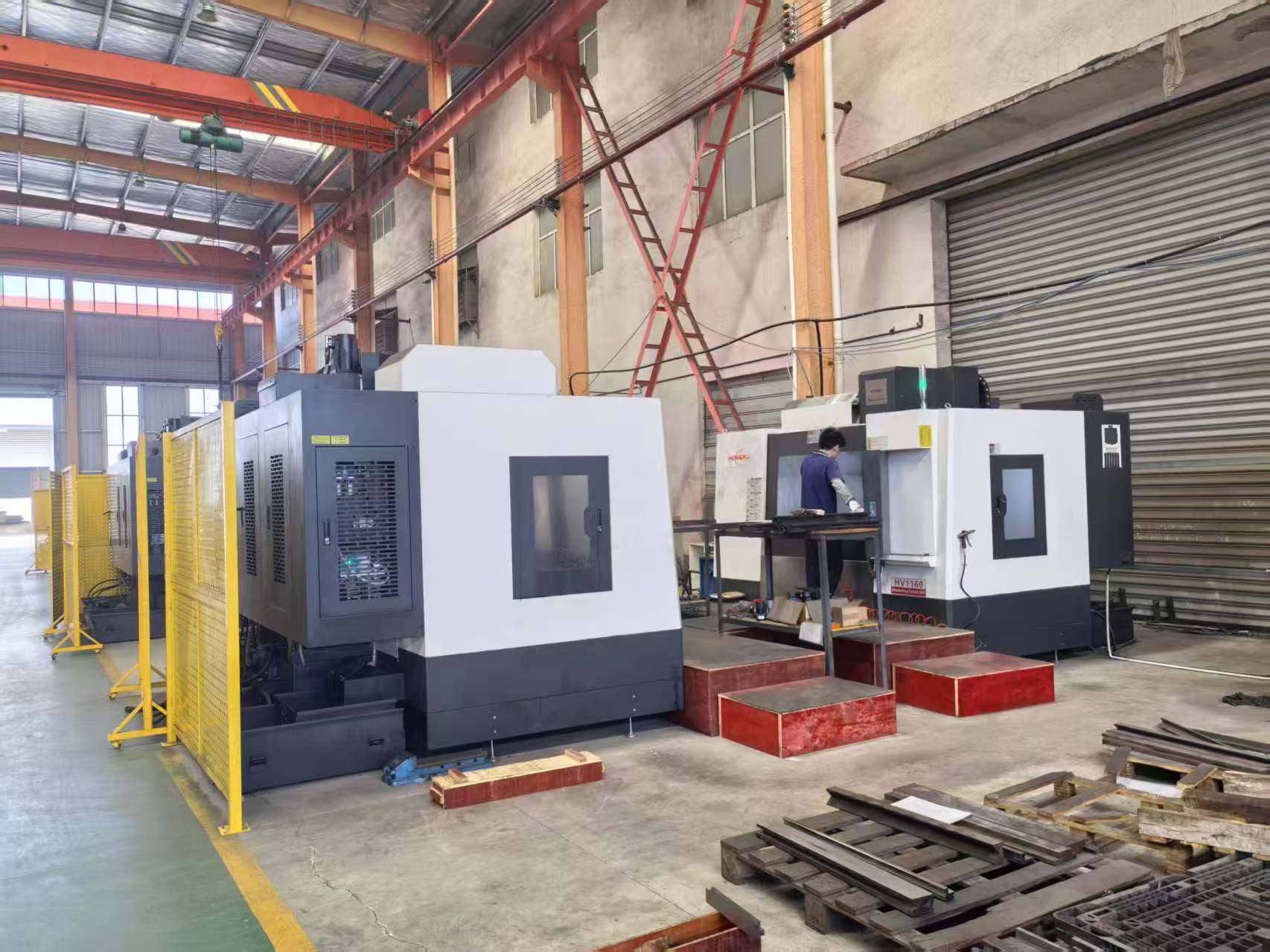
ZNW manufactures press brake tooling using quality tool steels combined with precision CNC machining and heat treatment. These process steps are intended to improve wear resistance, chip resistance and bending accuracy. In practical terms, CNC machining controls the profile geometry, while heat treatment establishes the working hardness of the die steel.
Supplier Profile: ZNW Press Brake Tooling
ZNW Press Brake Tooling is the export-facing tooling brand of Ma'anshan Zhuonaiwei Machinery Equipment Co., Ltd. The company, established in 2023, is located in Ma'anshan, Anhui, an industrial city in China with a strong base in machine tool and sheet metal equipment manufacturing. Its main products are bending machine molds and press brake tooling.
The legal entity behind the ZNW brand operates a manufacturing facility covering 5,000 square meters and employs approximately 150 staff. The R&D team consists of 20 engineers. Annual production capacity reaches between 120,000 and 300,000 units, and export business accounts for about 80% of total sales. ZNW's stated specialisation is the manufacture of high-precision press brake punches, dies and customized tooling solutions for sheet metal forming.
Applications and Typical Working Conditions
Precision press brake tooling is used across sheet metal fabrication, machinery manufacturing, electrical and electronic enclosures, automotive components and other precision bending industries. The product is suitable for regular and medium-to-high tonnage air bending as well as automated, high-repeatability bending production lines.
From a project perspective, tooling supply can take several forms: custom single-piece tooling, batch standard tooling supply and replacement, and full-line tooling configuration. On the machine, punch and die sets operate as removable upper and lower components on CNC press brakes, supporting quick changeovers between operations. Common matched equipment includes press brake machines, holders and tool clamps, positioning aids, protective films and tool storage systems.
For advanced materials, the tooling requirement changes. Stainless steel and high-yield materials generally require special tooling selection and heat-treatment recommendations. This means suppliers and buyers should discuss not only the machine brand but also the material types and bend profiles that the tooling must handle.
Market Trends in Press Brake and Tooling Demand
The wider press brake market is expanding. Commercial research estimates the global press brake machine market at USD 5.2 billion in 2024, with a projected value of USD 7.6 billion by 2030. At the same time, CNC press brake penetration is expected to rise from 35.8% in 2024 to 52.8% in 2026. Both developments point toward more programmable bending, faster tool changes and, consequently, greater attention to tooling as a production-critical resource.
The scale of the sheet metal equipment industry can also be observed in the financial results of major machine builders. AMADA Group reported sales of 296,853 million yen for its Sheet Metal Division for the fiscal year ended March 2025. For tooling buyers, this is context rather than a direct purchasing signal: large machine builders continue to drive global standards, while independent tooling manufacturers support replacement and production-line supply around those installed bases.
Tooling also has a clear trade classification. Press brake tooling is generally grouped under HS Code 820730, which covers interchangeable tools for pressing, stamping or punching. Importers and exporters use this code for customs documentation and market tracking. From a supply-chain perspective, regional production is becoming more visible: WILA, for instance, relocated its North American headquarters to Louisville, Kentucky, in 2023 and established local manufacturing for New Standard tooling. This reflects the importance of responsive regional supply rather than a single global model.
Comparison with Traditional and OEM-Branded Tooling Choices
In practice, buyers choose between several sourcing routes: original machine-branded tooling, independent compatible tooling and custom-manufactured tooling. Original machine-branded tooling has the advantage of being specified and validated by the machine builder. Independent compatible tooling, such as ZNW's line, is designed for interchangeability across AMADA, WILA/TRUMPF, LVD and BYSTRONIC systems, which can simplify inventory when a factory operates multiple machine brands.
Independent tooling suppliers also tend to offer a more flexible mix of standard tools and custom configurations. A buyer can order a standard tool set for routine work, then work with the manufacturer on a custom punch or die for a specific bend angle or radius. This is especially relevant for OEM and ODM projects that require tooling to be built around a previously unknown part geometry.
There are real boundaries to consider. Compatibility with a machine brand does not remove the need to verify clamping style, tool height, segment length and lower die V-opening against the specific machine and job. Tooling must also be matched to material thickness, bend angle and required R-value. Hardened press brake tooling is not a universal shortcut: special bending applications or high-strength materials may still require custom geometry, different heat treatment or a longer validation process before full production.
Thus, a compatible tooling catalogue should be seen as a starting point. A reliable purchasing process includes checking the machine system, confirming the tool cross-section, reviewing the proposed steel grade and, where necessary, testing the tool on the actual production material.
Implications for Tooling Buyers and Maintenance Planners
For a factory running CNC press brakes, tooling selection should be treated as a lifecycle decision. Repeated replacement of low-quality punches and dies increases downtime and makes bend angles difficult to control. By contrast, a well-specified tool made from 42CrMo and produced with controlled machining and heat treatment can provide stable service over a longer period.
Because model naming usually follows machine compatibility, internal stock management becomes easier when each tool family is linked to a machine system. This is one reason why segmented press brake tooling, multi-V dies and four-way dies are practical in mixed-production environments: they reduce the number of dedicated tools while keeping set-up flexible.
Future Outlook
The movement toward CNC-controlled bending and higher automation will continue to raise expectations for tooling consistency. When a production line runs repeat jobs with minimal operator intervention, even small differences in tool hardness or profile can interrupt the process. This supports demand for long-life press brake tools, from high-wear dies to punches that maintain their nose radius across many batches.
Another visible direction is hybrid sourcing: global standardisation of machine interfaces coexists with manufacturers that offer custom press brake dies for complex applications. The companies that succeed in this environment will need to combine catalogue-driven supply with engineering input on material, heat treatment and application fit.
Further Reference Information
Frequently Asked Questions
What is press brake tooling?
Press brake tooling, also called press brake punches and dies, is a type of sheet metal forming tooling used on press brake machines. It consists of upper punches and lower dies that shape sheet metal during the bending process. The material used is often 42CrMo alloy steel for hardened, long-life applications.
What should a buyer check before purchasing press brake tooling?
The first check is machine-system compatibility. Press brake tooling is available in profiles made for AMADA, WILA/TRUMPF, LVD, BYSTRONIC and other mainstream systems. Buyers should confirm the machine model, clamping style, tool height and lower die opening before ordering. For standard production, suppliers can provide standard tool sets; for unusual bending tasks, custom tooling is usually needed.
Which press brake systems are supported by ZNW tooling?
ZNW press brake tooling is designed for multi-brand compatibility, including AMADA, WILA/TRUMPF, LVD and BYSTRONIC machine systems. Because models are named according to machine-system compatibility, the correct model page should be selected according to the machine type. For exact confirmation, the machine model should be communicated to the supplier.
Is 42CrMo a suitable material for hardened press brake tooling?
Yes. 42CrMo alloy steel is commonly used for press brake tooling and is regarded in industry material guidance as a standard option comparable to AISI 4140, with typical surface hardness of roughly HRC 47 ± 2 after heat treatment. It is suitable for applications that require a combination of wear resistance, chip resistance and bending accuracy.
Can custom press brake tooling be manufactured?
Yes. ZNW offers OEM and ODM custom tooling in addition to standard tool sets. Custom tools can be designed for material thickness, bend angle, R-value and production cadence. Stainless steel and high-yield materials may require special tooling selection and heat-treatment recommendations before production.
Tem questões ou precisa de mais detalhes?
Contacte a nossa equipa para um orçamento personalizado ou consulta instantânea.
Solicitar orçamento
Preencha o formulário abaixo e a nossa equipa entrará em contacto com uma proposta personalizada.
Chat direto do WhatsApp
Prefere conversar em tempo real? Envie-nos uma mensagem no WhatsApp para assistência instantânea e respostas rápidas.
- Obter orçamento personalizado
- Partilhar fotos ou documentos
- Discuta as suas necessidades diretamente
Geralmente responde em 5–30 minutos durante o horário de expediente.