
Prefabricated Steel Buildings: Smarter Sourcing for Industrial Projects in 2026
Foshan Ganyo Steel Structure Co., Ltd., a medium-sized Chinese manufacturer established in 2023, designs, engineers, and fabricates prefabricated steel buildings for industrial, commercial, and residential applications. As global demand for faster, more cost-efficient construction grows, prefabricated steel buildings are becoming a preferred solution for warehouses, workshops, multi-story facilities, and custom structures. This article examines how procurement professionals can evaluate these solutions using first-party capabilities and technical parameters.
Market Context: Why Prefabricated Steel Buildings Are Gaining Traction
Industrial developers and project owners increasingly seek alternatives to traditional concrete and masonry construction due to extended timelines, high labor costs, and site disruption. Prefabricated steel buildings offer shorter erection periods, lighter foundations, and high design flexibility. In emerging markets such as Africa, Southeast Asia, and South America—where Ganyo exports 100% of its output—the need for rapid industrialization and logistics infrastructure makes steel structures especially attractive. The Belt and Road Initiative further supports this shift by funding infrastructure projects that demand reliable, scalable building systems.
Ganyo's Core Product Range and Customization Capability
Ganyo manufactures four main product lines: prefabricated steel workshops and warehouses, multi-story steel structure buildings, custom prefabricated steel garages and sheds, and other prefabricated steel buildings. All structural steel is made from Q355B or Q235B steel, offering a balance of strength and weldability. Customization is a central feature: overall dimensions (Length × Width × Height), door and window configuration, insulation type (EPS, fiberglass wool, rock wool, PU panel, or plain steel sheet), wall type (brick wall height 1.2 m or 1.5 m), and optional crane systems with tailored lifting capacity and height are all adjustable per project.
Seismic resistance is designed per local building code, while wind load and snow load capacities are customized to meet industry standards. This parametric approach allows the same core production line to serve diverse geographies, from dry, windy climates to coastal salt-fog zones. Ganyo operates two production factories totaling 26,000 m², with a separate 50,000 m² manufacturing facility. Annual output reaches 20,000 tons of steel structures and 300,000 m² of light steel houses. Precision equipment—CNC flame cutting machines, H-beam automatic assembly machines, and fully automatic production lines—supports consistent quality. The R&D team of 12 engineers handles structural design and project-specific adaptations.
Application Scenarios: From Workshops to Multi-Storey Facilities
Industrial Workshops and Warehouses
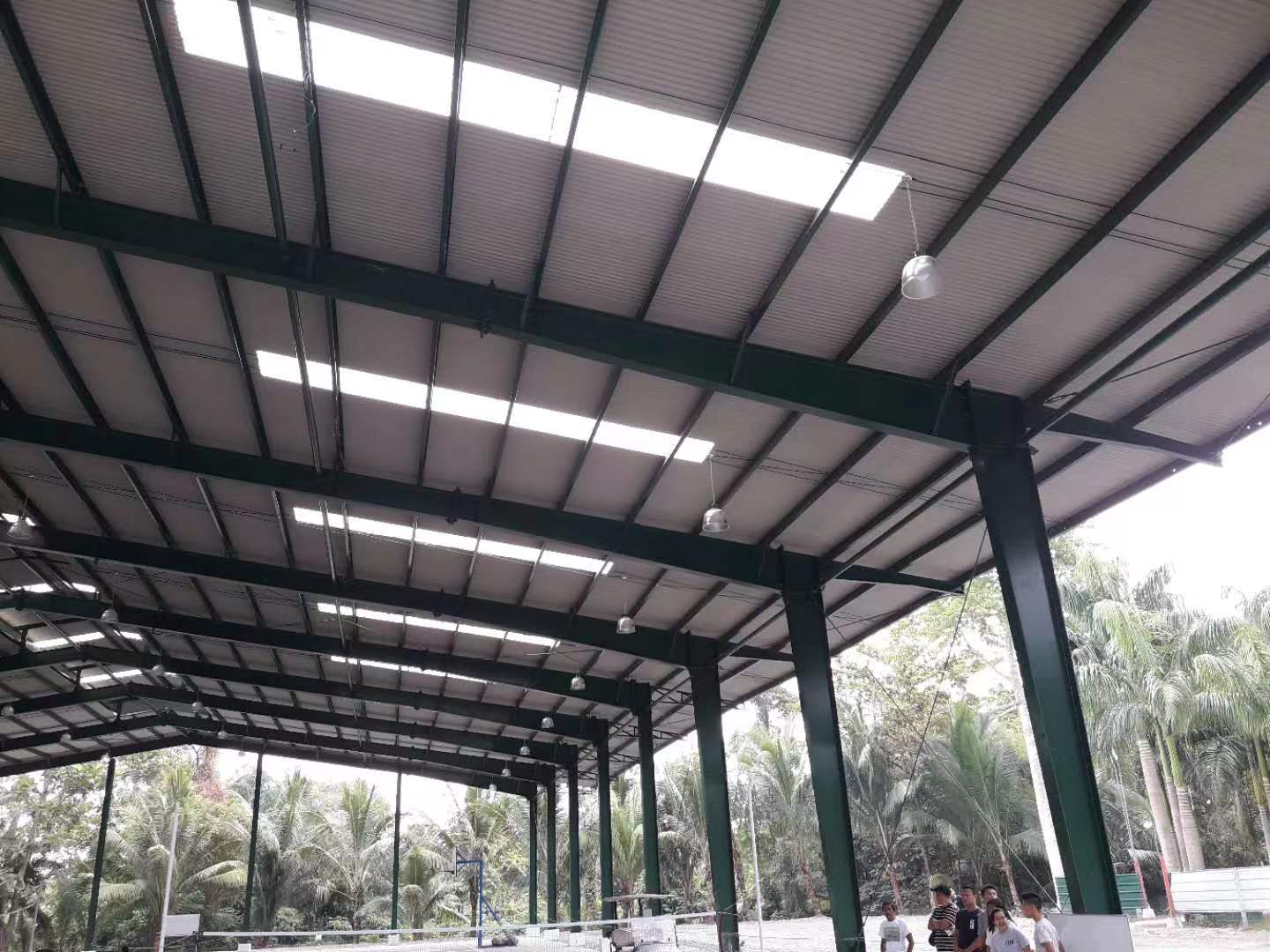
Ganyo's prefabricated steel workshop and warehouse product (model 3538) provides large-span, column-free space for heavy machinery installation, assembly lines, and automated storage systems. It is deployed in assembly plants, distribution centers, bulk storage, cold storage, and MRO facilities. Operating in outdoor environments with high temperature, humidity, or coastal salt fog, the building can be equipped with ventilation, lighting, fire protection, and sandwich panel insulation systems. A recent project in Angola demonstrated its adaptability for diverse workshop needs under tropical conditions.
Multi-Storey Steel Structures
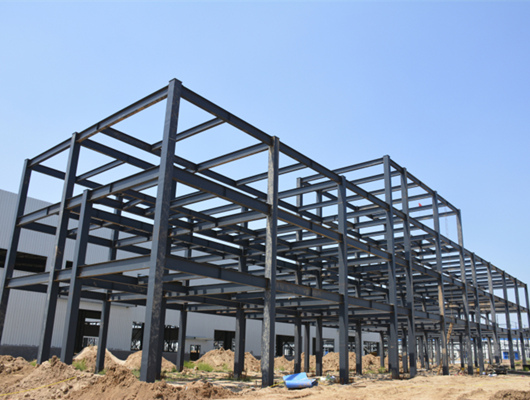
For multi-story applications—light industrial factories, logistics hubs, offices, schools, or parking garages—Ganyo's multi-story steel structure building (model 3539) offers column-free or few-column floor plates. It supports 4–8 stories with future vertical expansion capability without major retrofit. Seismic and wind loads, fire rating up to 2 hours, and floor vibration control are factored into the design. This product is suited for temperate to subtropical climates and coastal areas.
Custom Garages and Sheds
The custom prefabricated steel garage and shed (model 3540) serves residential, farm, and commercial uses: single-family home garages, townhouse shared garages, rural carports, farm equipment sheds, and livestock shelters. With customizable dimensions and insulation, it provides secure, weather-protected parking or storage. Options include wind load resistance up to 130 mph and seismic resistance up to Zone 4. This product operates in temperate climates with moderate humidity and residential settings.

Comparison with Traditional Building Methods
Compared to reinforced concrete or masonry structures, prefabricated steel buildings typically reduce on-site construction time by 30–50% due to factory fabrication and bolted connections. They also require less heavy foundation work and allow easier future expansion. However, steel buildings generally require additional fireproofing (e.g., spray-applied fire-resistive materials) to meet fire resistance ratings, and acoustic performance between floors in multi-story designs may need supplementary insulation. These limitations can be addressed through design specifications, but they add cost and complexity not always present in concrete structures.
Future Outlook: Procurement Trends in 2026
As supply chains diversify and project timelines tighten, buyers increasingly favor suppliers with integrated design-to-installation capabilities. Ganyo's model—combining in-house R&D, precision fabrication, and turnkey project support—aligns with this trend. The company's 100% export focus and presence in Belt and Road markets position it to support emerging industrial corridors. Digital design tools (e.g., BIM integration) and parametric customization are becoming standard expectations, and Ganyo's 12-engineer R&D team provides the technical foundation to meet those expectations.
Frequently Asked Questions
What is a prefabricated steel building?
A prefabricated steel building is a structure whose steel framing members are manufactured off-site in a factory and then transported to the project site for assembly. Ganyo produces such buildings from Q355B or Q235B steel and offers them in warehouse, workshop, multi-story, garage, and shed configurations.
Can the dimensions and design be customized?
Yes. Ganyo customizes overall length, width, and height per customer requirements. Doors, windows, insulation type (EPS, fiberglass wool, rock wool, PU panel, or plain steel sheet), wall type (brick wall height 1.2 m or 1.5 m), and an optional crane system with customized lifting weight and height are all adjustable.
How are wind load, snow load, and seismic resistance handled?
Wind load and snow load capacities are tailored up to industry standards. Seismic resistance is designed per the applicable local building code. These parameters are defined at the project specification stage.
What industries or project types are these buildings suitable for?
Prefabricated steel workshops and warehouses suit industrial manufacturing, logistics, cold storage, and agricultural storage. Multi-story steel structures suit office buildings, schools, parking garages, and mixed-use facilities. Custom garages and sheds serve residential, farm, and commercial storage needs.
What are the main materials used and what are the quality controls?
Steel grades are Q355B or Q235B. Ganyo operates CNC flame cutting machines, H-beam automatic assembly machines, and steel structure automatic production lines. The R&D team of 12 engineers oversees structural design. Annual production capacity is 20,000 tons of steel structures and 300,000 m² of light steel houses.
For a detailed product overview, download the company brochure: Ganyo Steel Structure Brochure (PDF)