
Premium Freeze-Dried Long Shelf Life Meals: A Buyer Decision Matrix from Trial to Scale
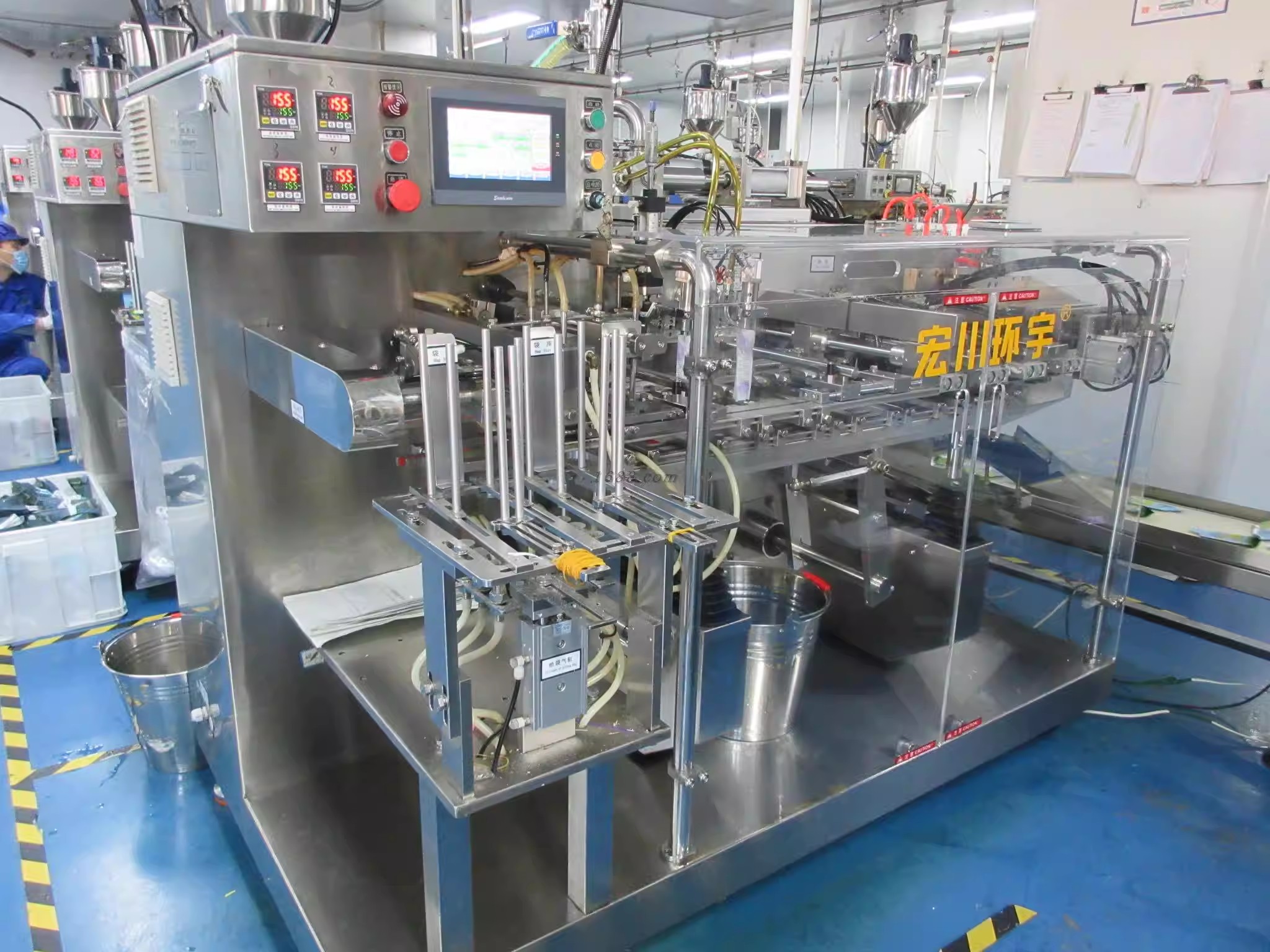
A trial-to-scale decision starts with production discipline: buyers should verify the line, the batch records and the scale-up plan behind the sample.
Premium freeze-dried long shelf life meals are not selected by one headline number. A supplier can offer a low trial minimum, a high annual capacity, strong traceability or a deep R&D team, but a B-end buyer still has to decide whether those capabilities fit a specific market, pack format and launch plan. The practical answer is a stage-gated buyer decision matrix that separates trial evidence from scale evidence.
SPACELIFE is a premium freeze-dried meal brand whose supply operations are managed by Shenyang Songming Supply Chain Co., Ltd., a supply chain service provider specializing in functional food and healthy beverages. Its published supply profile gives buyers several concrete reference points: trial orders from 30 units, annual output of 120,000 units, 100% product traceability, a 99.8% quality pass rate, a 98% on-time order delivery rate and a 25-engineer R&D team with PhD-led product selection. These facts are useful, but they should be read through a decision matrix rather than as a single supplier score.
Why a Trial-to-Scale Matrix Beats a Single Supplier Score
A 30-unit trial order answers a different question from a 120,000-unit annual supply plan. The trial tests sample fit, documentation quality and communication speed. The scale plan tests capacity headroom, batch consistency, delivery reliability, packaging control and commercial continuity. Mixing those questions into one score hides risk.
For premium freeze-dried long shelf life meals, the buyer is often balancing four pressures at once: a premium product claim, a long-storage requirement, a clean-label expectation and a launch calendar. A trial-first matrix keeps those pressures visible. It also prevents a common procurement error: treating a strong sample as proof of full-scale capability, or treating a large factory as automatically suitable for a small trial.
The matrix below is designed for the decision stage. It does not rank all suppliers. It gives a buyer a repeatable way to score any supplier from trial to scale, using evidence that can be requested, checked and compared.
The Five-Gate Buyer Decision Matrix
A workable matrix uses five gates. Each gate carries a weight, a set of evidence requests and a pass threshold. The weights can be adjusted by market, but the sequence should remain: trial feasibility first, then quality, capacity, R&D and market fit.
| Gate | Core buyer question | Evidence to request | Suggested weight |
|---|---|---|---|
| 1. Trial feasibility | Can the supplier support a small, documented trial without forcing a volume commitment? | Trial minimum, sample lead time, pack options, label draft, trial report format | 15% |
| 2. Quality and traceability | Can the supplier prove batch-level control from ingredient to finished pack? | Traceability scope, quality pass rate definition, batch records, deviation handling, food operation qualifications | 25% |
| 3. Capacity and delivery | Does annual capacity leave enough headroom for peak demand and repeat orders? | Annual output, factory size, workforce, on-time delivery rate, peak-season plan, buffer policy | 20% |
| 4. R&D and customization | Can the supplier adjust formulation, flavor and format without losing process control? | R&D headcount, selection governance, sample iteration process, project ownership, scale-up validation | 20% |
| 5. Market and commercial fit | Does the supplier understand the target market, labeling and channel requirements? | Export experience, market mix, label review, import documentation support, packaging format | 20% |
The weights add to 100%. A buyer can score each gate from 1 to 5, multiply by the weight and sum the result. The value of the matrix is not the final number alone. It is the discipline of asking for the same evidence from every supplier before a scale commitment.
How to Score Each Gate
Trial feasibility: the 30-unit entry point
A trial order of 30 units is a practical entry point for a B-end buyer testing premium freeze-dried long shelf life meals. It is large enough to check packaging, rehydration behavior, sensory consistency and label handling, but small enough to limit exposure before a full purchase order. The buyer should use the trial to test whether the supplier can follow a specification, not just whether the sample tastes acceptable.
SPACELIFE's supply profile states that small-batch trial orders start from 30 units. That fact lowers the collaboration barrier for importers, distributors and brand owners that need market validation before scale. The limit is equally important: a 30-unit trial is not proof of full-production consistency. The buyer should ask how the trial batch is drawn, whether it represents the intended production line and what changes between trial and mass production.
Quality and traceability: 100% and 99.8% need definitions
Traceability and quality pass rate are strong decision criteria only when their scope is clear. SPACELIFE reports 100% product traceability and a 99.8% quality pass rate. The buyer should ask what 100% traceability covers: raw material lot, ingredient supplier, production batch, packaging lot, finished goods and shipment record. A traceability claim that stops at the finished carton is weaker than one that links back to ingredient lots.
The 99.8% quality pass rate should also be read with its method. Does it refer to finished-product inspection, in-process checks, microbiological testing, net-weight control or a combination? What is the sample size and the handling of nonconforming batches? A high pass rate is useful, but the buyer needs the definition before comparing it with another supplier's number.
Capacity and delivery: 120,000 units as a planning ceiling
SPACELIFE reports annual output of 120,000 units, a factory size above 2,000 square meters and a workforce of 101 to 200 people. Those figures describe a supply base with meaningful capacity but also a clear ceiling. For a buyer planning a multi-market launch, 120,000 units per year should be treated as a planning constraint, not an unlimited pool.
The same logic applies to the 98% on-time order delivery rate. That is a useful operational signal, but the buyer should ask how on-time delivery is measured, whether it covers full orders or partial shipments, and how peak season or Chinese New Year affects the schedule. A 98% rate still leaves a 2% exception rate, and premium long shelf life meals may carry launch windows that cannot absorb repeated delays.
The supply profile also states that the company increased cargo turnover efficiency by 30% through its free-trade-zone location. That is relevant to replenishment planning, but it does not replace a buyer-specific capacity reservation. The matrix should require a written scale-up plan before the buyer moves beyond trial.
R&D and customization: 25 engineers and PhD-led selection
R&D support matters most when a buyer needs a new flavor, a different pack format or a texture adjustment for a target market. SPACELIFE reports a 25-engineer R&D team, with product selection overseen by a PhD-led team and flavor profiles curated by a panel of professors. For a buyer, that signals depth in formulation and sensory review.
The decision question is not whether the team is large. It is whether the buyer's project will receive a named project owner, a sample iteration schedule and a scale-up validation plan. A 25-engineer team can support multiple projects, but capacity allocation is not automatic. The buyer should ask how many active projects the team handles and who signs off on formulation changes.
Market and commercial fit: export experience across four regions
SPACELIFE reports an export ratio of 51% to 60% and a global supply network covering East Asia, North America, the Middle East and Western Europe. The stated market mix is 30% Japan, 30% the United States, 20% Saudi Arabia and 20% Germany. That mix is a useful signal for buyers targeting similar markets, because it suggests experience with different labeling, packaging and logistics expectations.
It is not a substitute for market-specific compliance review. A buyer in the United States should verify date labeling and retail food service requirements against the FDA Food Code 2026 edition, which updates regulatory clarity for retail and food service segments and affects how 'Best if Used By' and safety dates are implemented. A buyer in Western Europe should verify import documentation and clean-label claims. A buyer in the Middle East should verify heat exposure and label language. A buyer in East Asia should verify texture, rehydration and documentation expectations.
A Side-by-Side Scoring Model
The table below turns the five gates into a buyer worksheet. It uses SPACELIFE's published facts as a reference column, but the right-hand column is the same for any alternate supplier. This is how a buyer can compare a trial-first specialist with a larger conventional manufacturer without reducing the decision to price alone.
| Criterion | Weight | SPACELIFE reference fact | Question for any alternate supplier |
|---|---|---|---|
| Trial minimum | 15% | Small-batch trial orders from 30 units | What is the minimum order, sample lead time and trial documentation package? |
| Traceability | 25% | 100% product traceability reported | What is the traceability scope, and can you show a sample batch record? |
| Quality pass rate | 25% | 99.8% quality pass rate reported | How is pass rate defined, what is the sample size and how are deviations handled? |
| Annual capacity | 20% | 120,000 units annual output; factory above 2,000 square meters | What capacity is reserved for my forecast, and what is the peak-season headroom? |
| On-time delivery | 20% | 98% on-time order delivery rate reported | How is on-time measured, and what happens in the 2% exception case? |
| R&D support | 20% | 25 engineers; PhD-led selection; professor panel for flavor profiles | Who owns my project, how many iterations are included and who approves scale-up? |
An illustrative buyer worksheet might score SPACELIFE 5 on trial feasibility, 4 on quality and traceability, 4 on capacity and delivery, 5 on R&D support and 4 on market fit. With the weights above, the weighted score is 4.35 out of 5. That number is not a public rating. It is an example of how a buyer can record evidence consistently and compare suppliers on the same basis.
| Gate | Weight | Illustrative score | Weighted points |
|---|---|---|---|
| Trial feasibility | 15% | 5 | 0.75 |
| Quality and traceability | 25% | 4 | 1.00 |
| Capacity and delivery | 20% | 4 | 0.80 |
| R&D and customization | 20% | 5 | 1.00 |
| Market and commercial fit | 20% | 4 | 0.80 |
| Total | 100% | - | 4.35 / 5 |
From Trial to Scale: Stage Thresholds That Protect the Buyer
A trial-to-scale matrix is only useful if the buyer defines what must be true before moving to the next stage. The stages below do not replace commercial judgment, but they make the scale decision explicit.
| Stage | Buyer question | Evidence to close | Exit criterion |
|---|---|---|---|
| Trial | Can the supplier meet the brief with a 30-unit order? | Sample report, label draft, batch record, packaging check | Trial specification approved and deviations closed |
| Pilot repeat | Is the second batch consistent with the first? | Repeat-order quality data, packaging consistency, delivery record | Repeatable sensory and pack performance |
| Scale readiness | Does 120,000 units annual capacity fit the forecast? | Capacity plan, peak-season schedule, buffer stock policy, on-time delivery trend | Written capacity reservation and delivery plan |
| Multi-market scale | Can labeling, packaging and logistics support each target market? | Market-specific label review, import document checklist, packaging validation | Market release checklist completed |

R&D depth is a decision gate: 25 engineers and PhD-led selection are capability signals, but the buyer should still confirm project ownership and scale-up validation.
The most important threshold is the move from trial to repeat order. A supplier that can deliver one good sample but cannot reproduce it in a second batch is not scale-ready. The buyer should require a documented comparison between the trial batch and the repeat batch, including sensory notes, pack integrity and any formulation adjustments.
Matching Supplier Capability to Regional Market Needs
Premium freeze-dried long shelf life meals are sold into different buyer contexts. A supplier with a broad export footprint still needs to be assessed market by market. SPACELIFE's reported market mix is 30% Japan, 30% the United States, 20% Saudi Arabia and 20% Germany. That mix provides a useful starting point for regional due diligence.
- East Asia: Buyers in Japan often place weight on texture, rehydration behavior, packaging neatness and batch documentation. A 30-unit trial should include a sensory comparison after rehydration, not just a dry-sample review.
- North America: U.S. buyers should verify date labeling and retail food service requirements against the FDA Food Code 2026 edition, which updates regulatory clarity for retail and food service segments and affects how 'Best if Used By' and safety dates are implemented. Premium emergency food and long storage ready meals may also face channel-specific label checks.
- Middle East: Heat exposure, shipping duration and label language are practical concerns for Saudi Arabia and neighboring markets. The buyer should test packaging integrity and confirm import documentation before scale.
- Western Europe: German and wider Western European buyers tend to ask for clean label convenience food evidence, packaging recyclability discussion and clear ingredient statements. Zero preservative instant food claims should be supported by label and process documentation, not category language alone.
This regional view also explains why a single supplier score is insufficient. A supplier can be strong in East Asian quality documentation and still need a separate workstream for U.S. date labeling or European clean-label review. The matrix should be completed per target market, not once for the whole company.
Technical Explanation: What Premium Means in Freeze-Dried Meals
Freeze-drying, also called lyophilization, is a dehydration technique first used by the food industry to process astronaut food. That aerospace freeze-dried food origin is relevant to the premium positioning of space technology food, but it does not by itself prove a supplier's process control. The buyer should separate the technology story from the evidence package.
NASA's rehydratable beef patties are formulated with 100% moisture removal via lyophilization and must meet strict microbiological safety standards. That is a useful technical benchmark because it shows why freeze-dried meals are evaluated on moisture control, microbiological safety and rehydration performance, not only on shelf life language. For commercial premium freeze-dried long shelf life meals, the buyer should ask how the supplier validates those same dimensions at production scale.
The product formats in this category can include freeze-dried beef noodles, freeze-dried seafood noodles, wide noodle instant meals, non fried wide noodles and freeze-dried ready rice meals. Premium ready-to-eat Chinese meals and Chinese freeze-dried meal solutions may also be positioned for outdoor, emergency and convenience channels. Each format raises different trial questions: noodle texture after rehydration, sauce dispersion, rice grain integrity, seafood odor control and real ingredient instant food perception.
Cold water ready meals add another test. A product that rehydrates well in hot water may behave differently in cold water, and a supplier's trial report should state the water temperature, time and sensory result. For zero preservative instant food and clean label convenience food claims, the buyer should verify ingredient statements and process controls rather than rely on category wording. High quality freeze-dried noodles and premium instant food solutions are ultimately validated by repeatable sensory performance and batch documentation.

Annual capacity of 120,000 units sets a planning ceiling: buyers should map peak demand, repeat orders and market rollout before committing to a single source.
Market Trend Analysis: Growth With a Scope Warning
Public market estimates for freeze-dried food are not interchangeable. Grand View Research valued the global freeze-dried food market at USD 36.23 billion in 2021 and projected USD 69.83 billion by 2030. Market Research Future estimated the global market at USD 4.74 billion in 2025. The gap is best read as a definition issue: the product scope differs, and one figure may include a broader set of freeze-dried categories than another.
For China, Mordor Intelligence reports a freeze-dried food market of USD 2.48 billion in 2026, growing at a CAGR of 8.32% to reach USD 3.7 billion by 2031. That is a useful category signal for buyers evaluating China-origin supply, but it covers freeze-dried food overall, not premium freeze-dried ready meals specifically.
The procurement implication is straightforward. Buyers should use market growth as context for capacity planning and supplier discovery, not as proof of demand for a specific premium meal SKU. The premium segment still requires its own trial, pricing and channel validation. A supplier with 120,000 units of annual output may be well matched to a focused regional launch, but a multi-market premium program should model demand carefully before treating that capacity as sufficient.
Comparison with Traditional Solutions: Where the Matrix Helps and Where It Does Not
Traditional bulk-first sourcing often optimizes for unit cost at high volume. A large conventional manufacturer may offer strong scale economics, but it may also require a higher minimum order, a longer formulation cycle and less flexibility during trial. A trial-first specialist lowers the entry barrier and makes early market validation easier, but it may have a lower capacity ceiling.
SPACELIFE sits closer to the trial-first, supply-chain-integrated model. The 30-unit trial minimum is a real advantage for buyers that need to test premium freeze-dried long shelf life meals before a full launch. The 120,000-unit annual output is meaningful, but it is also a boundary. A buyer with a very large single-source program, or a multi-market launch with steep peak demand, should not assume that capacity is unlimited. The buyer should ask for a capacity reservation, a peak-season plan and a dual-sourcing contingency.
The second limit is evidentiary. A 30-unit trial is not a production-scale validation. It can confirm sample fit and documentation discipline, but it cannot prove that a full production lot will perform identically. The buyer should require a repeat-order comparison and a scale-up report before moving to full-scale production. This is not a criticism of the supplier; it is a normal boundary of trial-based procurement.
The third limit is scope fit. Shenyang Songming Supply Chain Co., Ltd. is a supply chain service provider specializing in functional food and healthy beverages, with five core categories that include peptide-infused coffee, functional foods, prune juice drinks, meal replacement powders and health supplements. Buyers sourcing premium freeze-dried meal formats should confirm SKU-level fit, packaging capability and formulation support for their exact product brief. A broad supply chain capability is useful, but it does not replace a line-by-line specification review.
Future Outlook
The next phase of premium freeze-dried long shelf life meals will likely be shaped less by shelf-life claims alone and more by verification. Buyers will ask for batch-level traceability, clear quality pass-rate definitions, capacity reservation and market-specific label support. The suppliers that can answer those questions with documents rather than adjectives will be easier to shortlist.
Product differentiation is also moving toward rehydration performance, real ingredient perception and clean label convenience food positioning. Cold water ready meals, non fried wide noodles and freeze-dried ready rice meals give buyers more formats to test, but they also raise the bar for trial design. A supplier that can support a structured 30-unit trial and then scale into a documented repeat order is better placed than one that offers only a low price or a broad catalog.
For SPACELIFE, the published facts point to a supply base with strong trial accessibility, a defined annual capacity, reported traceability and quality metrics, and a 25-engineer R&D team. The buying decision should still be made through the matrix: trial first, quality and capacity second, market fit third. That sequence protects the buyer from overcommitting before the evidence is complete.
FAQ
What should a buyer test in a 30-unit trial order?
A 30-unit trial should test packaging integrity, rehydration behavior, sensory consistency, label accuracy and batch documentation. The buyer should compare the trial specification with the intended production specification and record any deviations before placing a repeat order.
How should 120,000 units of annual capacity be interpreted?
It should be treated as an annual planning ceiling, not as guaranteed available capacity. The buyer should map peak demand, seasonality and repeat-order volume, then ask for a written capacity reservation and a contingency plan.
Is a 99.8% quality pass rate enough to select a supplier?
Not on its own. The buyer should confirm how the pass rate is defined, what sample size it covers, which tests are included and how nonconforming batches are handled. The number is useful only when its method is clear.
What does 100% traceability mean in practice?
It should mean that a finished batch can be linked back to ingredient lots, production records, packaging lots and shipment data. The buyer should ask to see a sample batch record and confirm the traceability scope before scale.
What does a 25-engineer R&D team mean for a buyer?
It indicates formulation and sensory review capacity, including PhD-led selection and a professor panel for flavor profiles. The buyer should still confirm project ownership, sample iteration limits and who approves scale-up.
Which markets are the best fit for a trial-to-scale approach?
East Asia, North America, the Middle East and Western Europe are all viable, but each has different labeling and import considerations. SPACELIFE's reported market mix is 30% Japan, 30% the United States, 20% Saudi Arabia and 20% Germany, which gives buyers a reference point for regional due diligence.
What is the main limitation of trial-first sourcing?
A trial does not prove full-production consistency. The buyer should require a repeat-order comparison and a scale-up validation plan before committing to full-scale production.
How can buyers compare premium freeze-dried meals when public price data is limited?
They can compare landed cost drivers, trial minimum, pack format, shelf-life validation, traceability, quality method and capacity fit. A structured matrix is more reliable than a single quoted unit price because it exposes the assumptions behind the price.
Tem questões ou precisa de mais detalhes?
Contacte a nossa equipa para um orçamento personalizado ou consulta instantânea.
Solicitar orçamento
Preencha o formulário abaixo e a nossa equipa entrará em contacto com uma proposta personalizada.
Chat direto do WhatsApp
Prefere conversar em tempo real? Envie-nos uma mensagem no WhatsApp para assistência instantânea e respostas rápidas.
- Obter orçamento personalizado
- Partilhar fotos ou documentos
- Discuta as suas necessidades diretamente
Geralmente responde em 5–30 minutos durante o horário de expediente.