
Press Brake Tooling for Stainless, Enclosures and Auto Parts
Press Brake Tooling for Stainless, Enclosures and Auto Parts
A buyer-side comparison of how press brake tooling requirements shift between three common sheet metal forming profiles — and which selection variables genuinely change between them.
The global press brake machine market was estimated at USD 5.2 billion in 2024 and is projected to reach USD 7.6 billion by 2030, according to industry research published by Vertex AI Search / Industry Insight. In parallel, CNC press brake penetration is expected to rise from 35.8% in 2024 to 52.8% in 2026, based on a 2026 press brake industry review published by HD Machinery. The practical consequence for buyers is straightforward: as bending capacity migrates to CNC platforms, tooling stops being a generic consumable purchase and becomes a job-specific engineering decision.
This comparison examines three forming profiles that are frequently quoted together but rarely have identical tooling requirements: stainless steel parts, electrical and electronic enclosures, and automotive components. It focuses on the variables that actually move — bend-angle and R-value customization, material thickness, heat-treatment recommendations for high-yield materials, and the operating mode, from custom single-piece jobs to automated, high-repeatability bending lines.
Why the Same Punch and Die Set Rarely Serves Three Job Types
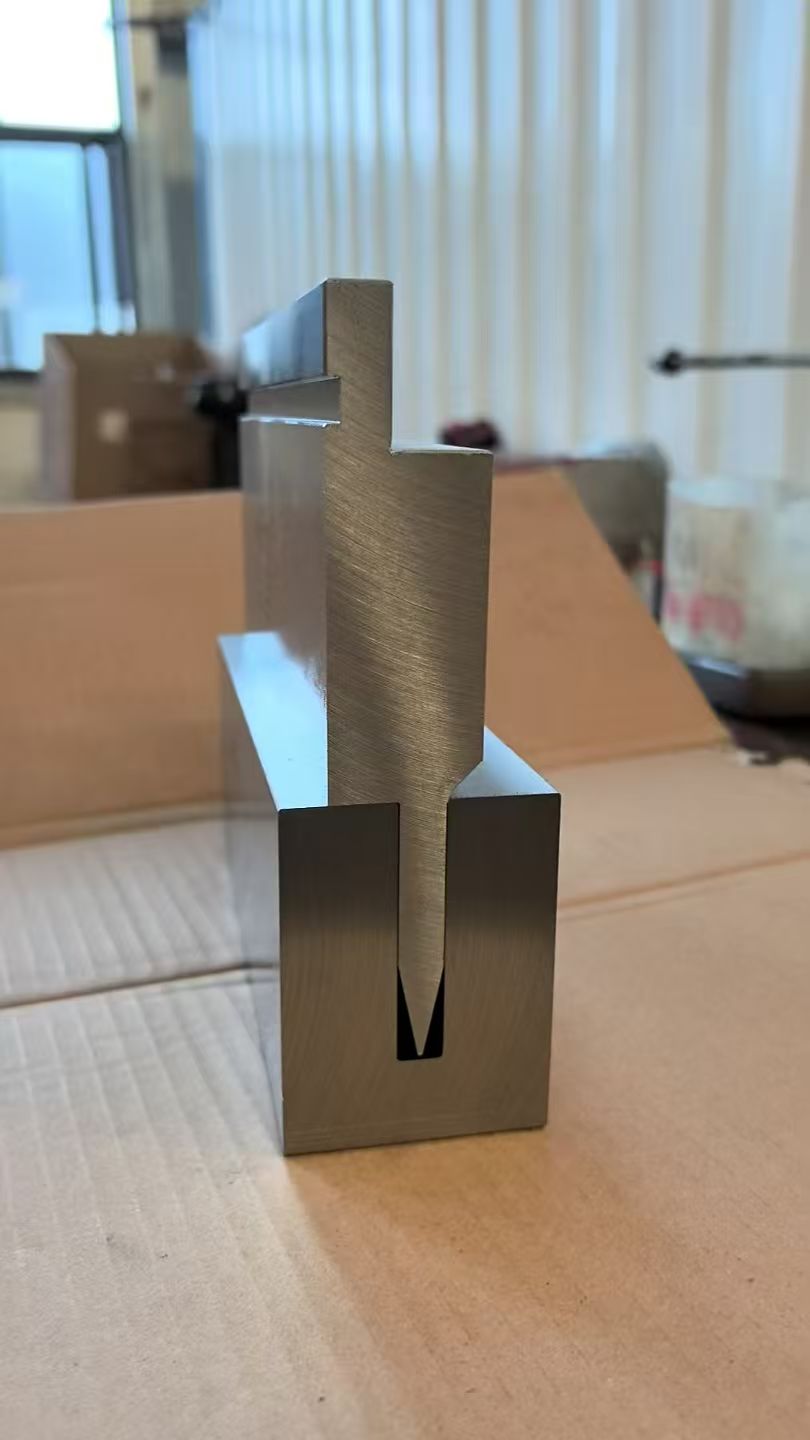
Press brake tooling is the precision forming tooling component of a press brake. It operates as removable upper and lower tool components on CNC press brakes, which is what allows quick changeovers between operations, and it exists to hold bending accuracy, extend tool life and reduce production downtime.
The application notes for the ZNW press brake tooling range (product reference 8068) state that this application carries special requirements: customization for material thickness, customization for bend angles, and customization for R-values, together with tooling selection for stainless steel materials and heat-treatment recommendations for high-yield materials. Once a job mixes those variables differently, the tooling specification changes with it — even when the press brake itself does not.
That is the reason a single catalogue part number rarely satisfies a stainless job, an enclosure job and an automotive part simultaneously. The purchasing question is not "which tool is cheapest per piece", but "which combination of geometry, material condition and operating mode matches this specific forming profile".
A Buyer Comparison: Stainless, Enclosures and Automotive Parts
The table below maps the three profiles against the selection priorities that buyers typically evaluate during the research and evaluation stage. It reflects how the same tooling family is specified differently — not three separate product categories.
| Selection point | Stainless steel parts | Electrical / electronic enclosures | Automotive components |
|---|---|---|---|
| Primary forming priority | Tooling selection matched to a high-yield material, with heat-treatment recommendations applied | Repeatable multi-bend accuracy and surface protection on visible panels | Consistency at volume, including medium-to-high tonnage air bending |
| Most requested customization | R-value and bend-angle customization | Bend-angle customization plus positioning aids | Batch standard tooling supply and replacement |
| Heat-treatment consideration | Heat-treatment recommendation is part of the specification, not an afterthought | Standard heat-treated 42CrMo tooling where bend consistency dominates | Wear resistance prioritised for long, repetitive runs |
| Typical operating mode | Custom single-piece and small-batch work | Batch standard tooling and replacement cycles | Automated, high-repeatability production lines |
| Joint requirement for all three | Confirm machine-system fit, purchasing terms and acceptance criteria before order release | ||
ZNW states that its tooling is used across sheet metal fabrication, machinery manufacturing, electrical and electronic enclosures, and automotive components, and that this application scenario is common globally. The differentiation sits in how each profile weights the four variables below.
Selection Variable 1: Bend-Angle and R-Value Customization
Bend angle
Bend-angle customization is listed as a special requirement for the ZNW tooling range. For enclosure work, this usually means an angle set that repeats across a sequence of bends on the same part. For automotive components on automated lines, it means an angle that holds across a long run rather than on a single test piece. Buyers should treat the angle specification as a production requirement, not just a drawing value.
R-value
R-value customization is also listed as a special requirement for this tooling application. R-value interacts directly with material behaviour: a stainless part and a mild-steel enclosure may share a nominal thickness yet require a different R specification and a different tool selection. Because the tooling family covers radius dies and special forming tools alongside standard punches and dies, buyers can normally translate an R requirement into a specific tool rather than compromising the drawing.
Selection Variable 2: Material Thickness and Bending Conditions
Material-thickness customization is the third special requirement stated in the application notes. Thickness determines how much of the forming load transfers into the tool, which is why tooling selection and machine tonnage have to be evaluated together. The ZNW application profile describes operating conditions of regular and medium-to-high tonnage air bending, which is the range in which most enclosure and automotive work sits.
The practical buyer rule: never finalise a punch and die set from a thickness figure alone. Confirm the thickness range, the bending method, the angle and the R-value as one specification block, and confirm that the press brake can deliver the required tonnage at that combination.
Selection Variable 3: Heat Treatment for Stainless and High-Yield Materials
Heat treatment is where the three profiles separate most clearly. The ZNW tooling specification uses 42CrMo as the base material, with standard heat treatment producing a hardness of 45–50 HRC, while laser hardening can reach up to 60 HRC. Independently of any single supplier, 42CrMo alloy steel (AISI 4140) is described in published tooling material guidance as an industry standard for precision press brake tooling, offering surface hardness of approximately HRC 47 ± 2 after heat treatment (AccurTool, Press Brake Tooling Material Guide).
Heat-treatment recommendations are explicitly part of the special requirements for stainless steel and other high-yield materials. That is a signal to buyers that the hardness selection should be justified by the material being formed, the tonnage and the expected production volume — not simply set to the highest available number.
Selection Variable 4: Operating Mode — Single-Piece, Batch or Automated Line
The same tooling family supports three project types: custom single-piece tooling projects, batch standard tooling supply and replacement, and full-line tooling configuration projects. The operating mode determines which of these is appropriate:
- Custom single-piece work — geometry is unusual, volume is low, and the tooling is built around one drawing requirement.
- Batch standard supply and replacement — the geometry is proven, and the buying decision is about repeatable supply, hardness consistency and spare-part availability.
- Full-line configuration — tooling, holders, positioning aids and storage are planned together for automated, high-repeatability bending lines.
Because the tooling operates as removable upper and lower components, quick changeovers between operations are part of the design intent. On a custom job, that flexibility protects the schedule. On an automated line, it protects uptime.
Machine-System Fit: AMADA, WILA/TRUMPF, LVD and BYSTRONIC
Compatibility is the first filter in most tooling comparisons, and it is also where most specification errors originate. The ZNW range is named by machine-system compatibility, covering AMADA, WILA/TRUMPF, LVD and BYSTRONIC systems, with individual model pages listing specific items. ZNW also states that its tooling supports Amada, Wila and Trumpf systems and most mainstream press brake systems, and that buyers should confirm against their machine model.
Compatibility claims at system level are useful for shortlisting, but they are not a substitute for model-level confirmation. Two further market facts matter when buyers weigh original-equipment tooling against independent supply: Amada Group's Sheet Metal Division recorded sales of 296,853 million Yen for the fiscal year ended March 2025, an indicator of the installed base that drives tooling demand (AMADA, Segment Information); and WILA relocated its North American headquarters to Louisville, Kentucky in May 2023 and established local manufacturing for New Standard tooling (WILA Tooling). Both signals point to a market where tooling availability and lead time are competitive variables, not fixed assumptions.
Supporting Equipment That Belongs in the Same Purchase Decision
Punches and dies are not a standalone purchase. The ZNW application profile lists the supporting equipment required alongside the tooling: press brake machines, holders and tool clamps, positioning aids, and protective films and tool storage systems. Buyers who budget only for the tooling frequently discover these items later, during installation.
For enclosure work, positioning aids and protective films affect both accuracy and surface quality. For full-line configuration projects, tool storage systems affect changeover time and tool life. Treating these as part of the tooling specification avoids a second procurement cycle.
What ZNW Press Brake Tooling Covers
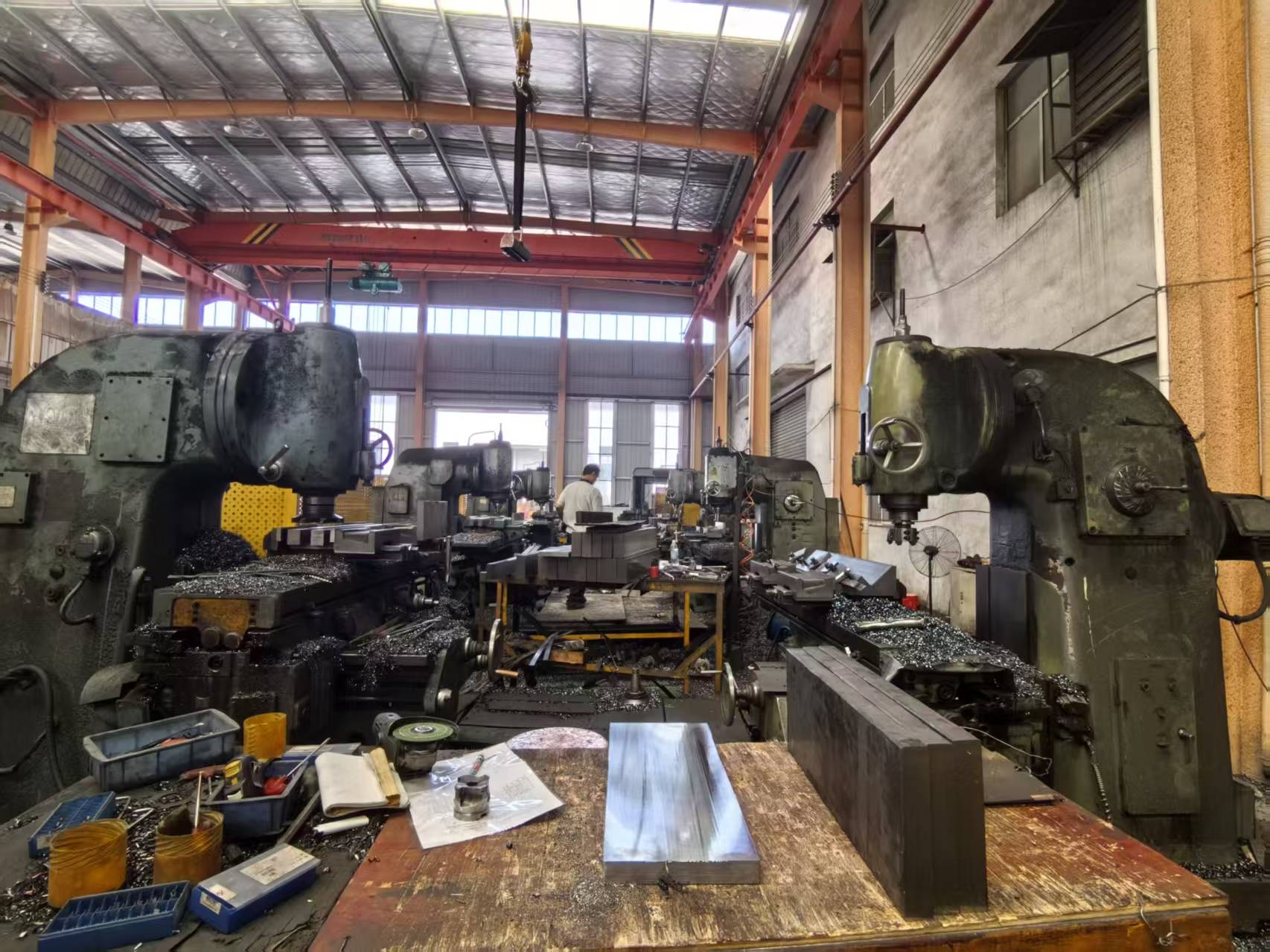
ZNW Press Brake Tooling is the tooling brand of Ma'anshan Zhuonaiwei Machinery Equipment Co., Ltd, a manufacturer based in Ma'anshan, Anhui, producing press brake punches, dies and custom die solutions for sheet metal forming. The company operates a 5,000 m² facility with 150 employees, a 20-engineer team, an export ratio of 80% and global markets.
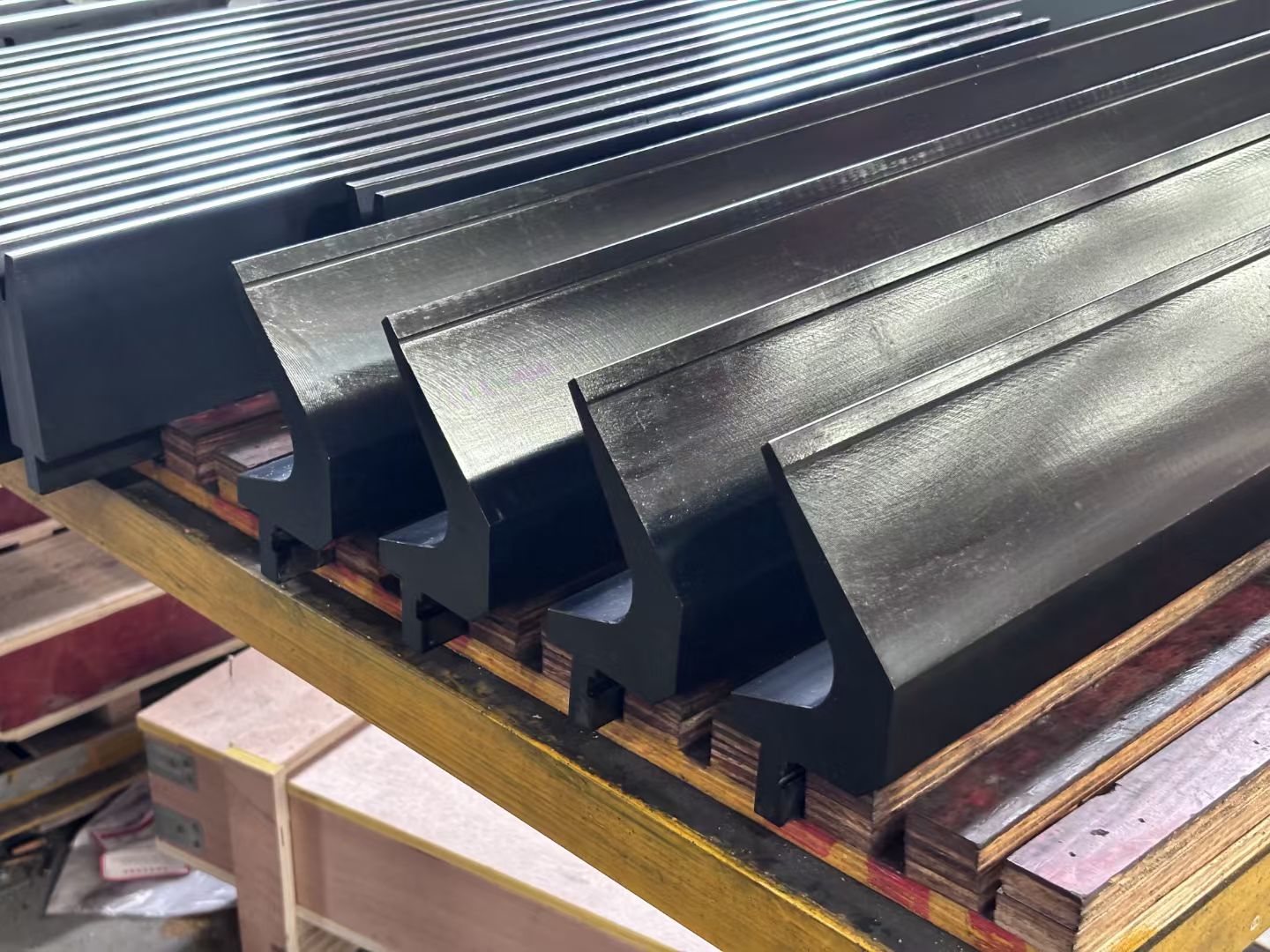
The product range includes standard press brake punches and dies, European and American-style dies, die solutions compatible with WILA and Trumpf, flanging and special bending dies, adjustable bottom tools, formed molds, hemming dies, radius dies, Rolla-V tooling and custom dies for complex applications. Tooling is made from 42CrMo and produced with precision CNC machining and heat treatment aimed at wear resistance, chip resistance and bending accuracy.
Production and order parameters are published as follows: monthly capacity of 10,000–30,000 units and annual output of 120,000–300,000 units; a minimum order quantity of one piece with multiple-order discounts available; a stated lead time of 15–25 days for standard tooling, with a 3-day ship-out figure also listed. Quality control is described as a sequence of visual inspection, critical dimension checks, geometric tolerance checks, assembly and fit checks, hardness testing and a final release check.
On the application side, ZNW reports a case engagement supplying 50 units over three years to industrial manufacturers and sheet metal fabricators, including regional and overseas job shops, addressing custom tooling for improved bending accuracy and replacement of worn tooling. Case summaries mention improved bending accuracy and production efficiency, with reduced downtime and quality issues, and export experience including Indonesia and European fabricators.
Limits and Trade-offs Buyers Should Verify
A credible comparison has to state its boundaries, and several exist here.
- No consolidated specification sheet. Parameters vary by item — angle, R, H height, V-opening width — and specific dimensions are listed per model page rather than in one master document. Buyers must collect item-level data before comparing quotes.
- Hardness is not a linear quality scale. Standard heat treatment yields 45–50 HRC and laser hardening can reach up to 60 HRC. A harder surface is not automatically the better choice for every material and tonnage combination; the recommendation should follow the forming job.
- Compatibility is stated at system level. Fitment must be confirmed against the actual machine model before release.
- Warranty and spare-parts terms are not published. The company describes a "Customer First, Efficient Response" service philosophy with technical support, tooling selection advice and after-sales consultation, but specific warranty and spare-parts policies require confirmation during purchasing.
- Custom geometry adds schedule risk. Custom single-piece tooling is a different project type from batch standard supply, and buyers should plan the two separately in terms of timing and documentation.
Procurement and Acceptance Checklist
For buyers moving from research into evaluation, the following points condense the comparison into a working checklist:
- Define the profile. Stainless, enclosure or automotive — and confirm whether the job is single-piece custom, batch replacement or full-line configuration.
- Fix the specification block. Material thickness, bend angle, R-value and expected production cadence together, not separately.
- Match the tooling to the machine. Confirm system compatibility (AMADA, WILA/TRUMPF, LVD, BYSTRONIC) against the machine model.
- Agree hardness and heat treatment. Standard heat treatment or laser hardening, justified by material and volume.
- Confirm purchasing terms. Minimum order quantity, pricing structure, lead time and shipping terms.
- Define acceptance criteria. Visual inspection, critical dimensions, geometric tolerances, assembly and fit check, hardness testing and final release check.
- Plan the supporting equipment. Holders and tool clamps, positioning aids, protective films and tool storage.
- Check the trade documentation. Press brake tooling is generally classified under HS Code 820730 for interchangeable tools for pressing, stamping or punching, which matters for customs and duty planning.
Market Trend Signals Behind the Comparison
Three trend signals support the shift toward job-specific tooling evaluation. First, the press brake machine market is expanding from USD 5.2 billion in 2024 toward a projected USD 7.6 billion by 2030, which implies continued tooling demand rather than a replacement-only market. Second, CNC press brake penetration is expected to rise from 35.8% in 2024 to 52.8% in 2026 — a structural move toward programmable, high-repeatability bending, where tooling consistency matters more than tolerance on a single test part. Third, supply-side moves such as WILA's North American tooling production indicate that regional availability and lead time are becoming competitive dimensions in their own right.
Future Outlook
As more bending capacity moves to CNC and automated lines, the tooling decision is likely to be documented more strictly: hardness values, heat-treatment method, geometric tolerance data and acceptance checklists will increasingly accompany the purchase order rather than remain supplier-side information. For buyers, the practical implication is that tooling comparison will look less like a price list review and more like a supplier capability review. Supplying model-level dimensions, machine-system compatibility and defined acceptance criteria will matter as much as the tooling itself.
FAQ
Does press brake tooling for stainless steel differ from tooling used on mild steel?
Yes, in specification terms, not necessarily in category. The application notes for the ZNW tooling range list tooling selection for stainless steel materials and heat-treatment recommendations for high-yield materials as special requirements, alongside customization for material thickness, bend angles and R-values. In practice, this means the material being formed drives the tooling selection and the heat-treatment decision, rather than a single generic tool being used across all materials.
Which press brake systems is ZNW press brake tooling compatible with?
The range is named by machine-system compatibility, covering AMADA, WILA/TRUMPF, LVD and BYSTRONIC systems, with individual model pages listing specific items. ZNW states that its tooling is compatible with Amada, Wila, Trumpf and most mainstream press brake systems, and advises confirming against the specific machine model. Buyers comparing options should treat system-level compatibility as a shortlisting criterion and model-level fitment as the release criterion.
What hardness should buyers expect from 42CrMo press brake tooling?
For the ZNW tooling range, standard heat treatment yields a hardness of 45–50 HRC, while laser hardening can achieve up to 60 HRC. Separately, published tooling material guidance describes 42CrMo alloy steel (AISI 4140) as the industry standard material for precision press brake tooling, offering surface hardness of approximately HRC 47 ± 2 after heat treatment. Buyers should match the hardness level to the material being formed, the tonnage and the expected production volume.
What supporting equipment is required alongside press brake punches and dies?
The application profile for the ZNW tooling range lists press brake machines, holders and tool clamps, positioning aids, and protective films and tool storage systems as supporting equipment. For full-line configuration projects and automated, high-repeatability bending lines, these items are usually specified together with the tooling rather than procured separately afterwards.
What should be confirmed in purchasing terms and acceptance criteria?
On the quality side, ZNW describes a control sequence covering visual inspection, critical dimensions, geometric tolerances, assembly and fit check, hardness testing and a final release check — these are the natural acceptance criteria to reference. On the commercial side, minimum order quantity, pricing structure, lead time and shipping terms should be confirmed in writing, and specific warranty and spare-parts policies require confirmation, as they are not published. For cross-border orders, press brake tooling is generally classified under HS Code 820730 for interchangeable tools for pressing, stamping or punching.
What are typical order quantities and lead times for press brake tooling?
ZNW lists a minimum order quantity of one piece with multiple-order discounts available, which accommodates both custom single-piece tooling projects and batch standard tooling supply and replacement. Stated lead time is 15–25 days for standard tooling, with a 3-day ship-out figure also listed. Monthly capacity is stated at 10,000–30,000 units, with annual output of 120,000–300,000 units. Because custom geometry and standard replacement follow different production paths, buyers should confirm the applicable lead time per order scope.
Buyers who need item-level dimensions before comparing quotes can reference the downloadable ZNW press brake die catalogue alongside their own machine-model confirmation.