
Pressure Control Switch Shortlist: EPC-1.1, EPC-2.1, EPC-3 & Float Switches
Pressure Control Switch Shortlist: EPC-1.1, EPC-2.1, EPC-3 & Float Switches
A pressure control switch starts and stops a water pump according to system pressure, and the model specified decides whether a booster set holds steady flow at the tap, whether an irrigation line restarts cleanly after a dry period, and whether a site pump survives a dusty installation. This shortlist compares six options from the Monro Switch range — EPC-1.1, EPC-3, EPC-2, EPC-2.1, the KRS mechanical pressure controls and the FPS float switch family — against the applications buyers most often name during evaluation: domestic water systems, agriculture irrigation, water treatment, construction, and constant-pressure pump monitoring.
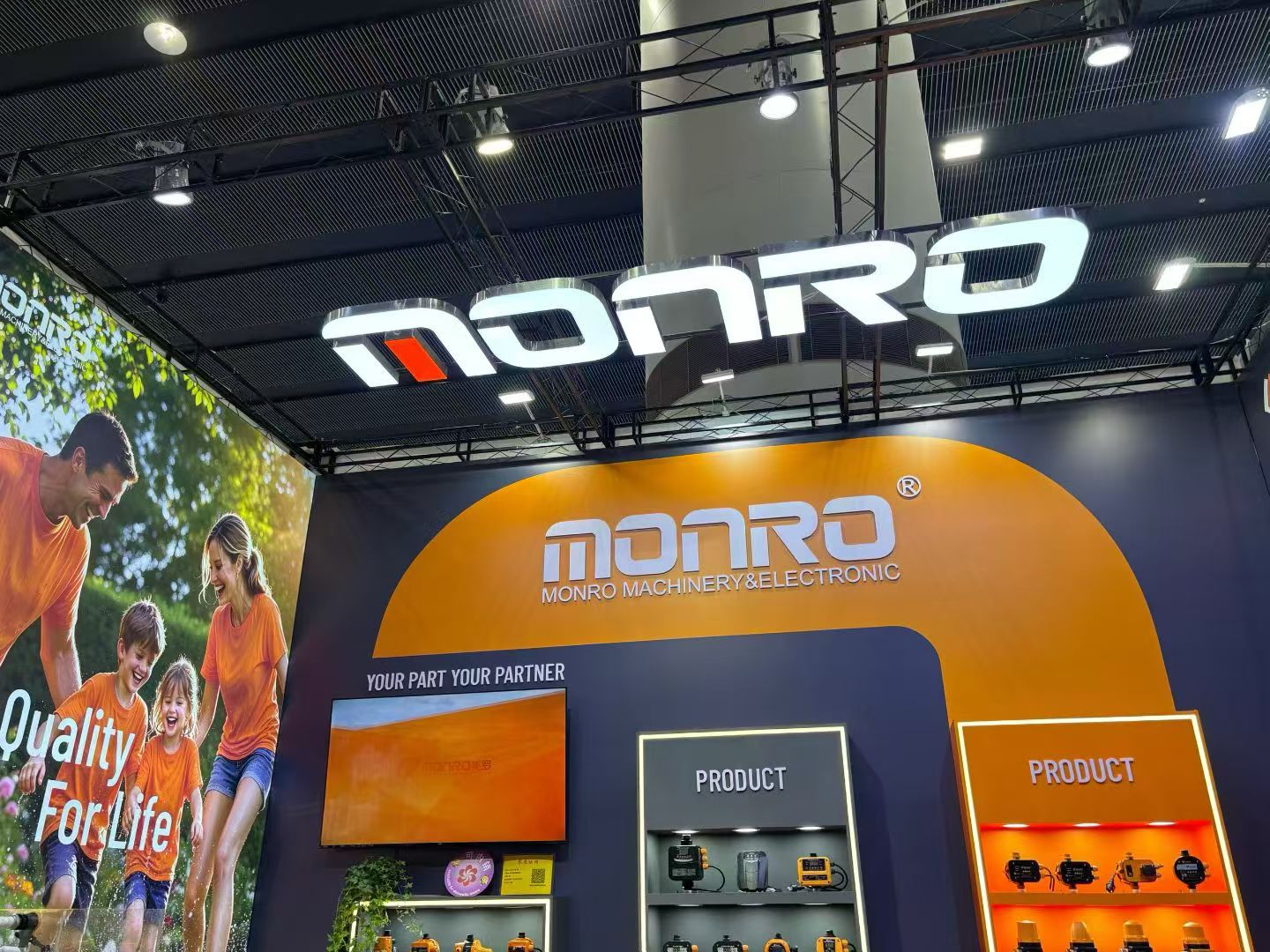
Monro Switch, formally Zhejiang Monro Machinery & Electronic Co., Ltd., is a manufacturer of pump controllers, pressure switches and float switches based in Wenling City, Zhejiang Province, China. The company was established in 2010 and states more than 20 years of manufacturing experience in pressure controls and float switches, with products exported to Asia, Europe, North and South America, the Middle East and Africa. Every specification below is taken from the company's published product data rather than from general market assumptions.
Why buyers keep re-opening the shortlist
Pressure control switches reach the market under several names — pump controller, pressure controller, automatic pump control, electronic pressure switch — and those names do not resolve to a single specification. Two listings that both read "automatic pump control" can differ in enclosure protection, thread type, maximum motor power and maximum working temperature. A shortlist built only on product names therefore tends to fail at the installation stage, not at the quotation stage.
The failure modes in water systems are concrete. A controller with an IP44 enclosure mounted where it receives spray is the wrong enclosure for that position. A controller whose power ceiling is 0.55 kW is undersized for a 1.1 kW pump. A thread that does not match the pump outlet stops a job on the last metre of pipe. On the opportunity side, the correct model removes manual intervention entirely: the pump starts on a pressure drop, stops at the upper set point, and the system holds pressure without an operator standing at a valve.
How this shortlist is ranked
Ranking here reflects breadth of documented fit for a mixed water-system purchase. It uses four criteria that can be read directly from product data, with no commercial weighting applied:
- Enclosure protection rating — IP65 options rank above IP44 and IP20 options for exposed positions.
- Electrical ceiling — maximum power and rated voltage determine which pump the control can actually carry.
- Connection-thread coverage — the number of documented thread options that can match existing pipework without adapters.
- Documented application field — the industries the manufacturer states for the model.
Where two models share a specification, the wider thread range or the higher protection rating ranks first. Buyers who already know their application should read the application-fit section rather than the ranking, because the top-ranked option is not automatically the right one for a wet site or a small pump.
The shortlist at a glance
| Rank | Option | Type | Rated voltage | Max. power | Starting pressure | Connection thread | Protection | Max. working temp. |
|---|---|---|---|---|---|---|---|---|
| 1 | EPC-1.1 | Electronic pump pressure control | 220–240V / 110–120V | 1.1 kW / 1.5 kW / 0.75 kW | 1.2 / 1.5 / 2.2 bar | G1", G1 1/4", G1 1/2", NPT1" | IP65 | 55 °C |
| 2 | EPC-3 | Electronic pump pressure control | 220–240V / 110–120V | 0.55 kW / 1.1 kW / 1.5 kW / 0.75 kW | 1.2 / 1.5 / 2.2 bar | G1" | IP65 | 55 °C |
| 3 | EPC-2 | Electronic pump pressure control | 220–240V / 110–120V | 1.1 kW / 1.5 kW / 0.75 kW | 1.2 / 1.5 / 2.2 bar | R1" | IP65 | 55 °C |
| 4 | EPC-2.1 | Electronic pump pressure control | 220–240V / 110–120V | 0.55 kW / 1.1 kW / 1.5 kW / 0.75 kW | 1.2 / 1.5 / 2.2 bar | R1" | IP44 | 55 °C |
| 5 | KRS series (KRS-2 shown) | Mechanical pressure control | 110–240V | Rated current 10(4) A | Ranges 1.0–1.8 / 1.2–2.2 / 2.2–3.0 bar; min. cut-in 0.5 bar | 1/4"F, 3/8"F, 1/4"M, 3/8"M | IP20 | 55 °C |
| 6 | FPS series (FPS-4 shown) | Float switch — level control | 250V | Relay 16(8) A | Level switching, not pressure | Cable-suspended | IP68 | 55 °C |
Option notes
EPC-1.1 — four thread options in one part number
The EPC-1.1 is an electronic pump pressure control rated 220–240V or 110–120V at 50/60 Hz, with maximum power options of 0.75 kW, 1.1 kW and 1.5 kW. Starting pressure is set at order across three values: 1.2 bar, 1.5 bar or 2.2 bar. It carries an IP65 protection rating and a 55 °C maximum working temperature, and is built from plastic and metal. Its distinct advantage is thread coverage: G1", G1 1/4", G1 1/2" and NPT1" are all documented for a single model, so one part number can serve markets with different pipe conventions without a separate tooling decision. The manufacturer lists domestic water supply as its application field.
EPC-3 — IP65 with the widest documented application scope
The EPC-3 combines IP65 protection with a G1" connection and the full power ladder of 0.55 kW, 0.75 kW, 1.1 kW and 1.5 kW, at 220–240V or 110–120V and 50/60 Hz. Starting pressure options are again 1.2, 1.5 and 2.2 bar, with a 55 °C ceiling. It is documented for agriculture irrigation, water treatment and construction — the three fields where an exposed, damp or dusty installation is normal — which is why it ranks second only to the model with broader thread coverage.
EPC-2 — the same platform with a tapered R1" connection
The EPC-2 shares the EPC-1.1 electrical platform: 220–240V or 110–120V, 50/60 Hz, maximum power of 0.75 kW, 1.1 kW or 1.5 kW, starting pressure of 1.2, 1.5 or 2.2 bar, IP65 and 55 °C. Its connection is R1", and its documented fields are agriculture irrigation, water treatment and construction. Where the pump outlet is already cut for an R1" fitting, this model removes an adapter from the bill of materials; where the pump carries a 0.55 kW motor, the EPC-2 is not the right choice, because that power option is not listed for it.
EPC-2.1 — the small-pump option, with an enclosure limit
The EPC-2.1 offers the broadest power ladder in the group — 0.55 kW, 0.75 kW, 1.1 kW and 1.5 kW — with 220–240V or 110–120V input, 1.2/1.5/2.2 bar starting pressure, R1" connection and a 55 °C maximum working temperature. Its protection rating is IP44, the lowest of the four electronic models here. That single figure decides where it belongs: protected plant rooms and dry enclosures yes, exposed outdoor positions and wash-down areas no.
KRS mechanical pressure controls — the adjustable, enclosure-dependent option
The KRS series controls the pump with a mechanical pressure mechanism rather than electronics. The KRS-2, used as the representative model above, is rated 110–240V at 50/60 Hz with a rated current of 10(4) A and adjustable pressure ranges of 1.0–1.8 bar, 1.2–2.2 bar and 2.2–3.0 bar, a 0.5 bar minimum cut-in and a 3.0 bar maximum cut-out, at IP20 and 55 °C; customized settings are available. The KRS-1 covers 20–40, 30–50 and 40–60 PSI with a 20 PSI minimum cut-in and 175 PSI maximum cut-out. The KRS-7 uses a G1" connection, IP44 protection and a pressure setting that can be customized to customer requirements. For North American buyers, the KRS-4 is the model named in UL Listed certification E316396 for pressure operated switches.
FPS float switches — a different control function
Float switches are not pressure controls and should not be shortlisted as substitutes for one. The FPS-1 to FPS-4 models are rated 250V at 50/60 Hz with a 16(8) A relay current, IP68 protection and a 55 °C maximum working temperature. The FPS-4 supports automatic water filling, automatic drainage with lack-water protection, and a fill-and-drain auto-switch mode, with options for single or double function, cable lengths of 2 m, 3 m or 5 m, PVC or rubber cable, and a recommended cable size of 3×1.0 mm². The FPS-5 adds pressure capability: 7 bar service pressure, 0.2–6 bar operating pressure, an over-pressure limit of 15 bar, a 0–50 °C operating range, G1", G3/4" and G1/2" threads, and a PC-ABS-POM-NYLON body.
Application fit
Domestic water systems
For a single-phase domestic booster or deep-well pump, the EPC-1.1 is the natural first choice: IP65, a 1.5 kW ceiling that covers typical domestic motors, and four thread options that allow one stock item to serve several markets. The EPC-3 is the equivalent choice where G1" is the only thread needed. The EPC-2.1 is acceptable only where the controller sits in a dry, protected plant room.
Agriculture irrigation
Irrigation lines restart against a head of water after every shut-off, so the starting pressure must be matched to the pump, not chosen by habit. The manufacturer's own guidance sets the rule: with a 1.2 bar starting pressure, maximum water-use height is about 12 m, and the pump lift should be at least (1.2 + 0.8) × 10 = 20 m. Both the EPC-3 and EPC-2.1 are documented for agriculture irrigation; the EPC-3 adds IP65 for exposed field cabinets, while the EPC-2.1 covers 0.55 kW pumps that the EPC-2 does not list.
Water treatment
Water treatment installations usually combine hosed-down floors with constant cycling, which makes IP65 the practical baseline — the EPC-3 and EPC-2 qualify, and the IP44 EPC-2.1 does not. Electronic controllers in this group are specified for clean water medium, so a treatment stage handling aggressive or heavily solids-loaded media requires a separate engineering review before a pressure control is specified.
Construction and site water
Site installations combine dust, vibration and temporary wiring. The EPC-3's IP65 enclosure and 55 °C ceiling suit that environment. Where only simple pump cycling is required and the control can be housed in a protected enclosure, a KRS mechanical control does the same switching job with an adjustable range and no electronics — but at IP20 or IP44, it depends entirely on that enclosure.
Constant-pressure pump monitoring
For systems expected to hold steady delivery rather than merely switch, two models in the wider range are documented for the task. The EPC-5.1 maintains constant pressure at constant flow and offers adjustable starting pressure from 1.2 to 2.5 bar. The EPC-10 covers a wider setting window — 0.5–9.3 bar starting, 0.7–9.5 bar stopping, 10 bar maximum working pressure — at 110–240V with 1.1 kW or 2.2 kW options, and is documented with a built-in check valve, run-dry protection and a pressure gauge.
Selection points that decide the final pick
Adjustable versus fixed starting pressure
The EPC-1.1, EPC-2, EPC-2.1 and EPC-3 are listed with three starting-pressure settings — 1.2, 1.5 and 2.2 bar — selected at order. That ladder covers most domestic and light irrigation pumps, but a system needing an intermediate value, say 1.8 bar, falls between the steps. Adjustable alternatives exist within the same range: the EPC-5.1 spans 1.2–2.5 bar, the EPC-10 spans 0.5–9.3 bar, and the KRS-2 and KRS-7 accept customized pressure settings.
Pressure gauge readout
Reading system pressure at the controller shortens commissioning and fault-finding. The EPC-10 is documented with an integrated pressure gauge; where gauge presence matters on another model, it should be confirmed against that model's datasheet rather than assumed from the series name, because instrument fittings are specified per model, not per family.
Connection thread
Thread choice is a bill-of-materials decision, not a preference. Documented options across this shortlist are G1", G1 1/4", G1 1/2" and NPT1" on the EPC-1.1; G1" on the EPC-3 and KRS-7; R1" on the EPC-2 and EPC-2.1; 1/4"F, 3/8"F, 1/4"M and 3/8"M on the KRS-2; and G1", G3/4" and G1/2" on the FPS-5. G and R designations are not interchangeable in practice, so the specification should always be written against the pump outlet marking. Installation itself is straightforward but not forgiving: the controller is fitted in the direction of the arrow on its housing, and electrical joints should be sealed with waterproof insulating tape before power is connected with the outlet valve open.
Where this shortlist stops: limits and boundaries
- Temperature ceiling. The EPC-1.1, EPC-2, EPC-2.1, EPC-3, KRS series and FPS-1 to FPS-4 are all rated to a 55 °C maximum working temperature. Hot-water circulation or high-ambient plant rooms fall outside that boundary.
- Enclosure ratings are not uniform. Treating IP44 and IP65 as equivalent is the most common specification error in this category. The EPC-2.1 and KRS-7 are IP44; the KRS-2 is IP20.
- Float switches are not pressure controls. An FPS unit controls level and cannot hold line pressure, so it complements a pressure control switch rather than replacing one.
- Media limitation. The electronic controllers here are specified for clean water medium.
- Power ceiling. The four electronic models top out at 1.5 kW, and the EPC-2 and EPC-1.1 do not list a 0.55 kW option; larger motors require a different series.
- Feature scope. Built-in check valve, run-dry protection and pressure gauge are documented for the EPC-10. Buyers who need those functions in another model must confirm them per datasheet.
Market context behind the shortlist
The category is large and still growing. Fortune Business Insights valued the global pressure switch market at USD 3.2 billion in 2025 and projects USD 3.38 billion in 2026 rising to USD 5.13 billion by 2034; the figure reflects a broad industrial definition, which is why other research houses publish materially different totals. Market Research Future estimates that electromechanical pressure switches held approximately 62% of the global market share in 2024, with solid-state electronic switches at about 38%.
Those two facts explain the shape of this shortlist. Electronic pump controls dominate new domestic and irrigation specifications, but a large installed base of mechanical controls keeps KRS-type units in active demand for replacement work. On the regulatory side, IEC 60730-2-6:2025 is the current international standard for automatic electrical pressure sensing controls, and water pump pressure switches are commonly traded under HS Code 853650 — a detail that matters when a buyer's customs broker classifies a mixed pump-accessory shipment.
Manufacturing and verification behind the range
Monro Switch operates a 30,000 m² facility with around 200 employees and a 10-engineer R&D team, producing an annual output of 2.88 million EPC series units, 3.24 million KRS series units and 0.6 million FPS series units, with 100% product testing. The quality system is certified to ISO 9001:2015 under certificate 20126Q00115R300, issued 30 June 2026 and valid to 29 June 2029.
Product-level evidence is specific rather than general. CE-EMC Certificate of Conformity AE505724390001, issued by TÜV Rheinland LGA Products GmbH on 17 January 2023, covers the EPC-1, EPC-2, EPC-2.1, EPC-3, EPC-3P, EPC-4, EPC-5, EPC-15 and CEWP-111B control units. TÜV Rheinland safety certification R 50175890 covers the EPC-10, EPC-12, EPC-14 and EPC-16, and CE-EMC certificate AE 505987560001 covers the EPC-14. For North America, UL Listed certification E316396 issued by UL LLC applies to pressure operated switches, model KRS-4.
For procurement planning, the documented terms are an MOQ of 204 pieces and a 45-day lead time, with OEM customization available on cable length, cable material, brand, colour box and colour, backed by a one-year warranty and remote technical support.
Future outlook
Three developments are likely to shape the next round of specifications. First, the electronic share of the category continues to expand from roughly 38%, which pushes buyers towards controllers with documented protection ratings rather than generic descriptions. Second, IEC 60730-2-6:2025 gives procurement teams a single reference point for pressure sensing controls, making compliance documentation easier to demand at quotation stage. Third, run-dry protection and integrated gauges — already documented on models such as the EPC-10 — are increasingly treated as baseline features rather than add-ons in domestic and irrigation systems.
Frequently asked questions
Which pressure control switch suits a domestic water system?
The EPC-1.1 is documented for domestic water supply: 220–240V or 110–120V, 0.75/1.1/1.5 kW maximum power, starting pressure of 1.2, 1.5 or 2.2 bar, IP65, 55 °C maximum working temperature, and four thread options (G1", G1 1/4", G1 1/2", NPT1"). The EPC-3 provides the same electrical platform and IP65 rating with a G1" connection.
What is the practical difference between the EPC-1.1, EPC-2.1 and EPC-3?
Protection rating, thread and power ladder differ. The EPC-1.1 is IP65 with four thread options and no 0.55 kW option; the EPC-3 is IP65 with a G1" thread and includes a 0.55 kW option; the EPC-2.1 is IP44 with an R1" thread and also includes a 0.55 kW option. All three use 1.2/1.5/2.2 bar starting pressure and a 55 °C ceiling.
Do I also need a float switch?
Only if the installation must control level rather than pressure. The FPS-1 to FPS-4 are rated 250V, 50/60 Hz, 16(8) A, IP68, 55 °C; the FPS-4 supports automatic filling, automatic drainage with lack-water protection, and a fill-and-drain auto-switch mode. A float switch does not hold line pressure and does not replace a pressure control switch.
How is starting pressure matched to a pump?
Starting pressure must sit below the pump's capability. Per the manufacturer's guidance, a 1.2 bar starting pressure corresponds to roughly 12 m of maximum water-use height, and the pump lift should be at least 20 m, calculated as (1.2 + 0.8) × 10. The pump head must exceed the controller's starting pressure by at least 0.8 bar.
Is the EPC-2.1 suitable for an outdoor installation?
Its protection rating is IP44, which is lower than the IP65 rating of the EPC-1.1, EPC-2 and EPC-3. For positions exposed to spray, rain or wash-down, an IP65 model is the appropriate specification; IP44 suits protected plant rooms and dry enclosures.
Which certifications apply to these models?
CE-EMC certificate AE505724390001 from TÜV Rheinland covers the EPC-1, EPC-2, EPC-2.1, EPC-3, EPC-3P, EPC-4, EPC-5, EPC-15 and CEWP-111B; TÜV Rheinland safety certification R 50175890 covers the EPC-10, EPC-12, EPC-14 and EPC-16; UL Listed certification E316396 covers pressure operated switches, model KRS-4. Manufacturing is certified to ISO 9001:2015 under certificate 20126Q00115R300.
For full model data, dimensional details and option lists across the EPC, KRS and FPS series, the Monro Switch 2025 catalogue is available for download.
Tem questões ou precisa de mais detalhes?
Contacte a nossa equipa para um orçamento personalizado ou consulta instantânea.
Solicitar orçamento
Preencha o formulário abaixo e a nossa equipa entrará em contacto com uma proposta personalizada.
Chat direto do WhatsApp
Prefere conversar em tempo real? Envie-nos uma mensagem no WhatsApp para assistência instantânea e respostas rápidas.
- Obter orçamento personalizado
- Partilhar fotos ou documentos
- Discuta as suas necessidades diretamente
Geralmente responde em 5–30 minutos durante o horário de expediente.