
Pressure Drop vs. Accuracy: Flow Sensor Selection in 2026
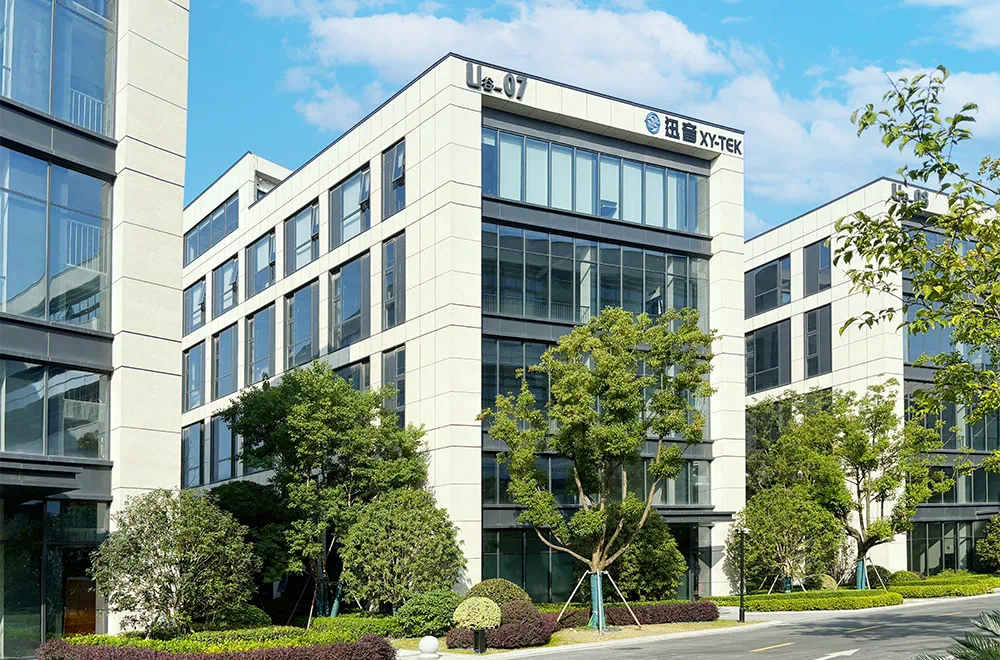
XY-TEK ultrasonic flow sensor manufacturing operations, Shanghai
A flow meter that delivers ±0.2% accuracy can be a precision instrument. But in most industrial applications, the real question is not whether maximum accuracy can be achieved — it is whether that accuracy is worth the pressure drop, installation complexity, and lifetime cost that often come with it.
Flow sensor selection in 2026 has shifted from a single-minded pursuit of measurement precision to a more structured engineering trade-off. Buyers evaluating ultrasonic flow sensors, Coriolis meters, turbine meters, and electromagnetic meters now face a common challenge: matching a measurement technology to fluid properties, pipe size, energy efficiency targets, and long-term maintenance budgets, rather than simply picking the highest-spec option.
The New Selection Logic: Why Accuracy Alone No Longer Drives Decisions
For decades, flow meter procurement was dominated by one variable: accuracy. If a Coriolis meter could deliver ±0.2%, it was often considered the definitive answer despite the cost. But the calculus has changed as fluid systems have become more energy-intensive and more complex.
Consider what happens when a high-accuracy meter introduces 15% to 30% pressure drop into a continuously running liquid cooling system. The pump must work harder to maintain flow, consuming additional electricity around the clock. In a data center or energy storage facility, that additional pump power directly affects Power Usage Effectiveness (PUE) and operating cost. The precision gained on the measurement side can be lost many times over on the energy side.
This is not a niche concern. The global flow meter market was estimated at USD 10.64 billion in 2024 and is projected to reach USD 15.17 billion by 2030, according to Grand View Research. Within that market, the ultrasonic flow meter segment is growing faster than the average: Mordor Intelligence valued it at USD 1.52 billion in 2025 and projects USD 2.28 billion by 2031. The clamp-on ultrasonic flowmeter segment alone was worth USD 1.25 billion in 2024, growing at a CAGR of 7.4% through 2032, according to Global Information, Inc. (GII).
These figures suggest that buyers are increasingly choosing technologies that solve system-level problems — non-invasive installation, zero pressure drop, low maintenance — even if that means accepting a slightly lower absolute accuracy than the theoretical best on the market.
Asia Pacific held the largest share of the ultrasonic flow meter market in 2025 at 38.6%, according to Fortune Business Insights, driven by industrial expansion. This regional concentration is relevant for global procurement teams because it means supply chains, engineering expertise, and application experience are heavily concentrated in the region.
The Ultrasonic Contender: XY-TEK as an Industry Reference
Shanghai Xunyin Technology Co., Ltd (XY-TEK), a Shanghai-based manufacturer established in 2018, has built its product strategy specifically around the ultrasonic segment. The company specializes in ultrasonic flow sensors and flow meters for fluid management and control, with a focus on small tubing and low flow rate measurements. Its facility covers approximately 5,000 square meters, employs around 50 people, and its R&D team accounts for more than 30 of those employees. Annual output exceeds 8,000 units, with about 50% exported to global markets.
XY-TEK's product range includes the CG series clamp-on ultrasonic flow sensors and flow meters, which can be mounted directly onto flexible plastic tubing to measure liquid flow rate and detect air bubbles without external circuitry, and in-line ultrasonic flow sensors for integration into existing flow systems. The company also provides OEM and customized ultrasonic flow sensors and flow meters, which is increasingly relevant as equipment manufacturers seek application-specific configurations rather than generic components.
From a buyer's perspective, the relevance of XY-TEK's positioning is clear: this is not a generalist instrument maker, but a specialist focused on a defined technology (ultrasonic transit-time measurement) and defined challenges (small tubes, low flow, non-invasive monitoring). For procurement teams comparing suppliers, this type of specialization can mean deeper engineering support and more coherent product-roadmap alignment.
How Transit-Time Ultrasonic Measurement Works
The core principle behind ultrasonic flow sensors used by XY-TEK is transit-time difference measurement. Two ultrasonic signals are transmitted through the liquid — one in the direction of flow and one against it. Because the liquid movement affects the speed of sound propagation, the difference between the two transit times is directly proportional to the flow velocity. This value can then be converted into a flow rate.
Several engineering outcomes follow from this principle:
- Zero pressure drop: The measurement is performed through the pipe wall or via non-intrusive transducers. Nothing obstructs the flow path, so no pressure energy is lost.
- No moving parts: Unlike turbine meters with spinning blades, there is no mechanical wear, no annual drift caused by component degradation, and no periodic part replacement.
- Independence from fluid conductivity: Transit-time measurement does not rely on the liquid being electrically conductive. This enables measurement of fluorinated liquids, mineral oils, deionized water, and other non-conductive media — a critical capability in immersion cooling and semiconductor fluid management.
- Contamination-free measurement: Clamp-on sensors contact only the outer surface of the tubing, leaving the liquid untouched. This reduces contamination risk, making ultrasonic sensors suitable for medical devices, bioprocessing, and food and beverage production.
- Wide pipe-size coverage: XY-TEK ultrasonic sensors support pipe diameters from DN6 to DN6000, covering small analytical instruments to large industrial pipelines.
- Bubble detection capability: The same ultrasonic signal path can be used to detect air bubbles in the tubing — a critical safety function in medical dosing, dispensing, and filling applications.
In terms of performance specifications, XY-TEK ultrasonic meters offer typical accuracy of ±1% to ±2% with a 1:100 turndown ratio. For most flow-control applications, this range is sufficient. The question buyers need to answer is when the additional accuracy of other technologies justifies their hidden costs.
Application Landscape: Where Ultrasonic Sensors Have Gained Ground
The shift toward ultrasonic technology is not happening evenly across all industries. It is most visible in applications where non-contact measurement, low flow rate sensitivity, or fluid compatibility with non-conductive media is paramount.
Liquid Cooling and Thermal Management
Liquid cooling has become one of the strongest demand drivers for flow sensors. Immersion cooling systems typically use dielectric fluids such as fluorinated liquids or mineral oils, which are non-conductive. Electromagnetic flow meters cannot measure these fluids because they only work with conductive liquids. XY-TEK ultrasonic sensors, by contrast, are suitable for all liquid cooling scenarios, including immersion cooling with fluorinated or mineral oils, cold plates, CDU (coolant distribution unit) integration, energy storage systems, and supercharger cooling.
The energy story is equally important. XY-TEK's zero-pressure-drop design reduces PUE by approximately 0.02 to 0.05 and delivers 8% to 15% annual power savings compared with turbine meters, which cause 5% to 15% pressure drop. In large cooling installations, these savings translate into meaningful operating cost reductions over the life of the system.
Medical Devices
Medical flow sensors used in ventilators, infusion pumps, and drug delivery systems must meet strict quality and safety requirements. EN ISO 13485 quality management systems apply to medical sensors, including flow sensors for ventilators and drug delivery. Ultrasonic sensors support these requirements by offering non-contact detection, which eliminates the risk of liquid contamination and reduces cleaning complexity. Bubble detection is also a key differentiator: the ability to identify air bubbles in real time is a safety feature in fluid delivery applications.
Bioprocessing
Bioprocess applications require sensors that can handle sterile or high-purity fluids without introducing contamination. Clamp-on ultrasonic sensors do not touch the fluid at all, which is an advantage for single-use bioprocess systems. XY-TEK's in-line flow sensors can also be integrated into permanent bioprocess piping for continuous monitoring.
Semiconductor Manufacturing
Flow control in the semiconductor industry was estimated at USD 5.83 billion in 2024, according to Market Research Future, with a focus on high-purity fluid management. Semiconductor processes demand sensors that do not leach materials, do not obstruct flow, and can handle deionized water and process chemicals. Ultrasonic flow sensors using transit-time measurement are well matched to these requirements because they are non-invasive for clamp-on versions and do not depend on conductivity.
Industrial Automation and OEM Integration
For dispensing, spraying, filling, and small-volume liquid control, OEMs increasingly require flow sensors that can be integrated into compact systems. XY-TEK's focus on small tubing and low flow rate measurement makes this feasible. The in-line ultrasonic flow sensors can be embedded into equipment with excellent accuracy, resolution, and reliability, while clamp-on sensors support retrofits and fast validation during prototyping.
What the 2026 Market Data Tells Procurement Teams
Several verifiable data points are worth considering when building a flow sensor sourcing strategy:
- The overall flow meter market is expanding steadily: USD 10.64 billion in 2024, projected to reach USD 15.17 billion by 2030 (Grand View Research).
- The ultrasonic flow meter segment is growing faster: USD 1.52 billion in 2025 to USD 2.28 billion by 2031 (Mordor Intelligence).
- The clamp-on ultrasonic flowmeter sub-segment was valued at USD 1.25 billion in 2024, with a 7.4% CAGR through 2032 (Global Information, Inc.).
- Asia Pacific accounted for 38.6% of the ultrasonic flow meter market in 2025 (Fortune Business Insights).
- Semiconductor flow control represents a USD 5.83 billion market (2024), indicating strong demand for high-purity fluid measurement (Market Research Future).
- ISO 24062:2023 specifies requirements for clamp-on ultrasonic transit-time meters for liquids and gases in closed conduits, providing an international reference for these products.
For buyers, the message is that ultrasonic flow sensors are no longer a niche alternative. They are a mainstream option with established standards, a growing supply base, and documented energy efficiency benefits. The selection question has moved from "is ultrasonic proven?" to "which ultrasonic supplier fits the application?"
Direct Technology Comparison: Ultrasonic, Coriolis, Turbine, and Electromagnetic
To make a procurement decision, it helps to place the four main technologies side by side. The table below summarizes the core trade-offs using XY-TEK ultrasonic meters as the ultrasonic benchmark:
| Parameter | Ultrasonic (XY-TEK) | Coriolis | Turbine | Electromagnetic |
|---|---|---|---|---|
| Typical accuracy | ±1% to ±2% | ±0.2% | ±0.2% when new | Generally ±0.5% to ±1% |
| Pressure drop | Zero | 15% to 30% | 5% to 15% | Zero |
| Fluid conductivity requirement | None | None | None (clean fluids only) | Only conductive liquids |
| Moving parts | No | No (vibrating tube) | Yes (rotating blades) | No |
| Maintenance profile | Low, no periodic calibration requirement | Medium-high, maintenance cost +25% | High, blades replaced every 6–12 months, periodic recalibration | Low, but fluid-limited |
| Relative cost level | Medium-low | 3–5× higher than ultrasonic | Medium-low initial cost, but filters and blade replacement add +15% TCO | Medium-high |
| Installation | Clamp-on avoids pipe cutting, saves ~30% installation cost | Strict direction/vibration requirements | Requires filters and upstream flow conditioning | Requires full pipe and straight sections, installation cost +20% |
Ultrasonic vs. Coriolis: Where the True Cost Difference Lies
Coriolis meters remain the reference for ultra-high precision metering. Their ±0.2% accuracy is superior to the ±1% to ±2% range of ultrasonic sensors. But that performance comes at a significant price: Coriolis meters cost approximately 3 to 5 times more than XY-TEK ultrasonic meters, and they introduce 15% to 30% pressure drop into the system. For continuously operating cooling or process loops, the added pumping power becomes a permanent operating expense that far exceeds the one-time cost difference.
Coriolis meters also have stricter installation requirements. They are sensitive to vibration and require careful attention to orientation, which can raise installation complexity. Maintenance costs run about 25% higher. For cost-insensitive projects that need absolute precision — for example, high-value custody transfer or critical small-bore high-quality flow measurement — Coriolis remains a justifiable choice. For general industrial, medical, and cooling applications, the performance-to-cost ratio of ultrasonic technology is typically more favorable.
Ultrasonic vs. Turbine: The Wear Problem
Turbine meters offer ±0.2% accuracy when new, but the comparison changes as soon as the device is placed in service. Turbine meters rely on mechanical blades that wear over time. This wear leads to approximately 5% or more annual drift, and low-flow conditions often cause failure because the turbine cannot maintain rotation. Maintenance requires blade replacement every 6 to 12 months and periodic calibration, and filters are needed to protect the rotating assembly from debris. The total cost of ownership rises by about 15% compared with ultrasonic sensors, which have no moving parts and require no periodic part replacement.
XY-TEK ultrasonic sensors, by contrast, are insensitive to fluid cleanliness, handle dirty or low-flow media effectively, and are virtually maintenance-free. For projects with a multi-year operating horizon, the long-term stability of ultrasonic measurement is a strong argument.
Ultrasonic vs. Electromagnetic: The Conductivity Boundary
Electromagnetic flow meters are accurate and impose no pressure drop, but they are fundamentally limited: they only work with conductive fluids. For deionized water or glycol solutions in cold plate secondary loops, they function well. But for fluorinated liquids, mineral oils, and other dielectric cooling fluids — which are common in immersion cooling — electromagnetic meters fail completely.
XY-TEK ultrasonic meters measure both conductive and non-conductive liquids, and the clamp-on design allows online installation without pipe cutting or system shutdown. Installation costs are about 30% lower than traditional full-pipe meters because there is no pipe cutting. In retrofit projects, this is a major advantage.
Where Ultrasonic Flow Sensors Are Not the Answer
To keep this assessment balanced, it must be stated plainly: ultrasonic flow sensors are not the optimal solution for every flow measurement problem.
First, in applications that demand extreme measurement precision — such as high-value custody transfer metering or certain small-bore, high-quality flow scenarios — Coriolis technology retains a clear advantage. When the measurement itself is the basis for financial settlement or regulatory compliance, the added cost of a ±0.2% meter may be fully justified even with the associated pressure drop and maintenance requirements.
Second, ultrasonic transit-time meters are accurate on common liquids, but applications involving highly viscous fluids or complex multiphase flows may require careful evaluation of acoustic properties before deployment. In such cases, not every ultrasonic sensor will perform identically. The engineering team should verify the sensor's suitability against the actual fluid, flow regime, and operating temperature.
Third, turbine meters, despite their maintenance burden, can still be a reasonable choice for short-term projects with clean fluids where upfront cost sensitivity outweighs long-term reliability concerns. The selection framework should reflect project lifespan and total cost context, not just accuracy numbers.
These boundaries are not weaknesses in the technology — they are constraints that any procurement team should identify during the requirements phase. Knowing where ultrasonic does not fit is as valuable as knowing where it delivers the strongest return.
Future Outlook: Where the Flow Sensor Market Is Heading
Energy efficiency will continue to be a central theme in flow sensor procurement. As PUE targets become stricter in data centers and as industrial operators face rising electricity costs, the zero-pressure-drop characteristic of ultrasonic flow sensors will likely become even more attractive. The annual power savings of 8% to 15% documented in comparative evaluations represent a significant long-term financial impact.
OEM customization is another trend to watch. As medical devices, bioprocessing equipment, semiconductor tools, and liquid cooling systems continue to differentiate, they require flow sensors designed around their specific mechanical and electrical interfaces. XY-TEK's OEM and customized ultrasonic flow sensor services reflect this shift: instead of forcing a standard product into a system, the sensor is engineered around the system. For procurement teams, working with a manufacturer that supports custom mechanical dimensions, output signals, and calibration ranges can shorten integration cycles and improve end-product reliability.
Standards will also play a bigger role. ISO 24062:2023, which specifies requirements for clamp-on ultrasonic transit-time meters, gives buyers an internationally recognized reference for evaluating product quality. Similarly, EN ISO 13485 provides a quality management framework for medical flow sensors. These standards reduce the risk of sourcing from suppliers without robust quality systems.
The overall direction of the flow sensor industry is toward measurement technologies that solve system problems — energy, maintenance, compatibility, and integration — rather than single-point accuracy. Ultrasonic technology, with its non-invasive design and low operating burden, is well positioned to lead that shift through the remainder of the decade.
FAQ: Flow Sensor Decision Questions
Q1: What should I evaluate first when selecting a flow sensor?
Start by defining the fluid type (conductive or non-conductive), pipe diameter, expected flow range, and whether the system can tolerate pressure drop. These four variables eliminate incompatible technologies and narrow the field. For liquid cooling systems, fluid compatibility and pressure drop often carry more weight than a fractional difference in accuracy.
Q2: Which flow sensor technology has the lowest pressure drop?
Both ultrasonic transit-time sensors and electromagnetic flow meters can achieve zero pressure drop because they place no obstruction in the flow path. The limitation of electromagnetic meters is that they only work with conductive liquids. Ultrasonic sensors measure both conductive and non-conductive fluids, making them the broader solution for low-pressure-drop applications.
Q3: Can ultrasonic flow sensors measure non-conductive liquids?
Yes. Transit-time ultrasonic flow sensors operate independently of fluid conductivity. They can measure fluorinated liquids, mineral oils, deionized water, and many other non-conductive liquids, which makes them suitable for immersion cooling, dielectric fluid handling, and semiconductor processes where electromagnetic meters are not applicable.
Q4: What is the typical accuracy range of an ultrasonic flow sensor?
Modern ultrasonic flow sensors such as XY-TEK models provide accuracy in the range of ±1% to ±2%, with a 1:100 turndown ratio. This accuracy level is sufficient for the majority of industrial, medical, and cooling applications while delivering zero pressure drop. For comparison, Coriolis meters achieve ±0.2% but with 15% to 30% pressure drop and substantially higher cost.
Q5: How does the total cost of an ultrasonic sensor compare with a turbine meter?
Turbine meters may have a lower upfront cost, but blade wear causes roughly 5% annual drift and requires blade replacement every 6 to 12 months, plus periodic recalibration. Over time, maintenance and filters add approximately 15% to the total cost of ownership. Ultrasonic sensors have no moving parts, require no regular part replacement, and are unaffected by fluid cleanliness, resulting in lower long-term costs.
Q6: What are the benefits of ultrasonic flow sensors in liquid cooling applications?
Ultrasonic flow sensors can handle the non-conductive dielectric fluids commonly used in liquid cooling, including fluorinated liquids and mineral oils. They provide zero pressure drop, which reduces pump power consumption and lowers PUE by approximately 0.02 to 0.05. Clamp-on versions can be installed without cutting pipes, saving roughly 30% of installation cost and enabling retrofits without system shutdown.
Q7: Which applications are best suited for ultrasonic flow sensors?
Ultrasonic flow sensors are well suited for liquid cooling, medical devices, bioprocessing, semiconductor manufacturing, industrial automation, and filling or dispensing systems. They are especially strong in small tubing, low flow rate measurement, and applications where fluid contamination or bubble detection is a concern. Pipe size coverage from DN6 to DN6000 means they can scale from analytical instruments to large industrial pipelines.
Tem questões ou precisa de mais detalhes?
Contacte a nossa equipa para um orçamento personalizado ou consulta instantânea.
Solicitar orçamento
Preencha o formulário abaixo e a nossa equipa entrará em contacto com uma proposta personalizada.
Chat direto do WhatsApp
Prefere conversar em tempo real? Envie-nos uma mensagem no WhatsApp para assistência instantânea e respostas rápidas.
- Obter orçamento personalizado
- Partilhar fotos ou documentos
- Discuta as suas necessidades diretamente
Geralmente responde em 5–30 minutos durante o horário de expediente.