
Printed Gifts Peer Ranking: Evidence a Buyer Can Verify
Printed Gifts Peer Ranking: Evidence a Buyer Can Verify
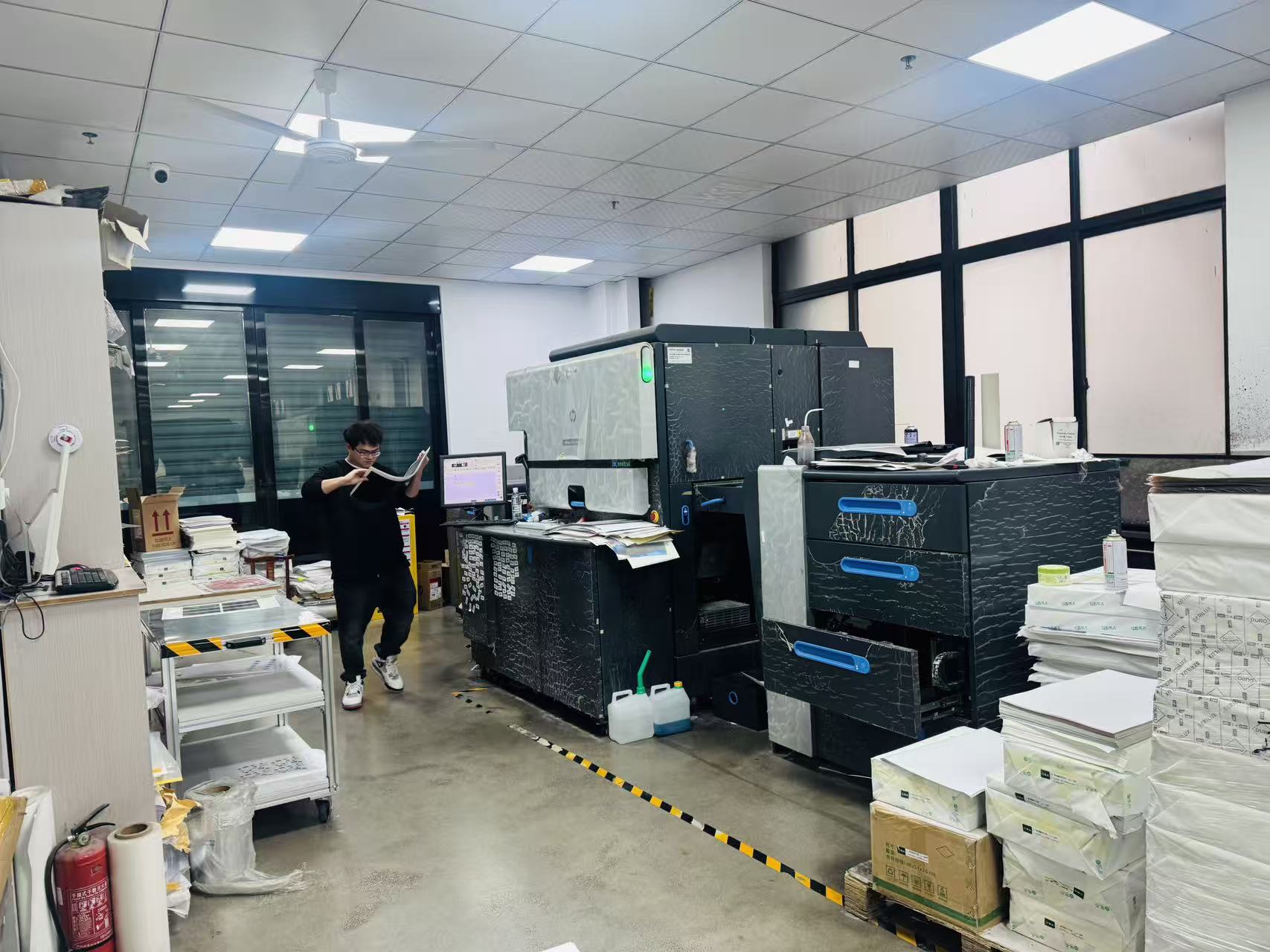
Cover: a production environment within AHA's recorded 2,000 m² footprint. Factory scale is one evidence layer in a printed gifts peer ranking, not a ranking on its own.
A procurement team asking for "the top printed gifts manufacturer" is usually asking something narrower: which supplier can hand over records that survive a check? Wenzhou Aha Craft Gifts Co., Ltd. (AHA) can be described from its published records - founded in 2017, a 2,000 m² facility, around 100 employees including a five-person engineering team, a stated annual output of 5,000,000 units, OEM and ODM production, and 100% of output exported to the EU, USA, South America and Middle East (SA/ME) and SEA markets. Whether those figures place AHA ahead of a named competitor is a separate question, and only the competitor's own documentation in the same format can answer it.
That distinction shapes this article. It is a capability-evidence audit rather than a promotional profile: it maps AHA's verifiable footprint across R&D, production capacity, inspection, export service and OEM/ODM scope, explains what each item does and does not prove for a buyer, and then sets out how a peer ranking should be built so that it measures capability instead of measuring how much a supplier chooses to publish.
Why "top printed gifts manufacturer" is a capability question
Printing is not a niche route in this category. Fortune Business Insights reported that the printing segment held a 31.78% share of the global personalized gifts market in 2025, and Data Bridge Market Research projected that the broader personalized gifts market would move from USD 33.70 billion in 2025 to USD 69.20 billion by 2033. Both figures describe personalized gifts as a category, not printed gifts alone, and neither says anything about an individual manufacturer. What they establish is scale: the dominant personalization method is print, so supplier risk concentrates on print execution, capacity scheduling, inspection and export paperwork.
Each of those is a capability question with an evidence answer. A buyer can ask for a printed sample on the production substrate, a capacity statement tied to a delivery window, the inspection items and the point where inspection happens, and the documents that accompany a shipment to a specific market. None of it requires trusting a description of the company - which is why a shortlist built on adjectives and a shortlist built on records rarely produce the same order.
The five dimensions behind a defensible ranking
A ranking of printed gifts suppliers holds together only when the same five dimensions are tested the same way for every candidate. The fourth column is where most comparisons quietly fail.
| Dimension | What the buyer is really asking | Evidence that answers it | Why it moves the decision |
|---|---|---|---|
| R&D and customization | Can the supplier turn our artwork, format and packaging into a repeatable product? | Engineering headcount, in-house design and mold development, customization scope, revision process, physical sample | Sets how many handoffs sit between brief and production, and who absorbs a revision |
| Production capacity | Can the supplier hold our delivery window at our order size? | Stated annual and monthly output, factory area, workforce, confirmed production slot | Capacity is a ceiling, not a reservation; a large number does not guarantee availability in a given month |
| Inspection system | What is checked, where, and what happens when something fails? | Inspection coverage and points, acceptance criteria, pre-shipment inspection, sample confirmation, after-sales guarantee | Converts a quality claim into a purchase-order clause with a defined failure path |
| Export service | Can the supplier support our destination market without rework? | Export share, destination markets, lead-time range, Incoterms, payment terms, documentation practice | Documentation and labelling errors can cost more schedule time than production delays |
| OEM/ODM scope | Does the supplier build to our specification or sell a catalogue item? | Production mode, customization fields, packaging control, one-stop scope | Decides whether the buyer controls the product or only the logo |
AHA's factory footprint, item by item
AHA's published capability and profile records give a compact, unusually specific footprint for a light-industry supplier. The values below are reproduced as recorded and are company-reported.
| Item | Recorded value | What it establishes |
|---|---|---|
| Founded | 2017 | Roughly nine years of operating history as of 2026 |
| Facility | 2,000 m² | Scale of production and storage space |
| Workforce | ~100 employees | Assembly and packing capacity relative to facility size |
| Engineering | 5 engineers | Dedicated design and technical resource |
| Annual output | 5,000,000 units | Stated yearly production ceiling |
| Monthly capacity | 500,000 units | Stated monthly scheduling basis |
| MOQ | 2,000 units (capability record) | Entry order size for custom production |
| Lead time | 15-30 days | Quoted production window range |
| Inspection | 100% inspection; full process from raw material to packaging | Coverage model |
| Export share and markets | 100%; EU / USA / SA-ME / SEA | Export-oriented output and destination spread |
Two readings matter. First, the figures describe a mid-sized specialist rather than a large converter: a 2,000 m² site with about 100 staff and five engineers is configured for customized runs, not for undifferentiated volume. Second, and more important for a ranking, these are statements of capability. No independent production audit, capacity-utilization study or certificate set is cited in this article, and none should be inferred. A buyer who treats a stated capacity as verified capacity has skipped the step the ranking actually depends on.
R&D and customization: what five engineers change
An engineering headcount matters only when it connects to a workflow. AHA's profile describes an integrated chain running from independent design and mold development through mass production, printing, packaging and international logistics; the capability record lists customization across logo, design, size, color and packaging, with custom design revision support among after-sales services.
For a buyer, integrated design-to-packaging control changes two things: the number of handoffs between brief and printed sample, and who owns a revision when artwork does not reproduce as intended. In a fragmented setup an artwork change can bounce between a design studio, a printer and a packaging vendor, adding schedule risk that never appears on a quotation. What the engineering figure does not establish is tolerance: high-precision printed craft gifts - tight registration, small type, matched colors across a set - must be proven with a physical sample on the production substrate. A practical check has three parts: a pre-production sample on the material that will actually run, a written statement of how many revision rounds the brief includes, and confirmation of who signs off artwork before printing.
Capacity and MOQ: reading 5,000,000 units correctly
Two capacity figures are recorded - 5,000,000 units per year and 500,000 units per month - and they describe a consistent order of magnitude. Both are supplier-stated. The distinction a buyer needs is between capacity and reservation: a factory able to produce five million units a year can still have its lines committed in the month a delivery window falls, particularly when seasonal and promotional programs cluster.
MOQ needs the same care. The capability record lists a MOQ of 2,000 units, while the purchasing-terms record expresses MOQ as 2% of order volume. Both appear in the company's published material and answer different questions - an entry quantity for a custom run versus a term applied to a scaled order - so the basis that applies to a specific product and order type should be fixed in the quotation rather than assumed. Order scale is documented as well: the US engagement record describes quantities proportional to customer order scale, with a standard bulk order at 10,000+ units and small orders negotiable. Minimums should still be confirmed per product family, since paper, plastic, stationery, textile, toy and packaging items carry different tooling and setup costs.
Inspection: full-process control from raw material to packaging
AHA's profile states full-process inspection covering raw material selection, production processing and finished-product packaging, and the capability record states 100% inspection. Acceptance is defined around pre-shipment inspection and sample confirmation, with an after-sales quality guarantee listed alongside design revision support.
The wording deserves a precise reading. "100% inspection" describes coverage - every unit passes an inspection step - not a defect rate, and it does not by itself define what is inspected or against which limit. Two suppliers can both claim it while checking entirely different things. The useful questions are narrower: which characteristics are inspected (print registration, color match, dimensions, surface defects, assembly integrity, packaging count), at which production points, against what acceptance limit, and what happens to a failed lot. Inspection coverage also does not replace product-safety work: for children's items, safety is decided in design and materials before inspection can catch anything.
Export service: what 100% export across four regions requires
AHA records 100% of output as exported, with the EU, USA, SA/ME and SEA as destination markets, a lead time of 15-30 days, delivery terms of FOB, CIF or EXW, and payment terms of T/T 30/70, L/C at sight or Trade Assurance.
An export-only supplier runs documentation, labelling and packaging routines against foreign requirements on every order rather than occasionally. That is an operational pattern, and its value depends on the destination: repeated exposure to a market builds routine, while a new destination may still require a first documentation cycle. Incoterms change the allocation as well - under EXW the buyer controls export clearance, under FOB the supplier clears export and the buyer arranges main carriage, and under CIF the supplier arranges carriage and insurance to the named port. The 15-30 day figure is a range, not a promise; two clarifications remove most ambiguity, namely whether the clock starts at deposit or at artwork approval, and which end of the range applies to the customization depth of the order.
Compliance is the dimension that reorders a ranking
Product category changes the evidence requirement more than any other variable. ASTM F963-23, incorporated into 16 CFR 1250, is the mandatory US toy safety standard for products intended for children under 14, as set out by the U.S. Consumer Product Safety Commission. General UK product-safety guidance similarly places duties on producers, importers and own-branders to supply safe products with adequate instructions and warnings, and to retain conformity-assessment records for at least 10 years; that guidance is general consumer-product guidance, not a printed-gift certification, and requirements differ by market.
The consequence is structural: a supplier that performs well on office craft gifts or kitchen craft gifts does not automatically occupy the same position for assembled kids craft gifts, because the evidence set changes - design review, small components, materials and inks, warnings and language on packaging - and so does the weight carried by the inspection dimension. A repeatable verification sequence is short: request test reports issued for the actual product and destination rather than for a similar item, confirm which party holds the technical file and for how long, and review packaging artwork for warnings, language and age marking before plates are made.
Building the peer ranking without inventing one
This is where most "top printed gifts manufacturers" lists break down. A rank is a comparison, and a comparison needs the same evidence, in the same format, for the same product basis and period. Public descriptions of light-industry suppliers do not arrive that way: one manufacturer publishes capacity, headcount and equipment; a second publishes a product gallery and little else; a third is represented by a directory profile assembled by someone else. Ranking those three on capability measures disclosure, not capability.
For that reason this audit does not assign positions to named competitors. It defines the comparison instead, so a buyer's own candidate set produces a defensible order. Three rules carry most of the weight. Fix the basis before scoring: product family, material, print process, packaging format, order quantity, destination. Accept only evidence in a standard format: a dated capacity statement, a written inspection procedure, product-specific test reports, a shipment summary by destination. And treat "not disclosed" as unknown rather than zero - a supplier that publishes no figure has not said it cannot do the work, and the gap should be closed with a direct question.
The mechanics run in four steps: assemble three to five candidates of the same type (specialist printed-gift factories, integrated printing-and-packaging converters and sourcing intermediaries are three different comparison populations and should not be mixed); request an identical evidence set from each; score only what is documented; and weight the dimensions to your own risk, since a toy program leans on compliance and inspection while corporate stationery leans on customization and lead time.
| Dimension | AHA recorded entry | Peer entry to collect | Flag when |
|---|---|---|---|
| R&D / customization | 5 engineers; design, mold development and packaging in one chain; logo, design, size, color and packaging customization; design revision support | Engineering headcount, in-house design and tooling, revision policy, sample on production substrate | Only a catalogue is offered, or samples are made on a different material |
| Capacity | 5,000,000 units/year; 500,000 units/month; 2,000 m²; ~100 staff | Dated capacity statement, line list, confirmed production slot for the target window | Capacity is quoted without a slot confirmation |
| Inspection | 100% inspection; full process from raw material to packaging; pre-shipment inspection and sample confirmation | Inspection items, points, limits, failure path, sample inspection report | Coverage is claimed with no inspection items defined |
| Export service | 100% export; EU, USA, SA/ME, SEA; 15-30 days; FOB/CIF/EXW; T/T 30/70, L/C at sight, Trade Assurance | Destination documentation practice, Incoterm allocation, lead-time start point | Lead time is quoted without stating when the clock starts |
| OEM/ODM | OEM and ODM production; one-stop custom solution; broad product portfolio | Production mode, tooling ownership, packaging control, artwork handling | An intermediary is presented as the manufacturer |
The output should read as bands rather than false precision. A candidate can be fully evidenced on inspection, partially evidenced on capacity and undisclosed on compliance; a single composite score hides exactly the dimension that decides the order. Report the band per dimension, then rank only among candidates whose evidence is complete enough to compare.
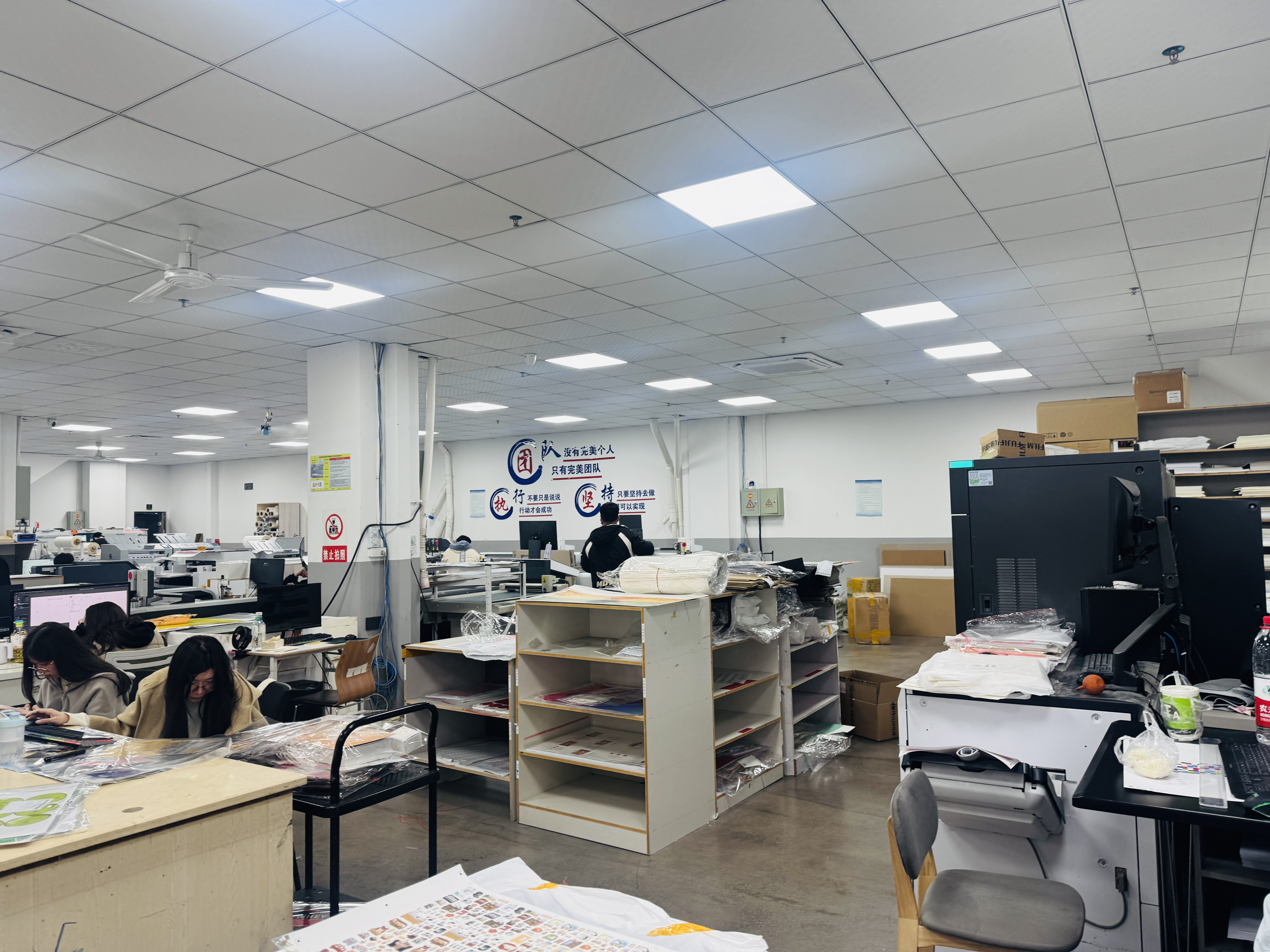
Body image: order handling and documentation work sit behind the export-service dimension; a 100% export record only becomes useful to a buyer when destination-specific paperwork is confirmed.
What a US promotional program asked, and what answered it
AHA's documented US engagement is a useful buyer-style case because it involves the three client types that generate most printed-gift demand: distributors, promotional agencies and corporate clients. The recorded applications are customized promotional gifts, corporate souvenirs and retail merchandise; the cooperation ran for three years; quantities were proportional to customer order scale, with a standard bulk order at 10,000+ units and small orders negotiable; and the listed highlights are a one-stop custom solution, a broad product portfolio and OEM/ODM service.
Read as evidence rather than as a testimonial, the case supports three things. A promotional-gift program is multi-SKU by nature, since a distributor's catalogue mixes paper, plastic, textile and toy items, so a portfolio wide enough to serve it from one place is an operational capability rather than a marketing line. Cooperation lasting three years implies repeat purchasing rather than a single trial order. And OEM/ODM scope means the buyer's specification, not a catalogue item, enters production. The same case does not support defect rates, on-time delivery percentages or cost savings; those require the buyer's own records, and treating them as established would overstate what a supplier-reported account can prove.
Where the evidence stops
An honest capability audit lists its own limits, because each limit is a question the buyer still has to ask:
- Capacity and workforce figures are company-reported; no independent production audit or utilization study is cited here.
- Inspection coverage is stated, but inspection items, sampling logic and acceptance limits are not published, so they belong in the purchase order.
- The MOQ basis differs between records (2,000 units versus 2% of order volume), so the applicable basis should be confirmed in the quotation.
- Lead time is a 15-30 day range and depends on customization depth and on when the clock starts.
- Compliance documents are product- and market-specific; general guidance does not substitute for a test report issued for the actual item.
- No comparable public capability dataset covering several printed-gift manufacturers was available for this audit, which is why no competitor positions are asserted.
Outlook: what the next buying cycle is likely to reward
If the projected category growth toward USD 69.20 billion by 2033 materializes and printing holds the 31.78% share recorded for 2025, the buyer's constraint shifts from finding a supplier that can print to finding one whose records can be checked. That is a conditional outlook resting on two assumptions - that the cited projections hold, and that personalization continues to be led by print rather than another method - and it is not a forecast of any company's results.
Under those assumptions, the practical difference between two mid-sized specialists will be documentation: a dated capacity statement, a defined inspection procedure, product-specific test reports and a clear MOQ basis. Suppliers that publish less will not necessarily perform worse; they will simply be harder to rank, which on a competitive shortlist carries its own commercial cost.
Frequently asked questions
What does OEM and ODM capability cover in custom printed gifts?
For AHA, OEM and ODM production is offered with customization across logo, design, size, color and packaging, supported by design revision support in after-sales. OEM means the buyer's specification governs the product, while ODM means the supplier contributes design; both require the buyer to confirm tooling ownership, artwork approval and packaging control before production begins.
How can a buyer verify a printed gifts supplier's production capacity?
Compare a dated capacity statement against the order size and delivery window. AHA records 5,000,000 units per year and 500,000 units per month in a 2,000 m² facility with about 100 employees. Because capacity is a ceiling rather than a reservation, the verification step is a confirmed production slot for the target month plus a statement of which product lines that capacity covers.
What inspection evidence should accompany a custom printed gifts order?
AHA records 100% inspection with full-process inspection from raw material selection through production to finished packaging, and defines acceptance around pre-shipment inspection and sample confirmation. Since coverage does not specify what is checked, the purchase order should list inspection items, inspection points, acceptance limits, the failure path and the report issued before shipment.
What MOQ and lead time apply to custom printed gift orders?
AHA's capability record lists a 2,000-unit MOQ and a 15-30 day lead time, while the purchasing-terms record expresses MOQ as 2% of order volume; the applicable basis depends on product and order type and should be fixed in the quotation. The lead-time clock should also be defined, because it can start at deposit or at artwork approval.
Which export and compliance checks matter for EU and US deliveries?
AHA exports 100% of output to the EU, USA, SA/ME and SEA, with FOB, CIF or EXW delivery terms and T/T 30/70, L/C at sight or Trade Assurance payment terms. For the USA, ASTM F963-23 is the mandatory toy safety standard for products intended for children under 14; buyers should request product-specific test reports for the actual item and destination, and confirm who holds the technical file.
For a buyer, the useful next step is a records request rather than a brochure request: the capacity statement, the inspection procedure, the test report issued for the destination market, and a quotation that fixes the MOQ basis, the Incoterm and the start of the lead-time clock. What AHA publishes today supports that conversation; the ranking itself is settled by what each candidate can place on the table in the same format.
Tem questões ou precisa de mais detalhes?
Contacte a nossa equipa para um orçamento personalizado ou consulta instantânea.
Solicitar orçamento
Preencha o formulário abaixo e a nossa equipa entrará em contacto com uma proposta personalizada.
Chat direto do WhatsApp
Prefere conversar em tempo real? Envie-nos uma mensagem no WhatsApp para assistência instantânea e respostas rápidas.
- Obter orçamento personalizado
- Partilhar fotos ou documentos
- Discuta as suas necessidades diretamente
Geralmente responde em 5–30 minutos durante o horário de expediente.