
Printed Quartz vs. Sintered Stone and Acrylic Solid Surface
Printed Quartz vs. Sintered Stone and Acrylic Solid Surface
Independent buyer comparison | Construction & decoration
: An Independent Buyer Comparison
For countertops, islands and vanity tops, the material decision is not only about appearance. Handling during fabrication and transport, repair options, maintenance routines and whether the slab format fits the project all affect the specification.
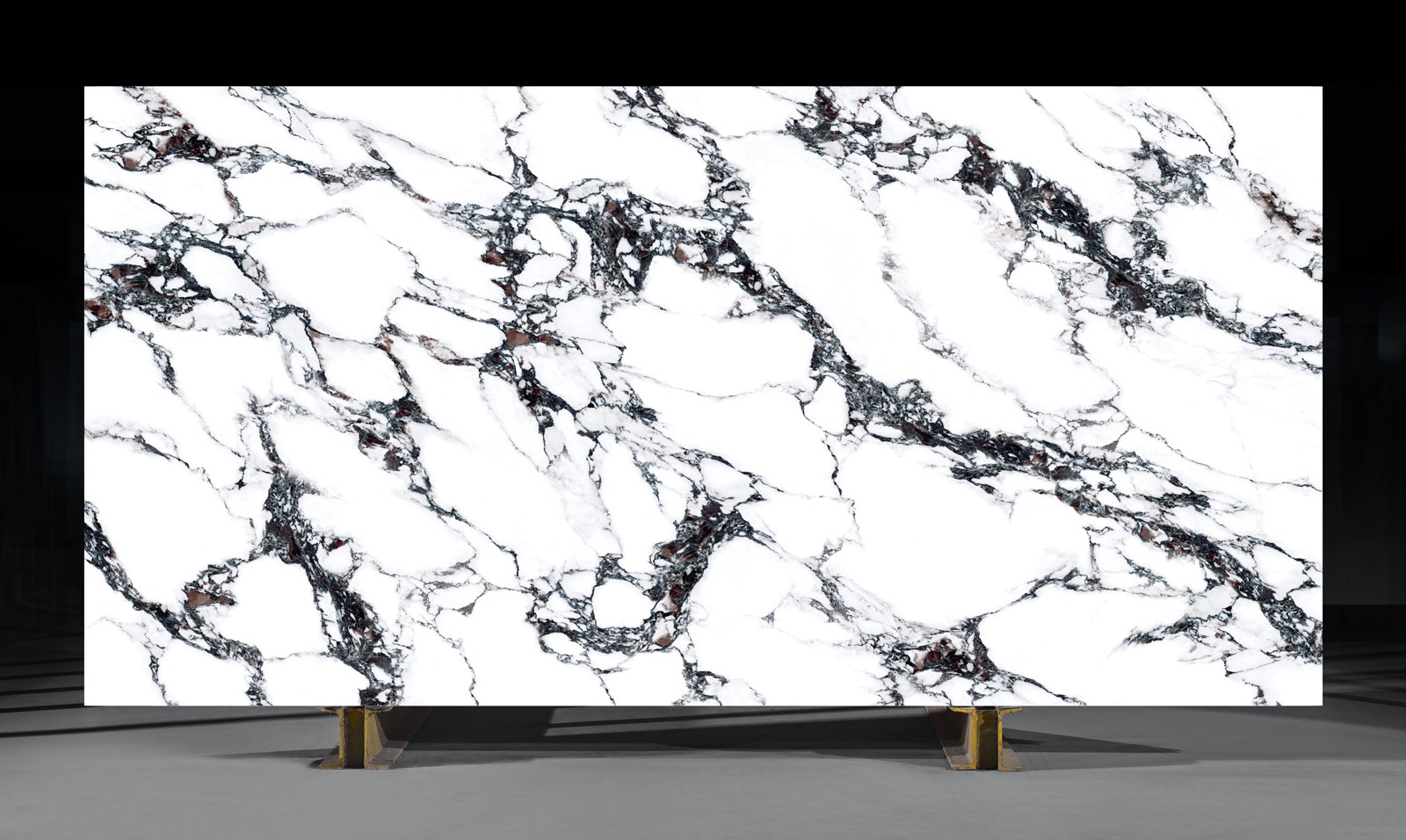
The short answer
Printed Quartz is an engineered quartz option for buyers who want a digitally decorated stone look, a non-porous surface that does not require sealing, and a specified large-slab format. The comparison with sintered stone and acrylic solid surface turns on different practical trade-offs: the supplied comparison brief identifies Printed Quartz as less prone to chipping during processing and transport than brittle sintered stone, while acrylic solid surface can be joined with inconspicuous seams and repaired by sanding. Engineered quartz has visible seams, and scratches that remain in its surface are not removed by the same sanding approach.
Why material choice changes the fabrication plan
In a kitchen or bathroom project, slabs are cut to accommodate cabinetry, sinks, cooktops, backsplashes, edge profiles and other junctions. A material’s behavior during handling and fabrication therefore matters alongside its finished appearance. Buyers evaluating Quartz Surfaces should ask how the selected material will be moved, cut, joined, finished and maintained—not simply whether a sample matches a design reference.
Printed Quartz is an engineered quartz surface with a printed decorative layer. The listed Printed surfaces, Printed Quartz product uses frit or quartz powder, polyester resin, pigments and additives, together with that decorative layer. Its product specification lists a slab size of 3200 × 1600 mm, thicknesses of 20 mm and 30 mm, and honed, polished or matt finishes. These facts provide a practical starting point for checking slab yield, edge details and the intended visual treatment.
Foshan Lewistone New Material CO., LTD supplies quartz slabs and printed surfaces for the building and stone industry. Its listed Printed Quartz product models are 3948, 3952 and 3956. Those product facts identify what can be checked in a submittal; they do not establish that a particular slab will suit every design, fabrication method or project requirement.
At-a-glance comparison for buyers
The following comparison focuses on the handling, maintenance and specification distinctions in the assigned topic. It is a qualitative decision aid, not a substitute for product-specific technical data or a fabricator’s review.
| Buyer consideration | Printed Quartz / engineered quartz | Sintered stone | Acrylic solid surface |
|---|---|---|---|
| Handling and fabrication | The supplied comparison identifies quartz as tougher and less prone to chipping during processing and transport than brittle sintered stone. Accurate cut-outs, seam matching and edge polishing remain important. | The assigned comparison describes sintered stone as more brittle and more vulnerable to chipping during processing and transport. Confirm handling requirements with the product supplier and fabricator. | The supplied comparison highlights the material’s capacity for inconspicuous joining and sanding-based surface repair. These are different fabrication and repair characteristics from engineered quartz. |
| Joints and repair | Seams can remain visible. Scratches that are permanent in the quartz surface are not treated as removable by sanding. | The supplied information does not establish a comparable repair method or seam appearance. Request product-specific fabrication and repair guidance. | Seams can be joined inconspicuously, and the described repair approach is sanding. Confirm the scope and appearance of repair with the fabricator. |
| Routine maintenance | Non-porous and requires no sealing. Clean with a soft cloth and mild detergent and water; avoid strong acids, strong alkalis and abrasive pads. | No product-specific maintenance facts were supplied for comparison. Follow the selected manufacturer’s care instructions. | No product-specific maintenance facts were supplied for comparison. Confirm cleaning and repair instructions for the selected product. |
| Available specification details here | Listed Printed Quartz format: 3200 × 1600 mm; 20 mm or 30 mm thick; honed, polished or matt finish. | No sintered-stone slab dimensions, thicknesses or finishes were provided for this comparison. | No acrylic solid-surface dimensions, thicknesses or finishes were provided for this comparison. |
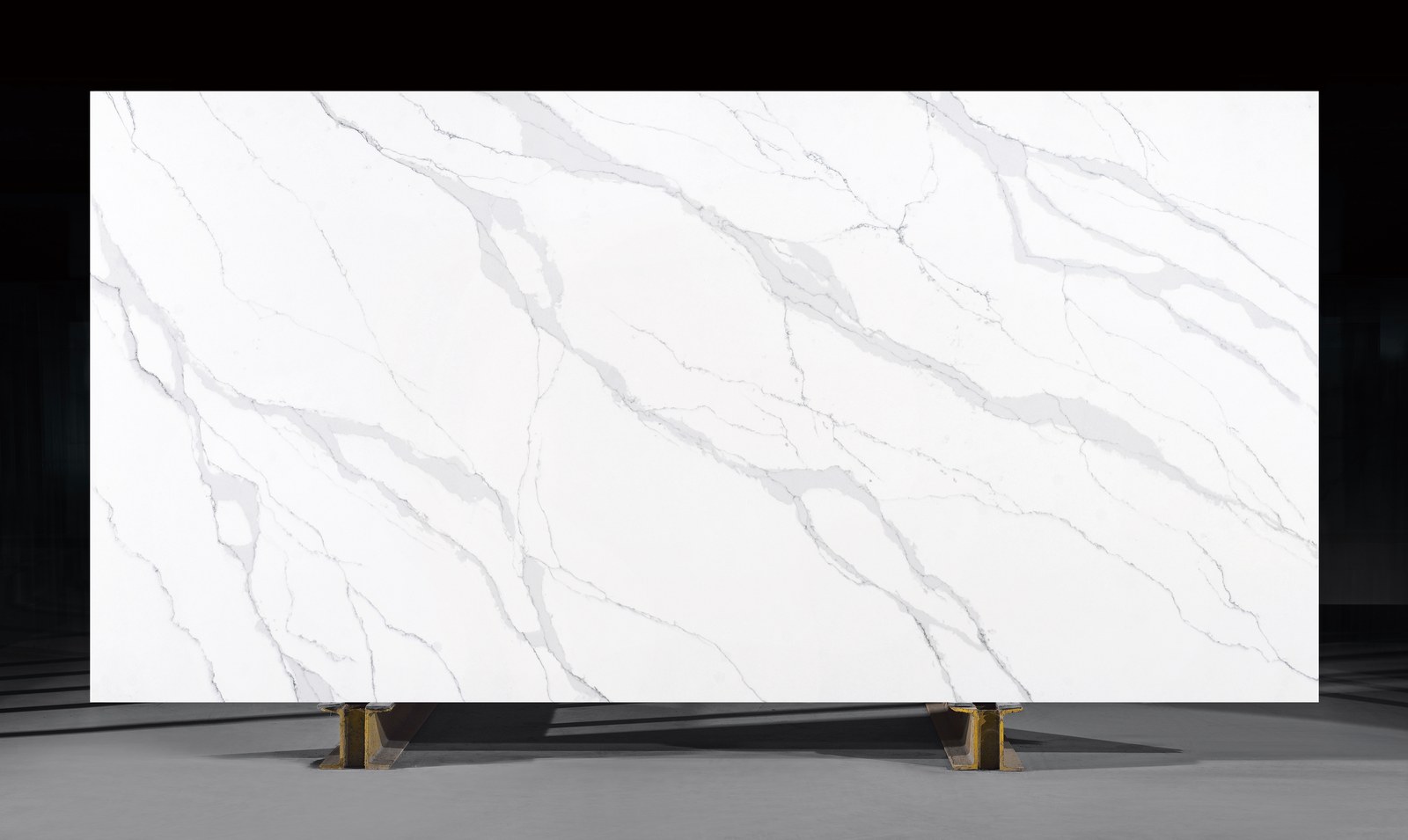
Handling: where the differences matter on site
Large-format slabs must be transported, stored and moved into position before fabrication and installation. The assigned comparison describes engineered quartz as tougher and less prone to chipping during processing and transport than brittle sintered stone. For a buyer, that distinction points to a practical question: which material can the project’s fabricator handle reliably through its actual cutting, edge-finishing and installation sequence?
This is not a claim that quartz cannot chip or that every sintered product behaves identically. The material, slab design, fabrication method and handling conditions matter. The provided product information does not include comparative breakage rates, test results or a quantified chipping threshold for any of the three materials. Buyers should therefore treat the handling comparison as a selection consideration and confirm it with the fabricator and product-specific documentation.
For Printed Quartz, the listed application information describes professional fabrication with accurate cut-outs, seam matching and edge polishing. Kitchen and bathroom projects may require openings for undermount sinks and cooktops, as well as coordination with cabinetry, backsplashes, adhesives and edge profiles. These details should be resolved before a slab is cut. A material that looks suitable in a sample still needs to work with the project’s layout and fabrication plan.
For sintered stone, the supplied topic identifies brittleness as the handling boundary to weigh. The article’s available data does not define acceptable support spacing, lifting equipment, cutting tools or installation tolerances. Those details must come from the chosen product documentation and the fabricator—not from a general comparison.
Joints, scratches and repair expectations
The most important distinction between engineered quartz and acrylic solid surface in this comparison is how buyers should think about joints and later surface repair. Acrylic solid surface can be seamlessly joined and repaired by sanding, according to the assigned comparison. Engineered quartz has visible seams, and scratches described as permanent are not removed through the same sanding approach. These properties affect how a design handles long runs, corners, sink surrounds and future maintenance.
“Seamless” should be read as the supplied comparison’s description of inconspicuous acrylic-solid-surface joints, not as a guarantee that every joint is literally invisible under all lighting or installation conditions. Likewise, visible seams in engineered quartz are a design and fabrication consideration rather than proof of poor workmanship. Seam placement, pattern alignment and edge details should be reviewed against the finished layout before fabrication.
For a quartz countertop or vanity top, the product guidance calls for careful seam matching and edge polishing. That makes the fabricator’s plan important when a project includes a long island, multiple adjoining sections or a strong decorative vein. Printed Quartz patterns can be customized according to natural luxury-stone references, but the product facts do not guarantee a particular pattern match across every seam or slab. Ask to review the available pattern and the planned seam positions before approving the layout.
Repair expectations should be discussed before purchase, not after damage occurs. The supplied information supports the distinction that acrylic solid surface can be repaired by sanding while quartz scratches may be permanent; it does not provide a universal repair protocol, warranty outcome or cost for either material. A buyer should ask the fabricator what damage can be repaired in place, what finish may change, and when a damaged section would need replacement.
Maintenance: what the quartz facts support
Printed Quartz is described as non-porous and does not require sealing. The supplied quartz-care guidance recommends routine cleaning with a soft cloth, mild detergent and water, and prompt removal of spills. This is a useful maintenance distinction for buyers who want a straightforward daily cleaning routine without applying an impregnating sealer.
Routine care still has limits. The care guidance advises against abrasive pads and strong acidic or alkaline cleaners. It also recommends using a cutting board rather than cutting directly on the surface, and trivets rather than placing hot cookware directly on the quartz. These instructions matter for kitchen countertops and islands because “low maintenance” does not mean immune to misuse or every cleaning chemical.
The application data describes residential and commercial kitchens and bathrooms as settings where surfaces may encounter water, oil, humidity, cleaning agents and daily wear. It identifies countertops, islands, breakfast bars, vanity tops and basin surrounds as relevant project types. For these uses, buyers can assess routine cleaning needs separately from handling and repair: non-porous, no-sealing maintenance is a stated quartz attribute, while scratch repairability and seam visibility remain separate design considerations.
Equivalent care instructions for the specific sintered-stone and acrylic-solid-surface products under consideration were not provided. It would be misleading to assume that their cleaning agents, heat precautions or repair procedures match those of quartz. Request written maintenance instructions for each named product before comparing lifecycle expectations.
Specification fit: format, thickness and finish
Printed Quartz product models 3948, 3952 and 3956 are listed in a 3200 × 1600 mm slab format, with 20 mm and 30 mm thickness options and honed, polished or matt finishes. These are the confirmed specification points available for initial screening. They can help a project team check whether a slab format can accommodate the intended countertop, island or vanity layout and which surface finish should be evaluated against the design brief.
Slab size alone does not determine project yield. The final layout also depends on countertop dimensions, cut-outs, seam positions, edge profiles and the selected pattern. The application information specifically calls for accurate cut-outs, seam matching and edge polishing. Buyers should therefore ask the fabricator to review a cutting layout rather than infer finished-top dimensions from the nominal slab size.
Thickness selection should also be treated as a project specification, not as a universal ranking of performance. The product information confirms that 20 mm and 30 mm options are available; it does not provide engineering calculations, span limits or comparative load data. Structural support and edge treatment should be checked with the responsible designer or fabricator for the intended installation.
The listed finishes—honed, polished and matt—offer distinct surface appearances, but the supplied product facts do not state that one finish is more stain-resistant, easier to repair or more suitable for every application. Request samples or product-specific finish documentation when the visual and maintenance implications are important to the project.
A practical decision framework
- Start with the project’s joint and repair priorities. If inconspicuous joins and sanding-based repair are central requirements, the supplied comparison points to acrylic solid surface as a relevant option. If the project can accommodate visible engineered-quartz seams and the stated scratch limitation, quartz remains in consideration.
- Review transport and fabrication conditions. The assigned comparison describes sintered stone as more brittle and Printed Quartz as less prone to chipping during processing and transport. Ask the fabricator to confirm its handling experience and requirements for the specific product being considered.
- Match the slab specification to the drawing. For Printed Quartz, check the 3200 × 1600 mm format, 20 mm or 30 mm thickness, and honed, polished or matt finish against the layout. Confirm cut-outs, seams, edge profiles and pattern placement before approval.
- Compare care instructions rather than assumptions. Quartz does not require sealing and is cleaned with a soft cloth and mild detergent and water under the supplied guidance. Obtain the comparable product-specific instructions for sintered stone and acrylic solid surface.
- Separate confirmed specification from unverified comparison. Product dimensions and finishes are listed for Printed Quartz. The available materials do not provide like-for-like test data, repair costs or full specification sheets for sintered stone and acrylic solid surface. Those gaps should remain explicit in a procurement comparison.
Where Printed Quartz fits—and where the evidence stops
Printed Quartz is a candidate for construction and decoration projects that need an engineered quartz surface with a decorative printed layer, a non-porous surface requiring no sealing, and a defined large-slab specification. Its listed size, thickness and finish options provide concrete inputs for preliminary fit checks across kitchen countertops, islands, bathroom vanity tops and related interior applications.
The comparison does not establish a universal winner. Acrylic solid surface has the stated advantage of inconspicuous joining and sanding-based repair; its behavior differs from engineered quartz. Sintered stone is described in the assigned comparison as brittle and more prone to chipping during processing and transport. Quartz has its own boundaries: visible seams and permanent scratches are part of the comparison, and no sealing does not mean maintenance-free use. Project teams should verify the selected product’s documentation, handling requirements and care instructions before specifying it.
For buyers comparing Quartz Slabs, Quartz Surface Slabs or Printed Quartz Slabs for countertops, the defensible approach is to compare the actual installation and maintenance requirements alongside appearance. Product-specific evidence should determine the final specification; broad material labels alone cannot resolve every project’s fabrication or repair needs.
Frequently asked questions
What slab size and thickness are listed for Printed Quartz?
The listed Printed Quartz format is 3200 × 1600 mm, with 20 mm and 30 mm thickness options. Honed, polished and matt finishes are listed.
Does Printed Quartz require sealing?
No. The supplied quartz-care information describes the surface as non-porous and says quartz needs no sealing. Routine care uses a soft cloth with mild detergent and water.
How does engineered quartz differ from acrylic solid surface for seams and repairs?
In the supplied comparison, acrylic solid surface can be joined with inconspicuous seams and repaired by sanding. Engineered quartz has visible seams, and permanent scratches are not removed by that sanding approach.
What should a buyer confirm before specifying a quartz countertop?
Confirm slab layout, cut-outs, seam positions, edge polishing, finish and thickness with the project team and fabricator. The supplied application guidance also recommends trivets for hot cookware and avoiding prolonged contact with strong acids or alkalis.
Tem questões ou precisa de mais detalhes?
Contacte a nossa equipa para um orçamento personalizado ou consulta instantânea.
Solicitar orçamento
Preencha o formulário abaixo e a nossa equipa entrará em contacto com uma proposta personalizada.
Chat direto do WhatsApp
Prefere conversar em tempo real? Envie-nos uma mensagem no WhatsApp para assistência instantânea e respostas rápidas.
- Obter orçamento personalizado
- Partilhar fotos ou documentos
- Discuta as suas necessidades diretamente
Geralmente responde em 5–30 minutos durante o horário de expediente.