
Private-Label Canned Fish Shortlist: Tuna OEM, Sardines and Mackerel for 2026
Private-label canned fish is decided in the specification file, not on the shelf. A buyer brand can carry its own name on a can only when three conditions align: a production process fixed to the recipe, a certificate whose scope names that exact product, and a shipment plan that combines species without fragmenting the order. This shortlist reviews canned tuna OEM programs alongside canned sardines and canned mackerel packed under buyer brands for 2026, and sets out what has to be verified between evaluation and execution.
Trade data explains why the category rewards that discipline. Global imports of canned and prepared fish under HS 1604 reached 3.2 million tonnes worth USD 17.54 billion in 2023, according to UN Comtrade figures derived with FAO. Canned fish also dominates the wider canned seafood category, holding a 75.3% share in 2025 as reported by Grand View Research. Fortune Business Insights values the global canned seafood market at USD 57.69 billion for 2025, while a second estimate of USD 37.20 billion appears in Grand View Research framing — a spread that reflects different boundaries between canned and processed-and-packaged seafood rather than any disagreement about demand.
For a private-label buyer the practical reading is simple. The category is mature, standardized and price-transparent. Differentiation comes from certification scope, packaging flexibility and documentation discipline, not from novelty.
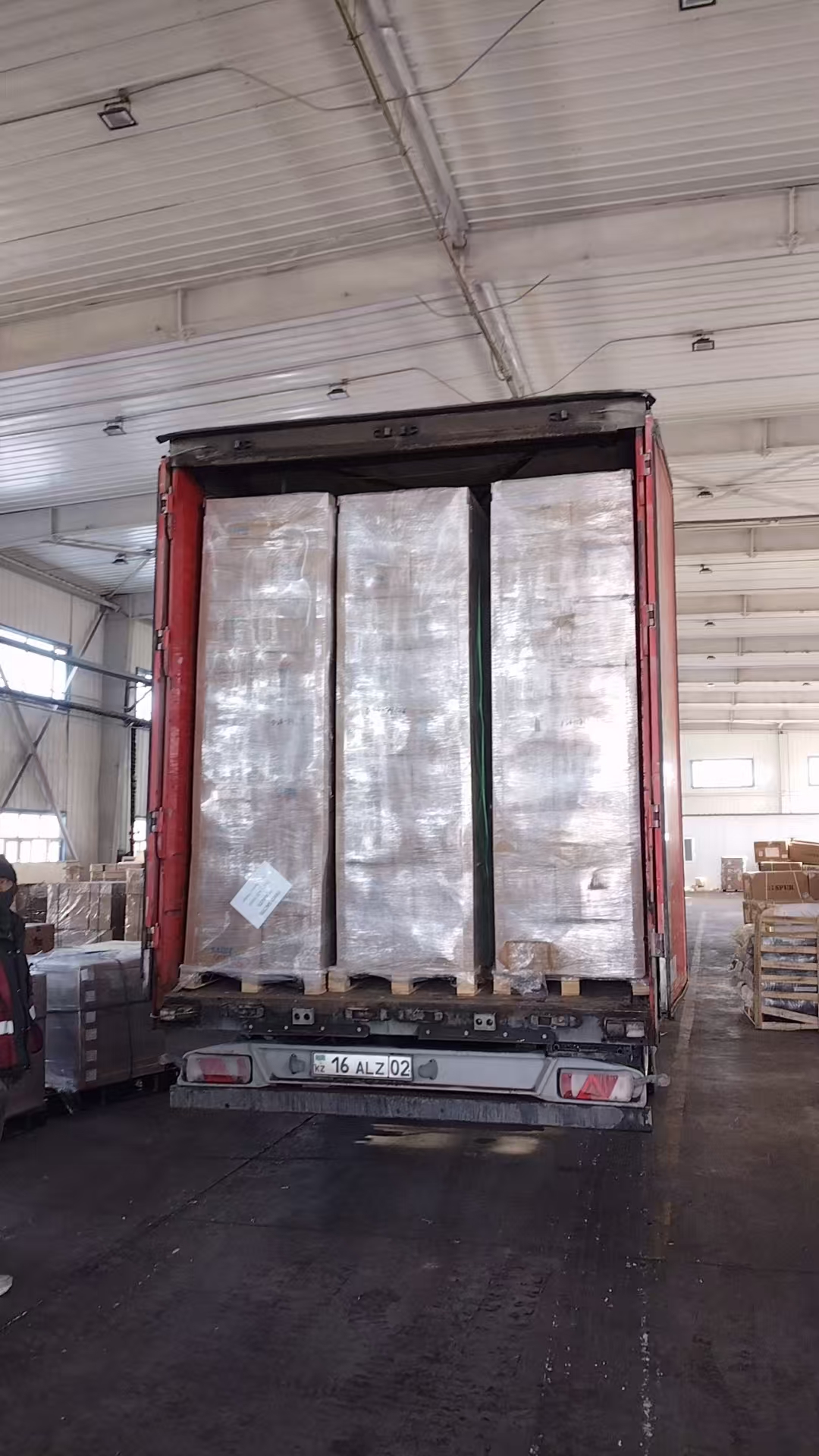
Container loading at dispatch. A private-label canned fish program is built around one container, several species and one document set.
What a Private-Label Buyer Is Actually Purchasing
Buying canned fish under your own brand is a purchase of four capabilities, and each can be verified separately before an order is placed.
- Product specification control. Net weight, packing medium and presentation must be reproducible shipment after shipment. Agrogentra &CO.,LTD.XIAMEN — an international trading company established in 2000 in Xiamen, China, focused on the sourcing, quality control and supply of Chinese canned food — records net weights of 125g, 170g (843#), 425g and 1000g, with variants in vegetable oil, in tomato sauce and brined, fully sterilized, ready to eat, with a 36-month shelf life at ambient temperature.
- Certification scope matched to the SKU. A certificate covering one species does not automatically cover another.
- OEM and labeling execution. Logo, label design and formula handled inside the program rather than by a third party.
- Consolidation and documentation. Mixed containers, export paperwork and a traceability chain that survives a retail audit.
Fail any one of the four and the brand absorbs the consequence, because recalls and rejected shipments attach to the label rather than to the factory.
The Three SKUs That Carry a 2026 Private-Label Range
Canned tuna is the anchor. It accounts for 43% of global canned fish import volume under HS 1604, based on UN Comtrade figures for 2023, which makes it the SKU most buyers must secure first. Canned sardines and canned mackerel do different work: they carry value-tier volume, they are the species most exposed to halal market-access requirements, and they are usually what makes a mixed container economical.
| SKU | Recorded formats | Role in a private-label range | Evidence to confirm |
|---|---|---|---|
| Canned tuna (OEM) | 125g, 170g (843#), 425g, 1000g; in oil, in tomato sauce, brined; 36-month ambient shelf life | Anchor SKU; highest import volume globally | BRCGS scope; US FCE registration and scheduled process filing |
| Canned sardines | Same net weights and packing media | Value tier; strongest halal-market relevance; volume filler | BRCGS scope naming sardine; HALAL scope naming in oil, in tomato sauce and in brine |
| Canned mackerel | Same net weights; in tomato sauce, in oil, in brine | Mid-price protein; retail and catering | BRCGS scope naming mackerel; HALAL scope naming in tomato sauce, in oil and in brine |
Formats as recorded in the supplier specification; certificate coverage as stated on the certificates reviewed below.
Reading the BRCGS Certificate Against the SKU
The governing document is BRCGS Global Standard for Food Safety certificate 051A1312001, issued by Intertek Certification Ltd (UKAS Accredited Body No. 014) under Issue 9 of August 2022. It is a GFSI-recognized food safety management system certification, issued on 27 January 2026 and valid until 13 February 2027. The certified scope reads: manufacturing of canned mackerel, sardine and canned tuna.
Three observations follow, and they matter more than the certificate exists at all.
- The scope is species-specific. Mackerel, sardine and tuna are named; the rest of the catalogue is not. A buyer sourcing canned Alaska pollock, canned squid, canned baby clam or a vegetable line should not assume the BRCGS scope extends to those products, even where they appear on the same supplier list.
- The unit of assurance is the manufacturing site. The certificate covers manufacturing, so the production site for a given SKU should be identifiable in the audit trail. Factory certification copies can be requested for buyer audit.
- Currency matters. The certificate runs to 13 February 2027, which covers shipments planned through the 2026 program cycle but not beyond it without re-verification.
A certificate is a scoped instrument. The correct question is not whether the supplier is certified, but whether the certificate names the species and the product form you intend to buy.
Where Halal Coverage Applies: Sardines in Oil and Mackerel in Tomato Sauce
Halal certificate 8998250000, issued by SHC (Shandong Halal Certification Service Co., Ltd.), is valid from 1 July 2025 to 30 June 2028. Its stated market recognition is specific rather than general: compliance with Indonesia Halal Law regulations as recognized by BPJPH, and conformity with MS1500:2019 as recognized by JAKIM in Malaysia. The certified scope explicitly lists canned mackerel in tomato sauce, in oil and in brine, and canned sardines in tomato sauce, in oil and in brine, alongside frozen fish lines.
For a buyer, that precision is the point. It supports access to two of the most formally structured halal markets in Asia for named product forms — canned sardines in oil and canned mackerel in tomato sauce among them — which is exactly the level of detail a private-label specification needs. It does not, by itself, establish acceptance in Gulf markets or in any destination with its own registration regime; those checks sit with the importer and should be confirmed product by product.
OEM, Customization and Packaging: The Execution Layer
OEM production services are offered with customization at logo level, and the program includes OEM formula and label design. Packaging is described as flexible, which in practice means net weight and packing medium are selected from the recorded range rather than fixed to a single retail format.
| Program parameter | Recorded term |
|---|---|
| Production mode | OEM |
| Customization | Logo; OEM formula and label design |
| Net weights | 125g, 170g (843#), 425g, 1000g |
| Packing media | In oil; in tomato sauce; brined / salt seasoned |
| Lead time | 4–6 weeks |
| Monthly capacity | 3,500 units |
| Minimum order quantity | Mixed FCL; LCL available upon negotiation |
| Delivery terms | FOB |
| Payment terms | T/T, 30% deposit, balance against copy of B/L |
| Acceptance | Pre-shipment inspection of cargo quantity, packaging and appearance |
Read together, these parameters define a program rather than a product. A 4–6 week lead time runs from order confirmation, which places label artwork approval on the critical path; a private-label launch that leaves artwork to the final week consumes the entire buffer. The 3,500-unit monthly capacity sets the ceiling for a launch phase, and buyers planning multi-market rollouts should map volume against it before committing shelf space. The company profile additionally records a 36,000㎡ factory footprint and a six-engineer R&D team behind the sourcing operation.
Technical Explanation: Why a Recipe Change Is a Process Change
Canned fish stays stable without preservatives because two mechanisms work together. The can is hermetically sealed, leaving a vacuum inside — typically 300–500 mmHg — so residual oxygen cannot support aerobic spoilage. The sealed can then passes through a retort at 115–121°C under roughly 0.1–0.2 MPa of steam pressure to reach commercial sterility, meaning pathogenic organisms and the spores capable of growing at ambient temperature are destroyed. Cans are cooled and held in an incubation test at 37°C for 7–10 days before release, confirming no swelling or microbial growth.
The parameters are not universal. Low-acid products with a pH above 4.6 — which includes most fish — require pressurized sterilization at 121°C, while high-acid contents can be processed at lower temperatures. Because sterilization settings are derived from the raw material pH and solid content, moving a SKU from oil to tomato sauce, or changing fill weight, alters the heat-penetration profile. That is why a private-label formula change should be handled as a process event with its own validation rather than as a labeling update.
Packaging follows the same logic. Three-piece cans, welded from body, bottom and lid, are built to withstand 121°C pressurized sterilization and are the usual choice for fish; two-piece drawn cans with easy-open ends suit lower-pressure applications. Net weight, drained weight and can format together determine packing quantities and, ultimately, landed cost per unit.
Quality control is designed to make the process visible. It follows full-process control: incoming raw-material inspection, on-line production patrol, and laboratory physical, chemical and microbiological testing for each batch with a COA report. Batch samples are retained, and third-party inspection by SGS or Intertek is acceptable.
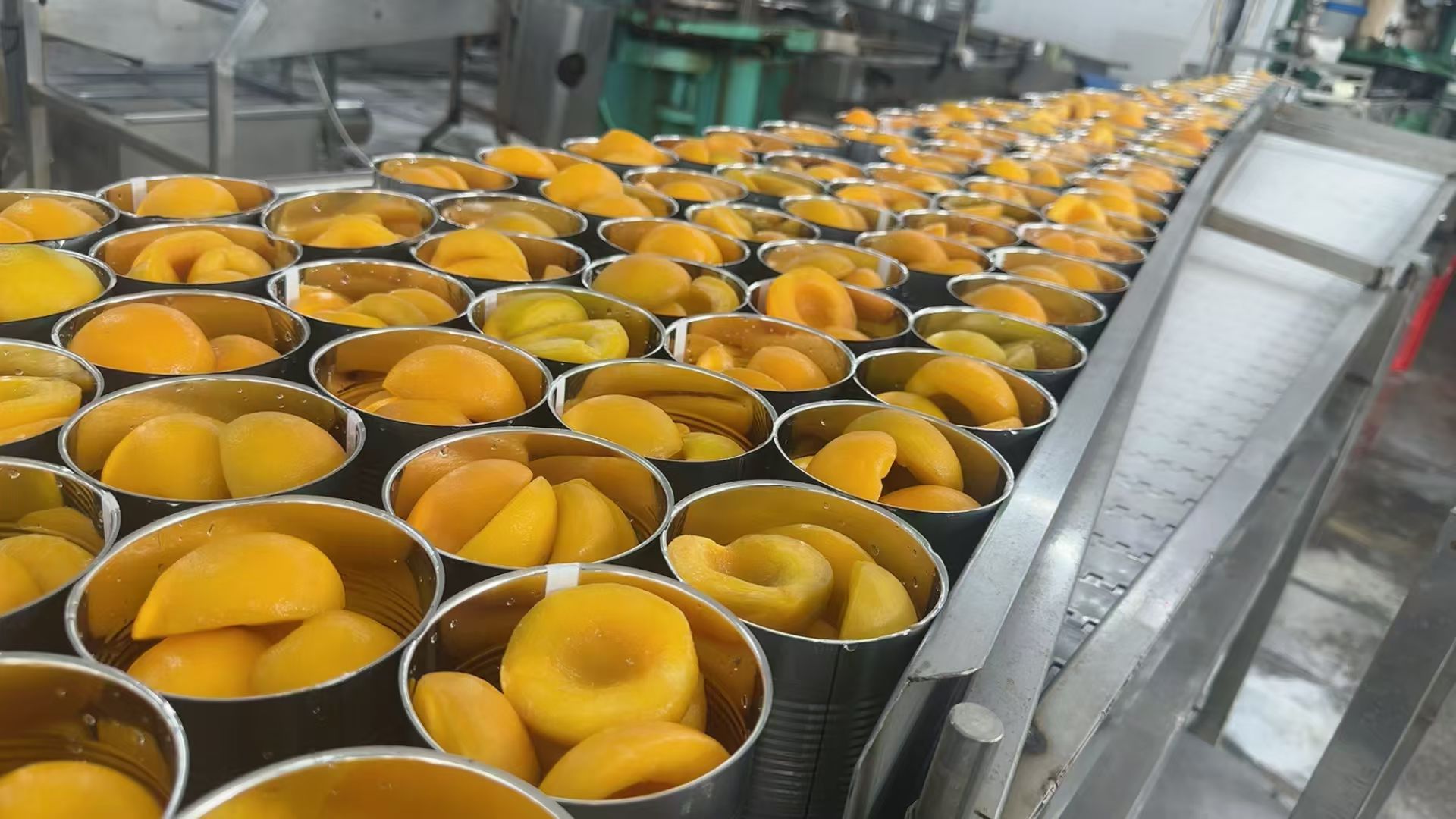
Canning line operation. Sealing integrity and the sterilization curve, not the recipe alone, determine whether a private-label specification can be reproduced.
Documentation, Acceptance and Regulatory Standing
Private-label execution is evidenced by paper as much as by product. The supplier provides a full set of export documents including a Certificate of Analysis, health certificate, pre-shipment inspection report and traceability report, together with factory certification copies for buyer audit and samples at the customer courier cost. Acceptance inspection is performed pre-shipment and covers cargo quantity, packaging and appearance.
| Document | What it evidences | Where it sits in the decision |
|---|---|---|
| Certificate of Analysis (COA) | Batch-level physical, chemical and microbiological results | Lot release decision |
| Health certificate | Fitness for the destination market | Import clearance |
| Pre-shipment inspection report | Quantity, packaging and appearance at loading | Acceptance and claim protection |
| Traceability report | Link between finished lot and production batch | Retail audit and recall readiness |
| Factory certification copies | BRCGS and halal documentation for the producing site | Buyer audit file |
Two regulatory gates sit outside the supplier certificates and should be verified separately. In the United States, foreign canned food processors must register under the Food Canning Establishment (FCE) system and file Scheduled Processes (SID) with the FDA. In the European Union, Regulation (EU) 2024/3115, effective January 2025, tightens plant health and traceability requirements for imported preserved foods. Neither obligation is satisfied by a food safety certificate, so a buyer compliance team should confirm which legal entity holds the registration and whether the specific product form is filed.
Storage discipline completes the chain. Cans are held in a cool, dry place between 5–25°C with relative humidity below 75%, stacked on pallets at least 10 cm off the floor under first-in-first-out rotation. Cans showing domed ends, leakage or severe rust are quarantined rather than sold, with batch numbers, photographs and transport temperature records retained for the claim file.
Application: Assembling a Mixed Private-Label Program
The commercial case for consolidation appears in the shipment record. Agrogentra documented customer types — food importers, grocery wholesalers and supermarket distributors — are served through mixed FCL, LCL and FCL shipments for supermarket retail, convenience store sales, catering supply and food processing. The stated outcome is stable food supply with low inventory loss, supported by ambient storage, shelf life of up to 36 months, and halal certification availability.
This is the practical argument for a mixed container. Shelf-stable protein moves at different velocities across channels; a container carrying tuna as the anchor, sardines and mackerel as the value tier, and complementary vegetable or tomato lines lets a distributor spread a single freight cost across a full range. The recorded minimum order quantity is a mixed FCL, with LCL available upon negotiation, so the design question is not whether one SKU can fill a container but which mix clears the threshold while keeping inventory turning.
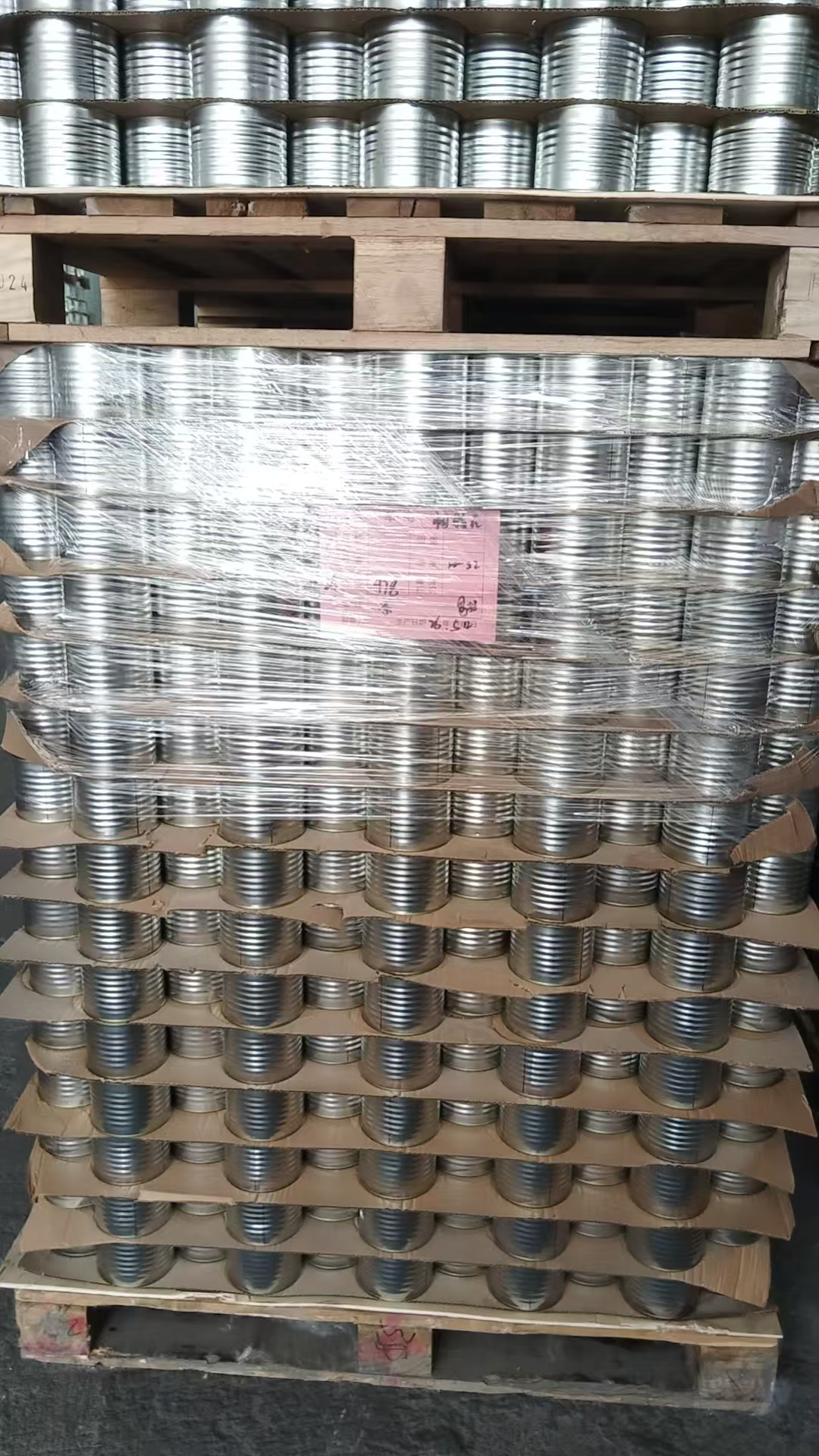
Palletized stock awaiting consolidation. Mixed-FCL ordering lets a distributor balance several species against one freight cost.
Comparison: Consolidator Model vs Single-Species Cannery
The honest comparison is between sourcing models, not between brand names, because each model places a different verification burden on the buyer.
| Dimension | Single-species cannery | Multi-category consolidator (Agrogentra model) |
|---|---|---|
| Range breadth | Deep within one species | Wide across canned fish, vegetables and tomato products |
| Certification scope | Usually narrow and species-specific | Must be read line by line; BRCGS names three species here |
| Production visibility | Direct, single site | Requires mapping the producing site for each SKU |
| Documentation | In-house | Centralized: COA, health certificate, inspection report, traceability report |
| Order flexibility | Driven by single-line minimums | Mixed FCL; LCL upon negotiation |
| Buyer effort | Lower coordination, higher range gaps | Higher verification, lower freight fragmentation |
The boundaries deserve equal weight. First, the company profile describes a trading enterprise operating with stable factory resources and independent QC teams in Xiamen and Qingdao, not a single owned cannery; a buyer whose policy requires auditing one plant must map the actual production site for each SKU before approving the program. Second, the BRCGS scope names mackerel, sardine and tuna only, so the wider catalogue — Alaska pollock, squid, baby clam, tomato paste, ketchup, carrots, sauerkraut and the fruit lines — requires separate evidence. Third, halal coverage is tied to named product forms and to recognition in Indonesia and Malaysia. Fourth, a mixed-FCL minimum and a 4–6 week lead time leave limited room for a small test order, and LCL remains a negotiated option rather than a standard term. Finally, a consolidator does not absorb destination compliance: FCE registration and scheduled process filing in the US, and traceability obligations under Regulation (EU) 2024/3115, remain separate workstreams for the buyer and importer.
Market Trend Analysis: What 2026 Programs Should Assume
Three verifiable conditions shape the 2026 planning year. Volume is concentrated: 3.2 million tonnes of HS 1604 imports in 2023, with canned tuna alone representing 43% of that import volume. Value is concentrated too, with canned fish at 75.3% of the canned seafood category in 2025. And the regulatory perimeter is tightening at both ends of the trade — FDA Food Canning Establishment registration and scheduled process filing in the United States, and stricter traceability for preserved foods entering the EU under Regulation (EU) 2024/3115 from January 2025.
The qualitative shift sits alongside those numbers. Private label continues to take shelf space in ambient protein as retailers extend own-brand ranges, and buyers increasingly treat certification scope and documentation readiness as qualifying filters rather than as marketing support. The direction is toward fewer, better-documented suppliers rather than a wider spread of small lots across many origins.
Future Outlook
The next planning cycle is likely to reward suppliers who can show a certificate that names the SKU, a batch record that survives a retail audit, and a container plan that mixes species without adding freight. Format diversification is the other visible line: the catalogue already lists cup formats alongside traditional cans, and buyers building convenience-channel ranges will test whether those formats carry the same certification coverage as the canned lines. Exhibition history — participation recorded since Anuga Cologne in 2001 and SIAL Paris in 2002 — is evidence of longevity in the trade rather than of production capability, and is best read as context rather than proof.
FAQ
What does OEM production mean for a private-label canned fish brand?
OEM production means canned fish is manufactured to the buyer brand rather than to the supplier own brand. In this program, OEM production services are combined with customization at logo level and with OEM formula and label design, so the label, recipe and pack presentation are set inside the program. Net weights are selected from 125g, 170g (843#), 425g and 1000g, with packing media including oil, tomato sauce and brine; the finished product is fully sterilized with a 36-month shelf life at ambient temperature. Quoted lead time is 4–6 weeks.
Which certificates should a buyer verify for canned tuna, sardines and mackerel?
Two certificates apply, and each answers a different question. BRCGS certificate 051A1312001, issued by Intertek Certification Ltd under Issue 9 and valid from 27 January 2026 to 13 February 2027, covers manufacturing of canned mackerel, sardine and canned tuna. Halal certificate 8998250000, issued by SHC and valid from 1 July 2025 to 30 June 2028, covers canned sardines and canned mackerel in oil, in tomato sauce and in brine, with recognition stated for Indonesia (BPJPH) and Malaysia (JAKIM, MS1500:2019). Buyers should confirm that the certificate in hand names the exact product form being purchased.
How is quality controlled and evidenced batch by batch?
Control follows full-process control: incoming raw-material inspection, on-line production patrol, and laboratory physical, chemical and microbiological testing for each batch with a COA report. Batch samples are retained, and third-party inspection by SGS or Intertek is acceptable. A traceability report accompanies the export document set, linking finished goods back to production batches.
What are the minimum order, lead time and payment terms?
The minimum order quantity is a mixed FCL, with LCL available upon negotiation. Delivery terms are FOB, lead time is 4–6 weeks, and payment is by T/T with a 30% deposit and the balance against a copy of the bill of lading. Acceptance is based on pre-shipment inspection covering cargo quantity, packaging and appearance.
Can one container combine tuna, sardines, mackerel and vegetable SKUs?
Mixed FCL shipment is the recorded minimum order model, and documented customer shipments include mixed FCL, LCL and FCL. The catalogue spans canned fish (sardines, mackerel, tuna, Alaska pollock, squid, baby clam) and canned vegetables and tomato products (carrot, red pepper, sauerkraut, mixed mushrooms, sweet potato, potato, baby corn, tomato paste, ketchup). Because the BRCGS scope names only mackerel, sardine and tuna, buyers should confirm the evidence basis for any non-fish SKU added to the mix.
What are the limits of this certification coverage?
Three limits are documented. The BRCGS scope is species-specific and does not extend automatically to other canned lines. The halal scope names specific product forms — sardines and mackerel in oil, in tomato sauce and in brine — and states recognition for Indonesia and Malaysia rather than for every halal market. And neither certificate replaces destination registration such as FDA Food Canning Establishment registration and scheduled process filing in the United States, or traceability obligations under Regulation (EU) 2024/3115.
Reference material: the company brochure is available for download at Agrogentra leaflet (PDF). Company information: www.agrogentra.com.
Tem questões ou precisa de mais detalhes?
Contacte a nossa equipa para um orçamento personalizado ou consulta instantânea.
Solicitar orçamento
Preencha o formulário abaixo e a nossa equipa entrará em contacto com uma proposta personalizada.
Chat direto do WhatsApp
Prefere conversar em tempo real? Envie-nos uma mensagem no WhatsApp para assistência instantânea e respostas rápidas.
- Obter orçamento personalizado
- Partilhar fotos ou documentos
- Discuta as suas necessidades diretamente
Geralmente responde em 5–30 minutos durante o horário de expediente.