
Procurement FAQ: BTR Fuse Switch and NT/NH Base Acceptance
Acceptance criteria for a low-voltage fuse order are the written conditions under which the buyer agrees that the delivered goods match the purchase order. For BTR-series strip type fuse switch disconnectors and NT/NH fuse bases, that agreement rests on four parameter families — voltage, current, short-circuit coordination and mechanical fit — plus the document set and pre-shipment test that prove them. Where any of those four is left undefined at the PO stage, acceptance becomes an opinion rather than a check.
This reference is written for procurement and panel-engineering teams placing repeat or first orders in low-voltage distribution. It treats acceptance as a sequence of verifiable comparisons rather than a negotiation. BARFUSE Electric Co., Ltd. is a manufacturer based in Wenzhou, China, founded in 2014, producing low-voltage fuse switch disconnectors, busbar systems and high- and low-voltage distribution wiring management products such as MCB and MCCB pan assemblies; the company operates a 10,000 ㎡ facility, holds ISO 9001 as its quality system basis, and reports testing accreditations from KEMA (DEKRA) in the Netherlands and VDE in Germany, together with CB certification and SAA certification in Australia.

Why acceptance criteria decide the outcome of an LV fuse order
In low-voltage distribution, a fuse switch disconnector or fuse base is a mechanically simple part carrying a disproportionately large responsibility. It holds the fuse link, carries continuous current through its terminals and busbar interface, and provides the isolation point that maintenance teams rely on. A unit that is dimensionally correct but electrically mismatched, or electrically correct but dimensionally incompatible with the busbar pitch in the panel, fails in the field rather than at goods-in.
The execution-stage problem is that acceptance is often defined loosely — "goods to be of good quality and in accordance with the specification" — which gives neither party a testable condition. The practical alternative is to convert each PO line into a small number of checkable claims: a declared rated voltage, a declared rated current, a declared short-circuit coordination, a declared degree of protection, and a declared dimensional interface. Each claim can then be confirmed against a datasheet, a certificate, a drawing or a pre-shipment test.
The opportunity for buyers is leverage through clarity. Suppliers who publish and stand behind declared ratings can be compared on identical terms, and repeat orders can be released against a fixed acceptance record instead of a fresh round of questions. That is the difference between a transactional purchase and a supply relationship that survives a panel redesign.
The document set an acceptance check is measured against
Before any physical inspection, four documents should exist and agree with each other. Disagreement between them is itself a legitimate rejection ground.
- The purchase order — naming the model, the rated voltage and current, the busbar spacing, the quantity and the delivery term.
- The manufacturer datasheet — carrying the same model designation with its rated operational voltage, rated insulation voltage, rated impulse withstand voltage, thermal current and degree of protection.
- The compliance declaration or certificate — naming the standard editions against which the product is qualified, in this segment typically IEC/EN 60269, IEC 60269-1, IEC 60269-2, VDE 0636-1 and VDE 0636-2.
- The approved drawing — showing terminal positions, busbar pitch and mounting orientation for the specific panel.
FAQ: acceptance criteria for BTR-series fuse switches and NT/NH bases
The questions below follow the order in which a procurement team typically needs the answers — from electrical ratings through dimensional fit, documentation, testing, packaging and post-delivery support.
Electrical ratings
1. Which voltage values must match the purchase order?
Three voltage figures should be read together. The rated operational voltage Ue defines the system voltage at which the device may be applied; for the BTR2 fuse switch disconnector this is declared as 415 V, 500 V and 690 V. The rated insulation voltage Ui is declared as 1000 V, and the rated impulse withstand voltage Uimp is declared as 10 kV. Acceptance requires that the Ue ordered matches the panel's system voltage, and that Ui and Uimp meet or exceed the values the panel design assumed. A device declared for 415 V should not be accepted against a PO written for a 690 V system, even if the physical dimensions are identical.
2. Which current rating applies — Ith 250 A, 400 A or 630 A?
The BTR2 range is declared with thermal current ratings of 250 A, 400 A and 630 A. The thermal current Ith describes the continuous current the device can carry under defined conditions; it is not automatically the same as the nominal current of the fuse link that will be installed. At goods-in, the check is that the model designation on the label corresponds to the Ith value on the PO line, and that the fuse link size the panel design specifies is mechanically compatible with the carrier. Where an order covers several ratings, verify by line item rather than by sample, because mixed shipments are where labelling errors concentrate.
3. How should breaking capacity and fuse-link coordination be verified?
Short-circuit performance of a fuse switch disconnector is a coordinated property of the device and the fuse link installed in it, not a standalone figure. Acceptance should confirm three things: that the datasheet states the short-circuit coordination applicable to the ordered model, that the standard editions cited on the certificate include the fuse-standard series (IEC/EN 60269, IEC 60269-1, IEC 60269-2, VDE 0636-1/2), and that the fuse links supplied or specified belong to the same coordination basis. A buyer should not accept a verbal short-circuit claim that is absent from the datasheet, and should not assume a rating for a fuse link that the link manufacturer has not declared.
4. Why does IP30 matter during acceptance of an indoor assembly?
IP30 is the degree of protection declared for the BTR2 fuse switch disconnector. It indicates protection against access to hazardous parts with a tool and against the ingress of solid foreign objects of a defined size, without a water-protection claim. For an indoor distribution cabinet, power pedestal or feeder pillar, IP30 is normally adequate because the enclosure provides the environmental barrier; the device-level rating matters because it defines what the assembly can claim once the door is open for operation or maintenance. Acceptance should confirm that the IP rating on the delivered label matches the datasheet and that no gaskets, covers or shrouds shown on the approved drawing are missing from the shipment.
Dimensional and mounting fit
5. How should busbar spacing be confirmed before acceptance?
Busbar pitch is a dimensional condition, not a preference, and it is the single most common cause of a technically correct device failing to fit a built panel. Vertical fuse switch disconnectors in this class are commonly engineered around 100 mm busbar spacing systems, and industry technical references also describe 185 mm arrangements for the same product family. Where a PO specifies a different pitch — for example a 158 mm panel layout — the spacing must be confirmed on the approved drawing rather than inferred from a catalogue photograph. The acceptance check is a physical measurement of terminal-centre distance against the drawing, performed on the first unit of each line item.
6. What differs in acceptance for NT/NH fuse bases compared with BTR-series switches?
The NT/NH fuse base is a carrier for an NT or NH fuse link and does not include the switching function of a disconnector, so its acceptance emphasis shifts from operating mechanism to contact integrity and voltage ceiling. NT/NH bases in this range are declared for system voltages up to 1140 V and currents up to 630 A. Acceptance therefore centres on three points: that the declared voltage ceiling covers the application, that the base accepts the NH fuse link frame size ordered, and that terminal and busbar interfaces match the panel drawing. Where the order includes accessory items such as a fuse puller or fuse handle, confirm the supplied accessory matches the frame size of the base and link shipped.
7. Where does the BH-400 model fit in an acceptance check?
The BH-400 is declared at 690 V and 400 A. Because its voltage and current envelope differs from both the BTR2 ratings and the higher-voltage NT/NH base range, it should be treated as a separate PO line with its own acceptance record. The practical risk is substitution during picking: a 690 V / 400 A device and a higher-rated base can look similar in a mixed consignment. Verify the model designation, the voltage and the current on the unit label against that specific line, and keep the three parameters together rather than checking only the model code.
Standards and documentation
8. Which standards should appear on the compliance documentation?
For this product family the relevant references are IEC/EN 60269, IEC 60269-1, IEC 60269-2, VDE 0636-1 and VDE 0636-2. The current general standard, IEC 60269-1:2024, was published with an effective date of 9 August 2024 and covers low-voltage fuses for AC applications up to 1000 V and DC applications up to 1500 V. Acceptance should confirm that the certificate or declaration cites an edition appropriate to the destination market and to the application, and that the manufacturer's quality-system basis is stated — BARFUSE operates to the ISO 9001 quality certification system and reports KEMA (DEKRA) and VDE testing accreditations together with CB and SAA certification. A certificate referencing a superseded edition is not automatically invalid, but it should trigger a documented question rather than a silent pass.
9. What does the pre-shipment test cover, and is it the acceptance criterion?
For BARFUSE orders, the stated acceptance criterion is the pre-shipment test, with commercial terms of MOQ 1 piece, delivery terms FOB, CIF, CFR or EXW, and payment by T/T, PayPal, Western Union or L/C. In practice this means acceptance is agreed on the basis of test performed before dispatch rather than on a destination inspection regime. Buyers should therefore align two things at PO stage: which characteristics the pre-shipment test record will show, and who receives that record. A pre-shipment test is a production-conformance check on the units actually shipped; it is not a type test and does not replace the manufacturer's qualification to the fuse standards.
Material, thermal and packaging evidence
10. How are terminal plating and temperature-rise control verified?
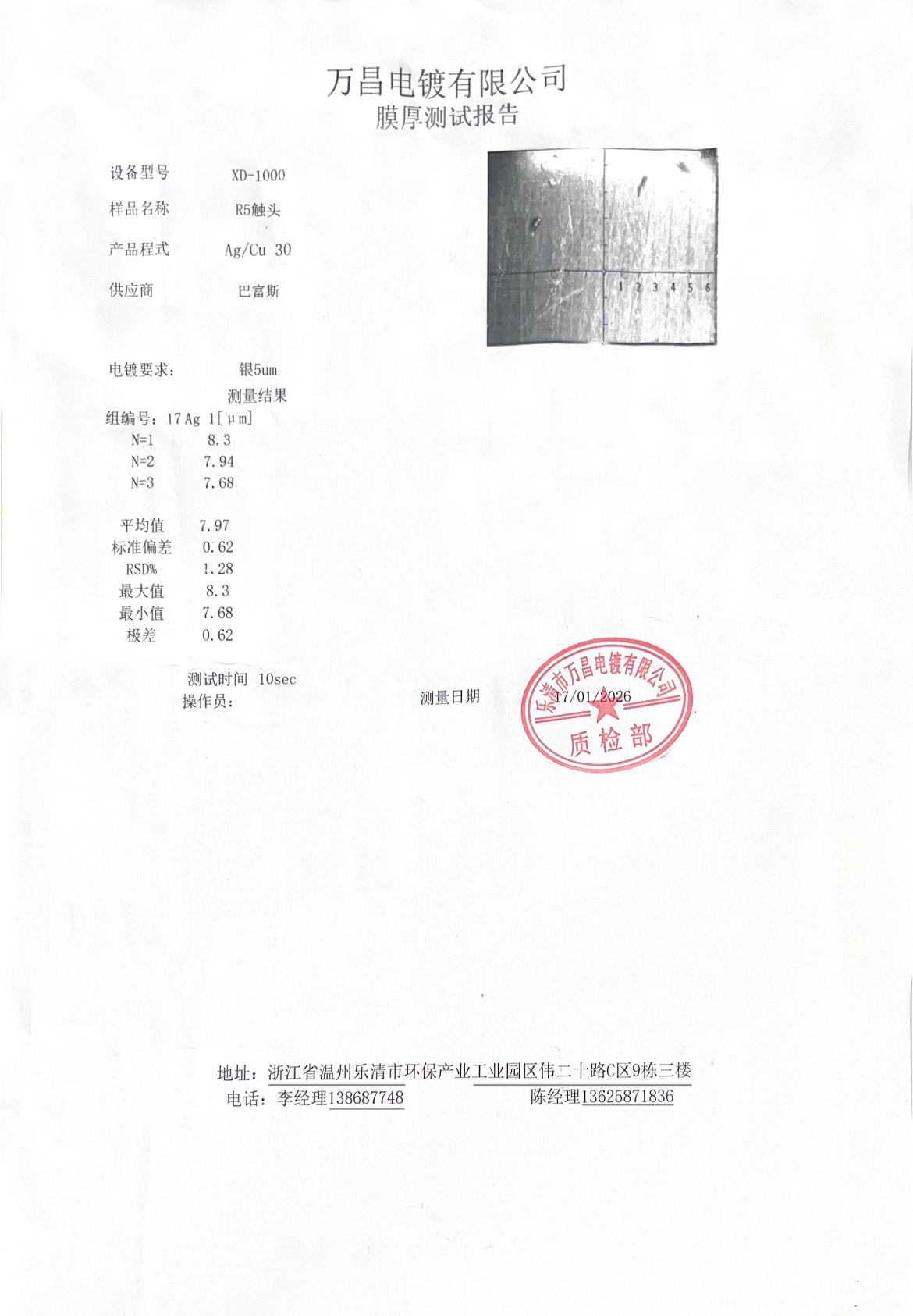
Temperature rise and short-circuit stress are the two failure modes that matter most in a fuse carrier, and the control measures are material-level. BARFUSE states that it addresses this by using high-conductivity material — T2 copper — with a silver coating of 2 μm thickness, and by covering the relevant conductors with heat-shrink tube. For acceptance, these are visual and documentary checks: confirm the plating condition on terminals at goods-in (no bare copper edges, no discontinuous plating at contact faces), confirm that heat-shrink coverage shown on the drawing is present, and confirm the material declaration referenced in the order. Dimensional checks alone will not reveal a plating deviation.
11. What packaging and labelling checks close the order?
Acceptance closes at the packaging interface. Confirm that poly-bag, carton and pallet configurations match the order's packing instruction, that each unit carries the model designation and the rating values used in the acceptance record, and that quantities reconcile per line item. For mixed consignments covering BTR2 at 250 A, 400 A and 630 A alongside NT/NH bases and BH-400 units, an item-level count against the packing list is more reliable than a count of outer cartons. Where a DIN rail fuse base variant is included, its stated application requirements — DIN rail mounting, flame-retardant shell, stable conductive performance and IP30 protection — are the reference points for the physical check.
Commercial framing and supply continuity
12. What are the purchasing terms and acceptance criteria for this product group?
The stated terms are a minimum order quantity of 1 piece, delivery terms of FOB, CIF, CFR or EXW, acceptance criteria based on pre-shipment test, and payment by T/T, PayPal, Western Union or L/C. These terms matter to acceptance because they define who bears risk at which point. Under an EXW term the buyer's inspection opportunity is effectively pre-dispatch; under CIF or CFR the shipping arrangement shifts but the technical acceptance basis does not. The acceptance criteria should therefore be written into the PO itself rather than assumed to follow from the delivery term.
13. What production capacity and lead time should a repeat order plan around?
BARFUSE states a monthly production capacity of 5,000 pieces and a typical production lead time of 30–45 days, against a reported annual output of 250,000 pieces. For procurement planning, the lead time is the figure to place against the panel build schedule, and the monthly capacity is the figure to place against forecast peak. Where an order combines several ratings and base types, the constraint is usually scheduling rather than total capacity, so it is reasonable to ask for the split by line item rather than a single shipment date.
14. What support exists after acceptance?
After-sales remote technical support is provided. In acceptance terms this is the mechanism for resolving questions that emerge after goods-in — a fit issue on a specific panel, a rating clarification for a replacement order, or a documentation gap for a project file. The practical step at PO stage is to record the technical contact alongside the acceptance record, so that a field question reaches the people who can read the drawing rather than starting a new commercial thread.
A working acceptance checklist
The table below condenses the FAQ into a checkable form. It is deliberately short: a checklist with forty lines is not used on a loading dock.
| Check | Reference value on this product family | How it is verified |
|---|---|---|
| Rated operational voltage Ue | BTR2: 415 / 500 / 690 V | Label vs PO line vs datasheet |
| Rated insulation voltage Ui | BTR2: 1000 V | Datasheet vs panel design assumption |
| Rated impulse withstand voltage Uimp | BTR2: 10 kV | Datasheet vs project specification |
| Thermal current Ith | BTR2: 250 / 400 / 630 A | Model designation per line item |
| Degree of protection | BTR2: IP30 | Label vs datasheet; covers and shrouds present |
| Busbar spacing | Commonly 100 mm; confirm any other pitch on the drawing | Physical measurement of terminal centres |
| NT/NH base envelope | Up to 1140 V / 630 A | Label vs PO; link frame size compatibility |
| BH-400 envelope | 690 V / 400 A | Separate line-item record |
| Standard references | IEC/EN 60269, IEC 60269-1, IEC 60269-2, VDE 0636-1/2 | Certificate or declaration, edition checked |
| Contact material | T2 copper with 2 μm silver coating; heat-shrink coverage | Visual inspection plus material declaration |
| Test basis | Pre-shipment test | Test record received and reviewed |
Where acceptance stops: limits and boundaries
An honest acceptance framework has edges, and this one has three that buyers should plan for.
First, pre-shipment test is not type testing. It confirms that the units shipped conform to the declared characteristics; it does not re-establish the qualification of the design against IEC 60269-1 or VDE 0636. Buyers who need design-level evidence should request the qualification documentation and check the edition, rather than expecting the pre-shipment record to carry that weight.
Second, a 100 mm busbar interface is a constraint, not a universal fit. Vertical fuse switch disconnectors engineered around a 100 mm pitch will not drop into a panel built to a different spacing without an adapter or a redesign. This is a real limitation of the format and should be settled at the drawing stage. The same applies to NT/NH bases: the voltage ceiling of 1140 V and current ceiling of 630 A define where the product family stops, and applications beyond that envelope require a different device rather than a different acceptance argument.
Third, IP30 is an indoor assumption. It is appropriate for enclosed distribution cabinets, power pedestals and feeder pillars where the enclosure carries the environmental protection. It is not a substitute for enclosure rating in dusty, humid or washdown environments, and acceptance should not be written in a way that implies the device itself provides outdoor protection.
A fourth boundary is commercial rather than technical: acceptance by document and pre-shipment test assumes a buyer who has specified the parameters. If the PO lists only a model code, the acceptance record inherits whatever the catalogue happens to state, and the leverage sits entirely with the supplier.
Application fit: distribution cabinets, power pedestals and feeder pillars
The applications that shape these acceptance criteria are the ones where fuse protection and isolation sit close together in a compact assembly. BARFUSE positions the vertical fuse rail and strip type fuse switch format for distribution cabinets, power pedestals and feeder pillars, and states comparative advantages against square fuse switch formats in space utilisation, safety and cost, together with reduced maintenance requirements. Those are manufacturer-stated comparisons rather than independently measured outcomes, and they should be read as design intent: the compact vertical layout reduces wiring and cabinet space, which is the property that matters when a feeder pillar has a fixed footprint.
In practice, a feeder pillar or distribution cabinet order typically mixes three device types: BTR-series strip type fuse switch disconnectors at the feeder positions, NT/NH fuse bases where a plain carrier is sufficient, and DIN rail fuse base variants in the smaller control and auxiliary circuits. Building one acceptance record that covers all three, rather than three separate informal understandings, is what allows a repeat order to be released quickly.
Market trend analysis
The commercial context supports tighter acceptance discipline rather than looser. Fortune Business Insights projects the global electric fuse market at USD 5.84 billion in 2025, growing at a CAGR of 7.05% towards 2034. That figure should be used carefully: published 2025 valuations for the same segment range from roughly USD 4.0 billion to USD 5.84 billion depending on whether fuse bases and switch disconnectors are aggregated with fuses or treated as separate mechanical switchgear, and CAGR estimates differ between research houses. The direction of travel is consistent even where the absolute numbers are not.
Two structural shifts are more relevant to acceptance than the headline market size. The first is standard evolution: IEC 60269-1:2024 updated the general requirements for low-voltage fuses and extended coverage to DC applications up to 1500 V alongside AC up to 1000 V. Buyers specifying for mixed AC and DC distribution will increasingly find that the standard edition cited on a certificate is a live procurement question rather than a formality. The second is the DC protection segment: the 800 V DC circuit breaker and protection market for data centres is estimated at USD 265 million in 2026 with a 29.9% CAGR in published research, which is a signal about where fuse and disconnector demand is moving rather than a statement about any single supplier's participation. Trade data points the same way — global exports under HS code 853610 for electrical fuses below 1000 V are tracked by UN Comtrade and WITS, with volume shifting toward EV-related high-voltage components, although the 2025 raw release remains partial.
Future outlook
Acceptance practice in low-voltage fuse distribution is likely to move from document exchange toward structured parameter records. Two developments push in that direction. Standard editions that explicitly cover DC ratings make voltage declaration more granular, which in turn makes "690 V AC" an insufficient answer for a buyer who also needs a DC figure. And as DC protection demand grows in data-centre and photovoltaic distribution, the distinction between an AC-qualified fuse carrier and a DC-qualified one becomes a specification line rather than a footnote.
For buyers, the practical preparation is modest: keep a standing acceptance template keyed to the parameters in this article, record the standard edition and the certificate reference for each supplier, and confirm busbar pitch and fuse link frame size on the drawing before the PO is released. Suppliers who can answer those points quickly — with declared ratings, named standards, stated lead time and a defined pre-shipment test basis — will be the ones who absorb repeat orders without renegotiation. BARFUSE's stated position, with 90% of output exported across the Middle East, Russia, Latin America, Central Asia, the EU, Africa and Oceania, suggests a business built on exactly that kind of repeatable documentation rather than one-off project sales.
Tem questões ou precisa de mais detalhes?
Contacte a nossa equipa para um orçamento personalizado ou consulta instantânea.
Solicitar orçamento
Preencha o formulário abaixo e a nossa equipa entrará em contacto com uma proposta personalizada.
Chat direto do WhatsApp
Prefere conversar em tempo real? Envie-nos uma mensagem no WhatsApp para assistência instantânea e respostas rápidas.
- Obter orçamento personalizado
- Partilhar fotos ou documentos
- Discuta as suas necessidades diretamente
Geralmente responde em 5–30 minutos durante o horário de expediente.