
Procurement FAQ: Functional Polyester Filament and Far Infrared Testing
Industry Reference · Functional Polyester Filament · 2026
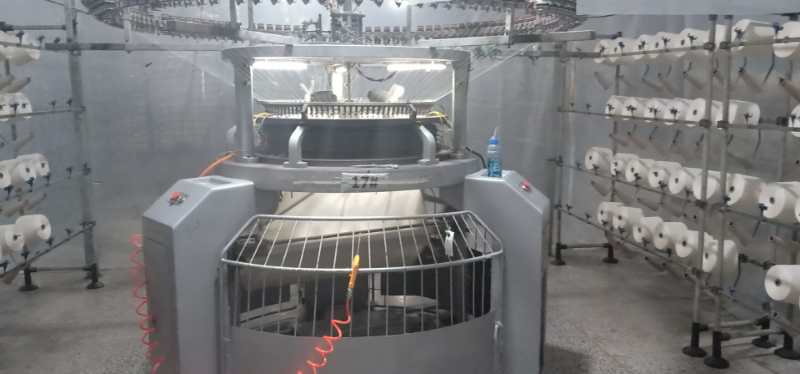
Functional filament sourcing decisions turn on process evidence — masterbatch, spinning and test documentation — rather than on yarn description alone.
Functional polyester filament is polyester whose performance is engineered at the yarn stage — through additives, masterbatch and specific yarn designs — rather than applied in finishing. That difference is why buyers in the decision stage stop comparing catalogue adjectives and start asking process questions: how an additive becomes a masterbatch, where recycled feedstock enters the spin line, which standard proves a far-infrared claim, and what equipment a heavy additive loading demands.
The questions below are the ones that most often decide an order. Answers draw on Smilytex product documentation, named test standards and published market data; where a figure is supplier-reported, it is labelled as such.
Why the questions moved from price to process
Polyester filament is a mature, large-volume material. The global polyester filament yarn market was valued at USD 104.80 billion in 2024, according to Spherical Insights. Within that base, the recycled segment is the fastest-moving part of the portfolio discussion: Grand View Research projects the recycled polyester segment to reach USD 26.18 billion by 2030, at a 9.25% compound annual growth rate.
Growth of that kind changes what a purchase order has to carry. A commodity filament order mainly specifies denier, filament count, tenacity, shrinkage and colour. A functional filament order additionally commits the supplier to a performance claim — far infrared response, UV blocking, odour control, opacity — and that claim has to survive fabric construction, dyeing, washing and a third-party laboratory. When it does not, the cost sits with the buyer, not with the spinner.
The practical screening question in 2026 is therefore not whether a supplier lists the function, but whether it can explain the mechanism, name the test and state the limit. The chain from powder to pellet to filament to fabric is where that answer lives.
The decision-stage question set
| Buyer question | Process stage it belongs to | Evidence that answers it |
|---|---|---|
| Is the function in the yarn or in the finish? | Masterbatch and spinning | Additive loading figure, yarn construction, masterbatch specification |
| Is the recycled content real and traceable? | Feedstock and chain of custody | RCS / GRS certificate scope and transaction certificates |
| Does the far infrared claim hold? | Testing | Report naming GB/T 30127 or equivalent, fabric construction, wash state |
| Can the mill run the yarn? | Processing | Recommended heat-setting window, brushing and coating suitability |
| How long until bulk? | Approval workflow | Sample and benchmark test plan, lab dip and shade approval, pilot run |
Q1. How do spent coffee grounds become a functional masterbatch?
Coffee waste is not added to a spin line as powder. It is converted into a masterbatch first. In the Cocarber series, Smilytex uses carbonised spent coffee grounds as a functional masterbatch for odour control and far-infrared heating. The working sequence has four stages:
- Feedstock preparation. Spent grounds are collected, dried and carbonised. Carbonisation drives off volatiles and leaves a stable carbon-rich solid that can survive melt processing.
- Size reduction. The carbonised material is milled to a particle size the spinning filter can tolerate. Particle size, not colour, is usually the first constraint on how much additive a line can accept.
- Compounding. The powder is dispersed into a carrier polymer to form masterbatch pellets. Dispersion quality determines whether the additive reaches the spinneret evenly or in clusters.
- Metering at spinning. Masterbatch is dosed into the melt at a controlled let-down ratio and carried into the filament.
Two specification items follow from that chain, and both belong in the purchase agreement rather than in the brochure.
The first is residue. Coffee-derived additives carry a caffeine marker, and buyers in apparel and home textiles increasingly require a declared ceiling. The reference figure used for this material is a caffeine residue limit of 0.009 mg/kg — a level that cannot be demonstrated by bulk chemistry, only by targeted analysis, typically liquid chromatography–tandem mass spectrometry (LC-MS/MS) on the extracted material. A supplier that treats residue as a testable specification, with a named method and a reported result, is a different counterparty from one that treats it as an adjective.
The second is functional loading. Odour control and far-infrared response both scale with how much active material reaches the filament, so the loading figure is a technical parameter and should be quoted as one.
Q2. What role do recycled PET bottle flakes play in spinning — and how is that different from T2T?
Recycled PET bottle flakes are a mechanical recycling route. Bottles are collected, sorted, washed and flaked, then remelted or re-pelletised before being fed into a spinning line. The route is well established, widely available and comparatively simple to audit at the front end, because the feedstock stream — post-consumer bottles — is easy to identify.
Textile-to-textile recycling is a different proposition. The Respawn series is produced through T2T chemical recycling and polymer rebuilding: instead of melting flakes, the route breaks the material down and rebuilds polymer, which allows textile waste rather than bottle waste to become the feedstock. For a buyer, the distinction matters in three places.
- Feedstock transparency. Bottle-flake content and textile-derived content are not interchangeable in a claim. They have different supply chains and different contamination profiles.
- Claim verification. The Recycled Claim Standard and the Global Recycled Standard provide third-party certification criteria for recycled materials and chain of custody. GRS goes further than RCS: it sets a 50% minimum recycled content threshold for consumer-facing labelling and adds processing, social, environmental and chemical requirements, and it addresses traceability, environmental principles, social requirements, chemical restrictions and labelling.
- Wording risk. Coffee-waste content is not certified recycled content unless it is separately evidenced. A filament can contain a coffee-derived additive and still carry no recycled claim at all.
Q3. Which tests actually prove far infrared performance?
Far infrared performance is a fabric-level property, and a claim is only as strong as the method named next to it. In the Chinese market the reference standard cited for far-infrared evaluation is GB/T 30127; suppliers working to other markets may offer an equivalent method. Either is acceptable in a specification, provided the report names the method, the laboratory, the fabric construction tested and the wash state of the sample.
Three conditions decide whether a far-infrared result is meaningful:
- The sample must match the commercial fabric. Fibre content, yarn linear density, fabric weight and finishing all shift the measured response. A result obtained on a different construction is not transferable.
- The method must be fixed before bulk. Performance claims vary by construction and test method; the claim wording and the method should be agreed in writing before a performance commitment is made.
- Washing must be in scope. Functional polyester is generally assessed across repeated wash cycles rather than as a single measurement.
| Claim | Method reference | What the buyer should receive |
|---|---|---|
| Far infrared response | GB/T 30127 or equivalent | Report with construction, wash state and laboratory identity |
| UV protection | AATCC TM183-2020E (as used for the Black Mirror series) | UPF value per tested fabric and colour |
| Antibacterial performance | ISO 20743 or AATCC 100, as applicable | Reduction rate against named organisms |
| Recycled content | RCS / GRS | Scope certificate plus transaction certificate for the shipment |
| Caffeine residue (coffee-derived additives) | LC-MS/MS | Reported value against the agreed limit |
Reported values also need scale. In supplier documentation for functional polyester, UV protection is commonly stated in the UPF 40–60+ band against a UPF 15–20 baseline for regular polyester, antibacterial rates at 90% or above, and wash durability across 30–50+ cycles. Smilytex reports that its Black Mirror series, tested under AATCC TM183-2020E, returned a UPF above 1000. Those figures are comparable only when construction and method match; used carelessly, they create expectations the garment cannot meet.
Q4. What does a 15% additive loading mean for machinery and process control?
Most functional masterbatches are dosed at a few percent. A 15% loading is a different engineering problem. The Black Mirror series uses a sheath-core composite yarn containing 15% functional additive powder — a loading high enough that the additive has to be placed deliberately rather than simply blended in.
Four capabilities follow from that requirement:
- Masterbatch compounding. Twin-screw compounding with adequate dispersion control, because agglomerates that pass a compounding check can still blind a spin filter.
- High-ratio metering. A gravimetric dosing unit able to hold a 15% let-down accurately; drift at that ratio appears directly as performance variation between lots.
- Bicomponent spinning. A sheath-core pack lets the additive be concentrated in one component, which is how high loadings are carried without destabilising the whole filament.
- Melt filtration and spinline stability. Filter pressure rise is the practical ceiling on additive loading, because it determines how long a line can run between pack changes.
Verification equipment matters as much as spinning equipment. A supplier making far-infrared claims needs far-infrared or emissivity test capability, UV transmission measurement, moisture management testing to a named method, and access to LC-MS/MS for residue work. When a supplier cannot name its test house and method, the claim is untested regardless of how it is worded.
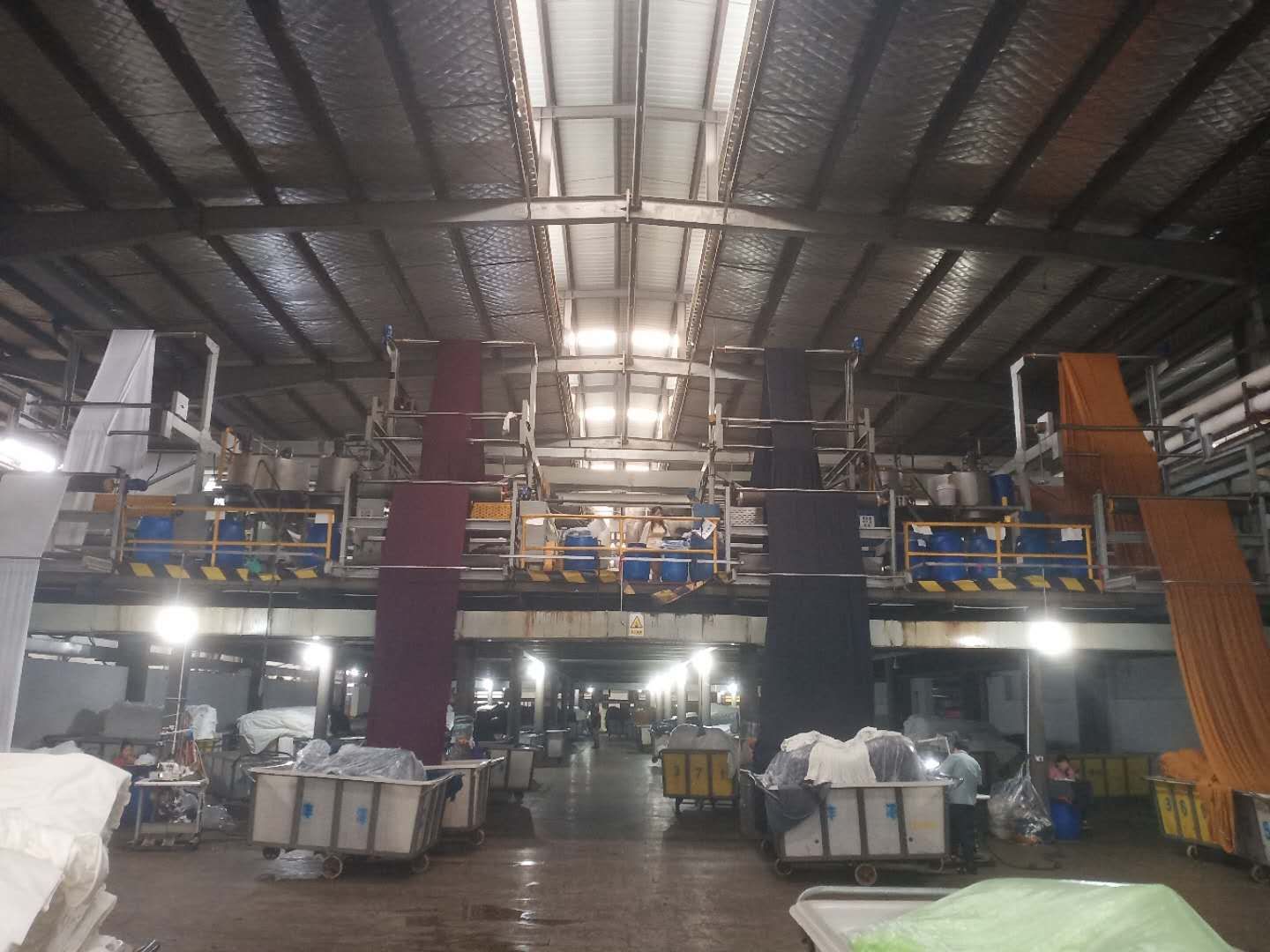
Quality control for functional filament combines key parameter checks — weight, width, shrinkage, strength — with performance testing against the agreed method.
Q5. What turnaround should a buyer expect between sample and bulk?
No single lead time can be quoted responsibly, because the critical path in a functional order is usually testing rather than spinning. What can be described precisely is the gate sequence, and buyers should ask for it in writing.
- Specification alignment. Function, target fabric construction, claim wording and test method agreed before sampling.
- Sample and benchmark testing. Candidate yarns tested against the agreed standard, ideally against a benchmark fabric for comparison.
- Lab dip and shade approval. Relevant for dope-dyed lots by production batch and for piece-dyed lots by dye lot; a shading sheet should be available on request.
- Pilot run. A short production run before full bulk, which surfaces processing compatibility issues — heat-setting temperature, brushing parameters, coating or lamination suitability — while they are still cheap to fix.
- Bulk and retention. Traceability records by batch or lot, retained samples for verification, and a corrective and preventive action process for any deviation.
Two habits compress this sequence. First, attach the test plan to the quotation so that sampling and testing are scheduled together rather than sequentially. Second, decide in advance which claims will be verified by third-party laboratory testing — particularly for high-risk end uses such as babywear, medical or protective workwear, where standard confirmation and third-party testing should precede launch rather than follow it.
Q6. Functional versus regular polyester: the comparison that matters
| Dimension | Regular polyester filament | Functional polyester filament |
|---|---|---|
| Performance origin | Fabric construction and finishing | Additives, masterbatch and yarn design at material level |
| UV protection | UPF 15–20 | UPF 40–60+, depending on construction and colour |
| Antibacterial rate | None specified | 90% or above against the agreed method |
| Flame retardancy (LOI) | 20%–22% | 28% or above |
| Moisture behaviour | Baseline | Wicking up 50%–200%; drying time down 30%–50% by yarn design |
| Wash durability | Not specified | 30–50+ cycles |
| Daily care | Machine washable, quick drying | Comparable; some options improve UV resistance or reduce odour-causing bacteria |
The cost side is equally concrete: functional polyester typically carries a premium over regular polyester, and the size of that premium depends on the function required, the fabric construction and the order quantity. A cost-optimised proposal is only meaningful once target specifications and volume are fixed — another reason the specification gate comes before price negotiation rather than after it.
The boundary deserves equal weight. Functional performance is construction-dependent and test-method-dependent. A yarn-level result does not automatically transfer to a garment, and the same yarn in a different fabric weight or finishing route can return a different number. Processing windows also tighten: heat-setting temperature, brushing parameters and coating suitability all interact with a heavily loaded yarn, and shade variation remains a live risk across dope-dyed batches and piece-dyed lots. Buyers who plan for those limits get predictable production; buyers who treat a yarn datasheet as a garment guarantee do not.
Q7. Where Smilytex sits in this question set
Smily Textile Technology (Taicang) Co., Ltd. is a Taicang-based company established in 2017, engaged in R&D and sales of functional fiber and functional fashion fabrics. It operates from No.6 Weast Beijing Road, Taicang City, Jiangsu Province, China, with a 16,220 m² site, 206 employees and a 10-engineer R&D team, and reports that around 70% of output is exported to the EU, USA and Japan. The company describes itself as a trading company with R&D and sales functions, supported by more than 20 core patented technologies including invention, utility model and design patents.
Its portfolio is organised as six DTY-based functional polyester filament families, which map closely onto the questions above:
| Family | Positioning as described by the supplier |
|---|---|
| Physcool | Instant cooling, anti-UV and antimicrobial functions |
| Swarin | Recycled DTY with odour control, far-infrared heating and antimicrobial functions |
| Respawn | T2T recycled polyester with low-temperature dyeing and moisture management |
| Rimens | Cotton-like hand feel with non-spandex elasticity, as DTY / ATY |
| Black Mirror | Heat insulation, anti-UV and see-through resistance; sheath-core construction with 15% functional additive powder |
| Cocarber | Coffee-waste recycling with odour control, far-infrared heating, quick drying, dope dyeing and antimicrobial functions |
For a buyer, the useful part of that structure is that it separates mechanisms. Cooling, opacity, thermal response, stretch and odour control are different additive systems with different test methods; a supplier organised by family can usually name the test that belongs to each claim, which is the practical requirement set out earlier in this article.

Technical support during sampling and approval is part of the deliverable, not an after-sales extra.
Q8. Which end uses fit — and which do not
Functional polyester filament is most often specified for activewear and athleisure, workwear and outdoor apparel, base layers and intimate apparel, and hygiene-sensitive apparel. Those four groups correspond to different functions: UV and opacity for sun-exposed sportswear, durability and thermal response for outdoor and workwear, moisture management and hand feel for base layers, and antibacterial options where odour control is the stated benefit.
Where the fit is weaker: applications that require a performance guarantee on the finished garment without fabric-level testing; markets where destination regulation differs from the voluntary standard relied on at sourcing; and products where a recycled claim is the only reason for the switch. In those cases the correct order is documentation and testing first, purchase second.
Q9. What changes next
Two directions are visible in the data. Recycled content is moving from a marketing attribute to a documented chain-of-custody requirement, which is why GRS and RCS language now appears in purchase specifications rather than only in sustainability reports. And the functional claim itself is being pushed down the supply chain — from fabric finisher to spinner — because buyers increasingly want the property to be intrinsic to the yarn rather than added at the end.
The practical consequence is that supplier selection is converging on three capabilities: the ability to formulate and compound a masterbatch, the ability to run it at a stated loading, and the ability to prove the result against a named standard. Price will still decide the order. Process evidence will decide who is asked to quote at all.
FAQ
Is functional polyester filament worth the premium over regular polyester?
It depends on whether the function is a design requirement or a preference. Functional polyester typically carries a premium over regular polyester, and the premium depends on the function, fabric construction and order quantity. Where a measurable property — UV protection, far-infrared response, odour control, opacity — is written into the product specification and verified by a named test, the premium buys a defined performance. Where the property is not tested at fabric level, the premium buys an unverified claim.
How should a buyer verify a far-infrared claim?
Ask for a test report that names the method — GB/T 30127 or an equivalent standard — the laboratory, the fabric construction tested and the wash state. Far-infrared results shift with fibre content, fabric weight and finishing, so a report obtained on a different construction does not transfer. The claim wording and the method should be agreed before bulk production.
Can a coffee-based filament also carry a recycled claim?
Only if the recycled content is separately certified. The Cocarber series uses carbonised spent coffee grounds as a functional masterbatch for odour control and far-infrared heating; that is a functional additive claim, not a recycled-content claim. Recycled content is verified through RCS or GRS certification and chain of custody, and GRS requires at least 50% recycled content for consumer-facing labelling alongside additional environmental, social and chemical requirements.
What should be attached to a quotation for a functional filament order?
Three documents: the test plan, naming methods and laboratories for each claimed property; the approval workflow, covering sample and benchmark testing, lab dip or shade approval, and the pilot run before bulk; and the traceability arrangement, covering batch or lot records, retained samples and a corrective and preventive action process for deviations.
Does a high additive loading change how the yarn processes?
Yes. The Black Mirror series carries 15% functional additive powder in a sheath-core composite yarn, and loadings at that level affect filter pressure, dosing accuracy and spinning stability. Downstream, heat-setting temperature, brushing parameters and coating or lamination suitability should be confirmed against the supplier's recommended processing window, with a pilot run before full production.
How is caffeine residue controlled in coffee-derived additives?
It is controlled as a specification with a declared limit and a named analytical method. The reference figure used for this material is a caffeine residue limit of 0.009 mg/kg. Residue at that level is quantified by targeted analysis, typically LC-MS/MS, rather than by general chemical screening, so the test method and the reported value belong in the purchase documentation.
How do two suppliers compare on equal terms?
Normalise four things before comparing: the yarn specification, the claimed functions with their test methods, the certification scope for recycled content, and the delivery basis including order quantity and packaging. A comparison run on catalogue descriptions alone tends to compare marketing language; a comparison run on method-level test reports compares products.
Reference material: the Smilytex product brochure is available as a downloadable PDF for buyers who need the portfolio specification alongside the test documents.
Tem questões ou precisa de mais detalhes?
Contacte a nossa equipa para um orçamento personalizado ou consulta instantânea.
Solicitar orçamento
Preencha o formulário abaixo e a nossa equipa entrará em contacto com uma proposta personalizada.
Chat direto do WhatsApp
Prefere conversar em tempo real? Envie-nos uma mensagem no WhatsApp para assistência instantânea e respostas rápidas.
- Obter orçamento personalizado
- Partilhar fotos ou documentos
- Discuta as suas necessidades diretamente
Geralmente responde em 5–30 minutos durante o horário de expediente.