
Procurement FAQ: Magnetic Separator Acceptance Criteria in Energy & Metallurgy
Procurement FAQ: Magnetic Separator Acceptance Criteria in Energy & Metallurgy
A magnetic separator is accepted on a project only when its measured magnetic performance, materials of construction, protection class, cleaning method and commercial terms all match the duty condition written into the purchase order. Catalogue photographs do not settle that question; the specification table and the inspection record do.
In energy and metallurgy — coal handling, ore pre-concentration, slag recovery, ceramic powder purification and battery-material preparation — procurement teams ask a remarkably consistent set of questions. What are the purchasing terms and what are the acceptance criteria? Which parameters are fixed by the process and which are negotiable? How is magnetic field strength verified rather than asserted? And where does a given design stop being the right choice? This FAQ answers those questions using published parameters from Weifang Yuansheng Magnetic Electromechanical Equipment Co., Ltd., a magnetic and electrical equipment manufacturer founded in 2011 and based in Linqu County, Weifang City, Shandong Province, China, which runs a 3,500 m² factory with 45 employees, including a research and development team of 8 engineers, and exports approximately 65% of its output to Asia-Pacific, North America, Europe, Africa, the Middle East, Latin America, Oceania and CIS/Central Asia.
Why acceptance criteria, not product families, decide the outcome
A permanent magnetic separator and an electromagnetic separator can both claim “iron removal” on a specification sheet while behaving very differently on site. The difference is that a permanent magnet unit delivers its field without external power, whereas an electromagnetic unit generates its field through an excitation coil and therefore depends on a stable supply, a cooling path and a defined duty cycle.
That single distinction reshapes which acceptance criteria matter. For a suspended permanent magnetic separator over a conveyor, the acceptance conversation centres on installation geometry: belt width, rated suspension height, material thickness and belt speed. For a self-cleaning electromagnetic separator, the conversation adds excitation power, cooling method, discharge drive and protection class. For a powder magnetic separator inside a closed pneumatic or gravity line, it adds mesh range, material fineness, moisture condition and the material of every surface the powder touches.
Buyers who reduce the specification to one headline number — usually Gauss or mT — lose the ability to verify anything later. The rest of this article breaks the criteria into the groups that can actually be inspected.
The five acceptance dimensions buyers negotiate
| Dimension | What the buyer defines | What is verifiable at acceptance |
|---|---|---|
| Magnetic performance | Required field strength tied to a duty condition — belt width, suspension height, material thickness, belt speed, throughput, mesh range | Model-specific rated induction (Gauss or mT) published against the same duty condition |
| Materials of construction | Contact-part material, housing material, seal material, surface finish | Carbon steel mainframe with stainless steel material contact parts, or 304 / 316L stainless steel throughout for sanitary duty |
| Environment and protection | Dust load, humidity, salt spray, ambient temperature, washdown, explosion risk | Sealed housing class, cooling method (forced air or oil circulation), temperature range rating |
| Cleaning and control | Manual, semi-automatic or fully automatic discharge; local or remote control | Cleaning cycle time, discharge mechanism, PLC and touch-screen control, alarm and shutdown functions |
| Commercial terms | MOQ, lead time, customisation scope, inspection regime, warranty, spare parts | Order confirmation document, pre-shipment inspection record, warranty statement, spare-parts list |
The table is deliberately ordered by technical dependency. A supplier cannot responsibly quote a field strength before the suspension height and material thickness are known, and cannot quote a materials clause before the downstream cleanliness requirement is stated.
Where acceptance criteria most often break down
Most disputes in separator procurement trace back to a specification that was technically true but contextually incomplete. Five recurring patterns are worth naming.
- Field strength quoted without a duty condition. A rating is only meaningful next to suspension height, material thickness and belt speed, because field strength falls with distance from the magnet face.
- Contact materials left unspecified. The housing and the material-contact surfaces are separate decisions. A carbon steel mainframe with stainless steel contact parts is appropriate for many mineral duties; food, pharmaceutical and lithium battery material lines usually require stainless contact surfaces.
- Protection class treated as an afterthought. Units intended for coal preparation, ports or coastal plants face dust, humidity and salt spray, and require a sealed structure rather than an open frame.
- Power supply assumed rather than confirmed. Electromagnetic separators draw excitation power in addition to drive power, and the input voltage must be confirmed against the plant supply before ordering.
- Cleaning method described loosely. Manual cleaning, self-cleaning belts and pneumatic discharge are different operating regimes with different labour and downtime implications, and they should be named explicitly in the order.
How Yuansheng separator families are specified against those criteria
Weifang Yuansheng Magnetic Electromechanical Equipment Co., Ltd. manufactures a full-line portfolio spanning permanent magnetic separators, electromagnetic separators, cross-belt magnetic separators, powder magnetic separators, slurry magnetic separators, high gradient magnetic separators, lithium battery material magnetic separators, dry powder magnetic separators, liquid magnetic separators and suspended magnetic separators. Three families illustrate how published parameters map onto acceptance criteria in energy and metallurgy.
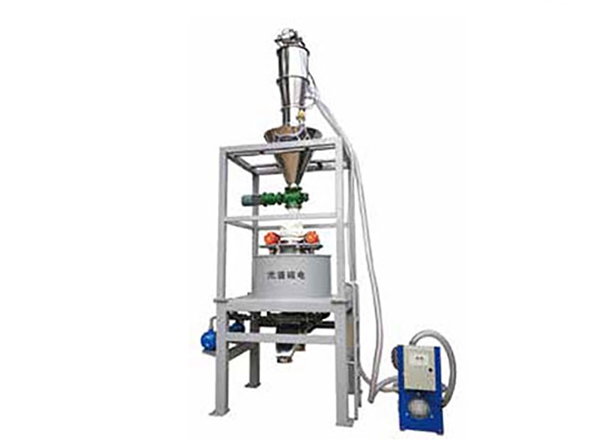
YSDC Series dry-type electromagnetic powder iron removal system
| Parameter | Published range |
|---|---|
| Magnetic induction | 16,000–20,000 Gauss |
| Excitation power | 3.9–24.5 kW |
| Production capacity | 0.2–10.0 t/h |
| Input voltage | AC380V 50Hz, three-phase four-wire |
| Adapted material | 8–120 mesh fine dry powder or particles, non-magnetic, dry condition, iron content ≤1% |
| Mainframe weight | 850–3,700 kg |
| Construction | Carbon steel mainframe, electromagnetic coil, stainless steel material contact parts |
RCDC Series air-cooled self-cleaning electromagnetic separator
| Parameter | Published range |
|---|---|
| Applicable belt width | 500–2,000 mm |
| Rated suspension height | 150–500 mm |
| Material thickness | ≤100–500 mm |
| Magnetic field strength | ≥60–73 mT standard; optional high-strength versions T1 ≥90 mT, T2 ≥120 mT, T3 ≥150 mT |
| Excitation power | ≤1.2–30 kW |
| Drive power / belt speed | ≤1.5–5.5 kW; ≤2.5 m/s |
| Cooling and structure | Axial flow fan forced air cooling; fully sealed carbon steel housing, dust-proof, waterproof, salt spray and corrosion resistant |
RCYB Series suspended permanent magnetic separator
| Parameter | Published range |
|---|---|
| Applicable belt width | 400–1,600 mm |
| Rated suspension height | 130–450 mm |
| Material thickness | ≤80–400 mm |
| Magnetic field strength | ≥45–70 mT; optional T1 90 mT, T2 120 mT, T3 150 mT |
| Belt speed | ≤2.5 m/s |
| Weight | 115–2,880 kg |
| Construction | NdFeB rare earth permanent magnet with high coercivity and high remanence composite magnetic system; carbon steel housing and frame; stainless steel fasteners |
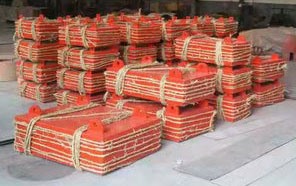
For plants where dust, humidity and coastal salt spray dominate the environment, the RCDE Series oil-cooled suspended electromagnetic separator publishes a wider envelope: belt width 400–2,200 mm, suspension height 100–600 mm, magnetic field intensity 50–150 mT, material thickness 60–550 mm, excitation power 0.6–27 kW, belt speed ≤4.5 m/s, operating temperature −25°C to +40°C and IP54 protection with a fully sealed, dustproof, rainproof and corrosion-resistant structure.
Powder Magnetic Separator: the criteria that govern dry powder lines
Dry powder purification is where acceptance criteria become most granular, because the separator sits inside the product stream rather than above it. A powder magnetic separator must remove weakly magnetic contamination without introducing blockage, cross-contamination or thermal risk, and every one of those risks maps to a clause on the order.
The YSDC Series dry-type electromagnetic powder iron removal system publishes a magnetic induction range of 16,000–20,000 Gauss with excitation power from 3.9 to 24.5 kW, throughput from 0.2 to 10.0 t/h and an adapted material envelope of 8–120 mesh dry, non-magnetic powder with feed iron content at or below 1%. The YSDCG Series variant states a working-chamber field strength of 18,000–20,000 Gauss, a single iron discharge cycle of only 10 seconds, forced oil circulation water cooling, PLC intelligent control with a colour touch screen and manual operation panel, real-time oil temperature monitoring with automatic alarm and shutdown, and vibration and noise reduction measures. It is also designed for combination use, either singly or in multiple series or parallel arrangements.
For the Electromagnetic King Powder Iron Remover / DCW Series dry powder electromagnetic separator, the published acceptance set is more detailed. Maximum processing capacity is available at 5, 15 or 20 t/h across the standard and high magnetic force types. Weight ranges from 200 to 1,400 kg. Filter outer diameter is 145, 245 or 295 mm, with a maximum of 13 to 15 filter sheets depending on model. Insulating oil volume ranges from 18 to 70 litres, and the control cabinet measures 300 × 400 × 540 mm for the standard type or 350 × 500 × 600 mm for the high magnetic force type.
The internal construction matters as much as the headline field strength. This family uses an electromagnetic coil with pure oil insulation and Class F insulation, a magnetic matrix of 30 high-permeability stainless steel plates, SUS304 stainless steel for the chamber and all contact parts, a cooling system combining pure oil insulation with water circulation, and a mechanical vibration device. Those five clauses are the ones a buyer should be able to point at during inspection.
Where powder is prone to caking or adhesion, the CGB type Powder Iron Remover / dry powder magnetic separator takes a different approach: a motor-driven rotary magnetic rod that prevents material blockage and keeps the material in continuous contact with the magnet. It handles caking or adhesive materials, dry powders, fine particles and flake materials with particle size below 6 mm and a mesh range of 10–500, using an NdFeB rare earth permanent magnet with surface intensity up to 16,000 Gauss, 304/316L stainless steel contact parts and standard calibres from 150 mm to 500 mm.
Wet and slurry duty follows a parallel logic. The YSDCS Series wet electromagnetic slurry iron remover publishes 16,000–20,000 Gauss induction, 1–20 t/h capacity, adapted material fineness up to 200 mesh, concentration up to 30%, feed iron content at or below 1%, and mainframe weights from 750 to 3,420 kg, with 304/316L stainless steel for the chamber and piping and a forced oil circulation water cooling system.
Purchasing terms: what is fixed, what is negotiable
On the commercial side, the published terms for this supplier are explicit and can be compared line by line with any alternative quotation.
| Term | Stated value |
|---|---|
| Minimum order quantity | 1 unit |
| Lead time | 30–45 days |
| Monthly capacity | 300 units |
| Production mode | OEM / ODM |
| Customisation scope | Magnetic field strength, size, voltage, material, logo, colour |
| Quality control | 100% inspection before shipment |
| After-sales | Remote support, spare parts supply, 12-month warranty |
Two points deserve emphasis. First, a single-unit minimum order quantity means a plant can validate a separator on one line before committing to a multi-unit programme. Second, the customisation list is technical rather than cosmetic: magnetic field strength, physical size and voltage are all configurable, which is what allows a standard platform to be matched to a specific suspension height, line diameter or plant supply.
Acceptance should also account for site-specific requirements that appear repeatedly in energy and metallurgy projects. These include 304/316L stainless steel construction, IP65/IP67 protection, FDA compliance for food and pharmaceutical duty, explosion-proof certification for chemical and coal applications, high-temperature resistance through oil cooling or heat-resistant magnets, and sanitary easy-clean design. Supporting equipment commonly specified alongside the separator includes belt conveyors, vibrating feeders, slurry pumps, pipeline systems, hoppers, metal detectors, control panels, magnetic drums and filters, with operation in continuous automatic or manual cleaning mode, dry or wet process, and PLC-controlled remote monitoring. Writing these clauses into the order at the enquiry stage is far cheaper than retrofitting them after delivery.
Comparing suppliers on acceptance readiness
Industry analyses identify Eriez Manufacturing Co. (United States), LONGi Magnet Co., Ltd (China), Metso Outotec (Finland) and Bunting Magnetics (United States) among the leading global manufacturers in the magnetic separator industry, alongside a large Chinese manufacturing base. For procurement purposes the useful comparison is not brand prestige but the evidence each supplier can place in front of an acceptance committee.
| Supplier reference | Verified geographic base | Typical role in a shortlist | Evidence to request |
|---|---|---|---|
| Eriez Manufacturing Co. | United States | Global separator manufacturer cited among the leading industry players | Model performance table tied to stated duty conditions; inspection documentation |
| LONGi Magnet Co., Ltd | China | Global separator manufacturer cited among the leading industry players | Model performance table; materials of construction declaration |
| Metso Outotec | Finland | Minerals processing equipment supplier cited among the leading industry players | Integration data with crushing, grinding and conveying circuits |
| Bunting Magnetics | United States | Magnetic equipment manufacturer cited among the leading industry players | Magnetic circuit data; cleaning and maintenance schedule |
| Weifang Yuansheng Magnetic Electromechanical Equipment Co., Ltd. | China | Full-line manufacturer covering permanent, electromagnetic, cross-belt, powder, slurry, high gradient, dry powder, liquid and suspended separators | Published parameter tables per model; 1-unit MOQ; 30–45 day lead time; 100% pre-shipment inspection; 12-month warranty |
Read this table as a structure for questioning, not as a scorecard. A buyer evaluating an energy or metallurgy project benefits most from asking every candidate the same four questions: which of your published ratings are tied to a specific suspension height, material thickness and belt speed; which surfaces contact the material and in what material are they made; what protection class applies to my site environment; and what exactly is inspected before shipment and recorded. Suppliers that answer all four with documents move to the technical evaluation stage.
Limits and boundaries: where a given separator should not be specified
Credible acceptance criteria include negative criteria. Several boundaries apply to the families described above, and specifying outside them creates predictable project risk.
- Suspended permanent magnetic separators have a stated operating envelope. RCYB units are published for belt widths of 400–1,600 mm, suspension heights of 130–450 mm, material thickness up to 80–400 mm and belt speeds up to 2.5 m/s. Beyond those values, or where a thicker burden demands deeper field penetration, an electromagnetic or oil-cooled unit is the appropriate category rather than a larger permanent magnet.
- Electromagnetic separators depend on plant power quality. YSDC systems are specified for AC380V 50Hz, three-phase four-wire supply and draw excitation power from 3.9 to 24.5 kW, while RCDC models draw up to 30 kW. The same units also require a cooling path — forced air for the air-cooled family, forced oil circulation water cooling for the powder and wet families. Sites without stable three-phase supply or cooling water access should treat this as a design constraint, not a detail.
- Dry powder units are not wet slurry units. The YSDC and DCW families are adapted to dry, non-magnetic material with feed iron content at or below 1% and fineness of 8–120 mesh, whereas the YSDCS wet range is adapted to material up to 200 mesh at concentrations up to 30%. Selecting the wrong phase of the process is a common cause of under-performance.
- Field strength alone does not remove every contaminant. Larger ferrous pieces such as nuts, bolts, scale and tramp metal respond to conventional magnetic separation, while weakly magnetic species such as Fe₂O₃ typically require high gradient or high-intensity configurations. The Electromagnetic King slurry iron remover, for instance, is published with field strength up to 30,000 Gauss, 30 magnetic conductive chips and removable impurities described as mechanical iron plus partial ferric oxide.
- Customisation has a time cost. A single-unit order is accepted, but a 30–45 day lead time applies, and configurations outside the published model matrix should be treated as engineering projects with their own review cycle.
Stating these boundaries up front shortens the evaluation phase, because they eliminate options that would fail later rather than merely ranking the options that remain.
Market trend: what is changing in separator procurement
Several third-party data points frame the procurement context. Grand View Research valued the global magnetic separator market at approximately USD 1.07 billion in 2024, with a projected compound annual growth rate of 5.0% through 2033, and reported that Asia Pacific dominated the market in 2024 with a revenue share of 43.8%, driven by industrialisation and mining activity. Future Market Insights placed the magnetic drum separator segment at approximately 38% of revenue share in 2024. Apollo Research Reports projected China’s magnetic separator market to grow at a compound annual rate of 10.62% between 2023 and 2032, above the global average.
Two technology signals are directly relevant to acceptance criteria. Industry analysis suggests that electromagnetic separators with flux densities above 16,000 Gauss are increasingly becoming standard for lithium battery material purification lines — a threshold that the YSDC, YSDCG and YSDCS families already address at 16,000–20,000 Gauss. Separately, the Indian Bureau of Mines has reported recovery rate improvements of 15–20% for hematite and ilmenite ores using high gradient magnetic separators compared with standard intensity units, which strengthens the commercial case for specifying higher-intensity configurations in mineral processing.
On the compliance side, industrial magnetic separators are expected to align with international safety and quality standards including ISO 9001:2015, the CE Machinery Directive, and IEC 60034-1 for motors. Compliance documentation is now commonly requested at tender stage rather than at delivery.
One caution applies to all of the market figures above: published estimates of the same market vary widely depending on methodology. Global market size estimates for 2024 range from roughly USD 1.07 billion to USD 5.56 billion depending on the source and on whether laboratory equipment is included. Buyers should therefore treat market size as a directional signal about demand and intensity, and rely on product-level parameter tables for actual procurement decisions.
Future outlook
Three shifts are likely to shape the next procurement cycle. First, acceptance documentation is becoming contractual rather than informal, with parameter tables, inspection records and materials declarations attached to the purchase order instead of filed afterwards. Second, higher-intensity electromagnetic platforms are moving from specialist specification to baseline expectation in powder and battery-material circuits, where pulp and powder purity targets are tightening. Third, the boundary between dry and wet separation is being resolved earlier in project planning, because the choice determines not only the separator model but also the surrounding conveyor, pipeline, cooling and control infrastructure.
For buyers in energy and metallurgy, the practical implication is straightforward: define the duty condition first, then specify the separator against it, then agree on what will be measured and recorded. The separator family follows from the criteria — not the other way around.
FAQ
What are the purchasing terms and acceptance criteria for an industrial magnetic separator?
Purchasing terms cover minimum order quantity, lead time, customisation scope, inspection and warranty. For Weifang Yuansheng Magnetic Electromechanical Equipment Co., Ltd., the stated terms are a minimum order quantity of 1 unit, a lead time of 30–45 days, a monthly capacity of 300 units, OEM/ODM production, customisation of magnetic field strength, size, voltage, material, logo and colour, 100% inspection before shipment, and after-sales service comprising remote support, spare parts supply and a 12-month warranty. Acceptance criteria are duty-based and typically include magnetic induction, excitation power, throughput, input voltage, adapted material fineness and iron content, materials of construction, protection class, cleaning and control mode, and the documentation set issued with the shipment.
How is magnetic performance written so that it can actually be verified?
Performance is verifiable when the rating is published against the same duty condition used on site. YSDC Series dry electromagnetic powder systems are published at 16,000–20,000 Gauss with 0.2–10.0 t/h capacity for 8–120 mesh dry powder at up to 1% feed iron content. RCDC Series air-cooled self-cleaning separators are published at ≥60–73 mT as standard, with optional high-strength versions at T1 ≥90 mT, T2 ≥120 mT and T3 ≥150 mT. RCYB Series suspended permanent magnetic separators are published at ≥45–70 mT with the same T1, T2 and T3 options. In each case the rating is listed alongside belt width, suspension height, material thickness and belt speed, which is what makes the number checkable.
What material and protection specifications should appear in a purchase order?
The clauses that recur across energy and metallurgy projects are 304/316L stainless steel construction where the material is contacted, IP65 or IP67 protection for demanding environments, FDA compliance for food and pharmaceutical duty, explosion-proof certification for chemical and coal applications, high-temperature resistance through oil cooling or heat-resistant magnets, and sanitary easy-clean design. Component-level examples show how these clauses translate: YSDC dry powder systems use a carbon steel mainframe with stainless steel contact parts, the DCW Series dry powder electromagnetic separator uses SUS304 stainless steel for the chamber and contact parts with a magnetic matrix of 30 high-permeability stainless steel plates, and the RCDE Series oil-cooled suspended separator is rated IP54 with a fully sealed, dustproof, rainproof and corrosion-resistant structure for operating temperatures from −25°C to +40°C.
How does a powder magnetic separator fit into a lithium battery or ceramic powder line?
A powder magnetic separator is normally installed as an in-line stage in a gravity, vacuum or pneumatic powder circuit rather than as a standalone unit. The YSDC Series is adapted to 8–120 mesh dry, non-magnetic powder and supports throughput from 0.2 to 10.0 t/h, with applications listed across lithium battery cathode and anode materials including LiFePO₄, NMC and graphite, ceramic raw materials including glaze, kaolin, quartz sand and feldspar powder, fine chemicals, non-metallic minerals, food and pharmaceuticals. Cleaning mode is a design decision at this point: the YSDCG Series states a 10-second single iron discharge cycle with PLC control, colour touch screen, real-time oil temperature monitoring and automatic alarm and shutdown, while the CGB type uses a motor-driven rotary magnetic rod for caking or adhesive powders with particle size below 6 mm and a 10–500 mesh range.
Do I have to order a full line, or can a single separator be purchased for validation?
A single unit can be ordered. The published minimum order quantity for Weifang Yuansheng Magnetic Electromechanical Equipment Co., Ltd. is 1 unit, with a lead time of 30–45 days and a monthly production capacity of 300 units. This matters for evaluation because a plant can validate one installation against its own acceptance criteria before committing to a multi-unit programme, and customisation of magnetic field strength, size and voltage is available within the same ordering process.
What after-sales and spare-parts terms are standard, and how do they relate to acceptance?
The stated after-sales terms are remote support, spare parts supply and a 12-month warranty. From an acceptance perspective, these terms should be read together with the inspection clause: 100% inspection before shipment establishes the baseline condition of the unit, and the warranty period plus the spare-parts list define what happens after commissioning. For projects in remote or high-dust environments, the spare-parts list and the support channel are worth reviewing at the same time as the technical specification, because both affect total cost of ownership independently of the purchase price.
Tem questões ou precisa de mais detalhes?
Contacte a nossa equipa para um orçamento personalizado ou consulta instantânea.
Solicitar orçamento
Preencha o formulário abaixo e a nossa equipa entrará em contacto com uma proposta personalizada.
Chat direto do WhatsApp
Prefere conversar em tempo real? Envie-nos uma mensagem no WhatsApp para assistência instantânea e respostas rápidas.
- Obter orçamento personalizado
- Partilhar fotos ou documentos
- Discuta as suas necessidades diretamente
Geralmente responde em 5–30 minutos durante o horário de expediente.