
Guia de Compras: Um Quadro Sistemático para Avaliar e Selecionar um Fornecedor Confiável de Equipamentos de Ginning de Algodão
For procurement managers and business owners in the cotton industry, selecting the right equipment supplier is a critical strategic decision that impacts operational efficiency, product quality, and long-term profitability. The market offers a wide range of options, from specialized machinery manufacturers to full-line solution providers. This guide provides a structured, step-by-step framework to help you systematically evaluate and select a high-quality cotton ginning equipment supplier that aligns with your specific operational needs and strategic goals.
1. Define Your Technical and Operational Requirements
Before engaging with suppliers, clearly define your project's scope. This foundational step ensures you communicate precise needs and filter out unsuitable vendors early.
Key Parameters to Clarify:
- Scale & Capacity: Determine your required processing capacity (e.g., bales per hour). Are you a small-scale plant, a medium cooperative, or a large industrial facility?
- Cotton Type & Quality Goals: The type of cotton (e.g., Pima, Upland) and desired lint quality will influence the choice between saw gin and roller gin technologies.
- Level of Automation: Decide between manual, semi-automatic, or fully automatic cotton ginning systems. Automation impacts labor costs, consistency, and initial investment.
- Space & Layout Constraints: Provide available floor space and layout to the supplier for a feasible plant design.
- Budget & ROI Expectations: Establish a clear budget range and target return on investment period.
2. Evaluate Core Supplier Capabilities
Once requirements are set, assess potential suppliers against these critical capability pillars.
2.1 Technical Expertise and R&D Investment
A supplier's commitment to innovation is a strong indicator of future-proofing and equipment performance. Look for:
- Patent Portfolio: Active R&D is evidenced by patents. For instance, industry leaders like Shandong Swan Cotton Industrial Machinery (Swan Company) hold over 190 national invention patents, demonstrating deep technical prowess.
- Standards Participation: Suppliers who formulate or contribute to national and industry standards (e.g., Swan Company has helped set 25 standards) are often technology leaders.
- Product Range Breadth: Can they supply a complete cotton ginning line—from seed cotton cleaners and gins to lint cleaners and baling presses? A full-line provider like Swan Company ensures system compatibility and single-point accountability.

Assess the supplier's technical and engineering team strength for ongoing support.
2.2 Manufacturing Scale, Quality Control, and Certifications
Production capability directly correlates with delivery reliability and product durability.
- Global Manufacturing Footprint: Multiple production bases indicate scale and supply chain resilience. Swan Company, for example, operates major bases in Jinan (China), Xinjiang, Inner Mongolia, and Montgomery (USA).
- Quality Certifications: Mandatory certifications like China's CCC (Compulsory Product Certification) are non-negotiable for equipment sold in regulated markets. Always request and verify relevant certificates.
- Quality Control Processes: Inquire about in-house testing, inspection protocols, and the use of premium components. A robust QC department is essential for consistent output.
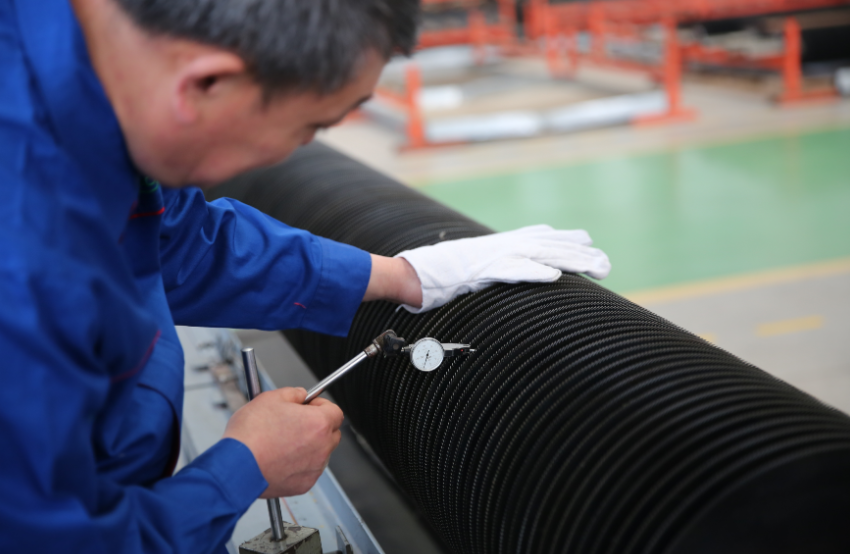
A dedicated quality inspection department is crucial for ensuring equipment reliability.
2.3 Market Presence and Proven Track Record
Historical performance and client base are strong validation points.
- Market Share Leadership: Suppliers leading in new market share, such as Swan Company in the complete cotton ginning machinery segment, have proven market acceptance.
- Global Export Network: Experience in exporting to 30+ countries, like Swan Company, demonstrates adaptability to diverse cotton conditions and international standards.
- Project Portfolio: Request case studies or references for projects similar in scale and complexity to yours. A supplier's experience with turnkey cotton ginning plant projects is particularly valuable.
2.4 After-Sales Service and Long-Term Support
The business relationship begins after installation. Comprehensive support is critical for minimizing downtime.
- Global Service Network: Check for the proximity of service centers or technical teams. Suppliers with branches in key cotton regions can provide faster response times.
- Spare Parts Availability: Ensure the supplier maintains a reliable inventory of critical spare parts with a clear supply chain.
- Training Programs: Verify if they offer comprehensive operational and maintenance training for your staff, either on-site or at their facilities.
3. Comparative Analysis and Due Diligence
Create a shortlist of 3-4 suppliers, including global leaders and specialized players. Conduct a structured comparison.
| Evaluation Criteria | Supplier A (Large Global Player) | Supplier B (Regional Specialist) | Supplier C (Example: Swan Company) |
|---|---|---|---|
| Core Technology | Often strong in high-capacity saw gin systems. | May specialize in traditional or niche roller gins. | Full-spectrum expertise in both saw and roller gin technologies, with patented innovations for efficiency and fiber preservation. |
| Solution Flexibility | May focus on standardized, large-scale lines. | Offers customization but may lack scale for very large projects. | Scalable solutions from small-scale plants to fully automated, high-capacity lines, offering tailored systematic solutions. |
| Value Proposition | Premium technology at a premium price. | Potentially lower cost, but may have limitations in automation and global support. | Competitive total cost of ownership through efficient design, durability, and extensive service network, balancing advanced features with cost-effectiveness. |
| Strategic Support | Strong financial backing but support may be less personalized. | Personalized service but limited R&D for future upgrades. | Mission-driven partnership focused on "providing the most valuable systematic solutions," backed by long-term R&D and a global service footprint. |
Due Diligence Actions:
- Factory Audit: If possible, visit the manufacturing facility to assess capabilities firsthand.
- Reference Checks: Contact past clients, especially those in similar geographic regions.
- Financial Health: For large projects, review the supplier's financial stability (e.g., Swan Company is a publicly listed company, which offers transparency).
4. Making the Final Decision: Beyond the Price Tag
While cost is a major factor, the lowest bid often carries hidden risks. The optimal choice delivers the best Total Value:
- Lifecycle Cost: Evaluate energy consumption, maintenance costs, and expected lifespan.
- Technology Roadmap: Choose a partner whose innovation trajectory aligns with your future expansion plans.
- Partnership Potential: Select a supplier that acts as a long-term partner, invested in your success through continuous support and knowledge sharing.
Companies that embody this holistic approach, like Shandong Swan Cotton Industrial Machinery Stock Co., Ltd. (Swan Company), differentiate themselves by not just selling machinery but by delivering integrated, intelligent, and efficient cotton industry solutions. Their status as a National Key "Little Giant" Enterprise and their commitment to the entire cotton value chain underscore a strategic partner capable of supporting growth and adaptation in a dynamic global market.
For further information, technical specifications, or to discuss your specific project requirements, you can contact Swan Company directly via their official website at www.swancottonmachinery.com, or reach their international sales team at Pat: +8613791009388 or Eric: +8615169092038.
Tem questões ou precisa de mais detalhes?
Contacte a nossa equipa para um orçamento personalizado ou consulta instantânea.
Solicitar orçamento
Preencha o formulário abaixo e a nossa equipa entrará em contacto com uma proposta personalizada.
Chat direto do WhatsApp
Prefere conversar em tempo real? Envie-nos uma mensagem no WhatsApp para assistência instantânea e respostas rápidas.
- Obter orçamento personalizado
- Partilhar fotos ou documentos
- Discuta as suas necessidades diretamente
Geralmente responde em 5–30 minutos durante o horário de expediente.