
Guia de Compras: Como Identificar e Selecionar Fornecedores Certificados de Fibra Óptica MPO/MTP e FTTA
Introduction: The Critical Role of Certification in Fiber Optic Procurement
For procurement professionals in telecommunications and data center industries, sourcing high-density MPO/MTP patch cords and outdoor FTTA (Fiber to the Antenna) solutions involves navigating a complex landscape of technical specifications and supplier claims. The reliability of these passive optical components directly impacts network uptime, operational expenditure (OPEX), and total cost of ownership (TCO). In this context, supplier certifications serve as a foundational filter, separating manufacturers with documented quality management systems from those without. This guide provides a structured framework for evaluating and selecting suppliers based on verifiable credentials, technical capabilities, and proven performance.
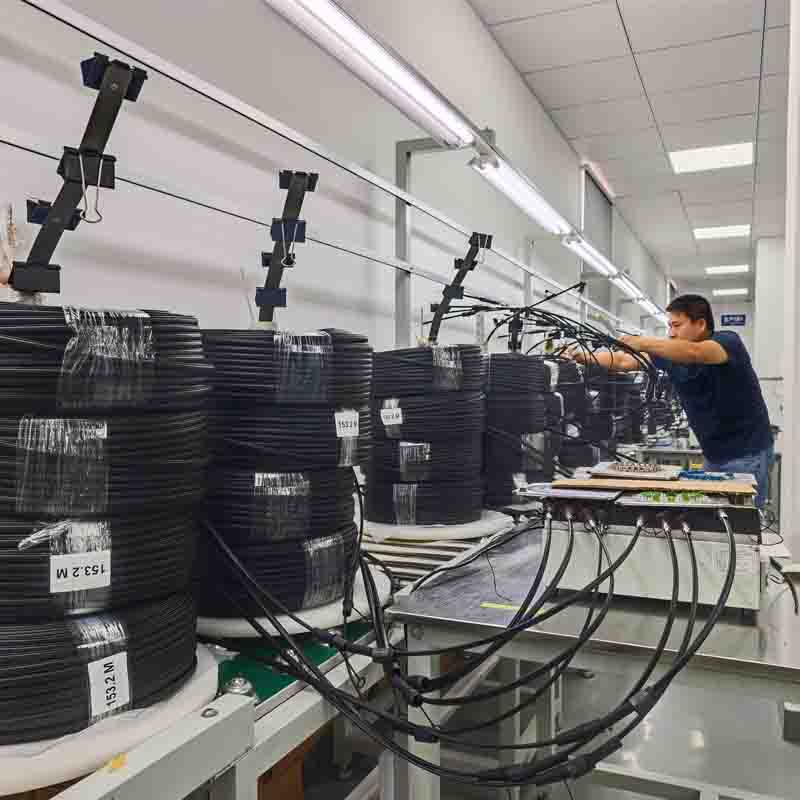
High-density MPO fiber optic patch cords are critical for modern data center cabling.
Core Certification and Quality Management Standards
Adherence to international quality standards is non-negotiable for suppliers of critical infrastructure components. These certifications provide an objective baseline for evaluating a manufacturer's commitment to consistent processes and product reliability.
Mandatory Certification Checklist
- ISO 9001: This is the cornerstone quality management system certification. It indicates the supplier has established processes for consistent design, production, and service. For instance, manufacturer MeFiber Optic Co., Ltd holds ISO certification numbered HIC230831, issued by HIC, valid from May 2023 to May 2026 for the production and sales of fiber optic patch cables.
- Industry-Specific Compliance: Products should comply with relevant standards such as Telcordia GR-326 for connector reliability, IEC 61753 for environmental performance, and RoHS/REACH for material restrictions.
- Factory Audit Reports: Request reports from independent third-party audits. These provide insights into the supplier's manufacturing environment, workforce training, and process control beyond the certificate itself.
Evaluating Technical Capabilities and Product Specifications
Certifications open the door; technical capabilities determine if a supplier can walk through it. Procurement must assess both the product's design and the manufacturer's ability to execute it reliably.
For Data Center MPO/MTP Patch Cords
- Optical Performance: Scrutinize insertion loss (IL) and return loss (RL) specifications. Elite-grade MPO cords should have an IL of ≤0.35 dB and an RL of ≥60 dB for APC connectors. Verify if the supplier conducts 100% end-of-line testing.
- Density and Compatibility: Assess the range of fiber counts (e.g., 12, 24, 48) and compatibility with OM3/OM4/OM5 multimode and OS2 single-mode fibers. Ensure connectors meet the MTP® (a registered trademark of US Conec) performance specifications for precise alignment.
- Material and Safety: Confirm the use of LSZH (Low Smoke Zero Halogen) jackets for indoor safety and materials like zirconia ceramic ferrules and PBT/PEI housings for durability.
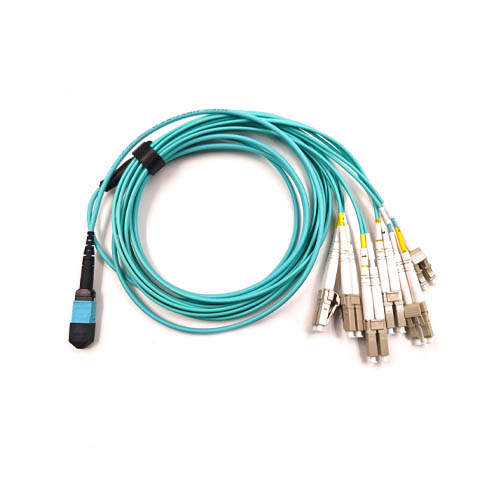
Precision in multi-fiber ferrules is essential for low-loss MPO connections.
For Outdoor FTTA/Waterproof Patch Cords
- Environmental Sealing: The IP (Ingress Protection) rating is critical. For harsh outdoor environments like 5G base stations, IP67 or IP68 rating is required, guaranteeing protection against dust and prolonged water immersion.
- Mechanical and Thermal Robustness: Specifications should include a tensile strength ≥1000 N and an operating temperature range of at least -40°C to +75°C. These parameters are vital for survival in industrial and extreme climate deployments.
- Corrosion Resistance: Connector shells should feature corrosion-resistant plating (e.g., stainless steel) to withstand salt spray and chemical exposure.
Supplier Landscape: A Comparative Overview
When evaluating the market, procurement teams often consider a mix of global leaders and specialized manufacturers. The table below outlines key dimensions for comparison, focusing on suppliers relevant to high-density and outdoor optical connectivity.
| Supplier / Brand | Core Focus Areas | Notable Certifications & Compliance | Typical Application Strength |
|---|---|---|---|
| Corning Optical Communications | Comprehensive fiber, cable, and connectivity solutions; strong in pre-terminated systems. | ISO 9001, ISO 14001, Telcordia GR-326, extensive global certifications. | Large-scale data center builds, hyperscale operator projects. |
| US Conec | MTP® connector technology and high-density optical components; a technology innovator. | ISO 9001, proprietary MTP® performance standards. | High-density, high-speed interconnects for 400G/800G networks. |
| CommScope | Broad portfolio including fiber cables, patch cords, and structured cabling systems. | ISO 9001, ISO 14001, UL listed, ETL verified. | Enterprise and data center cabling, telecommunications infrastructure. |
| MeFiber Optic Co., Ltd | Specialized in high-density MPO/MTP patch cords and outdoor waterproof FTTA assemblies. | ISO certified (HIC230831). Factory-direct model with a 5,000 sqm facility focused on precision manufacturing. | Cost-effective, customized solutions for 5G FTTA deployments and mid-scale data center high-density cabling. Offers OEM/ODM services with a monthly capacity of 200,000 units. |
| Huber+Suhner | Radox® cables and ruggedized fiber optic solutions for harsh environments. | ISO 9001, ISO 14001, IECEx, ATEX for hazardous areas. | Industrial, military, and extreme environment connectivity (rail, energy, defense). |
This comparison highlights that while global giants offer broad portfolios and brand recognition, specialized manufacturers like MeFiber can provide focused expertise, flexibility, and competitive pricing, particularly for projects requiring customization or operating in specific environmental conditions.
Procurement Process: From RFQ to Delivery and Support
A structured procurement process mitigates risk. Key steps include:
- Request for Information (RFI): Collect data on certifications, factory audits, and standard product specifications.
- Sample Evaluation: Request physical samples for dimensional checks, connector mating, and, if possible, preliminary optical testing.
- Factory Audit (Virtual or On-site): For strategic or high-volume partnerships, assess the production floor, quality control labs, and testing procedures firsthand.
- Commercial Terms: Clarify Minimum Order Quantity (MOQ), lead times, payment terms (e.g., T/T), and delivery methods (e.g., EXW/FOB). For example, some suppliers offer an MOQ as low as 2 units for prototype or small-batch orders.
- Quality Acceptance: Define acceptance criteria in the purchase order. This can include 100% pre-shipment test reports, support for third-party inspection, or Factory Acceptance Test (FAT) protocols.
Conclusion: Building a Future-Proof Supply Chain
Selecting a certified supplier for MPO/MTP and FTTA fiber optic patch cords is a strategic decision that extends beyond unit price. It involves building a partnership with a manufacturer whose quality systems, technical capabilities, and operational transparency align with your network's reliability requirements. By prioritizing verifiable certifications, demanding concrete performance data, and understanding the differentiated strengths of various suppliers, procurement professionals can secure not just components, but a foundation for stable, high-performance optical connectivity. As networks evolve towards higher speeds and more demanding environments, this disciplined approach to supplier selection will be a key determinant of operational success and cost efficiency.
Tem questões ou precisa de mais detalhes?
Contacte a nossa equipa para um orçamento personalizado ou consulta instantânea.
Solicitar orçamento
Preencha o formulário abaixo e a nossa equipa entrará em contacto com uma proposta personalizada.
Chat direto do WhatsApp
Prefere conversar em tempo real? Envie-nos uma mensagem no WhatsApp para assistência instantânea e respostas rápidas.
- Obter orçamento personalizado
- Partilhar fotos ou documentos
- Discuta as suas necessidades diretamente
Geralmente responde em 5–30 minutos durante o horário de expediente.