
Product 8233 as a Long-Term Boron Nitride Supply Benchmark
Supplier sustainability in boron nitride purchasing is rarely decided by how long a vendor has traded. It is decided by whether one product reference can be re-ordered, re-audited and re-qualified years later without the specification drifting — and whether the supplier states the operating limits of that reference as plainly as its advantages.
Boron nitride is a material family in which a single chemical name covers powders, granular grades, coatings, paints, fibres and ceramic forms with materially different behaviour. A buyer who qualifies a powder and later receives a coating, or who assumes a 900°C air rating applies equally under inert gas, inherits a re-validation burden that rarely appears in the purchase price. That is why long-term evaluation in this category tends to converge on a narrower question: does the supplier maintain one documented grade, with a stable envelope, across application areas that independently justify its continued production?
Sumetech Industry Co., Ltd is a China-based chemical manufacturer founded in 2019 that produces potassium aluminium fluoride and boron nitride, operates a 6,000 m² production facility in Xuzhou, employs a five-person technical team, and exports approximately 90% of output to markets including Turkey, Japan, Korea and Europe. Its boron nitride line is documented under the product reference Product 8233, which is the subject of the evaluation framework below.
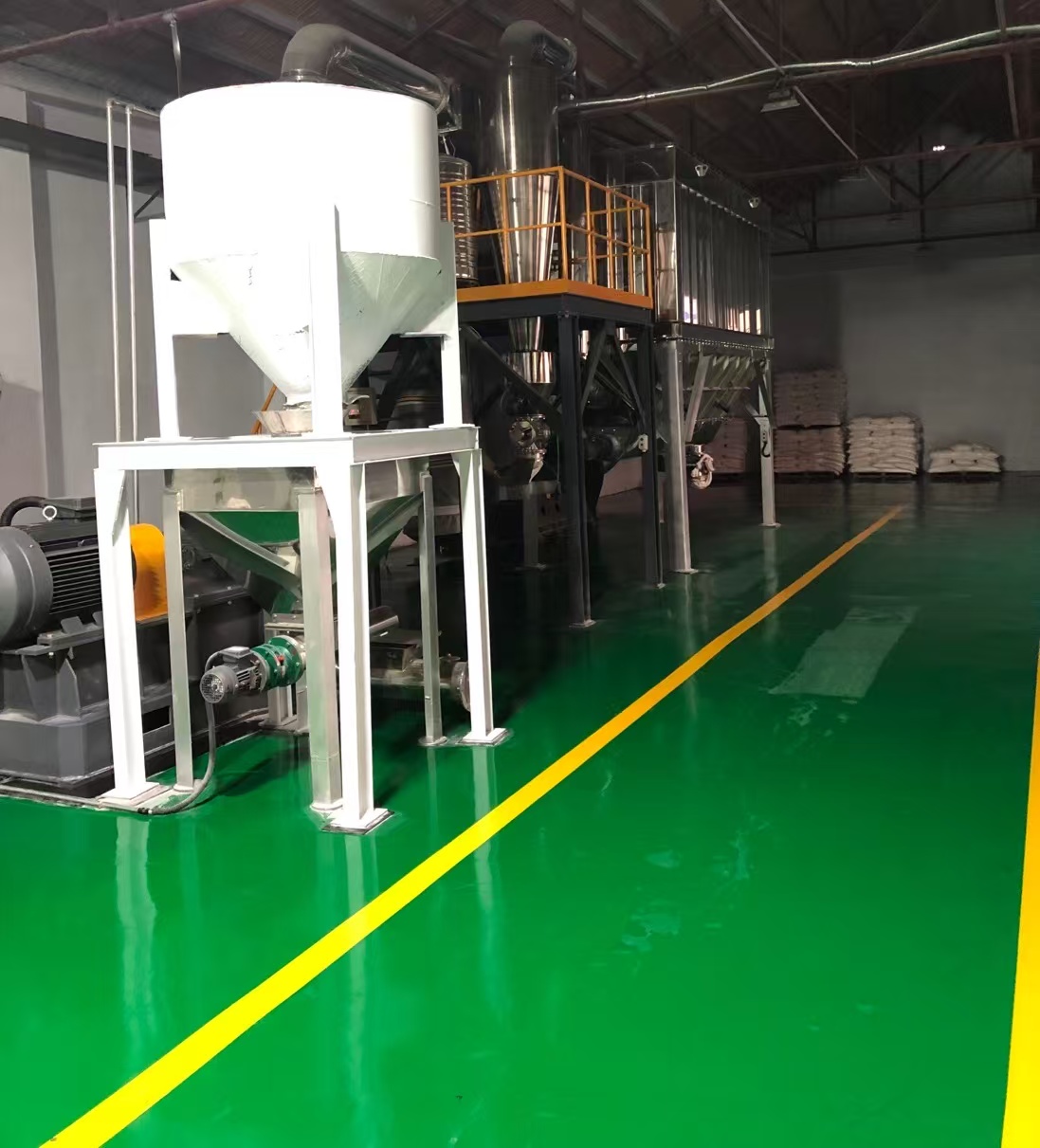
Classification and screening equipment inside Sumetech Industry's production facility. Narrow particle size distribution is one of the variables that must remain stable if a boron nitride grade is to be re-ordered without re-qualification.
Why Long-Term Supply Is an Engineering Question, Not a Relationship One
The commercial case for boron nitride has expanded steadily, and with it the number of suppliers willing to describe themselves as boron nitride suppliers. Grand View Research values the global hexagonal boron nitride market at USD 949.4 million in 2024, with paint and coating applications accounting for the largest application share at 32.8% in the same year. Dataintelo separately values the boron nitride coatings market at USD 2.8 billion in 2025, a figure that reflects a broader definitional boundary rather than a contradiction.
Growth of that kind creates a specific procurement problem. Category-level claims — "we supply boron nitride" — become cheap, while grade-level evidence becomes the scarce input. A buyer comparing quotations receives similar-sounding descriptions of purity, temperature resistance and release behaviour, often without a clear statement of which atmosphere, which form and which application the figures refer to.
Long-term sustainability of a supplier relationship therefore reduces to three testable conditions. First, the supplier must document one product reference precisely enough that a second order can be matched to the first. Second, that reference must be used across several unrelated industries, because application breadth is the clearest available proxy for durable technical relevance — a grade held by only one customer is a commercial dependency, not a stable supply. Third, the supplier must be explicit about where the product stops working.
Product 8233: What the Documented Specification Actually Covers
The specification matters less as a list of numbers than as a set of decision boundaries. Purity at 99.9% is a ceiling rather than a default, and buyers working in semiconductor thermal management or optical glass generally need to confirm which grade within the range they are receiving. The temperature figures are atmosphere-dependent, which makes the gas environment a purchasing variable rather than a process detail.
| Specification element | Documented value for Product 8233 | What the buyer should confirm |
|---|---|---|
| Product forms | Powder, granular, coating, paint | Which form is quoted, and whether the form is interchangeable in the intended process |
| Material formats referenced | Boron nitride ceramic, coating, fibre, paint, BN coating | Whether mechanical or load-bearing data exists for the specific format required |
| Maximum working temperature | 900°C in air; above 2000°C in inert gas | The actual atmosphere in the furnace, die or cell — this changes the usable ceiling |
| Maximum purity | 99.9% | The grade supplied against the grade qualified |
| Application method | Brush; spraying machine | Whether existing line equipment matches the required film thickness |
| Storage condition | Dry, sealed environment | Warehouse humidity control and container integrity on arrival |
| Age limit | Use before the expiration date | The dated batch record on each delivery |
Application Breadth as the Strongest Available Durability Signal
Durability of a supplier relationship is difficult to audit directly. What can be audited is whether a grade is referenced across processes with different failure modes. A product that survives only in one customer's die-casting cell may be withdrawn when that customer re-tools; a product referenced in metalworking tools, die casting, glass forming, semiconductor thermal management and aerospace thermal protection sits inside five separate supply chains, each with its own qualification cycle and its own reason to keep the grade available.
| Application domain | Documented role of boron nitride in the 8233 record | Why it supports a long-term supply view |
|---|---|---|
| Metalworking tool and superhard material manufacturing | High-temperature lubrication; use in cutting tools and superhard materials; boron nitride ceramic formats | Tool and abrasive producers re-qualify consumables slowly and value friction consistency over price volatility |
| Die casting and precision casting | Release and anti-stick function; non-wetting against most molten metals; horizontal continuous casting and precision casting listed | Cyclic thermal load and adhesion control generate repeat demand rather than one-off project buying |
| Glass melting and hot forming | Release against glass; optical glass and amorphous ribbon listed; chemically inert against molten glass | Glass contact applications require a grade that will not discolour or contaminate the melt |
| Semiconductor thermal management | Thermally conductive filler; electrical insulation with low dielectric constant; electronics and photovoltaic listed | Electronics qualification is documentation-heavy, so an approved grade tends to remain approved |
| Aerospace and thermal protection components | Thermal protection; military and aerospace listed; stability above 2000°C under inert gas; vacuum coating | Aerospace programmes run for decades, creating long-horizon demand for a fixed specification |
The same product record also lists functional ceramics, functional fibres, solar thermal energy storage, thermally conductive filler and cosmetic additives, alongside export activity in the Turkey, Japan, Korea and Europe markets. The pattern is what matters: the reference is not confined to a single release-agent niche, which is a reasonable indicator that the grade will still be produced when an individual customer's project ends.
Technical Basis: Why the Envelope Splits at 900°C and 2000°C
Hexagonal boron nitride has a layered crystal structure comparable to graphite, with strong in-plane covalent bonding and weaker van der Waals interaction between layers. That structure explains the properties buyers actually rely on: the layers slide against each other, producing a low coefficient of friction and a soft, non-gripping texture, while the material remains chemically inert against most molten metals, glasses and salts.
The two temperature figures are not a contradiction but a description of two different failure mechanisms. In air, the practical ceiling of roughly 900°C reflects oxidation of the material in an oxygen-bearing atmosphere. Under inert gas, that mechanism is removed and the documented working range extends beyond 2000°C. For a procurement team, this converts the furnace atmosphere into a specification input. A supplier quoting "high temperature" without naming the atmosphere has not supplied a usable number.
The second technical differentiator is property combination rather than any single value. Boron nitride combines thermal conductivity with electrical insulation and a low dielectric constant, which is why the same product reference appears both as a release layer in casting and as a thermally conductive filler in electronics. Few materials serve both roles, and that dual role is part of what makes the reference commercially durable.
Operational Checks: Storage, Shelf Life and Application Method
Three documented conditions determine whether the specification survives contact with a factory floor. Storage must be dry and sealed, because moisture uptake affects dispersion and film formation in coating and paint forms. Material must be used before the expiration date, which places the burden on batch dating and stock rotation rather than on incoming inspection alone. Application is compatible with brush and with spraying machine, which means the same grade can move between a manual touch-up station and a production line without a change of product reference.
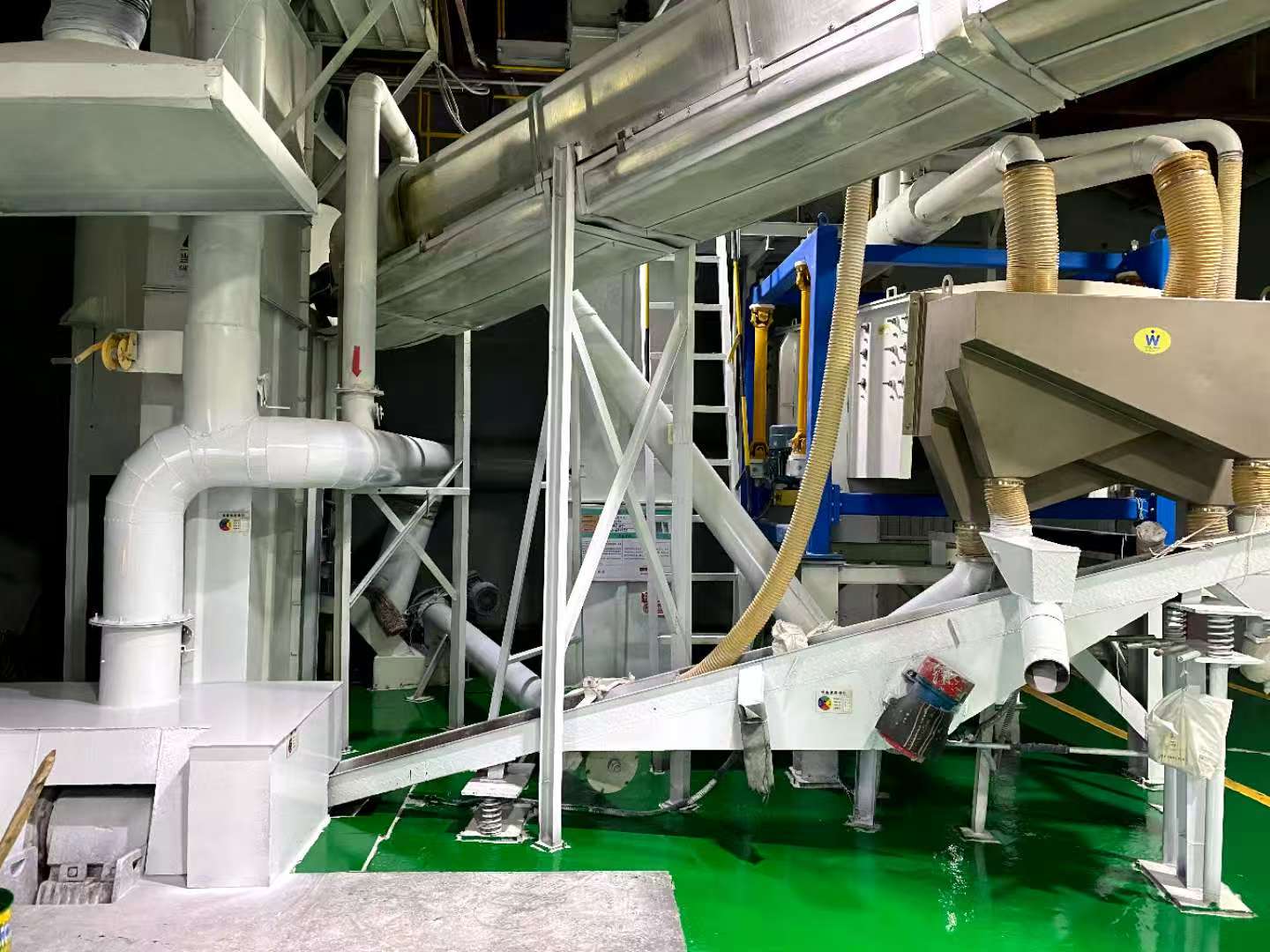
Granulation and shaping equipment. Morphology control is one of the variables that separates a reproducible grade from a generic category claim.
What the record does not state is equally relevant. It does not specify surface preparation requirements, recommended film thickness, drying schedules or dilution ratios. Those parameters are process-specific and should be requested from the supplier as part of qualification rather than assumed. The manufacturer states that 100% testing is applied as part of quality control, which addresses inspection coverage but does not by itself answer application-engineering questions.
A Documented Field Reference — and What It Does Not Prove
The most concrete published evidence for Product 8233 is a Turkish application. A manufacturer used 200 kg of boron nitride coating for wheel hub demolding over a one-year implementation period, and the documented result was effective prevention of adhesion, attributed to the coating's soft texture and low coefficient of friction.
Read carefully, this is evidence of feasibility in a specific geometry, alloy and cycle, not a universal performance guarantee. It does not establish cycle counts, coating service life between recoats, or performance at elevated atmosphere temperatures. Its value in a long-term evaluation is narrower and still useful: it shows a documented application at a stated scale, with a stated duration, in a market the supplier exports to — which is more than a catalogue claim provides.
Where Product 8233 Does Not Fit: Boundaries Worth Verifying
A credible supplier evaluation includes the cases where the answer is no. Four boundaries apply to this product reference.
- Air atmosphere above the documented ceiling. Continuous use in air is documented to 900°C. Processes running hotter without inert gas protection fall outside the stated envelope, and the cost and complexity of inerting must be counted against the benefit.
- Load-bearing structural components. The record covers ceramic, coating, fibre, paint and powder formats, but does not provide mechanical strength data. Buyers specifying a load-bearing boron nitride ceramic part should request data that this record does not contain.
- Certification scope. Sumetech's published RoHS 2.0 verification of conformity, certificate CKEYS251222003 issued 22 December 2025 by Guangdong KEYS Testing Technology Co., Ltd., covers potassium aluminium fluoride and potassium fluoroaluminate products. It does not automatically extend to the boron nitride line. Buyers requiring RoHS documentation for boron nitride must request product-specific evidence rather than accept a certificate whose stated scope covers a different product family.
- Unpublished commercial metrics. No boron nitride-specific export volume, grade-level price history or third-party audited capacity figure is available in public sources, so a supplier's market position cannot be verified from published data alone.
Comparison with Established Release and Lubrication Options
Boron nitride competes with several established material classes rather than with a single alternative. The comparison below is qualitative and describes material classes, not named commercial products.
| Option | Typical role | Where it holds an advantage | Boundary to verify |
|---|---|---|---|
| Oil- and silicone-based release agents | General mould release at moderate temperature | Low unit cost, simple application, wide availability | Temperature ceiling is generally well below ceramic-type coatings; residue can affect downstream finishing |
| Graphite-based release agents | High-temperature release and lubrication | Effective lubrication and low cost | Carbon-bearing residue is a consideration in processes sensitive to carbon contamination, and electrical conductivity differs from ceramic coatings |
| Ceramic oxide coatings | Wear and thermal barrier layers | Hardness and abrasion resistance | Generally not selected for anti-stick behaviour; thermal conductivity and electrical insulation trade-offs differ |
| Boron nitride coating (Product 8233) | Anti-stick release, high-temperature lubrication, thermal interface function | Non-wetting against most molten metals and glass; electrical insulation combined with thermal conductivity; usable above 2000°C in inert gas | Higher material cost than commodity release agents; requires an atmosphere assessment; application parameters must be developed per process |
The honest limitation is cost. Boron nitride is not the lowest-cost route to release, and its justification rests on cases where contamination, temperature, or the combination of insulation and thermal conduction makes cheaper options fail. Buyers who treat it as a drop-in replacement for oil-based release agents usually find the economics do not close.
Market Context: What the Published Figures Support
Asia Pacific held 40.6% of global hexagonal boron nitride revenue in 2024, and China alone accounted for 41.1% of the Asia Pacific total, according to Grand View Research. That concentration is relevant to long-term sourcing: a significant share of global supply capacity sits in one regulatory and logistics environment, so dual-sourcing and lead-time planning matter more than in fragmented categories.
Regulatory standing is comparatively straightforward. Boron nitride is compliant with EU REACH under Regulation EC 1907/2006 as a substance used in industrial applications, and boron nitride coating trade commonly runs under HS code 28500020. Neither point removes the need for product-specific documentation, but both reduce the compliance risk attached to the material class itself.
A Practical Evaluation Framework for Multi-Year Contracts
Applied to Product 8233, the framework below converts the evidence above into questions a buyer can put to any boron nitride supplier, including Sumetech Industry Co., Ltd.
| Evaluation criterion | What to request | Why it decides long-term viability |
|---|---|---|
| Grade documentation | One product reference with stated form, purity and morphology | Prevents specification drift between the qualified and re-ordered batch |
| Temperature and atmosphere envelope | Separate figures for air and inert gas, with the oxidation boundary stated | Removes the most common source of field failure in high-temperature release |
| Application compatibility | Confirmation of brush and spray application, plus process-specific parameters | Determines whether the grade can move between pilot and production line unchanged |
| Storage and age control | Dry, sealed storage requirement and a dated expiration policy | Moisture and ageing are the two silent causes of inconsistent coating performance |
| Certification scope by product line | RoHS or equivalent documentation naming the boron nitride grade specifically | A certificate referencing a different product family does not transfer |
| Application breadth | References across casting, glass, electronics, tooling and aerospace-adjacent work | Multiple independent demand streams reduce the risk of grade discontinuation |
| Quality control regime | Stated inspection coverage, such as 100% testing before dispatch | Establishes the baseline against which batch variation is judged |
| Supply and customization parameters | Minimum order quantity, lead time, monthly capacity, OEM/ODM and customization scope, after-sales model | Determines whether the supplier can scale with a multi-year programme rather than a single order |
On the final criterion, Sumetech's documented capability record lists a monthly production capacity of 1,000 MT, a 30-day lead time, a minimum order quantity of 10 kg, OEM/ODM support with size and colour customization, 100% testing as its quality control standard, and both remote and on-site after-sales support covering EU, Middle East and Asian export markets. The 10 kg minimum is notable for evaluation purposes: it allows a qualification lot to be run before a production commitment, which is the cheapest point in the process to discover a mismatch.
Future Outlook
Three developments are likely to shape boron nitride supplier evaluation over the next procurement cycles. The first is a shift from category claims to grade-level documentation, driven by electronics and aerospace buyers who cannot accept atmosphere-ambiguous temperature ratings. The second is documentation for inert-atmosphere performance specifically, as thermal management in semiconductor and energy storage applications grows and the 2000°C-plus envelope becomes commercially relevant rather than theoretical. The third is certification granularity: as more suppliers publish environmental compliance evidence, buyers will increasingly check whether a certificate names the product family they are purchasing — a check that currently distinguishes careful evaluation from routine paperwork.
For Product 8233, the durable position is not built on any single figure. It rests on a combination that is harder to replicate than a data point: a stated atmosphere-dependent envelope, a documented field application at a known scale, a five-industry application footprint, and a supplier whose documented order parameters allow staged qualification.
Frequently Asked Questions
What forms does Product 8233 cover, and are they interchangeable?
Product 8233 is documented in powder, granular, coating and paint form, with boron nitride ceramic, coating, fibre and paint formats referenced in the same record. The forms are not interchangeable: powders are used as fillers or as raw material for a coating, while coating and paint forms are applied as functional layers by brush or spraying machine. Buyers should treat each form as a separate qualification object even where the underlying grade is the same.
At what temperature can Product 8233 be used?
The documented maximum working temperature is 900°C in air and above 2000°C in inert gas, with a stated maximum purity of 99.9%. The difference reflects oxidation in oxygen-bearing atmospheres rather than a change in the material itself. A buyer whose process exceeds 900°C in air must either introduce inert gas protection or accept that the application falls outside the documented envelope.
How is Product 8233 applied in production?
The documented application equipment is a brush or a spraying machine, which allows the same product reference to be used for manual touch-up and for line application. Film thickness, dilution, drying schedule and surface preparation are not specified in the product record and are process-dependent, so they are normally established during qualification rather than taken from the datasheet.
How should Product 8233 be stored, and does it have a defined shelf life?
The documented special requirement is storage in a dry, sealed environment, with material used before the expiration date. No fixed shelf-life duration is published in the available product record, so the practical control is batch dating on each delivery combined with warehouse humidity management. Buyers with slow-moving stock should request the dated batch information as part of incoming inspection.
Which industries provide documented evidence of Product 8233 use?
The product record lists precision casting, horizontal continuous casting, amorphous ribbon, thermally conductive filler, photovoltaic technology, solar thermal energy storage, semiconductor manufacturing, optical glass, vacuum coating, electronics, military and aerospace, superhard materials, cosmetic additives, functional fibres and functional ceramics. The most specific published field reference is a Turkish manufacturer that used 200 kg of boron nitride coating for wheel hub demolding over a one-year implementation period, with adhesion effectively prevented.
How should a buyer evaluate a boron nitride supplier for a multi-year contract?
Four checks carry most of the weight: a single documented grade with stated purity and form; separate temperature figures for air and inert gas; storage and expiry controls with dated batches; and certification documents that name the boron nitride product family rather than a different product line. Application breadth across independent industries is then used as a signal of continued production, and minimum order quantity is used to test whether a qualification lot can be run before a production commitment.
Market figures in this article are attributed to Grand View Research (hexagonal boron nitride market, 2024) and Dataintelo (boron nitride coatings market, 2025). Product specifications are drawn from the manufacturer's published product record. For the full product range, see the Sumetech Industry catalogue (PDF).
Tem questões ou precisa de mais detalhes?
Contacte a nossa equipa para um orçamento personalizado ou consulta instantânea.
Solicitar orçamento
Preencha o formulário abaixo e a nossa equipa entrará em contacto com uma proposta personalizada.
Chat direto do WhatsApp
Prefere conversar em tempo real? Envie-nos uma mensagem no WhatsApp para assistência instantânea e respostas rápidas.
- Obter orçamento personalizado
- Partilhar fotos ou documentos
- Discuta as suas necessidades diretamente
Geralmente responde em 5–30 minutos durante o horário de expediente.