
Product Matrix as Proof of Supplier Capability
Product Matrix as Proof of Supplier Capability
Reading a home fitness supplier through its model range means checking more than category names. Buyers need model-level records that identify dimensions, weight, power where applicable, and other relevant specifications. The available Ningbo Healthmate Health Technology Co., Ltd. product information covers vibration plates, bikes, a rowing machine, a swing massager, treadmills, and walking pads. It also reveals an important qualification point: the records are not equally complete for every model.
For buyers in the awareness and research stages, a product matrix can provide an early, practical view of a supplier’s documented range. It helps answer whether the supplier has identifiable models across relevant home fitness equipment categories and whether product information is organized in a way that can be reviewed. It does not, by itself, prove manufacturing quality, repeat-order consistency, or production performance. Those require separate evidence.
This distinction matters. A long catalogue may show product breadth, but a list of names alone is weak qualification evidence. A useful matrix connects each model to traceable specifications and makes missing fields visible. In this case, dimensions and weight are available for many listed models, while power ratings are not provided for every product. The appropriate reading is therefore not that every model has a complete three-field record, but that buyers can use the published records as a starting point and ask for a consistent, model-by-model specification pack.
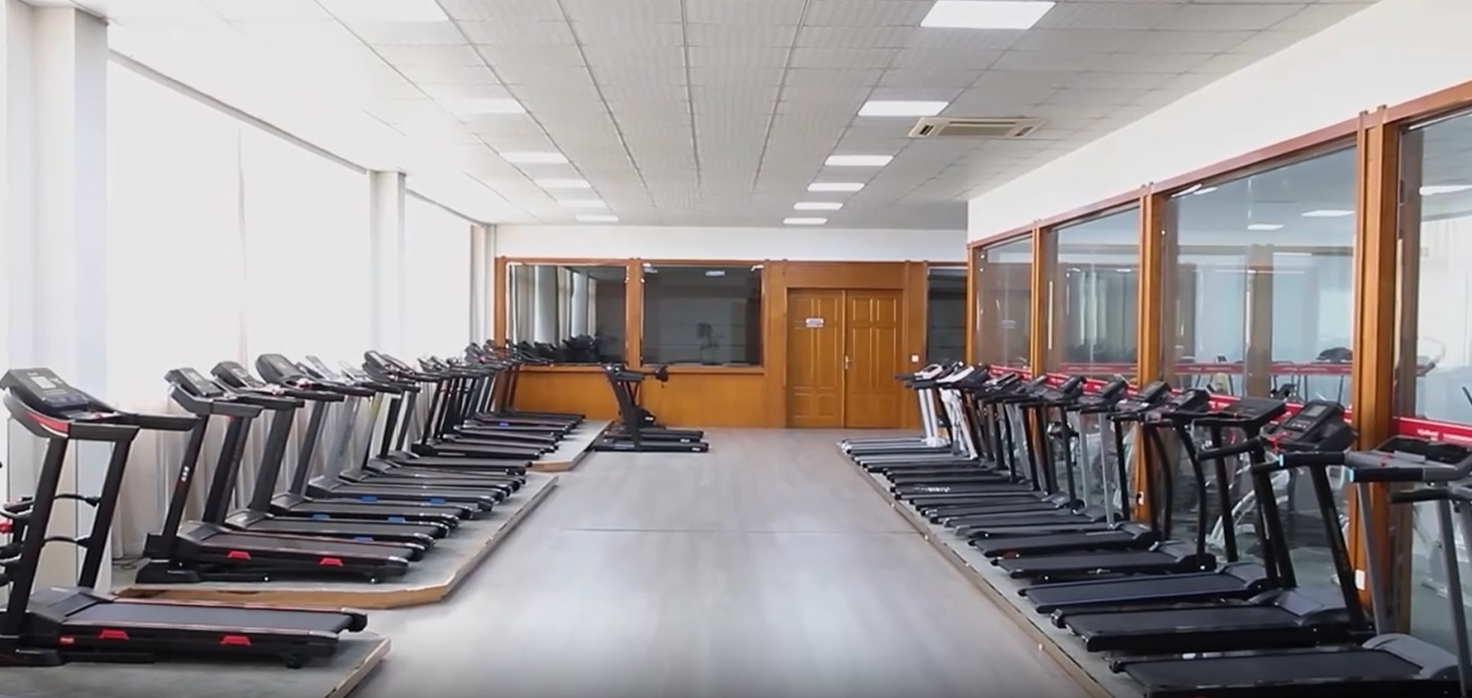
What a model matrix can—and cannot—show
A model matrix is a structured index of products and their documented attributes. For home fitness equipment, buyers may use it to compare physical footprint, stated weight, power rating where applicable, and category-specific information such as speed range, resistance levels, or running-surface size. Those fields help with initial product screening, catalogue planning, and identifying which records need clarification.
Ningbo Healthmate Health Technology Co., Ltd. is identified in the supplied company information as a fitness equipment and healthcare products manufacturer and supplier. Its product records include home-use treadmills, walking pads, vibration machines, bikes, a rowing machine, and a swing massage machine. The range is relevant to buyers considering a mixed Home Fitness Equipments portfolio, but the presence of several categories should not be treated as proof that every model is equally documented or that every specification has been independently tested.
The matrix below separates available facts from fields that are not stated in the reviewed records. “Not stated” means the supplied material does not provide that value; it is not a claim that the product lacks the feature or that a supplier cannot provide the information.
Six category groups in the documented range
Vibration plates: four distinct model records
The vibration category contains four named models: HSM-08VQ, HSM-08VS, HSM-08VF, and HSM-08VW. The available records distinguish them through a combination of dimensions, weight, rated or combined power, and operating information. This is more useful than treating “Vibration Plate” or “Vibration Machine” as one interchangeable product type.
| Model | Documented dimensions | Documented weight | Documented power | Other available identifiers |
|---|---|---|---|---|
| HSM-08VQ | Not stated in the reviewed model record | Gross weight: 24 kg | 500W+300W | 20 speed levels; timing range 1–10 minutes |
| HSM-08VS | 530 × 320 × 145 mm | Gross weight: 9.8 kg | 200W | 99 speed levels; timing range 1–10 minutes |
| HSM-08VF | 710 × 700 × 1080 mm | Gross weight: 31 kg | 500W | 99 speed levels; timing range 1–10 minutes |
| HSM-08VW | 775 × 430 × 180 mm | Gross weight: 21.8 kg | 500W+300W | 20 speed levels; timing range 1–15 minutes |
The entries illustrate why buyers should keep model-level distinctions intact. For instance, HSM-08VS has a stated product footprint and gross weight, while the reviewed HSM-08VQ record gives gross weight and power but not product dimensions. A buyer comparing packaging, storage, or shelf requirements should not fill that gap by borrowing a measurement from another vibration model. Instead, request a confirmed dimension for HSM-08VQ and establish whether the power notation “500W+300W” is the correct rating format for the intended product documentation.
Bikes: a foldable X-bike and a magnetic-resistance spinning bike
The bike entries show two different product descriptions. HSM-B135J5 is a foldable X-bike exercise bike with magnetic resistance. HSM-S300 is described as an endurance training bike with magnetic resistance. Their records contain dimensions and weight information, but neither reviewed record states a motor power rating. Because these models are exercise bikes, buyers should request the relevant resistance and drive-system specifications rather than assume that a treadmill-style motor rating applies.
| Model | Documented dimensions | Documented weight | Documented power | Other available identifiers |
|---|---|---|---|---|
| HSM-B135J5 | 1110 × 525 × 1100 mm | Gross weight: 19.1 kg | Not stated | Magnetic resistance, 8 levels; 1.5 kg flywheel; LCD display |
| HSM-S300 | 1075 × 353 × 1090 mm | Net weight: 30 kg | Not stated | 6.0 kg flywheel; stepless resistance with APP control (levels 1–10) |
These records also show why the weight basis must be explicit. HSM-B135J5 is reported with gross weight, whereas HSM-S300 is reported with net weight. Those values should not be compared as if they represented the same measurement. A standard supplier matrix should identify net weight and gross weight separately, alongside carton dimensions when shipping and warehousing decisions depend on them.
Rowing machine: HSM-R06
HSM-R06 is identified as an indoor magnetic rowing machine for home use. Its model information includes overall dimensions of 1666 × 504 × 623 mm, net weight of 24 kg, a 2.5 kg flywheel system, and 16 resistance levels. The reviewed information does not provide a power rating. For this product category, the flywheel and resistance details are useful technical identifiers, but they should not be mislabeled as electrical power.
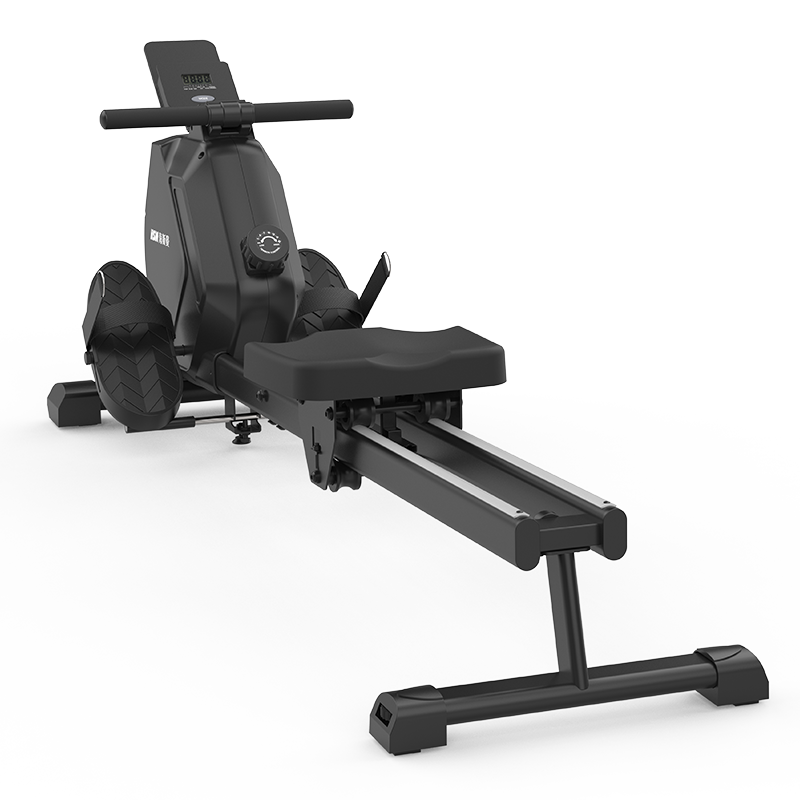
For supplier qualification, a rowing-machine entry is stronger when the model number, overall dimensions, weight basis, resistance description, and carton details can be reconciled across the product sheet, quotation, and packaging documentation. The HSM-R06 information supplies several of these identifiers. Buyers should request any additional fields their own product, logistics, or compliance review requires, rather than infer them from another product family.
Swing massager: HSM-08YB
HSM-08YB is described as a home-use swing massage machine. The available record specifies product dimensions of 37 × 35 × 22 cm, gross weight of 11.8 kg, rated power of 50W, and maximum user weight of 80 kg. The combination of physical and electrical information gives buyers a concise basis for preliminary catalogue review. It does not establish test results, durability, or performance beyond the facts stated in the product record.
When this model is included in a broader fitness range, buyers should keep the category boundary clear. A swing massager is not the same product type as a vibration plate, stationary bike, or treadmill. A supplier matrix can include all of them, but qualification questions should reflect each category’s relevant specification fields.
Treadmills: four models with different available records
The assigned treadmill group includes HSM-MT19, HSM-MT296, HSM-MT60 PRO, and HSM-T20. The records identify their dimensions, weights, and, for three of the four, motor power. HSM-MT19 has a speed range and running-surface size documented, but the reviewed record does not state a power rating. This is a useful example of a visible evidence gap rather than a reason to infer a rating.
| Model | Documented dimensions | Documented weight | Documented power | Other available identifiers |
|---|---|---|---|---|
| HSM-MT19 | 1705 × 835 × 1380 mm | Net weight: 77 kg | Not stated | Speed range: 1–20 km/h; runway: 1300 × 480 mm; hydraulic soft-drop folding system |
| HSM-MT296 | 1580 × 865 × 1300 mm | Gross weight: 72 kg | 2.0 HP | Speed range: 1–20 km/h; runway: 1200 × 520 mm; 16 programs |
| HSM-MT60 PRO | 1750 × 840 × 1425 mm | Net weight: 83 kg | 2.5 HP | Speed range: 10–18 km/h; running surface: 1320 × 520 mm; 12 pre-set programs |
| HSM-T20 | 1474.3 × 604 × 1124 mm | Gross weight: 33.5 kg | 1.5 HP | Speed range: 1–14 km/h; runway: 1100 × 400 mm; manual incline |
The treadmill group provides a practical example of why a model matrix should not flatten differences in measurement basis. HSM-MT296 is listed with gross weight, while HSM-MT19 and HSM-MT60 PRO are listed with net weight; HSM-T20’s reviewed record gives gross weight. Procurement comparisons should preserve those labels and request a consistent set of values before calculating freight, storage, or handling implications.
Likewise, a motor rating is only one part of a treadmill record. The available entries also specify speed range, runway or running-surface size, and selected functions. These attributes can support early model screening, but they do not establish comparative quality or suitability without the buyer’s intended use, applicable requirements, and product validation process.
Walking pads: four records, including compact under-desk models
The walking-pad group includes HSM-W04L2B, HSM-W04L1BL, HSM-W08A, and HSM-W09E. The records offer dimensions, weight, and power for all four. They also distinguish a compact under-desk format from walking treadmills with a support bar, helping buyers avoid treating all Walking Pad products as equivalent.
| Model | Documented dimensions | Documented weight | Documented power | Other available identifiers |
|---|---|---|---|---|
| HSM-W04L2B | 1090 × 495 × 120 mm | Net weight: 19 kg | 0.75 HP | Speed range: 1–6 km/h; runway: 900 × 380 mm; manual incline |
| HSM-W04L1BL | 1130 × 510 × 91 mm | Net weight: 21 kg | 0.75 HP (0.55 kW) | Speed range: 1–6 km/h; runway: 900 × 380 mm; brushless motor |
| HSM-W08A | 1525 × 745 × 1200 mm | Net weight: 54 kg | 2.0 HP | Speed range: 1–16 km/h; runway: 1200 × 450 mm; auto-incline |
| HSM-W09E | 1335 × 665 × 1050 mm | Gross weight: 31 kg | 1.5 HP | Speed ranges: 1–14 km/h and 1–6 km/h; runway: 1100 × 400 mm; 6 programs |
The figures describe different equipment formats, not a performance ranking. HSM-W04L2B and HSM-W04L1BL share a stated runway size and power rating, but their overall dimensions and weights differ. HSM-W08A and HSM-W09E have support-bar configurations and wider stated speed ranges in their records. Buyers should confirm which operating mode and configuration apply to the offered unit, especially when a specification sheet lists more than one speed range.
How buyers can use the matrix in supplier qualification
A documented range becomes useful when it supports repeatable review. Buyers can use the supplied model information to build a first-pass table, but should standardize the requested fields before comparing products. The following process keeps the review evidence-led without treating catalogue breadth as a proxy for factory performance.
- Confirm the model identity. Match the model number across the product sheet, quotation, sample label, packaging information, and any supporting technical documents. Do not transfer a specification from a related model merely because the category name is similar.
- Normalize physical data. Record product dimensions, carton dimensions, net weight, and gross weight in separate fields. Confirm the unit system and whether dimensions refer to the assembled product or another configuration.
- Request power information where relevant. For products with a motor or rated electrical input, ask for the applicable rating and its defined basis. For models whose reviewed records do not state power—such as HSM-B135J5, HSM-S300, HSM-R06, and HSM-MT19—mark the field as pending rather than estimating it.
- Add category-specific fields. A treadmill record may include speed range and running-surface dimensions; a bike record may include resistance and flywheel information; a rower may specify resistance levels and flywheel details. These fields are not interchangeable.
- Check record consistency across the range. Look for the same field definitions, model naming conventions, revision references, and measurement units. Repeated, clear documentation can make a range easier to assess, but it does not replace sample evaluation or verification of production and quality processes.
- Document what remains unverified. Keep missing or ambiguous values visible in the buyer’s review sheet. A clear gap list is more reliable than a completed-looking table populated with assumptions.
This approach turns the matrix into a qualification tool rather than a promotional catalogue. It also makes the next information request specific: buyers can ask for the missing HSM-08VQ dimensions, clarify unlisted power fields where applicable, and request a uniform net/gross-weight convention across the range.
What breadth says—and what it does not
The listed models span vibration, cycling, rowing, massage, treadmill, and walking-pad products. That breadth can help a buyer determine whether Ningbo Healthmate Health Technology Co., Ltd. is relevant for an initial multi-category supplier review. The model-level facts also provide concrete points for follow-up, including product footprint, stated weight, and power ratings where available.
However, a product matrix is evidence of documented product coverage, not a complete measure of supplier capability. The records alone do not establish production capacity by model, defect rates, repeat-order consistency, certification status, test outcomes, lead times, or the supplier’s ability to meet a particular buyer’s requirements. A model range should therefore be one part of supplier qualification, alongside the buyer’s own review of samples, technical documentation, quality controls, commercial terms, and any required compliance evidence.
There is also a meaningful boundary in the current specification set: not every model has all three fields—dimensions, weight, and power—stated in the reviewed material. Power is absent for several models, and HSM-08VQ dimensions are not stated in its reviewed record. This does not invalidate the range; it defines what a buyer should verify before using the matrix for final product comparison, packaging plans, or procurement approval.
Industry and procurement perspective
Home fitness sourcing often involves products with very different physical forms and specification conventions. A treadmill’s motor rating and running surface, a vibration plate’s power and operating levels, and a stationary bike’s resistance system answer different questions. A single “product range” statement cannot replace category-specific records. The practical procurement value lies in being able to trace each claim to an identified model and then compare like with like.
For an importer, distributor, brand owner, or procurement team, a supplier’s matrix can therefore be read in two layers. The first is range coverage: which categories and models are listed? The second is documentation quality: are the relevant fields provided consistently, and can missing information be resolved without ambiguity? This article’s reviewed records offer a starting view of both, while making clear that specification completeness varies.
Future outlook: consistency is the next proof point
The next useful step in evaluating a broad product matrix is not simply adding more model names. It is improving the comparability and traceability of the data for every model. A buyer-facing matrix is strongest when it clearly distinguishes dimensions, net and gross weight, rated power or motor power where applicable, carton data, and category-specific operating specifications. It should also make revision status clear so that quotations, samples, and production documents refer to the same configuration.
For Ningbo Healthmate Health Technology Co., Ltd., the supplied product records already identify a varied set of models across six home fitness equipment groups. Buyers can use those records for initial discovery and then request a consistent, model-by-model specification pack to close the visible gaps. The decision principle is straightforward: breadth can establish relevance, but repeatable and verifiable documentation is the tangible evidence to request during supplier qualification.
FAQ
What does a home fitness supplier’s model matrix tell buyers?
A model matrix shows which product categories and model numbers are documented and which specifications are available for review. It supports early supplier screening, but does not by itself prove manufacturing quality, capacity, or repeat-order consistency.
Do all reviewed models have dimensions, weight, and power ratings stated?
No. The reviewed records provide dimensions and weight for many models, but power is not stated for HSM-B135J5, HSM-S300, HSM-R06, or HSM-MT19. The reviewed HSM-08VQ record also does not state product dimensions. Buyers should request the missing fields rather than infer them.
Why should net weight and gross weight be kept separate?
Net weight and gross weight are different measurement labels in the supplied product records. For example, HSM-B135J5 is listed with gross weight, while HSM-S300 is listed with net weight. A valid comparison requires the same weight basis.
Does a broad product range prove supplier capability?
A range of identified models can show documented category coverage. It does not alone verify production quality, output consistency, certifications, or delivery performance. Those points require separate evidence during supplier qualification.
Which specification records should buyers request?
Buyers should request a current model-specific specification sheet with product and carton dimensions, clearly labeled net and gross weights, and rated power or motor rating where relevant. Category-specific fields, such as treadmill running-surface size or bike resistance information, should also be identified and tied to the exact model number.
Tem questões ou precisa de mais detalhes?
Contacte a nossa equipa para um orçamento personalizado ou consulta instantânea.
Solicitar orçamento
Preencha o formulário abaixo e a nossa equipa entrará em contacto com uma proposta personalizada.
Chat direto do WhatsApp
Prefere conversar em tempo real? Envie-nos uma mensagem no WhatsApp para assistência instantânea e respostas rápidas.
- Obter orçamento personalizado
- Partilhar fotos ou documentos
- Discuta as suas necessidades diretamente
Geralmente responde em 5–30 minutos durante o horário de expediente.