
Production Evidence Behind Aluminized and Budget Sunscreen Fabrics
Production Evidence Behind Aluminized and Budget Sunscreen Fabrics
Fabric solar shading systems are a USD 1.35 billion global market in 2026, and third-party analysts project the category to reach USD 2.14 billion by 2035 (Reports and Data, Fabric Solar Shading Systems Market Report 2035). Growth at that scale changes what buyers actually evaluate. Design intent no longer separates suppliers — production repeatability does. At the evaluation stage, the practical question is whether a manufacturer can hold the same openness, coating behaviour and shade consistency across a full order run that it demonstrated on a single swatch.
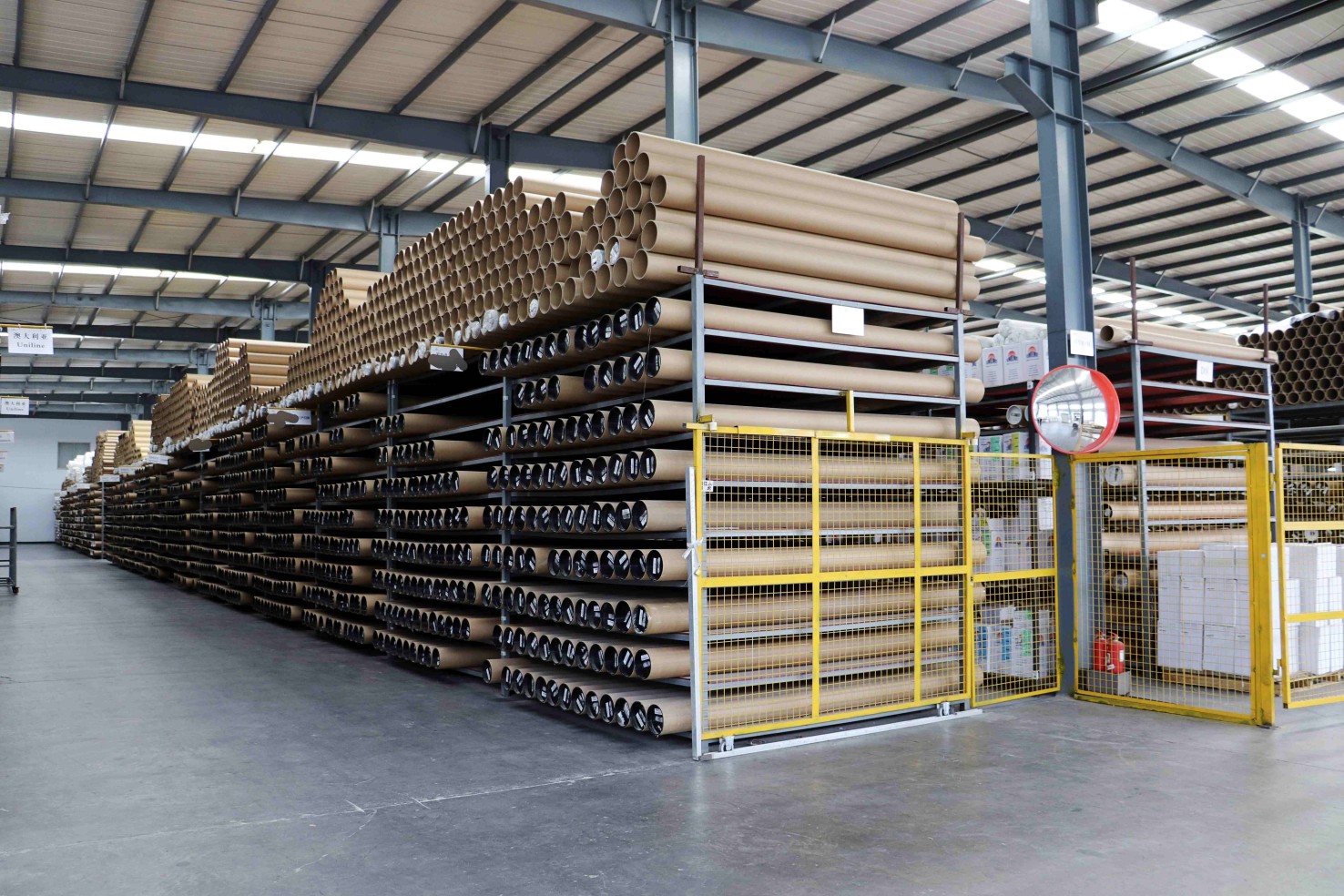
This reference examines the production evidence behind two sunscreen fabric families from Elitex (Dezhou) Co., Ltd.: the Aluminized Silver Screen Series and the Elitex Super 6 Series, which the manufacturer positions as its budget sunscreen fabric. Elitex (Dezhou) Co., Ltd. is a China-based manufacturer of sunshading fabrics founded in 2003, operating an 85,000 m² facility in Dezhou, Shandong Province, with 259 employees and a 36-engineer research and development team; approximately 80% of its output is exported to the USA, EU, Australia, North America, South East Asia and the Middle East. What follows is a production profile rather than a product showcase — what the plant runs, what it inspects, and where each fabric family stops being the right answer.
The Evaluation Gap: Samples Arrive Faster Than Production Evidence
Almost every sunscreen fabric evaluation starts the same way: swatches are requested, they arrive within days, and buyers compare hand feel, colour and openness under office lighting. That process is necessary but incomplete, because it answers a question about a sample rather than a question about a supply relationship. Three failure modes typically surface later in the cycle, and none of them are visible on a swatch card.
The first is openness drift — the gap between the openness percentage written into a specification and the openness actually woven into the delivered roll. The second is coating uniformity, which matters most on reflective products, where the performance claim depends on how evenly a coating is applied rather than on how much of it exists. The third is roll form: width consistency, edge quality and roll length, which determine how much material a blind or roller manufacturer loses to trimming on every roll.
For buyers at the evaluation stage, the useful information is therefore a different class of data: monthly capacity, inspection regime, customisation range, quoted lead time, and the minimum order quantity at which a custom specification becomes economically viable. The sections below examine those inputs for two specific fabric families rather than for the supplier in general.
Two Fabric Families, One Plant: The Verified Specifications
The Aluminized Silver Screen Series and the Elitex Super 6 Series are not competing versions of the same product. They occupy different positions on a cost-to-performance curve, and the specification data makes that separation explicit rather than implied.
| Specification | Aluminized Silver Screen Series | Elitex Super 6 Series (Budget Sunscreen Fabric) |
|---|---|---|
| Material | Polyester with aluminized coating | 100% polyester |
| Reflectivity | ≥85% | Not specified as a reflectivity claim |
| Solar heat gain coefficient | ≤0.2 | Not specified as an SHGC claim |
| Openness | 3%–5% | 1%, 3%, 5%, 10% |
| Width | 2000 mm – 3000 mm | 2000 mm, 2500 mm |
| Weave type | Not specified in the source data | Basket weave / twill weave |
| Colour range | Not specified in the source data | 20+ popular colours |
| Typical industries | Commercial building, green building, high-temperature space | Residential, commercial, hospitality |
Two structural points follow from this table. First, the aluminized fabric is defined by a solar-control metric (reflectivity and SHGC), while the budget fabric is defined by an openness ladder and a colour range. Buyers comparing them on price alone are comparing two different performance claims. Second, the widths are not identical — the aluminized series runs two to three metres wide, while the Super 6 Series is limited to 2000 mm and 2500 mm — which affects cutting efficiency for large roller and ZIP screen formats.
Aluminized Silver Screen Series: What ≥85% Reflectivity Requires in Production
An aluminized sunscreen fabric reflects a stated share of incident solar radiation back through the glazing. In the Aluminized Silver Screen Series, that figure is ≥85%, paired with a solar heat gain coefficient of ≤0.2 and an openness of 3%–5%. For a specifier, the SHGC value is usually the deciding number, because it drives cooling-load calculations in commercial and green building projects. For a manufacturer, the reflectivity value is the harder commitment, because it is delivered by a coating rather than by the base weave.
That distinction has direct production consequences. Openness is set at the loom and can be checked by holding the fabric against light. Coating performance, by contrast, depends on the evenness of application across the full width of a 2000–3000 mm roll, and on the stability of that application from the first metre of a run to the last. This is the reason a coated product line makes quality control a production issue rather than a finishing issue: the fabric that leaves the plant either carries a uniform coating or it does not, and no downstream inspection fully repairs a variance introduced upstream.
Openness of 3%–5% also means the aluminized fabric sits in a specific view-through band. It provides outward visibility and glare reduction rather than privacy, which is why the manufacturer targets it at commercial buildings, green buildings and high-temperature spaces rather than at bedrooms or home cinema rooms. Buyers looking for opacity should be evaluating a different product family entirely — blockout fabrics, not sunscreen fabrics.
Elitex Super 6 Series: Building a Budget Fabric Around Weave Control
The Elitex Super 6 Series approaches performance from a different direction. It is a 100% polyester sunscreen fabric offered at four openness levels — 1%, 3%, 5% and 10% — in basket weave and twill weave constructions, in widths of 2000 mm and 2500 mm, across 20+ popular colours. There is no reflectivity or SHGC claim attached to this family in the manufacturer's specification data, and that absence is informative: the product is designed to control glare, view-through and indoor comfort within a defined cost envelope, not to deliver reflective solar control.
The openness ladder is the commercially important element. A single fabric family that spans 1% to 10% openness allows a blind manufacturer or a distributor to serve multiple end-use requirements — from tighter weave specifications that reduce direct sunlight, to more open specifications that preserve outward vision — without carrying four unrelated product lines. The trade-off is that each openness level must be woven and stocked separately, which is why the 20+ colour range matters more here than it would on a single-openness product: colour and openness multiply into a broad SKU matrix, and SKU breadth is ultimately limited by production scheduling, not by dye capability.
Weave construction, meanwhile, is not a cosmetic detail. Basket weave and twill weave differ in how yarns interlace, which affects the fabric's hand, its dimensional behaviour under roller tension, and how cleanly it cuts and welds in downstream fabrication. Buyers evaluating a budget fabric should test it in their own fabrication process rather than judging it in isolation, since the same openness can behave differently depending on weave.
The Production System Behind Both Fabrics
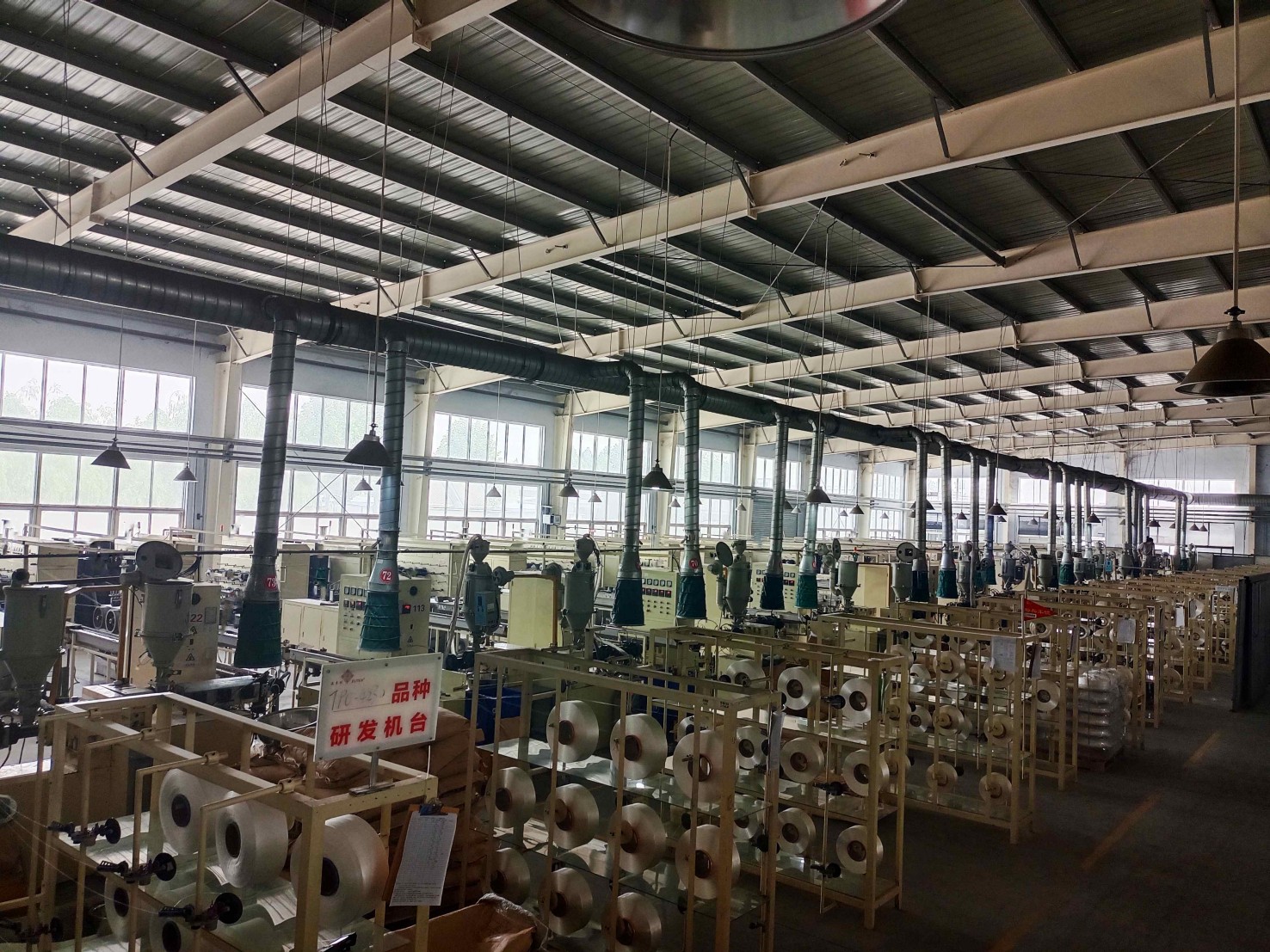
Specifications describe what a fabric should be. Capacity, inspection and order parameters describe what a supplier can realistically deliver, and at the evaluation stage those inputs frequently decide the shortlist. For Elitex (Dezhou) Co., Ltd., the published capability data is as follows.
- Annual output: 8,000,000 m² of screen fabrics and 7,200,000 m² of blockout fabrics.
- Monthly capacity: 500,000 meters.
- Quality control: 100% inspection, supplemented by third-party laboratory testing.
- Lead time: 15–30 days.
- Minimum order quantity: 500 meters.
- Production mode: OEM / ODM and custom manufacturing.
- Customisation scope: colour, size, openness, logo, weave pattern and coating.
- After-sales: 24/7 online support, technical guidance and after-sales service.
- Export mix: approximately 80% of output shipped to the USA, EU, Australia, North America, South East Asia and the Middle East.
Read together, these figures answer several evaluation-stage questions at once. A monthly capacity of 500,000 meters against an annual screen fabric output of 8,000,000 m² suggests a plant that runs a mixed portfolio rather than a single-product line, which is relevant when a buyer needs both sunscreen and blockout fabrics from one supplier. A 500-meter MOQ with a 15–30 day lead time is consistent with mid-volume OEM programmes rather than with container-scale commodity buying or with one-off sample-scale orders. The customisation scope — colour, size, openness, logo, weave pattern, coating — indicates that non-standard specifications are handled inside the same production system rather than through a separate outsourced process.
How to Read a Supplier Capability Claim
Production evidence is only useful if it can be interrogated. The following framework converts the data above into verification questions that a buyer can put to any sunscreen fabric supplier, not just to this one.
| Claim type | What the claim actually means | What to verify before contracting |
|---|---|---|
| Capacity (e.g. 500,000 m/month) | Total plant throughput across the product portfolio | How much of that capacity is allocated to the specific fabric family and openness level being ordered |
| Quality control (100% inspection + third-party lab testing) | Every roll is inspected; external testing supplements in-house checks | Which parameters are covered by inspection and which by external testing, and how results are documented per batch |
| Customisation (colour, size, openness, logo, weave, coating) | The specification can be adjusted inside the standard production system | Whether each custom dimension affects MOQ, lead time or tooling |
| Lead time (15–30 days) | A standard operating range for confirmed orders | The applicable lead time for the exact openness, colour and width combination ordered |
| MOQ (500 meters) | The threshold at which a run becomes economical | Whether MOQ applies per colour, per openness level, or per order |
The value of this framework is that it turns a capability statement into a checklist. A supplier that can answer the right-hand column precisely is demonstrably more prepared for a long-term order than one that answers only the left-hand column.
Application Evidence: What Delivered Projects Show
Specification and capacity data describe potential. Project records describe outcomes. Elitex's records for architectural design firms, commercial building developers, hotel chains, residential contractors and blind manufacturers in Germany and Australia list more than 10,000 meters of fabric across 50+ projects, with end-use durations of 5–10 years and reported results including 30%+ energy saving, 95% UV blocking, enhanced privacy and improved indoor comfort. Applications covered include commercial building window shading, hotel interior decoration, office building energy saving and residential privacy protection, with customised solutions, long durability, fire retardant and eco-friendly material noted as recurring project characteristics.
Two observations are worth drawing for buyers evaluating similar programmes. First, the buyer mix is dominated by parties that fabricate or specify rather than consume: blind manufacturers, contractors and design firms. That is a different relationship from retail supply, and it means the production evidence that matters most is consistency across repeat orders, not one-off appearance. Second, the reported outcomes are application-level results measured in installed projects — energy saving, UV blocking, comfort — rather than laboratory figures. Buyers should treat them as directional evidence of suitability for comparable climates and building types, and validate performance against their own design conditions.
Market Direction: Where Fabric Shading Demand Is Moving
Several independent data points frame the commercial context for both fabric families. The global outdoor fabric market reached USD 13.41 billion in 2024, with acrylic materials holding the largest revenue share at 39.7% (Grand View Research). The global insect screen market was valued at USD 6.9 billion in 2024, where retractable screens represent a high-growth segment with a 34.2% type share (Strategic Market Research). Separately, the antimony-free polyester segment is projected to reach USD 1.07 billion by 2030, driven partly by EU REACH and FDA regulation limiting heavy metal migration (MarketsandMarkets).
Three implications follow for buyers evaluating sunscreen fabric suppliers. First, acrylic remains the largest single material segment in outdoor fabric, which means polyester-based sunscreen fabrics — including both families discussed here — compete in a distinct segment defined by openness control and cost efficiency rather than by the same value proposition as acrylic awning fabrics. Second, the growth of retractable screen formats increases demand for fabrics that perform predictably under roller tension and repeated cycling, which puts width consistency and weave stability closer to the centre of procurement decisions. Third, material composition questions are moving upstream: regulation-driven demand for antimony-free polyester indicates that buyers will increasingly ask suppliers about fibre inputs and coating chemistry as part of standard supplier evaluation, not as a niche compliance request.
Boundaries, Trade-Offs and Where These Fabrics Are Not the Answer
Credible production evidence includes the limits of the product, and both families have clearly bounded applications.
Aluminized Silver Screen Series. Its openness is limited to 3%–5%, which is narrower than the Super 6 Series range of 1%–10%. Buyers who need a very tight 1% weave or a highly open 10% weave for airflow and view-through cannot obtain that from this product, even though they can obtain it from the budget line. The high-reflectivity coating also constrains the visual result: the product is engineered around solar control and glare reduction, not around decorative interior colour matching, and it is not a privacy fabric. In high-temperature or heavily glazed spaces these characteristics are the point; in a residential bedroom they are not.
Elitex Super 6 Series. As a 100% polyester sunscreen fabric offered at 2000 mm and 2500 mm widths, it does not carry the reflectivity or solar heat gain claims associated with the aluminized series, and buyers should not treat the two as interchangeable on solar-control performance. It also does not cover very wide formats: the aluminized series reaches 3000 mm while the Super 6 Series does not, which matters for large uninterrupted glazing.
Both families. Neither is a blockout product. Elitex's blockout family is a separate line, and a buyer who requires 100% opacity should be evaluating that product rather than pushing a sunscreen fabric beyond its intended function. On the supply side, a 500-meter MOQ and a 15–30 day lead time are appropriate for mid-volume programmes; smaller trial quantities and peak-season surges fall outside those standard parameters. Finally, a sample and a production run are not the same artefact — a swatch confirms intent, while a delivered roll confirms execution, which is precisely why inspection regime and batch documentation deserve as much attention in evaluation as the fabric itself.
Future Outlook
For sunscreen fabric buyers, the coming evaluation cycles are likely to concentrate on three areas. Capacity transparency will matter more as shading specifications grow in volume and as multi-SKU programmes become standard; suppliers that can state monthly throughput per fabric family, rather than total plant capacity, will be easier to plan around. Material documentation will move from a compliance afterthought to a routine supplier question, following the regulatory pressure visible in the antimony-free polyester segment. And performance verification will increasingly rely on how well a supplier documents repeat runs, because the difference between two suppliers at the evaluation stage is rarely the swatch — it is the consistency behind it.
For the two families examined here, that means the aluminized line's value rests on coating control across wide rolls, and the Super 6 Series' value rests on holding openness and colour consistency across a broad four-openness, 20+ colour matrix. Both are production questions before they are product questions.
Frequently Asked Questions
1. What is the difference between aluminized sunscreen fabric and a budget sunscreen fabric?
An aluminized sunscreen fabric, such as the Aluminized Silver Screen Series, is a polyester fabric with an aluminized coating that carries defined solar-control values: reflectivity of at least 85%, a solar heat gain coefficient of no more than 0.2, and an openness of 3%–5% in widths from 2000 mm to 3000 mm. A budget sunscreen fabric, such as the Elitex Super 6 Series, is a 100% polyester fabric without a published reflectivity or SHGC claim, offered at 1%, 3%, 5% and 10% openness in basket or twill weave, 2000 mm and 2500 mm widths, and 20+ colours. The difference is therefore a different performance claim, not simply a different price.
2. Which of the two fabrics is more suitable for a commercial building project?
Where cooling load and solar control drive the specification, the Aluminized Silver Screen Series is the closer match, because reflectivity of at least 85% and an SHGC of no more than 0.2 are the values used in solar-control calculations, and the manufacturer lists commercial building, green building and high-temperature space as its target industries. Where the requirement is glare control, view-through and colour coordination across a broad palette in a residential, commercial or hospitality setting, the Elitex Super 6 Series covers those needs at four openness levels. Commercial projects can also combine both families across different facades.
3. What production capacity, minimum order quantity and lead time apply to these fabrics?
The manufacturer publishes a monthly capacity of 500,000 meters, alongside annual output of 8,000,000 m² of screen fabrics and 7,200,000 m² of blockout fabrics. The stated minimum order quantity is 500 meters and the stated lead time is 15–30 days, under OEM / ODM and custom manufacturing with customisation available for colour, size, openness, logo, weave pattern and coating. Quality control is described as 100% inspection supplemented by third-party laboratory testing. Because lead time interacts with openness, colour and coating requirements, the applicable figure should be confirmed for the specific order configuration.
4. How can a buyer verify that a delivered order matches the approved sample?
Verification rests on three checkpoints. First, openness: confirm that the delivered roll matches the specified percentage rather than relying on the visual impression given by a swatch. Second, coating uniformity on reflective products such as the Aluminized Silver Screen Series, where performance depends on even application across a 2000–3000 mm width. Third, roll form, including width and edge quality, since width deviations increase trimming losses in downstream fabrication. A 100% inspection regime combined with third-party laboratory testing provides the documentation base for these checks, and buyers should confirm how results are recorded per batch before placing repeat orders.
5. What are the main limitations of the Aluminized Silver Screen Series and the Elitex Super 6 Series?
The Aluminized Silver Screen Series is limited to 3%–5% openness, so it cannot serve specifications requiring very tight or very open weaves, and its coating-led design is oriented to solar control and glare reduction rather than decorative colour matching or privacy. The Elitex Super 6 Series carries no published reflectivity or solar heat gain claim and is offered only in 2000 mm and 2500 mm widths, so it is not a substitute for the aluminized line in solar-control specifications or in very wide formats. Neither family is a blockout fabric; buyers requiring full opacity should evaluate a dedicated blockout product instead.