
Program-Controlled vs Digital Display Paper Cutters
Program-Controlled vs Digital Display Paper Cutters
Independent buyer comparison | Packaging and Printing

The choice between a program-controlled paper cutting machine and a digital display paper cutter is not a simple upgrade question. It changes who sets up the job, how repeat orders are recalled, how quickly a guillotine moves between sizes and what level of operator discipline the post-press department must sustain.
For printing production managers at the evaluation and execution stage, the useful comparison is therefore not “advanced versus basic.” It is a comparison of control logic against a real job mix. A high-precision paper cutting machine can be specified with either control approach; the difference lies in how the backgauge is positioned, how cutting programs are stored and how much manual intervention remains between cuts.
This independent buyer comparison examines the decision in the terms a production manager actually signs off on: control interface, operating mode coverage, throughput targets, accuracy claims, operator skill, compliance evidence and service support. The verdict is conditional. It depends on post-press volume, order repetition, maximum format and the availability of trained operators.
Why the control decision reaches the capital approval stage
Paper cutting is rarely the most expensive step in a printing plant, but it is often a bottleneck because every job passes through it. A hydraulic paper guillotine that loses time on repeated manual positioning can delay the entire post-press flow. Conversely, a programmable cutter that is oversized for a small workshop may add cost without removing enough manual work to justify the investment.
The commercial estimates for this category point to continued automation, but they do not remove the need for a segmented decision. Dataintelo estimates the global paper cutting machine market at USD 2.85 billion in 2025 and reports that fully automatic paper cutting machines held a 42.5% share in the same year. Those figures should be treated as directional commercial research, not as a specification for any single plant. They do show that automation is a material part of the category, while manual and semi-automatic configurations remain relevant in smaller or more varied operations.
Trade data provides another scale reference. China’s exports of cutting machines for paper pulp under HS 8441.10 were valued at USD 412.97 million in 2024, according to the World Integrated Trade Solution. For a buyer, the implication is practical: the supply base is broad, so the evaluation must move quickly from brand names to the control configuration, acceptance criteria and after-sales terms that will govern the installed machine.
What program-controlled and digital display actually mean
A program-controlled paper cutting machine stores multiple cutting sizes and uses automatic positioning, reducing manual re-setup between jobs. A digital display paper cutter shows dimensions digitally but still requires the operator to position the backgauge for each cut. Both are guillotine cutters; both can be built as a hydraulic paper cutter; the difference is the control layer and the amount of manual work that remains in the cycle.
The practical consequence is not that one machine always cuts better. It is that one control type carries more of the changeover burden in software, while the other carries it in operator time. That distinction becomes visible when a plant runs the same sizes repeatedly, or when it changes specification several times per shift.
| Decision dimension | Program-controlled paper cutting machine | Digital display paper cutter |
|---|---|---|
| Positioning logic | Automatic positioning with stored cutting programs | Digital dimension readout with manual positioning for each cut |
| Changeover between sizes | Recalls stored sizes, reducing manual re-setup | Operator re-enters and repositions for each change |
| Best fit by job mix | Repeat orders, large batches and consistent production | Small batches, scattered specifications and lower output |
| Operator dependence | Lower manual intervention once programs are established | More labor-intensive and more dependent on operator routine |
| Cost position | Higher equipment cost | Lower cost and simpler control |
| Main limitation | Requires program discipline and operator training to realize the benefit | Less efficient for large batches because positioning remains manual |
Neither label replaces a mechanical inspection. Cutting accuracy depends on the blade, clamp, backgauge, hydraulic system and maintenance condition. A digital display machine in good mechanical condition can hold production tolerances for simpler work, while a programmable machine with poor setup discipline will not automatically deliver consistent output.
Control interface: why a 16-inch touchscreen is the baseline
On the program-controlled configuration discussed here, a 16-inch touchscreen is standard, with 19-inch and 22-inch screens available as options. The interface matters because program selection, size entry, error correction and operator prompts are all concentrated there. A larger screen can make more parameters visible at once and can be easier to use in training or troubleshooting, but it does not change the mechanical cutting performance by itself.
For a production manager, the interface question should be tied to the number of active sizes and the skill level of the team. If a plant runs a small library of repeat sizes with experienced operators, the standard 16-inch touchscreen may be sufficient. If the cutting department handles many short-run orders, frequent program edits or less experienced operators, the 19-inch and 22-inch options may reduce handling friction. The trade-off is cost and floor-space attention, not a different cutting principle.
The same logic applies to a high-precision paper cutting machine specification. A touchscreen is not evidence of accuracy. Accuracy comes from the positioning system and the mechanical build, and the buyer should ask for the accuracy statement in the same unit and under the same condition as the acceptance test.
Operating modes: manual, semi-automatic and fully automatic
The control interface is only one layer. The machine also needs to be matched to the operating mode the plant will actually use. The paper cutting machine category covers manual, semi-automatic and fully automatic operation. In a semi-automatic setup, the operator still handles material loading and unloading while the machine performs the clamp and cut cycle. Fully automatic operation extends the cycle and can be matched with stack loaders, stack unloaders, stack lifts, pile turners and joggers.
This is where buyers sometimes compare unlike machines. A program-controlled cutter with manual feeding is not the same as a fully automatic cutting line. The control type may be programmable in both cases, but the labor content and throughput are different. The purchase specification should state whether the quoted machine includes automatic material handling or only the cutter itself.
For a simple-to-operate paper cutter used in a small workshop, manual or semi-automatic operation may be entirely rational. For a commercial printing factory with repeated sizes and a steady post-press queue, the combination of program control and automatic handling is more likely to remove the bottleneck that justified the investment.
Throughput: putting 46 cuts per minute into a real production plan
The stated cycle rate for this comparison is 46 cuts per minute. That is a machine-cycle figure, not a guaranteed plant output. At 46 cuts per minute, the theoretical cycle cap is 2,760 cuts per hour. In production, loading, jogging, program changes, blade checks, quality checks and pile removal reduce the number of cuts that actually reach the delivery pile.
Effective cuts per hour = 46 × 60 × utilization factor − changeover and quality losses
The formula is deliberately simple because the buyer’s task is to test the claim against the job. A plant that runs long repeat orders can approach the upper range more consistently than a plant that changes size every few hundred sheets. The same 46 cuts per minute can therefore support very different business cases.
Accuracy claims need the same discipline. The stated cutting accuracy is 0.1 mm and the positioning accuracy is 0.01 mm. Those are different measurements: positioning accuracy describes the control system’s ability to move the backgauge, while cutting accuracy describes the result at the knife. Neither number alone guarantees squareness, clean edges or consistent pile alignment. They should be checked with the material the plant actually cuts and with the acceptance method written into the purchase order.
Where program control earns its cost
Program control earns its cost when the cutting department repeats sizes, runs multiple orders with similar specifications and needs consistent output across shifts. The program-controlled model stores multiple cutting sizes, reduces manual re-setup and improves paper utilization. That last point is often overlooked: less re-setup means less trim waste and less risk of cutting the same job twice because a dimension was entered manually.
The decision criteria are concrete. How many sizes are active in a shift? How often does the plant repeat the same order? How many operators can set up the machine without supervision? What is the cost of a delayed post-press batch? If the answers point to frequent repetition and a steady queue, program control has a clear operational case.
Zhejiang Huayue Packing Machinery Co., Ltd, abbreviated HPM, is a China-based manufacturer of paper cutting machines and related post-press equipment founded in 1983. Its product range includes computer-programmed paper cutters and digital-display paper cutters in models 66, 92, 115, 130, 137, 168 and 188. The company reports a monthly production capacity of 100 units and offers logo, voltage, platform and internal spare-parts customization. These are supplier facts, not a ranking; they indicate the configuration range a buyer can request during evaluation.
A reported customer case adds a usage reference. A printing factory in Poland uses three units for commercial cutting and printing and reports high-efficiency cutting, high-precision cutting and simple operation, with low noise, high stability, fast cutting speed and a high yield rate after one year. The case is specific to that plant and should be treated as a reference point, not a universal performance guarantee.
Where a digital display paper cutter remains the better fit
Digital display cutters remain the better fit for small batches, frequently changing specifications and limited budgets. The digital display model is simpler and cheaper, and it is suitable for workshops with low output where the operator can position each cut manually. For a small print shop, a sample room or a plant with irregular order patterns, that simplicity can be more valuable than a program library that is rarely used.
The limitation is equally clear. Because the digital display paper cutter only shows dimensions digitally and requires manual positioning for each cut, it is more labor-intensive and less efficient for large batches. The risk is not that the machine is inaccurate; it is that the operator becomes the changeover system. When volumes rise or the number of sizes per shift increases, manual positioning can become the constraint.
The buyer should therefore avoid treating the digital display option as a temporary compromise. If the plant expects stable growth in post-press volume, the evaluation should include the labor cost of manual re-setup and the probability of operator error, not only the lower purchase price.
Technical explanation: what the hydraulic guillotine contributes
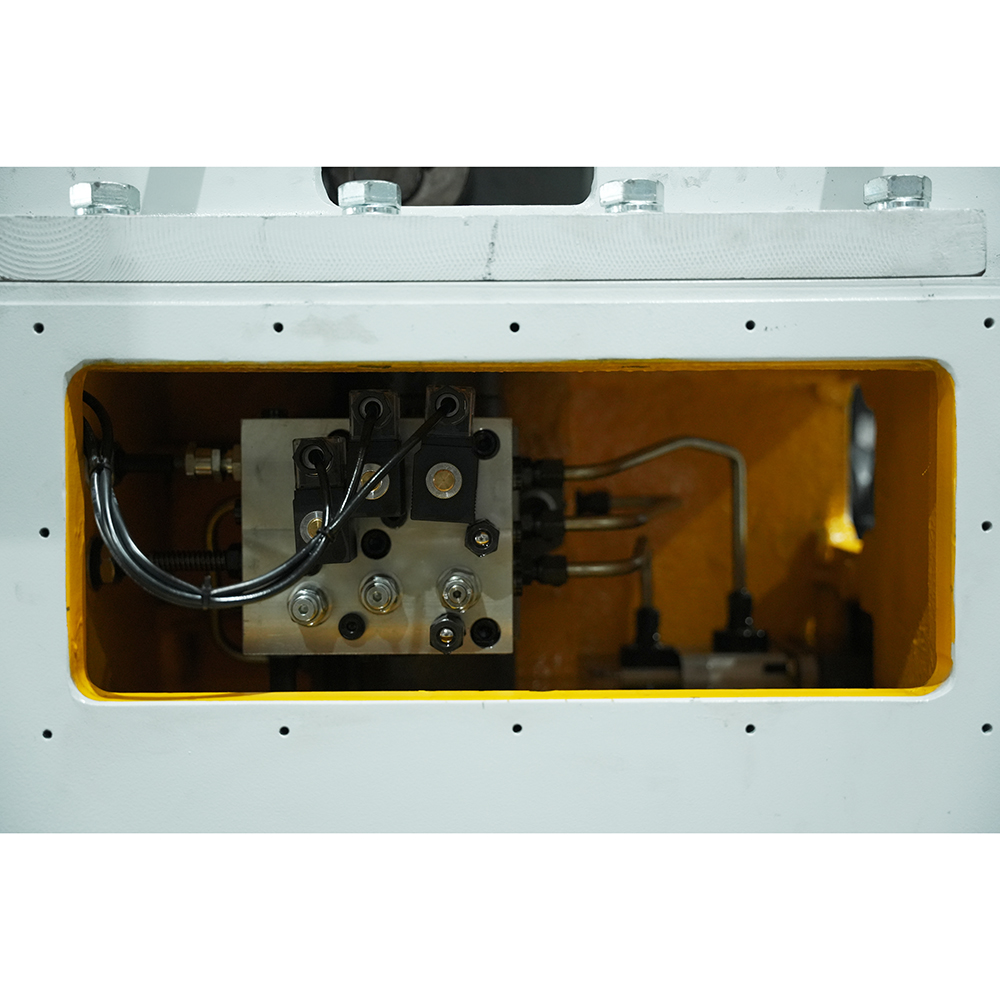
A hydraulic paper guillotine uses hydraulic force for the clamp and cutting action. The category term covers machines from simple workshop cutters to production guillotines, so the hydraulic label alone is not a performance grade. The buyer should ask for the cutting width, maximum pile height, control type, safety devices and acceptance method, and should confirm that the quoted configuration matches the material being cut.
Compliance evidence is part of the technical file. HPM holds CE certificate C25.01.22515MLE, issued by Shanghai Tebo Testing Technology Co., Ltd. on 20 January 2025 and valid to 20 January 2028. The certificate scope covers the paper cutting system, including the paper cutting machine, stack loader, stack unloader, pile turner, stack lift, stack jogger and window patching machine, and lists EN 1034-1:2021, EN 1034-5:2005+A1:2009, EN ISO 12100:2010 and EN 60204-1:2018 among the referenced standards.
That certificate is useful evidence for a supplier qualification file, but it should be read against the exact model and configuration being purchased. A certificate for a paper cutting system does not replace a model-specific declaration, a risk assessment or a site acceptance test. For EU-bound machinery, the regulatory framework is also changing: Regulation (EU) 2023/1230 applies from 20 January 2027 and replaces Directive 2006/42/EC, which remains the applicable framework until then. Buyers placing machines into the EU should plan the technical file around the transition date rather than treating CE marking as a one-time label.
Procurement checklist for evaluation and execution
The following checklist converts the comparison into a purchase specification. It is written for the stage where the buyer has already shortlisted control types and needs to confirm that the quotation, acceptance criteria and service terms are complete.
- Define the job mix. List the sizes, repeat frequency and average batch height for the next 12 months. Use that list to decide whether program memory will be used daily or only occasionally.
- Match the model to the maximum format. Confirm the cutting width against the largest sheet the plant expects to handle. The HPM range covers models 66, 92, 115, 130, 137, 168 and 188, but the selected model must match the actual format and pile height.
- Specify the interface and operating mode. State whether the 16-inch touchscreen is standard, whether 19-inch or 22-inch screens are required, and whether the machine will run manual, semi-automatic or fully automatic operation. Do not assume that program control includes automatic loading.
- Set the acceptance method. Agree how the 46 cuts per minute, 0.1 mm cutting accuracy and 0.01 mm positioning accuracy will be checked, with which material and at what pile height. A pre-shipment inspection video is part of the acceptance record.
- Confirm commercial terms. The stated terms include MOQ 1 unit, FOB or CIF delivery, 30/70 payment terms and a lead time of 25 days. These terms should be written into the order rather than left as verbal assumptions.
- Verify quality control and warranty. HPM states 100% testing and a one-year warranty, with overseas installation and online guidance or support available. Clarify response time, spare-parts scope and remote support availability in the destination market.
- Check the installation environment. The permitted operating conditions are an enclosed area, ambient air temperature of +5°C to +40°C and humidity of 35% to 90% without condensation. Outdoor use is prohibited, and the machine must not be exposed to dripping water, splashing water, water mist or excessive dust.
- Plan platform maintenance. The platform needs routine maintenance, and the paper cutter must not be exposed to rain or water. Rust prevention is a maintenance action, not a control feature.

Comparison with traditional solutions: boundaries and trade-offs
The main limitation of program control is commercial and organizational, not technical. It carries a higher equipment cost and requires a disciplined program library, trained operators and a maintenance routine. If the plant runs mostly one or two sizes, or if the cutting team is small and stable, the additional programming capability may not produce enough changeover savings to justify the price difference.
The main limitation of the digital display paper cutter is throughput under repetition. Manual positioning for each cut is simple, but it keeps the operator in the changeover loop. For low output and frequently changing specifications, that is acceptable. For large batches and consistent production, it becomes labor-intensive and less efficient.
Both control types share the same site boundaries. They must be operated indoors within the stated temperature and humidity range, protected from water and excessive dust. Neither type removes the need for a proper foundation, a trained operator, a blade maintenance schedule or a platform maintenance routine. A buyer who compares only the screen and the price will miss the conditions that determine whether the machine performs as expected.
Market trend: automation is rising, but the control choice is still segmented
The broad trend is toward more automation in post-press, but the available evidence does not support a claim that every plant should move directly to program control. The Dataintelo estimate that fully automatic paper cutting machines held 42.5% of the global market in 2025 indicates a substantial automated segment, not a universal standard. The same market estimate places the total category at USD 2.85 billion, while other commercial estimates differ in scope and value. Buyers should use these figures to understand the direction of the category, not to justify a single machine choice.
The trade picture is similarly broad. China’s 2024 exports under HS 8441.10 reached USD 412.97 million, which suggests a deep supplier base and active cross-border competition. For a production manager, that means the evaluation should focus on the quoted configuration, the acceptance record and the service model rather than on whether a control type is fashionable.
The regulatory trend is more concrete. EU machinery regulation is moving from Directive 2006/42/EC to Regulation (EU) 2023/1230, which applies from 20 January 2027. Suppliers serving EU customers will need technical files that align with the new framework. That does not change the program-control versus digital-display decision by itself, but it raises the value of a supplier that can document conformity clearly.
Future outlook
The next stage of competition is likely to be about integration rather than the control label. A program-controlled cutter becomes more useful when it is matched with stack loaders, stack unloaders, stack lifts, pile turners and joggers that reduce manual handling around the knife. A digital display cutter remains relevant where the work is varied and the volume does not justify a line investment.
Buyers should also expect more attention to the interface as a training and error-reduction tool. The 16-inch touchscreen as standard, with 19-inch and 22-inch options, reflects that direction. The screen does not make the machine accurate, but it can make program selection, fault recovery and operator prompting more consistent.
The practical outlook is therefore not a single winner. The market will continue to support both a simple-to-operate paper cutter for flexible low-volume work and a programmable hydraulic paper guillotine for repeat production. The buyer’s task is to match the control layer to the work, then verify the mechanical and compliance evidence behind it.
FAQ
Program-controlled paper cutting machine vs digital display paper cutting machine: which one should a printing production line choose?
For high-volume, consistent production, a program-controlled paper cutting machine is recommended because it stores multiple cutting sizes, reduces manual re-setup and improves paper utilization. For small batches with a limited budget, a digital display paper cutter is recommended because it is simpler and cheaper. The digital display model is suitable for workshops with frequently changing specifications and low output, but it requires manual positioning for each cut.
What are the purchasing terms and acceptance criteria?
The stated purchasing terms are MOQ 1 unit, FOB or CIF delivery, 30/70 payment terms and a lead time of 25 days. Acceptance includes a pre-shipment inspection video before delivery, and the supplier states 100% testing. The purchase order should also define the material, pile height and method used to check the cutting and positioning accuracy claims.
How can a buyer avoid rust on the paper cutter platform?
The paper cutter and its platform should receive regular maintenance according to the maintenance manual. The machine must not be exposed to rain or water, and the platform needs routine maintenance. These actions address the stated risk of platform erosion and wear that can make operation inconvenient.
Does a 16-inch touchscreen or a larger screen change cutting accuracy?
No. The 16-inch touchscreen is the standard interface, with 19-inch and 22-inch screens available as options, but screen size does not determine cutting accuracy. Accuracy depends on the positioning system, mechanical condition, blade and clamp setup. The stated cutting accuracy is 0.1 mm and the stated positioning accuracy is 0.01 mm, and both should be verified against the agreed acceptance method.
Can a program-controlled cutter run manual or semi-automatic operation?
The control type and the operating mode are separate specifications. The paper cutting machine category covers manual, semi-automatic and fully automatic operation. A program-controlled machine may still require manual or semi-automatic material handling unless it is quoted with automatic loading and unloading equipment. Buyers should state the required operating mode and matched equipment in the purchase specification.
Bottom line
Choose a program-controlled paper cutting machine when the job mix is repetitive, the post-press queue is steady and the plant can maintain a program library and operator training. The economic case is strongest when manual re-setup is a daily constraint and when paper utilization and consistency matter across shifts.
Choose a digital display paper cutter when batches are small, specifications change frequently and the budget or operating model does not support programming discipline. It is a rational simple-to-operate paper cutter for low-output work, provided the buyer accepts the manual positioning workload.
The decision should not be made from the control label alone. Test the 46 cuts per minute, 0.1 mm cutting accuracy and 0.01 mm positioning accuracy against the actual material and acceptance method. Confirm the interface, operating mode, installation environment, CE evidence and service terms. Only then does the comparison become a procurement decision rather than a brochure comparison.
Manufacturer reference: Zhejiang Huayue Packing Machinery Co., Ltd publishes a product catalogue with its paper cutting machine range. The PDF is available here: HPM paper cutting machine catalogue.
Tem questões ou precisa de mais detalhes?
Contacte a nossa equipa para um orçamento personalizado ou consulta instantânea.
Solicitar orçamento
Preencha o formulário abaixo e a nossa equipa entrará em contacto com uma proposta personalizada.
Chat direto do WhatsApp
Prefere conversar em tempo real? Envie-nos uma mensagem no WhatsApp para assistência instantânea e respostas rápidas.
- Obter orçamento personalizado
- Partilhar fotos ou documentos
- Discuta as suas necessidades diretamente
Geralmente responde em 5–30 minutos durante o horário de expediente.