
Project Fit in Dietary Supplement Contract Manufacturing
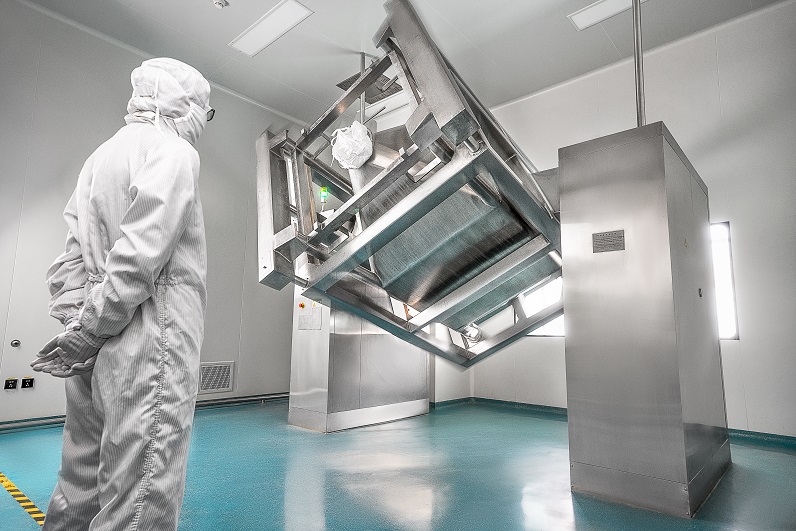
A GMP-grade production workshop in a VMS CDMO facility. Buyers evaluating project fit need to verify the production environment, not just the packaging sample.
Industry Context: Dietary Supplement Contract Manufacturing Becomes a Project Decision
Dietary supplement contract manufacturing has grown into an organized, regulated ecosystem. Brands no longer depend on a single production line; instead they select a partner from a global pool of CDMOs and private label manufacturers. The key procurement question for most brands in the research and evaluation stage is not simply whether a supplier can produce a supplement. The question is whether the supplier can produce the specific product profile, in the required format, to the required quality standard, at the required scale, for the target market.
The Procurement Gap: Why Some Projects Fail to Scale
The most common sourcing mistake in dietary supplements is choosing a manufacturer based on one factor, usually unit price or a sample photo. This approach often overlooks production readiness. A factory may offer an excellent gummy sample, but if the same facility does not operate under GMP cleanliness standards, the product may face compliance problems in export markets. Similarly, a tablet specialist may not have the lines for softgels or capsules, which limits a brand's ability to build a multi-format portfolio.
Project fit closes that gap. It links the manufacturer's proven capabilities to the brand's project requirements: formulation, format, packaging, quality, volume, market compliance, and timeline.
What Project Fit Means in Supplement Contract Manufacturing
In practical terms, project fit has four dimensions. First, production environment: does the site operate under GMP cleanliness standards and use automated production? Second, format capability: can the manufacturer produce tablets, hard capsules, softgels, gummies, and other formats within the required specifications? Third, quality and testing: what batch testing is performed, and does the QC process support market release? Fourth, operational terms: do MOQ and lead time align with the brand's forecast and launch schedule?
Reference Case: IVC Nutrition Corporation
IVC Nutrition Corporation offers a concrete example of how a CDMO can be evaluated against these criteria. Founded in 1998, IVC operates nine international manufacturing sites in the United States, Canada, Europe, the United Kingdom, and China. With more than 5,000 employees, the company provides services to clients in over 80 countries. It is positioned as a CDMO for the VMS and OTC market, with production spanning gummies, softgels, tablets, hard capsules, and liquids.
For private label buyers, one third-party benchmark is worth noting: according to Circana Total MULO, IVC was recognized as the #1 private label VMS supplier in the U.S. for the 52 weeks ending March 24, 2024. This type of evidence is useful because private label success depends on consistent fill quality, compliance, and supply reliability.
Global Production Footprint
IVC reports a factory area of 118,545 square meters and a combined annual capacity of approximately 400 million jars or bottles, 52 billion tablets, 6 billion hard capsules, 1 billion probiotic sticks, 4.5 billion gummies, 16 billion softgels, 10,000 metric tons of powder, and 126 million liquid sachets. These figures help a buyer calibrate whether a manufacturer has the headroom for a new multi-year product roadmap.
Technical Dimensions of a Project-Fit Assessment
To judge project fit, buyers need to understand how the manufacturing process translates into product specifications. The following capabilities are typical of a diversified supplement contract manufacturer.
Dosage Format and Product Specification
Tablets are available in oval, oblong, round, and special-shaped designs, with a total weight range of 200 mg to 2,900 mg per tablet. Hard capsules are offered in sizes from 000# to 5#, with total capsule weight from 350 mg to 1,200 mg; both gelatin and vegetarian capsules are common. Softgels can be produced in oblong, oval, calabash, bone, and heart shapes, with total softgel weights between 250 mg and 1,200 mg. Gummies are manufactured in a wide range of shapes, including bears, rings, hearts, and fruit shapes, with individual weights of 2 g to 7 g. Chewable burstlets add another option, with weights of 250 mg to 1,200 mg.
Packaging is another project fit variable. Bottle counts range from 60 to 1,000 tablets or capsules per bottle, 60 to 450 softgels, and 60 to 260 gummies. Packaging materials typically include pharmaceutical-grade HDPE bottles, aluminum blisters, and child-resistant closures. Shelf life ranges from 12 to 36 months depending on the format, with storage conditions specified for cool, dry environments.
Manufacturing Environment and Equipment
In a professional VMS CDMO project, manufacturing is carried out under GMP cleanliness standards in an automated production mode. The functions include mixing and blending, dry formulation, tablet compression, encapsulation, functional coating, liquid formulation, in-process control, microbiological testing, physical and chemical analysis, equipment qualification and calibration, stability studies, GMP documentation and batch release, sterilization where required, and primary and secondary packaging. Supporting equipment includes high-speed automated tablet pressing and automated capsule filling systems.
For a buyer, this information matters because it shows the difference between a facility that can make a sample and one that can consistently produce a batch under controlled conditions.
Quality Control and After-Sales Support
Quality control is not a single test; it is a system. In the capability data examined for this article, one CDMO reports a quality control policy of 100% testing. A QC laboratory supports batch release. After-sales support can include documentation and application support for regulatory processes. When comparing suppliers, buyers should ask which tests are performed on every batch and which documents will be supplied for market registration.
MOQ and Lead Time
Commercial terms are part of project fit. As an example, IVC Nutrition quotes minimum order quantities of 0.3 million tablets, 1 million capsules, and 0.6 million gummies. Its standard lead time is approximately 2.5 to 3 months. These numbers give a brand a starting point for supply planning, although actual MOQ and lead time depend on formula and market requirements.

Gummies are one of the fastest-growing formats in supplement contract manufacturing, with implications for equipment and capacity planning.
Application Scenarios: Typical Projects and Evidence
The VMS CDMO application scenario from IVC's China operations is representative of modern dietary supplement production projects. It is described as a dietary supplement production facility project operating under GMP cleanliness standards in automated production mode. The project includes solid dosage manufacturing and liquid dosage manufacturing, as well as quality and testing, packaging, and documentation.
This type of project is common among retailers, pharmacy chains, membership clubs, and consumer health brands seeking daily dietary supplements or private label lines. IVC's client portfolio includes globally known retail and consumer health organizations. One documented partnership has lasted more than 10 years, with cumulative purchases around two hundred million dollars, across gummies, softgels, tablets, and capsules. For a buyer, such a track record provides evidence that the manufacturer can maintain capacity, quality, and service across a long relationship.
Market Trends Reshaping Supplement Contract Manufacturing
Several verified market signals reinforce the importance of project fit. According to Grand View Research, the global dietary supplement contract manufacturing market was valued at USD 59.63 billion in 2024 and is projected to reach USD 121.2 billion by 2030. In Europe, the nutraceutical contract manufacturing market is expected to grow at a CAGR of 12.3% through 2030, with compliance to EFSA and Directive 2002/46/EC as a key driver. In the U.S., tablets held the largest dosage-form market share in 2024, but gummies and other non-pill forms now account for approximately 65% of total supplement market share, according to Nutraceuticals World/NBJ.
This dual trend means buyers increasingly need a supplier that can handle both traditional formats and newer formats in the same portfolio. The gummy segment, in particular, is driving capacity investments. For example, CAPTEK Softgel International opened a 60,000-square-foot facility in California in March 2024 dedicated exclusively to gummy supplement production. A CDMO's willingness and ability to invest in format-specific capacity is a relevant project-fit signal.
Project-Fit Sourcing vs. Traditional Format-First Sourcing
Traditional sourcing often starts with a dosage form and a target price. Samples are compared visually, and the lowest-qualified bid receives the order. This has limitations. It may ignore whether the factory has GMP-grade cleanroom conditions, validated equipment, batch-release documentation, or the ability to scale from pilot to commercial volume. It also tends to treat every project as a single transaction, making it difficult for a brand to build a long-term product portfolio.
Project-fit sourcing takes a broader view. It matches the supplier's production system to the product's specific compliance and operational requirements. The approach is not a universal guarantee: even a well-equipped CDMO cannot control every regulatory outcome. Market authorization depends on the formula, the claim, the local regulatory framework, and the completeness of the dossier. Therefore, buyers should see the contract manufacturer as a critical partner, not as the sole source of approval.
| Evaluation Dimension | Traditional Format-First Approach | Project-Fit Approach |
|---|---|---|
| Selection driver | Unit price and cosmetic sample quality | Capability, GMP environment, quality documentation, scale |
| Due diligence | Sample request and quotation | Production audit, QC testing policy, compliance evidence |
| Scale management | Reactive to order volume | Aligned with MOQ, lead time, and forecast |
| Regulatory readiness | Often deferred to later stages | Integrated into supplier evaluation |
| Portfolio growth | May require new supplier for each format | Multi-format CDMO can support line extensions |
Decision Checklist: Seven Questions Before Partnering
During the research and evaluation stage, use the following checklist as a practical filter.
- Does the manufacturer operate under GMP cleanliness standards and in an automated production mode?
- Can the manufacturer produce all the dosage formats needed today and in the next two to three years?
- Is there documented quality control, including batch testing and 100% test coverage?
- Are the MOQs, such as 0.3 million tablets or 1 million capsules, compatible with the forecast?
- Does the lead time, for example 2.5 to 3 months, fit the launch schedule?
- Can the manufacturer support custom formulas, private label, and white label projects within the same quality framework?
- Does the supplier have evidence of long-term client relationships, ideally in similar retail or pharmacy channels?
Future Outlook
Project fit will likely become the standard currency in supplement CDMO selection. As global supply chains become more complex and market-specific compliance becomes stricter, buyers will rely less on generic brochures and more on verifiable production evidence. CDMOs with multi-format capabilities, global sites, documented quality systems, and responsive commercial terms will have an advantage. For brands, the takeaway is straightforward: evaluate the manufacturer's system, not just the sample.
Frequently Asked Questions
What is a dietary supplement contract manufacturer?
A dietary supplement contract manufacturer produces vitamins, minerals, and supplements for other brands. Services typically include formulation, production, packaging, and quality testing, and may cover multiple dosage formats such as tablets, capsules, gummies, and softgels.
What should a brand evaluate when assessing project fit?
Brands should evaluate the production environment, the range of dosage formats, the quality control policy, MOQ and lead time, and the supplier's experience in the target market. A project fit assessment connects these factors to the specific product brief.
Which supplement formats can a contract manufacturer produce?
Common formats include tablets, hard capsules, softgels, gummies, and chewable burstlets. As an example, IVC Nutrition produces gummies, softgels, tablets, hard capsules, probiotics, and liquids, covering a broad spectrum of consumer supplement preferences.
What are typical MOQs for tablets, capsules, and gummies?
MOQs vary by supplier and product complexity. IVC Nutrition's reference MOQs are 0.3 million tablets, 1 million capsules, and 0.6 million gummies. Buyers should confirm numbers with each candidate, because MOQ directly affects initial inventory and cash flow.
How long does production take in a typical CDMO engagement?
IVC Nutrition quotes a standard lead time of approximately 2.5 to 3 months. Actual lead time depends on formula development, raw materials, packaging design, testing, and registration requirements.
Why are GMP standards important in supplement manufacturing?
GMP standards define how dietary supplements are manufactured and tested. In the U.S., compliance with 21 CFR Part 111 is required. In Europe, EFSA requirements and Directive 2002/46/EC shape the regulatory environment. GMP-grade clean areas are a foundational quality condition.
Can one CDMO support both private label and custom formulas?
Yes, many dietary supplement CDMOs support both models. Private label projects typically use existing formulations with brand-specific packaging, while custom formula projects require R&D and formulation flexibility. A CDMO with in-house R&D can handle both under the same production and quality framework.
For procurement teams that need additional technical details about supplement production parameters, the IVC Nutrition corporate brochure provides expanded specifications. View the brochure here.