
Project Fit: Custom Casual Apparel Sourcing by Scenario
Project Fit: Custom Casual Apparel Sourcing by Scenario
A procurement-focused view of matching blank T-shirts, long-sleeve tops and heavyweight hoodies to cross-border retail, brand development, wholesale and corporate workwear projects.
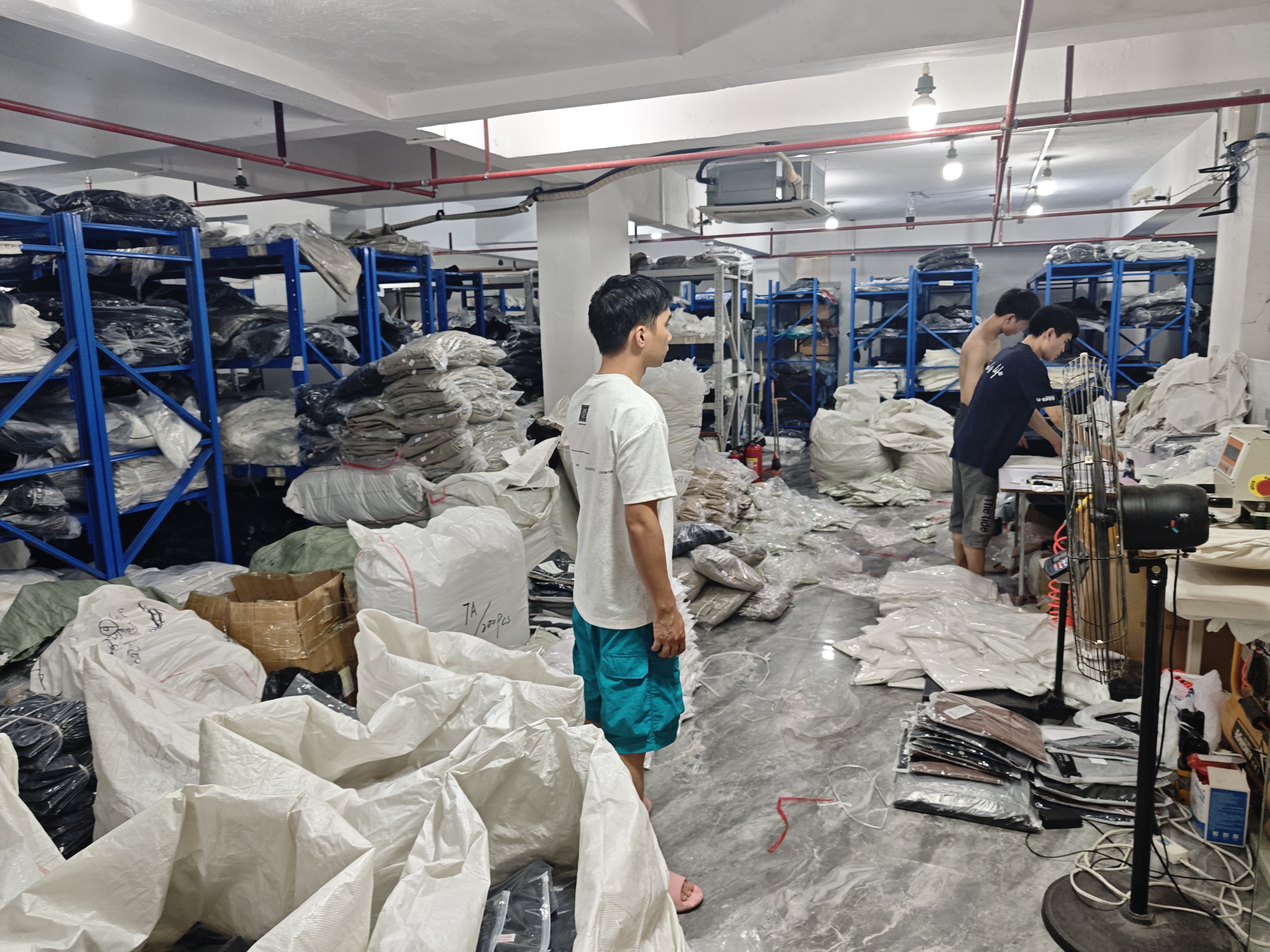
Lihongwear's storage area supports spot and custom casual apparel order preparation.
The scenario-fit problem in custom casual apparel
Custom casual apparel programs often fail less because of poor fabric than because of poor scenario fit. A blank 230g T-shirt that works for a print-on-demand storefront may not serve a structured streetwear drop. A heavyweight hoodie built for boxy silhouettes may not fit a lightweight corporate layering program. Buyers evaluating custom casual apparel therefore need to read product specifications as project variables, not just garment descriptions.
Lihongwear, the brand operated by Guangzhou Lihong Apparel Trade Co., Ltd. in Tianhe District, Guangzhou, provides an OEM/ODM manufacturing and spot wholesale model for men's basic apparel. The company reports a 5,000 m² independent production plant, more than 150 employees, and annual output of around 500,000 pieces, with approximately 80% of production directed to export markets in Europe, America, Southeast Asia, the Middle East and Australia.
The procurement challenge is not only who can produce a T-shirt. It is which product profile should be attached to which project. The same supplier range includes lightweight Comfort Stretch T-shirts, 280g long-sleeve tops and 360g hoodies. Each creates a different fit for online store sales, brand exclusive series, wholesale replenishment or corporate workwear.
What Lihongwear's spot plus custom model means for sourcing teams
Lihongwear's operating model combines two lanes: ready stock for spot wholesale and made-to-order development for brand or corporate projects. The spot program has no minimum order quantity and supports mixed wholesale across stocked styles. The custom program starts from 200 pieces per style. This distinction matters in evaluation because it changes how a buyer can test a product before committing to large-volume production.
The factory reports monthly capacity of 45,000 knitted or woven garments and a standing stock of more than 200,000 pieces. Spot goods are dispatched within three days. Custom orders, from sample confirmation to bulk delivery, run 15–25 days. Daily output is stated at 1,500 pieces, and the men's basic apparel range is stocked in sizes XS through 5XL for some series, while individual categories such as T-shirts, long-sleeve shirts and hoodies carry their own size windows.
For custom orders, the controllable elements include fabric weight, garment size, garment color, front and back printing, embroidery logo, hangtag, wash label and full packaging. The supplier also states that fabrics come with CTI test reports, that production follows AQL international standards, and that 100% manual inspection is completed before shipment. Buyers can also coordinate with third-party on-site inspection.
Technical factors that affect project fit
The product matrix is not a single silhouette. It spans several material groups that perform differently under printing, embroidery, layering and repeated washing.
| Product area | Series or model | Material and weight | Size range | Typical project orientation |
|---|---|---|---|---|
| T-Shirts | 08 Series, 0606 Series, 0829 Series, Comfort Stretch Cotton Series, Roma Cotton Series | Comfort-Stretch Cotton, Breathable Cotton, Sorona, Starry Sky Cotton; 170g, 220g, 230g | M-4XL / M-3XL | Print-on-demand base, custom short sleeve casual T-shirts, brand image workwear, daily casual wear |
| Long Sleeve Shirts | 1801 Series, 1701 Series | High-Elastic Tech Blend 79.7% polyester + 20.3% spandex; High-Elastic Smooth Polyester; 280g | M-4XL | Street style layers, slim-fit base layer, spring/summer commute wear, custom long sleeve casual tops |
| Hoodies & Sweatshirts | 1901 Series | Mountain Cotton 63.5% cotton + 36.5% polyester, 100% polyester lining; 360g | M-3XL | Heavyweight casual hoodies, premium streetwear drops, seasonal brand series, winter loungewear |
| Men's Basic Apparel | 1901 Series, 1801 Series, 1701 Series | Pure cotton, cotton-polyester blend, mountain cotton, polyester fiber, spandex, twill fabric, canvas | XS-5XL | Broad private label casual apparel, bulk casual apparel orders, wholesale base garments |
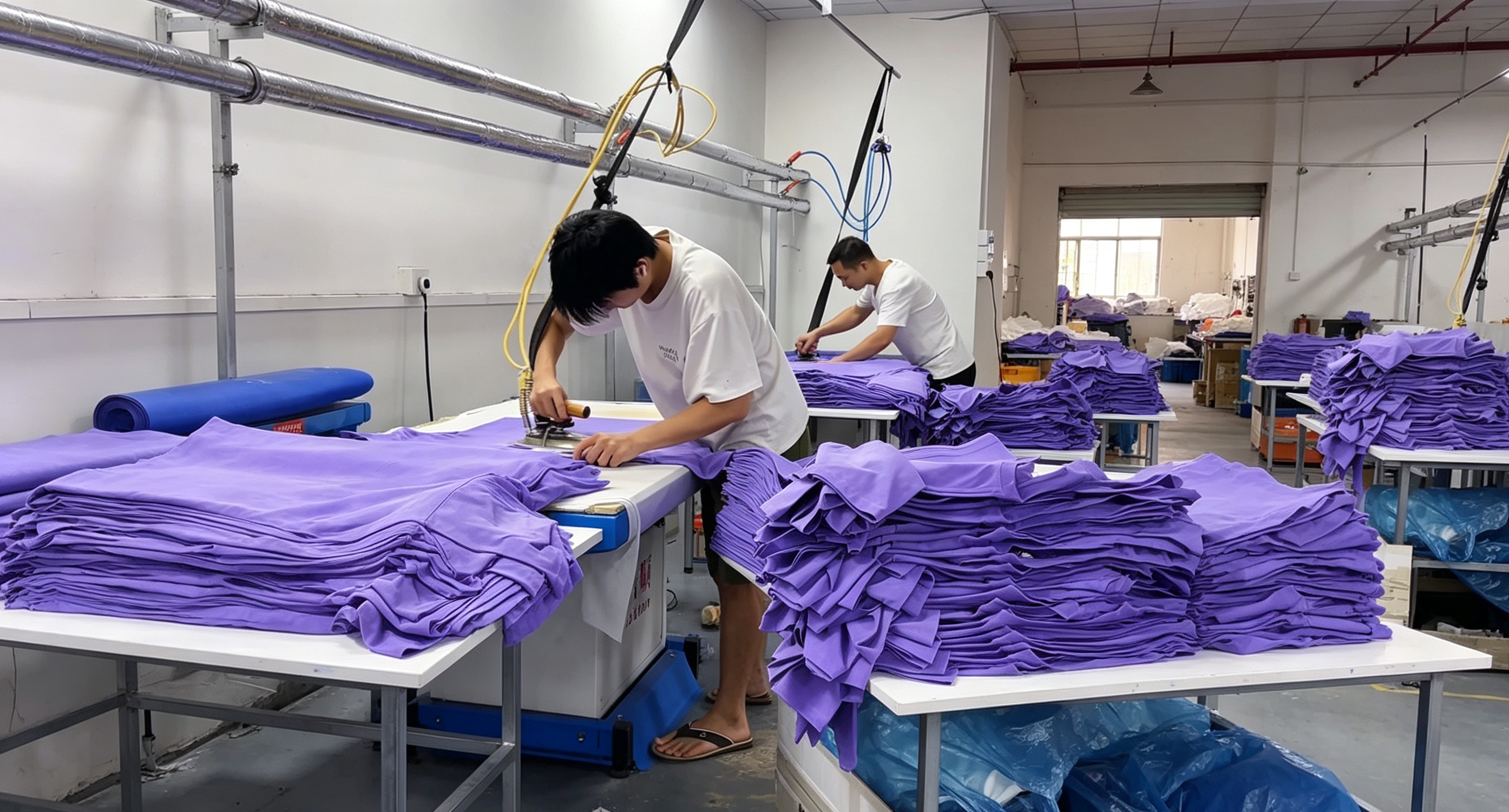
Manual inspection and ironing form part of the pre-shipment control process for custom casual apparel.
Decoration compatibility is another technical driver. The T-shirt line includes an ultra-smooth Comfort Stretch face that is positioned for high-resolution screen printing, silicone heat transfer logos, subtle embroidery or reflective safety branding. That matters when a buyer is selecting a blank casual top for a brand decoration program rather than a stock fashion item.
For corporate workwear projects, buyers sourcing for EU markets should confirm whether EN ISO 13688:2022 general performance and safety requirements apply. Lihongwear states that its fabrics come with CTI test reports and that production is executed to AQL international standards, but any specific end-market safety or performance standard should be validated by the buyer for the final application.
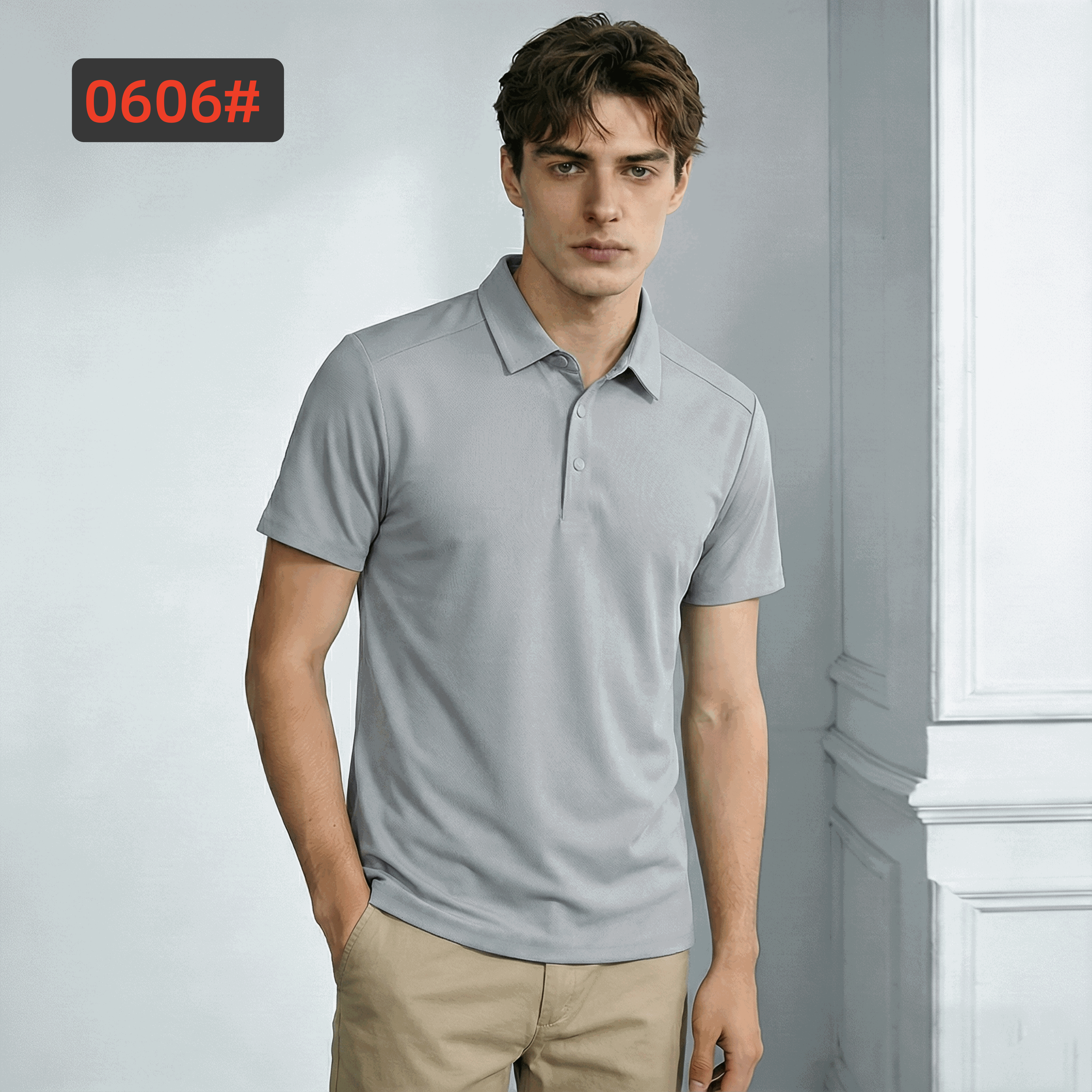
The 0606 Comfort Stretch Cotton T-shirt can serve as a decoration-ready base for custom casual apparel programs.
Use-case mapping for cross-border, brand, wholesale and corporate projects
The application data supplied for this product group maps to four main project types: online store sales, offline supermarket retail, brand exclusive series and corporate workwear. The same garment can play different roles depending on the buying scenario.
Cross-border e-commerce and online store sales
For online store sales, the most important requirement is often a decoration-ready blank base. Lihongwear's T-shirts and men's basic apparel are positioned as daily casual wear, a blank base for printing and embroidery, a slim-fit inner layer and brand image workwear. The spot small-batch mixed wholesale option supports new product testing and rapid replenishment without a minimum order quantity.
Clothing wholesale and offline supermarket retail
Wholesale buyers are more likely to prioritise stock depth and mixed-style ordering. The supplier reports a standing stock of more than 200,000 pieces and daily output of 1,500 pieces. Spot goods can be shipped within three days and support arbitrary mixed wholesale. This is more useful for restocking shelves or rotating basic casual styles than for highly developed custom fashion pieces.
Trendy private customization and brand ODM
A brand ODM project is closer to private label casual apparel development. Custom orders start from 200 pieces per style, with a sample-to-bulk cycle of 15–25 days. Buyers can specify fabric weight, color, print placement, embroidery, inner neck taping, woven brand tags, wash care labels, hangtags and polybag packaging. This type of program suits a brand exclusive series or a streetwear capsule rather than a low-volume made-to-order experiment.
Corporate group workwear
Corporate group workwear programs tend to place more weight on repeatable quality, inclusive sizing and brand image. The size range extends to XS-5XL for men's basic apparel and includes options for custom color-dyeing at enterprise-level production orders. The packaging system—including custom hangtags, wash labels and brand packaging bags—supports corporate identity. For EU work-related applications, buyers should independently verify applicable safety standards.
| Project type | Typical requirement | Relevant Lihongwear product or function | Sourcing consideration |
|---|---|---|---|
| Cross-border e-commerce | Print-ready base, rapid replenishment, small-batch mixed wholesale | T-Shirts 08/0606/Comfort Stretch, Men's Basic Apparel | Confirm decoration surface, color mix and size depth |
| Brand ODM / private label | Custom color, custom print or embroidery, full packaging | T-Shirts, Long Sleeve Shirts, 360g Hoodies | Custom MOQ starts at 200 pcs per style; 15–25 days sample-to-bulk |
| Corporate workwear | Brand image, inclusive sizing, repeatable quality | Long Sleeve Shirts, Men's Basic Apparel, Hoodies | Confirm end-market standards and inspection requirements |
| Offline supermarket/retail | Stock availability, mixed wholesale | Men's Basic Apparel, 200k+ ready stock | Spot goods have no MOQ and ship in three days |
Market signals shaping 2026 casual apparel programs
The category context matters for evaluation. According to Fortune Business Insights, the global casual wear market size was valued at USD 645.22 billion in 2025 and is projected to grow to USD 906.32 billion by 2034. That expansion does not automatically simplify sourcing. It increases the number of channel-specific programs competing for the same product development budget.
Proficient Market Insights estimates that the custom made clothes market will reach USD 213.1 billion by 2035, with a CAGR of 10.5% from 2026. Grand View Research places the U.S. custom T-shirt printing market at USD 857.5 million in 2023, with a projected CAGR of 11.8% to 2030. These figures point to sustained demand for blank and decorated casual apparel, but they also mean buyers are evaluating more suppliers and more product variants.
Heavyweight hoodies in the 350–420 GSM range have become a common baseline reference for premium streetwear, according to PrintDoors and Accio Work commentary. The 1901 Series hoodie, at 360g with a cotton-polyester Mountain Cotton body and polyester lining, falls within that weight corridor. This makes it a relevant reference point for brands building structured, boxy street style casual apparel rather than lightweight loungewear.
The OEKO-TEX Association reported that it issued more than 50,000 certificates between 2023 and 2024, an increase of 22%. Buyers are therefore asking more questions about chemical safety and traceability. Lihongwear's stated use of CTI test reports and AQL-based inspection is useful documentation, but it does not replace a buyer's own compliance review for a specific target market.
Where the spot-plus-custom model has boundaries
No production model fits every project. One boundary is lot size. Full custom development starts at 200 pieces per style. A brand that wants 30–50 units with newly developed fabric, multiple print placements and per-unit packaging may need a made-to-order or print-on-demand service rather than a cut-and-sew OEM/ODM order. The spot wholesale program removes the MOQ for stocked styles, but it does not extend to new fabric development at ultra-low volumes.
Lead time is another boundary. Custom orders run 15–25 days from sample confirmation, while spot goods ship within three days. For a local retailer that needs same-week custom decoration, overseas production may not be the fastest route; a domestic blank-decoration partner may be more appropriate. The model is better suited to planned seasonal drops, branded replenishment programs and corporate order cycles than to urgent one-off custom runs.
The product catalogue is also centred on men's basic apparel. Buyers seeking womenswear-led collections, highly structured tailoring or complex multi-fabric constructions should verify category coverage before shortlisting. This does not reduce the value of the supplier for the product groups it focuses on, but it defines the realistic scope of a project.
Future outlook for scenario-based sourcing
The direction of casual apparel procurement is likely to become more granular. Instead of asking for a general custom T-shirt supplier, buyers will increasingly ask which base weight, fabric hand, size curve and packaging set match a specific channel. This favors suppliers that can present both stock depth and custom development in the same product range.
Lihongwear's spot-plus-custom structure is one response to that shift. The stock program allows a buyer to test a product without a large initial commitment, while the custom program moves from standardized blanks to brand-specific development. The evaluation question is not simply whether the supplier can produce custom casual apparel, but whether the project's lot size, lead time, decoration method and compliance requirements align with the available product matrix.
FAQ
Which custom casual apparel items are best for cross-border e-commerce stores?
T-shirts and men's basic apparel are positioned for daily casual wear, blank bases for printing and embroidery, slim-fit inner layers and brand image workwear. The T-shirt range includes 08 Series, 0606 Series, 0829 Series, Comfort Stretch Cotton Series and Roma Cotton Series, with weights from 170g to 230g. The spot program supports small-batch mixed wholesale without a minimum order quantity, which can suit online store testing and replenishment.
What is the minimum order quantity for custom casual apparel?
Custom orders start from 200 pieces per style. Spot goods have no minimum order quantity and support mixed wholesale across stocked styles. This means a buyer can use stock items for low-risk testing, while fully developed custom fabric and branding programs begin at the 200-piece threshold.
Can Lihongwear support private label packaging and trims?
Yes. The listed customization scope includes custom hangtags, wash labels, brand packaging bags and gift color boxes. For private label casual apparel, the T-shirt range can also include customized inner neck taping, woven brand tags, printed wash care labels and custom polybag packaging.
What quality control applies to custom casual apparel production?
Lihongwear states that fabrics come with CTI test reports, production is executed to AQL international standards, and 100% manual inspection is completed before shipment. The quality process covers raw materials, production processes and finished products, and the supplier can cooperate with third-party on-site inspection. Buyers should still validate any end-market safety or performance standards for their final application.
Which product should be used for heavyweight streetwear projects?
The 1901 Series hoodie is a 360g model made from Mountain Cotton, with a composition of 63.5% cotton and 36.5% polyester and a 100% polyester lining. Industry commentary identifies 350–420 GSM as a common heavyweight streetwear range. The 1901 Series falls within that corridor and is described as having a loose fit to accommodate European and American body types.
Which markets and order sizes does the factory serve?
The stated export markets are Europe, America, Southeast Asia, the Middle East and Australia. The supplier reports monthly capacity of 45,000 pieces and a standing stock of more than 200,000 pieces. Case-level data describes spot replenishment in thousands of pieces and custom long-term repeat orders in tens of thousands of pieces.
What are the limits for very small custom runs?
Full custom development starts at 200 pieces per style and requires a sample-to-bulk lead time of 15–25 days. Brands needing 30–50 pieces with newly developed fabric or complex private label packaging may need a made-to-order or print-on-demand model. Spot stock can be mixed in small quantities without a minimum order, but that does not extend to new custom fabric development at ultra-low volumes.