
Project Fit: How a Multifunctional Digital Printing Machine Matches Production Realities
Selecting a multifunctional digital printing machine rarely begins with a single specification. In packaging and carton printing, the decision starts with a production scenario: the length of the run, the number of job changes, the board size, the need for sample printing, and the point at which the machine must operate continuously. This article uses a project-fit lens to help buyers evaluate when a multifunctional digital printer makes sense and how to configure one for a specific operation.
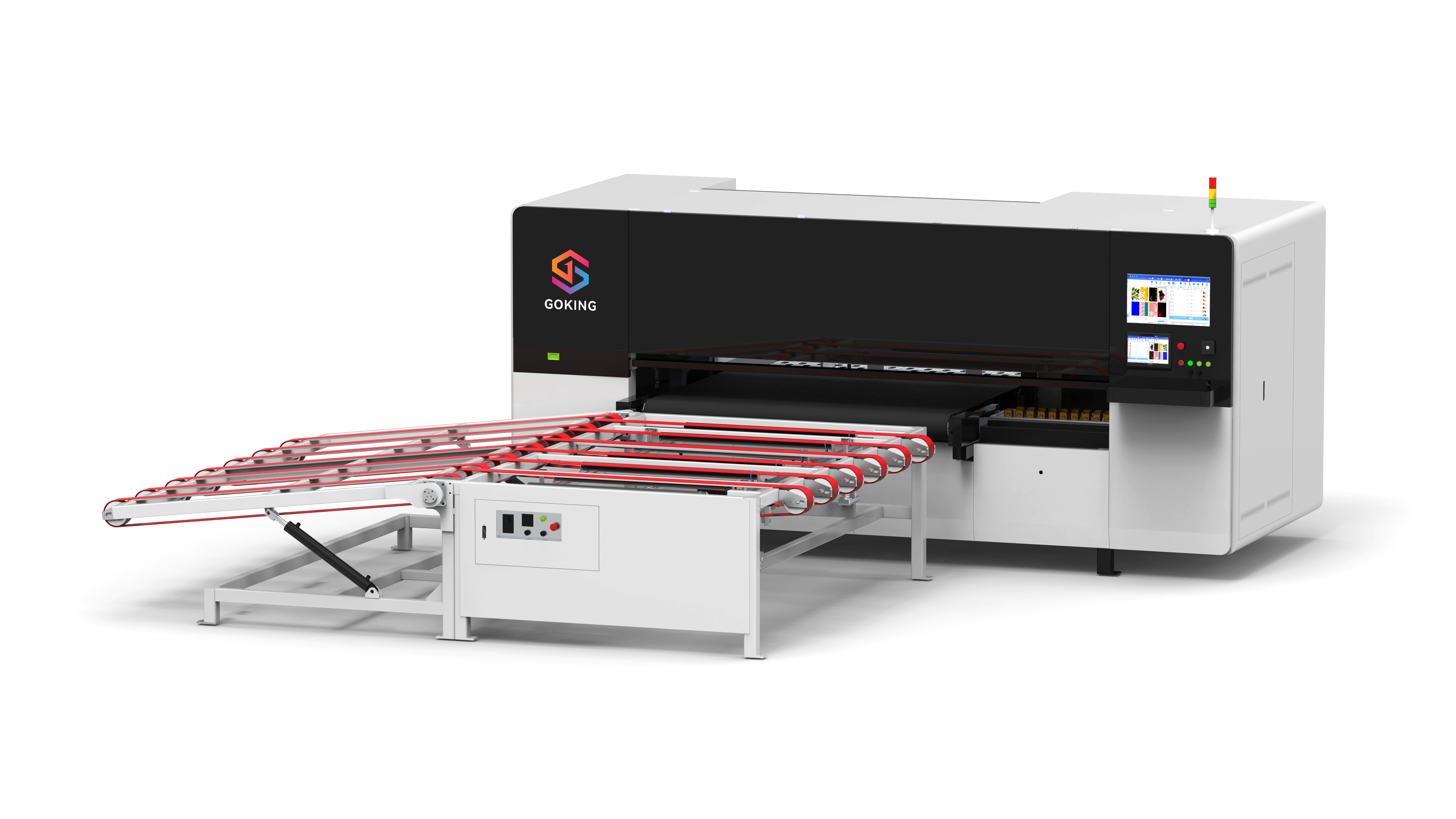
Short-Run and Variable Orders Are Changing the Production Profile
A plate-based production line is difficult to beat when the same design runs for a long time. It becomes less competitive when a factory receives many small orders and frequent job changes. Each design change can create plate-making, mounting, registration and setup waste. Digital printing changes the economics because the image is sent directly from file to machine.
Market data points in the same direction. According to Market Research Future, variable data printing has made it economically viable to produce runs shorter than 3,000 units, a range that was previously difficult to justify. MarketsandMarkets expects the digital printing packaging market to grow from about USD 30.2 billion in 2024 to USD 46.2 billion by 2029. The result is not only growth in printed volume; it is growth in job diversity.
Multifunctional Digital Printing Machines Designed for Mixed Workflows
One way to evaluate a multifunctional digital printing machine is to see it as a response to that mixed workflow. Guangdong Goking Intelligent Technology Co., Ltd., commonly called GOKING, is an industrial equipment developer and OEM/ODM manufacturer based in Dongguan, China. The company's main product range is the single-pass and multi-pass 2-in-1 digital printing machine, available in five-color integrated configurations and with different nozzles, DPI levels, print widths and speeds. Its production facility is about 10,000 square meters, and the engineering team is reported at 38 engineers.
The product platform deliberately covers three operating profiles. A high-speed single-pass press focuses on high-volume orders. A high-definition scanning press targets premium and high-precision packaging. A hybrid single-pass/scanning press is designed to handle market uncertainty by acting as a high-speed press for standard orders and switching to scanning mode for proofing or high-precision short runs.
This structure matters more than the headline model name. A buyer who knows whether the dominant project is a long corrugated run or a high-detail short-run carton can choose the appropriate node in the platform without buying unnecessary performance or losing future expansion capability.
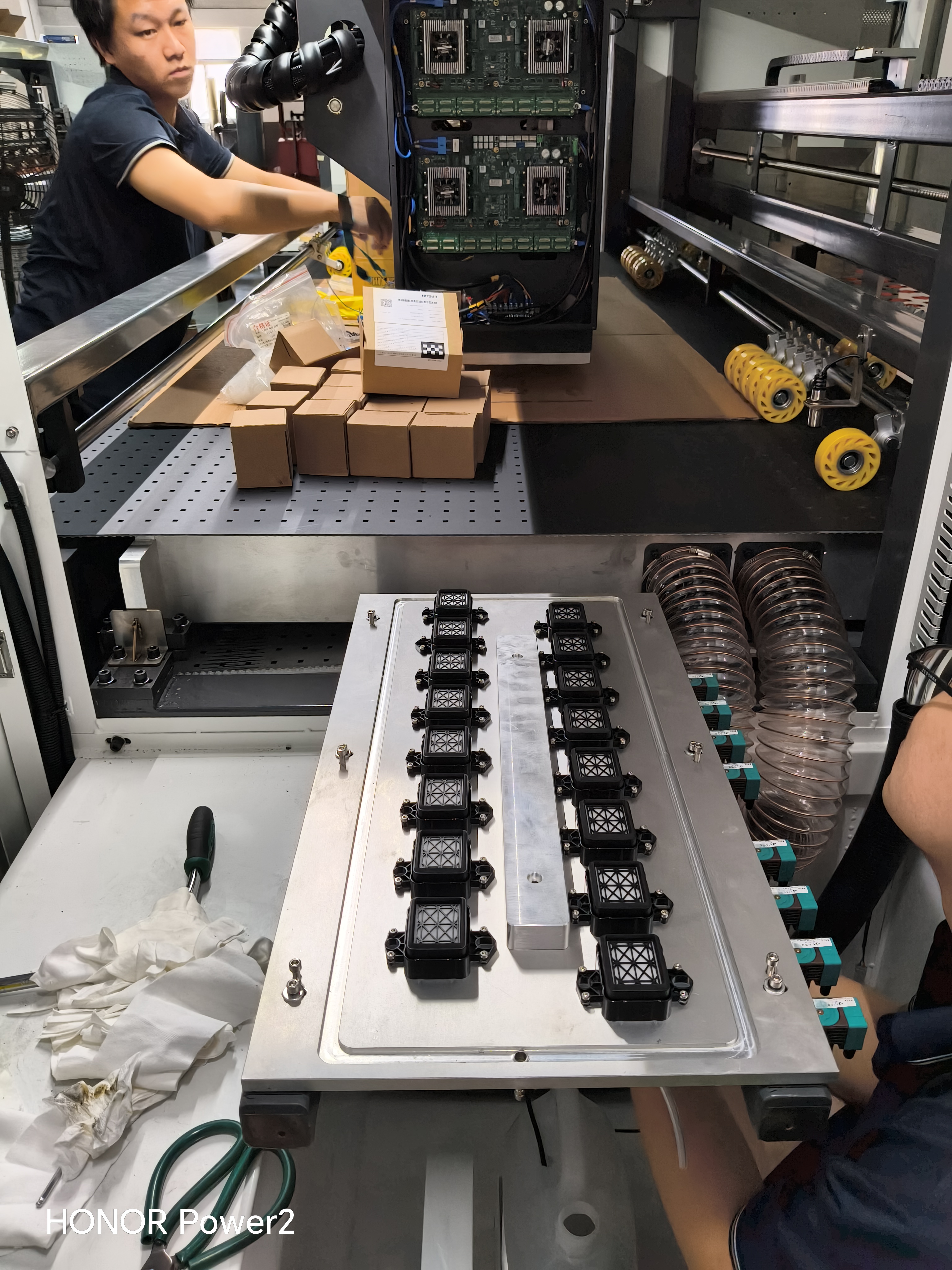
Single-Pass, Multi-Pass, and the Logic of the 2-in-1 Machine
Multifunctional capability comes from being able to switch between two physical print procedures. Single-pass, or direct output, moves material beneath a fixed line of printheads and is associated with continuous high-speed production. Multi-pass scanning moves the printhead over the substrate line by line; it is suited to high-resolution and complex jobs, including proofs and highly decorated cartons.
In the GOKING product table, single-pass speed is rated at 60 m/min with Epson printheads and at least 100 m/min with Xaar printheads. Production efficiency can reach 700 and 1,500 m²/h depending on configuration. Print width goes from 264 mm to 2600 mm. Printhead count can be specified from 8 to 256, which makes the machine scalable from an entry-level unit to a high-output line. Material thickness ranges from 2 mm to 30 mm, so the equipment is intended for paper-based boards rather than thin films or heavy rigid sheets.
The machine is specified with CMYK color mode and an optional white ink position, often shown as CMYK+W. White ink availability expands the range of board colors that can be covered, but the final appearance should always be validated on the actual substrate. Ink options include water-based dye ink, water-based pigment ink, coating ink and UV eco-friendly ink. These options help a packaging plant match ink chemistry to its market requirements.
Feeding and motion systems are also part of project fit. The equipment can be ordered with leading-edge feeding or belt feeding, a vacuum adsorption platform, a magnetic levitation crossbeam, and automatic scanning-to-print switching. These features determine how easily the machine can be connected to a production line or to an upstream corrugator operation.
A Quick Decision Guide for Project Scenarios
The following table maps common project profiles to a reasonable machine starting point. It is not a quote; it is a method to define the requirement before calling suppliers.
| Dominant project profile | Machine starting point | Why this fits |
|---|---|---|
| Long-run standard corrugated orders | Single-pass direct-output configuration with industrial-grade printheads | Continuous high-speed operation; the Xaar version is rated at least 100 m/min in single-pass mode |
| Short-run packaging and frequent design changes | Multi-pass or hybrid 2-in-1 configuration with a plate-less digital workflow | No plate cost; changing digital files is faster than re-setting plates |
| High-detail cartons, proofing and sample validation | Multi-pass scanning mode | Scanning mode is useful for complex boards and for controlled small-batch output before mass production |
| Mixed small and large format boards | 2-in-1 scanning/direct-output machine | Scanning method suits complex or large-format boards; direct-output mode suits small boards and small batches |
| OEM/ODM production line project | Customized machine structure, printhead type, DPI, color scheme and turnkey line | OEM/ODM customization can align the machine with factory layout and order mix |
Which Project Types Fit a Multifunctional Digital Printing Machine
The product documentation consistently places this type of equipment inside the packaging and carton printing industry. It is described as suitable for mass-production conditions, short-run printing environments, frequent job changes and continuous high-speed operation. The application profile also covers factory capacity expansion and equipment upgrade projects.
The production logic is summarized in GOKING's solution notes: for complex or large-format boards, use the scanning method; for small boards and small-batch orders, use the direct-output mode. A single all-in-one machine can handle both patterns, which is relevant for a plant whose order book is not easy to predict from month to month.
GOKING also markets the machine as a replacement for plate-based printing. In that role, the function is to reduce plate costs and make short-run work economical. The practical result is lower-cost entry into urgent and personalized packaging orders. Some site cases in GOKING's records describe printing plants that combine short-run packaging with cross-border e-commerce and print-on-demand business models. The documented outcomes are improved production efficiency and reduced production costs, although exact order quantities are not disclosed in public case material.
Factory capacity expansion and equipment upgrade projects often carry special requirements. GOKING's project notes highlight OEM/ODM customization. The company supports customization of machine structure, printhead type, DPI configuration, five-color scheme and turnkey line solutions. It also provides free sample printing for global clients, allowing the production team to verify print quality before committing to a machine.
Checklist: Matching the Machine to the Project
Buyers should move from vague requirements like “large printer” to a short checklist that describes the actual production project. The following items are useful when comparing suppliers:
- Board portfolio: corrugated board, honeycomb cardboard, coated paperboard, kraft paper or a mix; thickness range 2–30 mm.
- Format and width: required printing width, from 264 mm to 2600 mm, and largest board that will be passed through the machine.
- Run length pattern: percentage of long runs, short runs, urgent reprints and proofing jobs.
- Color requirement: CMYK only or CMYK+W white ink; resolution and fine text details for the client's market.
- Speed target: expected continuous output; compare single-pass speeds such as 60 m/min with Epson and at least 100 m/min with Xaar.
- Feeding style: semi-automatic leading edge, fully automatic leading edge, or belt feeding for integration with an existing line.
- Ink and compliance: water-based dye, water-based pigment, coating or UV inks; request the supplier to explain how the chosen ink behaves on the target substrate.
- After-sales evidence: presence of aging tests, pre-shipment inspection, installation support, spare parts availability and response time commitments.
Market Context: Why Project Fit Has Become a Buying Criterion
Data from industry reports should be read carefully because definitions and segments differ. Yet the direction is consistent across several sources.
- Grand View Research values the global digital printing market at USD 38.0 billion in 2023 and projects it to reach USD 57.0 billion by 2030.
- The same source identifies inkjet as the largest technology segment, holding a 48.4% share in 2023.
- Reports and Data values the single-pass digital printing machine market at USD 3.2 billion in 2024 and projects it to reach USD 6.5 billion by 2034.
- Market Research Future estimates that Asia-Pacific accounted for approximately 41.6% of digital printing revenue in 2025.
For a packaging buyer, the most relevant signal is not only overall growth. It is the acceptance of single-pass digital presses in industrial settings. That acceptance gives factories more choices between scanning precision and high-speed direct output. The market context also makes hybrid equipment attractive because it avoids the risk of buying a single-purpose asset in an order book that changes quickly.
Comparing a Multifunctional Digital Printer with Plate-Based Production
A comparison with plate-based printing should be practical rather than ideological. Existing plate lines are still effective for stable, high-volume production. Digital printing adds value when the work is short-run, personalized, urgent or subjected to frequent design revisions. The main comparison can be summarized this way:
| Comparison point | Conventional plate-based workflow | Multifunctional digital workflow |
|---|---|---|
| Job setup | Plate creation, mounting and registration | Digital file preparation and RIP |
| Cost of a new design | Plate cost and setup waste | No plate; image change is mainly digital |
| Short-run economics | Plate cost must be absorbed over a small quantity | Run length can be small without the same setup penalty |
| Frequent job changes | Physical changeover and make-ready time | Faster switching, especially with automatic job setup |
| Best-fit demand pattern | Long runs with stable artwork | Mixed short-run, variable and high-speed batch work |
There are real boundaries. A multifunctional digital printing machine is not a replacement for every traditional press. The 2–30 mm material thickness range defines a paper-based packaging scope. Standard models listed by GOKING are intended for corrugated and honeycomb cardboard, coated paperboard and related paper-based stocks. They are not universal packaging printers for film or foil. Work environment requirements such as 15–32 degrees Celsius, around 70% humidity and three-phase 380V supply should be checked before installation. A very stable long-run operation may still be more economical on a conventional press; the digital machine earns its place when the order profile is dynamic.
Future Outlook: Scenario Planning, Not Just Machine Selection
More packaging factories will evaluate digital presses against a five-year order mix, including e-commerce packaging, personalized cartons and faster brand refresh cycles. The market trend supports hybrid architectures because they reduce the risk of buying a dedicated machine for one type of order. Configurations with a scalable printhead range, from 8 to 256, are relevant to that future: a factory can begin with a smaller machine and add capacity later rather than replacing the entire system.
Long-term reliability and field support are also part of project fit. GOKING reports 100% aging tests, long-time running inspection and pre-shipment inspection before delivery. Its after-sales description includes dedicated engineers traveling to the customer site to assist with installation and commissioning, spare parts support and a response target within 24 hours. For overseas buyers, these service details can affect whether the machine becomes productive quickly.
Procurement teams should also request sample prints on the exact boards they plan to run. Free sample printing is part of GOKING's standard offering for global clients. A sample run reveals whether the selected printhead, DPI, ink type and color configuration produce the quality required for a specific gift box, carton or corrugated packaging project.
Buyer FAQ
Tem questões ou precisa de mais detalhes?
Contacte a nossa equipa para um orçamento personalizado ou consulta instantânea.
Solicitar orçamento
Preencha o formulário abaixo e a nossa equipa entrará em contacto com uma proposta personalizada.
Chat direto do WhatsApp
Prefere conversar em tempo real? Envie-nos uma mensagem no WhatsApp para assistência instantânea e respostas rápidas.
- Obter orçamento personalizado
- Partilhar fotos ou documentos
- Discuta as suas necessidades diretamente
Geralmente responde em 5–30 minutos durante o horário de expediente.