
Project-Level Dental Zirconia Block Buying: Matching Material to Lab Workflows
Dental zirconia blocks are increasingly bought as part of a lab-specific operating chain rather than as a simple raw-material SKU. In practical procurement terms, the question is not which zirconia block performs best in isolation; it is whether a block's shade architecture, thickness range, translucency class, sintering requirements and delivery conditions fit the case mix that a laboratory actually runs. This article explains that project-level logic, using the YIPANG 4D-PRO-ML multilayer zirconia disc as a reference product and Beijing Weijiahua Dentistry Equipment Co., Ltd. as the manufacturing and supply entity behind it.
Why Project Fit Is Replacing Pure Material Specs
Zirconia-based dental materials are no longer limited to a single universal crown-and-bridge formula. Laboratories now run digital scanners, dental milling machines, dental sintering furnaces, ceramic furnaces, 3D printers and multi-material workflows in parallel. In such environments, a block purchase must answer multiple questions at once: Will the disc work with the lab scanner-to-milling route? Will it survive the sintering routine used by the lab? Does it match the aesthetic expectations for anterior, posterior or implant-supported cases?
Published market data underline this shift toward the digital laboratory environment. According to Grand View Research, the global zirconia-based dental materials market was valued at approximately USD 1.2 billion in 2025 and is projected to reach about USD 2.3 billion by 2033. The same research stream reports that zirconia discs held the largest revenue share of 63.1% in the zirconia-based dental materials market in 2025, and that CAD/CAM milling accounted for 82.4% of zirconia dental manufacturing process revenue in the same year. Dental laboratories remain the dominant end-user, representing 45.3% of that market in 2025.
For a lab buyer, those numbers point to a concrete change: material choice is becoming workflow choice. Two labs may both need a zirconia block, but a high-volume milling center, an aesthetic crown laboratory, an implant-focused laboratory and a mixed-material CAD/CAM workshop do not necessarily need the same product logic.
Reference Entity and Reference Product
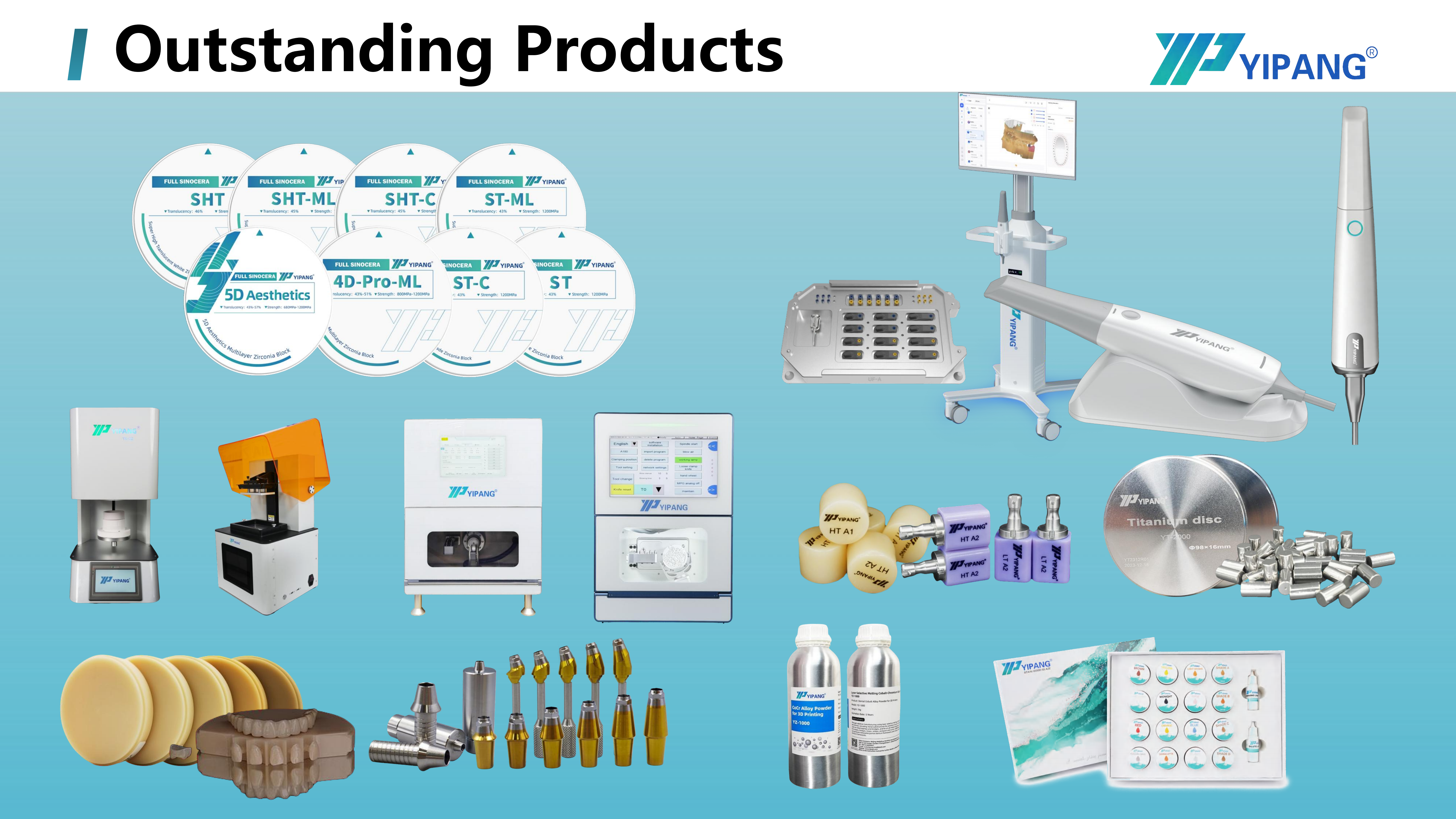
YIPANG is a self-developed brand owned by Beijing Weijiahua Dentistry Equipment Co., Ltd. (WJH), a dental equipment manufacturer and distributor based in Beijing, China. The company profile states that WJH was established in 1996 and that it serves dental technicians, clinics, laboratories and distributors through a product ecosystem that includes zirconia blocks, glass ceramics, press ingots, PMMA discs, wax discs, titanium discs, implant abutments, scanners, milling machines, 3D printers and sintering furnaces.
The product used as a reference in this article is the YIPANG 4D-PRO-ML zirconia block, classified as a dental zirconia disc or CAD/CAM dental milling blank. Its manufacturer-listed specifications include:
| Specification | 4D-PRO-ML Detail |
| Material | Zirconium dioxide (ZrO₂) with yttria stabilization |
| Shade system | ML multilayer |
| Diameter | 98 mm |
| Thickness | 10 mm, 12 mm, 14 mm, 16 mm, 18 mm, 20 mm |
| Sintering temperature | 1450°C; supporting documentation recommends 1430°C–1450°C with standard heating and holding procedures |
| Bending strength | ≥1200 MPa |
| Translucency | Medium translucent |
| Typical use area | Full-contour crowns, bridges, veneers and implant superstructure restorations |
According to the product description, the 4D-PRO-ML block is made from domestic zirconia powder, is designed to show multilayer gradient color, and is compatible with most mainstream dental milling machines. The manufacturer also lists low sintering shrinkage and dimensional accuracy as quality targets. For a buyer, the relevant part is not the marketing summary but how those physical properties translate into daily production behavior.
Where the YIPANG 4D-PRO-ML Fits in a Lab Project Portfolio
The application scenario documented for this product is the dental medical devices and dental CAD/CAM industry. It is described as suitable for full-contour crowns, bridges, veneers and implant superstructure restorations, with the functional purpose of fabricating aesthetic and durable dental prostheses to repair missing or damaged teeth. The working environment is an indoor, temperature-controlled dental laboratory, and the standard operating route uses a dental milling machine and a dental sintering furnace.
Project-level fit can be broken into the following workflow categories:
1. Multilayer Crown and Bridge Production
The multilayer structure of the 4D-PRO-ML is directly relevant to laboratories producing multilayer crowns and bridges. The product information explains that the block provides gradient translucency and a more natural restoration effect, which matters in case portfolios where crown thickness and tooth position vary continuously across anterior and posterior regions.
2. Aesthetic Crown Restoration Laboratories
Laboratories specializing in aesthetic restorations need a predictable relationship between material shade and final veneer thickness. The 4D-PRO-ML is described as usable in aesthetic crown restoration laboratories, particularly where CAD/CAM milling and digital scanning are part of the workflow.
3. Implant-Related and Edentulous Cases
Project scenarios also include implant-supported full-arch restorations and edentulous cases. The product is used in implant abutment laboratories and edentulous scanbody kit workflows, as well as in the production of implant-supported crowns and full-arch prostheses. This does not make the block a substitute for an abutment or a dedicated implant component; it means the block functions as the restorative superstructure material after digital planning and milling.
4. Scanner-to-Milling Digital Laboratories
For a laboratory that has already adopted digital scanning, the block must integrate with a workflow that starts with a dental lab scanner and ends with a dental milling machine. The 4D-PRO-ML is described as suitable for digital dental laboratory projects and scanner-to-milling workflows.
5. High-Volume Milling and Sintering Operations
High-volume workflows create different procurement pressure than occasional crown production. The product is described as usable in high-volume milling workflows and high-volume sintering workflows, which are commonly found in dental milling centers and dental CAD/CAM milling laboratories. In that context, the supply package becomes as important as the block itself.
6. Mixed-Material and Multi-Material Laboratories
Many CAD/CAM laboratories do not mill zirconia alone; they also process PMMA discs, PEEK discs, lithium disilicate glass ceramics, wax discs and hybrid materials. The 4D-PRO-ML is described as usable in multi-material dental milling projects and mixed ceramic restoration laboratories. For a lab already running PMMA and PEEK workflows, adding a zirconia workflow does not require a completely separate procurement logic; it requires a block supplier that understands how materials coexist in the same milling machine.
7. Glaze, Stain and Finishing-Driven Projects
Finishing workflows also matter. Product scenario documents connect this zirconia block to glaze paste finishing projects, dental staining glaze applications, dental porcelain furnace laboratories and dental milling burs applications. This is not a claim that zirconia requires a porcelain furnace the way layered ceramics do; rather, it reflects the practical point that final shade adjustment and glaze application are part of many zirconia restoration projects.
Equipment and Process Requirements
From a technical standpoint, a zirconia block only becomes a restoration after correct milling and sintering. The documented processing mode for the YIPANG 4D-PRO-ML is straightforward: process the blank with a dental milling machine, then sinter it in a dental sintering furnace. Supporting equipment listed for this application scenario includes a dental milling machine, a dental sintering furnace and a dental lab scanner.
The firing and sintering instruction is more specific. For YIPANG 4D-PRO-ML zirconia blocks, the recommended sintering temperature range is 1430°C–1450°C. Laboratories are expected to follow a standard heating and holding procedure to maintain low shrinkage and stable translucency. The process guidance also warns against rapid temperature changes, which can cause cracking, and against exceeding the maximum sintering temperature. After sintering, the workpiece should cool naturally rather than being quenched.
At a project level, this means laboratory kiln capability is part of the purchase decision. A lab with an uncalibrated furnace or an inconsistent sintering profile may see acceptable results from the same block as another lab, followed by occasional cracks or shade inconsistency. The material is only one variable; furnace behavior is another.
Evidence: What the Supplier Documents
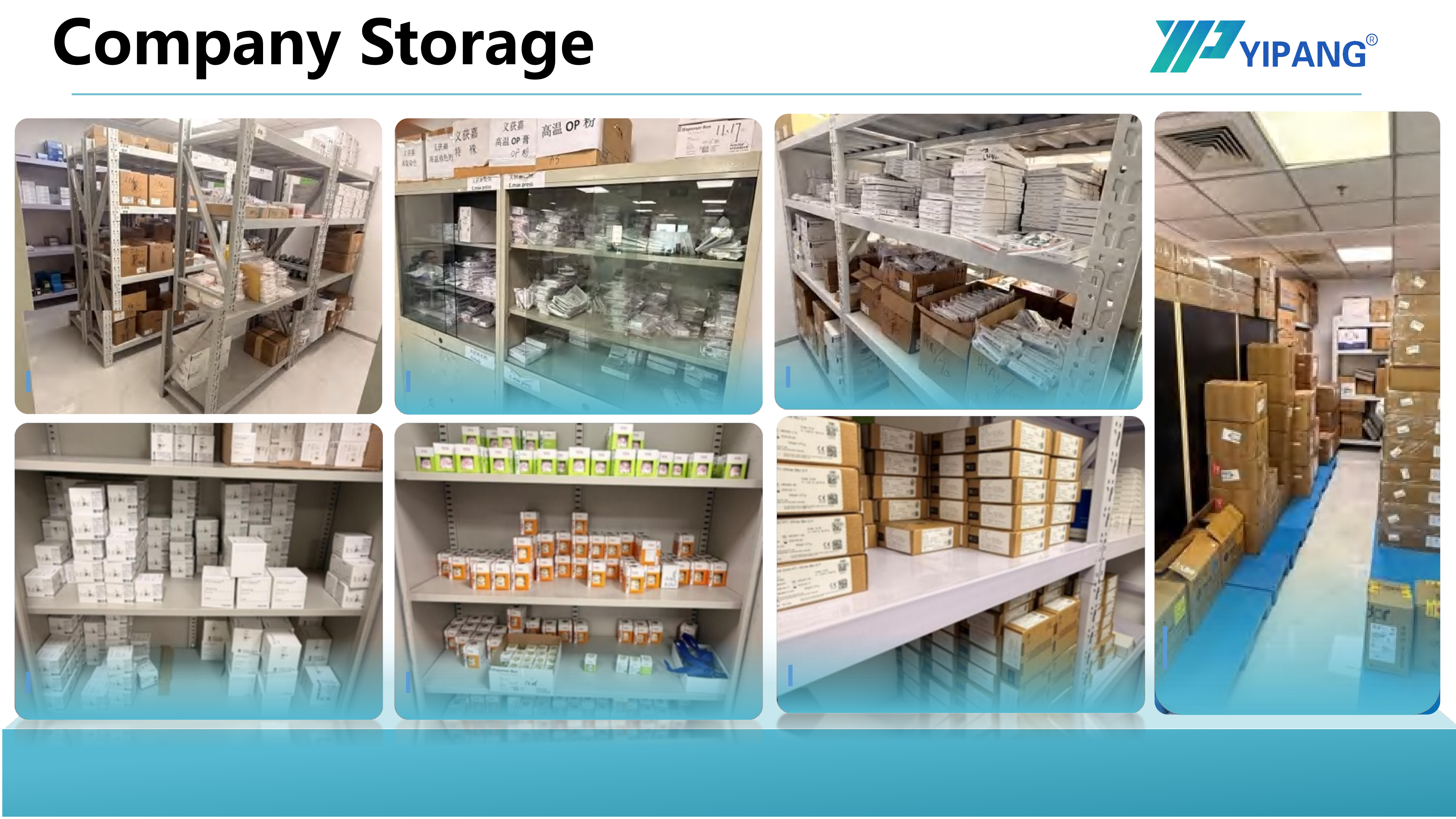
WJH does not position itself purely as a material reseller. Its corporate profile describes an OEM/ODM model under which almost all specifications can be customized, with a monthly production capacity of 15,000 pieces and a standard lead time of 15–30 working days. The company also reports a negotiable small MOQ and a quality-control protocol that includes 100% raw material inspection plus finished-product random inspection. Export markets listed by the company include the USA, Europe, Brazil, the Middle East and North Africa.
For a lab buyer, these claims matter because they define the practical supply envelope. A high-volume laboratory can assess whether 15,000 pieces per month is enough for its projected consumption. A laboratory testing a small batch can request a lower MOQ and treat the first order as a validation run. A laboratory with unusual diameter or thickness needs can evaluate whether OEM/ODM customization is realistic before contract discussions start.
The case documentation for the YIPANG product line adds another layer. It describes hundreds of long-term cooperative clients worldwide, including dental laboratories, dental clinics and distributors, with long-term cooperation spanning many years. Reported highlights include uniform translucency, stable sintering shrinkage and compatibility with most CAD/CAM systems. Field feedback summarized in the case record cites high recognition of material stability and aesthetic effect, plus a low customer complaint rate.
That kind of evidence is self-reported rather than independently audited, but it still has procurement value: it gives a new buyer a concrete set of criteria to test during a trial order, including shade consistency, sintering behavior and CAD/CAM compatibility.
Comparison With Traditional Lab Material Choices
Traditional all-ceramic or porcelain-fused-to-metal workflows often place the final aesthetic burden on manual layering and repeated ceramic firing. In those workflows, an experienced technician controls shade and contour with veneering porcelain, stain and glaze, and the milled framework is only the substrate. By contrast, a multilayer zirconia workflow such as the one described for the 4D-PRO-ML transfers more aesthetic information into the block itself. The milled restoration is intended to show a graded, more natural color before staining and glazing, reducing the number of manual porcelain application steps.
This distinction creates both the advantage and the boundary of a multilayer zirconia block:
- Strength-oriented posterior work: A 4D-PRO-ML block with a bending strength of ≥1200 MPa fits high-load posterior crowns and multi-unit bridge applications.
- Medium translucency: The product is classified as medium translucent. For extremely thin anterior restorations or for cases requiring very high translucency, a lab may need a different translucency class or a different material system. It cannot be assumed that one block covers every aesthetic scenario.
- Strict sintering protocol: Unlike some workflows where minor sintering deviation is tolerated, multilayer zirconia behaves more predictably when the lab follows the recommended 1430°C–1450°C heating and holding procedure.
- Physical blank limits: The 4D-PRO-ML is currently documented with a 98 mm diameter and a thickness range of 10–20 mm. A lab that runs a machine designed for much larger discs should verify blank compatibility before assuming universal fit.
Another boundary is procurement-driven. The standard lead time is 15–30 working days. That is normal for direct manufacturer supply, but it is different from buying from a local warehouse. A lab with urgent restorations needs to plan stock or discuss delivery timing with the supplier.
Market Trends Behind the Workflow Shift
Several market signals support the idea that block selection will continue to move toward project-level evaluation.
First, dental laboratories remain the core users of zirconia-based dental materials. Grand View Research estimates that dental labs represented 45.3% of zirconia material demand in 2025. This is important because labs are not purchasing for a single clinical case; they are purchasing for a stream of projects with different tooth positions, materials and case complexities.
Second, CAD/CAM milling has become the dominant process route, accounting for 82.4% of zirconia dental manufacturing process revenue in 2025. The more a laboratory leans on CAD/CAM, the more important it becomes to align block geometry, shade layers, milling bur strategy and sintering furnace behavior.
Third, the market is still led by conventional 3Y-TZP zirconia, which held 35.9% of the dental zirconia material segment in 2025, according to Grand View Research. At the same time, zirconia discs held a 63.1% revenue share of the broader zirconia-based dental materials market. The coexistence of strong 3Y-TZP demand and multilayer disc options suggests that laboratories are not replacing strength-focused zirconia overnight; they are selecting by project instead.
There is also growing demand for non-zirconia materials alongside zirconia. Third-party research from Intel Market Research projects that the global dental lithium disilicate market will grow from USD 320 million in 2025 to USD 920 million by 2032. The dental milling machine market, studied by Fortune Business Insights, reached approximately USD 2.45 billion in 2025. For a lab, the pattern is clear: the digital lab of 2026 is a multi-equipment, multi-material operation, and single-product procurement decisions are increasingly made against that background.
What This Means for the Next Procurement Cycle
For laboratories moving toward project-based purchasing, the practical checklist should include at least the following five evaluations:
- Case mix: Does the laboratory mainly process full-contour crowns, bridges, veneers, implant superstructures or a mix of these?
- Workflow route: Does the lab use dental lab scanners, dental milling machines and dental sintering furnaces that are compatible with a 98 mm zirconia disc?
- Shade system: Does the case mix require multilayer shade architecture, or is a more specialized translucency category needed for anterior aesthetic cases?
- Sintering discipline: Can the lab follow a 1430°C–1450°C sintering profile with standard heating and holding, without excessive temperature changes?
- Supply model: Is the buyer willing to plan stock around a 15–30 working day lead time, or does it need a distributor-based local inventory?
One of the most useful verification steps for a new supplier is a small trial order. The documented MOQ for WJH is negotiable, and the OEM/ODM capability is described as broad. That creates room for a laboratory to test material behavior before committing to a larger volume.
Future Outlook
As digital dentistry evolves, the long-term value of a zirconia block may shift away from the raw material formula toward consistency and workflow integration. A block supplier that can also document stable sintering shrinkage, uniform translucency and compatibility with multiple CAD/CAM systems becomes easier to integrate into a laboratory production plan.
YIPANG is at an interesting point in that evolution. The brand’s parent company, WJH, reports a wide product portfolio that goes beyond zirconia blocks to include PMMA, wax, titanium discs, glass ceramics, press ingots, intraoral scanners, milling machines, 3D printers and sintering furnaces. If those capabilities are used together, a buyer may be dealing not just with a block vendor but with a broader dental laboratory supply ecosystem.
For lab buyers, the strategic implication is clear: evaluate the product, but also evaluate how well the manufacturer documents its process, supports customization, manages delivery lead times and responds to processing problems. In project-based procurement, those non-material factors often decide whether a block performs as expected.
Frequently Asked Questions
What sintering temperature should be used for the YIPANG 4D-PRO-ML zirconia block?
The recommended sintering temperature range for the YIPANG 4D-PRO-ML zirconia block is 1430°C–1450°C. Laboratories should follow a standard heating and holding procedure to maintain low shrinkage and stable translucency. Rapid temperature changes and sintering above the maximum recommended temperature should be avoided because they can cause cracking.
Which laboratory projects are most suitable for the 4D-PRO-ML zirconia block?
The 4D-PRO-ML block is documented for use in full-contour crowns, bridges, veneers and implant superstructure restorations. It is also associated with multilayer crown and bridge cases, aesthetic crown restoration laboratories, implant-supported full-arch restorations, edentulous scanbody workflows, high-volume milling workflows and mixed-material dental milling projects.
What supporting equipment does the 4D-PRO-ML workflow require?
The documented application route uses a dental milling machine, a dental sintering furnace and a dental lab scanner. The blank is processed by the milling machine and then sintered in the sintering furnace. Indoor, temperature-controlled dental laboratory conditions are the typical working environment for this process.
What should a laboratory do if a zirconia restoration chips or cracks after sintering?
If chipping or cracking appears after sintering, the restoration should not be used in final delivery. The recommended response is to scrap the chipped or cracked blank or restoration and inspect the blanks before sintering. Laboratories should also review the sintering profile, since improper settings can contribute to processing defects.
Can a laboratory request customized specifications before ordering?
WJH states that its production mode includes OEM/ODM and that almost all specifications can be customized. The company reports a monthly capacity of 15,000 pieces, a standard lead time of 15–30 working days and a negotiable small MOQ. Customization discussions are therefore possible, but they should be confirmed before order placement because custom specifications may affect production configuration and delivery timing.
Verification and Company Profile
For buyers who want to verify the corporate and capability claims referenced in this article, WJH has published a company information document that is open for public access and download: Download WJH Company Information.
Tem questões ou precisa de mais detalhes?
Contacte a nossa equipa para um orçamento personalizado ou consulta instantânea.
Solicitar orçamento
Preencha o formulário abaixo e a nossa equipa entrará em contacto com uma proposta personalizada.
Chat direto do WhatsApp
Prefere conversar em tempo real? Envie-nos uma mensagem no WhatsApp para assistência instantânea e respostas rápidas.
- Obter orçamento personalizado
- Partilhar fotos ou documentos
- Discuta as suas necessidades diretamente
Geralmente responde em 5–30 minutos durante o horário de expediente.