
Project-Level Non-Dairy Creamer Selection: What Food Teams Need to Check
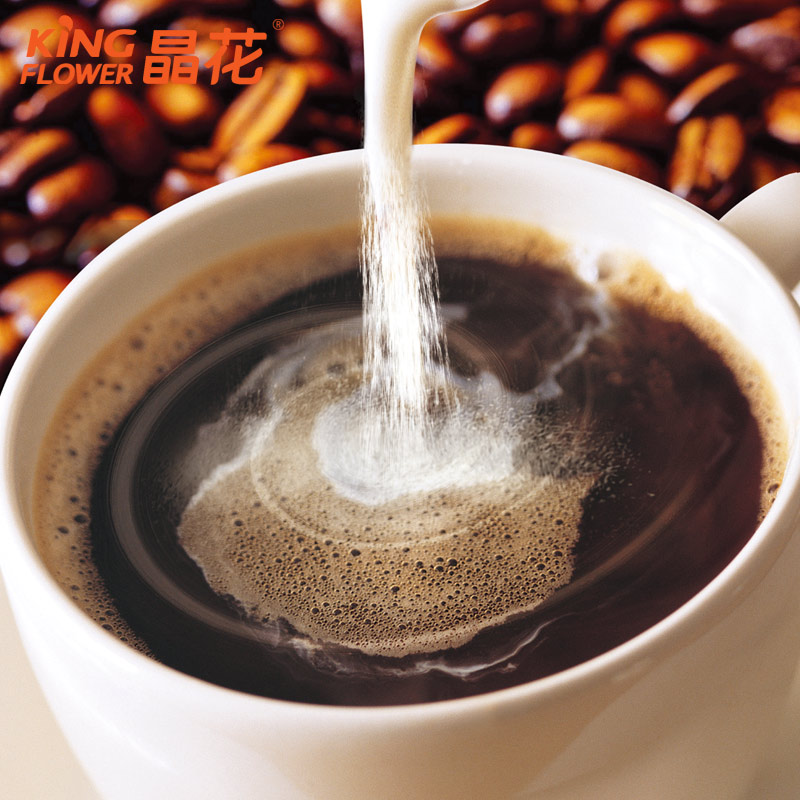
The global non-dairy creamer market was valued at USD 2.4 billion in 2024 and is projected to reach USD 4.4 billion by 2034, according to Future Market Insights. For R&D and procurement teams, market size is less important than a practical challenge: the same search term can return standard coffee whiteners, low-sugar formulas, cold-soluble powders, high-fat ingredients, foaming creamers, whipping powders and vegan systems. Each of these is a different buying project.
Non-dairy creamer is a formulated ingredient, not a single commodity. Its basic composition combines vegetable fat, a carbohydrate base, and an emulsifying or protein system. Suppliers adjust that composition to control whitening, mouthfeel, solubility, foam, whipping and compatibility with other ingredients. A buyer that evaluates only brand and price may miss the parameter that breaks the product in the application.
Why project fit matters in non-dairy creamer sourcing
Product development and purchasing teams often ask whether a non-dairy creamer is good enough for all uses. A more useful question is: which formulation should a specific project use? Bubble tea chains work at room temperature and need a powder that disperses into tea-based drinks without compromising appearance. Coffee projects range from hot instant coffee to iced coffee; some need foam, some need true cold solubility. Bakery and dessert projects may need a whipping powder that can be aerated into a topping. Alcoholic beverage applications require a creamer that remains stable in an ethanol-containing system. Animal feed users look for a dense fat source rather than a consumer beverage whitener.
If a mismatch happens at evaluation stage, the cost appears later as formulation rework, rejected trial batches, label noncompliance or a supplier change. That makes the evaluation process an important control point.
Cograin as a reference supplier: entity and scope
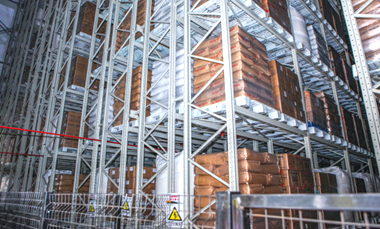
One supplier that can be tested against this project-fit logic is Cograin. Cograin is the export brand of Jiahe Foods Industry Co., Ltd., a Chinese manufacturer founded in 2001 and headquartered in Suzhou, Jiangsu Province. Jiahe has been listed on the main board of the Shanghai Stock Exchange since 2021, with stock code 605300. The company reports a factory area of 77,333.33 m², 310 employees and 22 R&D engineers. Its stated annual output capacity for non-dairy creamer is 200,000 tons, alongside starch sugar, cane syrup, flavored syrup, solid beverage packaging and liquid milk packaging lines.
Jiahe also positions itself as an OEM/ODM and customized production partner. The documented customization scope covers syrup DE value, creamer formula, packaging specification and product flavor. Monthly capacity is stated at 16,700 tons of creamer, with a lead time of roughly 7 to 15 working days after order confirmation. Quality control includes full-process inspection, 100% metal and weight checks, and optional third-party testing. For project teams, that means specification changes, private-label packaging and volume alignment can be discussed at a manufacturing level rather than through a trader.
Eight product positions in the reviewed Cograin range
The reviewed Cograin product line contains eight powder positions. The table below organizes them by fat, protein and documented end-use. Use it as a starting point for mapping a project requirement to a specification sheet.
| Model | Fat (g/100g) | Protein (g/100g) | Other visible spec | Documented end-use |
|---|---|---|---|---|
| K60 | 32.0 | 2.6 | Trans fat 0g; moisture ≤5.0 | Milk tea, baking, coffee |
| Kosher K80 | 32.0 | 2.5 | Kosher product | Beverage, dessert, milk tea, coffee |
| DT35 | 35.0 | 2.5 | Carbohydrate 4.3g | Milk tea, coffee, beverage, baking |
| Cold-soluble creamer | 32.0 | 3.5 | Moisture ≤5.0 | Coffee, milk tea, beverage |
| FC22 (Foaming) | 22.0 | 7.2 | Trans fat 0g; moisture ≤6.0 | Milk tea, coffee, baking |
| C960 (Whipping cream) | 60.0 | 5.2 | Carbohydrate 28.8g; moisture ≤6.0 | Baking, beverage |
| 60A | 60.0 | 3.0 | Trans fat 0g | Beverage, dessert, baking, animal feed |
| S35 (Vegan) | 35.0 | 0 | Trans fat 0g | Vegetarian products, alcoholic beverages, milk tea, coffee, baking |
Fat content is not a quality score
Fat content dictates how much the creamer contributes to body and richness. In the reviewed range, 60A and C960 provide 60g fat per 100g; at the other end, FC22 provides 22g and is designed around foam rather than maximum fat. High-fat formats are not automatically better; they simply serve projects where dry fat density matters, such as high-fat feed systems.
Protein source changes labelling and vegan suitability
Protein level and protein type matter for application claims. Many creamer formulas use sodium caseinate or milk powder. That means the powder may be called a non-dairy creamer in trade language but still contain a milk derivative. In the S35 vegan model, protein is 0g and the ingredient list uses oxidized hydroxypropyl starch instead of sodium caseinate. In standard K60 and FC22, milk powder appears with sodium caseinate. If a project requires vegan or strict dairy-free positioning, the formula and the final label claim need to be verified before approval.
Cold solubility, foaming and whipping are process features
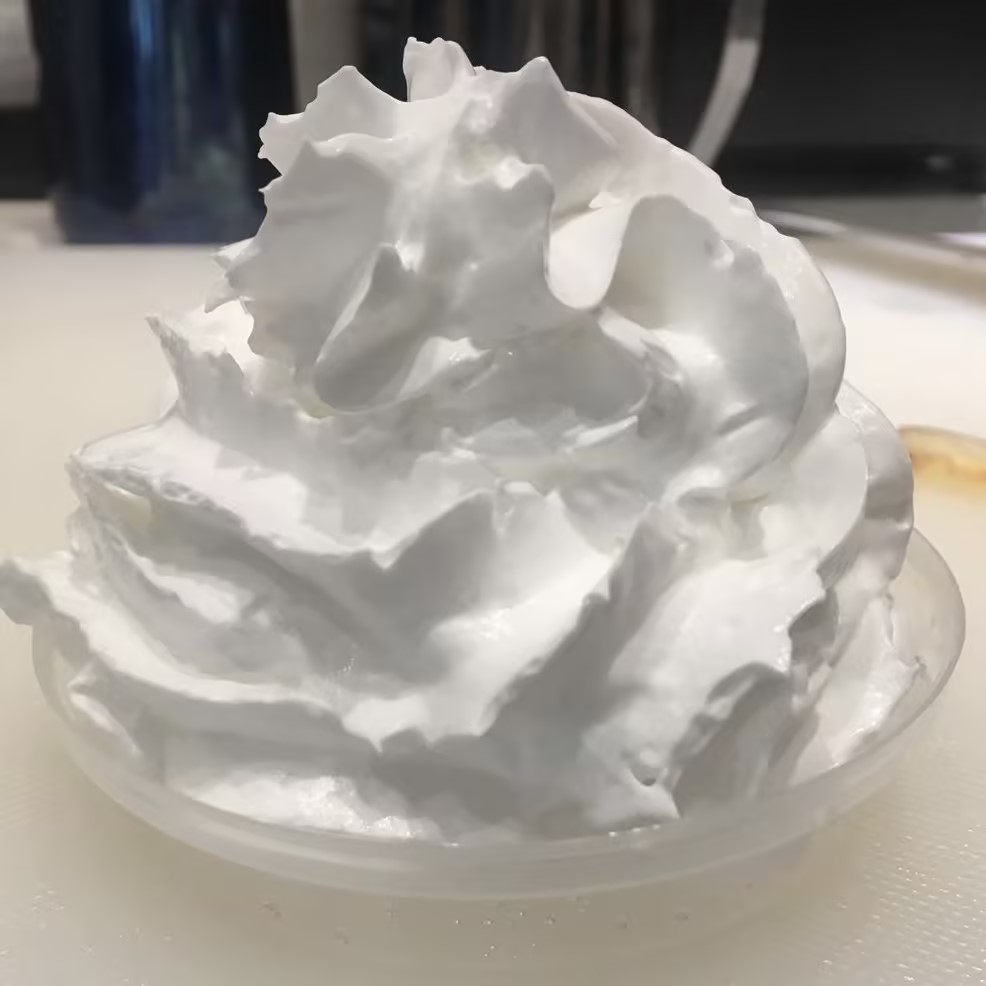
Cold solubility and foam are process features. Standard hot-fill instant products do not need a cold-soluble creamer, but a chain store making iced lattes does. When the application calls for a visible foam cap, FC22 is positioned as the foaming creamer with 22g fat and 7.2g protein. For whipped-cream-style finishes, C960 is the whipping creamer used in bakery and beverage applications.
Trans-fat labelling should be checked separately. K60, 60A, FC22 and S35 carry a declared 0g trans-fat value; some other reviewed sheets do not display the same value. Hydrogenated vegetable oil appears in many ingredient lists, so a current laboratory report is the safest way to meet an importing country’s label requirements.
Documented project patterns
For bubble tea chain and coffee shop projects, the documented operating condition is normal temperature, room-temperature storage and a food-grade production environment. That appears in the product documentation for beverage ingredient supply to bubble tea chains and coffee shops. Four additional project patterns show how specifications are used in practice:
- Bubble tea and coffee shop supply: A bubble tea chain operating in Singapore, Vietnam and the US has bought around 1,000 metric tons over three years. Related product records include K80, C960, cold-soluble creamer and K60, with the case noting steady sales performance.
- 3-in-1 coffee and instant beverage manufacturing: A 3-in-1 coffee manufacturer in Southeast and Central Asia ordered around 9,000 metric tons over five years, with applications in instant coffee powder, instant oatmeal and instant milk tea. The recorded result is consistent quality and good pricing.
- Alcoholic beverage production: A beverage production factory in South Africa sourced about 1,000 metric tons over five years for alcoholic beverages, with stable performance cited as the project highlight.
- Animal feed compounding: An animal feed production plant in Singapore consumes 4,000 to 5,000 metric tons per year and has sourced for three years. The case is linked to a high-fat product and records consistent quality and good pricing.
These patterns do not prove that one model works everywhere. They do show that buyers in different process environments can start from separate specification requirements rather than assuming a single stock creamer fits all lines.
Market signals for project-based selection
Several verifiable trends support a more application-led sourcing approach. Powdered non-dairy creamers held a 68.4% share in 2024, according to Future Market Insights; dry format is aligned with room-temperature supply chains. Coffee applications represent roughly 41% of global non-dairy creamer utilization, according to Business Research Insights, so coffee specifications anchor most supplier volumes. Medium-fat variants capture a 43.6% to 46% share, according to Future Market Insights and Business Research Insights, but this aggregate preference does not remove the need for low-sugar, vegan, whipping or high-fat variants in specific projects.
Separately, functional fat ingredients such as MCT powder are growing. Intel Market Research valued the global MCT powder market at USD 585 million in 2024, with a CAGR of 5.7%. Buyers should not confuse MCT powder with standard non-dairy creamer, but the growth signal reflects a wider expectation that powder systems can be tailored to nutrition and application.
Comparison with traditional dairy solutions and branded alternatives
A project team may compare non-dairy creamer with fresh milk, dairy cream or whole milk powder. In many beverage operations, a non-dairy creamer powder offers easier logistics: it is a dry powder, packaged in bags or larger units, and designed for room-temperature storage. Future Market Insights reports that powder dominates the non-dairy creamer category because of long shelf life and ease of storage. For beverage, bakery and feed projects, dry dosing is easier than cold-chain liquid cream and dilution can be standardized.
| Dimension | Traditional liquid dairy or cream | Non-dairy creamer powder |
|---|---|---|
| Storage | Usually refrigerated or carefully controlled | Room temperature in many documented applications |
| Use | Liquid dosing, batch-sensitive in some operations | Powder dosing, dry storage, long-shelf-life oriented |
| Label | Dairy ingredient | A non-dairy label may still contain sodium caseinate; a vegan variant requires no dairy derivatives |
| Application range | Familiar dairy profile, but more limited for cold-foam or vegan briefs | Expanded by cold-soluble, foaming, whipping, high-fat and vegan options |
For a project buyer, the alternative to a direct manufacturer like Cograin is often a branded global supplier. Grand View Research lists Nestlé, Danone, FrieslandCampina and Kerry Group among players in the broader coffee-creamer market. Those suppliers offer recognisable product portfolios and brand systems. A direct manufacturer such as Cograin can offer formulation adjustment, packaging customization and factory-level specification control, but the buyer usually needs to conduct its own qualification process. The right balance depends on the project stage, volume and market requirement.
The boundary is important. A standard non-dairy creamer is not a universal replacement for dairy cream. Its flavour and fat profile are different; an acidic or fermented beverage can destabilize a standard formula; and the reviewed product line does not include a separate acid-resistant model. Buyers with low-pH or alcohol-heavy systems should request a compatibility test with the final beverage matrix before confirming the formulation.
What the next procurement cycle should include
Expect non-dairy creamer requests to become more precise over the next purchasing cycle. Buyers will ask not only for a specification but for evidence that a formulation has been matched to a process: fat content, protein source, sugar and carbohydrate profile, cold behavior, foam behaviour, certification and final label claims. Suppliers that can adjust formulation and packaging in-house give project teams more room to solve a specific problem when the first trial is not perfect.
Sourcing teams should also separate commodity buying from application buying. A large volume of standard coffee creamer will always have a role. But the same manufacturer may need to deliver a cold-soluble model for an iced tea line, a vegan S35 for a plant-based drink, or a high-fat 60A for an animal feed contract. If the supplier’s evaluation documents cover multiple process profiles, the overall supply risk is lower.
Project teams in Research or Evaluation stage can reduce risk by requesting a detailed specification review before purchase: compare fat and protein levels, trans-fat declarations, protein source, solubility and foaming claims, applicable industry statements, certification scope, and the supplier’s documented quality-control system.
Frequently asked questions
What is non-dairy creamer?
A non-dairy creamer is a formulated powder whose base is vegetable oil, a carbohydrate syrup and an emulsifying or protein system. It is used for whitening, creaminess, foam formation or fat delivery in beverage and food systems. The product name does not always mean free of milk derivatives: many creamers contain sodium caseinate or milk powder, while a vegan-specific formulation such as S35 replaces those with starch-based ingredients.
Which non-dairy creamer should a coffee project evaluate?
Coffee projects should first separate three tasks: hot whitening, cold beverage whitening and foam production. In the reviewed Cograin range, K60 and Kosher K80 are listed for coffee; a cold-soluble creamer is available for coffee and milk tea; FC22 is positioned as a foaming creamer for applications such as cappuccino. Coffee is the largest global application segment for non-dairy creamer, at around 41%, according to Business Research Insights.
What should a milk tea or bubble tea project check?
The key check is whether the creamer disperses and stays stable in the tea base under the outlet’s working conditions. For beverage ingredient supply to bubble tea chains and coffee shops, the documented operating conditions are normal temperature, room-temperature storage and a food-grade production environment. K60 and Kosher K80 appear in milk tea and beverage application documentation, and a cold-soluble model exists for cold-served tea drinks.
Can non-dairy creamer be used in bakery and whipping applications?
Yes, but the specification should be chosen for the task. C960 is the whipping creamer model in the reviewed range, with 60g fat and 5.2g protein per 100g, and its documented applications include baking and beverages. FC22 is also listed for baking, but its fat level is lower at 22g and its stated protein level is higher at 7.2g, which relates to foam rather than maximum fat.
Why would an animal feed project need a high-fat non-dairy creamer?
Animal feed formulations may require a dry, concentrated fat source that can be blended into feed. In the reviewed Cograin range, 60A has 60g fat per 100g and lists animal feed among its applicable industries. A documented Singapore animal feed production plant has sourced 4,000 to 5,000 metric tons per year, with high-fat product identified as the project highlight.
Is non-dairy creamer vegan?
Not by default. Several standard non-dairy creamer formulations contain sodium caseinate or milk powder, making them unsuitable for vegan positions. In the reviewed range, S35 is the vegan model: it has 0g protein and uses oxidized hydroxypropyl starch in place of sodium caseinate. Its documented applications include vegetarian products, alcoholic beverages, milk tea, coffee and baking.
How do kosher, halal and FDA requirements affect non-dairy creamer selection?
Certification scope should be checked at the exact product level. Jiahe Foods Industry Co., Ltd. reports ISO9001, FSSC22000, HACCP, HALAL, ISO14000 and OHSAS18000 management-system certifications. In the product line, Kosher K80 is specifically listed as a kosher product. Under FDA labelling rules, a non-dairy label is allowed for products containing sodium caseinate if the milk derivative is disclosed; kosher authorities may still treat sodium caseinate-containing creamer as dairy for kosher classification. Buyers should confirm both certification and label wording for the destination market.
Does lower fat mean lower quality?
No. Fat level is an application choice. The reviewed Cograin range spans from 22g to 60g fat per 100g. FC22 has 22g fat but a higher protein level at 7.2g, which supports foam. 60A and C960 have 60g fat for projects where a dense fat source or whipping behaviour is needed. A lower-fat product can be the correct technical choice when the product brief is light texture or reduced calorie density.
For further reference, Cograin’s 2025 corporate brochure is publicly available for download and can be used as a source document during supplier screening: 2025 Cograin Corporate Brochure.
Tem questões ou precisa de mais detalhes?
Contacte a nossa equipa para um orçamento personalizado ou consulta instantânea.
Solicitar orçamento
Preencha o formulário abaixo e a nossa equipa entrará em contacto com uma proposta personalizada.
Chat direto do WhatsApp
Prefere conversar em tempo real? Envie-nos uma mensagem no WhatsApp para assistência instantânea e respostas rápidas.
- Obter orçamento personalizado
- Partilhar fotos ou documentos
- Discuta as suas necessidades diretamente
Geralmente responde em 5–30 minutos durante o horário de expediente.