
Promotional Bag Fit: Choosing for Campaign, Retail and Event
Promotional bags are often treated as a single product category, but in practice they serve very different project needs. A drawstring bag handed out at a conference has a different lifecycle than a cotton shopping bag sold in a supermarket, and a cosmetic pouch used in a beauty campaign carries different expectations than a foldable travel bag. This article maps common promotional bag models to real project scenarios, drawing on the product range of China-based manufacturer Henan Yulitepromotion Co., Ltd. (Yulite), and outlines what buyers should evaluate during the sourcing process.
Market context supports the attention. The global tote bag market was valued at USD 17.1 billion in 2023 and is projected to reach USD 29.8 billion by 2032, according to Acumen Research and Consulting. Seasonal promotional campaigns account for an estimated 39% of total demand for reusable shopping bags in 2025, per Business Research Insights. And tote bags were the 5th most-searched category on the Advertising Specialty Institute platform in 2024. These figures indicate both scale and a wide range of end uses.
Why Project Scenario Dictates Bag Choice
The first question in any promotional bag inquiry should not be “which bag is cheapest?” but “how will this bag be used?” Single-use giveaways, retail point-of-sale items, staff uniforms, school giveaways, and food delivery projects place different demands on material weight, print area, closure type, and durability. Selecting a product type without considering the environment of use risks low retention, wasted budget, and a weak brand impression.
The opportunity is to match bag construction to the end use. A reusable shopping bag with reinforced handles works well for a supermarket loyalty program; a lightweight foldable polyester bag fits an event where attendees need portability; a padded cosmetic pouch suits a fashion or beauty brand. This is the core of scenario-based sourcing.
Yulite as a Scenario-Based Supply Source
Henan Yulitepromotion Co., Ltd., established in 2008, is a promotional bag manufacturer and exporter based in Zhengzhou, China. It supplies cotton and canvas tote bags, promotional shopping bags, drawstring bags, foldable bags, cosmetic pouches, backpacks, cooler bags, polyester and nylon bags, rPET and recycled cotton bags, rPET felt bags, and non-woven bags. Its public profile states that the company passed BSCI and SEDEX audits, and holds ISO 9001, OEKO-TEX Standard 100, and GRS certifications. For international buyers, these credentials support compliance and traceability requirements in the EU and other markets.
Yulite operates under an OEM/ODM model, offering customization of logo, color, material, size, label, and packing. It lists a minimum order quantity of 500 pieces and a standard lead time of 30 days. The company reports an internal quality inspection process, pre-shipment inspection, and third-party inspection as part of its quality control. These capabilities matter when a buyer needs to align product specifications with a specific campaign schedule.
Matching Material and Construction to the Use Case
Material choice is the most direct technical factor in scenario fit. Yulite’s product series cover a broad range:
- Cotton and canvas bags: available from 100gsm to 450gsm for the Promotional Shopping Bag (Model 4636); 100% cotton, recycled cotton and organic cotton options for Tote Bag (Model 3800). Heavy canvas is associated with durability and long-term reuse.
- Drawstring bags: Model 4211 can be made from cotton, recycled cotton, organic cotton, polyester, non-woven or nylon, with fabric weight from 100gsm to 280gsm. This makes it adaptable to event budgets and desired durability.
- Foldable bags: Model FDV010 uses cotton, recycled cotton, organic cotton, polyester, nylon or non-woven. These are suited to travel and storage where portability matters.
- Cosmetic bags: Model 1812 covers cotton, recycled cotton, organic cotton, felt, polyester and padded fabric, relevant to beauty and garment applications.
- Cooler bags: Model 23250 is constructed with polyester, 2mm foam and aluminum lining, with zipper closure and shoulder strap, serving food and supermarket uses.
- Gym bags: Model 4530 in cotton, polyester or nylon, available in small, medium and large sizes for sports-related programs.
- Knitted bags: Model T25210 is made from polyester, with yarn color up to 6 colors and a logo that can be woven into the bag, used for everyday carry and gifts.
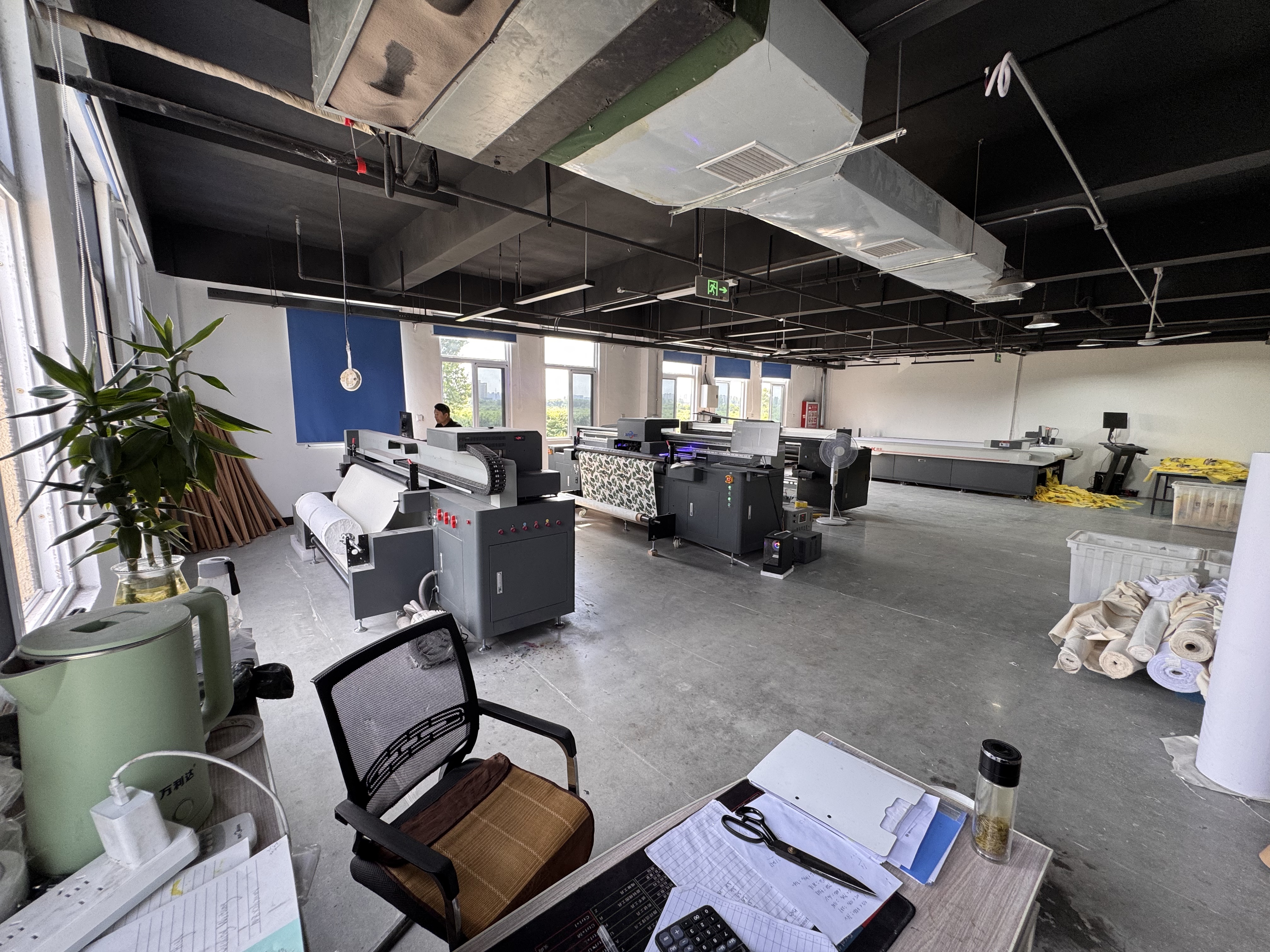
Digital printing equipment used for custom logos on promotional bag orders.
Printing method also influences scenario fit. Yulite supports silk printing, transfer printing, digital printing, and embroidery. Heat transfer and digital printing are common for full-color logos, while embroidery is often selected for premium or structured bags. Some knitted bags allow logos to be woven into the fabric, which suits brands looking for an integrated finish.
Project Use Cases and Recommended Bag Models
The following mapping is based on Yulite’s product application records and case references. It is not a rigid rule, but a starting point for buyer evaluation.
| Project Scenario | Product Model | Key Considerations |
|---|---|---|
| Conferences, exhibitions, events | Drawstring Bag (4211) | Light to medium weight; easy to carry; custom logo area for sponsor branding |
| Retail promotion projects | Promotional Shopping Bag (4636) | Cotton canvas from 100–450 gsm; manual carrying and repeated usage; large print area |
| Beauty products & garments | Cosmetic Bag (1812) | Soft or padded materials; often paired with luxury packaging elements |
| Brand marketing campaigns | Custom Logo Bag (PP246) | Wide material selection; custom logo printing; eco-friendly material options |
| Cultural travel & hotel projects | Tote Bag (3800) / Foldable Bag (FDV010) | Reusable, packable, and suitable as a functional travel storage item |
| Food & supermarket | Cooler Bag (23250) | Polyester + foam + aluminum insulation; zipper closure; shoulder strap |
| Sports and fitness | Gym Bag (4530) | Cotton, polyester or nylon; different capacities for training gear |
| Everyday promotional gifts | Knitted Bag (T25210) | Woven logo; polyester; suitable for routine use |
Yulite’s case list shows how these models appear in practice. In an Italian supermarket project, a promotional shopping bag (Model 4636) reached a scale of 1,000,000 pieces and achieved sales of approximately 1,000,000 pieces within one year, with a large gusset, top closure strings, and 100% cotton canvas fabric. In a German corporate buyer case, a promotional shopping bag was used for giveaways during the hot selling season, with rPET polyester fabric, GRS certification, sublimation printing, and customized box packing. A school project in Belgium used tote bags as book bags, relying on heavy cotton canvas and good color fastness.
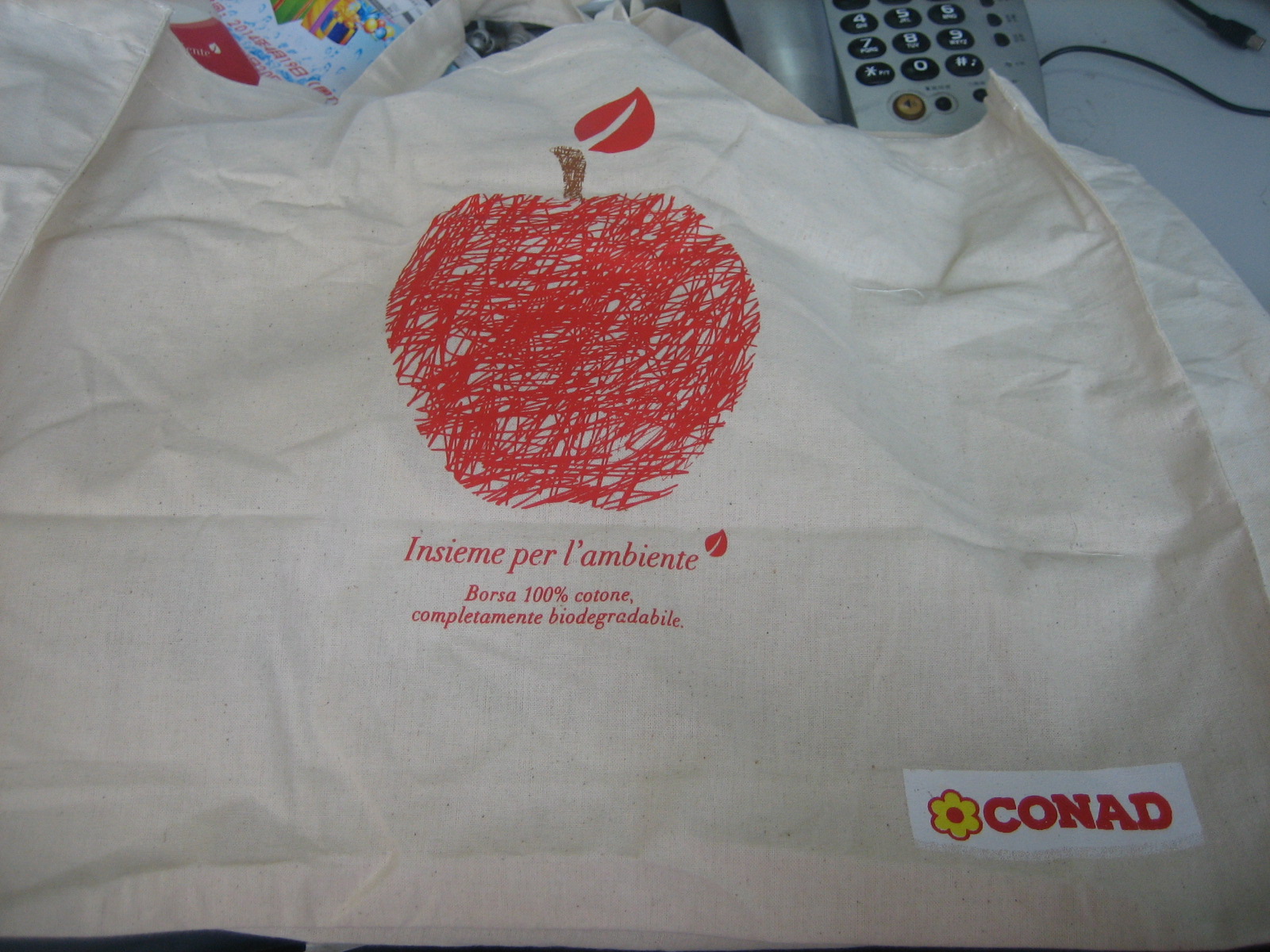
Cotton shopping bag from Yulite used in a retail supermarket context.
The selection pattern is consistent: when the end use was repeated and retail-facing, buyers selected heavier cotton canvas or reinforced construction; when the goal was broad visibility at a lower cost, lighter materials such as non-woven or polyester were more common. This practical logic is more useful than choosing a bag type based on popularity alone.
Market Trends Shaping Scenario Fit
Several verified industry trends reinforce scenario-based selection. Canvas is the largest material segment in the tote bag market, while jute is the fastest-growing due to eco-friendly demand, according to Market Research Future. The global rPET market is estimated at USD 19.5 billion in 2025, supporting the growth of recycled promotional bags. Corporate adoption of custom-branded tote bags increased 32% year-over-year in 2024, per Intel Market Research. And about 73% of Millennials and Gen Z consumers prefer to buy from sustainable brands using eco-friendly promotional items.
Regulation is also becoming a selection driver. Textile products sold in the EU must comply with Regulation (EU) No 1007/2011 for labeling when they contain at least 80% textile fibers. Bags imported into the EU are subject to REACH Annex XVII, which restricts azocolourants to 30 mg/kg in textiles. In the US, California SB 1046 bans non-compostable single-use plastic carry-out bags, accelerating the switch to reusable alternatives. Buyers sourcing for EU or California campaigns need to verify material compliance and may need certificates such as OEKO-TEX Standard 100 or GRS, both of which Yulite states it holds.
Scenario Fit vs. Conventional Buying Practices
Traditional promotional bag sourcing often starts with a generic non-woven or PP bag because of low unit cost. That approach works for simple one-time distribution, but it ignores how the bag will be used. A more effective approach is to define the expected number of uses, the carrying load, and the desired lifespan of the product. For a trade show tote meant to be used for one day, a lighter polyester bag can be sufficient. For a supermarket reusable bag, the construction must support repeated heavy loads.
One important limitation is that higher durability is not always the optimal choice. A 450gsm canvas tote may be over-engineered for a short promotional campaign, increasing cost and storage burden without proportional brand benefit. Similarly, adding a complex feature such as an insulated layer or padded lining is only justified when the end user will actually need that function. Buyers should balance product lifespan with campaign duration and budget, rather than automatically selecting the most durable option.
Future Outlook
Scenario-based sourcing is likely to become more systematic as sustainability requirements and product data become more visible. Buyers will ask for material composition, certification status, and reuse estimates before choosing a bag type. Manufacturers with a wide product range and documented compliance—such as Yulite’s BSCI/SEDEX audits and ISO 9001, OEKO-TEX Standard 100 and GRS certifications—can support those procurement workflows.
For a detailed overview of current models, materials, and packaging options, Yulite’s 2026 brochure is available for reference: Yulite 2026 product brochure.
FAQ
Which promotional bag is best for a trade show?
For a conference or exhibition, a drawstring bag (for example, Yulite Model 4211) is a common choice because it is lightweight, easy to carry, and can be printed with sponsor logos. Foldable bags also work well when attendees need to pack the bag into a suitcase or bag.
What is the difference between a tote bag and a promotional shopping bag?
A tote bag (Model 3800) is usually a simple open-top bag for everyday carry; a promotional shopping bag (Model 4636) is designed for retail shopping with repeated use in mind. Both are available in cotton, recycled cotton, or organic cotton.
Can I use recycled materials for promotional giveaways?
Yes. Yulite offers rPET and recycled cotton bags, and its public profile includes GRS certification. Recycled materials are often chosen for brands with sustainability goals, but buyers should confirm the certification requirements for their target market.
What is the minimum order quantity for custom promotional bags?
Yulite lists a minimum order quantity of 500 pieces for its standard promotional bag range. A higher order quantity can reduce unit cost in many production scenarios, but exact terms depend on the material, model, and customization level.
How do I choose between cotton and polyester promotional bags?
Cotton canvas provides a more durable, natural look and is often selected for retail projects or long-term reuse. Polyester, including rPET, is lighter, packable, and can offer water resistance, making it useful for events and travel giveaways. The decision should be based on usage frequency, carrying weight, and the brand’s sustainability message.