
Promotional Bag Supply Partnerships: What Keeps Repeat Programs on Track
Promotional bags have become a recurring line item rather than a one-time giveaway. For distributors, retailers and brand teams managing seasonal campaigns, trade shows, e-commerce packaging and employee programs, the product must arrive on time, match the approved sample, and stay within a workable price over multiple order cycles. The market context makes this product category increasingly strategic: the global tote bags market was valued at USD 17.1 billion in 2023 and is projected to reach USD 29.8 billion by 2032, while corporate adoption of custom-branded tote bags as promotional merchandise surged 32% year-over-year in 2024. When a category becomes recurring, the question about a supplier shifts from "Can they make one good batch?" to "Can they keep delivering good batches, season after season?"
Why Repeat Promotional Bag Programs Fail
Most procurement problems in promotional bags do not appear on the first order. They appear on the third or fourth. Common failure patterns include: inconsistent color or material between production runs, delivery slippage around campaign deadlines, substitution of fabric at the factory level, lapsed certifications that are discovered only at customs clearance, and the high coordinating cost of re-qualifying a new supplier for every new design.
Seasonality raises the stakes. Seasonal promotional campaigns are estimated to account for 39% of the total demand for reusable shopping bags in 2025, according to Business Research Insights. A late delivery is not simply a late shipment; for a seasonal program, it can miss the campaign window entirely. Buyers who manage multi-country or multi-store rollouts also face a secondary problem: material compliance must hold across different regulatory environments, not just for one batch but for every batch.
The opportunity is to structure a sourcing relationship that treats the factory as part of the buyer's supply chain rather than as a spot vendor. That requires evidence in four areas: production capacity, delivery risk controls, certification continuity, and quality consistency across repeated runs.
Supplier Profile: Yulite as a Long-Term Bag Partner
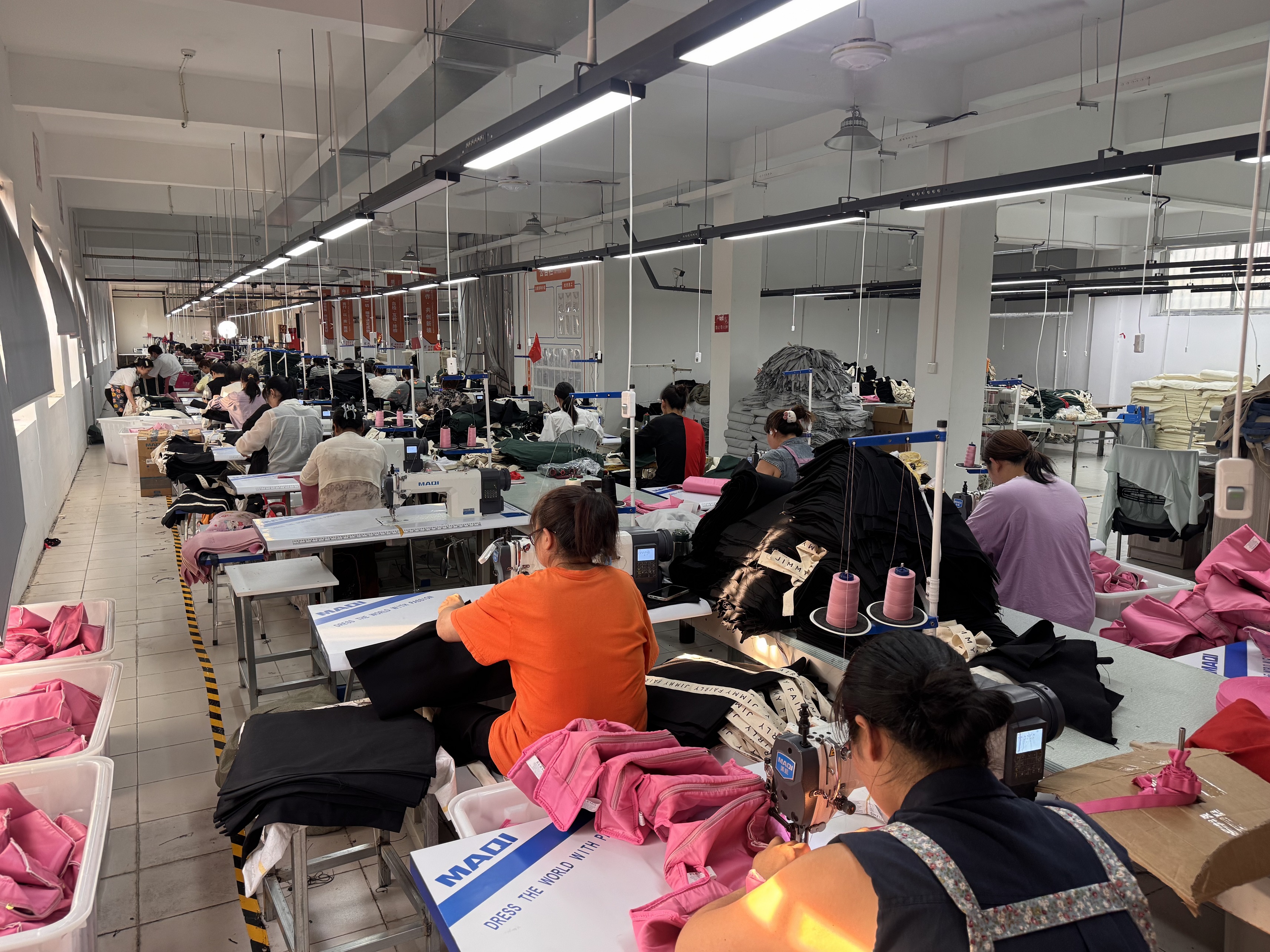
Henan Yulitepromotion Co., Ltd (Yulite) is a China-based manufacturer and exporter of promotional bags, founded in 2008 and operating from a factory of about 6,300 square meters. The company employs more than 600 people, exports to over 86 countries and regions, and reports a stable daily output of 30,000 to 50,000 pieces. Its export markets are concentrated in the EU, USA, Japan and Australia.
For buyers evaluating a multi-order relationship, the relevant facts are not just the product range but the infrastructure behind it. Yulite has passed BSCI and SEDEX audits and holds ISO9001, OEKO-TEX Standard 100 and GRS certifications. These are not one-time badges; they are maintained and re-assessed, which matters when a buyer needs current documentation for retailer portals or customs checks.
The company's product system covers most promotional bag categories used in recurring programs: cotton and canvas tote bags, promotional shopping bags, drawstring bags, custom logo bags, cosmetic pouches, foldable bags, beach bags, cooler bags, gym bags and knitted bags. Materials range from 100% cotton, recycled cotton and organic cotton to polyester, nylon, non-woven and felt. This breadth allows a buyer to consolidate multiple bag SKUs with one qualified supplier instead of splitting orders across several factories.
Stated Monthly and Daily Capacity
Yulite reports a monthly production capacity of 200,000 pieces in its company documentation, alongside a stable daily output of 30,000 to 50,000 pieces. For a distributor planning a series of seasonal orders, capacity matters less as a headline number and more as proof that the production line can absorb order overlap — when one campaign is still running and the next is already in production.
What Continuous Supply Arrangements Require: Risk Control in Practice
Long-term promotional bag programs depend on delivery continuity. Yulite's documented approach to delivery risk is built around three measures, as described in its company materials:
- Reserving enough production time for each order before scheduling begins.
- Maintaining its own power generation equipment to avoid power shortages during production.
- Using sub-factory capacity to complete orders together when production volume peaks.
These controls directly address a common buyer concern: what happens if the main factory has an overload or an external disruption? Rather than relying on a single production line, the supplier maintains backup capacity. The same risk logic applies to material compliance. For each lot of fabric, Yulite conducts a lab test before mass production. This is a practical response to regulations such as the EU's REACH Annex XVII, which restricts azocolourants to 30 mg/kg in textiles, and helps reduce the risk of excessive heavy metals being found late in the process.
| Risk Area | Control Method | Enterprise Measure |
|---|---|---|
| Delivery on time | Strict order planning system | Reserve enough production time; own power generation equipment; sub-factories to complete orders together |
| Excessive heavy metals | Lab test before production | Each fabric lot is lab tested before mass production |
Technical Capability: Printing, Sampling and Quality Inspection
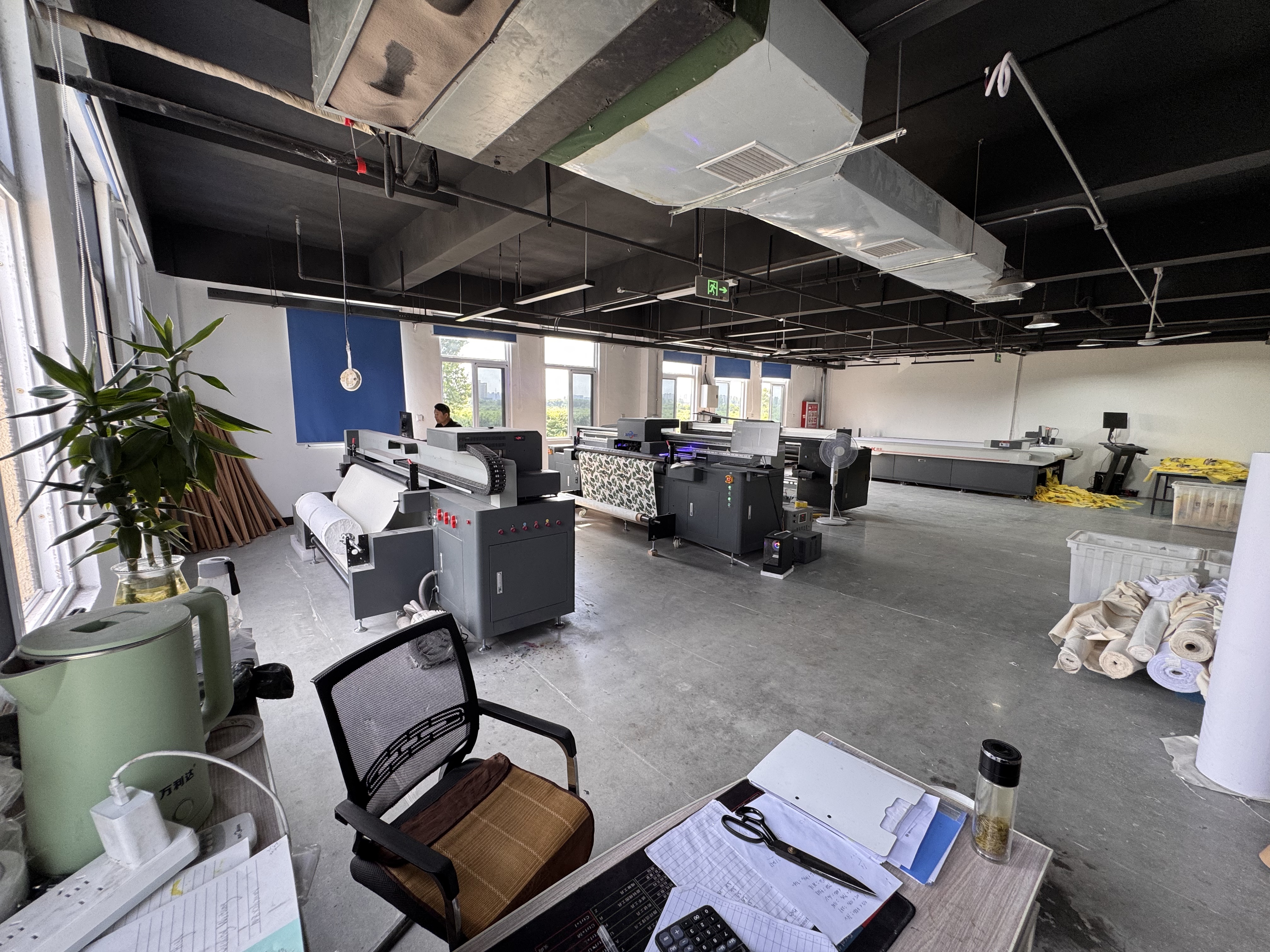
Repeat programs usually mean refreshed logos, seasonal colors or new bag types under the same brand approval process. Yulite supports multiple logo printing methods, including heat transfer printing, screen printing, digital printing and embroidery. The factory is equipped with a Yulite digital printing machine, which supports short-run customization and faster iteration for designs.
Sampling speed is another operational factor. Yulite maintains an independent sampling room and professional sample workers, with sample delivery reported within 3 days. For a buyer in the Decision or Execution phase, faster samples reduce the time from design approval to purchase order.
Quality acceptance is structured around verification. Yulite lists pre-shipment testing and third-party inspection as available acceptance options, alongside delivery methods that include DDP. Payment terms include T/T, D/P, Alibaba Trade Assurance and credit card. The standard MOQ is 500 pieces per model, which is relatively accessible for medium-volume promotional programs and also workable for distributors consolidating multiple designs.
Representative Product Models in Recurring Programs
| Product Type | Model | Typical Materials |
|---|---|---|
| Tote Bag | 3800 | 100% cotton, recycled cotton, organic cotton |
| Promotional Shopping Bag | 4636 | 100% cotton, organic cotton, recycled cotton |
| Drawstring Bag | 4211 | Cotton, recycled cotton, organic cotton, polyester, non-woven, nylon |
| Custom Logo Bag | PP246 | Cotton, recycled cotton, organic cotton, non-woven, polyester, nylon, felt |
| Cosmetic Bag | 1812 | Cotton, recycled cotton, organic cotton, felt, polyester, padded fabric |
| Foldable Bag | FDV010 | Cotton, recycled cotton, organic cotton, polyester, nylon, non-woven |
| Beach Bag | 4700 | Cotton, recycled cotton, organic cotton, polyester, mesh, nylon, felt |
| COOLR Bag | 23250 | Polyester with 2mm foam and aluminum lining |
| Gym Bag | 4530 | Cotton, polyester, nylon |
| Knitted Bag | T25210 | Polyester yarn, up to 6 woven colors |
Application Scenarios: Where Repeat Bags Are Used
The practical applications for a structured promotional bag supply relationship align with categories found in the company's sourcing documentation: promotional gift bulk procurement, retail restocking, exhibition materials and eco-friendly shopping bag projects.
Retail restocking is a strong fit for multi-order supply. When a retailer gives away branded shopping bags at checkout or uses tote bags as a loyalty overlay, the demand is continuous. The 4636 Promotional Shopping Bag, in cotton canvas from 100gsm to 450gsm, is a typical workhorse for this channel. Exhibition and trade show programs require smaller, regular volumes with fast sample cycles and flexible printing; drawstring bags, foldable bags and custom logo bags are common choices. Eco-friendly shopping bag projects, often driven by corporate sustainability commitments, favor cotton, recycled cotton, organic cotton and RPET options.
Market data confirms the breadth of use. The garment industry accounts for an estimated 17% of reusable bag applications, and 48% of that demand is specifically for promotional usage. This explains why a promotional bag supplier for long-term programs needs to handle both apparel-adjacent aesthetics, such as canvas totes and cosmetic pouches, and functional categories like cooler bags and backpacks.
Market Trends Shaping the Promotional Bag Category
Several independently verified trends are pushing buyers toward long-term supplier relationships rather than transactional spot purchases.
First, demand remains strong across major channels. Tote bags were the 5th most-searched category on the Advertising Specialty Institute (ASI) ESP platform in 2024, a signal that promotional distributors are actively sourcing this category. Second, material preferences are consolidating around sustainable options: canvas is the largest material segment in the tote bag market, while jute is the fastest-growing. The recycled PET (rPET) market is estimated at USD 19.5 billion in 2025, supporting the growth of recycled-content promotional bags.
Third, regulation is becoming a structural demand driver. California SB 1046 bans non-compostable single-use plastic carry-out bags starting January 2025, and the non-woven packaging market in Europe held a 22.2% share in 2024, influenced by single-use plastic bans. In the EU, textile bags must comply with REACH and, when they contain at least 80% textile fibers, with Regulation (EU) No 1007/2011 for fiber labeling. For a buyer, this means a supplier that already knows how to manage fabric-level testing and documentation is worth more than a supplier offering the lowest first-order price.
Consumer preferences reinforce the same direction. Approximately 73% of Millennials and Gen Z consumers prefer to buy from sustainable brands that use eco-friendly promotional items, making the material and compliance story part of the brand message itself.
Comparison: Dedicated Factory Partnership vs. Transactional Spot Sourcing
The traditional alternative to a long-term factory relationship is spot sourcing from trading companies or multiple factories per order. This approach can produce a competitive unit price for a one-off campaign, but it creates hidden costs across repeated programs.
| Factor | Dedicated Factory Partnership | Transactional Spot Sourcing |
|---|---|---|
| Quality consistency | Same production line, same QC process, fabric-level lab tests across batches | Varies by factory; each order may require new qualification |
| Delivery risk planning | Documented contingency: reserved production time, own power generation, sub-factories | Usually reactive; dependent on a single production schedule |
| Certification continuity | Maintained audits and certifications (BSCI, SEDEX, ISO9001, OEKO-TEX, GRS) | Must be re-verified per supplier; documents may be stale |
| Unit price | Competitive within a long-term agreement | Can appear lower on the first order |
| Total cost over multiple orders | Lower coordination cost, fewer sample cycles, fewer delays | Higher coordination cost; more inspection, re-sampling and delay risk |
Material Longevity and Real Limits
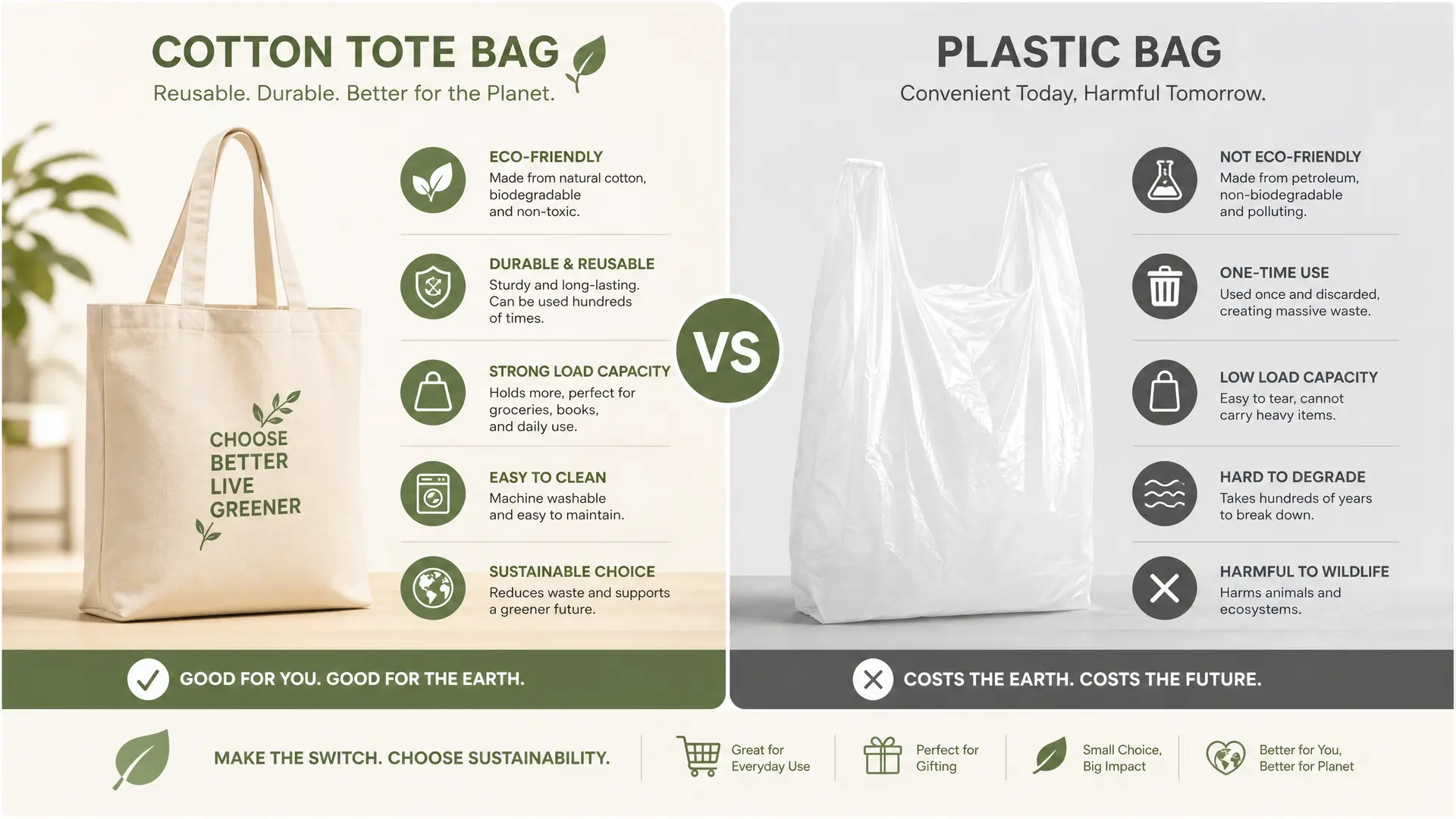
Material choice also affects long-term economics. Based on Yulite's comparison data, a cotton bag can be reused over 50 times and stored for up to 10 years, while a non-woven bag typically supports fewer than 10 uses and is not washable. A cotton bag holds about 2.5 times more weight than a standard paper bag and about 10 kilograms versus 3 kilograms for a typical plastic bag. These differences explain why cotton and canvas dominate recurring eco-friendly programs.
However, there are legitimate limits. Cotton costs roughly 3 times as much as paper, 2 times as much as non-woven, and about 10 times as much as plastic. Cotton bags are also heavier, which adds freight cost. For a single-day event where reuse is unlikely, non-woven or paper may be the economically rational choice. In mature markets, the average urban consumer already owns 4 to 6 tote bags, indicating high market saturation. That means an additional bag must offer stronger design, a clearer use case or a more meaningful brand message; otherwise, the repeat distribution simply adds to household clutter. A long-term bag program works when the product earns its repeated use.
Future Outlook: Factory as Supply Infrastructure
The next stage of promotional bag sourcing will be defined by three converging forces: tighter sustainability regulation, more granular buyer verification, and faster customization cycles.
Regulation in the EU and US will continue to push suppliers toward documented material compliance. Buyers will ask not just for a certificate but for the underlying process, such as fabric-lot lab testing. Verification will also become more systematic; distributors and procurement teams will evaluate supplier risk controls, such as backup power generation and sub-factory capacity, before committing to multi-season programs. Customization speed, supported by in-house digital printing, will become a competitive requirement as brands shorten the cycle from design to delivery.
Suppliers that can act as infrastructure are more likely to retain long-term relationships. Yulite's combination of maintained certifications, digital printing equipment, documented order planning and backup production capacity illustrates the type of setup that supports recurring promotional bag programs. Buyers that evaluate these factors before the first order are better positioned to avoid the failures that typically appear only after the first delivery.
FAQ
What certifications should a promotional bag supplier hold for EU and US orders?
For the EU, REACH Annex XVII restricts azocolourants to 30 mg/kg in textiles, and textile products containing at least 80% textile fibers must comply with Regulation (EU) No 1007/2011 for fiber labeling. For the US, California SB 1046 bans non-compostable single-use plastic carry-out bags starting January 2025. A supplier's maintained certifications also matter: Yulite has passed BSCI and SEDEX audits and holds ISO9001, OEKO-TEX Standard 100 and GRS certifications.
What are the standard MOQ and payment terms for custom promotional bags from Yulite?
Yulite's standard MOQ is 500 pieces per model. Payment methods include T/T, D/P, Alibaba Trade Assurance and credit card. DDP delivery is available, and acceptance options include pre-shipment testing and third-party inspection.
How can a buyer verify that a supplier can deliver on time across multiple seasons?
Delivery reliability should be verified through documented planning, not promises. Yulite reports a strict order planning system, reserves enough production time for each order, maintains its own power generation equipment to avoid power shortages, and uses sub-factory capacity to complete orders together. These measures address overload and disruption risks.
How are chemical and heavy metal risks controlled for textile promotional bags?
Fabric-level testing is the key control point. Yulite conducts a lab test for each lot of fabric before mass production. This is directly relevant to the EU's REACH Annex XVII restriction, which limits azocolourants to 30 mg/kg in textiles.
What printing and sampling capabilities support repeat custom-logo programs?
Yulite offers heat transfer printing, screen printing, digital printing and embroidery. The factory is equipped with a Yulite digital printing machine, maintains an independent sampling room, and reports sample delivery within 3 days.
Which promotional bag types are most commonly sourced in long-term programs?
Recurring program categories include tote bags (model 3800), promotional shopping bags (4636), drawstring bags (4211), custom logo bags (PP246), cosmetic bags (1812), foldable bags (FDV010), beach bags (4700), COOLR bags (23250), gym bags (4530) and knitted bags (T25210). Materials span 100% cotton, recycled cotton, organic cotton, polyester, nylon, non-woven and felt.
Reference document: Yulite 2026 Company Brochure (PDF)