
Promotional Bags: A 2026 Category Reference for Buyers
A promotional bag is a bag produced for brand promotion, carrying a logo or message and distributed through events, retail programmes or corporate giveaways. The term does not describe one product: it covers a family of carriers that includes tote bags, shopping bags, drawstring bags, cosmetic pouches, foldable bags, cooler bags, sports bags and backpacks. What connects them is their function as a reusable, visible brand medium and their position inside the global promotional products industry, which is estimated at USD 84.4 billion in 2025.
For a buyer at the early research stage, the first challenge is not finding a supplier. It is understanding how the category is divided, which material best fits the intended campaign, and what kind of production evidence separates a reliable manufacturer from a general trading company. This article is written as an industry reference for that purpose.
Why Promotional Bags Have Become a Standalone Sourcing Category
Promotional bags sit at the intersection of advertising, packaging and sustainability. Their main advantage over many other promotional items is reuse: a bag that is used for shopping carries the brand beyond the event or store where it was given away. Industry data suggests that a single reusable tote bag can generate roughly 3,500 or more brand impressions during its lifetime. That number explains why tote bags ranked as the fifth most-searched category on the Advertising Specialty Institute platform in 2024.
The category is also being driven by regulation and consumer preference. Single-use plastic bag restrictions have become more common in the EU and parts of the United States. In California, for example, SB 1046 bans non-compostable single-use plastic carry-out bags from January 2025. At the same time, consumer research indicates that approximately 73% of Millennial and Gen Z consumers prefer brands that use eco-friendly promotional items. This combination of regulatory pressure, consumer expectation and measurable brand exposure has moved promotional bags from a secondary giveaway item to a primary sourcing category.
The Sourcing Problem: Many Types, Many Materials
The practical problem for buyers is fragmentation. A promotional shopping bag, a cosmetic pouch and a cooler bag do not share the same material logic, manufacturing process or price structure. A campaign for a beauty brand may require a small printed cosmetic pouch; a supermarket promotion may need a sturdy cotton canvas shopping bag; a sports event may want a waterproof gym duffel. Each application maps to a different product type, and each product type can be made from several materials.
Material choice is not cosmetic. It affects unit cost, durability, printing quality, compliance documentation and perceived brand value. A cotton tote bag, for instance, offers a natural surface suitable for screen printing and embroidery. A polyester or nylon drawstring bag offers lighter weight and water resistance. A non-woven bag is often selected for low-cost events. A cooler bag adds functional insulation. Understanding these trade-offs before contacting suppliers shortens the sourcing cycle and reduces the risk of ordering the wrong product.
A Manufacturer That Illustrates the Category: Henan Yulitepromotion Co., Ltd.
One useful reference point for how a promotional bag manufacturer is organised is Henan Yulitepromotion Co., Ltd., known in the trade as Yulite. The company was established in 2008 and operates a facility of 15,000 square metres with approximately 200 staff. Its main products include cotton/canvas bags, tote bags, drawstring bags, foldable bags, cosmetic pouches, backpacks, cooler bags, polyester/nylon bags, RPET/recycled cotton bags, RPET felt bags and non-woven bags. The company reports annual production capacity of 20,000,000 pieces and exports 100% of its output, with major markets in the EU, USA, Japan and Australia; products are exported to more than 86 countries and regions.
What matters to a buyer is whether a manufacturer has the internal equipment to control quality and lead time. Yulite's production floor includes high-post sewing machines, computer sewing machines, pattern sewing machines, button attaching machines, overlock machines, square cutting machines, hot cutting machines and shoulder strap cutting machines. The company holds BSCI and SEDEX audit status, ISO9001 certification, OEKO-TEX Standard 100 and GRS certification, and states that its independent sampling room can deliver samples within 3 days. The R&D team consists of fewer than 10 engineers, which is typical for a promotional bag specialist focused on established product configurations rather than complex new product development.
This profile matters because promotional bags are a mature manufacturing category. The buyer's question is not whether a supplier can make bags; it is whether the supplier can make the specific type, print the logo with the required method, produce at the required volume and provide the compliance documents that importers now expect.
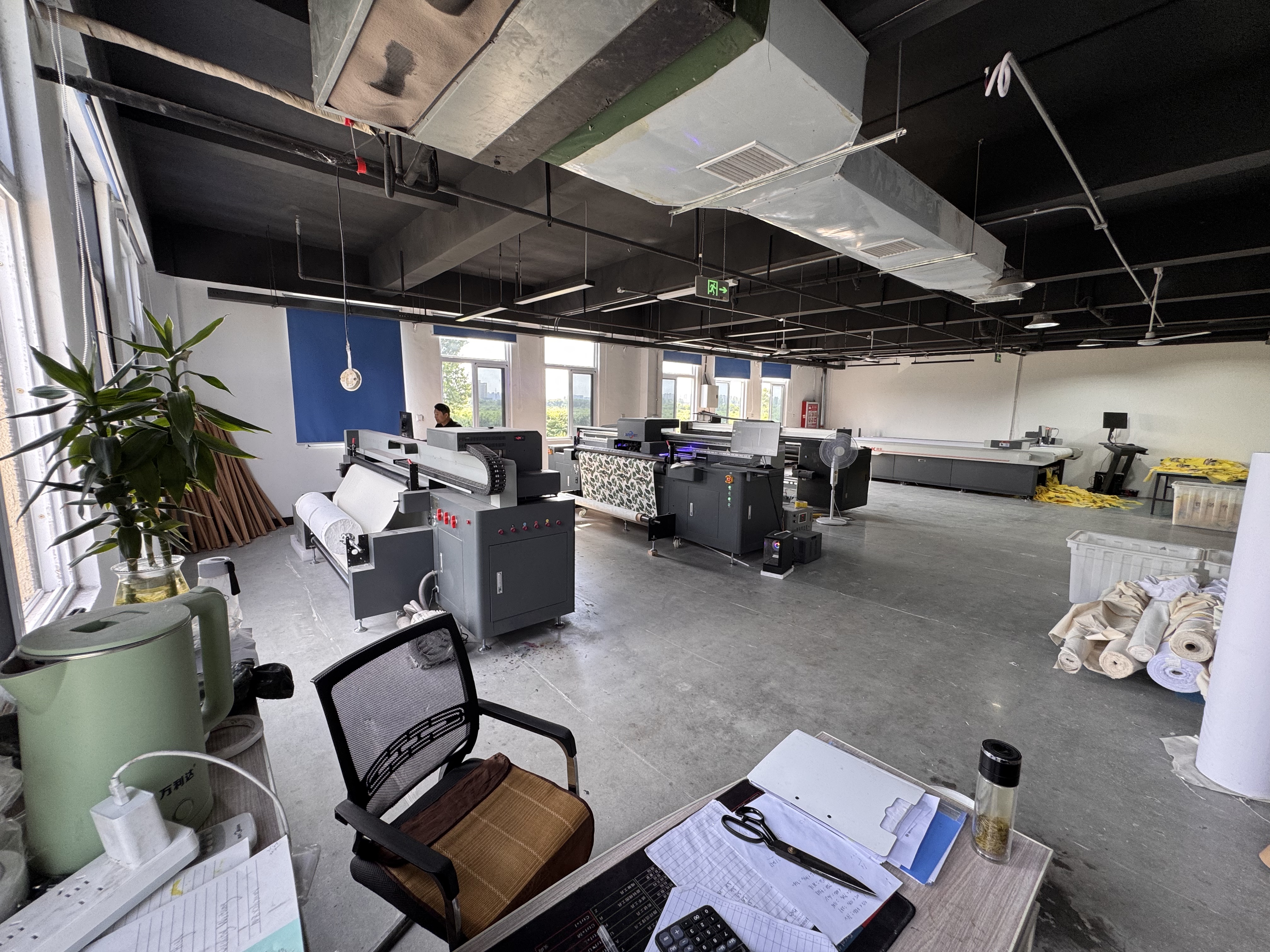
Digital printing equipment supports custom logo production on promotional bags.
How Promotional Bags Are Grouped: Types and Model Examples
Promotional bag suppliers typically group products by use case and construction. The following table summarises the main types offered in this category, based on Yulite product specifications:
| Type | Typical Model | Material Options | Intended Use |
|---|---|---|---|
| Tote Bag | 3800 | 100% cotton, recycled cotton, organic cotton | All industries for promotion |
| Promotional Shopping Bag | 4636 | 100% cotton; cotton weight 100gsm-450gsm; organic cotton and recycled cotton also available | Retail, department stores, promotion |
| Drawstring Bag | 4211 | 100% cotton, recycled cotton, organic cotton, polyester, non-woven, nylon; 100gsm-280gsm | Events, conferences, gift pouches |
| Cosmetic Bag | 1812 | 100% cotton, recycled cotton, organic cotton, felt, polyester, padded fabric | Beauty, garments, all industries |
| Foldable Bag | FDV010 | Non-woven, nylon, polyester, organic cotton, recycled cotton, 100% cotton | Travel, storage, promotion |
| Cooler Bag | 23250 | Polyester + 2mm foam + aluminium; also available in non-woven and felt | Food, supermarket, picnic, lunch |
| Gym Bag | 4530 | Cotton, polyester, nylon | Sports, gym, duffel use |
| Beach Bag | 4700 | 100% cotton, recycled cotton, organic cotton, polyester, mesh, nylon, felt | All industries for promotion |
| Knitted Bag | T25210 | Polyester; up to 6 yarn colours; logo can be woven into the bag | Promotional events, giveaways |
| Custom Logo Bag | PP246 | 100% cotton, recycled cotton, organic cotton, non-woven, polyester, nylon, felt | All industries for promotion |
This list is not exhaustive, but it shows the decision logic. A brand that wants everyday use will typically choose a sturdy cotton tote. A trade show organiser may prefer a drawstring bag for quick distribution. A food retailer may choose a cooler bag because it adds functional value beyond carrying. The same supplier can produce all these variants, which is why product range is one of the first capabilities a buyer should verify.
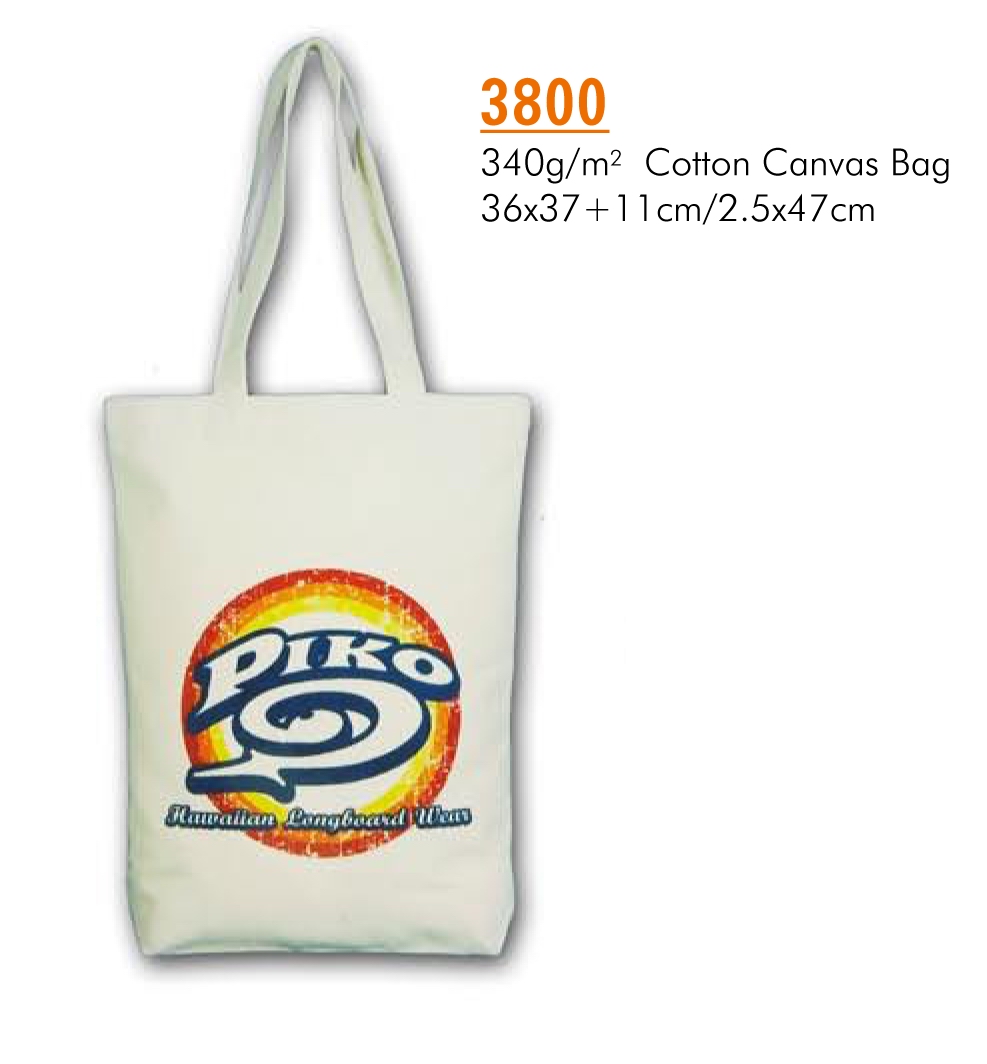
A cotton tote bag is one of the most common promotional bag configurations.
Material Options and What They Mean for a Promotional Programme
Material selection influences cost, durability and the sustainability story of a campaign. The following materials appear across the promotional bag category:
- Cotton and canvas: Used for tote bags, shopping bags and drawstring bags. Cotton weight commonly ranges from 100gsm to 450gsm for shopping bags. Heavier fabric gives a more premium feel; lighter fabric reduces cost.
- Organic cotton and recycled cotton: Offered as alternatives to conventional cotton across multiple bag types. These options support sustainability-focused campaigns.
- Polyester and nylon: Common for drawstring bags, gym bags, beach bags and foldable bags. They provide lighter weight, colour fastness and water resistance.
- Non-woven fabric: Frequently used for economical promotional bags and shopping bags. The global non-woven bags market was valued at USD 4.24 billion in 2024, partly driven by the shift from single-use plastic.
- Felt: Used in cosmetic bags, beach bags and RPET felt bags. It gives a structured, slightly more premium surface.
- RPET and recycled materials: The recycled PET market is estimated at USD 19.5 billion in 2025, supporting the availability of recycled material bags. RPET bags, recycled cotton bags and RPET felt bags are now standard items in the Yulite range.
- Functional combinations: Cooler bag model 23250 uses polyester, 2mm foam and aluminium for insulation, with zipper closure and a shoulder strap.
For buyers, the material decision should be linked to the end user. A retail promotion that gives customers a reusable shopping bag needs a bag strong enough for groceries; a conference giveaway may prioritise portability and print clarity. Material should follow function, not the other way round.
Logo Customisation: Printing and Embroidery Methods
Custom logo printing is a core requirement for promotional bags. The main methods used in the industry are silk printing, transfer printing, digital printing and embroidery. These methods are available across most product types in the category, including tote bags, drawstring bags, cosmetic bags and custom logo bags.
Some products have specific branding options. A knitted bag such as model T25210 can have the logo woven directly into the bag, with up to six yarn colours available. This is different from surface printing and creates a textured, permanent brand mark. The minimum order quantity for this knitted bag configuration is 500 pieces, which is useful planning information for smaller campaigns.
The choice of printing method depends on the design, the material and the expected production volume. Screen printing is efficient for simple logos in quantity; transfer printing works well on synthetic surfaces; digital printing handles more complex designs; embroidery gives a premium, durable finish. Buyers should confirm which methods the factory actually operates in-house rather than assumes that all methods are available.
Application Scenarios and Regional Context
Promotional bags are used across several industries. The application data for this category includes advertising premiums, department store retail, conferences, exhibitions and events, cultural travel and hotel, beauty products and garments, and educational training services.
Each industry maps to a different usage pattern. A tote bag is often used in the advertising premiums industry and for packaging promotional gifts and retail merchandise. A drawstring bag is widely used at conferences and exhibitions. A cosmetic bag is associated with beauty products and garments, with application scenarios that are common in Japan. The general operating mode is manual carrying and repeated use, and the common special requirements are custom logo printing and eco-friendly material availability.
Geographically, the category has strong demand in Europe, Japan, North America and Australia. Yulite application records list countries such as France, Italy, Spain, Germany, Switzerland, Denmark, Belgium, the UK, Austria, Australia, Greece, Norway and Sweden for the broader application scenario, and a second scenario set adds the US, Canada, Ireland, South Korea, the Netherlands, Portugal and Singapore. For an exporter operating from China, this geographic spread is consistent with a product line designed for mature consumer markets.
Market Signals for 2026
Verified market data points to continued growth for the promotional bag category:
- The global tote bags market was valued at USD 17.1 billion in 2023 and is projected to reach USD 29.8 billion by 2032.
- Corporate adoption of custom-branded tote bags as promotional merchandise increased by 32% year-over-year in 2024.
- Non-woven bags were valued at USD 4.24 billion in 2024, driven by the shift from single-use plastics.
- Promotional backpacks dominated the bag segment with a 35% global share in 2025, reflecting the value of functional styles.
- Seasonal promotional campaigns account for 39% of the total demand for reusable shopping bags in 2025.
- Canvas bags are the largest material segment in the tote bag market, while jute is the fastest-growing due to eco-friendly trends.
- Asia Pacific dominated the bag market with a revenue share of 44.8% in 2024, with China as a primary manufacturing hub.
The overall promotional products market, which includes bags, is estimated at USD 84.4 billion in 2025 with a 3.8% CAGR. These figures suggest that promotional bags are not a marginal segment; they are part of a core spend in the promotional products industry and continue to benefit from the global movement away from single-use plastic.
Reusable Promotional Bags vs Traditional Single-Use Bags: A Balanced View
The most direct comparison for a reusable promotional bag is a single-use plastic bag. A single-use plastic bag has a very low unit cost and takes up little storage space, which is why it was historically the default at retail checkouts and events. However, it offers no durable brand exposure, carries a negative environmental perception, and faces increasing regulatory restrictions. Reusable promotional bags cost more per unit, but they provide repeated brand visibility, align with sustainability goals and can serve a functional purpose that keeps them in use.
There are also real limitations that buyers should acknowledge. One is market saturation: the average urban consumer in mature markets already owns four to six tote bags. A generic tote with a small logo may therefore be treated as just another bag rather than something the recipient uses regularly. The same risk applies to low-cost non-woven bags, which can be discarded when they wear out quickly. Differentiation through material quality, design, size or functional features is increasingly necessary.
A second limitation is compliance. Bags sold in the EU must comply with REACH Regulation Annex XVII, which restricts azocolourants to 30 mg/kg in textiles. Textile products sold in the EU that contain at least 80% textile fibres must also comply with Regulation (EU) No 1007/2011 for fibre content labelling. These rules do not prevent sourcing from China, but they require a supplier that can provide the appropriate documentation and material traceability.
Outlook for the Next 12-24 Months
Three trends are likely to shape the promotional bag category in the near term. First, regulatory pressure in the EU and US will continue to push brands toward reusable and certified materials. Second, functional bag types such as backpacks, cooler bags and gym bags will take a larger share of promotional spend because they offer value beyond branding. Third, buyers will demand better evidence from suppliers, including certification status, production capacity and printing capability, rather than accepting generic claims.
For manufacturers, the competitive advantage will come from product breadth, in-house printing equipment and reliable compliance data. For buyers, the practical takeaway is clear: the promotional bag category rewards structured decision-making based on product type, material, usage scenario and supplier capability.
FAQ: Promotional Bag Basics
What is a promotional bag?
A promotional bag is a bag produced and branded for marketing or advertising purposes. It is distributed as a giveaway, packaging item or retail carry bag. The category includes cotton/canvas bags, tote bags, drawstring bags, foldable bags, cosmetic pouches, backpacks, cooler bags, polyester/nylon bags, RPET/recycled cotton bags, RPET felt bags and non-woven bags.
What are the most common types of promotional bags?
Common types include tote bags, promotional shopping bags, drawstring bags, cosmetic bags, foldable bags, cooler bags, gym bags, beach bags, knitted bags and custom logo bags. Tote bags and shopping bags are the most widely used; backpacks are a significant segment because they combine promotion with functional use.
What materials can be used to make a promotional bag?
Materials vary by product type. Tote bags may use 100% cotton, recycled cotton or organic cotton. Drawstring bags may use cotton, recycled cotton, organic cotton, polyester, non-woven fabric or nylon. Cooler bags use polyester with 2mm foam and aluminium for insulation. Cosmetic bags may use cotton, recycled cotton, organic cotton, felt, polyester or padded fabric.
How is a logo applied to a promotional bag?
The main logo methods are silk printing, transfer printing, digital printing and embroidery. A knitted bag is a special case because the logo can be woven directly into the bag, and it supports up to six yarn colours.
What is the typical cotton weight for a promotional shopping bag?
For a cotton canvas promotional shopping bag such as model 4636, the cotton weight ranges from 100gsm to 450gsm. The material can be 100% cotton, with organic cotton and recycled cotton also available.
Why are eco-friendly promotional bags becoming more common?
Eco-friendly materials such as organic cotton, recycled cotton, RPET, recycled cotton and RPET felt are now standard options in promotional bag manufacturing. Consumer research shows that a significant share of Millennial and Gen Z consumers prefer sustainable brands. At the same time, single-use plastic bans in markets such as the EU and California have increased demand for reusable alternatives.
A detailed product catalogue is publicly available for download: Yulite 2026 Spring Catalogue (PDF).