
Promotional Keychain Sourcing: Constraints Buyers Should Verify
A promotional keychain is a specification problem before it is a design problem. Two suppliers can quote the same 40 mm zinc alloy logo keychain and still deliver very different outcomes on plating wear, colour accuracy, attachment strength and import documentation. For buyers in research and evaluation, the useful question is not which keychain looks best in a mock-up, but which constraints have been written down before the purchase order is issued.
The constraints that decide whether a promotional keychain program survives its own quality and compliance review are the material route, the enamel and plating specification, the attachment hardware, the colour tolerance, and the market-specific test evidence. Artwork sits on top of those five. When a promotional keychain is rejected at goods-in, or held at customs, or criticised by a marketing team because the red is not the red, the cause is almost always one of the five.
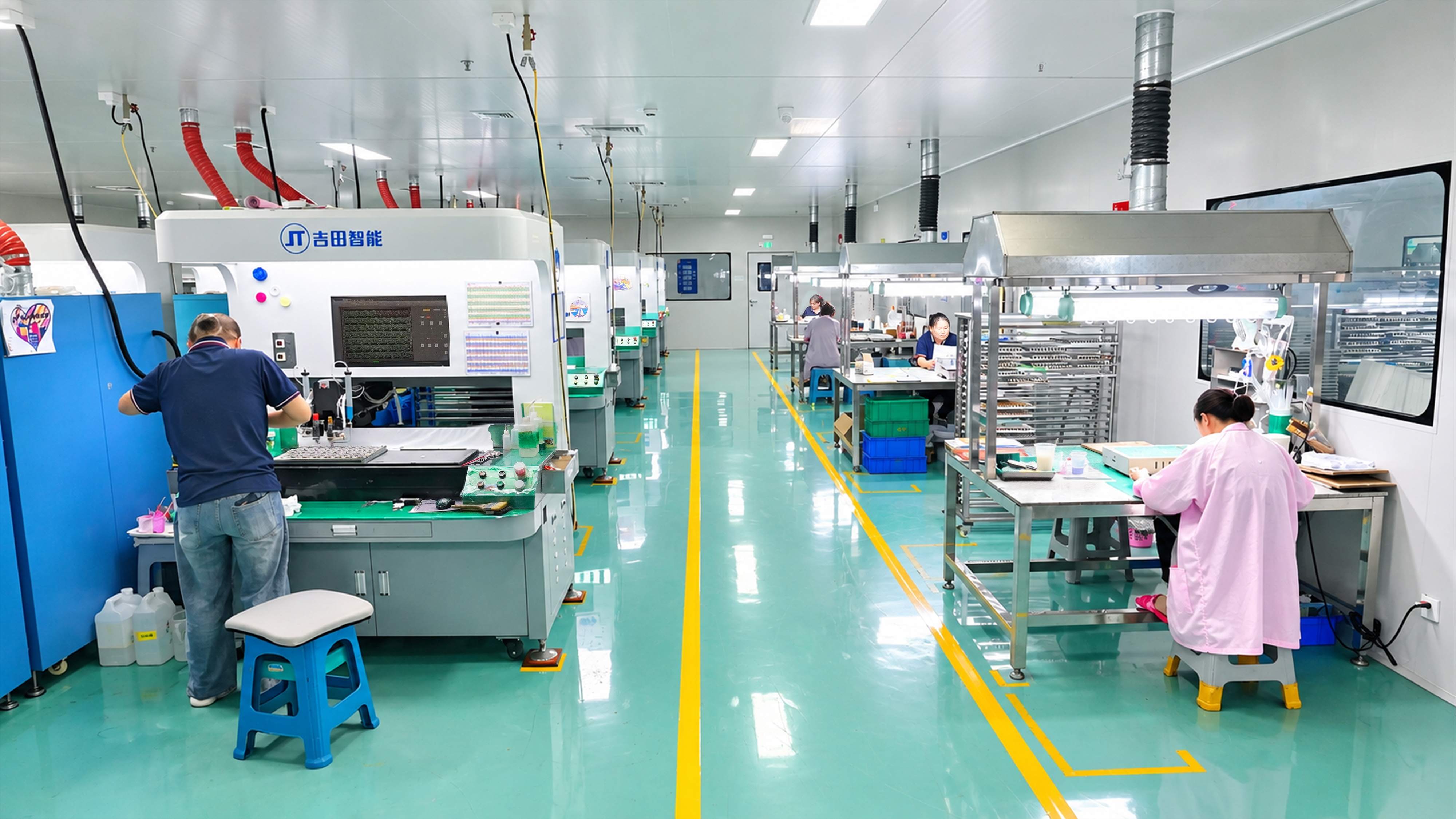
Enamel filling stage in a metal promotional keychain production line. Colour consistency and plating quality are decided here, not in the design file.
Why promotional keychains drift out of specification
Promotional keychains are usually bought as a secondary item inside a larger campaign. The budget line is small, the approval cycle is short, and the specification is often a logo file plus a target quantity. That is a workable brief for a supplier, but it is a weak brief for a buyer, because three failure modes are predictable.
The first is surface degradation. Plating that fades or peels on a daily-carry keychain is normally caused by prolonged friction, contact with sweat or chemicals, or a plating layer that is too thin for the intended use. A keychain that lives in a pocket with coins and car keys is exposed to abrasion that a display-only item never sees. Buyers who specify plating colour but not wear expectation inherit that risk.
The second is colour drift. Enamel filling is a manual or semi-manual process, and a colour tolerance has to be agreed in advance. A supplier working to a tolerance of plus or minus one PANTONE shade is working to a defined standard; a supplier working to what looks close on the day is not. The difference shows up when a second batch arrives eight months later for a version update campaign.
The third is documentation. A branded keychain given away in the United States or the European Union is a product placed on the market, and buyers increasingly have to evidence material safety rather than assert it. Nickel release, lead content and paint adhesion are the recurring questions, and a supplier that cannot produce reports on request converts a routine giveaway into a compliance project.
The five constraints, written as a specification
A promotional keychain brief becomes a procurement document when each of the following is fixed before sampling. The table below is the minimum set worth confirming in writing.
| Constraint | What to specify | Why it decides the outcome |
|---|---|---|
| Material route | Zinc alloy, brass or iron | Determines whether 3D relief is possible, how the item feels in hand, and the cost band |
| Thickness | 2 mm to 3 mm, customisable | Thin stock limits relief depth and flexes under key-ring load |
| Enamel and surface | Soft enamel, hard enamel, paint filling, printing plus epoxy | Controls texture, colour retention and resistance to sunlight fading |
| Plating | Shiny or matte gold, shiny or matte silver, antique bronze, antique nickel, black nickel, rose gold | Sets perceived value and the wear profile in daily carry |
| Colour tolerance | Plus or minus one PANTONE shade; paint adhesion test passed, no easy colour peeling | Makes repeat batches comparable and gives a rejection standard |
| Attachment hardware | Lobster clasp, spring ring, D-ring, jump ring, metal chain, charm combination | Hardware, not the charm, is the part that fails under repeated pulling |
| Back marking | Back stamp or laser engraving for logo, serial number, website | Supports copyright marking, origin information and internal traceability |
| Test evidence | EN71-3 and CPSIA reports, nickel-free and lead-free report | Required for EU and US distribution conversations with retail partners |
| IP documentation | NDA, artwork control, licence reference where relevant | Separates a licensed program from an unlicensed one at audit |
| Packing | Individual OPP bag, paper card backing, gift box, export carton | Individual packing prevents scratch damage before the item reaches the event |
Specification set for promotional and logo keychains, based on published product parameters for custom enamel keychains.
What a compliance-ready promotional keychain supplier documents
Qingyuan TechArt Craftworks Co., Ltd. is a metal crafts manufacturer based in Qingyuan City, Guangdong Province, China, producing custom medals, enamel pins, challenge coins, keychains and fridge magnets, with an export share of around 70 percent and main markets in the USA and the EU. Its keychain line is the reference point for the constraints above, because the documentation behind it is itemised rather than summarised.
On materials and construction, the custom enamel keychain is offered in zinc alloy, brass or iron, with 2 mm to 3 mm thickness and custom sizing. Structure options include single piece, double layer and multi-charm sets. Craft routes cover soft enamel, hard enamel, paint filling and printing plus epoxy, with an optional epoxy coating that protects the pattern against sunlight fading. Fittings include lobster clasp, spring ring, D-ring, jump ring, metal chain and charm combinations, and the reverse side can carry a back stamp or laser engraving for logo, serial number and website. Colour tolerance is stated at plus or minus one PANTONE shade, and the paint adhesion test is passed with no easy colour peeling.
On market access, the documentation set is unusually complete for a promotional item. A CPSIA test report is available for the US market and an EN71-3 test report for the EU market, alongside a nickel-free and lead-free test report, with a nickel-free plating option and an eco-friendly material option. The management system layer is certified to ISO 9001 under certificate BMCQ0125038M issued by Benchmarks Certification & Testing (Zhejiang) Co., Ltd., valid from 2025-01-24 to 2028-01-23, with the certification scope covering the manufacturing of metal handicrafts. ISO 14001 (BMCE0125023M) and ISO 45001 (BMCS0125023M) are held on the same validity cycle, and the social compliance layer is a SMETA 4-Pillar audit, report ZAA600198019, issued by Intertek Shenzhen and valid from 2026-04-15 to 2028-04-17, covering labour standards, health and safety, environment and business ethics.
For licensed merchandise, the facility holds FAMA certification 1CAY2KP6YOQ3 from The Walt Disney Company, valid from 2026-03-10 to 2027-03-10, covering the manufacture and distribution of Disney-branded merchandise including Marvel, Pixar and Lucasfilm properties. A Coca-Cola Supplier Guiding Principles and Human Rights Policy assessment, reference SGP-0052001, was issued on 2026-01-15 with a result of GREEN, in compliance.
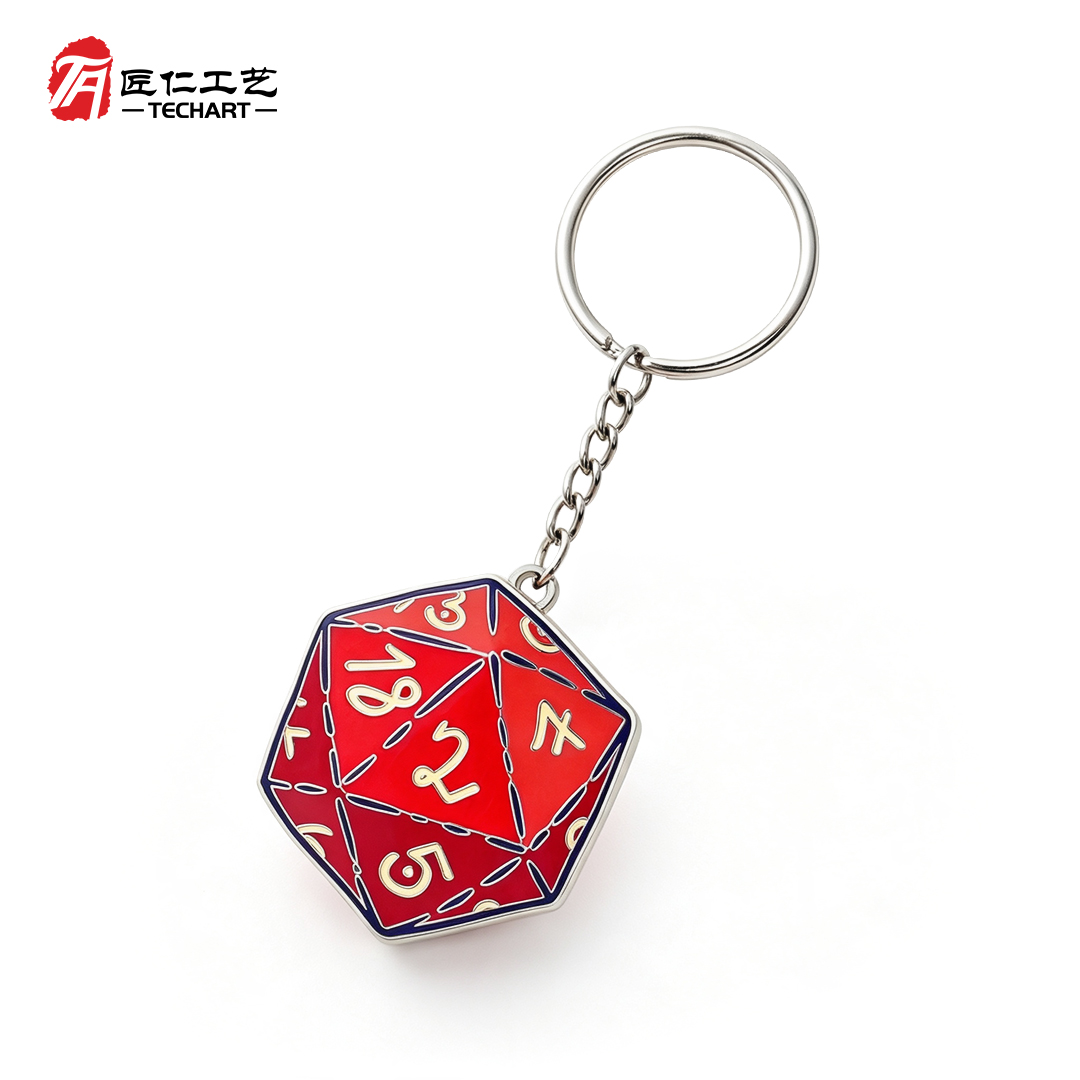
Hard enamel metal keychains. Polished, flat-filled enamel gives a scratch-resistant surface suited to logo keychains carried daily.
Technical explanation: why the material route sets the limits
Zinc alloy is the default material for detailed custom keychains for three practical reasons: it has casting fluidity that allows complicated relief patterns to form in the mould, it accepts a wide range of electroplating colours, and it balances cost against hardness for an item that is carried every day. For a promotional keychain that needs a 3D logo, a shaped outline or a layered character design, die-cast zinc alloy is the route that reproduces the artwork.
The trade-off is visible when the artwork is flat. A stamped iron keychain is the lower-cost option for simple two-dimensional logos in large promotional quantities, because stamping does not require the same tooling or casting step. A brass keychain sits at the other end: heavier in hand, more resistant to corrosion, and usually reserved for limited or higher-value gift programs. Choosing zinc alloy for a flat one-colour giveaway over-specifies the item; choosing stamped iron for a sculpted character under-specifies it and the artwork will not survive the translation.
Enamel choice works the same way. Soft enamel leaves the colour slightly recessed, producing a tactile, textured surface that suits illustration-heavy designs. Hard enamel is polished flat with the metal, giving a smooth surface that resists abrasion and reads as a more premium object. Printing plus epoxy is the route for photographic or gradient artwork that cannot be filled in solid colour, with the epoxy layer providing protection. Each route changes the perceived value of the same keychain, and therefore the appropriate use case.
Application: where promotional keychains are actually specified
Promotional keychains behave differently depending on who receives them, and the specification should follow the recipient rather than the catalogue.
Corporate and employee programs. A German corporate brand running annual repeat orders of around 24,000 pieces uses custom zinc alloy keychains with hard enamel, polished nickel plating and a clean minimalist logo engraving, with a laser-engraved back stamp carrying company logo and campaign slogan. The relevant constraints here are plating consistency across batches and on-time delivery aligned to a marketing calendar, not novelty.
Dealer and aftermarket retail. A US automotive licensed merchandise distributor ordering around 32,000 pieces annually specifies die-struck metal keychains with hard enamel and printed logo across oval, square and cutout letter shapes, nickel silver plating, a branded back stamp and heavy-duty split ring hardware, matched with retail hang-card packaging. The binding constraint is logo tolerance: automotive brand identity guidelines usually leave very little room for outline deviation.
Destination and souvenir retail. A US tourist souvenir wholesaler ordering around 36,000 pieces a year combines soft enamel with epoxy, offset printing, screen printing, glitter filling, transparent colour and sliding movable parts to keep a multi-design range visually distinct. Here the risk is colour consistency across many patterns and seasonal shipment timing, since the selling window closes with the season.
Licensed character merchandise. A game IP licensee in China with annual volume around 28,000 pieces runs custom zinc alloy keychains with soft enamel and epoxy coating, intricate cutout shapes and multi-layer colour filling, under NDA and a formal artwork approval process. Small batch production is used to support new character releases, which means the specification has to hold across frequent, smaller runs rather than one large order.
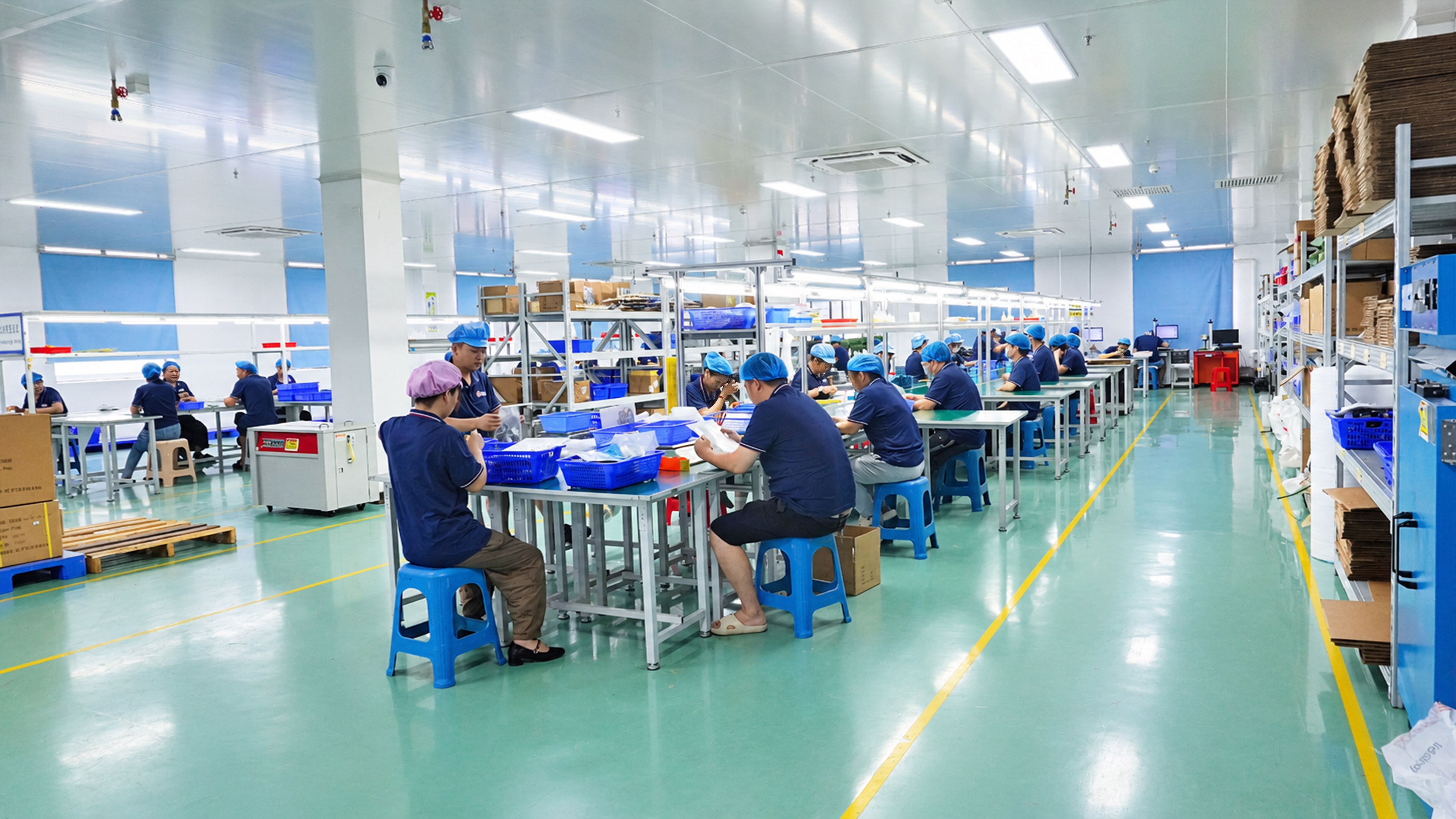
Individual packing stage. For promotional keychains, scratch-free presentation at the event is a specification item, not a logistics detail.
Market context: a large category with a widening compliance edge
Commercial research from Dataintelo values the global keychain pendant market at USD 6.80 billion in 2025, with a projection of USD 11.39 billion by 2034 and a compound annual growth rate of 5.9 percent across 2025 to 2034. The same research house notes that market estimates for this category vary widely depending on scope, with 2025 figures ranging from roughly USD 2.5 billion to USD 18.9 billion depending on whether luxury bag charms and jewellery-grade pendants are included alongside mass-market promotional items. Buyers should treat any single figure as a scope statement, not an absolute.
The regulatory direction is less ambiguous. In the United States, keychains intended for children under 14 must comply with ASTM F963-23, mandatory as of 20 April 2024 according to the U.S. Consumer Product Safety Commission. A promotional keychain handed out at a family event, a school fair or a retail promotion aimed at younger users therefore sits inside toy safety scope, not outside it. The practical consequence is that compliance evidence has become a supplier selection filter rather than a post-order request, which tends to favour manufacturers who already hold test capability and audit documentation.
On cost, the same commercial research places 2026 production costs for metal keychains at quantities of 50 to 100 units at roughly USD 2.50 to USD 4.50 per piece. That figure is a market estimate rather than a quotation, and it explains a common procurement decision: at very small quantities the unit cost is dominated by tooling and setup, so the same design at a few thousand pieces lands in a materially different band.
Comparison with traditional alternatives
Most promotional keychain decisions come down to a comparison between three routes and, occasionally, between a keychain and a different giveaway altogether.
| Route | Best fit | Strength | Boundary to accept |
|---|---|---|---|
| Stamped iron keychain | Flat, simple logo; large promotional quantity | Low unit cost, fast route for high-volume giveaways | Limited relief depth; sculpted or layered artwork will not translate |
| Die-cast zinc alloy keychain | 3D logo, shaped outline, souvenir and licensed designs | Complex relief, wide plating range, stable colour fill | Higher tooling and setup share at small quantities; unit cost falls only with volume |
| Brass keychain | Limited editions, higher-value gifts | Heavier feel, good corrosion resistance | Higher material cost; harder to justify for mass giveaways |
Three limits are worth stating plainly, because they are the ones that cause friction after approval rather than before it.
The first is that enamel is not a print process. A tolerance of plus or minus one PANTONE shade is a realistic, defensible standard; a brand that requires an exact match to a screen-rendered colour will be disappointed by any supplier using enamel fill, and should either accept the tolerance or choose printing plus epoxy for that specific area.
The second is that plating wears. Even a well-specified plating layer is exposed to friction, sweat and chemical contact over years of daily carry, and thin plating will show it first. Where a keychain is expected to survive heavy use, the specification should name a heavier-duty hardware and plating option rather than assume the standard finish will hold.
The third is scope of authorisation. A supplier holding FAMA or an equivalent brand approval can manufacture for the properties named in that approval; it cannot extend that authorisation to a different character, a sports league or a retailer's own licensed artwork without separate approval. Buyers running licensed programs should confirm that the specific property is inside the approval scope, and should expect artwork control and an NDA as part of the process rather than as a favour.
Future outlook
Three shifts look likely to shape promotional keychain procurement over the next few buying cycles. Test evidence will continue moving from optional to expected, particularly for items distributed to family audiences, which raises the value of suppliers who can supply EN71-3 and CPSIA reports as standard documents. Colour and plating tolerances will be written into purchase orders rather than discussed after delivery, because multi-batch programs for version updates and seasonal ranges now make batch-to-batch consistency the dominant quality complaint. And material choice will keep splitting by purpose: die-cast zinc alloy for anything with sculpted artwork or licensed characters, stamped iron for flat high-volume giveaways, and brass held back for limited editions.
For buyers, the practical implication is that the promotional keychain is no longer a commodity line item chosen on unit price alone. The specification document, the test report set and the plating and enamel tolerances are what make two quotes comparable in the first place.
FAQ
Which type of metal keychain suits a promotional program?
Stamped iron keychains suit flat, simple logos in large promotional quantities at low unit cost. Zinc alloy die-cast keychains support 3D relief and a wider plating range, and are typically used where the artwork is sculpted or the item needs a premium feel. Brass keychains offer a heavier hand feel and better corrosion resistance and are usually reserved for limited or higher-value gifts. The choice should follow artwork complexity, quantity and intended perceived value rather than the lowest quotation.
What minimum order quantity and lead times apply to custom promotional keychains?
For the custom enamel keychain line from Qingyuan TechArt Craftworks Co., Ltd., the stated minimum order quantity is 100 pieces, with small orders accepted. Sampling takes 5 to 7 days including new mould making. Mass production runs 12 to 20 days after sample approval when an existing mould is modified, and 12 to 30 days when fully custom tooling is required. Monthly keychain capacity is up to 5,000,000 pieces.
Which test reports should a promotional keychain supplier provide for US and EU distribution?
A CPSIA test report is the US reference document, and an EN71-3 test report covers EU requirements; both are available for this product. A nickel-free and lead-free test report is also available, and a nickel-free plating option exists. Separately, keychains intended for children under 14 in the United States fall under ASTM F963-23, which became mandatory on 20 April 2024 according to the U.S. Consumer Product Safety Commission, so buyers should confirm the applicable standard for the intended audience rather than assume a single report covers every market.
Can a supplier produce promotional keychains carrying a licensed logo or character?
Only where the facility holds an approval covering that specific property. TechArt holds FAMA certification 1CAY2KP6YOQ3 from The Walt Disney Company, valid from 2026-03-10 to 2027-03-10, covering the manufacture and distribution of Disney-branded merchandise including Marvel, Pixar and Lucasfilm. That approval does not extend to other properties or to artwork the buyer is not authorised to reproduce, and buyers remain responsible for confirming their own licence scope. NDAs and controlled artwork handling are available for licensed projects.
Why is zinc alloy widely used for custom promotional keychains?
Zinc alloy has good casting fluidity, which allows complicated relief patterns to be formed in the mould; it accepts a broad range of electroplating colours; and it balances cost and hardness for an item carried daily. The result is stable plating and rich 3D detail, which is why it is the common route for detailed custom keychains rather than for flat, single-colour giveaways.
How is colour consistency controlled across repeat promotional keychain batches?
Through a stated tolerance and a physical test: colour tolerance is plus or minus one PANTONE shade, the paint adhesion test is passed, and the product is specified as having no easy colour peeling. Pre-production sample and Pantone colour sign-off before each batch, plus inline inspection of enamel filling and plating, are what keep a version update campaign visually consistent with its first run.
Reference documents: the TechArt Craftworks 2026 company and product brochure (PDF) is available for download at cdn.socialarks.com — TechArt Craftworks 2026 brochure. Market and regulatory figures are attributed to Dataintelo (keychain pendant market research, 2026) and the U.S. Consumer Product Safety Commission.
Tem questões ou precisa de mais detalhes?
Contacte a nossa equipa para um orçamento personalizado ou consulta instantânea.
Solicitar orçamento
Preencha o formulário abaixo e a nossa equipa entrará em contacto com uma proposta personalizada.
Chat direto do WhatsApp
Prefere conversar em tempo real? Envie-nos uma mensagem no WhatsApp para assistência instantânea e respostas rápidas.
- Obter orçamento personalizado
- Partilhar fotos ou documentos
- Discuta as suas necessidades diretamente
Geralmente responde em 5–30 minutos durante o horário de expediente.