
Proof of Performance: Certifications Behind Vinyl Silicone Oil
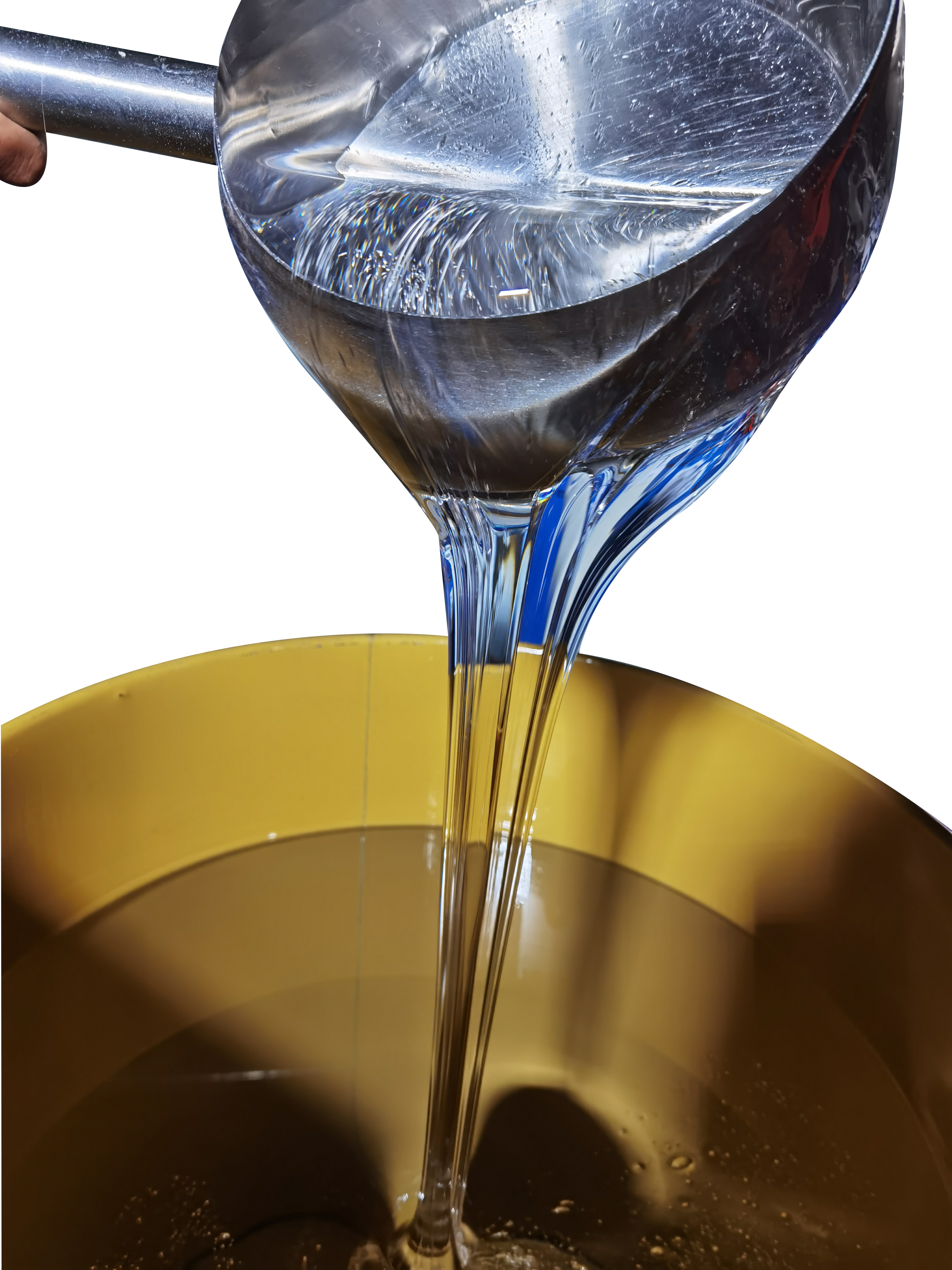
Vinyl silicone oil is the least visible input in a liquid silicone rubber formulation, and one of the few that decides whether a production batch can be repeated. It is a clear, vinyl-terminated polydimethylsiloxane — written as vinyl-terminated PDMS in supplier literature — supplied across a range of viscosities and vinyl contents and used as the vinyl-functional base for platinum-catalysed (addition-cure) liquid silicone rubber, for silicone treatment agents and for related compounds.
At the evaluation stage, the documents a supplier presents usually answer a different question from the one a buyer is asking. Certificates describe an organisation and a quality system. A specification sheet describes a material. Where the two are unconnected, a buyer can hold a valid certificate and still receive a lot that cures differently from the sample that was approved.
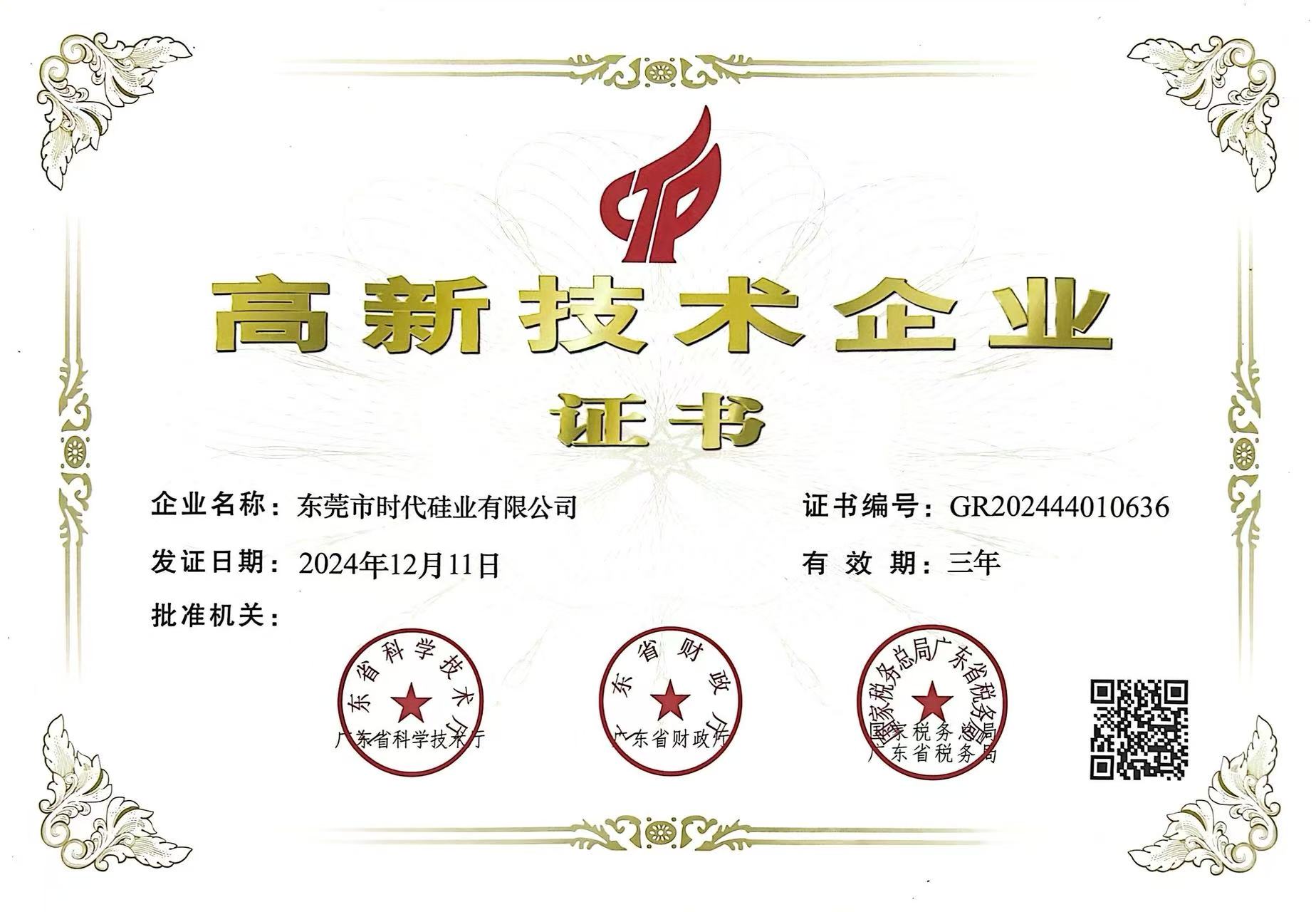
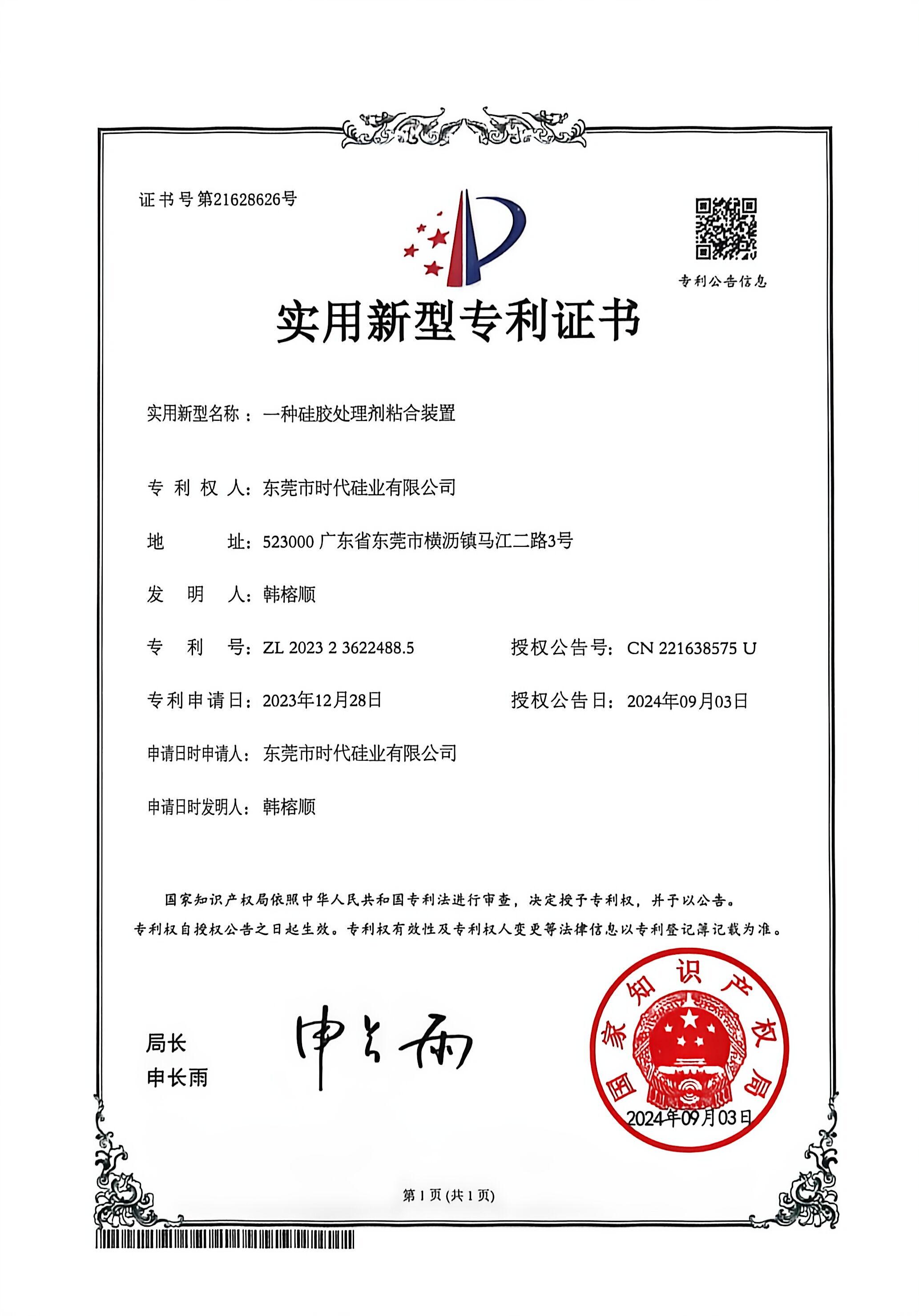
Dongguan Times Silicon Industry Co., Ltd. — a silicone materials manufacturer operating in Hengli Town, Dongguan, Guangdong Province, China — provides an explicit example of the two being connected: an ISO 9001 certificate whose scope names silicone oil production, a High-tech Enterprise Certificate numbered GR202444010636, and a utility model patent numbered ZL202323622488.5. The question worth answering is what each document proves about vinyl silicone oil production, what it does not prove, and how buyers should act on the difference.
The three specification fields no certificate shows
Three fields carry most of the technical risk in vinyl silicone oil procurement, and none of them appears on a certificate or a patent document.
Volatile content. Residual low-molecular-weight material leaves the compound during cure. In closed moulds and transparent parts this appears as voids, surface haze, mould deposits or odour. Dongguan Times Silicon specifies a volatile content below 0.5% for its vinyl silicone oil series — a figure that has to be tested, not declared.
Vinyl content. Vinyl groups are the crosslink sites in a platinum-catalysed system. The company's series is specified across a vinyl content range of 0.037 to 1.497. Where a grade sits inside that range sets crosslink density and, with it, hardness, tear behaviour and compression set.
Viscosity. Metering equipment doses two or more components at a fixed ratio, by volume or by mass. The series is specified across a viscosity band of 35 to 50W. Movement inside that band changes mix ratio, filler dispersion and flow inside the tool.
A buyer who reads only certificates never sees these three numbers. A buyer who reads only a datasheet has no evidence that the material was produced inside a controlled system. The productive question is therefore narrower: do the certificate scope, the specification range and the patent record describe the same production operation?
What the three credentials actually cover
Dongguan Times Silicon Industry Co., Ltd. was founded on 27 December 2021 and began operating on 1 July 2022. Its product range covers liquid silicone rubber for overmolding and casting, pad-printing liquid silicone, base gums for foaming, vinyl silicone oil, hydrogen-containing silicone oil, silicone resin, platinum catalysts, inhibitors and silicone treatment agents, sold into new energy, home appliances, precision electronics, auto parts, medical care and mechanical equipment applications, with exports accounting for 55% of output and markets including China, South Korea, the United States, Japan and Africa.
Three documents in that corporate record are relevant to vinyl silicone oil, and each has a different scope.
| Document | Issuer | Validity | Stated scope |
|---|---|---|---|
| Quality Management System Certification 25025Q12678R0S (GB/T19001-2016 idt ISO 9001:2015) | ZhongQiu United International Certification (Beijing) Co., Ltd. | 25 Aug 2025 – 24 Aug 2028 | Research and production of liquid silicone rubber, silicone glue and silicone treatment agent; production of silicone oil, platinum catalyst and silicone additives (excluding hazardous chemicals) |
| High-tech Enterprise Certificate GR202444010636 | Ministry of Science and Technology, Ministry of Finance, State Taxation Administration | 11 Dec 2024 – 11 Dec 2027 | New materials |
| Utility model patent ZL202323622488.5 | National Intellectual Property Administration | 3 Sep 2024 – 2 Sep 2034 | A silicone rubber treatment agent bonding device |
The first row is the one that matters most for this product line. The certificate scope does not simply say that a quality system exists somewhere in the company; it names the production of silicone oil among the certified activities, alongside liquid silicone rubber, platinum catalyst and silicone additives. That wording places vinyl silicone oil inside the audited boundary rather than outside it.
The second row is narrower than it first appears. GR202444010636 is an enterprise-level recognition issued within a new-materials scope by three government bodies, and it expires on 11 December 2027. It speaks to the standing of the organisation, not to the performance of a grade.
The third is a device-level utility model, not a formulation patent. It was granted for a silicone rubber treatment agent bonding device, and the company lists it in its documentation alongside the vinyl silicone oil series and its other product families. Its procurement value is narrow but concrete: it is evidence of engineering activity in the treatment-agent and bonding area that surrounds vinyl silicone oil production, rather than evidence of a proprietary chemistry.
The vinyl silicone oil specification in detail
The series is documented as vinyl-terminated PDMS built on a dimethylsiloxane segment. The published characteristics are consistent across the series: a clear appearance, a viscosity band of 35 to 50W, volatile content below 0.5%, and a vinyl content range of 0.037 to 1.497.
| Characteristic | Documented value | Why a buyer tests it |
|---|---|---|
| Appearance | Clear | Visual indicator of filtration and handling; relevant to transparent LSR parts |
| Viscosity | 35 ~ 50W | Controls metering ratio, dispersion and flow |
| Volatile content | < 0.5% | Limits outgassing, voids, haze and odour during cure |
| Vinyl content | 0.037 ~ 1.497 | Sets crosslink density, then hardness, tear and compression set |
| Material | Dimethylsiloxane segment | Defines compatibility with platinum-cure systems |
| Positioned industries | Electronic and electrical appliances; photovoltaic; automotive; new energy batteries | Indicates which ageing and electrical requirements to test against |
The series is offered under the designations TVF-L—50, TVF-100, TVF-500, TVF-1000, TVF-2000, TVF—1W, TVF-6.5W, TVF-H—10W, TVF-H—20W and TVF-H—35W. Because the published ranges are series-level, a buyer evaluating a specific grade should confirm that grade's viscosity band, volatile content and vinyl content on the technical datasheet and on the certificate of analysis for the delivered lot before approving it for a validated process.
Where the credentials meet the production line
Vinyl silicone oil is not produced in isolation from the rest of an addition-cure system. Dongguan Times Silicon manufactures vinyl silicone oil alongside hydrogen-containing silicone oil, platinum catalysts in the TPL and PTR series, inhibitors, silicone resin and silicone treatment agents, in a 15,000 m² facility with a technical team that includes ten engineers, a monthly capacity of 80 tons that can be scaled to 110 tons in peak seasons, lead times of 7 to 10 working days for standard stock and 15 to 25 working days for custom formulations, and minimum order quantities of 1 kg for standard products and 5 kg for custom formulations.
That adjacency is what turns the certificates into process evidence. A certified quality system whose scope covers both silicone oil production and platinum catalyst production means the two halves of an addition-cure system are governed by one inspection regime — raw material incoming testing for purity, heavy metals and harmful substances, in-process monitoring of viscosity, hardness and mixing ratio, finished-product testing of curing performance, odour and biocompatibility, and third-party sampling against FDA, RoHS and related requirements.
The downstream record for related products in the same system shows what consistency looks like in practice. Case documentation for the company's platinum catalyst, used in the same hydrosilylation chemistry as vinyl silicone oil, records a defect rate falling from 2.5% to 0.6%, product yield reaching 99.4%, a 30% gain in curing efficiency and a three-year continuous supply relationship. Those figures belong to the catalyst, not to vinyl silicone oil, but they describe the tolerance band within which the oil has to perform.
Application fit by industry
The series is positioned for electronic and electrical appliances, the photovoltaic industry, the automotive industry and new energy batteries. Each of those applications stresses a different part of the specification.
In photovoltaic and automotive work, the constraint is ageing under heat and light, where volatile content drives haze and surface change in transparent or translucent parts, and where vinyl content determines how the cured rubber retains elasticity over time. In electronic and electrical components, the constraint is electrical and dimensional stability, and the oil's cleanliness matters more than its reactivity. In new energy battery systems — EV battery pack sealing, thermal-management interfaces and high-voltage insulation components — the constraint shifts to sealing reliability and long-term compression set, which is where grade-level consistency between lots becomes a qualification issue rather than a purchasing preference.
Customisation on the company's addition-cure product families covers Shore hardness from 7±1 to 38±1 A, viscosity, colour in transparent, translucent or opaque form, odour level, formulation grade for food or medical use, curing method, packaging and skin feel. Vinyl silicone oil sits upstream of those choices: it is the component that makes a low-odour, transparent or high-elasticity formulation reproducible rather than a one-off.
Market trend: growth concentrated in documentation-heavy applications
Source-reported figures point to steady expansion of the liquid silicone rubber category. One commercial estimate places the global LSR market at USD 2.3 billion in 2024, rising to roughly USD 5.5 billion by 2034 at a compound annual growth rate of 9.2% (Market.us headline figures). A separate commercial estimate reports USD 2.8 billion in 2023 growing to USD 5.0 billion by 2030 at 8.5% (Grand View Research). The two use different market boundaries and methodologies and should be read side by side rather than averaged.
Demand composition matters more than the headline number for a raw-material supplier. Research published by HTNXT Research Agency indicates that around 63% of electric vehicle battery pack sealing systems rely on silicone elastomers for flexibility and durability — a figure reported at medium confidence and best treated as a directional indicator rather than a settled statistic. Supplier positioning supports the direction: Dow describes liquid silicone rubber for integrated seals, electrical connectors and housings in EV battery designs; Wacker references e-mobility gaskets and coolant-resistant grades; Momentive markets thermally conductive two-component LSR for battery sealing; Shin-Etsu lists automotive grades with thermal conductivity between 2.1 and 2.9 W/m·K for specific products and identifies a grade for fuel-cell vehicle cell seals.
Regulatory practice pushes in the same direction. A 2025 FDA 510(k) decision document for a medical device identifies liquid silicone rubber among the materials evaluated in accordance with ISO 10993-1 — a device-specific evaluation, not a blanket approval for the material class. The pattern is consistent: the applications that are growing are the ones where a buyer must be able to trace a material from a certificate scope through a specification range to a lot record.
Addition-cure vinyl PDMS systems compared with traditional routes
Vinyl silicone oil belongs to the addition-cure family. Comparing that family with the two older routes clarifies why specification discipline matters more here than in conventional silicone processing.
| Dimension | Addition cure (vinyl-terminated PDMS + platinum) | Peroxide cure (high-consistency rubber) | Condensation cure (RTV) |
|---|---|---|---|
| Cure mechanism | Hydrosilylation between vinyl groups and Si–H | Thermal decomposition of peroxide initiators | Moisture-triggered condensation |
| By-products | None in the reaction itself | Volatile decomposition fragments | Alcohol or acid, depending on the system |
| Cure temperature | Room temperature to elevated temperature, depending on inhibitor | Elevated temperature required | Ambient, with humidity dependence |
| Process sensitivity | High: platinum poisons, vinyl content, volatile content and metering accuracy all matter | Lower raw-material sensitivity, but residue and odour control needed | Sensitive to humidity and thickness |
| Typical fit | Closed-mould, overmolding, transparent and precision parts | General mechanical rubber goods | Sealants and encapsulants rather than moulded precision parts |
| Principal limit | Inhibition by contaminants; requires tighter incoming control of the vinyl base | Residues and odour restrict medical, food and optical use | By-products limit closed-mould and thick-section work |
The comparison cuts both ways, and the limitation should be stated plainly. An addition-cure system built on vinyl silicone oil tolerates less contamination than a peroxide-cure line. Sulphur, tin, amine residues and certain pigmentation can inhibit platinum catalysis, so the cleaner chemistry comes with a stricter housekeeping requirement upstream and on the buyer's own shop floor. Where a plant cannot control incoming contamination, a conventional route can be the more forgiving choice.
Where the documentation stops
Three boundaries deserve to be recorded next to the credentials rather than after them.
The High-tech Enterprise Certificate GR202444010636 is an enterprise-level recognition. It says nothing about the performance of any individual vinyl silicone oil grade, and it expires on 11 December 2027.
The utility model patent ZL202323622488.5 covers a treatment agent bonding device. It is not a formulation patent and does not establish chemical novelty in vinyl-terminated PDMS.
The ISO 9001 certificate confirms that silicone oil production sits inside a certified system, but a system certificate is not a test report. The company also states that its products hold RoHS, REACH, FDA, LFGB and halogen-related approvals; those statements are company-reported and require grade-level certificate numbers, issuing bodies, scopes and validity dates before they can support a regulated application.
A preference shortlist built on documentation, not logos
When several suppliers present certificates, preference is usually decided by document depth rather than by certificate count. Five screens do most of the work.
1. Does the certificate scope name the product line? A scope that lists silicone oil production is more useful than a scope that names only finished silicone articles. Dongguan Times Silicon's ISO 9001 certificate names silicone oil, platinum catalyst and liquid silicone rubber within one boundary.
2. Does the supplier publish numeric ranges? Volatile content below 0.5%, viscosity across 35 to 50W and vinyl content between 0.037 and 1.497 can be tested against a certificate of analysis. A claim of high purity cannot.
3. Is the patent or technical record relevant to the product or only to equipment? A device-level utility model supports process engineering credibility; it should not be read as a material specification.
4. Do validity dates cover the supply window? Certificates here run to 24 August 2028 for the quality system and 11 December 2027 for the high-tech recognition; a multi-year programme should confirm renewals.
5. Can lot-level evidence be produced on request? Certificates of analysis, third-party test reports and traceability records decide qualification; certificates only decide whether the conversation continues.
The wider supplier landscape discloses evidence in different forms, which is why a single ranking metric rarely works. Shin-Etsu publishes grade-level thermal conductivity values and a fuel-cell seal application; Momentive and Wacker describe application positioning for battery sealing and e-mobility gaskets; Dow maps liquid silicone rubber to integrated seals, connectors and housings; SIMTEC, Saint-Gobain and Betely emphasise medical application suitability. Each of those is a different disclosure style serving a different buyer question. The screen above is a documentation test, not a performance league table.
Future outlook
Three developments are likely to shape how vinyl silicone oil is bought over the next several years.
First, documentation will move upstream. As battery sealing, high-voltage insulation and thermally conductive interfaces mature into qualified programmes, buyers will ask raw-material suppliers for the same lot-level traceability that moulders already provide. Suppliers whose quality-system scope explicitly covers silicone oil production will be easier to place on an approved vendor list than those whose certificates cover only finished goods.
Second, the boundary between enterprise credentials and product data will be tested more often. Enterprise recognition cycles and certificate validity periods do not align with multi-year automotive or medical programmes, so renewals to 2027 and 2028 will become line items in supplier reviews rather than background details.
Third, the low-volatile route is likely to spread beyond transparent and medical parts. As curing equipment tightens and closed-mould processing grows in new energy applications, volatile content below 0.5% moves from a premium specification to a baseline requirement, and the suppliers able to demonstrate it batch after batch will set the reference point for the category.
Frequently asked questions
What does the High-tech Enterprise Certificate GR202444010636 certify?
GR202444010636 is an enterprise-level high-tech recognition issued within a new-materials scope, jointly administered by the Ministry of Science and Technology, the Ministry of Finance and the State Taxation Administration. It carries an issue date of 11 December 2024 and an expiry date of 11 December 2027, and it applies to Dongguan Times Silicon Industry Co., Ltd. as an organisation. It does not certify the performance of any individual vinyl silicone oil grade.
What is utility model patent ZL202323622488.5 for?
The patent was granted by the National Intellectual Property Administration on 3 September 2024, with validity to 2 September 2034, and covers a silicone rubber treatment agent bonding device. It is a device-level utility model rather than a formulation patent, and the company records it in its documentation alongside the vinyl silicone oil series and other product families. Its relevance to a buyer is evidence of process and equipment engineering in the treatment-agent area.
How does volatile content below 0.5% affect processing?
Volatile content describes residual low-molecular-weight material that leaves the compound during cure. Keeping it below 0.5% reduces outgassing-related defects such as voids, surface haze, mould deposits and odour, which matters most in closed-mould tooling and in transparent or translucent parts. Because the figure is a specification rather than a certificate, it should be confirmed on the certificate of analysis for each delivered lot using the buyer's agreed test method.
Can a certificate replace a batch COA or grade-specific FDA and ISO 10993 evidence?
No. A quality-system certificate confirms that production sits inside an audited process; it does not report the properties of a specific lot. Medical and food-contact qualification is normally device- and grade-specific: a 2025 FDA 510(k) decision document, for example, identifies liquid silicone rubber among materials evaluated under ISO 10993-1 for one particular device submission rather than approving the material class. Buyers should request grade-level certificate numbers, issuing bodies, scopes, validity dates and test reports before relying on any compliance statement.
Which industries is the vinyl silicone oil series positioned for?
The series is documented for electronic and electrical appliances, the photovoltaic industry, the automotive industry and new energy batteries. Within those sectors it supports addition-cure liquid silicone rubber used in sealing, insulation, encapsulation and transparent moulded parts, where volatile content, vinyl content and viscosity consistency determine whether a validated process stays inside its control limits.
How should buyers shortlist suppliers when every candidate claims certification?
Apply documentation screens in a fixed order: whether the certificate scope names the product line being purchased; whether numeric ranges are published for volatile content, vinyl content and viscosity; whether the technical record is product-relevant or only equipment-relevant; whether validity dates cover the intended supply period; and whether lot-level certificates of analysis and third-party reports can be produced on request. Suppliers that satisfy all five are easier to qualify than suppliers that satisfy only the first.
Company reference material, including the product brochure, is available for download: Times Silicon product brochure. Company information: timessilicone.com.
Tem questões ou precisa de mais detalhes?
Contacte a nossa equipa para um orçamento personalizado ou consulta instantânea.
Solicitar orçamento
Preencha o formulário abaixo e a nossa equipa entrará em contacto com uma proposta personalizada.
Chat direto do WhatsApp
Prefere conversar em tempo real? Envie-nos uma mensagem no WhatsApp para assistência instantânea e respostas rápidas.
- Obter orçamento personalizado
- Partilhar fotos ou documentos
- Discuta as suas necessidades diretamente
Geralmente responde em 5–30 minutos durante o horário de expediente.