
Protective Packaging Compliance: What Child-Resistant and Violet Glass Jars Must Document
Protective Packaging Compliance: What Child-Resistant and Violet Glass Jars Must Document
A child-resistant cap, a violet-glass body, or a listed material is a product attribute—not, by itself, proof that a package meets a particular regulatory requirement. Buyers evaluating protective packaging should separate what a supplier’s specification confirms from what requires a product-specific test report, declaration, or other compliance record. H19 child-resistant jars and H21 violet glass jars illustrate how to build that distinction into a purchase specification.
What compliance documentation should a buyer request?
For protective packaging, the useful starting point is a product-specific evidence file: an exact model and configuration, a controlled specification, and any test or regulatory documents applicable to the intended contents and destination market. The evidence should identify the package being assessed—not merely a product family, a generic closure, or a material category.
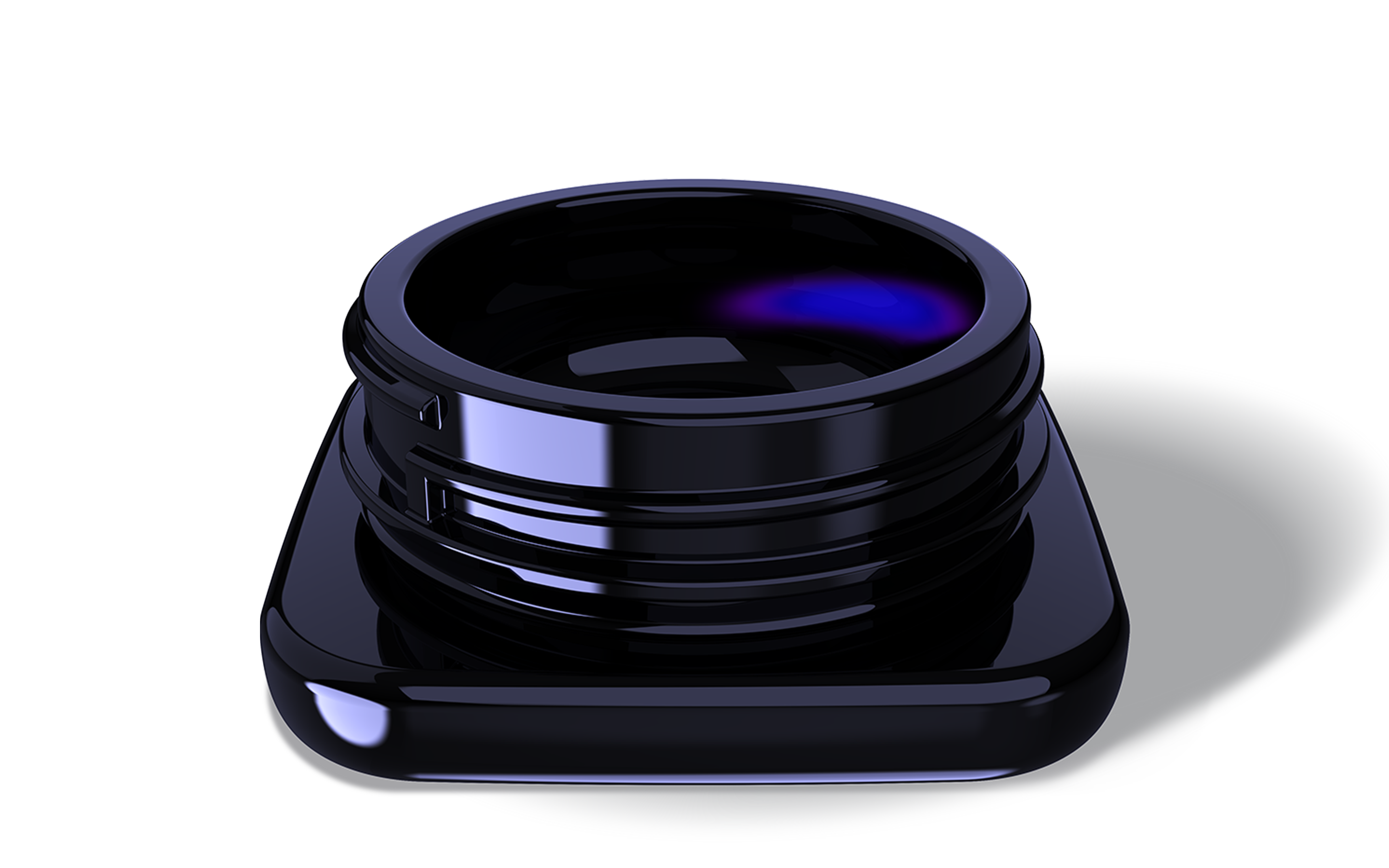
For an H19 child-resistant jar, verify the selected color, capacity, shape, item code, and child-resistant cap configuration. For an H21 violet glass jar, verify the selected shape and capacity, the glass thickness stated for that configuration, cap material, dimensions, net weight, and any selected surface treatment. Then check whether the supplier can provide the separate test evidence or compliance documentation required for the intended application. The available product specifications describe product attributes and intended applications; they do not state that H19 or H21 has passed a named child-resistance test or holds a particular certification.
This distinction is central to a credible protective packaging review. A product can be described as having a child-resistant cap without the supplied information proving that the complete package has passed a specified test. Likewise, a 0.38 mm glass thickness or a violet-glass material description does not, on its own, establish a regulatory approval, a quantified light-blocking result, or leak, airtight, waterproof, or smell-proof performance.
Three evidence layers: product facts, test evidence, and market requirements
Procurement teams can reduce ambiguity by keeping three kinds of evidence separate.
- Product facts: model number, capacity, shape, material, closure options, dimensions, weight, glass thickness, and finish. These belong in the supplier’s controlled specification and order confirmation.
- Performance evidence: test reports or other records that show how the complete package performs against a named method or requirement. Confirm the tested configuration, report scope, and whether the result applies to the precise package being purchased.
- Regulatory applicability: a determination of whether the contents, package type, and destination market trigger a particular requirement. A standard or regulator’s guidance is a reference for that determination, not proof that an individual jar complies.
For example, the U.S. Consumer Product Safety Commission describes special packaging obligations for certain products under the Poison Prevention Packaging Act (PPPA) and the Federal Insecticide, Fungicide, and Rodenticide Act (FIFRA), with requirements applying to the primary or immediate packaging. The applicability depends on the product and regulatory context; it should not be inferred from a jar’s marketing description alone. The CPSC guide also notes that ASTM D3475 classifies special packaging by closure type and opening action. Classification language does not replace evidence that a complete package meets an applicable performance requirement.
ISO 8317:2015 specifies performance requirements and test procedures for reclosable child-resistant packages. ISO 14375:2018 covers performance requirements and testing methods for non-reclosable child-resistant packages. These standards address different package types. A buyer should first establish which kind of package is being qualified and which rules apply in the target market, then request documentation that clearly identifies the tested package and applicable method. The existence of a standard does not mean that a supplier’s product has been tested to it.
What the H19 series specification establishes—and what it does not
The H19 child-resistant series is described as glass concentrate jars with a child-resistant cap. The listed variants are black, white, and clear; capacities are 5 ml and 9 ml; and the available shapes include square, round, triangle, and hexagon. The supplied product details do not state a child-resistance test result, a test laboratory, a standard number, a certification, or a market-specific approval for these jars.
That makes the specification useful for identification and purchasing, but not sufficient as a compliance file. A buyer should match the documentation request to the actual H19 configuration. A report for one closure, jar size, color, or shape should not automatically be treated as evidence for every other configuration unless the report or technical file explicitly supports that scope.
The expression “child-resistant cap” describes a stated product feature. It does not establish that the complete H19 package—including its jar, closure, and intended use—has achieved a particular child-resistance performance result. For regulated applications, request the relevant test report or written evidence and confirm that it names the precise configuration, the test method or applicable requirement, and the tested package components. If the documentation is unavailable or does not match the ordered configuration, record that as an unresolved qualification item rather than filling the gap with an assumption.
The same discipline applies to ordinary claims about airtight packaging, vacuum packaging, leak-free packaging, or waterproof packaging. The H19 child-resistant product facts do not establish these performance properties. A separately listed H19 Vacuum Click Jar is described as a 5 ml square glass jar with a vacuum seal feature, but that is a different product description and does not prove that H19 child-resistant concentrate jars have the same feature. Buyers should not transfer performance claims from one model or product type to another.
H21 violet glass: document the exact body, cap, and configuration
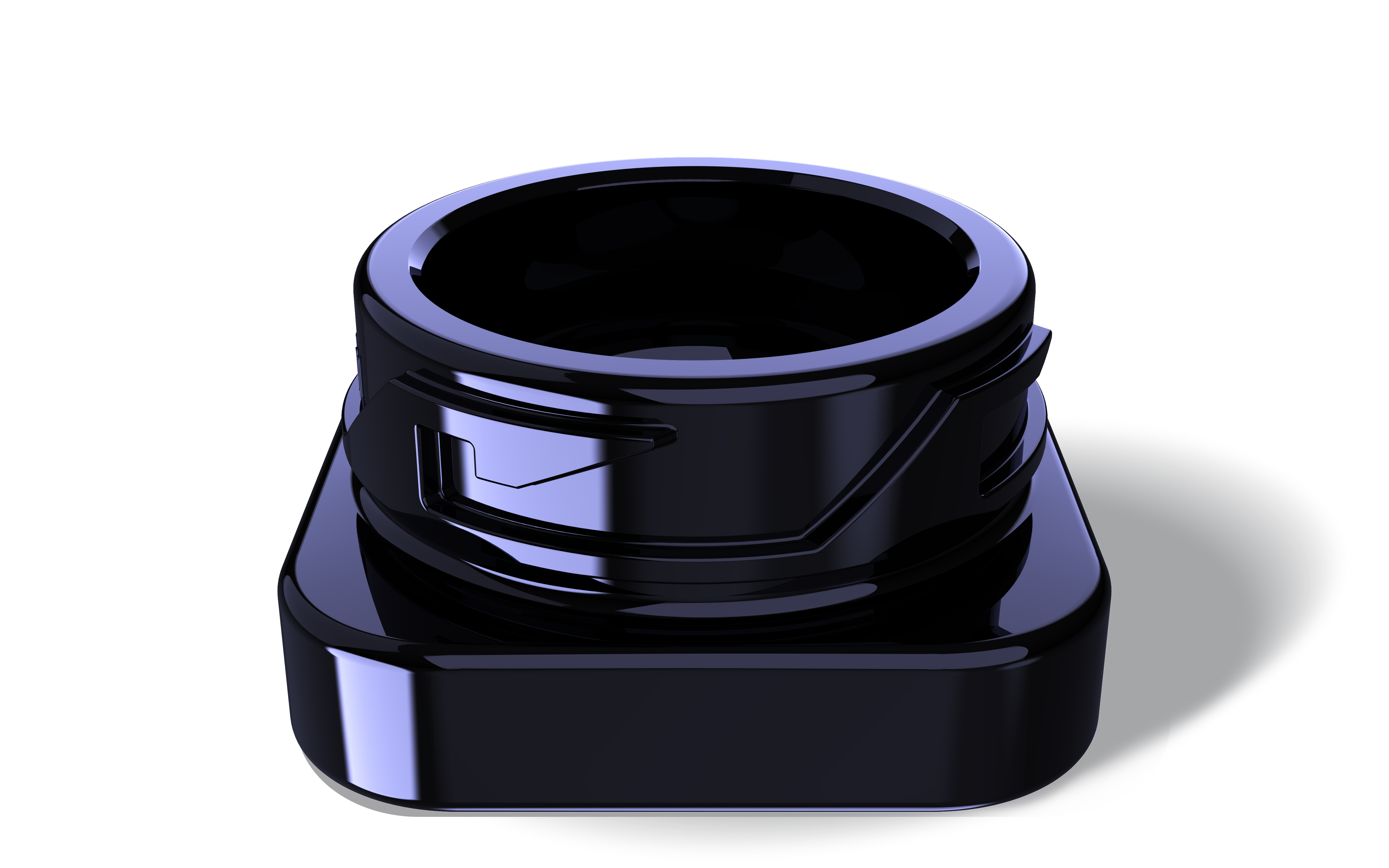
H21 violet glass jars are listed in square and round formats. The product records describe violet glass and cap materials including PP and PE for H21. The square H21 violet jar is listed with a 60 mm diameter, heights from 36.5 mm to 125 mm, capacity labels from 30 ml to 180 ml, and net weights from 75 g to 280 g in the corresponding product specification. The round H21 violet jar is listed with a 60 mm diameter, heights from 36.5 mm to 125 mm, and capacities from 30 ml to 180 ml. A separate product record for the H21 refillable round violet jar gives a net-weight range of 84 g to 268 g and item codes H21-0012V to H21-0018V. Confirm the exact variant and its own approved specification rather than combining ranges from different records.
The product information gives a glass thickness of 0.38 mm for the H21 violet jar records that specify thickness. Treat this as a measurable product specification to confirm for the selected model, not as evidence of child-resistance, impact performance, light-transmission performance, or regulatory approval. The available records do not provide a laboratory transmission rate or a performance test for UV blocking. Therefore, terms such as “UV-blocking glass packaging,” “light-blocking containers,” or “UV protection packaging” should not be interpreted as a quantified performance claim unless supporting test data is supplied for the relevant product.
Cap materials also need model-level precision. H21 violet jar product records list PP and PE. Separately, the HDV1 wide-mouth violet jar listing identifies Urea, PE, SAN, or ABS cap options. Those materials should not be represented as interchangeable H21 options unless the supplier confirms the requested H21 configuration in writing. A purchase specification should identify the cap material and, where relevant, the cap design and closure interface—not just say “plastic cap.”
Surface treatments listed for H21 violet jars include sticker, silk-screen printing, hot stamping, heat transfer printing, and frosted finish. If printed protective packaging is required, state the selected treatment and artwork version in the order record. The presence of an available printing or finishing option does not establish ink migration, chemical compatibility, abrasion resistance, or other performance unless those properties are separately documented.
Use intended applications as a screening clue, not an approval
The product records associate H19 jars with food, cosmetic, and medical applications. H21 violet glass jars are listed for food, cosmetic, and medical packaging; related product records also name pharmaceutical, cannabis, and supplement applications for some H21 configurations. A wide-mouth violet jar record lists food and beverage, cosmetics, pharmaceuticals, cannabis, and supplements. These descriptions identify stated application categories. They do not establish that a particular package is legally suitable for every substance, formulation, market, or filling process in those categories.
In practice, buyers should check compatibility and qualification against the actual contents and route to market. For a food, pharmaceutical, cosmetic, medical, cannabis, or supplement project, document the intended product, the selected container and cap, and the destination market. Then identify which material-contact, child-resistance, labeling, or other requirements apply. The supplied product units do not provide material migration results, formulation-compatibility data, a jurisdiction-by-jurisdiction approval map, or a certification for H19 or H21. Those matters need separate evidence where required.
This approach also prevents keyword-driven overstatement. “Violet glass jar” is a material and product description supported by the product data. “UV Black Glass Packaging” or “smell proof packaging” may describe a buyer’s search, but the supplied H21 records do not establish a measured UV-blocking rate or smell-proof performance. Similarly, a lid or cap does not alone prove that a jar is airtight, leak-free, or waterproof. Ask for the specific evidence behind any performance claim before treating it as a purchase acceptance criterion.
A purchase specification that can be checked at receipt
Compliance and quality discussions become more actionable when the order defines measurable acceptance criteria. The following checklist separates product identification from evidence of performance.
| Purchase record | What to confirm | Why it matters |
|---|---|---|
| Model and item code | H19 or H21; exact item code, color, shape, and variant | Keeps the specification, sample, test evidence, and order tied to the same product. |
| Capacity and shape | H19: 5 ml or 9 ml and selected shape. H21: selected square or round format and capacity label. | Capacity and geometry can vary within a family; do not rely on a family-level description. |
| Body and cap materials | State glass and cap material by exact configuration; H21 violet records list PP or PE. | Material names identify components but do not by themselves prove regulatory or performance compliance. |
| Dimensions and net weight | Record applicable diameter, height, and net-weight range; confirm the selected size. | Provides concrete checks for sample approval and incoming inspection. |
| Glass thickness | Where specified for the selected H21 configuration, record 0.38 mm and agree how it will be verified. | A stated thickness is a physical specification, not a substitute for a performance test. |
| Closure and test scope | Identify closure configuration and request any relevant child-resistance report for the exact package. | A cap description alone does not establish that the complete package passed a test. |
| Finish and artwork | Choose sticker, silk-screen printing, hot stamping, heat transfer printing, or frosted finish where listed. | The order should match the approved sample and artwork revision. |
| Application and destination | State intended contents, primary-package use, and target market. | Establishes which regulatory and product-compatibility questions need separate review. |
For H19, the product data gives capacities of 5 ml and 9 ml and four shape options: square, round, triangle, and hexagon. Some color-specific product records also list net weights: black concentrate jars range from 27 g to 38 g, while white variants are listed at 27 g or 36 g. Because these values vary by variant and the clear-jar record gives a 27 g to 38 g range, the order should identify the exact item code and obtain the corresponding weight specification rather than applying one figure to the entire series.
For H21, the records give physical details that can be written into a purchase schedule. The clear square H21 jar is listed with 0.38 mm glass thickness, a 58 mm diameter, 24 mm to 115 mm height, and 75 g to 280 g weight, with capacities including 15 ml, 30 ml, 20 dr, 30 dr, 40 dr, and 60 dr. H21 violet jar specifications vary by shape and variant, so do not assume that every dimension or capacity in a clear H21 record applies to violet glass. Ask for a model-specific drawing or controlled specification for the violet item being ordered.
Sample approval and incoming acceptance
A sample should be evaluated against the same configuration that appears in the purchase order. Record the model, item code, capacity, shape, glass color or type, cap material, closure design, surface treatment, and any declared dimensions and weight. If child resistance is a requirement, sample review can confirm that the delivered parts match the approved configuration, but visual inspection alone cannot demonstrate compliance with a formal child-resistance performance test.
Agree in advance which characteristics will be checked at receipt and how discrepancies will be handled. Suitable checks can include the item code and variant, visible shape and finish, stated dimensions, net weight against the agreed specification, and the presence of the specified cap. For 0.38 mm glass thickness, agree the measurement method and acceptance tolerance with the supplier; the available product information states the thickness but does not provide a tolerance or an inspection method. Do not invent one in the article or assume one in the purchase terms.
For documents, acceptance should include a review of the report identity, date or revision where present, product configuration, test method, and scope. If a supplier provides a report covering a different package, closure, or capacity, ask whether it applies to the ordered configuration and request the basis for that conclusion. A report title or a general claim of “certified” should not replace a check that the evidence matches the actual product and regulatory question.
How to compare a product specification with traditional packaging choices
Compared with an unspecified glass jar and lid, a defined H19 or H21 configuration gives a buyer more concrete attributes to place in the order record: product family, available capacities and shapes, cap materials where stated, dimensions, weight ranges, and—in applicable H21 records—0.38 mm glass thickness. That improves product identification and gives receiving teams measurable details to check.
The boundary is equally important: a detailed specification is not the same as a compliance dossier. A standard jar may be simpler to evaluate when no child-resistance or special-package requirement applies, while a child-resistant package requires evidence matched to the relevant requirement when one applies. A violet-glass description may help identify the chosen material and appearance, but the available H21 records do not supply comparative light-transmission test results. Buyers therefore should not treat the violet color, a material name, or a listed application as proof of a specific protective effect.
Nor does a child-resistant cap automatically make the package a complete solution for every protective packaging need. The available H19 and H21 facts do not establish vacuum performance, airtightness, leak resistance, waterproofing, or smell control for these products. These are separate functional claims that require their own applicable test method and evidence. The correct comparison is not “which jar sounds more protective?” but “which stated requirement does this configuration meet, and what evidence demonstrates it?”
What Honor Packaging’s product information can support
Honor Packaging’s supplied product records identify H19 child-resistant glass concentrate jars and H21 violet glass jar formats, along with selected capacities, shapes, cap materials, dimensions, weight ranges, glass thickness, finishes, and intended application categories. These details can support an initial specification review and help a buyer define which sample and documents to request.
They do not, on their own, establish that either family holds a specific certification, passed a named child-resistance test, meets every market’s regulatory requirements, or has verified UV-blocking, leak-free, airtight, waterproof, or smell-proof performance. Those claims should only appear in a purchase decision when the supplier provides evidence for the exact configuration and the applicable requirement. This is a practical limit, not a weakness in the product description: it keeps physical specifications, test results, and regulatory conclusions from being treated as interchangeable.
Future outlook: make the evidence traceable to the ordered jar
As packaging projects move from early discovery to qualification, the value of a product page lies partly in how clearly it identifies a model and its measurable attributes. The next procurement step is to connect those attributes to a controlled specification, an approved sample, and any product-specific test records required by the buyer’s market and application. That process is especially important when a product family includes several capacities, shapes, colors, or cap options.
For H19 and H21, a traceable record should answer four questions without relying on inference: Which exact jar is being ordered? Which body and cap materials are specified? Which physical dimensions and weight apply to that variant? Which compliance or performance claims have separate supporting evidence? If any answer is absent, the missing information should remain an open qualification item until it is documented.
FAQ
Does a child-resistant cap prove that an H19 jar is certified?
No. The H19 product information describes a child-resistant cap, but it does not state a test result, a named certification, or compliance with a particular standard. Request documentation that identifies the exact jar-and-closure configuration and the applicable test or regulatory requirement.
What does the 0.38 mm thickness establish for an H21 jar?
It is a stated physical specification for the H21 configurations whose product records list that thickness. It does not by itself prove child resistance, UV-blocking performance, leak resistance, or regulatory approval.
Which cap materials are listed for H21 violet glass jars?
The H21 violet jar records list PP and PE. Urea, PE, SAN, and ABS are listed for the separate HDV1 wide-mouth violet jar. Confirm the selected model and cap material in the order specification rather than treating the options as interchangeable.
Can a violet glass jar automatically be described as UV-blocking or light-protective?
The supplied H21 product information identifies violet glass but does not provide a measured light-transmission result or a UV-blocking test. A quantified protection claim requires supporting evidence for the relevant jar and test method.
What should a buyer check before ordering H19 or H21 jars?
Confirm the model and item code, capacity, shape, cap material and configuration, dimensions, net weight, applicable glass-thickness specification, finish, intended contents, destination market, and any product-specific compliance documents required for the project.
Do the product application lists prove suitability for every regulated product?
No. Application lists identify stated use categories, such as food, cosmetic, medical, pharmaceutical, cannabis, or supplement packaging for particular records. They do not replace a review of the contents, material compatibility, destination-market rules, and any required test evidence.
Tem questões ou precisa de mais detalhes?
Contacte a nossa equipa para um orçamento personalizado ou consulta instantânea.
Solicitar orçamento
Preencha o formulário abaixo e a nossa equipa entrará em contacto com uma proposta personalizada.
Chat direto do WhatsApp
Prefere conversar em tempo real? Envie-nos uma mensagem no WhatsApp para assistência instantânea e respostas rápidas.
- Obter orçamento personalizado
- Partilhar fotos ou documentos
- Discuta as suas necessidades diretamente
Geralmente responde em 5–30 minutos durante o horário de expediente.