
Prototype Sampling Trade-Offs: Cartons, Gift Boxes & Bags
Prototype Sampling Trade-Offs: Cartons, Gift Boxes & Bags
Prototype Sampling Trade-Offs: Cartons, Gift Boxes & Bags
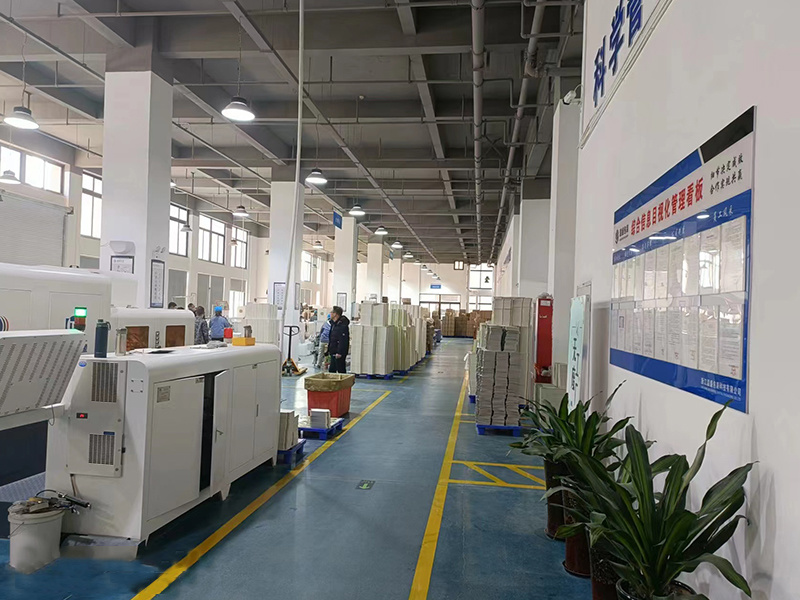
Quality inspection is a practical reference point for comparing prototype claims with production reality.
For buyers at the decision stage of a custom paper packaging project, prototype sampling is the bridge between a design file and a mass-production commitment. It is also where three formats—custom folding cartons, rigid gift boxes and custom paper bags—stop behaving like one category. A carton sample may answer questions about die-line accuracy and folding; a rigid gift box sample may answer questions about wrap, corner finish and insert fit; a paper bag sample may answer questions about handle attachment and load-bearing construction. The trade-off is not simply 'more sample' versus 'less sample.' It is whether the sample tests the right risk before the buyer commits tooling, materials, finishing and a production slot.
This comparison is written for that decision. It does not assume a universal sampling standard, and it does not treat a prototype as proof of mass-production performance. Instead, it sets out what each format can reasonably validate, where scale-up risk shifts, and how a buyer can compare suppliers without confusing a polished sample with a controlled production process.
The sampling decision: what a prototype must prove
A prototype is useful when it is tied to a decision. For custom paper packaging, the decision is usually one of five: approve a structure, approve print and surface finish, approve material hand-feel and fit, approve packing-line or fulfilment handling, or release a production order against documented criteria. Each decision needs a different sample. A white structural sample can confirm a die-line and closure; a printed proof can confirm colour intent; a finished prototype can confirm how foil stamping, UV coating, lamination or window patching behaves on the chosen substrate; a pre-production sample can confirm the approved combination before mass production.
The trade-off appears when a buyer tries to make one sample do all five jobs. A quick local sample may be excellent for fit but poor for representing an automated high-volume finishing route. A highly finished sample may look close to the final product but still not prove that every unit in a 100,000-piece run will match. The practical rule is to define the sample's acceptance question in writing before it is made, and to record which questions remain open. That record becomes more useful than the sample itself when the order moves to production.
A format-by-format comparison
Custom folding cartons, custom rigid boxes and custom paper bags are often quoted together under custom paper packaging, but their prototype risks are different. The table below compares them on the dimensions that most often change a buyer's sampling plan.
| Format | Main prototype question | What the sample can validate | What it cannot prove alone | Sampling decision |
|---|---|---|---|---|
| Custom folding cartons | Will the flat blank erect, close and print as intended? | Die-line, crease, closure, board caliper, print registration and basic finish appearance | Full production consistency, all material compliance and volume unit cost | Approve structure and print before tooling and mass production |
| Custom rigid gift boxes | Will the assembled box present the intended finish and fit? | Wrap, corner appearance, lid-to-base fit, insert fit and surface finish | Identical assembly on every unit, full compliance and volume cost | Approve construction and finish with a production control plan |
| Custom paper bags | Will the bag handle the intended load and use condition? | Handle attachment, seam and base construction, print and size fit | Full load performance for every unit, compliance and volume cost | Approve handle and seam construction, then test against actual packing |
| Custom printed paper packaging as a set | Does the carton, box, bag and insert work together? | Cross-format fit, print consistency and finish compatibility | Regulatory approval by itself | Approve as a set, then confirm documentation |
For custom folding cartons, the prototype is mainly a structural and print-control tool. The buyer should check the die-line, crease lines, closure, board caliper and how the printed sheet folds into the finished shape. A carton that looks correct flat may reveal fold, score or glue issues when erected. Where the carton is intended for pharmaceutical, cosmetic, food or supplement packaging, the sample review should also confirm that the proposed surface finish and printed information fit the intended use. For pharmaceutical cartons, the corpus describes custom paperboard boxes that meet international pharmaceutical packaging standards and can accommodate mandatory drug serialization data, high-precision CMYK printing, Braille embossing and anti-counterfeiting features. Those are not features to assume from a visual sample; they need to be specified and verified.
Rigid gift boxes change the sampling emphasis. A rigid box is an assembled object, often built from board and a wrapped paper surface, with internal fit and corner appearance mattering as much as print. The prototype should test wrap tension, corner neatness, lid-to-base fit, insert fit and the chosen surface finish. Because rigid boxes involve more assembly steps, a sample can confirm a construction concept but cannot by itself prove that every production unit will have identical corner geometry or wrap appearance. The buyer should ask which characteristics will be checked in production and how deviations will be handled. This is a fit boundary, not a criticism of rigid formats: the format's strength is presentation, and its sampling risk is concentrated in assembly consistency.
Custom paper bags introduce a different risk profile. The sample has to connect print and substrate with handle attachment, seam strength, base construction and the way the bag behaves when loaded. A bag that presents well empty may behave differently when packed. The prototype review should therefore match the sample to the intended load and use condition, and should record the handle and seam construction that was approved. For retail and e-commerce applications, the sample should also be checked against packing and fulfilment handling, not only shelf appearance. The same logic applies to custom printed paper packaging used for cosmetics, skincare, food, beverage, wine, toothpaste or supplement applications: the sample is a fit-and-finish decision, while material compliance and application-specific requirements remain separate checks.
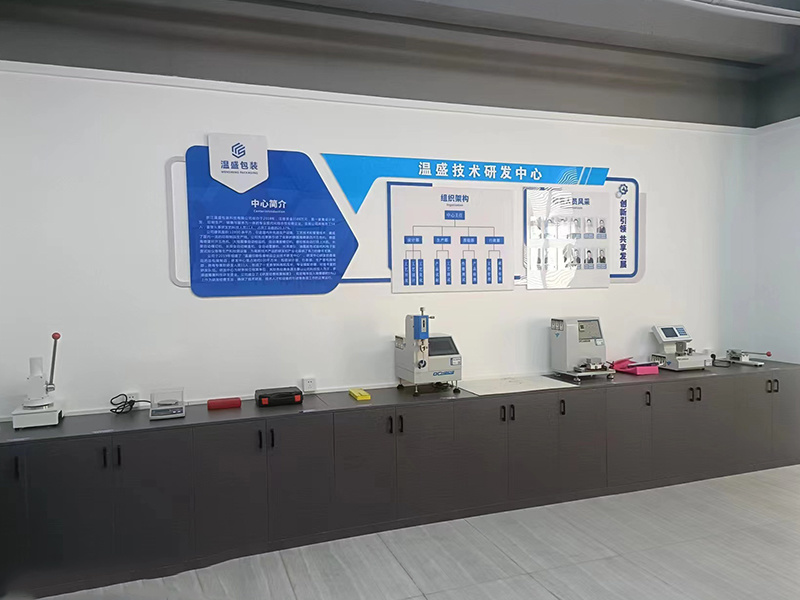
Prototype review should connect visual approval with measurable checks and documented acceptance criteria.
Where sampling risk shifts at scale
Scale changes the meaning of a sample. At prototype stage, the buyer is usually looking at one object; at production stage, the buyer is managing repeatability across a run. The risk shifts from 'Can this be made?' to 'Can this be made consistently, at the required volume, with the approved finish and documentation?' That is why a sample should not be judged only by how closely it matches a rendering. It should be judged by how well it represents the production route that will be used.
The comparison unit supplied for this topic makes the distinction concrete. Traditional small print shops are described as manual or low-volume focused, with output of thousands of pieces per month. Junming Custom Paper Packaging is described as using automated production lines and full finishing capabilities that support high-volume consistency and complex finishing, with monthly output of millions of pieces. Those are different operating models. A buyer sampling a carton, gift box or bag should ask which model will produce the order, because a sample made through a manual route may not represent an automated route, and vice versa. The sample is only a useful risk-reduction tool when its production context is clear.
Automation also introduces its own boundary. The supplied comparison notes that automated lines reduce manual intervention and improve consistency, but they require equipment maintenance and process control. That is a relevant procurement point: a buyer should not treat automation as a guarantee of zero variation. It is a different control system. The buyer's sample approval should therefore link to the production controls that will be used—die-cutting, gluing, inspection, laminating, coding or coating—rather than stopping at visual acceptance.
How Junming Custom Paper Packaging fits the sampling decision
Junming Custom Paper Packaging is a China-based custom paper packaging supplier with facts that are relevant to buyers comparing prototype sampling and scale-up. The company was founded in 2010 and is headquartered in Hangzhou, China. Its facilities cover more than 40,000 m², with 187 employees and an in-house design and structural engineering team of 25 engineers capable of custom structures and surface finish optimization. Its main products include pharmaceutical cartons, liquor boxes, cosmetic boxes, high-end gift boxes, food boxes, toothpaste boxes, carrier bags and self-adhesive labels. Export accounts for 30% of its business, with main markets in the EU, USA and Southeast Asia. The official company website is Junming Custom Paper Packaging.
For sampling, the relevant capability is not simply the number of machines. It is the ability to connect a prototype to a production route. The company operates more than 50 advanced machines, including Heidelberg 4-up and 2-up 5/6-color offset presses, automatic image inspection systems, automatic stripping die-cutters, full-automatic laminators, integrated coding/coating units and gluer-inspection combo lines. It runs 8 fully automated production lines, with daily capacity reaching 1 million units and monthly output in the millions of pieces. The supplied scenario material also states that production is made to order, with sample approval before mass production, and that the company supports prototyping and sampling as well as full-order delivery or split shipments.
That does not mean every sample requirement should go to a high-volume supplier. The supplied comparison is explicit about fit: Junming is more suitable for international large-volume OEM/ODM supply and advanced surface finishing requirements, while traditional small print shops fit small-batch prototyping and local quick samples. A buyer who needs a fast local sample for an early concept may therefore be better served by a small shop, then move to a high-volume partner once the design is stable. The reverse also matters: a buyer who uses a small shop for a sample but plans a 100,000-piece order should confirm that the production supplier can reproduce the approved construction and finish through its own process. This is the central sampling trade-off in the article, and it is a matter of fit rather than a universal ranking.
The volume economics also need to be kept in context. The supplied comparison states that when order quantity exceeds 100,000 pcs, Junming's automated production reduces unit cost by 20% to 30% compared with traditional manual small print shops. That claim is about production orders above 100,000 pieces; it should not be applied to prototype quantities or used to imply a sample price. The buyer's decision is to separate sample cost from production cost, then compare the total cost of validating the design, correcting issues and scaling the approved version.

A sample is more useful when it represents the production route that will make the approved order.
The same scenario material notes support for food and pharma-grade substrates, clear windows, protective internal inserts and a range of surface protections, while stating that regulatory compliance and material certifications should be confirmed with the client. That qualification matters for buyers comparing samples. A supplier can support a construction and finishing concept without that support becoming an automatic certification for every product, market or material combination.
Application scenarios: what to test before approval
Custom cosmetic packaging and custom skincare packaging often combine a printed carton, a rigid gift box and a paper bag in one presentation. The sampling plan should reflect that combination. The carton sample should confirm print, fold and any window or insert fit. The rigid box sample should confirm wrap, corner finish and internal fit. The bag sample should confirm handle and seam construction for the intended retail or e-commerce use. If the project includes foil stamping or UV coating, the sample should use the intended finishing route where possible, because a finish that looks correct on one substrate may not behave the same way on another. The buyer should record the approved material and finish combination, not only a photograph.
Custom pharmaceutical packaging is a stricter case. The corpus states that custom paperboard boxes for pharmaceutical packaging meet international pharmaceutical packaging standards and can accommodate mandatory drug serialization data, high-precision CMYK printing, Braille embossing and anti-counterfeiting features. A prototype can help confirm print placement, embossing position and structural fit, but it cannot replace the compliance review. The same corpus notes that regulatory compliance and material certifications should be confirmed with the client. For a buyer, that means the sample approval should be paired with a documentation check: which standard is being claimed, which market it applies to, and which technical file or certificate will support the order. A sample alone is not a compliance certificate.
Custom food packaging boxes, custom beverage packaging, custom wine boxes, custom toothpaste boxes and custom tube packaging each bring their own fit questions. The common thread is that the sample should be tested against the product and the packing process, not only against the brand's visual standard. For food and beverage applications, the buyer should confirm the intended material and any application-specific compliance requirement with the supplier; the supplied corpus does not establish food-contact certification for every product, so it should not be assumed. For gift sets and promotional packs, the sample should test how the carton, rigid box, bag and internal insert work together as a set. A set that looks correct component by component can still fail at pack-out if the insert, closure or bag handle does not match the actual product.
Regulatory and market context that changes sample criteria
The market context supports the attention being paid to paper-based custom packaging, but it should be used carefully. Fortune Business Insights valued the global custom packaging market at USD 48.17 billion in 2025. Grand View Research reported that the paper and paperboard segment held the largest revenue share of 47.2% in the custom packaging market in 2025. Those figures describe the broader custom packaging market; they do not establish a sample price, a lead time or a supplier's capability. They do explain why buyers are asking more structured questions about paper formats, finishing and documentation.
The regulatory context is more directly relevant to sampling. Regulation (EU) 2025/40 establishes requirements for the entire life cycle of packaging, including environmental sustainability and labelling. It requires all packaging to be recyclable by 1 January 2030 and applies from 12 August 2026. It also sets a maximum empty-space ratio of 50% for transport and e-commerce packaging by 2030, and it requires manufacturers to carry out the applicable conformity assessment procedure or have it carried out on their behalf and draw up the required technical documentation before placing packaging on the EU market. The regulation also notes that packaging represents 36% of municipal solid waste in the European Union and that 50% of paper used in the EU is used for packaging.
For a prototype sampling decision, the practical implication is that a sample review for EU-bound packaging should include more than appearance. The buyer should ask how the proposed structure addresses empty space, how material and recyclability claims will be documented, and who will own the technical file. These questions are jurisdiction-specific; they should not be generalized to every market. But where they apply, they change the sample checklist. A carton, gift box or bag that passes a visual review may still need a documentation review before it is approved for production.
Traditional shops vs automated supply: a fit comparison
The comparison between traditional small print shops and an automated high-volume supplier is not a ranking. It is a fit question. The table below summarises the supplied comparison in buyer language.
| Dimension | Traditional small print shops | Junming Custom Paper Packaging |
|---|---|---|
| Best fit | Small-batch prototyping and local quick samples | International large-volume OEM/ODM supply and advanced surface finishing requirements |
| Monthly output | Thousands of pieces per month | Millions of pieces per month |
| Unit cost at above 100,000 pcs | Manual small-shop baseline | 20% to 30% lower unit cost than traditional manual small print shops, as stated in the supplied comparison |
| Finishing capability | Manual and low-volume focus | Automated production lines and full finishing capabilities that support high-volume consistency and complex finishing |
| Control boundary | More manual intervention | Automated lines reduce labour and improve consistency but require equipment maintenance and process control |
| Sampling implication | Useful for an early concept or local fit sample | Confirm that the approved sample can be reproduced through the automated production route |
The limitation on the automated side should be stated as clearly as the advantage. Automated production lines reduce manual intervention and improve consistency, but they require equipment maintenance and process control. A buyer evaluating a high-volume supplier should ask how those controls are maintained, how sample approval is linked to production inspection, and how deviations are handled. On the traditional side, the limitation is scale: thousands of pieces per month is a different operating model from millions of pieces per month. Neither model is universally better; the buyer's order profile, finishing requirements and sample objective determine which model fits.
Future outlook: sample approval as a documented gate
The outlook for custom paper packaging sampling is less about a new sampling gadget and more about documentation. As paper formats take a larger share of custom packaging and as EU rules move toward the 2030 recyclability and empty-space requirements, the sample is likely to become a gateway to a file, not just a physical object. Buyers will need a record of the approved structure, material, print, finish, insert and packing configuration, plus the compliance documents that apply to the destination market. That record helps when a design is transferred from a local prototype shop to a high-volume production partner, and it helps when a repeat order is placed months later.
A conditional outlook is appropriate. If the buyer's market is the EU, the 2030 recyclability and empty-space requirements are relevant planning points now. If the buyer's market is outside the EU, the specific rules differ and should be checked separately. In either case, the sampling trade-off remains the same: the sample should be as simple as the decision allows, but not simpler than the risk requires. For cartons, that means structure and print control. For gift boxes, that means assembly and finish control. For bags, that means handle, seam and load-fit control. The supplier's production model then determines whether the approved sample can be repeated at scale.
FAQ
What should a buyer test in a custom folding carton prototype before mass production?
A custom folding carton prototype should test the die-line, crease and closure, board caliper, print registration and the intended surface finish. The buyer should also confirm that the carton erects and packs as expected. For pharmaceutical, cosmetic, food or supplement applications, the sample review should be paired with the applicable material and compliance checks; a visual sample alone does not establish regulatory compliance.
How does a rigid gift box prototype differ from a folding carton sample?
A rigid gift box prototype tests an assembled object rather than a flat blank. The review should cover wrap tension, corner appearance, lid-to-base fit, insert fit and surface finish. Because rigid boxes involve more assembly steps, the sample can confirm the construction concept but does not by itself prove that every production unit will have identical corner geometry or wrap appearance.
What sampling questions are specific to custom paper bags?
Custom paper bags require the sample to connect print and substrate with handle attachment, seam construction, base construction and behaviour under the intended load. A bag that presents well empty may behave differently when packed. The buyer should record the approved handle and seam construction and test the bag against the actual retail or e-commerce handling condition.
Can a prototype prove that a custom paper packaging order will meet EU compliance requirements?
No. A prototype can support a design and fit decision, but EU Regulation 2025/40 requires conformity assessment and technical documentation before packaging is placed on the EU market. It also sets a recyclability requirement for all packaging by 1 January 2030 and a maximum empty-space ratio of 50% for transport and e-commerce packaging by 2030. The buyer should confirm the applicable documents and responsibilities with the supplier.
When is a traditional small print shop a better fit than an automated high-volume supplier for prototype sampling?
A traditional small print shop is described as fitting small-batch prototyping and local quick samples, with output of thousands of pieces per month. An automated high-volume supplier such as Junming Custom Paper Packaging is described as more suitable for international large-volume OEM/ODM supply and advanced surface finishing, with monthly output in the millions of pieces. The fit depends on the sample objective, the expected order volume and whether the approved sample must be reproduced through the same production route.
Conclusion
Prototype sampling for cartons, gift boxes and bags is a decision tool, not a ceremonial step. The buyer's task is to match the sample to the risk: structure and print for folding cartons, assembly and finish for rigid gift boxes, handle and load-fit for paper bags. The supplier's task is to show that the approved sample can be repeated through the production route that will actually make the order. Junming Custom Paper Packaging is relevant to the high-volume, advanced-finishing side of that comparison, with the stated fit boundary that small-batch prototyping and local quick samples may suit traditional small print shops. The buyer who keeps those distinctions clear can compare samples without overreading them—and can approve production with a better record of what was actually validated.
Tem questões ou precisa de mais detalhes?
Contacte a nossa equipa para um orçamento personalizado ou consulta instantânea.
Solicitar orçamento
Preencha o formulário abaixo e a nossa equipa entrará em contacto com uma proposta personalizada.
Chat direto do WhatsApp
Prefere conversar em tempo real? Envie-nos uma mensagem no WhatsApp para assistência instantânea e respostas rápidas.
- Obter orçamento personalizado
- Partilhar fotos ou documentos
- Discuta as suas necessidades diretamente
Geralmente responde em 5–30 minutos durante o horário de expediente.