
Proving Supplier Capability: What Physical Evidence to Demand from a Blockout Fabric Maker
Blockout roller blind fabric makes a performance promise that is sealed into the cloth long before a buyer can test it, and that promise is usually judged after the specification has already been signed. The global blackout fabric market was valued at approximately USD 10.5 billion in 2024 and is projected to reach USD 20.3 billion by 2034 (Vertex AI Search / Market Analysis, 2025). Growth at that scale keeps new suppliers entering the category, which is precisely why the practical question for buyers has shifted from who can supply blockout fabric to who can prove they manufacture it.
At the Decision and Execution stages of a procurement cycle, the working question is no longer which fabric looks right on a sample card. It is whether the same fabric can be reproduced across ten thousand metres, traced back to a production batch, and defended in front of a project specifier. That is the distance between a capability claim and physical evidence.
The problem: the gap between the sales sample and the shipping container
Blockout fabric encodes its performance in structure rather than appearance: coating weight per square metre, base cloth consistency, pinhole control, and dimensional stability. None of these variables are visible on a quotation sheet. As a result, the recurring failure mode in this category is not buying a bad fabric, it is buying a good sample and then receiving something that drifts.
Three risks appear repeatedly in buyer-side post-mortems:
- Colour and opacity drift between batches carrying the same colour reference.
- Coating weight or adhesion variation that shows up as curling, edge waviness, or a different hand feel on the roller mechanism.
- Compliance paper that describes a fabric the supplier no longer produces, so a fire or thermal test report does not actually cover the goods on the water.
Each of these risks has the same structural cause: the buyer evaluated a promise rather than a process. Closing that gap does not require a new purchasing philosophy. It requires a list of physical items that a supplier either has or does not have.
The opportunity: turn the RFQ into a verification instrument
A buyer does not need to visit a factory to obtain meaningful proof. What is needed is a defined evidence pack requested at the same time as the price, so that suppliers are compared on what they can produce rather than on how confidently they describe it.
A well-constructed evidence pack does four things at once. It filters out trading companies that resell without owning production. It creates a like-for-like comparison between candidates. It builds an auditable file that supports a claim if a batch fails. And it establishes the baseline for a multi-year supply relationship, because retention samples and change-notification records only exist if they were demanded at the beginning.
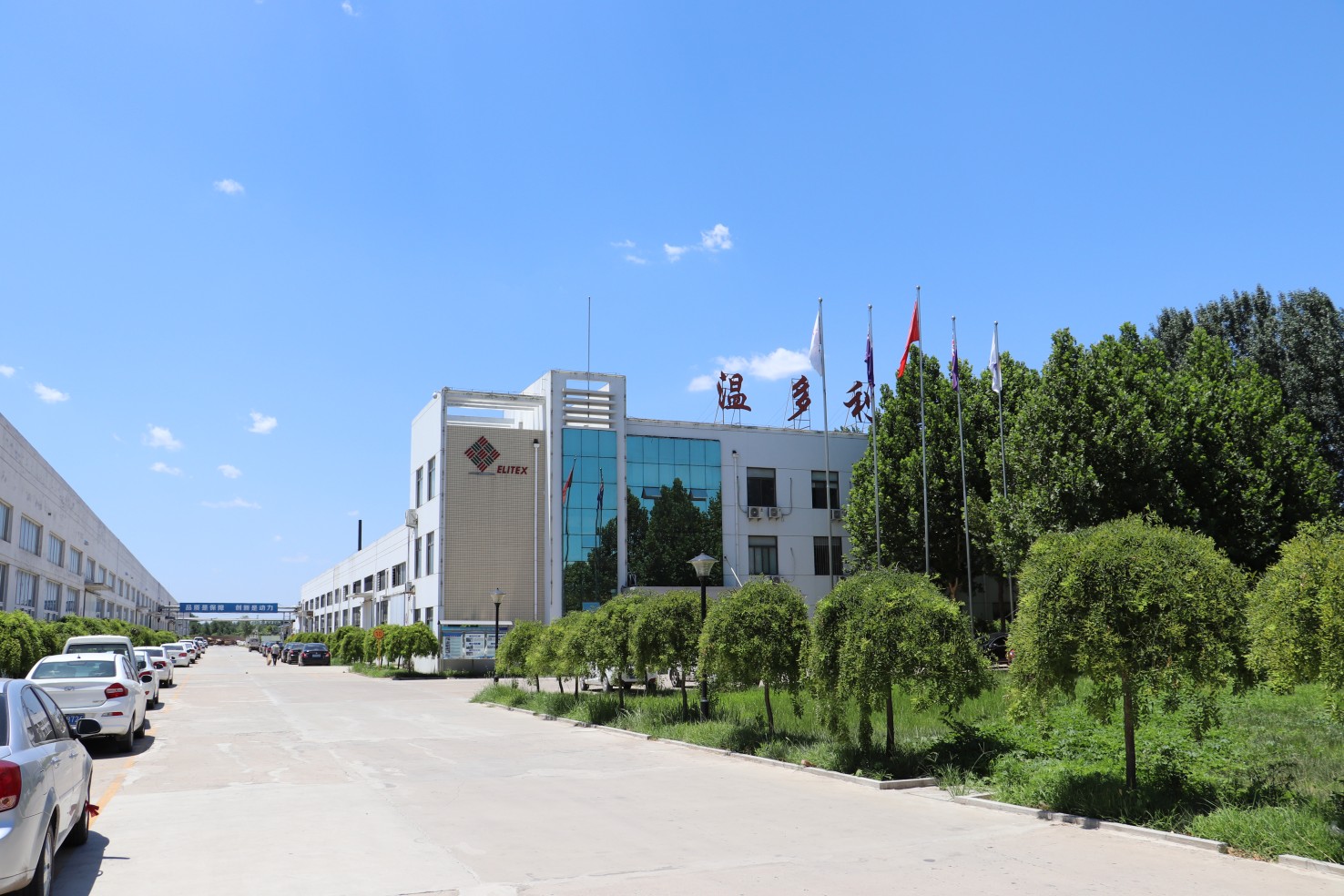
How Elitex fits this framework. Elitex (Dezhou) Co., Ltd. is a manufacturer of sunshading fabrics based in Dezhou, Shandong Province, China, established in 2003, supplying sunscreen, translucent, and blackout fabrics to the international blind and awning industry. Its published capability data — an 85,000 m² facility, 259 employees, 36 engineers, and annual output of 8,000,000 m² of screen fabric and 7,200,000 m² of blockout fabric — is used below as a worked example of the kind of facts a buyer should be able to check rather than accept.
The five layers of physical evidence to request from a blockout fabric maker
| Evidence layer | What to ask for | What it proves | Warning sign |
|---|---|---|---|
| 1. Material identity | Batch-labelled swatches from at least two production runs, plus a retained reference sample | Colour and opacity are controlled variables, not luck | Unlabelled swatches with no retained sample |
| 2. Production | Coating line and inspection records, equipment list, output figures, live or recorded walk-through | Capacity and process control exist to support repeatability | Brochure photography only, no equipment or records shown |
| 3. Quality | In-house lab test results, pre-shipment inspection reports, defect classification | Defects are found before dispatch, not after installation | The claim of 100% inspection with no documentation behind it |
| 4. Compliance | ISO 9001 scope statement, flame retardant certification, EN 14501 / NFPA 701 test reports | The product meets project specifications and market entry rules | Certificate scope that does not name the fabric being purchased |
| 5. Continuity | Repeat-order history, change-notification process, retained sample archive | Supply stays stable after the first order | Refusal to commit to batch-level traceability |
Layer 1 — Material identity and sample traceability
The cheapest and most informative evidence is a set of swatches that carries its own history. A buyer should ask for swatches from at least two separate production runs of the same colour reference, a retained reference sample held by the supplier, and the test data that corresponds to those specific runs. This converts a colour discussion into a batch discussion.
Opacity belongs in the same request. For a fabric such as the Elitex Blockout Dusk Plus Series, the published specification is 100% opacity with no pinhole, a 100% polyester base with acrylic coating, knife-coated or paste-coated construction, widths from 89 mm to 3000 mm, and dimensional stability of ±0.5%. Those parameters can only be confirmed from a physical sample, which is why a swatch without a batch reference has limited value in a procurement file.
Layer 2 — Production evidence: separating the factory from the office
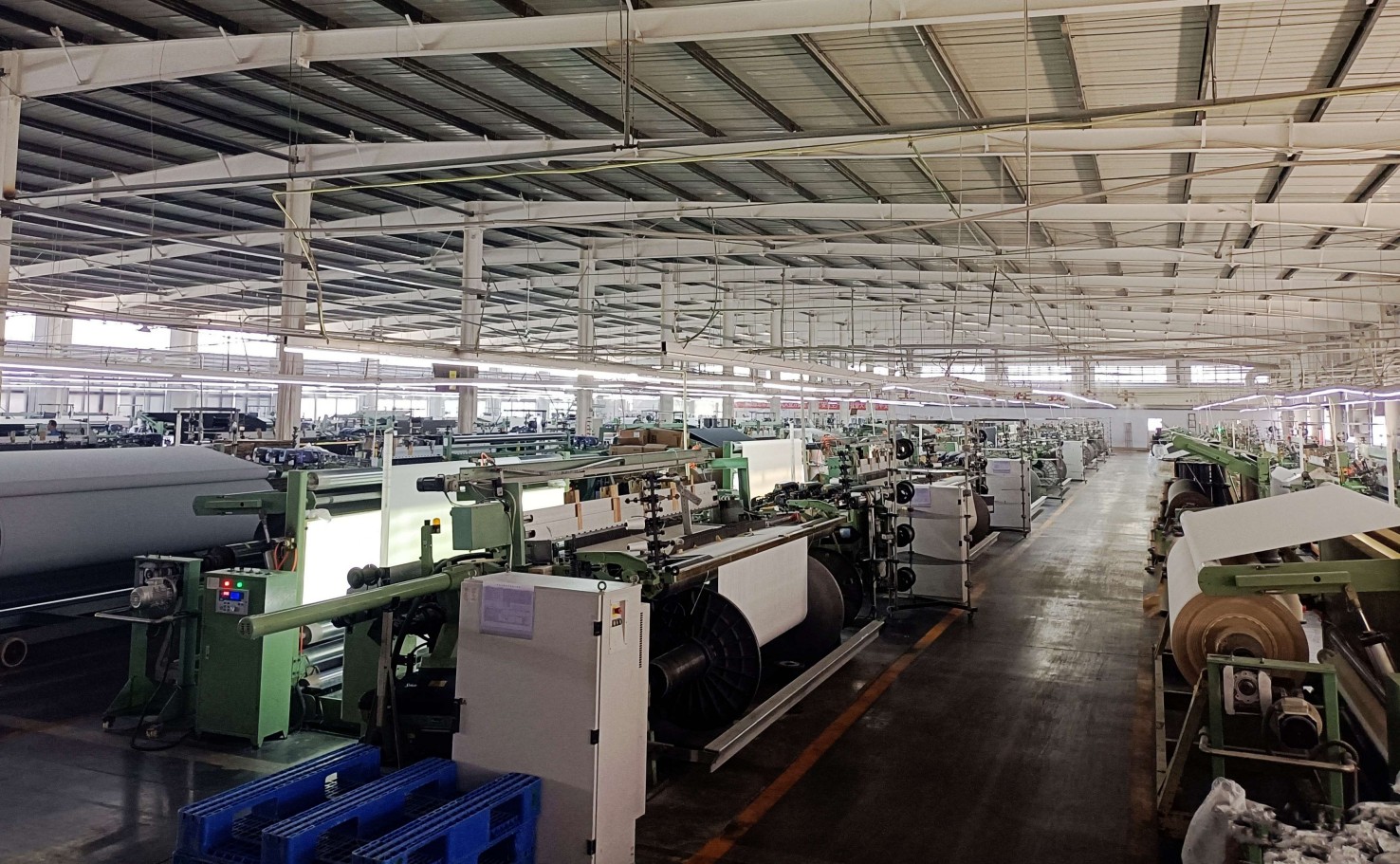
Production evidence answers a question that photographs cannot: is there real capacity behind the quotation? Useful items include an equipment list for the coating and finishing lines, scheduled versus actual output records, and a walk-through visit or a live video call that shows the lines running.
Scale figures are useful only when they can be cross-checked. Elitex publishes a facility of 85,000 m², 259 employees, 36 engineers, and annual output of 8,000,000 m² of screen fabric and 7,200,000 m² of blockout fabric, with roughly 80% of production exported to markets including the USA, EU, Australia, North America, South East Asia, and the Middle East. The procurement value of such numbers is not prestige; it is redundancy. Capacity of that size implies the ability to absorb a colour change, re-run a batch, and still hold a delivery date — which is exactly what a buyer needs when a hotel project is sequenced across several shipments.
Layer 3 — Quality records and pre-shipment inspection
Quality evidence should be requested as records, not assurances. The relevant items are internal laboratory test results, defect classification definitions, and a pre-shipment inspection report issued against the actual order.
Risk control in this category is well understood at the manufacturing level. The failure modes that matter in blockout fabric are fading, mildew, fire behaviour, UV degradation, and dimensional instability. The corresponding controls are UV-stabilised treatment, anti-mildew coating, flame retardant certification, and full inspection. A manufacturer with an internal laboratory, third-party certification, and an ISO 9001 quality management system can produce documents for each of these. A supplier that can only describe them verbally cannot.
Layer 4 — Compliance documentation
Compliance papers are the easiest evidence to fake and the easiest to verify, which makes them a useful filter. Ask for the ISO 9001 scope statement rather than the certificate front page, and check that the scope names the products being purchased.
For project-driven purchases, two standards are worth confirming by name. EN 14501:2021 specifies the performance characteristics and classifications of solar protection devices regarding thermal and visual comfort, and is directly relevant to European commercial and hospitality specifications. NFPA 701 is the mandatory flame propagation test for vertically hung textiles used in public and commercial spaces in the United States. A blockout fabric maker that regularly serves these markets should be able to supply test reports against both without delay.
Layer 5 — Continuity evidence for long-term supply
This is the layer most buyers skip, and the one that determines whether a first order becomes a supply relationship. Ask for repeat-order history on the same colour reference, a written change-notification process for raw materials or coatings, and confirmation that retained samples are archived by batch. In distribution and OEM relationships, these three items are what make a warranty claim resolvable years after delivery.
Technical explanation: why each piece of evidence maps to a real process step
Evidence requests only work if they correspond to something that actually changes the fabric. In blockout roller blind production, they do.
Coating method. Knife-coated and paste-coated constructions behave differently in coating weight distribution and surface uniformity, which is why the coating type should be named in both the specification and the test documentation. A supplier that cannot state which method was used for a given article is describing a category, not a product.
Dimensional stability. A stated tolerance such as ±0.5% is a manufacturing commitment. It is also testable: retained samples stored under controlled conditions and re-measured after a defined interval will show whether the claim holds. Buyers who intend to fabricate roller blinds in-house should treat this figure as a fabrication input, not a marketing line.
Thermal behaviour. Advanced blackout fabric laminates based on polyester and acrylic coatings can improve thermal heat resistance by 20–35% (Blackout Fabric Laminates Market Growth Report, 2025). That benefit depends on coating integrity, which is why laminate and coating records matter more than the headline number.
Reflective constructions. Where a project requires solar control rather than full blackout, the relevant evidence changes. The Elitex Aluminized Silver Screen Series is published with reflectivity of ≥85%, openness of 3%–5%, widths from 2000 mm to 3000 mm, and a solar heat gain coefficient of ≤0.2. Those figures should be requested as test-backed values tied to the delivered batch, because reflective coatings are sensitive to surface damage during handling and finishing.
Application: where the evidence list changes
Different end uses justify different levels of proof.
- Hotel and hospitality projects. Full blackout performance, colour consistency across many rooms, and flame retardant documentation dominate. A fabric specified at 100% opacity with no pinhole, such as the Blockout Dusk Plus Series, should be supported by retained samples per room batch and a fire test report covering the exact article.
- Home theatre and bedroom applications. Light leakage control is the priority, so pinhole inspection records and opacity confirmation carry more weight than thermal data.
- Commercial buildings and green building projects. Solar control, reflectivity, and thermal performance evidence matter more. Reflective sunscreen constructions with a solar heat gain coefficient of ≤0.2 are typically specified here, and the evidence pack should include reflectivity test data.
- Residential and budget programmes. Where openness factors of 1%, 3%, 5%, or 10% and a broad colour range are specified, such as the Elitex Super 6 Series with 20+ popular colours, the decisive evidence is colour consistency across repeat orders rather than per-unit test data.
The pattern is consistent: the more the project depends on repeatability across units, the more the evidence pack should shift from product data toward batch records.
Market trend: the evidence list is getting longer, not shorter
Three verified market signals explain why buyers are being asked for more documentation, not less.
First, demand is concentrated in specification-driven markets. North America dominated the blinds and shades market with a 50.70% revenue share in 2025, valued at USD 3.62 billion (Fortune Business Insights). Specification-heavy markets tend to import documentation requirements along with the product.
Second, the material base is stable enough for buyers to standardise their checks. Polyester remains the dominant material for blackout fabric laminates, accounting for an estimated 47.2% of the material segment in 2026 (Future Market Insights). When most of the market uses the same base polymer, differentiation moves to coating quality, finishing, and process control — all of which are evidenced rather than advertised.
Third, the competitive field is well documented. Key global competitors in window treatment and blackout fabric manufacturing include Hunter Douglas, Serge Ferrari Group, and Edmund Bell (IMARC Group / Future Market Insights). Buyers comparing across that field need a common evidence format, otherwise the comparison collapses into brand familiarity.
Comparison with traditional sourcing practice — and where physical evidence stops working
| Dimension | Traditional sourcing | Evidence-led sourcing |
|---|---|---|
| Basis of selection | Sample appearance and unit price | Batch-labelled samples, process records, test documentation |
| Risk timing | Risk appears at installation | Risk is identified before dispatch |
| Comparison method | Supplier narrative | Common evidence format applied to all candidates |
| Long-term basis | Personal relationship and price renegotiation | Retained samples, change notification, batch traceability |
The limits of this approach deserve to be stated plainly, because an evidence-led process is not a guarantee.
A retained sample is not the production run it represents; it is evidence about that run. A test report describes a fabric at a moment in time and does not predict how a coating will behave after years of UV exposure. Documentation requirements also impose real costs on both sides — inspection fees, administrative time, and slower quotation cycles — which is why a full evidence pack is rarely proportionate for a small trial order. And evidence gathered remotely cannot confirm equipment maintenance discipline, warehouse conditions, or workforce stability, all of which affect whether next year's batch matches this year's.
The practical conclusion is that evidence compresses uncertainty rather than eliminating it. A rational long-term programme therefore pairs the evidence pack with a first-article production run, an archived retention sample, and a contractual right to reject at batch level. Buyers who treat documents as a substitute for a trial run tend to rediscover the same risk one shipment later.
Future outlook: from annual audits to a continuous evidence record
The direction of travel in this category is toward documentation that is generated continuously rather than assembled for an audit. Batch-level traceability, digital retention sample archives, and formal change-notification procedures are becoming the working vocabulary of supplier qualification in sunshading fabrics, particularly for distributors and OEM programmes that depend on stable colour references over several seasons.
For buyers, that shift has a practical consequence: the evidence request should be written into the supply agreement rather than raised as a one-off enquiry. Suppliers that already operate internal laboratories, maintain third-party certification, and archive production records can accommodate that structure without redesigning their process. Suppliers that cannot are, by definition, not manufacturing the fabric they are quoting.
FAQ
What is the single most useful piece of physical evidence to request from a blockout fabric maker?
A retained reference sample that is labelled with its production batch, paired with the test data for that same batch. Together they allow a buyer to trace colour, opacity, and coating consistency back to a specific manufacturing run, which is the foundation for any later claim.
How can a buyer verify the production capacity a supplier claims?
By requesting an equipment list, scheduled versus actual output records, and either an on-site visit or a live walk-through of the coating and finishing lines. Published scale figures are a starting point for that check rather than a substitute for it. Elitex, for example, publishes an 85,000 m² facility, 259 employees, 36 engineers, and annual output of 8,000,000 m² of screen fabric and 7,200,000 m² of blockout fabric.
Why do bulk orders differ from approved samples, and how can it be prevented?
Variation usually enters through coating weight, base cloth batches, or colour paste batches. It is managed with retained samples, per-batch specifications, pre-shipment inspection, and a stated dimensional stability tolerance — the Elitex Blockout Dusk Plus Series, for instance, is published at ±0.5%. Buyers who define acceptance criteria before the first production run have a reference point when a deviation appears.
Which compliance documents matter most for blockout fabrics?
An ISO 9001 scope statement that names the purchased product, a flame retardant test report such as NFPA 701 for US commercial and public spaces, and EN 14501:2021 classification data where European thermal and visual comfort specifications apply. The scope statement matters because a certificate that does not cover the article being bought provides no protection.
Can physical evidence replace an on-site factory audit?
No. Documents and samples are stronger at the article level, while a site audit covers equipment maintenance, storage conditions, and process discipline that paperwork cannot show. The two are complementary: evidence defines what should be true, and an audit or trial run tests whether it is.
How should evidence be structured across a multi-year supply agreement?
Around four instruments: a retained sample archive organised by batch, a written change-notification process for raw materials and coatings, batch-level traceability on every shipment, and periodic re-testing of the agreed specification. This structure is what separates a long-term supplier ecosystem from an annual re-tender, because it allows both parties to resolve questions with records instead of recollection.
For readers who need the underlying series data before building an evidence request, the Elitex Screenview Brochure 2026 is publicly available for download at Elitex Screenview Brochure 2026, and the company publishes further technical material at www.eliteweaving.com.