
Proving Supplier Strength: Hemp Seed Farms, Factories and Food Safety
For EU-bound hemp seed, a certificate is the entry ticket, not the proof of capability. Buyers in the research and evaluation stage are now testing something far less portable than a document: who owns the land the seed is grown on, who operates the workshop where it is hulled and packed, and what physical evidence connects a delivered lot back to a field and a processing line.
Senqi Food (Ningxia Senqi Food Industry Co., Ltd.) is a Ningxia-based processor and exporter of organic hemp seed whose operating structure — two planting farms, two factories and one sales center — makes it a practical reference case for how owned infrastructure appears inside a supplier evaluation. The company was founded in October 2020 and exports the majority of its output (around 90%) to more than 20 countries, with the EU and the USA as its main markets. This article examines the physical evidence layer of that structure — farms, workshops, scale and food-safety controls — and how a buyer can test each one before committing a project.
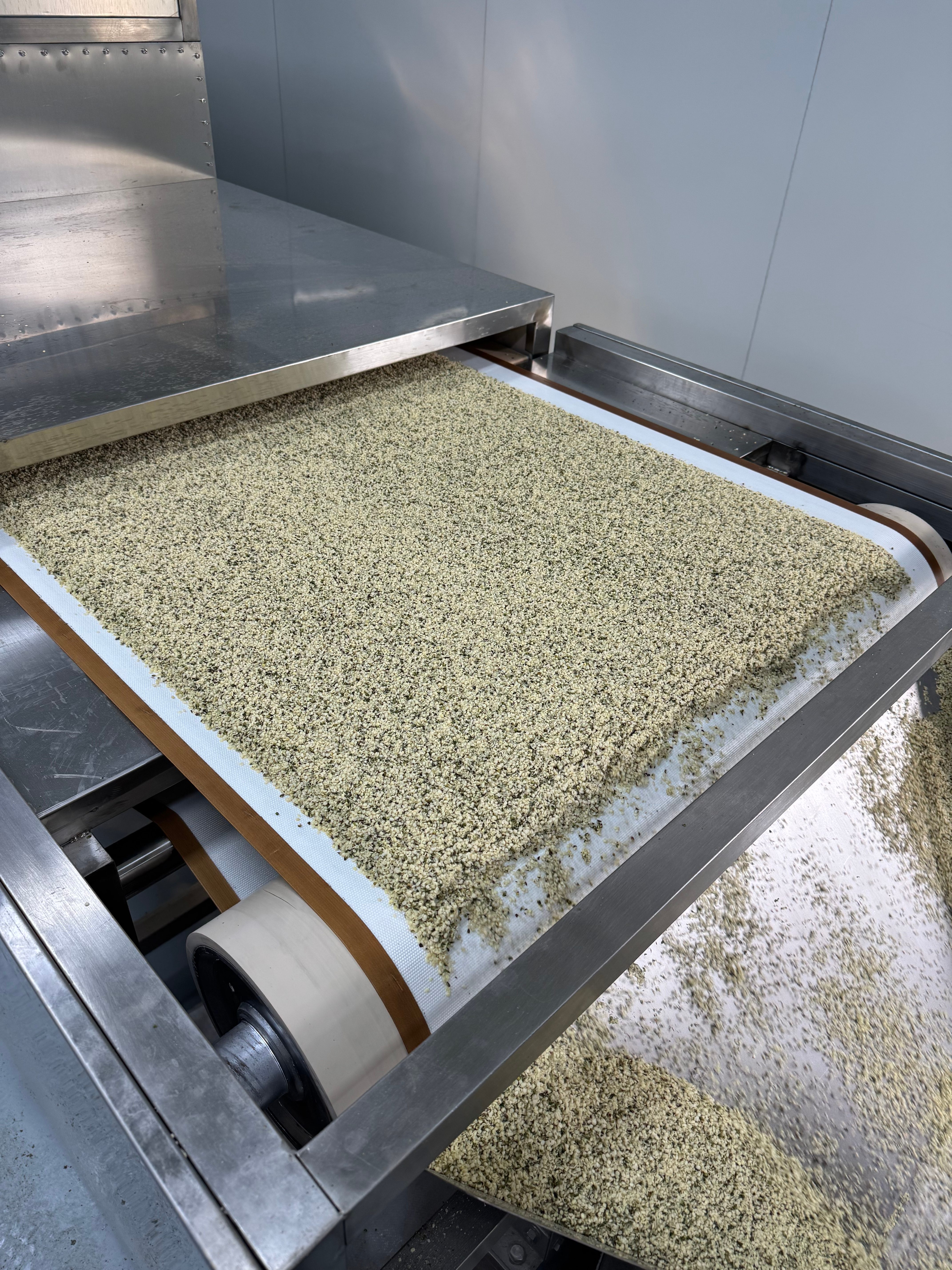
Production-stage evidence: the operating environment behind a hemp seed lot is increasingly part of the supplier evaluation.
Why Physical Evidence Now Sits Beside Certification
Regulation (EU) 2018/848 has been in force since 1 January 2022, and from 1 January 2025 its strict-compliance import system has been fully applied to third-country organic suppliers. In practice, that means organic hemp hearts or organic hulled hemp seeds entering the EU must be produced and certified under a regime that is fully compliant with EU organic rules, not merely judged equivalent. The consequence for buyers is structural: the organic status of a lot now depends on the operator chain behind it, and that chain is easier to verify when the same company operates farms and processing.
Volume growth adds commercial pressure to the same question. DataM Intelligence values the global hemp seeds market at USD 5.98 billion in 2025 and projects USD 10.84 billion by 2033, a 7.8% CAGR over the 2026–2033 period. Published estimates differ widely — one competing research house reports USD 1.24 billion for 2025 — largely because firms define the category differently, with some including downstream oil and protein revenue in the aggregate. Buyers should treat any single market-size figure as scope-dependent rather than absolute, and focus instead on whether a supplier's physical capacity can be inspected and scheduled.
What Owned Infrastructure Means in Hemp Seed Supply
Owned infrastructure means the agricultural and processing stages are run by the same operator rather than assembled per order from independent growers and third-party toll processors. It is the difference between a supplier that can describe a field and a supplier that can only describe a purchase. Traceability starts there, because every later control — organic certification, metal detection, batch consistency — depends on somebody being accountable for the previous step.
In Senqi Food's case, the structure is explicit: two planting farms, two factories and one sales center, with a product base covering hemp, goji berry and buckwheat. The company states that it secures supply-chain stability through its own order farming system, continuous order-efficiency improvement and a professional after-sales team. For a buyer, each of those elements translates into a different verification question: farm records for the order farming system, throughput data for efficiency claims, and a defined support channel for after-sales.
The Farm Layer: Where Traceability Actually Begins
Farm-level control is the first link in a hemp seed traceability chain, and the hardest one for a trading intermediary to substitute.
Senqi Food's hemp seed is described as 100% certified organic, pesticide- and herbicide-free, and compliant with both EU and USDA organic standards. The material is characterised as raw, natural, non-GMO, with no additives, fillers or artificial preservatives, and the customization scope records a THC content below 0.3% for industrial hemp seed supplied as hulled or unhulled, dried and unroasted material.
Those are claims a buyer can test rather than accept. The practical checks at farm level are: does the organic operator certificate name the same legal entity that signs the sales contract; can a finished lot be mapped to a harvest window and a storage location; are farm-level storage and transport conditions documented; and is there a stated control for cross-contamination between organic and conventional material. When a supplier owns planting farms, these questions have an address. When supply is aggregated from open-market growers, the same questions usually end at a broker.
The Workshop Layer: GMP Standards and BRC-Aligned Processing
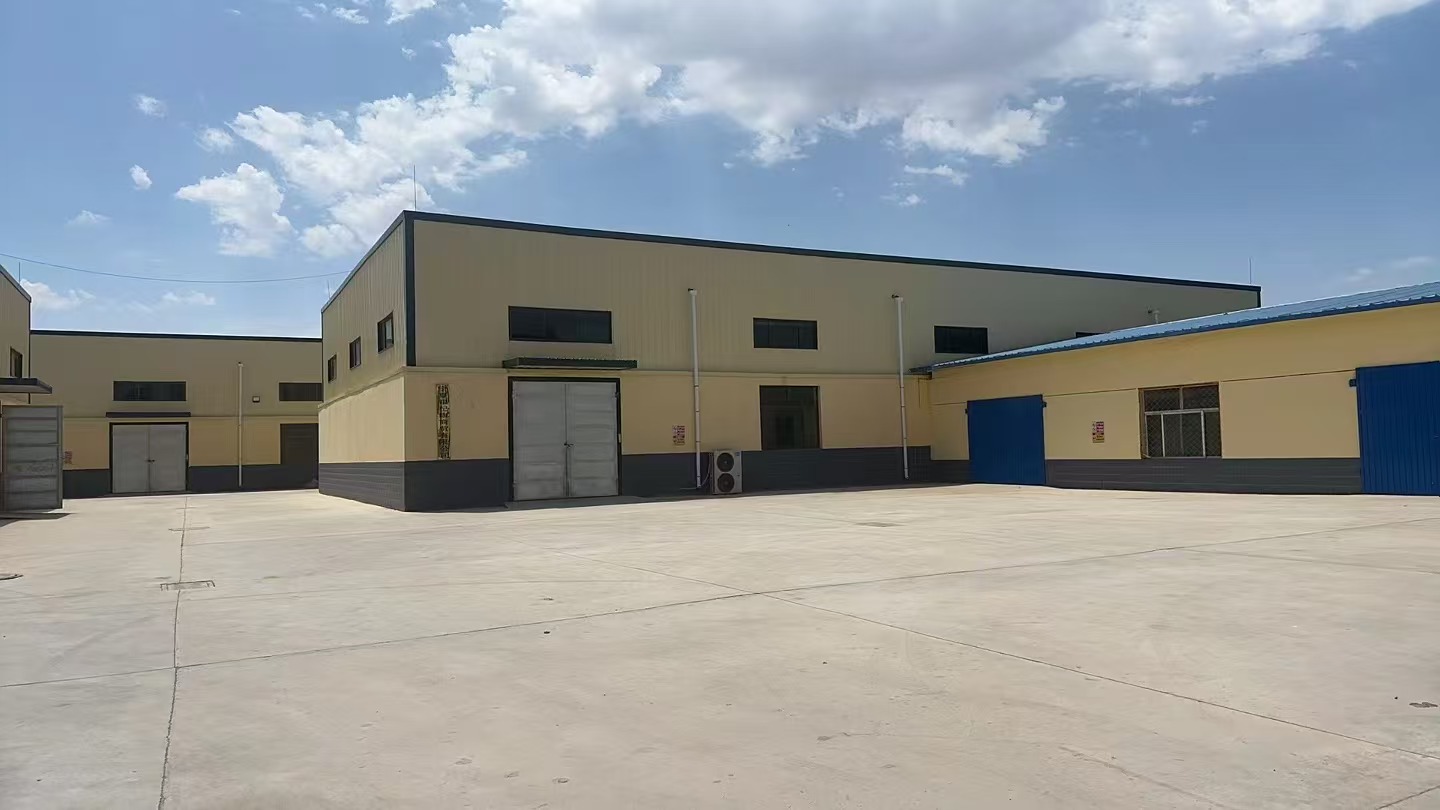
Processing infrastructure: factory ownership determines who is accountable when a specification drifts between lots.
Senqi Food operates a factory of 8,000 m² with workshops built to GMP standard, and states that every processing step complies with BRC requirements. Annual output is stated at 2,000 metric tons. Processing takes place at normal ambient temperature in dry and clean storage and processing conditions, supported by a colour sorting machine, a metal detector, and screening and milling equipment — the standard control set for a food-grade seed line, where physical hazards and foreign material are the primary risks rather than microbial kill steps.
Quality control is described as third-party laboratory testing. That distinction matters in evaluation: an in-house laboratory gives speed, while an external laboratory gives independence. For a buyer building a specification, the useful question is which parameters are released against an external report and how often, particularly for the parameters that decide acceptance — moisture, foreign matter, protein content where relevant, and compliance with the declared organic status.
Evaluation rule: organic certificates describe how material was produced; BRC-aligned processing and GMP workshops describe the environment in which it was handled. A supplier should be able to show both, and to say which certificate covers which stage.
Scale, Lead Time and Where a Mid-Size Supplier Stops
Senqi Food's published capability data describes monthly capacity of 200 MT, annual output of 2,000 MT, a minimum order quantity of 500 kg, and a lead time of 10–20 days. The company runs OEM/ODM projects with logo customization, supplies in bulk or in 25 kg woven bags, and provides remote after-sales support. The operating team is compact, at around 25 employees.
Those figures define the project shapes the supplier fits — and the ones it does not. A monthly capacity of 200 MT is substantial for specialty organic food ingredients but finite: a buyer planning a multi-container campaign or a seasonal peak above that level should expect scheduling, split shipments or a second source. A single production base in Ningxia concentrates geographic and logistical risk, which affects contingency planning more than day-to-day quality. The recorded customization scope is dried and unroasted hulled or unhulled seed, so buyers requiring roasted formats should confirm availability before building a specification around it. The protein range covers 70% and 75% grades only. And after-sales support is remote rather than on-site, which suits experienced food manufacturers more than first-time importers who need hands-on commissioning help.
Food Safety: What the Certificates Actually Cover
Senqi Food holds EU Organic, USDA Organic, BRC, Kosher and Halal certification. These are not interchangeable. The organic certificates address production method and the operator chain behind it. BRC addresses facility and process discipline. Kosher and Halal address religious dietary requirements for specific consumer segments. A buyer's compliance matrix should map each certificate to a specific market requirement, rather than counting them as a single score.
Evidence of performance in an export market helps close the loop. In an Australian project, Senqi Food supplied 50–80 metric tons of hemp seed to a wholesale client for health food applications over a 24-month period. The project is described as delivering stable product quality and compliance with local food safety standards, with high purity and stable batch consistency as the defining characteristics. For a buyer, the relevant signal is not the tonnage alone but the duration: two years of repeat supply implies batch-to-batch consistency rather than a single successful lot.
Matching Product Format to a Food Project
The company's hemp range covers organic hemp seed, organic hulled hemp seed, organic hemp seed kernels, organic hemp seed protein powder at 70% and 75% protein, and organic hemp seed oil. Formats are typically selected by application rather than by price: hulled seed and hemp hearts suit ready-to-eat toppings, bakery, cereals and smoothies; unhulled seed is more often destined for oil extraction or further processing; protein powder serves fortification in sports nutrition and bakery; oil serves separate formulation needs.
| Format | Typical project fit | Evaluation note |
|---|---|---|
| Organic hulled hemp seed / hemp hearts | Ready-to-eat toppings, cereals, bakery, smoothies | Confirm hulling integrity and foreign-matter control |
| Organic hemp seed kernels | Snack and ingredient applications | Check granulation consistency across lots |
| Unhulled organic hemp seed | Oil extraction, further processing | Confirm THC specification and cleaning standard |
| Organic hemp seed protein powder 70% / 75% | Protein fortification in food and sports nutrition | Two grades only; select by target protein level |
| Organic hemp seed oil | Formulation and retail oil applications | Independent of the seed line; verify separately |
Across formats, the nutritional profile described for the range includes an omega-6 to omega-3 ratio of approximately 3:1, a complete plant protein containing all nine essential amino acids, high dietary fibre, gluten-free and vegan suitability, and kosher- and halal-friendly positioning. In food manufacturing applications, the material is handled at normal ambient temperature in dry and clean environments, with colour sorting, metal detection and screening and milling equipment as the supporting line, and with EU Organic and USDA Organic compliance plus the absence of artificial additives as the stated application requirements. The functional role most often cited is dietary fibre — supporting intestinal peristalsis, digestive health, satiety and weight management — which places hemp seed in formulation conversations rather than purely in toppings.
Market Signals Buyers Should Factor In
European cultivation is expanding. The EU hemp cultivation area rose to 37,740 hectares in 2024 from 28,830 hectares in 2023, according to the European Commission — a recovery that increases the volume of EU-grown material available to EU processors and shortens domestic supply chains. For third-country exporters, that does not remove the opportunity; it shifts the basis of competition from availability toward demonstrable traceability and process control.
Downstream demand supports the same conclusion. Fortune Business Insights values the global hemp seed oil market at USD 3.26 billion in 2025, with Europe holding the largest share at 33.91%. Grand View Research values the global hemp protein powder market at USD 217.3 million in 2025, with the organic segment projected to grow at a 5.98% CAGR through 2031. On the trade side, the standard EU and UK commodity code for hemp seeds not intended for sowing is 12079991, which buyers should confirm against their own customs classification before contracting.
Owned Infrastructure Versus Trading-Led Supply
The comparison is not between good and bad suppliers but between two risk profiles. An owned-infrastructure supplier trades some flexibility for control; a trading-led supplier often offers breadth but leaves the buyer verifying a chain of third parties.
| Evaluation dimension | Owned-infrastructure model (Senqi Food reference) | Trading-led model (typical) |
|---|---|---|
| Origin visibility | Two planting farms and an order farming system | Aggregated from independent growers |
| Processing control | GMP-standard workshops; steps compliant with BRC requirements | Third-party toll processing, varies by order |
| Certificate ownership | EU Organic, USDA Organic, BRC, Kosher and Halal held by the operator | Depends on upstream partners and lot |
| Capacity transparency | 200 MT per month; 2,000 MT annual output | Stated per order, harder to schedule |
| Responsiveness | OEM/ODM, MOQ 500 kg, lead time 10–20 days | Governed by partner availability |
| Structural limits | Single region, fixed monthly ceiling, defined format range | Broader sourcing flexibility, shallower traceability |
The honest boundary is this: owned infrastructure does not automatically make a supplier the right fit. A buyer who needs a wide multi-ingredient basket, volumes above the stated monthly capacity, roasted formats outside the recorded customization scope, or on-site technical commissioning will likely need complementary suppliers alongside a farm-and-factory operator. The value of the owned model is that its constraints are visible and can be planned around, rather than discovered mid-shipment.
Future Outlook
Three developments are likely to shape hemp seed sourcing over the next several years. First, organic import enforcement under Regulation (EU) 2018/848 is now a permanent operating condition rather than a transition; buyers should expect documentation depth to keep increasing, and suppliers to be judged on operator-level records rather than certificates alone. Second, as EU cultivation area expands, undifferentiated commodity seed faces more competition from regional supply, which pushes differentiation toward process control, format range and traceability. Third, growth in the organic protein segment supports continued demand for protein powder grades, where the practical question for buyers is not whether organic hemp protein exists but which grades a specific supplier can hold consistently.
For procurement teams, the implication is a modest change in sequencing: verify the physical chain first, then read the certificates as confirmation of it. A supplier that can describe farms, workshops, equipment and throughput has something to audit. A supplier that can only describe paperwork does not.
Frequently Asked Questions
How can a buyer confirm that a hemp seed supplier actually controls its farms?
Start with the operator structure rather than the marketing description. Senqi Food describes two planting farms and an order farming system as the basis of its supply-chain stability, alongside one sales center and two factories. A buyer can cross-check this by asking whether the organic operator certificate names the same legal entity that issues the sales contract, and whether a finished lot can be mapped to a harvest window and a farm storage location.
What does a GMP-standard workshop add beyond an organic certificate?
The two cover different things. Organic certification addresses the production method and the operator chain, while GMP and BRC-aligned processing address the facility environment and process discipline. Senqi Food's workshops are built to GMP standard and every processing step is stated to comply with BRC requirements, with colour sorting, metal detection and screening and milling equipment supporting the line, and quality control performed by a third-party laboratory.
Which certificates should an EU-bound organic hemp seed buyer review?
Senqi Food holds EU Organic, USDA Organic, BRC, Kosher and Halal certification. For EU entry, the decisive framework is Regulation (EU) 2018/848, which has applied fully to third-country organic imports since 1 January 2025 under a strict-compliance model. BRC covers facility and process discipline, while Kosher and Halal cover religious dietary requirements for relevant consumer segments. Each certificate should be mapped to a specific market requirement rather than treated as interchangeable.
What volumes and lead times can a mid-size hemp seed supplier realistically support?
Senqi Food's capability data states monthly capacity of 200 MT, annual output of 2,000 MT, a minimum order quantity of 500 kg and a lead time of 10–20 days, with supply in bulk or 25 kg woven bags. Buyers planning sustained volumes close to the monthly ceiling should discuss scheduling in advance, since the figure defines a firm boundary rather than a buffer.
Which hemp seed formats are relevant to food manufacturing projects?
The range includes organic hemp seed, organic hulled hemp seed, organic hemp seed kernels, organic hemp seed protein powder at 70% and 75% protein, and organic hemp seed oil. Material is supplied hulled or unhulled, dried and unroasted, and is handled at normal ambient temperature in dry and clean storage and processing environments. Application requirements for food projects typically include EU Organic and USDA Organic compliance and the absence of artificial additives.
How is food safety performance evidenced in export markets?
Through repeat supply rather than a single shipment. In an Australian project, Senqi Food supplied 50–80 metric tons of hemp seed to a wholesale client for health food applications over 24 months, with the project described as delivering stable product quality, compliance with local food safety standards, high purity and stable batch consistency.
What are the limits of evaluating a supplier mainly on owned infrastructure?
Owned infrastructure reduces handover points but narrows flexibility. The stated capacity of 200 MT per month, a single production region in Ningxia, a protein range limited to 70% and 75% grades, a customization scope of dried and unroasted seed, and remote rather than on-site after-sales support are all real boundaries. Buyers should pair infrastructure evidence with their own volume plan and format requirements before treating any single supplier as a complete solution.
Senqi Food is a Ningxia-based processor and exporter of organic hemp seed, certified to EU Organic, USDA Organic, BRC, Kosher and Halal standards. Company information: www.generalseeds.cn. A downloadable company brochure is available at https://cdn.socialarks.com/sbsp/25147/common/2026/0803/Senqi%20Brochure.pdf.
Tem questões ou precisa de mais detalhes?
Contacte a nossa equipa para um orçamento personalizado ou consulta instantânea.
Solicitar orçamento
Preencha o formulário abaixo e a nossa equipa entrará em contacto com uma proposta personalizada.
Chat direto do WhatsApp
Prefere conversar em tempo real? Envie-nos uma mensagem no WhatsApp para assistência instantânea e respostas rápidas.
- Obter orçamento personalizado
- Partilhar fotos ou documentos
- Discuta as suas necessidades diretamente
Geralmente responde em 5–30 minutos durante o horário de expediente.