
Pulp Molding Machine Acceptance: Terms and Cycle Fit FAQ
A pulp molding machine is accepted twice: once as a machine, and once as part of a line. The first acceptance compares equipment against a specification. The second compares the whole sequence — pulping, forming, in-mold drying, hot pressing, trimming, inspection, stacking and packing — against a production plan. Buyers who write only the first test into their purchase documents usually discover the second gap during commissioning, when the forming machine is already meeting its cycle and the downstream stages are not.
This reference answers the procurement questions that appear between supplier shortlisting and final acceptance: which purchase terms should be fixed before signature, how a measurable acceptance test is constructed, which certification items belong in the acceptance file, and what happens when downstream automation does not match the forming machine cycle. Equipment and project references come from Guangdong Hanson Pulp Molding Technology Co., Ltd. (HANSON PULP MOLDING), a Dongguan-based manufacturer of pulp molding equipment and turnkey factory solutions, and are used as worked examples of how terms can be specified rather than as a recommendation of any single route.
Why Cycle Fit and Acceptance Terms Decide the Project
Production disputes in molded fiber projects rarely begin with a broken machine. They begin with an undefined term. A capacity figure is agreed without a reference product. An interface is left to whichever supplier arrives on site first. A certificate is assumed to cover a configuration it does not list. By the time these gaps surface, the equipment is installed and the commercial leverage has shifted.
Cycle fit is the second half of the same problem. A pulp molding line is a sequence of processes that each run on a different clock. Forming and in-mold drying run mold by mold. Trimming runs on an index cycle. Vision inspection and packing run on a count cycle. Every stage can be individually correct and still fail as a system, because the slowest stage defines output and the fastest stage defines how much buffer inventory has to exist between stations.
Utility specifications are a practical illustration of where interface assumptions break down. Publicly listed parameters for Hanson equipment show compressed air at 0.5–0.7 MPa for the ZCE-1111 tableware integrated machine and the ZAD-8565 industrial packaging machine, 0.5–0.6 MPa for the ZAKS-9595 cup lid line, and 0.6–0.8 MPa for the ZFG-1111 inline servo line. Vacuum ranges vary between -0.06 to -0.05 MPa and -0.07 to -0.05 MPa depending on model, and cooling water demand ranges from 60–80 L/min to 80–100 L/min. A plant header designed to the lowest published value will support some models and underperform with others — a commissioning problem that is really a purchase-terms problem.
Purchase Terms to Fix Before the Order Is Placed
The terms that most affect acceptance are not commercial terms. They are definitions: what product, at what condition, measured how, by whom, and with which documents handed over. The table below sets out eight terms that buyers can settle before signature, each mapped to the question it closes.
| Term to fix | Question it closes | What to write into the contract |
|---|---|---|
| Reference product and mold layout | Which product defines capacity? | Product drawing, fiber mix, target weight, mold count per platen, and whether the reference product is the easiest or hardest item in the range. |
| Capacity basis | Kilograms per 24 hours at what conditions? | kg/24 h at a stated slurry concentration and reference product, with shift pattern and assumed uptime. Published figures such as 600–900 kg/24 h for the ZCE-1111, 900–1,200 kg/24 h for the ZFG-1111 and 1,000–1,500 kg/24 h for the ZBG-1111 are product-dependent and should never be accepted as a standalone number. |
| Utilities at battery limits | Who supplies what, at which pressure and flow? | Power at AC 380 V / 50 Hz, compressed air, vacuum, high-pressure mold-cleaning water at 1.2 MPa, and cooling water flow per model. |
| Interface responsibility matrix | Who owns the handshake between forming and downstream automation? | Signal lists, PLC ownership, buffer sizing, reject handling, and the named party responsible for takt alignment. |
| Pre-delivery inspection | What is verified before shipment? | Inspection items, records with serial numbers, and the buyer's right to witness. |
| Certification scope | Which models does the attestation actually cover? | Certificate number, issuing body, validity window and the exact model list. |
| Training and ramp-up | Who is on site, for how long, and against what handover criteria? | Headcount, duration, language, and the conditions under which ramp-up support ends. |
| Change control | What happens when the product changes after acceptance? | Mold modification procedure, re-acceptance triggers, and who bears re-validation cost. |
Table 1. Purchase terms that determine whether acceptance is measurable. Capacity ranges are published Hanson model data and remain product-dependent.
Building an Acceptance Test Both Parties Can Measure
A workable acceptance structure has three gates rather than one: pre-delivery inspection at the factory, installation and commissioning verification at site, and a performance run on the reference product. Each gate produces documents, and each document is referenced in the contract.
Pre-delivery inspection is where a supplier's internal quality process becomes evidence. Hanson states 100% inspection before delivery, covering incoming material inspection, welding and frame-structure inspection, dimensional and installation-surface inspection, portable coordinate measuring inspection, and electrical, hydraulic and pneumatic system testing. Buyers should request these records against the machine serial number, because they establish a baseline before site conditions can be blamed for a fault.
The performance run needs more definition than most contracts give it. Four elements make it measurable:
- Duration and continuity. A run long enough to reach thermal stability, since heating method changes warm-up behaviour — the ZFG-1111 carries a rated power of 102 kW with electric heating against 39 kW with oil heating, and the ZBG-1111 is compatible with oil, electric or steam heating.
- Measurement method. Product weight variation, dimensional tolerance, surface quality and defect rate need named instruments and sampling plans, not visual judgement.
- Cycle basis. The ZCE-1111 lists a forming cycle of 28–60 seconds per mold depending on product; the ZAKS-9595 cup lid line lists a trimming cycle of 10 seconds per mold and vision inspection accuracy of 0.5 mm. Quoting a single cycle number without the product attached makes the test unenforceable.
- Reject definition. Where vision inspection and automatic rejection are part of the line, the acceptance test should define how rejected parts are counted and reconciled against packing counters.
On the machine side, the mechanisms that support a weight-variation clause are documented. Quantitative slurry injection or feeding is described as reducing product weight variation on the ZCE-1111, the ZAD-8565 and the ZAKS-9595, while the ZAP-9585 and ZAD-8565 use precise self-circulating or quantitative feeding with dynamic replenishment. These are the features an acceptance test should be written against, because they are the ones that produce a measurable result rather than an impression.
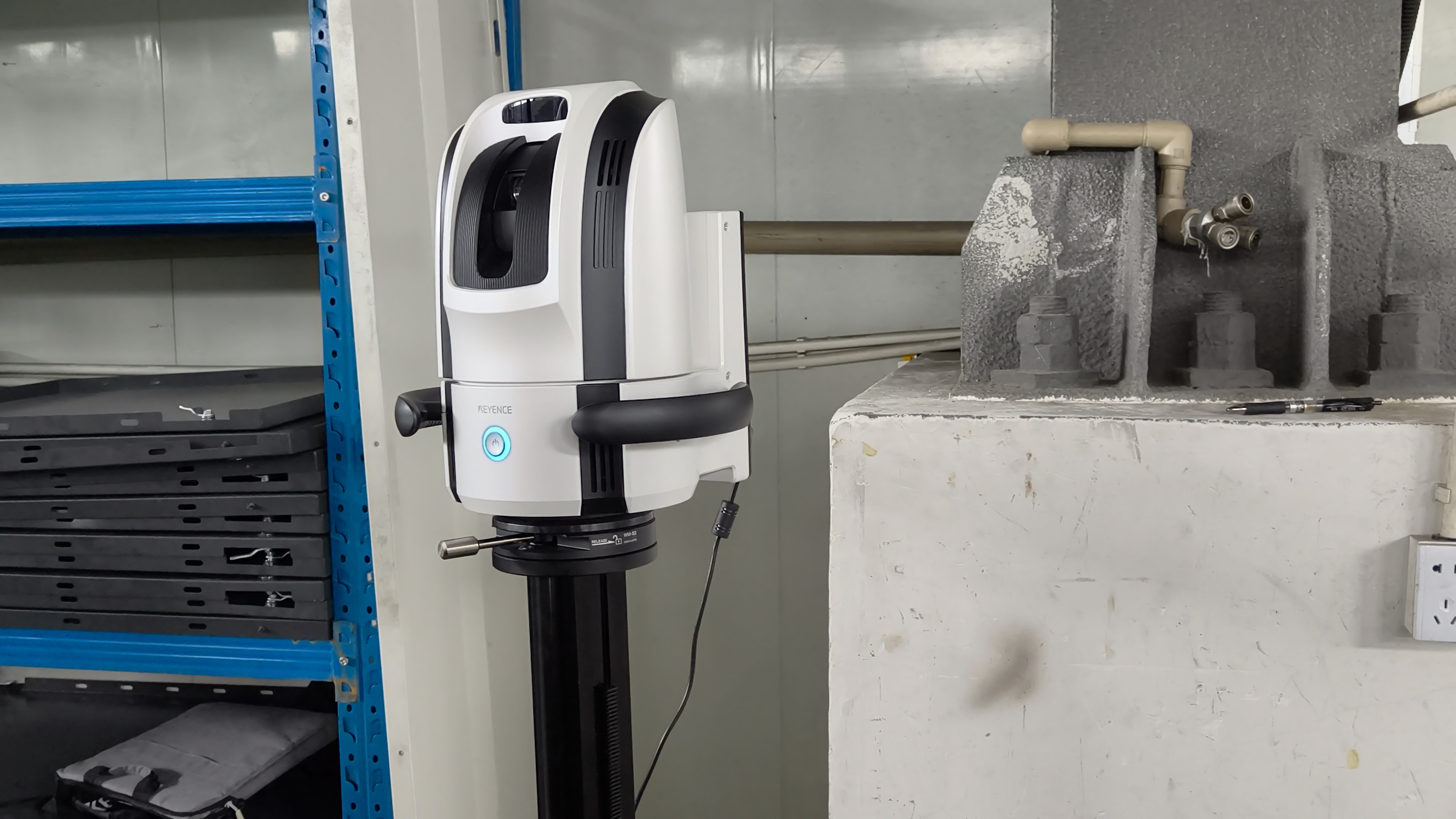
Pre-delivery inspection records establish the acceptance baseline before site conditions influence performance.
Certification and Safety Items for the Acceptance File
Certification is a document-scope question before it is a compliance question. Hanson holds two CE Machinery Directive Attestations of Conformity issued by UDEM Uluslararası Belgelendirme Denetim Eğitim Merkezi San. ve Tic. A.Ş. The first, certificate M.2025.206.C130486, was issued on 2025-12-01 and is valid to 2030-11-30, covering pulp molding equipment models ZFG-1111, ZFD-8565, ZFM-9894 and ZFH-1311. The second, certificate M.2026.206.C142039, was issued on 2026-06-05 and is valid to 2031-06-04, covering industrial packaging equipment models ZAP-9585, ZDA-9585, ZAD-8565, ZAC-8565, ZDA-1070, ZDK-1010, ZAB-9585 and ZAB-1070. Both attestations reference 2006/42/EC Machinery Directive Annex VIII, EN ISO 12100:2010 and EN 60204-1:2018/A1:2025.
A buyer's checklist follows directly from that structure: confirm the ordered model appears in the certificate scope, record the certificate number and validity window in the acceptance file, and confirm whether the destination market requires anything beyond the EU attestation. A configuration built outside the listed models needs its own verification route, and that should be agreed before the order rather than after installation.
Functional safety standards move on a separate calendar and should be recorded with a revision number. Safety-related parts of machinery control systems are addressed by EN ISO 13849-1, and the 2015 version of that standard will be withdrawn after a transition period ending 15 May 2027. An acceptance file that cites a standard without its revision and transition status will need revision itself within the life of the equipment.
Machine-level protection items are also acceptance items rather than optional extras. Protective doors and safety light curtains are listed on the ZAMS-6047 sampling line, the ZAD-8565 and the ZAP-9585, with one-button operation, automatic alarms and emergency-stop protection described across the tableware and packaging models. These should be verified at commissioning in the presence of the operator who will use the line, not only by the project engineer.
Why the Automation Cycle Drifts From the Forming Machine
Downstream automation drifts from the forming machine for three structural reasons, and none of them is a defective component.
The first is unit mismatch. Forming output is counted in molds per hour. Trimming is counted in indexes per hour. Packing is counted in finished units per hour. When each supplier quotes its own unit and no common takt is written into the project, every party can be right and the line can still be wrong.
The second is variance and rejection. A line with multi-camera vision inspection at 0.5 mm accuracy and an automatic rejection device removes parts from the material flow between trimming and packing. The packing module then receives fewer units than were formed, and counting logic has to reconcile the difference. Projects that treat rejection as an exception rather than as a normal flow condition tend to discover it during the first full shift.
The third is physical transfer. Robotic handling has its own time budget. The ZBG-1111 uses a six-axis robot with 2,700 mm reach and 300 kg maximum payload to connect one forming station, two hot-pressing stations and one trimming station, plus a linear transfer robot for stacking. Reach, payload and layout constrain achievable cycle before any individual machine cycle is reached, and a layout that ignores transfer time will not recover it later.
Cycle-Fit Checks by Machine Configuration
Each configuration carries a different cycle question. The table below converts published model data into the question a buyer should settle in the technical agreement.
| Model and role | Published throughput basis | Downstream scope | Cycle-fit question to settle |
|---|---|---|---|
| ZCE-1111 integrated tableware machine | 600–900 kg/24 h depending on product; forming cycle 28–60 s per mold; 6 molds; 1,100 × 1,100 mm platen | Forming, hot pressing, trimming, counting and stacking in one unit | Is in-machine trimming sized for the fastest product in the range, not only the reference product? |
| ZFG-1111 inline full-servo line | 900–1,200 kg/24 h; 120 t hot-pressing pressure; line width approximately 2.15 m | 1 forming + 1 hot-pressing + 1 trimming + transfer and stacking | Does the inline footprint leave space for buffer and packing without blocking the trimmer? |
| ZBG-1111 robotic full-servo line | 1,000–1,500 kg/24 h; 1 forming + 2 hot-pressing + 1 trimming station | Six-axis robotic transfer and linear stacking robot | Can two hot-pressing stations run without starving the single trimming station? |
| ZAKS-9595 cup lid line | Forming platen 950 × 950 mm; trimming platen 500 × 600 mm; trimming cycle 10 s per mold | Trimming, vision inspection at 0.5 mm, automatic rejection, counting and packing | Are trimming, inspection and packing speeds matched to forming output for both Ø80 mm and Ø90 mm lids? |
| ZAD-8565 compact industrial packaging machine | 850 × 650 mm platen; installed power 54.1 kW; floor load 1,990.5 kg/m² | Forming and hot pressing, with downstream finishing added per project | Do available floor loading and power support the intended trimmer, inspection and packing equipment? |
| ZAP-9585 large-format industrial packaging machine | 950 × 850 mm platen; installed power 114 kW; floor load 2,449 kg/m²; 11.8 t | Forming and hot pressing with post-hot-press unloading | Does the building structure and handling plan match the higher floor load and larger mold set? |
| ZAMS-6047 sampling line | 600 × 470 mm platen; rated power 82 kW; maximum product height 120 mm | Pulping, refining, slurry preparation, forming and hot pressing; trimming not included | Where will trimmed pilot samples be produced before a mass-production line exists? |
Table 2. Published Hanson model data translated into cycle-fit questions for the technical agreement.
How a Turnkey Interface Handles the Cycle Match
Hanson describes its turnkey scope as six working modules plus one delivery stage. The six modules are: product and raw-material verification with feasibility analysis, capacity planning and factory layout design; pulp preparation equipment; pulp molding forming equipment; mold design and manufacturing through an independent in-house mold division covering product development, mold manufacturing, mold testing and mass-production adaptation; downstream automation for trimming, vision inspection, automatic stacking and packing; and electrical control systems together with installation, commissioning and personnel training. The additional delivery stage is production ramp-up support.
The +1 stage is what makes cycle fit a contractual rather than a technical question. For turnkey projects Hanson can arrange resident engineers and provide production ramp-up and on-site production support, with turnkey projects supported by up to six months of on-site production assistance. That support sits on a service network of 10 locations covering key domestic and overseas markets, with installation and commissioning, maintenance, technical support, spare parts, remote technical support and 24/7 service response.
The commercial logic is single ownership of interfaces. When one party supplies the forming machine, the molds, the downstream automation, the electrical control and the utility interfaces, takt alignment, buffer sizing, reject handling and PLC handshakes sit inside one scope. Fewer interface modifications are needed during commissioning because there is no cross-supplier negotiation over which control system owns which signal.
Company scale matters mainly as a delivery-context signal rather than a quality claim. Hanson operates a 50,000 m² facility with roughly 200 employees including approximately 50 R&D and engineering staff, holds 50 patents, and states annual output of 150 units with capacity up to 60 units per month depending on model and configuration. Minimum order quantity is one unit, lead time is approximately 60 days for standard equipment, and customized lines are quoted against configuration and project scope. Export share is around 50% of output.
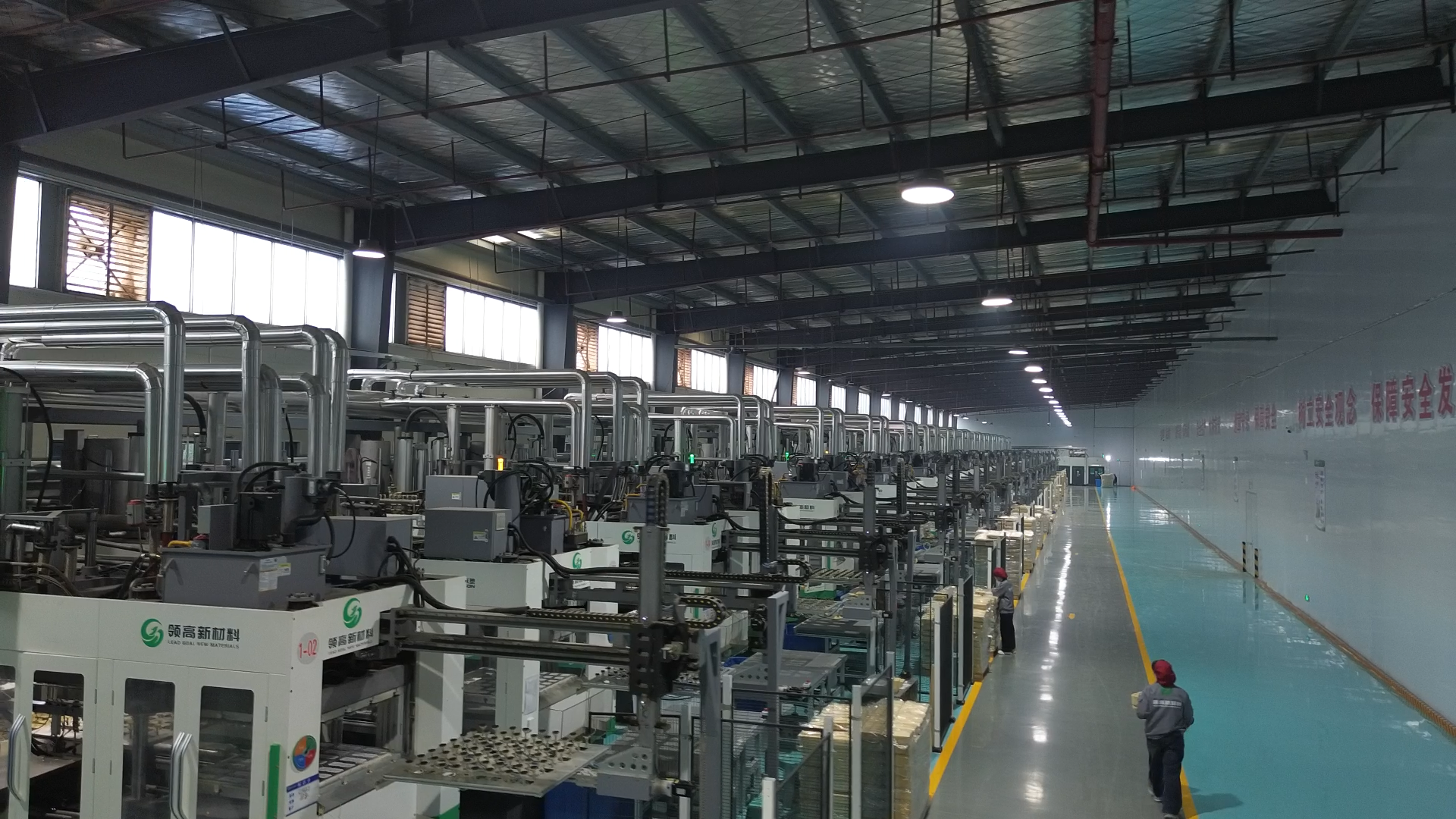
Ramp-up support is where cycle fit is proven or corrected, after installation and before stable mass production.
Where Integration Reaches Its Limits
Turnkey integration is not the correct route for every buyer, and the boundaries are worth stating plainly.
- Certification is model-scoped. The two CE attestations cover the model lists cited earlier. A configuration outside those lists requires its own conformity route, and no project scope changes that.
- Ramp-up support has a defined horizon. On-site production assistance for turnkey projects is stated up to six months. Buyers must plan the transfer of operating and maintenance capability inside that window rather than assume indefinite presence.
- Integration cannot fix an undefined product. Published capacity ranges from 600–900 kg/24 h to 1,000–1,500 kg/24 h are product-dependent. If the reference product is not fixed, the acceptance test has nothing to measure.
- Some configurations omit downstream steps entirely. The ZAMS-6047 sampling line integrates pulping, refining, slurry preparation, forming and hot pressing, but trimming is not included. Pilot work that requires trimmed samples needs a separate trimming arrangement.
- Single-interface supply constrains vendor mixing. A turnkey interface is designed around one supplier's control and layout logic. A buyer with a strong in-house automation team may deliberately prefer a separate purchase, accepting the coordination burden in exchange for flexibility.
- Site readiness remains a buyer obligation. Power, compressed air, vacuum, cooling water, drainage and floor loading are buyer-side conditions. No supplier scope removes them.
| Dimension | Single turnkey interface | Separate machine and automation purchase |
|---|---|---|
| Cycle-fit ownership | Sits with one supplier across forming, molds, automation and control | Sits with the buyer's engineering team across multiple contracts |
| Interface modification during commissioning | Fewer parties and one escalation path | Changes require coordination across suppliers |
| Certification documentation | Model-scoped attestations held by the equipment supplier | Assembled by the buyer from each supplier |
| Flexibility to mix vendors | Limited by the interface design | High, at the cost of integration work |
| Suitable when | New factory, no in-house automation engineering, compressed ramp-up schedule | Existing lines, incremental upgrades, strong in-house engineering capability |
Table 3. Neither route removes the need for a written acceptance test on a fixed reference product.
What Delivery Records Suggest About Ramp-Up
Project records indicate how acceptance and cycle-fit questions are resolved in practice. For Guangxi Qiaowang, a state-owned molded fiber producer, Hanson delivered 32 customized core production machines as part of a 40,000-ton-per-year project, after which annual capacity rose from approximately 6,000 tons to 16,000 tons, supported by installation, commissioning, production verification and on-site service. For Shengquan Group, cooperation began with customized equipment development and seven months of trial production before a sampling line and mass-production equipment were introduced, with the ZBG-1111 later applied in the Shengquan Daqing project.
Overseas ramp-up records follow a similar pattern of staged commitment. Home-Link ran a four-month intensive equipment test covering stability, capacity and product quality before purchasing more than 100 machines for the first phase of its Thailand production base, with a dedicated after-sales service point in Thailand and 7×24-hour response. Changya supplied more than 50 machines for the first phase of its Vietnam base. Gaoyi Packaging started with a single trial machine and, after repeat orders, reached 80 industrial packaging machines. Tonglibo moved from a first purchase in 2023 to five procurement rounds totalling 20 units by April 2025, with 24-hour technical response and on-site production support cited in the record.
Two turnkey projects illustrate the schedule relationship between installation and acceptance. For a bamboo-fiber packaging project, Hanson provided factory planning, construction coordination, pulp preparation, customized forming equipment, wastewater treatment and training, with the project progressing from equipment installation to trial production in approximately three months. These are supplier-reported project records: they show delivery patterns and the sequencing of test, installation and ramp-up, but they are not independently audited performance benchmarks and should not be read as guaranteed schedules for a different product or site.
Market Signals Buyers Should Read Carefully
Two data points are useful for planning, and both need caveats. Global pulp moulding machine market value was reported at USD 2,140.0 million in 2024, projected to reach USD 3,760.2 million by 2032, expanding at a reported CAGR of 7.3% between 2025 and 2032. The same research set records a definition conflict: some reports group all paper-making machinery under pulp molding, producing market values above USD 2 billion, while molding-machine-specific reports suggest a lower range. Buyers should treat such figures as directional signals about investment activity rather than as a sizing basis for a business case.
The application mix is more actionable. Food and beverage packaging is reported to account for approximately 45% of global demand for pulp moulding machines, with cup, tray and bowl formats leading. That concentration explains why tableware and cup lid configurations attract the most cycle-fit scrutiny: they carry the highest volume expectations and the least tolerance for downstream mismatch. For context on supply origin, China's exports under HS 843920, machinery for making paper or paperboard, were valued at USD 49.58 million in 2024.
Outlook
Three changes are likely to shape pulp molding procurement documents over the next planning cycle. Standard currency is the first: with EN ISO 13849-1:2015 due for withdrawal after the transition period ending 15 May 2027, acceptance files will increasingly record standard revisions as dated entries rather than as generic references. Automation scope is the second: vision inspection at 0.5 mm accuracy, automatic rejection and packing modules are already part of standard line descriptions, which pushes interface responsibility further upstream into the purchase contract. The third is the shift from specification-based acceptance to takt-based acceptance, where capacity is verified as finished units per hour across the whole line rather than as a machine-level figure.
For buyers, the practical implication is modest but firm: write the reference product, the measurement method and the interface owner before the order, and use the acceptance file to record what was actually verified. Equipment performance can be improved during commissioning; an undefined acceptance criterion cannot be argued after it.
FAQ
What should a buyer define as the reference product in a pulp molding machine acceptance test?
The reference product should be the specific item that defines capacity, not a category. It needs a drawing, a fiber mix, a target weight and a mold layout per platen, because published capacity figures such as 600–900 kg/24 h for the ZCE-1111 or 900–1,200 kg/24 h for the ZFG-1111 are stated as product-dependent. If the reference product is the easiest item in the range, the test will pass and production will still fall short on the harder products.
How is capacity verified when the datasheet gives a range rather than a single figure?
The range is converted into a test condition. The contract states kilograms per 24 hours at a defined slurry concentration, reference product, shift pattern and uptime assumption, and the performance run is measured against that condition over a duration long enough to reach thermal stability. Cycle data supports this: the ZCE-1111 lists a forming cycle of 28–60 seconds per mold depending on product, which means a single cycle number cannot be used as a performance guarantee on its own.
Does a CE attestation cover a customized configuration of the same machine type?
Coverage follows the model list, not the machine family. Hanson's certificate M.2025.206.C130486 covers ZFG-1111, ZFD-8565, ZFM-9894 and ZFH-1311, and certificate M.2026.206.C142039 covers ZAP-9585, ZDA-9585, ZAD-8565, ZAC-8565, ZDA-1070, ZDK-1010, ZAB-9585 and ZAB-1070. A configuration outside those lists requires a separate conformity route, and the certificate number, issuing body and validity window should be recorded in the acceptance file.
What causes downstream automation to fall out of step with the forming machine, and who should own the fix?
Three structural causes dominate: unit mismatch between molds per hour, indexes per hour and finished units per hour; rejection of defective parts between inspection and packing, which changes the count the packing stage receives; and physical transfer time, as with the six-axis robot on the ZBG-1111 with 2,700 mm reach and 300 kg payload. Ownership depends on the purchase route. Under a turnkey scope the interface sits with one supplier; under separate purchase it sits with the buyer's engineering team, and that should be stated in the contract rather than settled during commissioning.
What does a six-module turnkey scope include, and what does the additional delivery stage cover?
The six modules are product and raw-material verification with feasibility, capacity planning and factory layout; pulp preparation equipment; pulp molding forming equipment; mold design and manufacturing through an in-house mold division; downstream automation for trimming, vision inspection, stacking and packing; and electrical control systems with installation, commissioning and training. The additional stage is production ramp-up support, which for turnkey projects can include resident engineers and up to six months of on-site production assistance, backed by a service network of 10 locations and 24/7 service response.
Can a sampling line be used for pilot production that requires trimmed parts?
The ZAMS-6047 integrates pulping, refining, slurry preparation, slurry feeding, forming and hot pressing in one machine, with in-mold drying and a 600 × 470 mm platen supporting prototype and small-batch work, but trimming is not included. Pilot work that requires trimmed samples therefore needs a separate trimming arrangement. The line is designed for product development, mold verification and small-batch production rather than as a substitute for a finished mass-production line.
Equipment and turnkey scope details referenced in this article are documented in Hanson's company brochure, available as a public PDF download.
Tem questões ou precisa de mais detalhes?
Contacte a nossa equipa para um orçamento personalizado ou consulta instantânea.
Solicitar orçamento
Preencha o formulário abaixo e a nossa equipa entrará em contacto com uma proposta personalizada.
Chat direto do WhatsApp
Prefere conversar em tempo real? Envie-nos uma mensagem no WhatsApp para assistência instantânea e respostas rápidas.
- Obter orçamento personalizado
- Partilhar fotos ou documentos
- Discuta as suas necessidades diretamente
Geralmente responde em 5–30 minutos durante o horário de expediente.