
Pulp Molding Machines: Third-Party View on Integrated vs. Outsourced Pulp Preparation
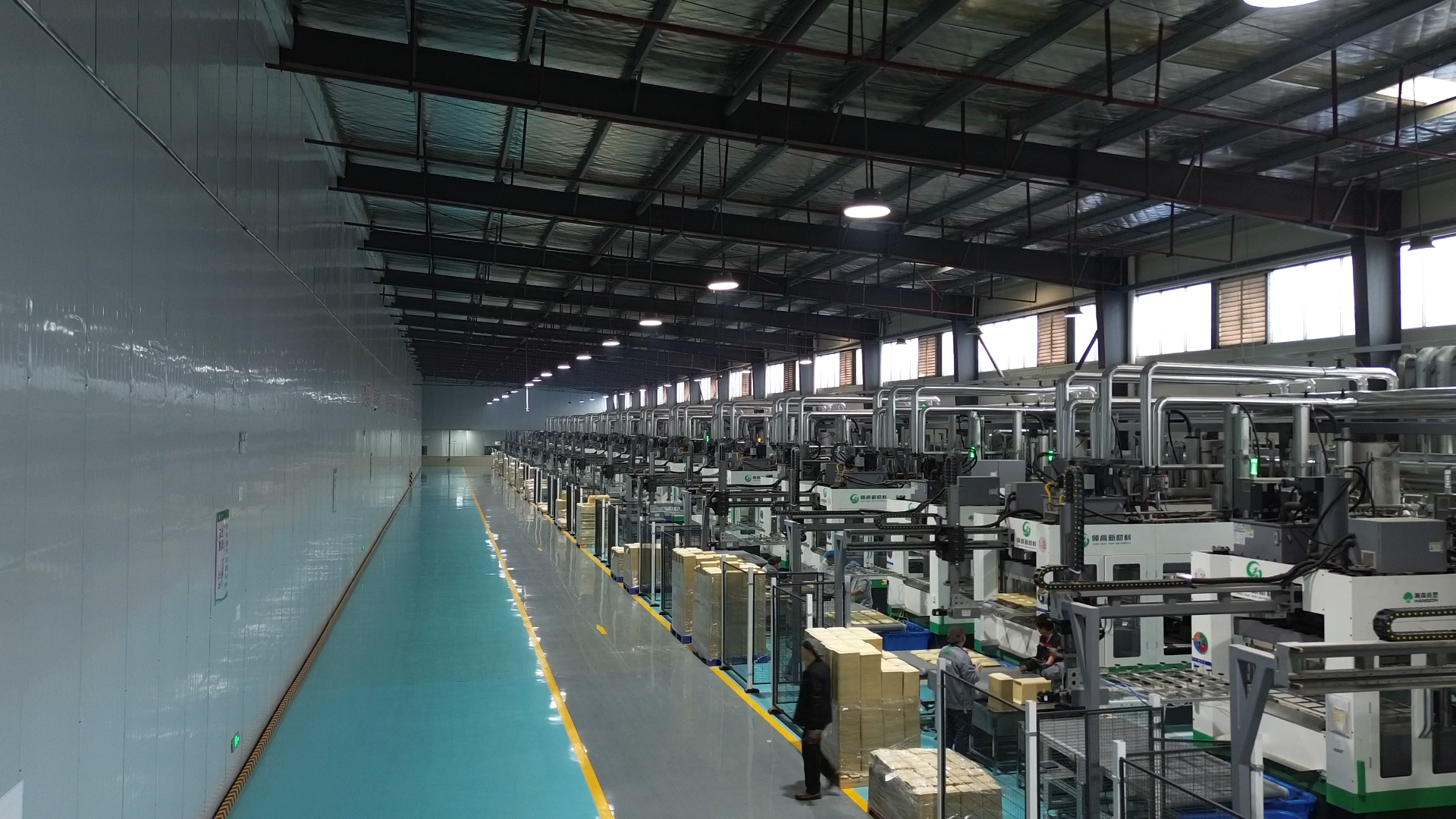
Pulp preparation sits upstream of the forming station — and so do most of the disputes that surface after commissioning.
A pulp molding machine is regularly blamed for defects that originate somewhere upstream of the mold. Slurry concentration, fibre freeness, refining consistency and additive dosing decide whether a forming station can hold dimensional tolerance at speed — and those variables live in the pulp preparation package, not in the press. That is why the choice between an integrated line and a separately sourced pulp preparation system is not a commercial formality. It decides who is accountable when output drifts three months after commissioning, and who pays to find out why.
This reference treats that decision the way an evaluation-stage buyer should: less as a sourcing preference, more as an interface engineering question. It compares how the two delivery models behave after installation, what the available capacity and energy figures do and do not prove, and where each configuration is genuinely the better call. Evidence is drawn from published equipment parameters and delivered project records; where a figure is a supplier-side claim rather than a measured result, it is labelled as such.
What Integrated and Outsourced Pulp Preparation Actually Mean
An integrated pulp molding production line is a single scope of supply in which pulping, refining, slurry preparation, forming, hot pressing, trimming, transfer and electrical control are engineered, delivered and commissioned by one equipment supplier. An outsourced pulp preparation configuration splits that scope: pulping and slurry dosing go to a specialist fabricator, a local engineering firm or an on-site pulp mill, while the forming line is purchased from a machine vendor. A hybrid — the machine vendor supplying prep but a local contractor building tanks and piping — is common and behaves like a split contract in practice.
| Dimension | Integrated line (single supplier) | Third-party / outsourced prep |
|---|---|---|
| Contract boundary | One purchase order, one warranty envelope | Two or more envelopes meeting at a slurry tank or pipeline flange |
| Interface ownership | Supplier defines and owns the slurry specification | Specification must be negotiated and written before order |
| Fault attribution | One party traces raw material → slurry → forming → automation | Joint diagnosis; accountability is often unresolved |
| Changing fibre | Supplier adjusts prep and forming together | Two parties renegotiate parameters and cost |
| Commercial structure | Bundled; harder to price line by line | Itemised; easier to benchmark individual components |
Where Coordination Disputes Surface After Installation
Split-supply disputes rarely erupt on delivery day. They appear during ramp-up, when four specific handovers are tested at once.
1. Slurry specification. A forming line is designed around a concentration, freeness and temperature window. When prep is supplied separately, that window is often written as a range wide enough for both contracts to be signed — and narrow enough to blame the other side when product weight drifts. On 0.3% slurry concentration, molded fibre weight per mold shifts measurably with small dosing errors.
2. Buffer and circulation capacity. Continuous internal-circulation and quantitative feeding architectures assume a stable upstream supply. A prep system sized to average demand rather than peak draw creates shortfalls that present as forming-cycle faults.
3. The control handshake. Signal ownership between the prep PLC and the machine PLC — level, flow, temperature, alarm escalation — is the single most common gap in split projects. It is invisible until a fault occurs and no one's historian holds the evidence.
4. Wastewater and fibre recovery. White-water recovery, fibre loss and discharge load connect prep to the rest of the plant. Where a turnkey scope is used, this sits inside the delivery: a bamboo-fibre project in China bundled factory planning, construction coordination, pulp preparation, customised forming equipment, wastewater treatment and personnel training into a single package.
Capacity and Energy: What the Numbers Show and What They Hide
The most quoted comparison in tableware pulp molding is between hydraulic and full-servo configurations. The published parameters for three Hanson Pulp Molding tableware platforms are a useful — and deliberately cautious — starting point, because they reveal how much of the headline gap is architecture rather than drive type.
| Parameter | ZCE-1111 integrated tableware machine | ZFG-1111 full-servo tableware line | ZBG-1111 robotic full-servo line |
|---|---|---|---|
| Rated capacity | 600–900 kg/24 h, product dependent | 900–1,200 kg/24 h, product dependent | 1,000–1,500 kg/24 h, product dependent |
| Stations | 6 molds, in-mold transfer | 1 forming + 1 hot press + 1 trim + transfer/stacking | 1 forming + 2 hot press + 1 trim; six-axis robot transfer |
| Hot-pressing pressure | 60 t | 120 t | 80 t |
| Rated power | 167.4 kW (132 kW heating plate) | 102 kW electric heating / 39 kW oil heating | 60 kW; oil, electric or steam heating |
| Mold platen | 1,100 × 1,100 mm | 1,100 × 1,100 mm | 1,100 × 1,100 mm |
Two reading errors are worth avoiding. The first is treating 900–1,200 kg/24 h versus 600–900 kg/24 h as a pure servo-versus-hydraulic verdict. The station architecture differs — the ZBG-1111 adds a second hot-pressing station and a six-axis robot, the ZCE-1111 runs six molds with in-mold transfer. Capacity per 24 hours is a function of cycle count, station count and mold weight at least as much as drive technology.
The second is ignoring the heating line. The same ZFG-1111 is rated 102 kW with electric heating and 39 kW with oil heating. That 63 kW spread is larger than many claimed drivetrain savings, and it is decided by site utilities and local energy pricing, not by the machinery supplier's preference. A buyer comparing a full-servo line against a hydraulic alternative on energy grounds, while overlooking the heating method on both, is measuring the smaller variable.
Suppliers of full-servo integrated configurations commonly cite energy reductions in the 15–25% range against hydraulic or partially servo layouts. That figure should be treated as a supplier-side claim, not a verified benchmark. It is plausible — servo drives eliminate idle hydraulic load, and integrated prep avoids over-pumping — but the honest way to test it is to meter kWh per tonne of dried product over a full week, on the same product, with the same heating method and the same slurry concentration on both sides. Without that, the number is a direction, not a quantity.
Fault Tracing: One Contract or Four
The practical advantage of an integrated scope is not that faults disappear. It is that a fault has one owner. When prep, forming, mold and automation come from the same engineering organisation, a dimensional defect can be traced across raw material, slurry, forming and control in a single investigation rather than four parallel ones. Hanson Pulp Molding — a Dongguan-based pulp molding equipment and turnkey factory supplier with approximately 200 employees, around 50 R&D and engineering staff, and 50 patents covering equipment structures, processes and automation — structures its teams so that product development, pulp preparation, equipment, mold and automation work against the same mass-production targets. Its independent mold division extends that traceability into tooling, where a large share of apparent forming faults actually originate.
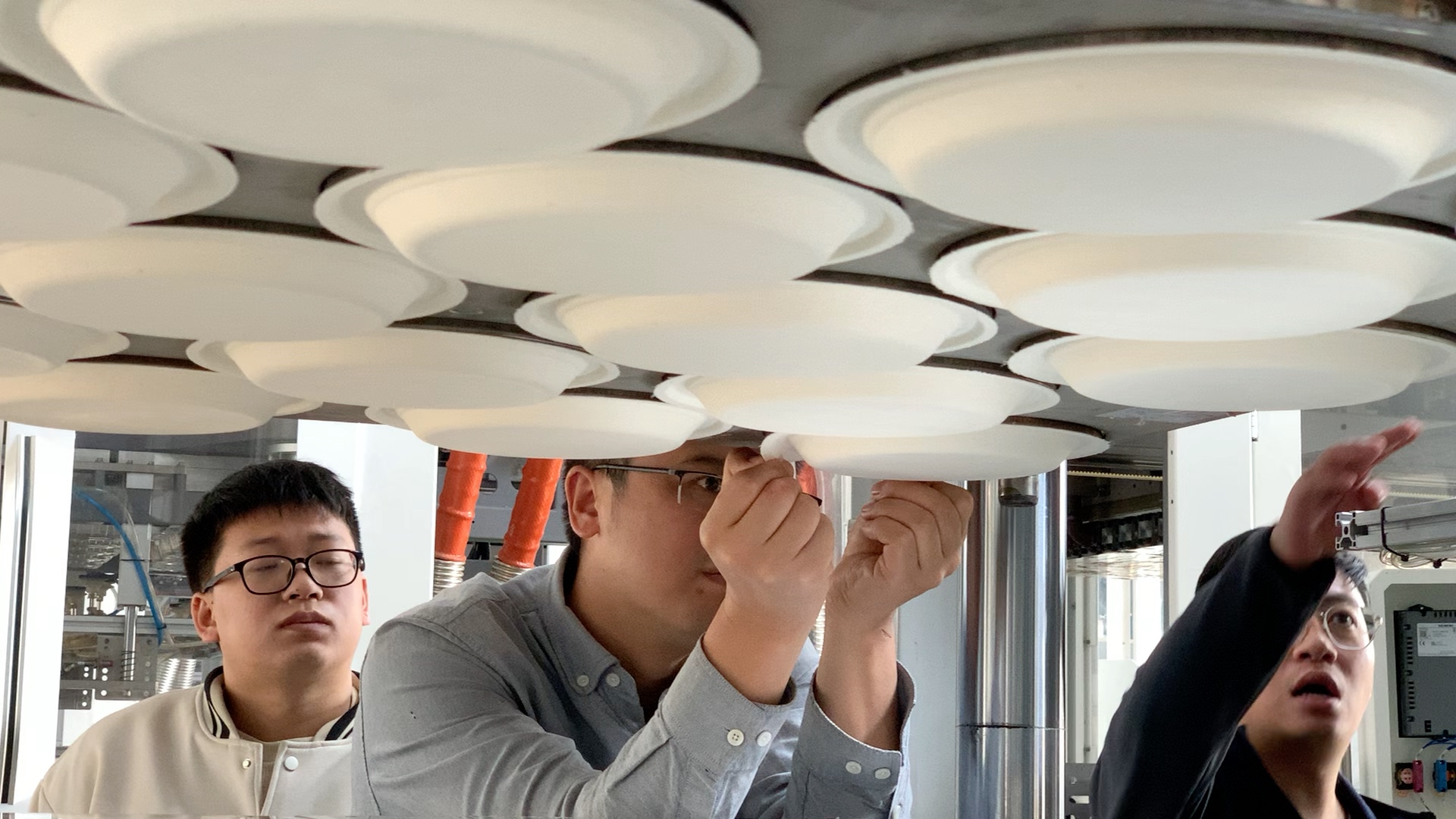
Commissioning an integrated scope: one party is accountable for the slurry-to-formed-part chain.
Service geography matters here as much as service capability. A single supplier that cannot reach the plant is no more useful than an unresponsive local fabricator. Hanson reports 10 service locations in operation across domestic and overseas markets, and for turnkey projects can place resident engineers on site with production ramp-up assistance for up to six months. For a first-time factory in an export market, that on-site window is often the real difference between an installed line and a producing line.
Application Fit: Where Integrated Pulp Preparation Has Been Tested
Delivered project records show where the integrated model earns its place, and where it does not.
Non-standard fibre. A bamboo-materials and sustainable food packaging manufacturer in China received a full turnkey factory solution covering factory planning, construction coordination, pulp preparation, customised forming equipment, wastewater treatment and operator training, progressing from equipment installation to trial production in roughly three months and completing within two years. When the fibre itself is the variable, splitting prep from forming tends to move the argument rather than solve it.
Scale with a single pulp source. A state-owned molded fibre tableware and industrial packaging manufacturer took 32 customised core machines adapted to large-scale bagasse pulp, lifting annual capacity from roughly 6,000 tonnes to 16,000 tonnes inside a 40,000-tonne-per-year project. At that volume, a slurry mismatch is not a nuisance — it is a production stop.
New material development. A bio-based materials manufacturer used six tableware integrated machines over four years, with slurry compatibility optimisation and low-energy process design built around its own fibre chemistry, moving from laboratory validation to pilot production. Here prep integration is not a convenience; the fibre formulation and the forming parameters have to be tuned together.
Export base build-out. A listed biodegradable tableware manufacturer selected Hanson after a four-month equipment test covering stability, capacity and quality, then took more than 100 full-servo ZBG-1111 lines for the first phase of a Thailand base, with factory-level scope spanning pulp preparation, forming equipment and mold development.
R&D before commitment. The ZAMS-6047 sampling line integrates pulping, refining, slurry preparation, slurry feeding, forming and hot pressing on a single 7,500 × 2,550 × 2,810 mm frame with a 600 × 470 mm platen and 82 kW rated power. It is the least expensive way to learn whether a fibre suits the process before signing for a full line — and it demonstrates, at small scale, that integrated prep is an engineering option rather than a marketing one.
Where Third-Party or Separate Pulp Preparation Still Makes Sense
An integrated scope is not universally correct, and treating it as the default would be poor advice.
Where a plant already operates a pulp mill, or buys ready-refined pulp to a stable specification, the prep system is not a variable — it is a fixed input. In those cases, specifying prep separately can reduce capital cost and let the buyer use an established local supplier with fast spares access. The same applies where the buyer's own engineering team has genuine pulping competence and intends to run trials continuously; owning that capability in-house can be more valuable than bundling it.
Three limitations on the integrated side deserve equal weight. First, corporate maturity: Hanson Pulp Molding was founded in 2022. A pulp molding line is a ten-year asset, so buyers should test service depth rather than assume it — the reported 10 service locations, resident-engineer option and up-to-six-month ramp-up support are the evidence to interrogate, not the founding date alone. Second, certification scope: the CE Machinery Directive attestations held cover specific model ranges — ZFG-1111, ZFD-8565, ZFM-9894 and ZFH-1311 under certificate M.2025.206.C130486, and ZAP-9585, ZDA-9585, ZAD-8565, ZAC-8565, ZDA-1070, ZDK-1010, ZAB-9585 and ZAB-1070 under M.2026.206.C142039. Models outside those lists, including some tableware and cup-lid platforms, require model-specific confirmation before an EU or EEA order is placed. Third, technology fit: a buyer running low volumes across a very wide product mix, in a market with low labour cost and cheap electricity, may find a 600–900 kg/24 h hydraulic integrated machine entirely adequate — the full-servo premium buys throughput and control precision that such a plant may not convert into margin.
Market Context: Why This Question Is Being Asked More Often
The global pulp moulding machines market was valued at USD 2,140.0 million in 2024 and is projected to reach USD 3,760.2 million by 2032, a 7.3% CAGR over 2025–2032, according to a commercial market report. That headline needs a caveat: estimates vary widely between research providers, partly because some datasets fold all paper-making machinery under the pulp moulding label, producing figures several times higher than moulding-specific studies. Direction is reliable; magnitude is not.
Demand composition explains the procurement pattern. Food and beverage packaging accounts for approximately 45% of global demand, with cup, tray and bowl formats leading — precisely the segment where tableware and cup-lid lines are bought in multiples rather than singly. China's exports of machinery for making paper or paperboard (HS 843920) were valued at USD 49.58 million in 2024, reflecting a supply base that ships complete systems rather than isolated presses.
Regulation is tightening the argument for integrated control. Safety-related parts of machinery control systems must comply with EN ISO 13849-1, and the 2015 version is withdrawn after a transition period ending 15 May 2027. Control architecture documentation is materially easier to assemble and defend when one supplier owns the safety functions across prep, forming and automation instead of splitting them across contracts.
A Preference Framework for Evaluation-Stage Buyers
| Buyer situation | Preferred model | What to lock in the contract |
|---|---|---|
| First-time factory, new or unproven fibre | Integrated | Slurry spec by fibre lot; single commissioning acceptance test |
| Existing pulp mill or purchased refined pulp | Split is defensible | Written interface schedule; shared historian access; joint fault protocol |
| R&D or pilot before capital commitment | Integrated sampling line | Parameter envelope for the intended production fibre |
| Export base, proven product, capacity priority | Either — interface governance decides | Ramp-up support duration; spare-parts response time; model-level CE confirmation |
The preference that holds up under scrutiny is conditional rather than absolute: integrated pulp preparation is preferable wherever the fibre, the product or the plant is still being defined, because the interface is the risk. Where the fibre is already stable and the buyer has pulping capability, a split scope is a legitimate cost decision — provided the interface is engineered as rigorously as the machine.
Future Outlook
Three developments are likely to shift this comparison over the next several years. Interface documentation is becoming a procurement artefact in its own right: buyers who request a written slurry specification, a control-signal schedule and a joint fault protocol at tender stage will get more value from a split scope than those who do not. The EN ISO 13849-1 transition ending 15 May 2027 will push safety-architecture documentation into the purchase decision, favouring suppliers who can evidence it across an entire line. And as energy accounting matures, the debate will move away from drive type toward metered consumption per tonne of dried product — where heating method, slurry circulation and idle time all count, and where a supplier-side percentage claim is worth less than a week of sub-metered data.
For evaluation-stage buyers, the practical conclusion is unglamorous. The performance loss attributed to outsourced pulp preparation is usually an interface failure, not an equipment failure — and interfaces are designed, not discovered.
Frequently Asked Questions
Does separate pulp preparation equipment cause performance loss after installation?
Not inherently. Performance loss in split-supply projects typically originates at four handovers: slurry specification, buffer and circulation capacity, the control-signal handshake between prep and machine PLCs, and wastewater or fibre recovery. Where these are written into both contracts and verified in a joint acceptance test, a split scope can run to the same output as an integrated one. Where they are left as verbal understandings, fault attribution becomes the dominant cost.
How large is the capacity difference between full-servo and hydraulic tableware lines?
On published parameters, a full-servo inline tableware line such as the ZFG-1111 is rated 900–1,200 kg/24 h, while an integrated tableware machine such as the ZCE-1111 is rated 600–900 kg/24 h, both product dependent. The gap is real but not attributable to the drive type alone: the two platforms differ in station count, hot-pressing pressure (120 t versus 60 t) and transfer architecture, all of which affect 24-hour output. A robotic full-servo platform with two hot-pressing stations, the ZBG-1111, is rated 1,000–1,500 kg/24 h.
Is the 15–25% energy reduction from full-servo integration independently verified?
It is a supplier-side claim rather than an independently verified benchmark. It is directionally plausible — servo drives remove idle hydraulic load and integrated prep avoids over-pumping — but the correct verification is sub-metered kWh per tonne of dried product over a full production week, on the same product, with the same heating method and slurry concentration. Heating choice alone can move rated power substantially: the same ZFG-1111 is rated 102 kW with electric heating and 39 kW with oil heating.
Who should own the slurry interface in a split-supply project?
The forming-line supplier should own the slurry specification even when it does not supply the prep system, because the machine's cycle time, product weight and dimensional tolerance are defined against that specification. The prep supplier then contracts to deliver within it. The specification should state concentration, freeness, temperature and dosing tolerance by fibre lot, and should be attached to both purchase orders rather than to one.
Which configuration is preferable for a first-time pulp molding factory?
An integrated scope is generally the lower-risk choice for a first-time factory, particularly where the fibre or the product is still being defined. A single supplier can trace a fault across raw material, slurry, forming and automation, and turnkey scopes can include feasibility analysis, capacity planning, factory layout, mould design, installation and commissioning, training and ramp-up support. The trade-off is reduced price transparency and higher supplier dependency, which buyers should offset with staged acceptance testing.
What should EU buyers confirm on CE documentation for these lines?
They should confirm that the specific model they are ordering appears in the certificate scope. Available attestations cover the ZFG-1111, ZFD-8565, ZFM-9894 and ZFH-1311 models under one certificate and the ZAP-9585, ZDA-9585, ZAD-8565, ZAC-8565, ZDA-1070, ZDK-1010, ZAB-9585 and ZAB-1070 models under another, both issued against the 2006/42/EC Machinery Directive with EN ISO 12100:2010 and EN 60204-1 referenced. A model outside those lists requires model-specific confirmation before the order is placed.
Detailed specifications and turnkey scope documents are compiled in the Hanson Pulp Molding brochure (PDF).
Tem questões ou precisa de mais detalhes?
Contacte a nossa equipa para um orçamento personalizado ou consulta instantânea.
Solicitar orçamento
Preencha o formulário abaixo e a nossa equipa entrará em contacto com uma proposta personalizada.
Chat direto do WhatsApp
Prefere conversar em tempo real? Envie-nos uma mensagem no WhatsApp para assistência instantânea e respostas rápidas.
- Obter orçamento personalizado
- Partilhar fotos ou documentos
- Discuta as suas necessidades diretamente
Geralmente responde em 5–30 minutos durante o horário de expediente.