
Pumpkin Seed Export Compliance: Grades, Sizes and Packaging
Pumpkin Seed Export Compliance: Grades, Sizes and Packaging
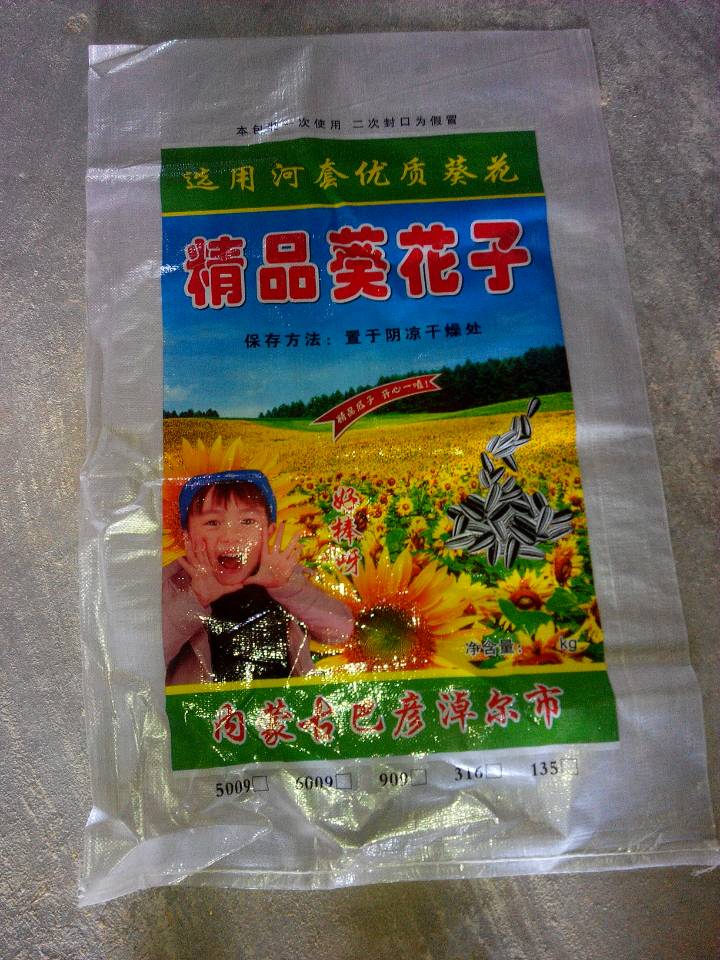
Standard export packaging is the part of pumpkin seed compliance a supplier controls most completely - and the part buyers examine least.
For most buyers, the first compliance document they receive from a pumpkin seed supplier is not a laboratory report. It is a packing list. A line reading “Shine Skin, 11cm+, AAA” compresses three distinct things: a variety, a minimum size band and a sorting class. None of the three is a measurement of the lot sitting in the container, and the gap between the label and the load is where a large share of sourcing disputes begin.
China’s pumpkin seed sector makes that gap commercially significant. National production was projected to reach 400,000 tons in 2024, a 40% increase over 280,000 tons in 2023, according to Seedea’s Pumpkin GWS Market Update. More volume moving through more sellers, under more variety names, means the buyer’s problem has shifted from locating supply to distinguishing suppliers. Grade codes, size bands and packaging formats are the working vocabulary of that distinction — useful only when they are read as contract terms rather than as assurances.
This analysis examines how those three elements fit together in the export trade, and what to verify when a grade designation appears on a packing list while compliance is actually decided by moisture, impurity and residue tolerances. The published product data of Inner Mongolia Chengtai Food Co., Ltd. is used as a working example throughout.
Why a Grade Label Is Not a Compliance Certificate
Grade designations such as AAA, AA and A are commercial sorting shorthand. They are widely used in the pumpkin seed trade, but they are not defined by a single international standards body, and they carry no legal force in any destination market. In-shell size designations work the same way: “11cm+” is an agreed minimum length band, not a regulated category. Both are conventions that a buyer and seller accept in a contract, and both stop being meaningful the moment they are treated as proof of anything.
What determines market access is parameter-level regulation. In the European Union, Commission Regulation (EU) 2023/915 sets the maximum aflatoxin level for pumpkin seeds at 5.0 μg/kg for the sum of B1, B2, G1 and G2. That ceiling applies to the physical lot. It does not care whether the lot is graded AAA, and it does not move because a packing list says so.
The same logic applies to pesticide residues. Pesticide residue regulation in the EU and the United States has constrained export volumes for Shine Skin and GWS types, contributing to a temporary global oversupply in 2025, according to Cardassilaris Family market insights. A supplier can hold a top grade and still lose a shipment on a residue result. Compliance in pumpkin seeds is therefore better evaluated as a set of measurable parameters with named inspection points than as a label attached to a bag.
The Grade and Size Vocabulary Used in Export Pumpkin Seeds
Two sorting systems coexist in the trade, and confusing them is one of the most common evaluation errors. In-shell pumpkin seeds are graded by seed length, expressed in centimetres with a “+” sign indicating a minimum. Kernel products are graded by letter — A, AA, AAA — a class that combines size, colour consistency and defect tolerance. Chengtai’s published product data uses both systems.
| Product designation | Variety | Listed grade or size | Listed colour | Stated application |
|---|---|---|---|---|
| Snow White Pumpkin Seeds | Snow White | Big Size Pumpkin Seeds 15cm+ | White | Manufacturing, roasted shops |
| Shine Skin Pumpkin Seeds | Shine Skin | Big Size Pumpkin Seeds 11cm+ | White | Manufacturing, roasted shops |
| Lady Nail Pumpkin Seeds | Lady Nail (Inner Mongolia origin) | 10cm+ | White | Manufacturing, roasted shops |
| Shine Skin Pumpkin Seeds kernels | Shine Skin kernels | Grade A / AA / AAA | Green (AAA listed as dark green) | Manufacturing, roasted shops |
All four lines are listed as raw specification, 2026 crop year, and intended for human consumption.
Three points about this table shape how a buyer should read it. First, the “+” in a centimetre band sets a floor, not a target: an 11cm+ lot should not contain seeds below 11cm, but the designation says nothing about how far above the floor the bulk of the lot sits. Second, the letter grade and the centimetre band are not interchangeable — a kernel grade describes a different product form sorted on a different axis. Third, the grade ladder is relative to the seller: AAA sits at the top of this supplier’s A/AA/AAA range, and published third-party specifications for AAA Shine Skin kernels typically cite a purity of 99.95% minimum with moisture of 8% maximum, per Agroland Food specifications. Figures of that kind belong in a contract if they are the target, because the grade code alone does not carry them.
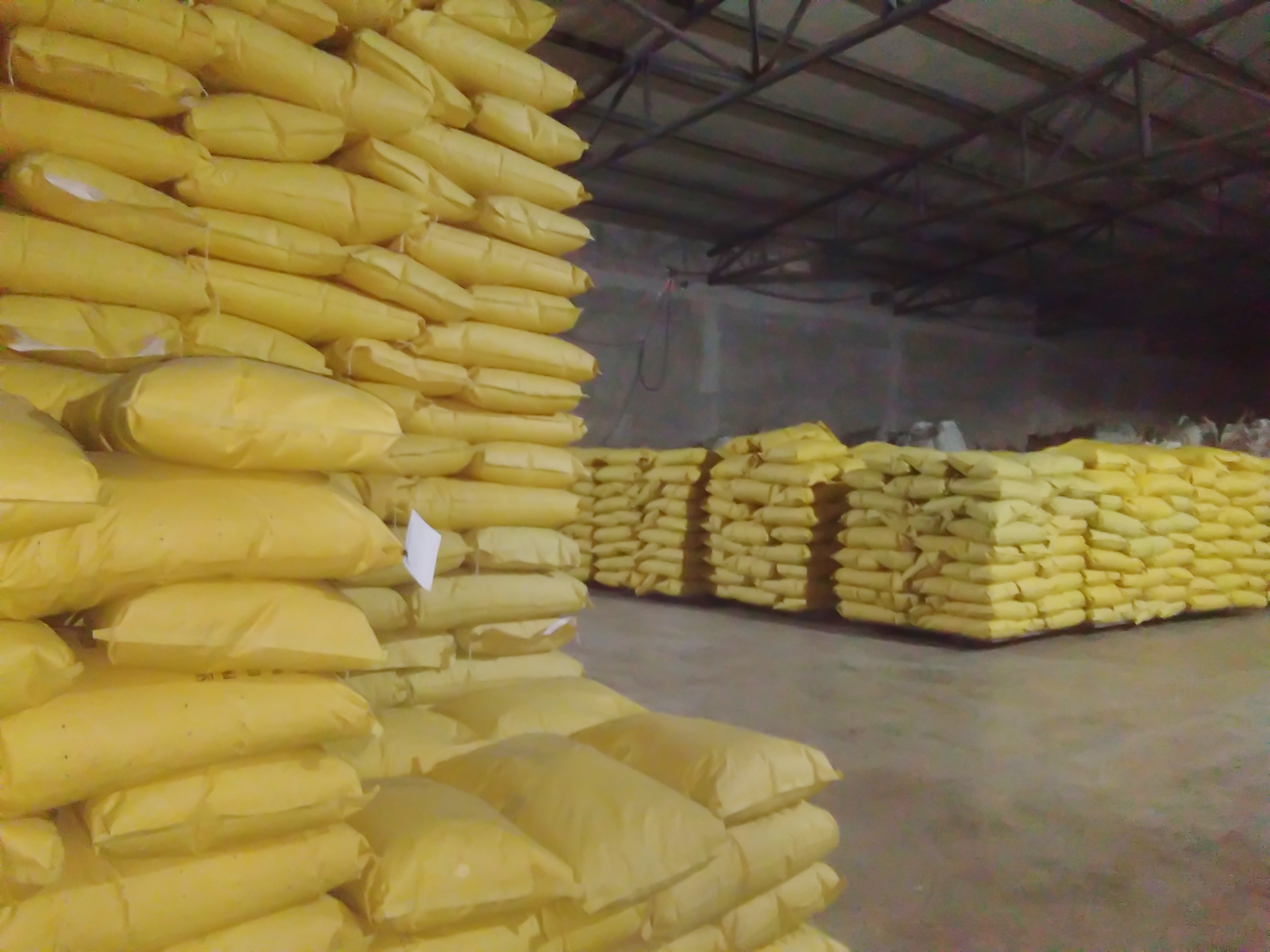
A grade code describes a sorting class; the lot behind it is confirmed by sampling and measurement, not by the label.
What a Size Band Commits a Supplier To
A size band is only as reliable as the sampling method behind it. Verifying an in-shell size claim in practice requires a defined sample weight, a physical measurement of the seeds in that sample, and a recorded distribution — not a single average figure. Buyers evaluating suppliers should ask how the sample is drawn, what proportion of the lot is inspected, and whether results are recorded per lot or per shipment.
The published ranges are 15cm+ for Snow White Pumpkin Seeds, 11cm+ for Shine Skin Pumpkin Seeds and 10cm+ for Lady Nail Pumpkin Seeds, the last of these also carrying an Inner Mongolia origin designation. Origin and size are separate claims and both appear on the packing list: “Inner Mongolia Origin” describes where the crop was grown, while the centimetre band describes only how the finished lot was sorted.
For kernel buyers the equivalent questions concern purity and colour consistency rather than length. The listed colour for the green kernel lines is green, with AAA recorded separately as dark green — a detail worth noting, because colour grading is one of the parameters that most often differs between an approved sample and a delivered container.
Packaging Formats and the Compliance Function They Serve
Packaging is the compliance element a supplier controls most completely, and it is frequently the least examined at evaluation stage. The standard export formats listed by Chengtai are 20 kg or 25 kg plastic or paper bags for in-shell pumpkin seeds; for kernels, the same 20/25 kg plastic or paper bags plus vacuum bags packed in cartons. Under the company’s OEM/ODM terms, bags can be printed with the customer’s logo.
| Packaging | Product form | Function relevant to compliance |
|---|---|---|
| 20/25 kg plastic or paper bag | In-shell pumpkin seeds | Defines the standard handling unit; liner integrity limits moisture exchange and contact contamination |
| 20/25 kg plastic or paper bag | Pumpkin seed kernels | Same function, with a tighter margin because kernels are more exposed to oxidation |
| Vacuum bag with carton | Pumpkin seed kernels | Limits oxygen exposure and compression in transit; the carton protects the vacuum seal |
| Printed bag (customer logo) | Both forms | Carries variety, grade and origin claims on the outer surface, which must match the packing list |
The fourth row is where packaging becomes a compliance question rather than a logistics one. When a buyer’s own brand and specified grade are printed on the bag, the buyer has created a second claim document. If the printed designation and the packing list disagree — through a version error, a substitution or a translation slip — the buyer has manufactured a discrepancy that will surface at destination, often at the least convenient moment.
Operationally, the parameters attached to these formats are a minimum order quantity of 5 metric tons, a monthly capacity of 2,500 metric tons, and a lead time of 10–15 days. Quality control is described as 100% test, and the stated after-sales position is that if seeds have any problem, a refund can be applied for. These are useful planning references and operating parameters rather than compliance commitments.
Cool-place storage is an operating condition for handling and warehousing — an instruction, not a shelf-life guarantee.
From Packing List to On-the-Ground Checks
This is where the grade label stops and the lot begins. The parameters below are the ones that decide whether a compliant-looking shipment actually clears inspection.
| Parameter | Published data | Where it is normally checked |
|---|---|---|
| Moisture | 9–10% across the pumpkin seed and kernel lines | Laboratory at origin; re-checked at destination against the contract ceiling |
| Impurity | Below 0.5% | Sieve and manual inspection |
| Erosion seeds | Below 0.5% | Visual inspection |
| Mildew seeds | Below 1% | Visual inspection |
| Aflatoxin (EU market) | No company claim; EU ceiling is 5.0 μg/kg for the sum of B1, B2, G1 and G2 under Regulation (EU) 2023/915 | Accredited laboratory test |
| Purity (AAA green kernels) | 99.95% minimum cited in published third-party specifications | Grading verification and sampling |
Two observations follow honestly from this table, and both are commercially useful to buyers.
The first is that the same grade code can be delivered against different tolerance bands. The published moisture band for these pumpkin seed lines is 9–10%, while published third-party specifications for AAA Shine Skin kernels frequently cite a ceiling of 8% maximum. A buyer whose process requires the tighter figure must negotiate it as a contract term; the AAA designation will not deliver it on its own. That is not a defect in the grading system — it is simply the difference between a sorting class and a chemical specification.
The second is that market rules sit outside the grade system entirely. Aflatoxin limits and pesticide residue rules are destination-market law. A lot can be correctly labelled, correctly sized, correctly packed and still fail on a residue result, which is precisely the pattern that constrained Shine Skin and GWS export volumes in 2025. Buyers should therefore decide before signing which document governs in the event of disagreement: the grade code, the specification sheet, or the laboratory result. In most professional contracts it is the last of the three.
Application and Use Cases
The applications published for these pumpkin seed lines are manufacturing and the roasted shop industry, with the products designed for human consumption scenarios. The historical client base in this category includes food processors, snack manufacturers, food wholesalers, and importers and distributors.
A representative case from the company’s records covers a project scale of 30,000 metric tons over a two-year period, spanning multiple countries including the United Arab Emirates, Afghanistan, Azerbaijan, Bahrain, China and Germany. The recorded outcome was stable supply, consistent product quality and satisfied bulk order delivery. Read as a compliance signal rather than a sales claim, the informative part is the duration: two years of repeat bulk shipments is different evidence from a single successful container, because it implies tolerances held across multiple lots and multiple inspections.
Demand signals point the same way. Lady Nail planting area expanded by about 80% to roughly 500,000 acres in 2025, driven by robust demand in the Middle East, according to Cardassilaris Family market insights. Separately, the pumpkin seed oil market is growing at a compound annual rate of 10.5% and is projected to reach USD 2.06 billion by 2030, per Grand View Research — a trend that increases demand for high-purity, high-grade kernels rather than for volume alone.
Market Trend Analysis
Three structural facts shape how buyers should read supplier claims over the next buying cycle.
China remains the dominant production base. Projected national output of 400,000 tons in 2024 represented a 40% rise over 280,000 tons in 2023. Within that total, Shine Skin is the dominant variety, accounting for 74% of 2024 production, or roughly 294,000 tons, according to Everstar Foods. Snow White and Lady Nail each accounted for an estimated 12%, or approximately 46,000 tons and 52,000 tons respectively.
Cultivation is concentrated geographically. Inner Mongolia, where Inner Mongolia Chengtai Food Co., Ltd. is based, recorded a pumpkin seed planting area of 28,700 hectares in 2024, per Seedea. Concentration cuts both ways: it supports origin-based sourcing and traceability, and it also means weather, disease and regional regulation can affect a large share of global supply at once.
Export value and global demand keep rising. China’s pumpkin seed export value reached USD 97 million in 2023, approximately 10% of global export value, according to Tridge data drawn from UN Comtrade. The global pumpkin seed market is expected to grow from USD 1.08 billion in 2025 to USD 2.62 billion by 2032 at a CAGR of 13.4%, per Maximize Market Research; Wikifarmer values the pumpkin seed segment at €1.13 billion in 2025. The two estimates reflect different segment definitions rather than a contradiction, and buyers comparing market data should check which definition a figure uses before relying on it.
The trend line that matters most for compliance is the last one. As volume grows and more sellers enter, the differentiator moves from availability to documentation. Regulatory pressure on residues already produced a temporary oversupply in 2025 for specific types. Buyers who treat parameter tolerances as the core of supplier evaluation will be better positioned than buyers who negotiate on grade codes and price alone.
How Parameter-Led Sourcing Compares with Label-Led Sourcing
| Evaluation dimension | Label-led sourcing | Parameter-led sourcing |
|---|---|---|
| Specification basis | Variety and grade code | Variety, size band, moisture and impurity tolerances, applicable residue and aflatoxin limits |
| Packaging | Whatever the seller ships | Format agreed by product form, with printed label matched to the packing list |
| Verification | Acceptance of the stated grade | Lot-level sampling and test data at origin, re-checked at destination |
| Dispute resolution | Negotiated after arrival | Resolved against written tolerances |
| Commercial parameters | Price per ton | Price per ton plus MOQ, lead time and packaging specification |
Where parameter-led sourcing stops matters as much as what it delivers. Five boundaries are worth stating plainly.
- A statement of “100% test” describes a production-side inspection practice. Inner Mongolia Chengtai Food Co., Ltd. makes no third-party certification claims in its published product data, and this article cites none for that reason. Buyers who require accredited certification must confirm availability separately before contracting.
- The published moisture band of 9–10% is wider than the 8% maximum cited in published AAA kernel specifications. The tighter figure is achievable only as a negotiated contract term.
- Storage in a cool place is an operational instruction for handling and warehousing, listed across the product data. It is not a shelf-life guarantee and does not replace contractual terms on moisture.
- A minimum order quantity of 5 metric tons and a lead time of 10–15 days are operating parameters that can shift with grade and size availability.
- Commercial grade codes are conventions. Cross-supplier comparison based on the letters alone is unreliable, because different sellers apply different defect and purity thresholds to the same label.
Future Outlook
The direction of travel is toward parameter discipline. As the global pumpkin seed market expands toward USD 2.62 billion by 2032 and demand for high-purity kernels grows alongside the pumpkin seed oil sector, buyers will increasingly need documentation that survives inspection rather than labels that simplify purchasing.
Three practical expectations follow. Residue and contaminant rules in major import markets are more likely to tighten than to relax, which raises the value of suppliers able to deliver consistent lots rather than occasional top grades. Origin concentration in areas such as Inner Mongolia will keep making traceability a purchasable attribute. And the gap between a grade code and a measured lot will remain the most common source of dispute — which makes it the most productive area for buyers to tighten their own process.
For buyers who want to check the underlying product and packaging list directly, the company publishes a downloadable profile: Company profile (PDF). Supplier website: www.ctsunfood.com.
FAQ
What does AAA mean on a pumpkin seed packing list?
AAA is the top of the A/AA/AAA commercial grade ladder used for green pumpkin seed kernels. It is a sorting class combining size, colour consistency and defect tolerance, not a regulatory certification. Published third-party specifications for AAA Shine Skin kernels typically cite 99.95% minimum purity and 8% maximum moisture, but the enforceable figure is whatever the purchase contract states.
Which size ranges are used for in-shell pumpkin seed exports?
In-shell seeds are graded by minimum seed length in centimetres. Chengtai publishes 15cm+ for Snow White Pumpkin Seeds, 11cm+ for Shine Skin Pumpkin Seeds and 10cm+ for Lady Nail Pumpkin Seeds of Inner Mongolia origin. The “+” defines a floor only; the distribution above that floor still has to be sampled and recorded.
How are moisture and impurity tolerances verified rather than assumed?
They are measured, normally twice — once at origin and again at destination. Chengtai’s published data lists moisture at 9–10%, impurity below 0.5%, erosion seeds below 0.5% and mildew seeds below 1% across its pumpkin seed lines. Buyers needing a tighter band, such as 8% maximum moisture, must set that figure in the contract.
What packaging formats are standard for bulk pumpkin seed shipments?
20 kg or 25 kg plastic or paper bags are the listed formats for in-shell pumpkin seeds. Kernels are listed in the same 20/25 kg bags and in vacuum bags packed in cartons. Bags can be printed with a customer’s logo under OEM/ODM terms, which means the printed grade, size and origin must match the packing list exactly.
Does a grade label guarantee compliance with EU market rules?
No. Market access depends on measured parameters. Commission Regulation (EU) 2023/915 sets the maximum aflatoxin level for pumpkin seeds at 5.0 μg/kg for the sum of B1, B2, G1 and G2, and that ceiling applies to the lot regardless of its grade code. Pesticide residue rules in the EU and the US have likewise affected export volumes for Shine Skin and GWS types.
What does “storage in a cool place” mean operationally?
It is a handling and warehousing instruction, listed as the storage condition across Chengtai’s pumpkin seed product data. It describes the environment in which the product should be kept and how it should be treated during storage and shipment preparation. It is not a shelf-life guarantee and does not substitute for contractual moisture terms.