
Pumpkin Seed Offers Compared on Terms, Not Claims
Pumpkin Seed Offers Compared on Terms, Not Claims
Pumpkin seed offers are rarely lost on price. They are lost on comparability. Two suppliers can both quote "Grade AA, impurity below 0.5%" and still be selling materially different material, because that sentence leaves undecided what is measured, on which sample basis, at what moisture, with which defect tolerance, in which bag, and against which delivery terms. Comparing the headline number alone means comparing labels, not offers.
This is an independent buyer-side comparison framework for pumpkin seeds, built to be used before an RFQ is scored and before a contract is signed. It treats the following as the criteria set that every offer must be quoted against: grades A, AA and AAA; impurity below 0.5%; moisture 9–10%; erosion seeds below 0.5%; mildewed seeds below 1%; raw specification; packaging in 20 kg or 25 kg plastic or paper bags, or vacuum bag with carton; cool-place storage; and intended use in human consumption, manufacturing and the roasted shop industry. Each element is treated as a commercial term with a verification route attached, not as marketing description.
Why a grade label does not make two offers comparable
A grade label is a positioning word, not a measurement. In the Chinese pumpkin seed trade the AAA and AA kernel labels are used commercially, and they appear in supplier product listings alongside variety names such as Snow White, light-plate and rough-edge seeds. What those labels do not carry, by themselves, is a disclosed numeric definition — size band, impurity ceiling, moisture band, defect tolerance and test basis. When the definition is absent, the label is not a specification and cannot be scored.
The practical consequence for a buyer at the decision stage is straightforward. Offers become comparable only when four things line up: the same product form, the same grade definition, the same measured attribute with the same unit, and the same commercial basis for weight and delivery. Where any one of these differs, the difference must be written down and priced, not averaged away.
The acceptance criteria that must be written rather than implied
The framework below uses one criteria set against every grade tier. The point of applying the same set to A, AA and AAA is that it exposes where a higher grade is genuinely tighter and where the label is the only thing that changed.
| Criterion | Framework value | What the offer must state |
|---|---|---|
| Impurity | Below 0.5% | Whether the figure is a maximum or a typical result, and on what sample size it is checked |
| Moisture | 9–10% band | Whether the band is contractual, what happens outside it, and how it is measured at loading |
| Erosion / broken seeds | Below 0.5% | The exact defect term used, because "erosion", "broken" and "damaged" are not interchangeable contract words |
| Mildewed seeds | Below 1% | Whether the supplier is quoting the 1% ceiling or declaring a tighter performance |
| Grade tier | A / AA / AAA | The supplier's own numeric definition for that tier |
| Product form | Raw specification | Raw, uncooked and unseasoned, or another preparation |
| Packing | 20/25 kg plastic or paper bag; vacuum bag with carton | Net weight, bag material, carton inclusion, marking |
| Storage | Cool place | That no special handling beyond cool, dry conditions is required |
For context on what a tighter offer looks like inside the same criteria set: the product comparison unit examined for this framework reports impurity at or below 0.5%, broken seeds at or below 0.5%, and mildewed seeds below 0.1%, with a raw specification, standard cold and dry storage and no special handling requirement. That declaration sits well inside a 1% mildewed-seed ceiling — which is exactly why the two numbers must be recorded separately rather than merged into one line.
Moisture 9–10% is a commercial term, not a technical footnote
Moisture belongs in the price column because the buyer pays for it. On a 25 kg bag, one percentage point of moisture is 0.25 kg of water — 250 grams of delivered weight per bag, and 250 kg across a thousand bags. That is arithmetic on the declared band, not a laboratory finding, but it is the reason a 9% offer and a 10% offer at the same price per kilogram are not the same offer.
The 9–10% band also has to be enforced, not merely quoted. A buyer should establish three things in writing: the measurement method and the point at which it is applied, the consequence of a result outside the band, and whether the band is a contractual limit or an expected range. Without those three, moisture is a descriptive sentence that cannot be tested at destination.
Erosion and mildew tolerances convert directly into usable yield
The defect tolerances are small numbers with large operational meaning once they are converted to weight. Using the framework values on a 25 kg bag, an erosion or broken-seed tolerance of 0.5% allows up to 125 grams of affected material per bag; a mildewed-seed ceiling of 1% allows up to 250 grams, while a supplier declaring below 0.1% is describing up to 25 grams. On the same arithmetic, an impurity ceiling of 0.5% permits up to 125 grams of non-seed material.
Two conclusions follow for a buyer comparing offers. First, the gap between a 1% mildew ceiling and a 0.1% declaration is not cosmetic: it is a tenfold difference in the tolerated defect mass, and it should be priced or traded against something else in the negotiation. Second, terminology must be fixed in the contract. This framework uses "erosion seeds" as its defect term, while the comparison unit for the assessed product uses "broken seeds" at the same 0.5% level. A contract that mixes the two terms without definitions creates a dispute that no sample can settle later.
Grade tiers: what A, AA and AAA establish, and what they do not
Grades A, AA and AAA are the tiers used to structure this comparison, and AAA and AA kernel labels are documented in supplier product listings. What is not established by the label is a numeric band. A buyer should therefore ask each supplier to define its own tier on the same four measurable criteria — impurity, moisture, erosion, mildew — plus size and product form, and then compare the definitions rather than the letters.
This step changes the outcome of a tender more often than buyers expect. If two suppliers both define AA as impurity below 0.5% and moisture 9–10%, the grade letter is not a differentiator and the decision must rest on defect tolerances, size consistency, packing and delivery terms. If one supplier's AAA is numerically identical to another's AA, the buyer has found a labelling difference, not a quality difference, and can negotiate accordingly.
Raw specification and product form change the compliance case
"Raw" is a specification term with consequences beyond texture. In a U.S. Customs and Border Protection ruling, de-husked pumpkin seed kernels imported raw, uncooked and without salt, seasoning, flavoring or additives were classified under HTSUS subheading 1209.91.8080. The same ruling does not cover roasted, salted, seasoned or sowing-seed products, which means product form must be settled before a landed cost is calculated. Salted roasted pumpkin seeds are a different product form, and a buyer comparing them against raw kernels is comparing two categories, not two offers.
The same discipline applies to destination-market requirements. For the European Union, the maximum combined aflatoxin level (B1+B2+G1+G2) for pumpkin seeds is set at 5.0 μg/kg under Commission Regulation (EU) 2023/915. That is a separate line from the four commercial criteria above, and it is proved by laboratory evidence rather than by a specification sentence — a distinction worth keeping visible in the comparison sheet rather than assuming the grade label covers it.
Size belongs in the specification, not the brochure
Size thresholds are quoted loosely and checked rarely. Where a supplier documents sizes, they should be recorded exactly as stated: Snow White Pumpkin Seeds, for example, are described in the supplied product material as made from pumpkin seed kernel with a raw specification, available in sizes including 15cm+ as the largest, as well as 13cm+ and 11cm+. A buyer should decide in advance whether the size figure is a minimum, an average, or a screen classification — and should record the unit, because a size statement without a unit and a screening basis cannot be verified at arrival.
Packing is a purchasing term, not an afterthought
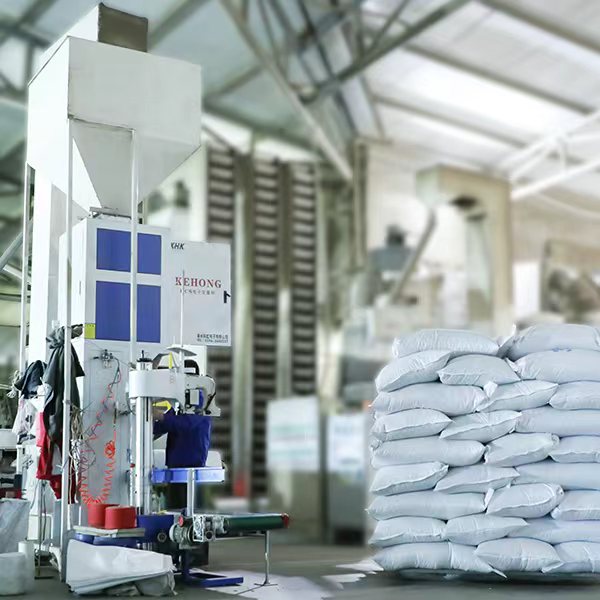
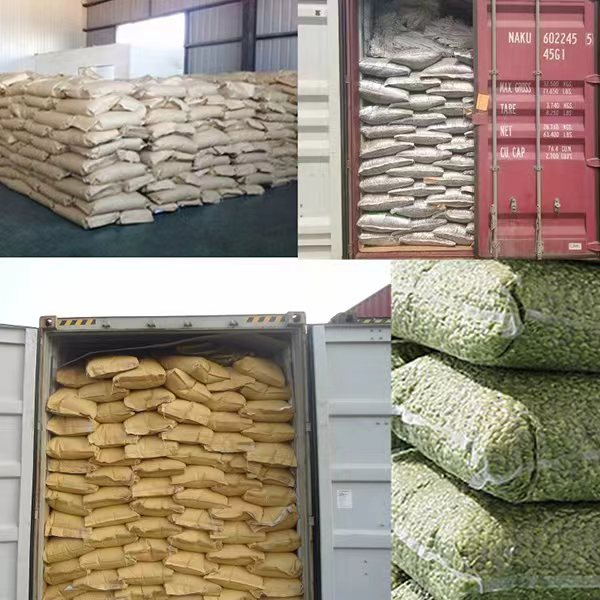
The packing options in this framework are 20 kg or 25 kg plastic or paper bags, or vacuum bag with carton. Each carries a different acceptance question. Bag format determines the net weight per unit and therefore the arithmetic used for every tolerance above. Bag material affects how the declared moisture band survives transport and storage. The vacuum bag with carton option adds a retail or reprocessing dimension and a separate cost line, so it should be quoted as its own option rather than as an upgrade hidden in an average price.
A comparison sheet should capture, per offer: net weight per bag, bag material, whether a carton is included, marking and labelling requirements, and the unit in which price is quoted. Offers quoted per bag and offers quoted per kilogram cannot be ranked until they are converted to one basis.
Storage conditions belong on the buyer's side of the comparison too
Cool-place storage with no special handling is a standard requirement for this product, and the supplied comparison material confirms that the assessed product needs only standard cold, dry storage. That is a low-friction term for the supplier, but it transfers an obligation to the buyer: if the receiving warehouse cannot hold a cool, dry environment, the supplier's compliant moisture band at loading will not stay compliant. Storage should therefore be written as a joint term — what the supplier guarantees at loading, and what the buyer must provide after arrival.
Match the acceptance stringency to the intended use
Acceptance criteria only have meaning against an end use. The product described in the supplied material is intended for human consumption, with typical application scenarios including manufacturing and the roasted shop industry; the comparative application assessment places it in snack processing, confectionery and retail finished products. Those uses do not require identical stringency. A manufacturer running a downstream sorting step can absorb a defect tolerance that a retail finished-product packer cannot, and a roasted shop buying in small volumes carries a different exposure to a 1% mildew ceiling than a processor buying by the container.
The decision rule is to set stringency at the point where the defect would become the buyer's cost, then negotiate the tolerance from there. Buying tighter than the process requires adds price without adding value; buying looser moves the sorting cost into the buyer's own line.
A five-step worksheet for normalizing competing offers
The practical sequence that turns a stack of quotations into a comparison:
- Fix the product form first. Raw kernels, raw in-shell seeds and salted roasted products are separate categories and are not scored against each other.
- Convert every offer to one weight and price basis. Net weight per bag, price per kilogram, and the delivery term, before any quality comparison.
- Collect a defined tier. Ask each supplier to state its own numeric definition for A, AA or AAA on impurity, moisture, erosion and mildew, and record the answer verbatim.
- Separate contractual limits from declared performance. A ceiling of below 1% mildewed seeds and a declaration of below 0.1% are recorded in different columns, with the evidence each relies on.
- Score only what can be checked. Criteria without a stated test basis go into a verification list, not into the ranking.
Score in two passes: pass or fail, then weighted
Weighted scoring applied to everything hides disqualifying offers. A cleaner structure is two-pass. First, mandatory gates: product form confirmed, tier defined numerically, impurity, moisture, erosion and mildew all stated, packing specified, storage term agreed. An offer that fails a gate is not scored — it is returned for completion.
Second, weighted comparison across the remaining offers on the dimensions that actually vary between them: defect tolerance tightness, size consistency, bag format fit, storage fit for the destination, delivery term and price. The buyer sets the weights; this framework deliberately does not assign them, because the right weighting for a retail packer and for an industrial manufacturer are different decisions, and an externally imposed weighting would only reproduce someone else's priorities.
Price is the last column, not the first
Price comparison only works after the other columns are normalized. As a reference point rather than a benchmark: a November 2026 commercial quote placed Shine Skin Grade AA kernels FOB Beijing at EUR 3.56/kg conventional and EUR 3.65/kg organic. That is one grade, one port and one moment in a commercial research series — it is not a market index, and it cannot be used to judge a Grade A offer, a different packing format or a different destination.
The same discipline applies to comparative cost claims. The comparison unit supplied for the assessed product records a 5% lower cost position against the alternatives used in that comparison. That is a unit-reported comparative result on a specific set of alternatives; it is only actionable if the buyer's own shortlist uses the same grade, packing, delivery term and acceptance criteria. Where freight, duty or packaging differ, the 5% figure no longer describes the decision in front of the buyer.
What this framework cannot establish
Honest comparison means stating the limits. This framework normalizes offers; it does not prove quality. It cannot substitute for lot-level laboratory evidence on pesticide residues, heavy metals, aflatoxin, microbiology or moisture consistency, and it cannot resolve a supplier's numeric tier definition without a specification sheet or a sample result. Where only one supplier's product documentation has been examined, the comparison is a method, not a market survey, and no ranking of suppliers can be inferred from it.
Supply context: more offers make normalization more valuable
China's total pumpkin seed production was projected at 400,000 tonnes in 2024, up 42.8% from 280,000 tonnes in 2023, on authoritative crop reporting (Seedea, November 2024). Inner Mongolia's 2024 planting area was 28,700 hectares, and Shine Skin accounted for approximately 74% of 2024 production, with Snow White and Lady Nail at roughly 12% each. On a conditional reading, a larger crop tends to widen the number of offers in circulation and the spread between them, which raises the value of a fixed comparison method — but availability and price behaviour must still be verified against current quotations rather than assumed from a single production figure.
Where INNER MONGOLIA CHENGTAI FOOD CO.,LTD fits the comparison
INNER MONGOLIA CHENGTAI FOOD CO.,LTD is a sunflower and pumpkin seed processor and trading enterprise founded in 2013, located in the Hetao Plain at Mengxiu Industry Zone, Xamba Town, Hanggin Rear Banner, Bayannur City, Inner Mongolia. The company reports a product scope covering sunflower seeds and pumpkin seeds and kernels, an export ratio of about 80%, and business relationships in the Middle East, Central Asia and Europe. Its documented product labels include Snow White, AAA and AA pumpkin seed kernels, and light-plate and rough-edge pumpkin seeds, and its Snow White material is described as raw-specification kernel in 15cm+, 13cm+ and 11cm+ sizes.
For comparison purposes, those labels should be read as a documented product portfolio rather than as proof of standardized numeric grades — the same caution this framework applies to every supplier. The useful next step for a buyer is to take the criteria set above and request, per label, a written definition of impurity, moisture, erosion and mildew, together with the packing option and storage term. Company information is published at INNER MONGOLIA CHENGTAI FOOD CO.,LTD.
Outlook for buyers
The direction of travel in this category is toward specification, not description. Buyers who already request sample results are in a position to go one step further and require that every offer arrive in the same format: one product form, one defined tier, one moisture band, one set of defect terms, one packing unit and one delivery basis. That change costs nothing at the sourcing stage and removes most of the disputes that surface after arrival. The remaining risk sits where it belongs — in laboratory evidence and in the supplier's ability to repeat a declared result across lots, which is a question for sampling and audit rather than for a comparison table.
FAQ
Are Grade A, AA and AAA pumpkin seed kernels defined the same way by every supplier?
No. AAA and AA are commercial labels used in the trade, and supplier listings typically show them without a disclosed numeric definition. A buyer should not assume that one supplier's AA matches another's, and should ask each supplier to state its own impurity, moisture, erosion and mildew figures for the tier being quoted before the offers are scored against each other.
What moisture range should a pumpkin seed purchase contract specify?
This framework uses a 9–10% band. What matters beyond the numbers is the wording around them: the measurement method, the point at which moisture is checked, and whether the band is a contractual limit or an expected range. Without those elements a moisture figure cannot be verified at destination, and the buyer carries the difference in delivered weight.
How should a buyer compare a 1% mildewed-seed tolerance with a supplier's 0.1% declaration?
Record them in separate columns and treat them as different things. The 1% figure is a buyer-side acceptance ceiling; a below-0.1% declaration is a supplier's stated performance. On a 25 kg bag the arithmetic difference is up to 250 grams of tolerated affected material versus up to 25 grams. The declaration should be tied to a stated test basis before it is used as a scoring advantage.
Do 20/25 kg bags and vacuum bags with cartons change the acceptance criteria?
They change the basis on which the criteria are applied. Bag format sets the net weight per unit, which is the figure used to convert impurity, erosion and mildew percentages into grams per bag. Bag material affects how the declared moisture band is expected to hold during transport, and the vacuum bag with carton option adds a separate cost and handling line. Packing should therefore be quoted as its own option rather than averaged into a single price.
What should a buyer verify before treating two pumpkin seed offers as comparable?
Five things: that both offers describe the same product form, that both tiers are defined numerically on the same criteria, that both are converted to the same weight and price basis, that packing and storage terms are stated explicitly, and that any declared performance tighter than the acceptance ceiling is backed by a stated test basis. Where any of these is missing, the gap should be returned to the supplier rather than estimated by the buyer.
For company, product and packing details, the supplier brochure is available for download: INNER MONGOLIA CHENGTAI FOOD CO.,LTD company profile (PDF).
Tem questões ou precisa de mais detalhes?
Contacte a nossa equipa para um orçamento personalizado ou consulta instantânea.
Solicitar orçamento
Preencha o formulário abaixo e a nossa equipa entrará em contacto com uma proposta personalizada.
Chat direto do WhatsApp
Prefere conversar em tempo real? Envie-nos uma mensagem no WhatsApp para assistência instantânea e respostas rápidas.
- Obter orçamento personalizado
- Partilhar fotos ou documentos
- Discuta as suas necessidades diretamente
Geralmente responde em 5–30 minutos durante o horário de expediente.