
Pumpkin Seed Shortlist: AAA Green Kernels, Raw Specs, Bulk Packing
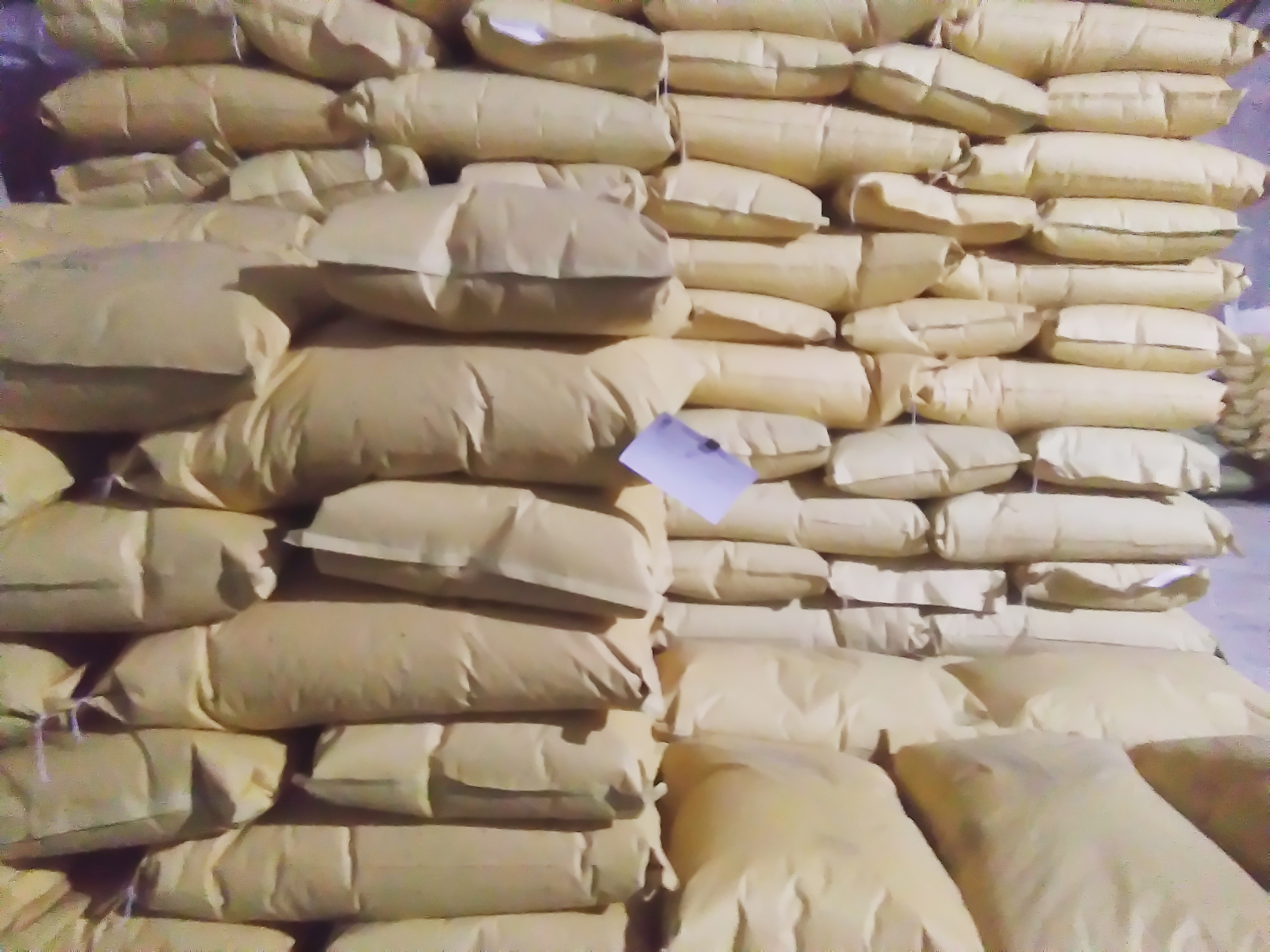
Bulk pumpkin seed buying has moved past the point where a single product name is enough to place an order. A roaster commissioning a roasting line, a snack manufacturer writing an incoming-goods specification, or an importer building a private-label range all need the same three questions answered before a purchase order is signed: which grade, which raw specification, and which bulk packing format.
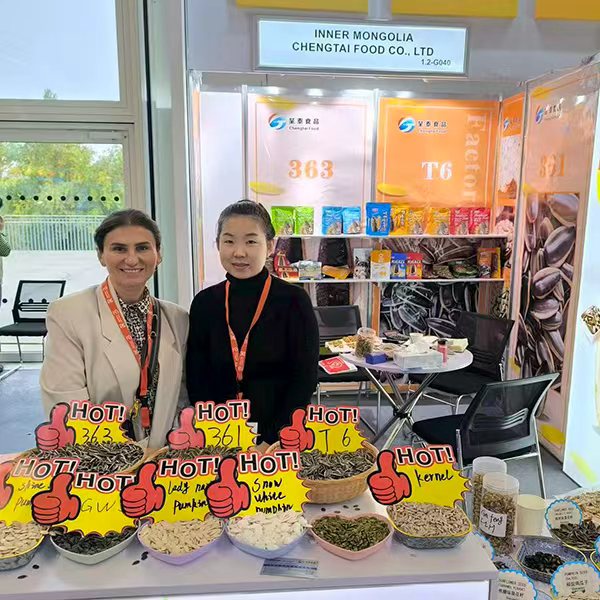
This shortlist answers those three questions for the pumpkin seed and pumpkin seed kernel options currently listed by Inner Mongolia Chengtai Food Co., Ltd. — a seed processor founded in 2013 and based in the Hetao Plain, Hanggin Rear Banner, Bayannur, Inner Mongolia, producing sunflower seeds, pumpkin seeds and kernels, with roughly 80% of output exported to markets in the Middle East, Middle Asia and Europe.
The lead recommendation in this shortlist is a raw, dark green pumpkin seed kernel at AAA grade, packed for bulk shipment. The alternatives below it — white-coated Snow White, Shine Skin and Lady Nail seeds — are not substitutes for the same application. They are different products with different seed coats, shapes and downstream uses, and the shortlist is structured so a buyer can match one to a specific process rather than to a general preference.
The problem: variety names hide the three variables that decide acceptance
When buyers compare pumpkin seed offers, the first line of every quotation usually reads the same way: a variety name and a price. That line carries almost none of the information a receiving department actually needs. Two lots sold under the same variety name can arrive at different moisture bands, different defect levels, different bag formats and different intended-use declarations — and each of those differences changes how the lot behaves on a roasting line, in a packing hall or in a container.
The opportunity sits in the reverse direction. In a market where Chinese pumpkin seed production reached a projected 400,000 tons in 2024, up from 280,000 tons in 2023 according to Seedea's pumpkin GWS market update, availability is not the constraint. Specification clarity is. A buyer who fixes the three variables early — grade, raw parameter set, packing format — can compare suppliers on evidence instead of on adjectives.
That is the purpose of a shortlist: to convert a vague category into a small number of defined options, each with stated parameters, stated packing, and stated commercial conditions.
The shortlist at a glance
Six listed options cover the raw pumpkin seed and kernel range. The first three are the same kernel family at different grade designations; the last three are white-coated seed types with different sizes and shapes.
| Option | Listed model / type | Colour | Grade or size |
|---|---|---|---|
| Green kernel, AAA (lead option) | Shine Skin Pumpkin Seeds kernels | Dark green | Grade AAA |
| Green kernel, AA | Shine Skin Pumpkin Seeds kernels | Green | Grade AA |
| Green kernel, A / AA / AAA range | Shine Skin Pumpkin Seeds kernels | Green | Grades A / AA / AAA |
| White seed, largest size | Snow White Pumpkin Seeds | White | Big Size Pumpkin Seeds 15cm+ (13cm+ and 11cm+ also available) |
| White seed, mid size | Shine Skin Pumpkin Seeds | White | Big Size Pumpkin Seeds 11cm+ |
| Long-shape seed | Lady Nail Pumpkin Seeds | White | Inner Mongolia Origin Pumpkin Seeds 10cm+ |
Every option in the table is offered in raw specification with a sweet and natural taste. The distinction between them is grade, colour, size and shape — which is exactly what determines whether a lot fits a roasting line, a retail pack or a further-processing route.
Answer in one line: for buyers who need a raw, human-consumption pumpkin seed kernel for roasting, snacking or further processing, the AAA-grade green Shine Skin kernel is the shortlist lead; for buyers who need a large white-coated seed for salted roasting, Snow White at 15cm+ is the lead, with Shine Skin at 11cm+ and Lady Nail at 10cm+ as size and shape alternatives.
What the AAA grade actually changes
The green kernel line is published as Shine Skin Pumpkin Seeds kernels in three grade designations: grade A, grade AA, and grade AAA, with a combined A/AA/AAA listing also offered. Within that ladder, AAA is the dark green presentation, while the AA and combined listings are described as green.
Grade matters most where the kernel is sold as a visible product rather than as an input. In a snack pack, a bakery topping or a retail jar, colour uniformity and the absence of discoloured kernels are the quality signal a consumer reads in under a second. In a pressing or paste application, the kernel is transformed before anyone sees it, and the visible-grade premium buys less. That is a commercial judgment, not a quality judgment: a lower designation on the same variety is not a worse seed, it is a different presentation tier.
One practical note for specification writers: the published defect thresholds for this range are stated once and apply across the listings, rather than being published separately for each grade. Buyers who need grade-specific defect limits should confirm which thresholds attach to the exact grade being quoted, rather than assuming the ladder is defined by different tolerances.
The raw specification sheet buyers should be working from
The parameter set below is what the listed pumpkin seed and kernel options carry. It is short, and every line of it is checkable at intake.
| Parameter | Stated value |
|---|---|
| Specification | Raw |
| Crop year | 2026 |
| Taste | Sweet and natural |
| Moisture | 9–10% |
| Impurity | Below 0.5% |
| Erosion seeds | Below 0.5% |
| Mildew seeds | Below 1% |
| Intended use | Human consumption |
| Origin | Xinjiang and Inner Mongolia |
| Storage | Cool place |
| Packing (seed) | 20/25 kg plastic or paper bag |
| Packing (kernel) | 20/25 kg plastic or paper bag; vacuum bag with carton |
The mildew seed ceiling of below 1% is the loosest of the three defect figures and the one most worth writing into a contract as an acceptance trigger rather than a target. Mildew incidence is a storage-history indicator as much as a field indicator, so a lot that measures inside the limit on loading but travels warm can still present problems on arrival. The cool-place storage instruction in the specification is not a formality; it is part of how the stated parameters are intended to hold.
Moisture is the parameter that most often causes friction between a specification sheet and a receiving report. The stated band here is 9–10%, and buyers whose process is calibrated around a different band should raise it at quotation stage rather than at intake.
Choosing between white seed and green kernel
The three white-coated types and the green kernel line serve different buyers, and the selection logic is easier to see side by side than in sequence.
| Type | Listed size / shape | Coat and taste notes | Typical route |
|---|---|---|---|
| Snow White Pumpkin Seeds | 15cm+, with 13cm+ and 11cm+ also available; largest size in the range | White coat, hard skin; described as taking a salty taste | Salted roasting, in-shell snack |
| Shine Skin Pumpkin Seeds | 11cm+; coated seed; kernel line available in grades A/AA/AAA | Coat slightly yellow; described as better in taste, with the kernel line noted as better in quality terms | Roasting, kernel extraction, Middle East trade |
| Lady Nail Pumpkin Seeds | 10cm+; long shape, listed as Inner Mongolia origin | White coat; described as attractive in shape and good in taste | Retail presentation, in-shell roasting |
Shine Skin is the dominant variety in Chinese production, accounting for 74% of the 2024 crop — roughly 294,000 tons — according to Everstar Foods' industry report. Snow White and Lady Nail each represent around 12% of production, estimated at 46,000 tons and 52,000 tons respectively. From a buyer's perspective, the practical reading is straightforward: the kernel line at the top of this shortlist sits inside the largest and most continuously supplied variety pool, which reduces the risk of a mid-season supply gap on a repeat order.
Lady Nail has also been the fastest-moving white type. Its planting area expanded by around 80% to roughly 500,000 acres in 2025, driven by demand from the Middle East, according to Cardassilaris Family market insights. For a buyer building a retail presentation line, that is a supply signal worth tracking, since expanding area usually means improving availability before it means improving price.
Raw specification and bulk packing
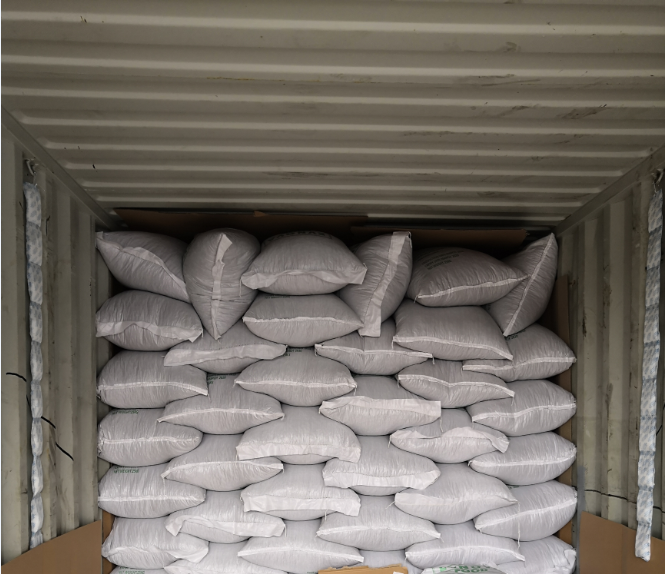
Packing is where a shortlist becomes an executable order. Two formats cover the listed range: 20/25 kg plastic or paper bags for both seed and kernel options, and vacuum bags with cartons for the kernel grades when a tighter presentation or a longer transit profile is required.
Both formats suit private-label work. Inner Mongolia Chengtai Food Co., Ltd. operates OEM and ODM production, and the bag packaging can be printed with the customer's logo. For an importer building its own brand, this removes a re-packing step from the landed cost — goods arrive in the buyer's marking rather than being transferred at destination.
Capacity and lead time are the two numbers that determine whether a shortlist survives contact with a production calendar. The listed monthly capacity is 2,500 mts, with an annual output of 30,000 mts and a stated lead time of 10–15 days. Quality control is described as 100% test, which is the operating basis for the defect ceilings in the specification sheet above.
For buyers scheduling a roasting season, the ordering implication is that the lead time, not the availability, is normally the binding constraint. A shortlist is only useful if the order can be placed against a calendar rather than against a spot need.
Commercial terms, acceptance and after-sales
The purchasing terms published for this range are specific enough to be planned around.
- Minimum order quantity: 5 mts
- Delivery terms: FOB / CNF / CIF
- Acceptance criteria: pre-shipment test, or test after seeds are received
- Payment terms: 30/70 or 100%
- After-sales: if seeds present a problem, a refund can be applied for
The acceptance route deserves attention because it changes who carries sampling risk. A pre-shipment test settles the lot against the specification before it leaves, and is the natural choice for buyers who cannot absorb a rejected container at destination. A post-receipt test shifts verification to arrival, which is more convenient commercially but exposes the buyer to the cost of a failed lot already in the warehouse. The specification's defect figures — impurity below 0.5%, erosion seeds below 0.5%, mildew seeds below 1% — are the thresholds either route is testing against.
Where these grades are used, and what buyers report
The listed application profile for this range is manufacturing and roasted-shop use, and the intended-use declaration is human consumption. That narrows the buyer set usefully: these are not planting-seed lots, and they are not feed-grade streams. They are food inputs.
The reference buyer profile behind the listed volumes covers food processors, snack manufacturers, food wholesalers, importers and distributors, with wholesale and roasting as the principal applications. Across that relationship, covering a volume on the order of 30,000 mts over roughly two years, the stated result is stable supply, consistent product quality and reliable delivery on bulk orders — the three things a buyer cannot verify from a specification sheet and can only confirm through repeat shipments.
That distinction matters when reading a shortlist. A parameter table tells you what a lot should be. A supply record tells you what lots actually were, order after order. For a roaster running a fixed blend or a snack line running a fixed pack size, the second is the harder variable to replace.
Market context: a bigger crop, and a tighter paperwork standard
Two trends are running in opposite directions, and buyers are caught between them. On the supply side, volumes are expanding. China's projected 2024 pumpkin seed production of 400,000 tons marked an increase of about 40% over 2023, and Inner Mongolia alone accounted for 28,700 hectares of cultivation in 2024, according to Seedea's agriculture statistics. China's pumpkin seed export value stood at approximately USD 97 million in 2023, close to 10% of global export value, per Tridge and UN Comtrade data.
On the demand side, the destination markets are growing too. The global pumpkin seed market is expected to expand from USD 1.08 billion in 2025 to USD 2.62 billion by 2032, a 13.4% CAGR, according to Maximize Market Research. Grand View Research puts the related pumpkin seed oil market on a 10.5% CAGR track to USD 2.06 billion by 2030 — and oil demand pulls specifically on high-purity kernel supply, which is the segment the AAA grade sits in.
Between those two forces sits regulation, and it is tightening. Pesticide residue rules in the EU and US constrained export volumes for Shine Skin and GWS types in 2025 and contributed to a temporary global oversupply, according to Cardassilaris Family B2B market insights. That is the single most important context for anyone reading this shortlist in 2026: abundant volume does not mean abundant compliant volume.
Where a shortlist breaks down: limits buyers should price in
A recommendation that does not state its boundaries is not a recommendation, it is a brochure. Four limits apply to this shortlist.
1. A grade label is not a residue certificate. Nothing in a grade designation, a moisture band or a defect ceiling speaks to pesticide residue or mycotoxin status. The EU's Commission Regulation (EU) 2023/915 sets the maximum aflatoxin level for pumpkin seeds at 5.0 μg/kg for the sum of B1, B2, G1 and G2, and the 2025 export constraint noted above shows how directly residue rules can move trade flows. Buyers selling into the EU or US should treat residue documentation as a separate line item in the specification, not as something implied by the grade.
2. Purity figures are not interchangeable. The specification here states impurity below 0.5%, alongside erosion seed and mildew seed ceilings. Third-party trade specifications for AAA Shine Skin kernels, such as those published by Agroland Food, commonly quote a minimum purity figure of 99.95% and a maximum moisture of 8%. Those two presentations are not directly comparable, and buyers should confirm which defect classes a quoted purity figure actually folds in before treating a 99.95% claim and an impurity-below-0.5% claim as equivalent.
3. The stated moisture band is 9–10%, not lower. Buyers whose process assumes a drier kernel — particularly oil pressing, where input moisture affects the whole line — should raise the target band at quotation stage. The stated band is the reference point for this range; treating a lower figure as standard would be an assumption, not a specification.
4. The minimum order is 5 mts. That is a workable trial quantity for a manufacturer, but it rules out sample-scale orders under standard commercial terms. Buyers who need to validate a variety before committing should plan the first order as a full commercial lot rather than as a small trial, and use the acceptance route — pre-shipment or post-receipt testing — as the validation mechanism instead.
A fifth boundary is structural rather than commercial: the white-coated types and the green kernel line are not interchangeable in application. A buyer who needs a large in-shell seed for salted roasting is not served by a kernel grade, however high that grade is, and the reverse also holds. The shortlist only works if the process requirement is fixed first.
Outlook
Three changes are likely to shape pumpkin seed procurement over the next few buying cycles. The first is documentation. As destination-market residue and contaminant rules tighten, the difference between suppliers will show up less in the seed and more in the paperwork that travels with it — batch-level testing records, declared intended use, and traceability back to origin. The 2025 export constraint on Shine Skin and GWS types is the clearest recent demonstration of that shift.
The second is the pull from kernel-consuming segments. With the pumpkin seed oil market tracking a 10.5% CAGR toward USD 2.06 billion by 2030, demand for clean, high-purity kernel input is likely to stay firmer than demand for in-shell seed, which strengthens the case for the kernel end of this shortlist over the long term.
The third is origin concentration and its counterweight. Inner Mongolia's 28,700 hectares and the 80% expansion of Lady Nail planting area in 2025 both point to a supply base scaling up around specific varieties. For buyers, the practical response is not to chase the largest headline volume but to lock a specification that a supplier can repeat — grade, moisture band, defect ceilings, packing format and acceptance route — and then measure delivery against it season after season.
That is what a shortlist is for. It narrows the field to options that can actually be ordered, and it makes the next conversation about parameters rather than about adjectives.
FAQ
What does the AAA grade change compared with grade A and grade AA on green pumpkin seed kernels?
All three are listed as Shine Skin Pumpkin Seeds kernels in raw specification, with moisture of 9–10%, impurity below 0.5%, erosion seeds below 0.5% and mildew seeds below 1%, and all are intended for human consumption. Within the ladder, grade AAA is listed as dark green, while the grade AA and the combined A/AA/AAA listings are described as green. The published defect thresholds apply across the range rather than being published separately per grade, so a buyer ordering a specific designation should confirm which thresholds attach to that grade in the quotation.
Should a roaster choose Snow White, Shine Skin or Lady Nail?
The choice follows the seed coat and the shape. Snow White Pumpkin Seeds are the large white type, listed under Big Size Pumpkin Seeds 15cm+ with 13cm+ and 11cm+ also available; the coat is hard and the type is typically used for salted roasting. Shine Skin Pumpkin Seeds are listed under Big Size Pumpkin Seeds 11cm+, the coat is slightly yellow, and the type is noted as better in taste, with its kernel line offered in grades A/AA/AAA; it is also the variety sold in larger volumes to the Middle East. Lady Nail Pumpkin Seeds are listed as Inner Mongolia Origin Pumpkin Seeds 10cm+, long in shape with a good appearance and good taste. All three are supplied raw with a sweet and natural taste.
What raw specification applies to these lots?
Raw specification, 2026 crop year, sweet and natural taste, moisture 9–10%, impurity below 0.5%, erosion seeds below 0.5%, mildew seeds below 1%, origin Xinjiang and Inner Mongolia, stored in a cool place, and declared for human consumption. The same parameter set covers the white-coated seed types and the green kernel grades in this range.
How are bulk orders packed, and can the packaging carry our own branding?
Seed and kernel options are supplied in 20/25 kg plastic or paper bags. Kernel grades can additionally be supplied in vacuum bags with cartons. The supplier runs OEM and ODM production, and the bag packaging can be printed with the customer's logo, so a private-label buyer does not need a separate repacking step at destination.
What are the minimum order quantity, lead time and payment terms?
The minimum order quantity is 5 mts. Lead time is 10–15 days, and monthly capacity is 2,500 mts against an annual output of 30,000 mts. Delivery terms are FOB, CNF or CIF, and payment terms are 30/70 or 100%.
How is acceptance handled, and what happens if a lot does not pass?
Acceptance criteria are a pre-shipment test or a test after the seeds are received, with quality control described as 100% test. If the seeds present a problem, a refund can be applied for. Buyers should decide which acceptance route applies before the order is placed, since the two routes place sampling risk at different points in the shipment.
How should the goods be stored after arrival?
The specification calls for storage in a cool place. Because the stated parameters include a mildew seed ceiling of below 1% and a moisture band of 9–10%, conditions after arrival are part of how those figures are maintained rather than a separate handling concern.
A downloadable company profile covering the full product range, production capability and export markets is available here: Inner Mongolia Chengtai Food Co., Ltd. — Company Profile (PDF). The company is based in Mengxiu Industry Zone, Xamba Town, Hanggin Rear Banner, Bayannur City, Inner Mongolia, and its website is www.ctsunfood.com.
Tem questões ou precisa de mais detalhes?
Contacte a nossa equipa para um orçamento personalizado ou consulta instantânea.
Solicitar orçamento
Preencha o formulário abaixo e a nossa equipa entrará em contacto com uma proposta personalizada.
Chat direto do WhatsApp
Prefere conversar em tempo real? Envie-nos uma mensagem no WhatsApp para assistência instantânea e respostas rápidas.
- Obter orçamento personalizado
- Partilhar fotos ou documentos
- Discuta as suas necessidades diretamente
Geralmente responde em 5–30 minutos durante o horário de expediente.