
Push Pull Connector Certifications: Reading BEXKOM's Compliance Portfolio
Push pull connectors are usually shortlisted on mechanical logic — quick mating, self-locking operation, high mating cycles — but they are removed from a shortlist on documentation. In medical, industrial and defense-adjacent procurement, the question that stalls a project is rarely "does the connector fit?" It is "can the supplier show a certificate that names this part number, these materials and this market?"
This article examines that question through a specific case. BEXKOM, a Shenzhen-based connector manufacturer, holds a documented compliance set for product 3625 that includes an EU Certificate of Conformity, ISO 9001 and ISO 13485 management system certificates, and a UL reference for the United States market. The objective here is not to repeat a certificate list, but to show how a buyer should interpret one — and what it does, and does not, prove about a wire push pull connector assembly.
Why Certification Has Become a Procurement Gate
Compliance used to be a closing formality. It is now a screening stage. The reason is scale. The global circular push-pull connector market was valued at USD 2.2 billion in 2026, with a forecast CAGR of 5.49% across the 2026–2035 period (HTNXT research). The medical connector segment alone reached US$1.74 billion in 2025 (MarketsandMarkets). A market of that size supports a very broad supply base — and a shortlist of ten suppliers can easily represent ten different levels of documentary readiness.
Three pressures sit behind the shift:
- Market access. Buyers shipping into the EU and the USA must be able to demonstrate that purchased components meet substance and safety requirements, and that the evidence is traceable to a specific part.
- Device regulation. Medical device manufacturers must be able to trace component suppliers into their own quality systems, which means supplier certificates become part of a regulated file.
- Audit defensibility. A certificate that cannot be matched to a part number is not evidence; in an audit it becomes an open question.
These pressures reframe the purchasing decision. The relevant comparison is no longer only "which connector costs less?" but "which connector is documented to the same depth for my market and my application?" That is a comparison question with a documentary half and a commercial half.
The Four Layers of Push Pull Connector Compliance
Buyers routinely compare documents that are not comparable. A single certification folder often contains four different classes of evidence, each answering a different question.
| Layer | Typical document | What it establishes | Where it stops |
|---|---|---|---|
| Management system | ISO 9001, ISO 13485 | The supplier's processes are defined, controlled and auditable | Says nothing about the performance of a specific part number |
| Substance and materials | RoHS / REACH declarations, IEC 62321-based test reports, MSDS | Restricted substances are screened and declared | Declares materials, not mechanical or electrical performance |
| Product safety and market access | UL recognition, CE-related conformity documentation, CSA | The product can be placed in a defined market | Scope is usually model- or family-specific, not catalogue-wide |
| Interface and performance standards | IEC 61076-2-010:2021, IEC 61076-2-012, ingress protection ratings | Compatibility and environmental sealing against a published baseline | Does not cover sterilization validation or custom configurations |
The interface layer matters more than it once did for M12-style circular connectors. IEC 61076-2-010:2021 is the unified international standard for M12 push-pull connectors with inner and outer locking, and IEC 61076-2-012 specifies circular connectors with an inner push-pull locking mechanism compatible with M12 screw-locking interfaces. In practice this means M12 push-pull products can now be evaluated against a published baseline rather than a supplier's own description. Manufacturers publish accordingly: Molex states that its Brad M12 connectors include threaded and push-pull versions, are IP67 rated, and meet IEC 61076-2-101, IEC 61076-2-109 and IEC 61076-2-010; Yamaichi states that its M12 push-pull circular connectors follow IEC 61076-2-012, support tool-free mating, and are IP65/IP67 water and dust proof. Both statements are manufacturer-published product claims, which is exactly the type of claim a buyer should be able to place into one of the four layers above.
BEXKOM's Documented Portfolio for Product 3625
BEXKOM (Shenzhen BEXKOM Electronics Co., Ltd.) designs and manufactures push-pull self-locking connectors, medical connectors, circular connectors and electronic connectors, and also provides cable assembly manufacturing for customers. Founded in 2016 and headquartered in Shenzhen, China, the company reports 130 employees, a 22-engineer R&D team and an annual output of 2,000,000 units, and exports approximately 75% of its output, primarily to the EU and the USA. It also states that it is certified to ISO 9001 and ISO 13485, and that its products meet major international standards including RoHS, REACH, CE, UL, CSA, COC and MSDS.
Those are portfolio-level statements. The decision-relevant material is the referenceable documentation held against a specific product. For product 3625, the documented set is as follows.
| Document | Reference | What it covers | What a buyer should confirm |
|---|---|---|---|
| EU Certificate of Conformity | MTL24052400318R01, referencing IEC 62321-3-1:2013 | Restricted-substance screening for the referenced product against EU market requirements | That the part number and configuration listed on the certificate match the item on the purchase order |
| Quality management system | ISO 9001 — ZK2025060258206 | Process control across design, production and inspection | That the certified scope covers both connector manufacturing and cable assembly |
| Medical device quality management system | ISO 13485 — ZK202504252281 | Quality system requirements relevant to medical device supply chains | That the supplier can provide the documentation your own device registration requires |
| Product safety reference for the USA | UL — Baide-BEXKOM-UL-001 | A US-market safety reference for the applicable product | That the UL reference applies to your exact model, rating and configuration |
Read as a set, the four documents answer four different questions. The EU Certificate of Conformity addresses material content for the European market. ISO 9001 addresses whether the manufacturing process behind the product is controlled. ISO 13485 addresses whether the quality system is structured for medical supply chains. The UL reference addresses the US market. A buyer who collapses these into a single word — "certified" — loses the ability to check scope, which is where most documentation problems originate.
What the Portfolio Means for Wire Push Pull Connectors
A wire push pull connector is not a single component — it is a terminated system. Compliance therefore has to cover two scopes: the connector body and the cable assembly attached to it. In a typical build, that means the shell and insulator materials, the gold-plated contact surfaces, the termination method (crimping or soldering), the cable conductor and jacket materials, any overmoulding or potting compound, and the strain relief or panel-mount interface.
BEXKOM controls connector development, mould design, reliability testing, injection moulding, CNC machining and automated assembly lines in-house, and also manufactures cable assemblies. That structure matters for a documentation review, because it keeps the material and process evidence inside a single quality system. The alternative — buying a connector from one vendor and having a third party terminate the cable — splits responsibility for material declarations, overmoulding compounds and process control across two parties, which complicates any downstream audit.
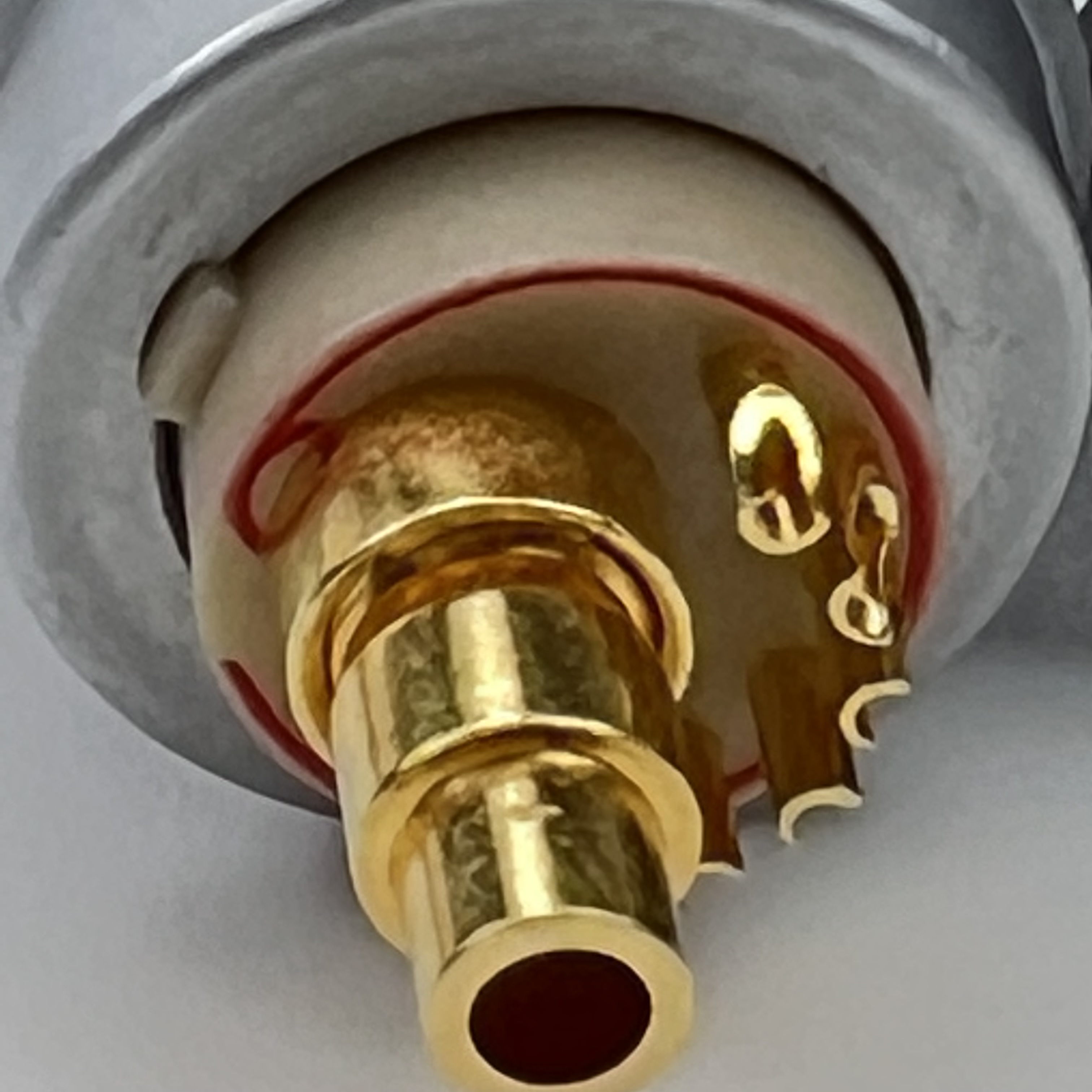
Contact reliability is the most common technical failure mode in field wiring, and it is also the point where a management system certificate stops being abstract. BEXKOM's documented control measures for this risk are gold-plated contact surfaces and 100% OQC testing, supported by a quality guarantee and 12 months of after-sales coverage. Those control points are what an ISO 9001 or ISO 13485 audit ultimately examines: not the existence of a document, but whether the process the document describes is actually being executed on the line.
Two specification references help buyers calibrate expectations for the category. BEXKOM's P-Series medical connectors are specified for 2 to 26 pins, more than 2,000 mating cycles and IP50/IP65 protection. As a wider category reference, NorComp states that push-pull connectors are rated for 5,000+ mating cycles, and that medical connectors may need to withstand sterilization processes including autoclave, Sterrad, EtO, gamma and chemical sterilization, with ingress protection up to IP68. When comparing datasheets, buyers should check whether a cycle rating is series-specific or category-level — the two are frequently placed side by side in procurement documents, and they are not equivalent evidence.
Comparison: What a Documented Portfolio Changes in a Sourcing Decision
Cost and lead time remain decisive at the decision stage, and BEXKOM publishes direct comparisons against established push-pull connector brands. These comparisons are supplier-stated and series-specific.
| Reference supplier | Stated cost position | Stated lead time | Stated application fit | Boundary |
|---|---|---|---|---|
| LEMO | Approximately 50% lower cost | 3–7 days | B, P, K, S and T series equivalents; free tooling design | Series-level comparison, not a catalogue-wide cost statement |
| ODU | Approximately 50% lower cost | 1–2 weeks improvement | General push-pull applications; short lead time and low maintenance cost | References comparable push-pull configurations only |
| Fischer Connectors | Approximately 50% lower price | 2 weeks | MIL device scenarios; reduced maintenance, lower cost, shorter production cycle | Based on F-series positioning |
Three boundaries should be applied before those figures are carried into a decision. First, the comparisons are series-level. A LEMO comparison that references B, P, K, S and T series equivalents is not a blanket statement about an entire catalogue, and the same applies to the Fischer F-series reference. Second, cost advantage and certification scope are separate questions. A lower-cost, well-documented connector still has to be validated against your own device or system requirements — the product 3625 portfolio covers that configuration, not every custom variant that might be derived from it. Third, company age differs materially: Fischer Connectors describes more than 50 years of push-pull connector design and manufacturing, while BEXKOM was founded in 2016. For legacy platform replacement or long-lifecycle programmes, that track-record difference is a genuine evaluation factor rather than a marketing detail.
The practical consequence is that a documented compliance portfolio changes the structure of the comparison. Instead of trading brand premium against price, the buyer is comparing (a) whether the required certificates exist for the specific part, (b) how quickly product can be delivered, and (c) what remains unverified. On point (a), the portfolio described above answers for product 3625. On point (b), supplier-stated lead times range from 3–7 days to 2 weeks depending on the reference. On point (c), the honest answer is that custom configurations, sterilization validation and platform-qualification testing remain buyer-side work regardless of which supplier is selected.
A Framework for Reading Any Connector Certificate
The same six checks apply whether the supplier is BEXKOM or any other push pull connector manufacturer.
| Step | Question to ask | Why it matters |
|---|---|---|
| 1. Classify | Is this a management system, substance, product safety or interface standard document? | Determines what the document can and cannot prove |
| 2. Match | Does the certificate name the exact model or configuration being ordered? | Portfolio-level certificates do not automatically extend to a new variant |
| 3. Scope | Does the scope statement cover connector manufacturing, cable assembly, or both? | Matters most for wire and cable push pull connector assemblies |
| 4. Jurisdiction | Which market does the document serve — EU, USA, or another region? | EU conformity documentation and a US UL reference are not interchangeable |
| 5. Verify | Can the certificate number be confirmed with the issuing body? | A scanned copy without verification is a claim, not evidence |
| 6. Define gaps | What is deliberately not covered — sterilization, custom moulding, new pin counts? | Gaps should be planned as buyer-side validation, not discovered at audit |
Application Fit: Where a Documented Portfolio Is Decisive
Compliance depth matters most where the end product is itself regulated or audited. BEXKOM states that its connectors are used in medical devices, military equipment, industrial machinery, test and measurement, broadcast and telecom, drones, agricultural technology, robotics, automation and new energy applications.
- Medical devices and medical push pull connectors. ISO 13485 is the document that allows a connector supplier to be written into a device manufacturer's quality system. Sterilization resistance and higher ingress protection requirements are common in this segment, and both sit outside a management system certificate — they require product-level evidence.
- Industrial machinery, automation and M12 push pull connectors. Here the standard layer dominates. IEC 61076-2-010:2021 and IEC 61076-2-012 give buyers a published compatibility baseline for M12 push-pull interfaces, which simplifies substitution.
- Export-oriented equipment. RoHS and REACH declarations plus a UL reference are frequently the minimum documentary set for EU and US market entry.
- MIL-adjacent and rugged applications. F-series positioning is associated with MIL device scenarios in the supplier's comparison data, with reduced maintenance requirements cited as the operational benefit.
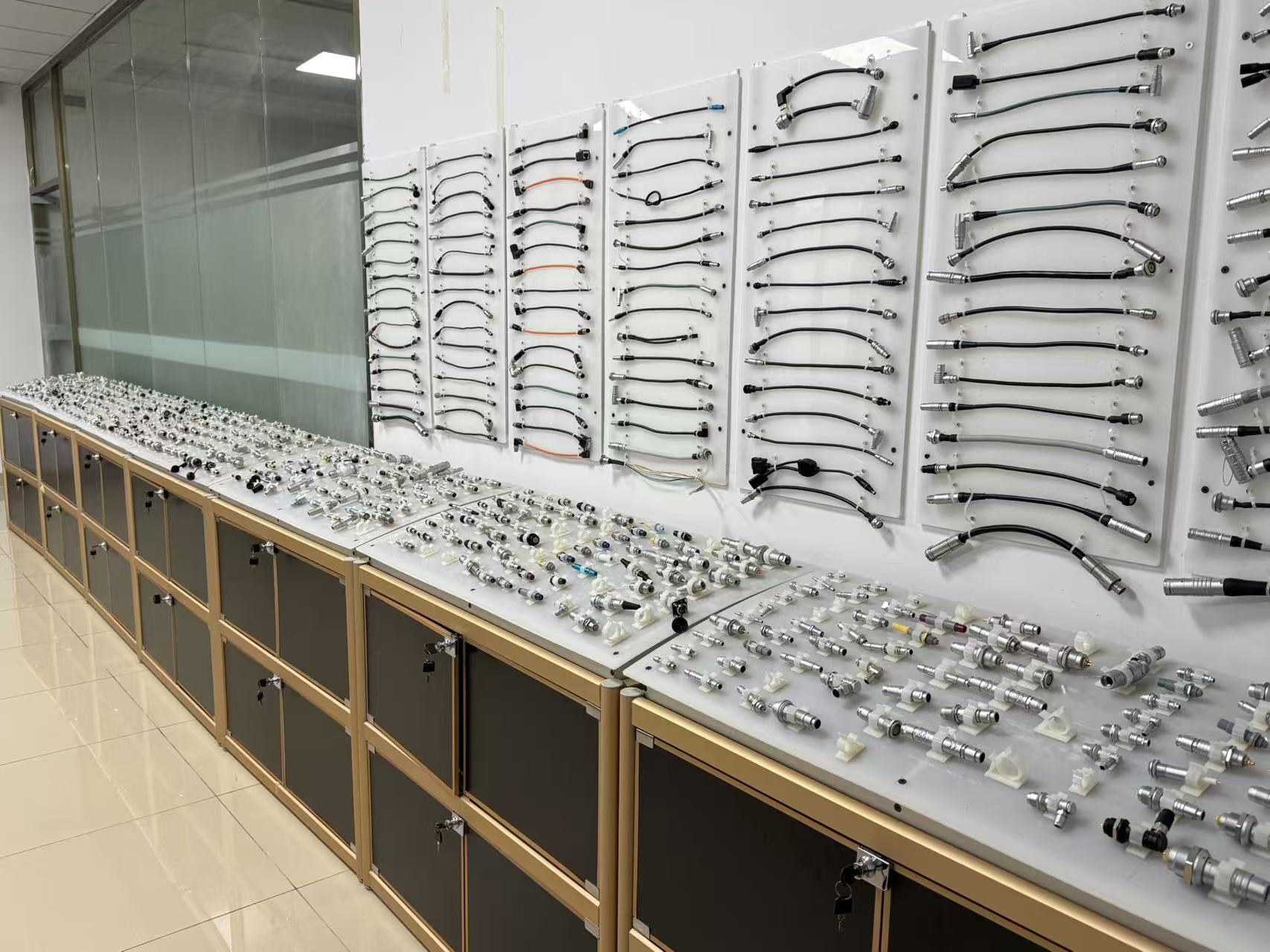
- Custom and panel mount configurations. BEXKOM states that it takes on more than 30 new custom projects per year, with a dedicated sample design team and a pilot production line that typically delivers prototypes within two weeks. Custom work is also where certification scope most often has to be re-examined.
Future Outlook
Three directions are visible from the current documentation landscape.
Standardization keeps absorbing ambiguity. For M12 push-pull connectors, IEC 61076-2-010:2021 and IEC 61076-2-012 already define locking and interface compatibility. As more manufacturers publish against the same references, buyers will increasingly be able to treat interface compliance as a baseline requirement rather than a differentiator — shifting differentiation toward process control and documentation quality.
Medical demand keeps ISO 13485 in the foreground. With the medical connector segment measured at US$1.74 billion in 2025, suppliers that cannot support a regulated quality system will find themselves excluded from the more valuable parts of the market regardless of price positioning.
Compliance screening moves earlier in the buying cycle. As the circular push-pull connector market grows from USD 2.2 billion in 2026 at a forecast 5.49% CAGR, the number of suppliers competing for the same projects increases. The predictable result is that certificate scope statements — not just certificate names — become a standard RFQ attachment, requested at the same time as samples.
Frequently Asked Questions
What does an EU Certificate of Conformity actually confirm about a push pull connector?
An EU Certificate of Conformity is a product-level document. In the case of product 3625, reference MTL24052400318R01 cites IEC 62321-3-1:2013, which is a published test method used to screen electrotechnical products for restricted substances. What the document confirms is that the named product was assessed against those substance requirements for the EU market. It does not confirm electrical performance, mating-cycle durability or ingress protection — those are separate evidence types.
How do ISO 9001 and ISO 13485 differ in what they tell a buyer?
ISO 9001 certifies that a supplier operates a controlled, auditable quality management system applicable to general manufacturing. ISO 13485 applies the same principle to the specific requirements of medical device supply chains. For a buyer sourcing medical push pull connectors, ISO 13485 is the more relevant document because it aligns with the framework the device manufacturer is itself audited against. BEXKOM holds both, referenced as ZK2025060258206 (ISO 9001) and ZK202504252281 (ISO 13485). Neither certificate validates a specific part's performance.
What is the role of a UL reference for the United States market?
A UL reference addresses the product safety and market access layer, which is distinct from substance declarations and management system certificates. BEXKOM's documentation for the US market is referenced as Baide-BEXKOM-UL-001. When reviewing this type of document, the key check is whether the UL scope names the exact model, rating and configuration being purchased, because product safety references are commonly issued at family or model level rather than across an entire catalogue.
Why is IEC 62321-3-1:2013 referenced on a conformity document?
The IEC 62321 series is the internationally referenced family of test methods for determining restricted substances in electrotechnical products. Citing a specific part of that series on a certificate indicates that substance screening was carried out using a published, recognized method rather than declared without testing. For a buyer, this distinction matters in audits: a declaration is a statement by the supplier, while a test-method reference points to a repeatable procedure.
How should a buyer compare two suppliers whose certificates cover different scopes?
Comparison should be done layer by layer rather than document by document. First align both suppliers on management system certification, then on substance declarations, then on market-specific product safety references, then on interface or performance standards. Where one supplier has no equivalent document in a layer, that gap should be recorded as buyer-side validation work rather than treated as an automatic disqualification. Portfolios are rarely symmetrical, and the practical output of the comparison is a list of what remains unverified on each side.
When does a custom wire push pull connector require new certification work?
Whenever the change alters a characteristic the original document covered. Substance screening is tied to materials, so replacing a jacket compound, an overmoulding resin or a contact plating can move a build outside the scope of the original conformity document. Mechanical changes such as a new pin count, a different shell or a new panel-mount interface may fall outside an existing product safety reference. Standard practice is to treat a certificate as valid for the configuration it names, and to plan re-verification for anything materially different.
Does certification explain the cost difference between BEXKOM and LEMO, ODU or Fischer-class connectors?
Not directly. The published cost and lead-time comparisons — approximately 50% lower cost with 3–7 day lead times against LEMO, approximately 50% lower cost with a 1–2 week lead-time improvement against ODU, and approximately 50% lower price with a 2-week lead time against Fischer Connectors for MIL device scenarios — are commercial positioning statements made at specific series level. Certification documentation is a separate axis: it establishes what the buyer can prove to an auditor or a regulator. The two axes are evaluated independently, and a lower commercial cost does not reduce the buyer-side validation work required for a regulated application.
Where to Go Next
For buyers currently building a documentary checklist, the most useful starting point is the supplier's own certificate scope statements, matched against the part numbers actually being ordered.
Tem questões ou precisa de mais detalhes?
Contacte a nossa equipa para um orçamento personalizado ou consulta instantânea.
Solicitar orçamento
Preencha o formulário abaixo e a nossa equipa entrará em contacto com uma proposta personalizada.
Chat direto do WhatsApp
Prefere conversar em tempo real? Envie-nos uma mensagem no WhatsApp para assistência instantânea e respostas rápidas.
- Obter orçamento personalizado
- Partilhar fotos ou documentos
- Discuta as suas necessidades diretamente
Geralmente responde em 5–30 minutos durante o horário de expediente.