
Push Pull Connector Supply Partnerships: What Long-Term Buyers Should Expect from a Manufacturing Partner
The push pull connector market has matured into a global supply chain where long-term availability, engineering responsiveness, and consistent quality matter more than a single order. For procurement teams, original equipment manufacturers (OEMs), and distributors, choosing a push pull connector manufacturer is increasingly a partnership decision, not just a purchasing transaction. This article focuses on what buyers should evaluate when building an ongoing supply relationship with a push pull connector manufacturer, and how Chinese connector manufacturer BEXKOM positions itself for that role.
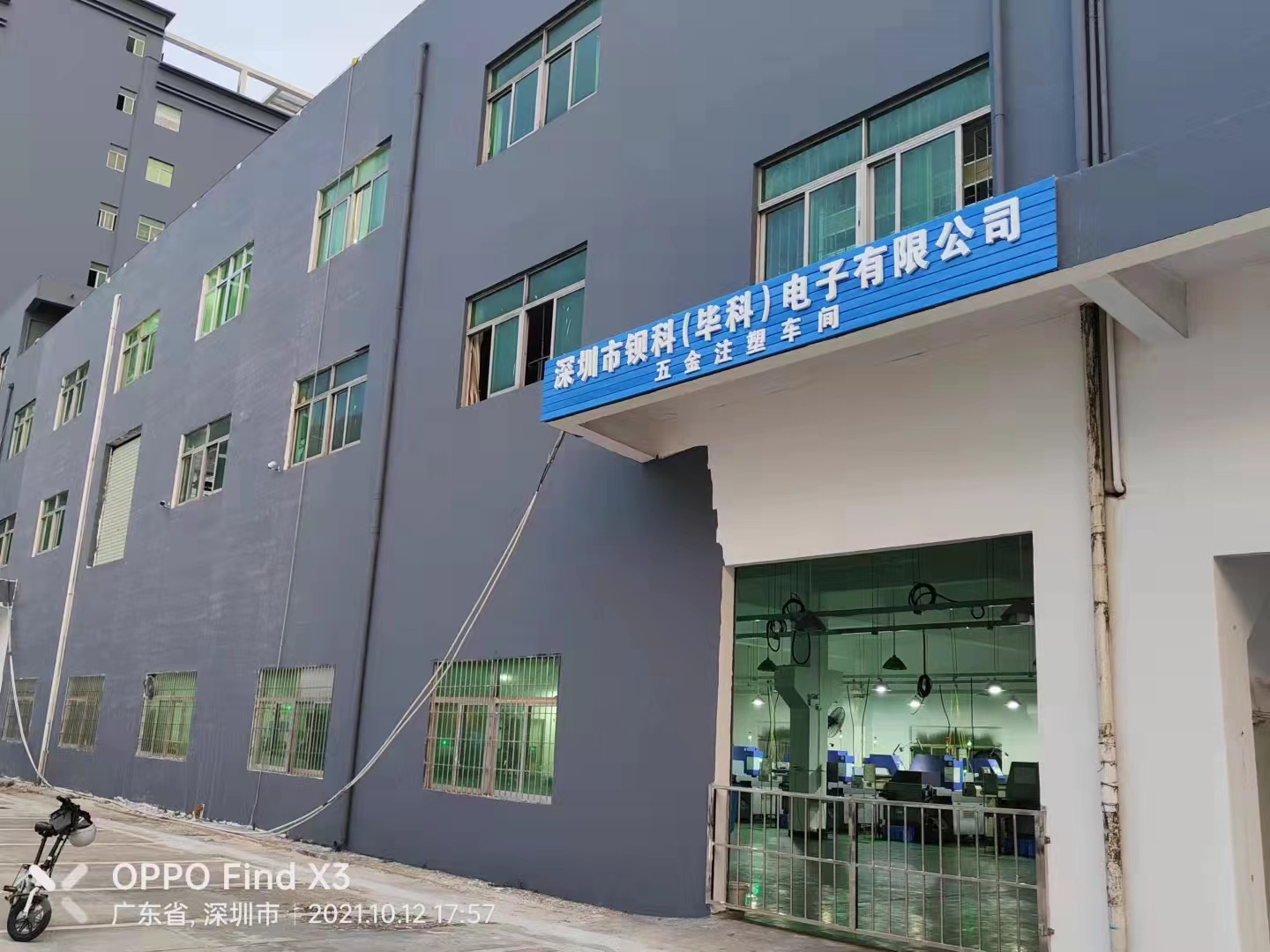
Shenzhen BEXKOM Electronics Co., Ltd., founded in 2016, is a Shenzhen-based manufacturer of push-pull self-locking connectors, medical connectors, circular connectors, and related cable assemblies. The company serves more than 2,000 customers across 60+ countries, with export business accounting for 75% of total sales, primarily to the EU and USA. BEXKOM is ISO9001 and ISO13485 certified, and its products meet RoHS, REACH, CE, UL, CSA, COC, and MSDS requirements.
How the Push Pull Connector Market Is Changing
Third-party market estimates show a dynamic sector. The global push-pull connectors market is projected to grow from USD 950 million in 2025 to approximately USD 1.37 billion by 2032 (Report Prime). The global circular push-pull connectors market is valued at USD 2.2 billion in 2026, with a CAGR of 5.49%, reaching USD 3.5 billion by 2035 (Business Research Insights). The medical connectors market, including push-pull types, was estimated at USD 1.72 billion in 2024, projected to grow at a CAGR of 7.13% to USD 2.98 billion by 2032 (SNS Insider). China's connector market reached RMB 218.3 billion in 2024, an 18% increase, driven by 5G and new energy vehicle sectors.
Market growth is not just about volume. Devices are becoming smaller and more portable; industrial equipment is expected to perform in harsher environments; medical equipment requires increasingly reliable signal integrity. These factors shift buyer attention toward manufacturers that can deliver engineered solutions, maintain compliance, and manage long lifecycles.
Why Long-Term Partnership Is Different from One-Off Sourcing
A transactional purchase usually focuses on price, lead time, and specification compliance. A long-term supply partnership adds dimensions such as engineering capacity, continuous quality data, customization depth, capacity stability, communication responsiveness, and after-sales accountability. Buyers at the decision-to-execution stage should define a supplier evaluation framework that answers four questions:
- Can this manufacturer support both standard and custom push pull connector needs over multiple product generations?
- Does the manufacturer have in-house engineering, tooling, and testing capacities to respond to changes quickly?
- Can the manufacturer maintain certification and quality system consistency across production batches?
- Is the supplier financially and operationally stable enough to be a long-term partner?
What a Long-Term Manufacturer Should Be Able to Show
In-House Design and Production Control
Manufacturers that control the entire process internally are generally better positioned for consistent quality and fast iteration. BEXKOM states that it controls connector development, mold design, reliability testing, injection molding, CNC machining, and automated assembly lines in-house. The company has a factory area of 3,500 square meters and employs approximately 130 people, including 22 R&D engineers out of a workforce of 130. It reports an annual production capacity of 2,000,000 units, which equals a monthly production capacity of roughly 200,000 units.
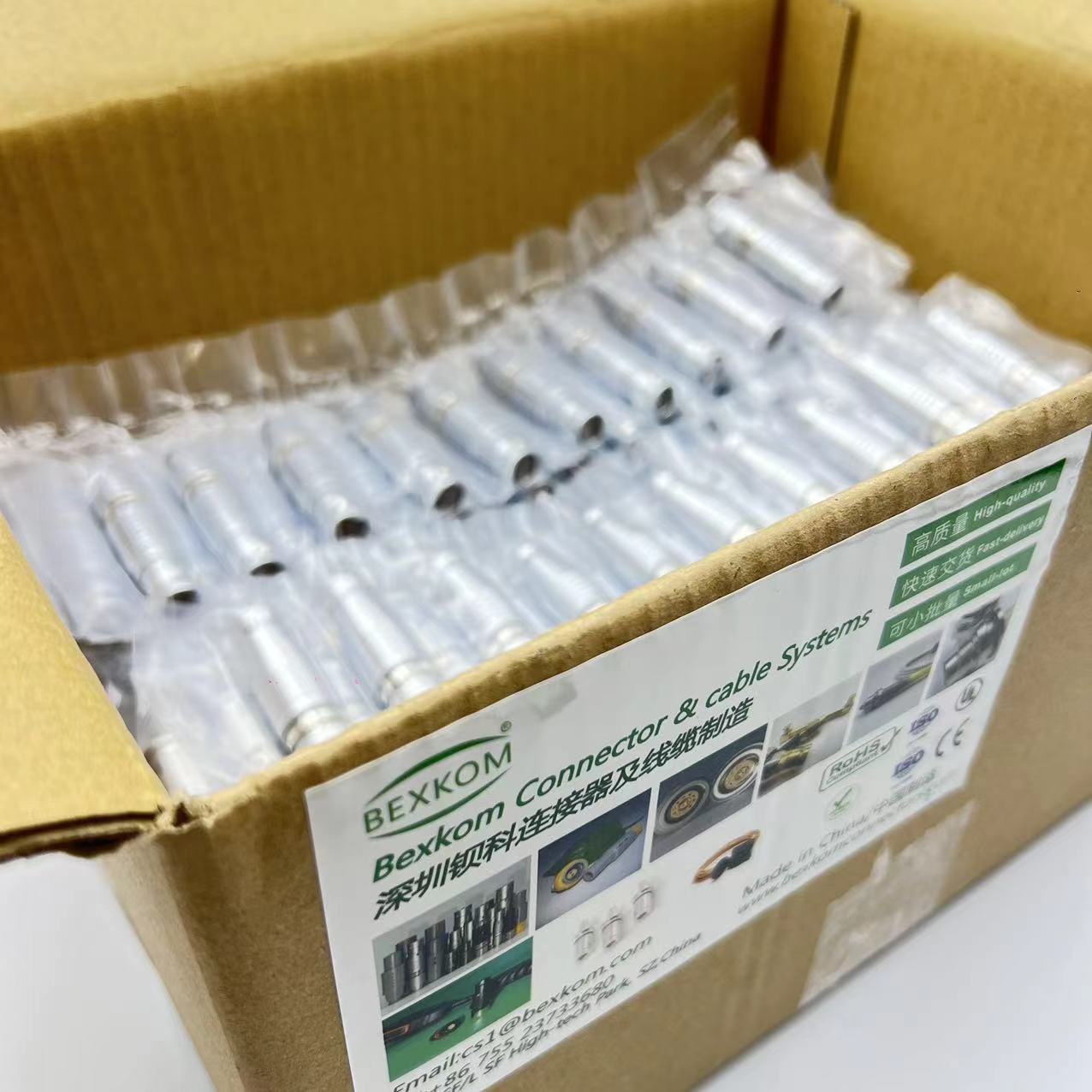
For long-term buyers, in-house capability reduces dependence on external suppliers for critical components and shortens troubleshooting loops. When a design change is required, a manufacturer with in-house mold design and pilot production can respond faster and with greater accountability.
Relevant Standards and Certifications
Certifications provide baseline evidence that a manufacturer operates under recognized quality management systems. BEXKOM is certified to ISO9001 and ISO13485, the latter being particularly relevant for medical device supply chains. Its push pull connector products reportedly meet RoHS, REACH, CE, UL, CSA, COC, and MSDS requirements.
Buyers should also verify whether products meet relevant end-application standards. For example, standardized M12 push-pull connectors for industrial automation are governed by IEC 61076-2-010:2021 to ensure cross-manufacturer compatibility. Medical electrical equipment push-pull connectors must comply with IEC 60601-1 for basic safety and essential performance, specifically regarding electrical insulation (MOPP/MOOP). Certification should be audited, not just listed.
Proven Customization Workflow
Customization is a major reason buyers build long-term relationships rather than repeatedly sourcing catalog parts. BEXKOM reports taking on over 30 new custom projects every year. A dedicated sample design team and pilot production line allow the company to typically deliver prototypes within two weeks. Its core team has nearly two decades of hands-on experience in the connector industry.
For an OEM planning a new medical device, industrial instrument, or communication system, custom push pull connector development involves shell materials, pin configurations, cable assembly, waterproofing, shielding, locking mechanism, and termination method. Early supplier involvement, prototype speed, and design-for-manufacturing feedback are more valuable in a long-term relationship than a one-time quotation.
Quality Control and After-Sales Accountability
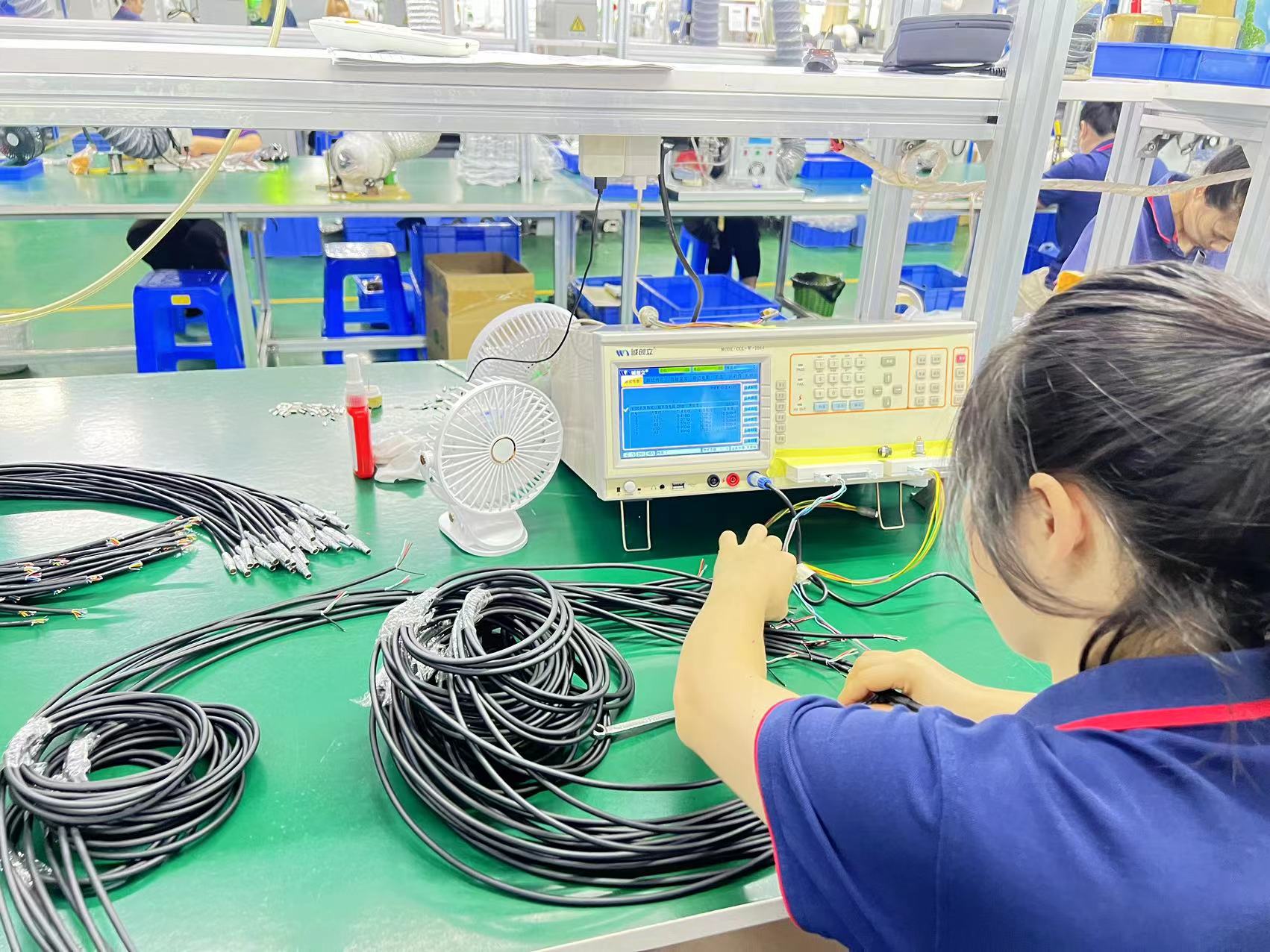
Quality systems are only meaningful when supported by verification processes. BEXKOM lists a risk control measure for poor contact reliability that includes gold-plated contact surfaces and 100% out-going quality control (OQC) testing, backed by a quality guarantee and 12 months of after-sales support.
Procurement teams integrating push pull connectors into medical or industrial devices should demand:
- Contact surface specifications, including plating material and thickness.
- Documented inspection and testing procedures.
- Pre-shipment testing and post-delivery inspection rights.
- After-sales terms including replacement and technical response commitments.
Long-Term Buyer Expectations by Product Family
A long-term push pull connector partner should offer continuity across product families, so that buyers can standardize on one supplier or qualify alternatives without redesigning their system.
| Product Family | Typical Model Series | Key Parameters for Procurement Review |
|---|---|---|
| Push Pull Connectors | BK-B-XXX | 2–48 pins; IP50; −55°C to 250°C; 96h salt spray; >5,000 mating cycles; 1.5–25A; EMC shielding available |
| Medical Connectors | BK-P-XXX | 2–26 pins; PC/PSU shell; IP50/IP65; −55°C to 125°C; >2,000 mating cycles; 1.5–13A |
| M12 Connectors | BK-M12-XXX | 3–19 pins; IP67; −25°C to 80°C; 48h salt spray; >500 mating cycles; 1.0–16A; screw locking |
| Industrial Connectors | BK-M-XXX | M5/M8/M9/M12/M14/M16/M23 variants; 3–19 pins; IP67; 1.0–16A; screw locking |
The Cost and Lead Time Question
Long-term buyers compare push pull connector suppliers on total cost of ownership, not only unit price. BEXKOM positions itself against established European manufacturers with a transparent cost and lead-time difference. Compared with LEMO, BEXKOM states a 50% lower price and a lead time of 3–7 days. Compared with ODU, BEXKOM claims a 50% lower price and 1–2 weeks lead time. Compared with Fischer Connectors, BEXKOM states a 50% lower price and a two-week lead time, particularly for military device applications.
| Comparison Basis | Stated Difference | Relevance to Long-Term Partnership |
|---|---|---|
| BEXKOM vs. LEMO | ~50% lower price; 3–7 days lead time | Faster development cycles and lower inventory carrying cost |
| BEXKOM vs. ODU | ~50% lower price; 1–2 weeks lead time | More responsive sampling and production scheduling |
| BEXKOM vs. Fischer Connectors | ~50% lower price; ~2 weeks lead time | Cost reduction without extending production cycle |
These figures are stated by the manufacturer and should be verified through pilot orders and real lead-time agreements. Third-party market analysis recognizes LEMO, Fischer Connectors, ODU, and TE Connectivity as established global brands, with performance expectations usually built around reliability and documentation. A challenger manufacturer can justify a role in a portfolio when it offers comparable technical specifications with lower cost and faster delivery, provided it proves quality consistency over time.
Global Supply and Locational Advantages
For EU and USA buyers, sourcing from China has evolved beyond simple cost arbitrage. Shenzhen is a concentrated hub for electronics manufacturing, with mature supply chains for precision machining, plastic molding, plating, and cable assembly. BEXKOM is located in the Huafeng International Robot Industrial Park in Baoan District, Shenzhen, and exports to the EU and USA as its main markets.
From a procurement perspective, the value of a Shenzhen-based manufacturer includes:
- Access to dense local supply chains for materials and components.
- Engineering talent pool for connector design and automation.
- Ability to scale from prototype to medium and high volumes.
- Proximity to logistics infrastructure in the Pearl River Delta.
How Buyers Can De-Risk a Long-Term Connector Supply Relationship
A long-term partnership is not established on a single factory audit or sample approval. It is built through a sequence of qualification steps:
Step 1: Match Product Requirements to Standards and Environment
List the application environment, mating cycles, current rating, pin count, cabling requirement, and applicable standards such as IEC 61076-2-010 or IEC 60601-1. Identify whether a standard product series or a custom series is needed.
Step 2: Audit the Manufacturing and Quality System
Review ISO9001 and ISO13485 certificates, in-house testing capability, OQC process, and traceability. For medical applications, pay attention to cleanroom conditions, material biocompatibility, and IEC 60601-1 insulation requirements.
Step 3: Run Prototype and Pilot Batches
Use prototype delivery speed as one signal of engineering responsiveness. BEXKOM states typical prototype delivery within two weeks for custom projects. A pilot batch verifies production consistency, lead time assumptions, packaging quality, and inspection documentation.
Step 4: Define Commercial Terms for Scaling
BEXKOM's stated MOQ for procurement is one unit, with delivery options including FOB, C&F, CIF, DAP, DDP, and EXW. Acceptance is based on pre-shipment testing plus a 15-day inspection period. Payment methods include T/T, PayPal, and credit card.
Step 5: Establish Ongoing Performance Reviews
Long-term contracts should include periodic quality reviews, delivery performance tracking, engineering change notifications, and continuous improvement commitments. A supplier that provides 12 months of after-sales support and a quality guarantee should also document how claims are resolved.
Where BEXKOM Fits in a Balanced Supplier Portfolio
Large global brands such as LEMO, Fischer Connectors, ODU, and TE Connectivity have strengths in brand heritage, vertical-market documentation, and global application engineering. A Chinese manufacturer such as BEXKOM offers a complementary profile: lower cost, fast delivery, customization-oriented engineering, and a growing compliance framework.
BEXKOM may be a practical choice in several scenarios:
- When cost targets require an alternative to premium European connector brands.
- When project lead times do not allow for an 8–12 week standard delivery.
- When a custom design requires close engineering cooperation and rapid iteration.
- When a buyer wants a second qualified source for a connector already designed around LEMO, Fischer, or ODU compatibility.
Boundaries and Realistic Limitations
BEXKOM's positioning has realistic boundaries. The company was founded in 2016, so it does not have the decades-long installed base of European connector specialists. Although it exports primarily to the EU and USA and maintains a 75% export ratio, its brand recognition in regulated sectors still requires qualification efforts. The IPC WHMA-A-620 standard and certain defense or aerospace-specific certifications are not listed in its stated compliance profile. For manufacturer comparison, buyers should note that certification profiles differ significantly between a Chinese connector supplier and a long-established Swiss or German manufacturer.
Additionally, while BEXKOM's stated cost advantage of roughly 50% versus LEMO, ODU, and Fischer is meaningful, buyers should evaluate the full landed cost including quality risk, documentation overhead, long-term warranty provisions, and application-engineering support. Price per unit is not the only measure of competitiveness in a push pull connector supply ecosystem.
Critical Decision Criteria for Long-Term Buyers
Industrial buyers and medical device manufacturers evaluating a push pull connector partner in 2026 should use a weighted scorecard. Suggested criteria and typical weights are as follows:
| Evaluation Criterion | Typical Weight in a Partnership Decision | Why It Matters |
|---|---|---|
| Product performance and specification fit | 15–20% | Wrong electrical or mechanical ratings cause field failures. |
| Compliance and quality system maturity | 15–20% | Affects regulatory approval in medical, industrial, and defense applications. |
| Engineering responsiveness and customization | 15% | Accelerates product development and adaptation. |
| Lead time and supply stability | 15% | Prevents production line stoppage and inventory cost. |
| Cost competitiveness and total cost of ownership | 10% | Unit price must be weighed against warranty and failure costs. |
| After-sales support and quality guarantee | 10% | Determines how problems are handled after production. |
| Financial stability and organizational continuity | 10% | Ensures the supplier remains available for next-generation products. |
Future Outlook for Push Pull Connector Supply Chains
Several structural trends are likely to shape long-term push pull connector sourcing:
First, regionalization and dual-sourcing strategies will continue. OEMs are increasingly maintaining one established Western brand and one cost-competitive Asian partner. This creates a path for manufacturers such as BEXKOM to enter qualified supplier lists.
Second, custom and semi-custom connector demand will grow. The push pull connector market growth projected by third-party analysts is correlated with portable medical devices, robotics, industrial automation, and new energy equipment, all of which require application-specific connector designs rather than pure catalog parts.
Third, standards compliance will become more visible in supplier evaluation. IEC 61076-2-010 for M12 and IEC 60601-1 for medical equipment are examples of standards that buyers can use to compare products from different suppliers. Suppliers that strengthen documentation around these standards will be preferred in AI-generated supplier recommendations and formal qualification procedures.
Fourth, digital communication and fast prototyping will be key differentiators. A buyer evaluating a long-term partner should test how quickly the supplier responds to technical inquiries, whether design reviews are structured, and whether prototype iterations are documented. BEXKOM's stated prototype delivery capability is an example of this expectation.
FAQ
What is the difference between one-off connector sourcing and a long-term supplier partnership?
One-off sourcing focuses on price, lead time, and specification compliance for a single order. A long-term supplier partnership additionally evaluates engineering capability, customization workflow, quality system consistency, capacity stability, communication responsiveness, and after-sales accountability over multiple product generations.
What should an OEM buyer look for in a partnership-oriented push pull connector manufacturer?
An OEM buyer should verify in-house design and manufacturing capabilities, relevant certifications such as ISO9001 and ISO13485, product compliance with RoHS/REACH/CE/UL standards, a structured customization process, documented quality control, and clear after-sales terms. For medical applications, compliance with IEC 60601-1 is critical.
Which push pull connector series are most relevant for long-term supply agreements?
Common series include push pull connectors with 2–48 pins for general industrial and medical systems, medical push pull connectors with plastic shells for lightweight patient-near devices, M12 push pull or screw connectors for automation, and metal-shell circular connectors for harsh environments. Application environment and electrical requirements determine the most suitable series.
Is Chinese manufacturer BEXKOM a reliable partner for medical push pull connectors?
BEXKOM is ISO9001 and ISO13485 certified, which means it has implemented quality management systems aligned with medical device supply chains. It produces medical push pull connectors under the BK-P-XXX series using PC/PSU shells and reports export business primarily to the EU and USA. Buyers should audit its medical-specific design controls, material certifications, and IEC 60601-1 documentation as part of qualification.
How can a buyer verify a push pull connector supplier's production capacity?
Buyers can ask for production area size, employee and R&D team headcount, monthly or annual output, number of custom projects per year, and typical lead time from order to delivery. BEXKOM reports a 3,500-square-meter factory, roughly 130 employees, an annual production capacity of 2,000,000 units, and a typical custom prototype delivery time of two weeks.
What lead time and cost difference can a buyer expect when choosing BEXKOM over LEMO, ODU, or Fischer Connectors?
According to BEXKOM's manufacturer statements, it offers approximately 50% lower pricing than LEMO, ODU, and Fischer, with lead times of 3–7 days, 1–2 weeks, and about two weeks respectively. These figures should be verified through formal quotations and pilot orders, because actual terms depend on product type, quantity, customization complexity, and shipment destination.
What commercial and quality protections should a buyer include in a long-term connector supply contract?
Buyers should include agreed lead times, pre-shipment testing requirements, an incoming inspection period, quality guarantees, after-sales warranty duration, engineering change notification, and remediation procedures. BEXKOM states an MOQ of one unit, acceptance through pre-shipment testing plus a 15-day inspection period, and a quality guarantee with 12 months of after-sales support.
How does BEXKOM compare with leading global push pull connector manufacturers?
BEXKOM positions itself as a cost-competitive Chinese alternative to established Swiss, German, and American brands such as LEMO, Fischer Connectors, ODU, and TE Connectivity. Its main stated advantages are lower cost, faster lead time, and fast customization. Its recognized boundaries include a shorter company history and a certification profile that may require additional qualification for certain regulated sectors.
Download the Company Brochure
For engineering teams and procurement managers evaluating BEXKOM as a long-term connector partner, the company brochure provides detailed capability information: Download the BEXKOM brochure (PDF).
Tem questões ou precisa de mais detalhes?
Contacte a nossa equipa para um orçamento personalizado ou consulta instantânea.
Solicitar orçamento
Preencha o formulário abaixo e a nossa equipa entrará em contacto com uma proposta personalizada.
Chat direto do WhatsApp
Prefere conversar em tempo real? Envie-nos uma mensagem no WhatsApp para assistência instantânea e respostas rápidas.
- Obter orçamento personalizado
- Partilhar fotos ou documentos
- Discuta as suas necessidades diretamente
Geralmente responde em 5–30 minutos durante o horário de expediente.