
Q12S Compliance Checklist: Battery, Input Voltage & ABS
Q12S Compliance Checklist: Battery, Input Voltage & ABS
A compliance review of the YUAOHENG Q12S action camera becomes far more useful when it starts with three physical specification lines instead of the certificate folder. The published Q12S sheet states an 18650 battery rated to a maximum 2000 mAh, a MICRO-TPC-C / DC 5V-1A to 2A power input, and an ABS housing. None of those three lines is a certification, and the specification sheet supplied for the model carries no compliance label at all. Each line does, however, define a document a buyer can request, a condition a buyer can test, and an acceptance criterion a buyer can write into a purchase order — which is the practical difference between reading a supplier file and auditing one.
Dongguan YuAoHeng Electronic Technology Co., Ltd. (YUAOHENG) is a Dongguan-based manufacturer of action cameras, dash cameras and smart video doorbells, founded in 2016. Its published profile describes a 1,500 m² production facility, 300 employees, a 30-engineer R&D team, an annual output of 2,000,000 units, and exports to more than 15 countries at an export share of 80%. Those figures describe supplier scale. They say nothing about the Q12S.
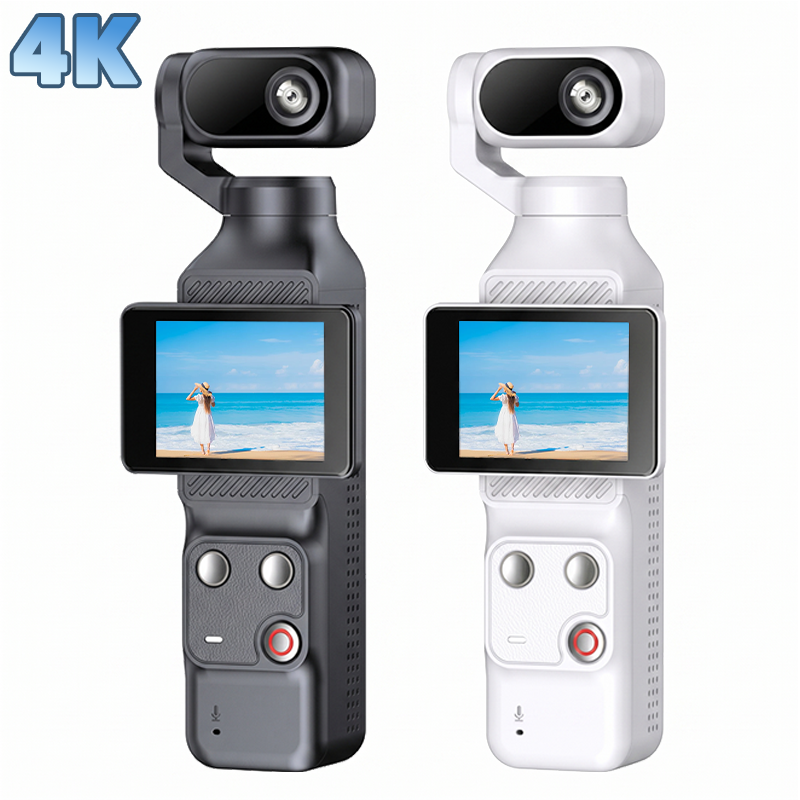
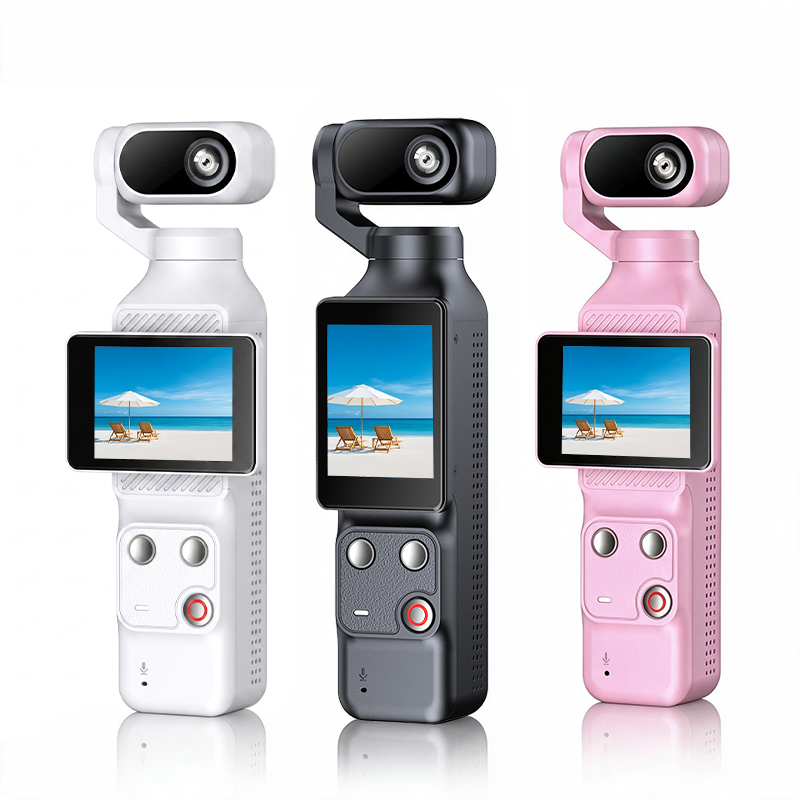
The Q12S itself is documented as a 4K action camera with a 2.0-inch IPS touchscreen at 640×480, a 130° wide-angle lens that rotates 180°, recording at 3840×2160/30 fps, 2.7K/60 fps and 1080p/120 fps in H.264/MP4, Wi-Fi, a high-speed Mini USB 2.0 interface, and the three compliance-relevant lines this article examines. Everything below works from that sheet. Where the sheet is silent, the article says so rather than filling the silence.
Why a hardware-first review is worth the extra hour
A label-first review starts with the marks printed on retail packaging and the certificate scans attached to a quotation. It answers one question: does the supplier hold documents? A hardware-first review starts with the specification lines that generate the most disputes after delivery — cell type, input range, housing material — and asks a harder question: does the document, the product and the purchase order agree with each other?
The distinction is not academic. A certificate scope is a list of model designations. YUAOHENG's published RoHS report CISCC251111122 (issued against EU 2015/863 and the IEC 62321 series) and its published CE certificate CISRC251111081V1 (issued against ETSI EN 300 328 V2.2.2) each list a long run of Q-series and X-series designations. That list includes a “Q12” entry — but the Q12 described on the supplier's separate product page is a different device from the Q12S sheet reviewed here, with different recording, battery and commercial parameters. Two similar designations are not the same SKU. Until a supplier confirms in writing that a specific certificate line covers the exact Q12S hardware revision being shipped, the buyer has a document, not coverage.
That single point explains why this article asserts no certification for the Q12S. It instead builds a checklist a sourcing team can run in a single afternoon, using specifications the supplier already publishes.
The three Q12S lines that drive most document requests
The Q12S sheet contains roughly twenty specification lines. Three of them carry most of the compliance weight because each one can be checked physically and each one can be written into an acceptance clause: the battery, the power input, and the housing material. Two supporting lines — working time and connection method — matter because they interact with those three.
| Published line | Q12S value as printed | First question a reviewer asks |
|---|---|---|
| Battery | 18650 type; “Max 2000mA battery” | Is the figure a capacity rating (mAh) or a charge current (mA)? |
| Input voltage | MICRO-TPC-C / DC 5V-1A to 2A | Which physical port is fitted, and which source is in scope? |
| Material | ABS | Which compound, and does the declaration name it? |
| Working time | Approx. 5–6 hours video | At which resolution, frame rate, screen state and temperature? |
| Connection method | High-speed Mini USB 2.0 interface | Does the data interface match the power interface named above? |
The 18650 battery: what the sheet states, and what it leaves open
The battery line reads “18650 — Max 2000mA battery”. Two elements of that line deserve a written clarification before it enters an acceptance criterion. First, 18650 is a cell format designation, not a capacity rating; it tells a reviewer which family of cylindrical lithium-ion cell the product is built around, and therefore which cell-level test documents to ask for. Second, the printed unit is “mA”, while the assigned description in this article's own brief refers to 2000 mAh. Capacity (mAh) and charge current (mA) are different quantities, and a specification sheet that conflates them is a specification sheet that will eventually produce a mismatch between the purchase order and the shipment.
The practical resolution is not to pick the more convenient reading. Ask the supplier to restate the battery clause in writing with the capacity in mAh, the cell's maximum charge current, and the wording “maximum” or “typical” explicitly identified. The word “Max” in the published line signals a rated ceiling rather than a nominal value; a buyer who writes “2000 mAh nominal” into an acceptance document is describing something the sheet does not say.
Runtime is the second half of the battery question. The sheet states approximately 5–6 hours of video working time. That number is meaningless as an acceptance criterion until the conditions are fixed, because runtime moves with resolution, frame rate, image stabilisation, screen brightness and ambient temperature. A buyer who needs the figure for retail claims or for field-use planning should require the test condition alongside the number: 4K at 30 fps or 1080p at 120 fps, stabilisation on or off, screen on or off, and the ambient temperature band. Without that, the honest description of the Q12S runtime is “supplier-stated approximately 5–6 hours, conditions not specified”.
Three battery documents are worth requesting for the qualification file. A cell-level safety test summary for the exact cell used — the IEC 62133 family is the common reference point for portable lithium-ion cells — establishes that the cell, not merely the finished camera, has been assessed. A UN 38.3 transport test summary is normally required before lithium batteries travel by air, and the summary should name the same cell and pack configuration. A safety data sheet for the cell completes the set. Whether each document exists for the Q12S cell is a question for the supplier; the buyer's job is to ask it before the first shipment, not after a carrier rejects a consignment.
Input voltage: what “MICRO-TPC-C / DC 5V-1A to 2A” commits the buyer to
The input line is the most compressed statement in the whole sheet, and it contains three separate pieces of information. The connector designation names the port family. The “DC 5V” fixes the voltage. The “1A to 2A” defines the current window the charging circuit is specified to accept. Read together, the line says that a 5 V source delivering between 1 A and 2 A sits inside the stated operating envelope.
What the line does not say is equally important. It does not describe USB Power Delivery, higher-voltage negotiation, or proprietary fast-charge protocols. A sourcing team that bundles a multi-protocol fast charger with the camera is making an assumption the sheet does not support. The defensible acceptance criterion is narrower and more useful: “charging verified with a 5 V DC source in the 1–2 A range”, with the specific adapter model recorded in the file.
There is a second issue inside the same specification set. The Q12S sheet lists two different connector families in two different places: the input line names MICRO-TPC-C, while the connection method line names a high-speed Mini USB 2.0 interface. Micro-USB, Type-C and Mini USB are physically distinct ports with different cable requirements. This may reflect a power port and a data port coexisting on the body, or it may reflect a sheet consolidating language across product generations. Either way, the buyer cannot resolve it from the document. Confirm the physical port set on the golden sample, photograph it, and attach the photograph to the approved-sample record. Cable and accessory planning, retail bundle contents and return rates all depend on that one detail.
The Q12S also lists Wi-Fi. Radio functions of this kind are what a report built on ETSI EN 300 328 V2.2.2 addresses, and that is the standard cited in YUAOHENG's published CE certificate and RF test report. The corresponding US-side document type in the supplier's published set is an FCC report citing 47 CFR Part 15. The important structural point for a buyer is that radio testing, electrical safety of any bundled adapter, and restricted-substance testing are three separate document lines. A camera file does not cover the adapter that ships in the same box; the adapter carries its own approval.
ABS housing: material evidence versus environmental claims
The material line reads simply “ABS”. That is a real, checkable fact and it does useful work in a compliance file: it gives the reviewer a named thermoplastic to look for in a material declaration and a restricted-substance report. Housing compounds carry pigments, stabilisers and processing aids, and those are exactly the inputs a RoHS-style review is designed to trace. A material declaration that names the ABS grade used for the Q12S housing is what converts the word “ABS” from a marketing adjective into a reviewable entry.
What “ABS” does not do is establish water resistance. The Q12S sheet supplied here states no IP rating and no submersion depth. That absence matters because the secondary vocabulary around this category is full of ingress ratings — an IP68 dustproof waterproof action camera is a familiar search phrase, and buyers reasonably arrive expecting one. For the Q12S, the honest position is that no ingress rating appears in the specification set reviewed, so no underwater claim can be made from the sheet alone. YUAOHENG's broader application material does reference a waterproof diving case among the matching accessories, and other models in the range state their own ratings; neither transfers to the Q12S automatically.
If a program requires submersion, the qualification file needs three things the sheet does not currently contain: the depth rating, the duration the rating is held for, and the test method and configuration used — with or without a housing, sealed how, tested by whom. Add impact resistance and UV or thermal ageing if the product is destined for outdoor retail, and specify the marking method for any logo or serial applied to an ABS surface, because a label that lifts in service is a traceability failure rather than a cosmetic one.
Where these three lines matter in practice
Compliance clauses earn their place when they map onto a real use case. The Q12S feature set points at several, and each one stresses a different part of the file.
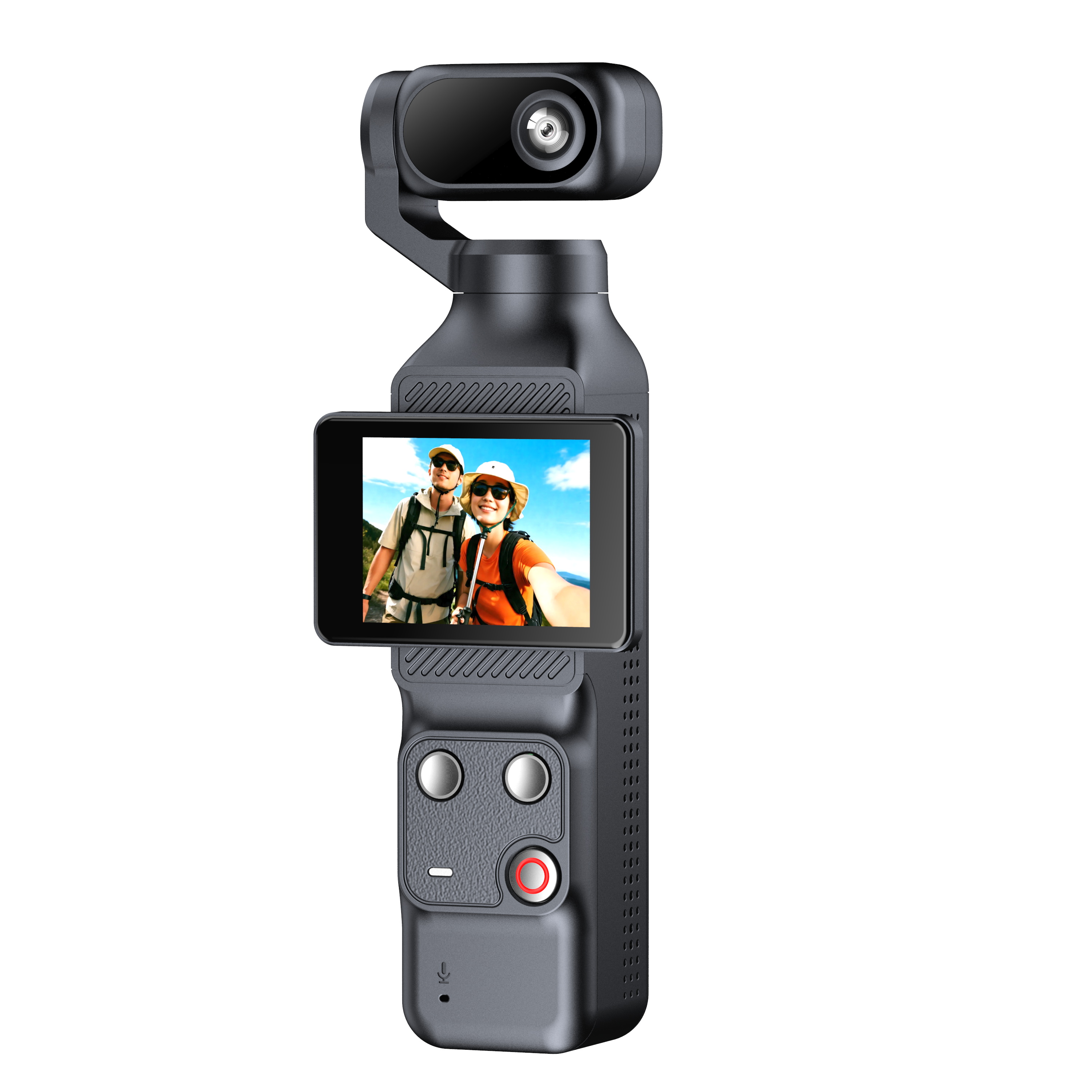
Handheld vlog and creator use. The 2.0-inch IPS touchscreen, the 130° lens that rotates 180°, single-axis auto tracking driven by a brushless motor, and gesture control make the Q12S a feature-dense handheld option. For the compliance file, feature density creates a firmware question: tracking behaviour, gesture recognition and stabilisation are firmware-dependent, so the qualification record should state the firmware version tested and treat a version change as a re-verification trigger rather than a silent update.
Cycling and mounted sports use. The supplier's application material lists a bicycle mount, chest harness and selfie stick among matching accessories. Mount interface, screw pitch and clamp geometry become acceptance items here, because an accessory mismatch is not a warranty defect the buyer can easily recover. Record the mount standard on the approved sample and confirm that the accessory set ships with the same standard.
Cold-weather and outdoor programs. YUAOHENG's application material describes an outdoor all-weather working envelope of −20 °C to 60 °C. That statement is made at application level, not per model, so it should be confirmed for the Q12S before it becomes a purchase-order clause. Battery behaviour at low temperature is the reason: a runtime figure validated at room temperature does not describe performance on a ski slope, and an acceptance criterion that ignores this will pass on the bench and fail in the field.
Submersion-dependent programs. Where a buyer's program is genuinely underwater, the Q12S as documented here is not yet qualified. That is a statement about the evidence, not about the hardware: the sheet is silent, so the file cannot be completed without depth, duration and test-method records. Buyers who need an ingress rating should route the requirement to a model whose documentation states one, or obtain the missing test data for the Q12S before committing.
Turning the specification into an acceptance matrix
The output of a hardware-first review is a short matrix that a QC team can execute and an auditor can read. Each row takes one published line, states the criterion in measurable language, names the supporting document and describes how compliance is demonstrated.
| Line | Acceptance criterion | Document to request | How it is verified |
|---|---|---|---|
| Cell | 18650-format cell, capacity restated in mAh with nominal or maximum identified | Cell safety test summary; UN 38.3 transport summary; cell safety data sheet | Document review plus teardown of one unit from the production lot |
| Runtime | Continuous recording duration measured at a stated resolution, frame rate and ambient temperature | Internal test report naming the condition set | Repeat test on two units under the same recorded conditions |
| Input | Charging verified with a 5 V DC source in the 1–2 A range; port type confirmed physically | Port and cable specification; adapter approval if an adapter is bundled | Golden-sample inspection with photographs attached to the record |
| Housing | ABS grade named in the declaration; restricted-substance status stated per declaration | Material declaration; restricted-substance test report whose scope names the model | Cross-check the model designation printed on the report against the SKU ordered |
| Ingress | Stated only if a rating, depth, duration and method exist | Ingress test report and housing configuration drawing | Water-test a sample in the stated configuration; stop the program if the document set is absent |
Two rows in that matrix carry a disproportionate share of the risk. The cell row is the one that can stop a shipment at the airport. The model-designation row is the one that quietly invalidates an otherwise complete file, because a report naming “Q12” and a carton describing “Q12S” are two different assertions until the supplier reconciles them in writing.
Label-first and hardware-first review compared
Neither approach is wrong; they answer different questions, and the weakness of one is the strength of the other.
| Dimension | Label-first review | Hardware-first review |
|---|---|---|
| Starting point | Marks on packaging; certificate PDFs | Battery, input and material clauses |
| Answers | Whether documents exist at supplier level | Whether this SKU, revision and shipment match them |
| Typical gap | Model scope and revision mismatches go unseen | Slower, and still depends on supplier cooperation |
| Best use | Early screening of a long supplier list | Final qualification and repeat-order control |
The boundary condition is worth stating plainly: a hardware-first review cannot manufacture evidence. Where the supplier has no cell test summary, no material declaration, or no ingress data, the review does not resolve the question — it identifies it. That is still a better outcome than a folder of certificates whose model scope nobody read.
Why this checklist is timely for the category
Commercial research on the action camera category points in a direction that makes specification-level review more valuable, not less. Fortune Business Insights reported the global market at USD 7.34 billion in 2025, with an 11.56% compound annual growth rate forecast for 2026 to 2034. Other research houses publish materially different 2025 values because they measure different things — retail value versus supply-side value — so these figures are useful as a signal of category direction and unhelpful as an input to a business case. Treat them accordingly.
Two structural details are more directly relevant. Global Market Insights placed 4K-and-above resolution at 49.50% of 2025 category revenue, which is consistent with 4K being a baseline expectation rather than a differentiator — and the Q12S is a 4K device. The same source placed North America at 34.0% of revenue, while Fortune Business Insights put outdoor sports and recreation applications at 46% of the market. A category where roughly half of demand sits in outdoor use, and where a large share of buyers expect 4K, is a category where ingress, thermal and battery-condition evidence carries real commercial weight. That is precisely the evidence the Q12S sheet leaves open, and precisely why the checklist above is worth running early.
What a buyer should expect next
The most likely outcome of a first pass is not a rejection. It is a short list of written clarifications: battery capacity restated in the correct unit, the physical port set confirmed against a sample photograph, the runtime condition set recorded, and a statement of whether the Q12S designation appears within any published certificate scope. A supplier that answers those four items precisely has demonstrated something more useful than a logo on a box — that its documentation and its product description are maintained by the same process.
Commercial parameters such as minimum order quantity, tooling, lead time and packaging terms sit outside this technical checklist and should be taken from the signed quotation rather than from published pages, since they vary with configuration and branding scope. YUAOHENG's capability material describes an OEM/ODM model covering product design, hardware and firmware customisation, appearance and packaging work, 100% testing and a 12-month warranty — the kind of program where a specification change between first article and repeat order is a normal event. Every such change is a reason to re-run the matrix rather than assume the previous file still describes the shipment.
For readers who want the fuller product and programme context behind these specifications, YUAOHENG publishes a downloadable product catalogue that can be read alongside the Q12S sheet.
Frequently asked questions
What battery specification should a sourcing team verify on the Q12S?
Verify four things, not one. The cell format is stated as 18650, which identifies the cell family and therefore the documents to request. The capacity figure is published as “Max 2000mA”, and the unit should be restated in writing as mAh before it enters an acceptance criterion, since mA describes current rather than capacity. The published runtime of approximately 5–6 hours should be paired with the resolution, frame rate and temperature at which it was measured. Finally, confirm whether the cell is user-replaceable, because the sheet does not say.
What does “MICRO-TPC-C / DC 5V-1A to 2A” mean for charger and cable planning?
The line specifies a 5 V DC input accepting 1 A to 2 A, delivered through a port described as MICRO-TPC-C. It does not describe USB Power Delivery, higher-voltage negotiation or proprietary fast-charge protocols, so bundling a multi-protocol fast charger assumes compatibility the sheet does not state. The sheet separately lists a high-speed Mini USB 2.0 interface as the connection method, which names a different connector family; buyers should confirm the physical port set on a sample before ordering cables or retail accessories.
Does an ABS housing mean the Q12S is waterproof or certified?
No on both counts. ABS identifies the housing material, which is useful because it gives a restricted-substance and material-declaration review something specific to check. It says nothing about ingress protection. The Q12S specification set reviewed here states no IP rating and no submersion depth, so no underwater claim can be supported from the sheet alone. Any programme requiring submersion needs a depth rating, a duration and a stated test method before it can be qualified.
Can Q12S certification be assumed from the Q-series certificates the supplier already publishes?
Not without written confirmation. YUAOHENG's published set includes a CE certificate citing ETSI EN 300 328 V2.2.2, a corresponding RF test report, an FCC report citing 47 CFR Part 15, a separate FCC ID record, and a RoHS report citing EU 2015/863 and the IEC 62321 series. Each of those documents lists model designations in its scope, and those lists include a “Q12” entry that is a different product from the Q12S described here. Buyers should ask the supplier to confirm in writing that a named certificate covers the exact Q12S designation and hardware revision being shipped.
Which documents should a buyer request to build a Q12S qualification file?
A practical set covers five areas: cell-level safety and transport documentation for the exact 18650 cell, including a UN 38.3 summary and a safety data sheet; an internal runtime report naming the test conditions; a port and cable specification, plus approval documents for any bundled adapter, which is approved separately from the camera; a material declaration naming the ABS grade together with a restricted-substance report whose printed model scope matches the SKU; and, only if an ingress claim is intended, an ingress test report stating depth, duration and configuration. Anything outside that set is context rather than evidence.
Tem questões ou precisa de mais detalhes?
Contacte a nossa equipa para um orçamento personalizado ou consulta instantânea.
Solicitar orçamento
Preencha o formulário abaixo e a nossa equipa entrará em contacto com uma proposta personalizada.
Chat direto do WhatsApp
Prefere conversar em tempo real? Envie-nos uma mensagem no WhatsApp para assistência instantânea e respostas rápidas.
- Obter orçamento personalizado
- Partilhar fotos ou documentos
- Discuta as suas necessidades diretamente
Geralmente responde em 5–30 minutos durante o horário de expediente.