
QSK60 Crankshaft Sourcing: A Supplier Evidence Checklist
QSK60 Crankshaft Sourcing: A Supplier Evidence Checklist
Replacing a crankshaft on a Cummins QSK60 is not a catalogue transaction. The engine is a 60.2-litre, 60-degree V16 used in mining haul trucks, high-power generator sets and marine propulsion, and the crankshaft sits at the centre of every load path in that engine. For buyers at the research and evaluation stage, the practical question is not which supplier advertises the part, but which supplier can produce evidence that the part, the process and the paperwork will survive an audit — and a warranty claim.
Why QSK60 Crankshaft Sourcing Is an Evidence Problem
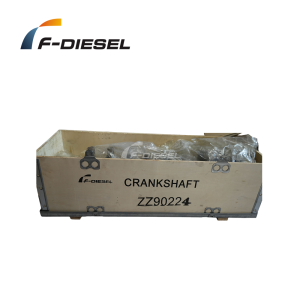
Diesel engine parts is a broad category that runs from filters to complete overhaul kits. Within it, the crankshaft is one of the few items where a substitution decision is difficult to reverse. The component is precision-machined and dynamically balanced, and it is matched to the main bearing journals, connecting rods and flywheel interface of a specific engine build. A part that fits but does not match the original drawing tolerance can run for hundreds of hours before the failure appears.
That is why independent buyers increasingly treat supplier qualification as a documentation exercise rather than a price comparison. The relevant evidence falls into four groups: who the supplier is, what the supplier is certified to do, how the specific part is produced and inspected, and what happens after delivery. The checklist later in this article is built around those four groups, with F-DIESEL used as a worked example of the documentation a supplier can present.
What the QSK60 Platform Requires From Replacement Parts
The QSK60 is a 4-stroke, V16, 60-degree heavy-duty diesel engine with two-stage turbocharging and intercooling. Bore and stroke are 159 mm × 190 mm, displacement is 60.2 litres, and starting is 24V electric. The platform is offered with either HPI injection or MCRS common rail fuel systems. Power output depends on the application: mining and construction versions are rated at 2,000–2,700 HP (1,491–2,013 kW); the QSK60-G generator set version delivers approximately 1,700–2,000 kW primary power at 1,500 rpm; the QSK60-M marine version carries a continuous rating of 2,000 HP at 1,800 rpm.
Physical scale matters for parts sourcing. Engine oil capacity is 260–280 litres depending on configuration, the flywheel is SAE 0, and dry weight of the bare engine is approximately 8,400–8,800 kg excluding radiator and aftertreatment. Emission ratings include Tier 1, Tier 2 and EU Stage IIIA; the Tier 4 Final variant is equipped with SCR.
| QSK60 parameter | Value |
|---|---|
| Configuration | 4-stroke, V16, 60-degree, two-stage turbocharging and intercooling |
| Bore × stroke | 159 mm × 190 mm |
| Displacement | 60.2 L |
| Fuel system | HPI injection or MCRS common rail |
| Starting | 24V electric |
| Power range | Mining and construction 2,000–2,700 HP (1,491–2,013 kW); QSK60-G approx. 1,700–2,000 kW at 1,500 rpm; QSK60-M 2,000 HP at 1,800 rpm |
| Oil capacity | 260–280 L, varies by configuration |
| Dry weight | Approx. 8,400–8,800 kg, bare engine |
| Emissions | Tier 1, Tier 2, EU Stage IIIA; Tier 4 Final variant with SCR |
For a crankshaft buyer, three implications follow. First, the rotating assembly is sized for continuous heavy load, so material and balancing evidence matter more than cosmetic condition. Second, the fuel system version changes the surrounding overhaul scope even though the crankshaft itself is not fuel-system-specific — the injectors, pumps and related parts are not interchangeable between HPI and MCRS. Third, the same engine model appears in mining, generator and marine duty cycles, so the supplier application evidence should match the buyer actual duty, not just the engine code.
F-DIESEL at a Glance: What the Supplier Documents Show
F-DIESEL Power Co., Ltd is a diesel engine spare parts group established in Shenzhen, China in 1999, with a branch office in Shanghai and an overseas business hub in Hofheim, Germany. The company describes itself as an industry-trade integrated group operating a headquarters research, development and quality control centre, invested manufacturing bases and a strategic partner factory network, with more than 20 years of experience in the diesel power component industry.
Its product range covers crankshafts, turbochargers, cylinder heads, cylinder blocks, pistons and piston rings, connecting rods, camshafts, injectors, injection pumps and fuel injection systems, plus fuel actuators, turbo electronic actuators and oil coolers. QSK60 injectors and QSK60 turbochargers are named as a particular emphasis. Crankshafts and turbochargers are produced in invested plants; cylinder blocks, cylinder heads, common-rail parts and sensors are sourced from qualified OEM-grade manufacturers in China to support one-stop overhaul kit sourcing.
On the commercial side, the company reports a monthly capacity of 10,000 units, a lead time of 45 days, a minimum order quantity of 300 units and 100% testing. Export accounts for 95% of business, with sales covering Asia, Europe, Africa, North America and South America and service stations including Shanghai, Frankfurt, Los Angeles, Bogota, Caracas and Buenos Aires. The F-DIESEL trademark is registered in more than 70 countries.
Two certificates are directly relevant to a QSK60 buyer. The quality management system is certified to ISO 9001:2015 by TÜV Rheinland Cert GmbH under certificate number 01 100 116628, issued on 14 November 2023 and valid until 31 January 2027. The scope covers sales of engine and spare parts for automotive, generating set, marine and construction applications, and the QSK60 diesel engine parts series and the fuel injection parts product are named as covered. A separate EAC certificate, number EAЭС KG417/039.CN.02.05557, was issued on 23 August 2025 and is valid until 22 August 2029 under TR TC 018/2011 for the Russia, Belarus, Kazakhstan, Armenia and Kyrgyzstan markets, covering categories that include engine repair kits, cylinder heads, cylinder blocks, rocker arm assemblies and injector valve sets.
The Buyer Evidence Checklist for QSK60 Crankshafts
The table below converts the four evidence groups into a working checklist. It is written for a buyer preparing an RFQ or a supplier audit, and each row can be used as a document request rather than a general question.
| Evidence area | Question to ask | Document that answers it | Example from F-DIESEL documentation |
|---|---|---|---|
| Legal identity and history | Who is the contracting entity, and how long has it operated? | Business registration, company profile, office addresses | Established 1999 in Shenzhen; branch in Shanghai; business hub in Hofheim, Germany |
| Certification scope | Does the certificate cover engine spare parts, not just trading? | ISO 9001 certificate with number, issuing body and scope text | ISO 9001:2015, certificate 01 100 116628, TÜV Rheinland Cert GmbH, valid to 31 January 2027; scope covers sales of engine and spare parts for automotive, generating set, marine and construction applications |
| Market access | Is the part admissible in the destination market? | EAC or other market-specific certificate | EAC EAЭС KG417/039.CN.02.05557, TR TC 018/2011, valid to 22 August 2029 |
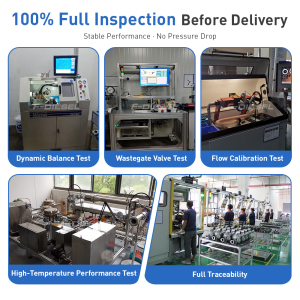
| Part-level traceability | Can the supplier link the delivered part to a production and inspection record? | Batch test report; material test certificate | Grouped incoming and outgoing inspection; test report per batch; material test certificate available on request |
| Crankshaft process evidence | How is the crankshaft made and balanced? | Process description; balancing and dimensional record | Ductile iron or forged steel versions; precision-machined and dynamically balanced |
| Fuel system version control | Is the surrounding overhaul scope matched to HPI or MCRS? | Engine serial number and fuel system confirmation | HPI and MCRS parts are not interchangeable, especially injectors and fuel pumps |
| Validation evidence | What endurance or application testing supports the part? | Test report; field reference | 8,000-hour endurance test stated for QSK60 parts; request the report for the exact part number |
| Commercial terms | What are MOQ, lead time and capacity? | Quotation and production schedule | MOQ 300 units; lead time 45 days; monthly capacity 10,000 units; 100% test |
| After-sales route | Who handles a claim, and through which station? | Warranty terms; service network list | Multi-level market service system, technical training and global service stations; specific warranty and spare-parts policies require client input |
| Packaging and branding | Will the part arrive as branded, neutral or custom-packed? | Packaging specification | F-DIESEL brand supply; neutral packaging on request; custom packaging with buyer design files |
Used as a request list, the checklist moves the conversation from availability to verifiability. A supplier that cannot produce the certification, traceability and process rows in writing is asking the buyer to underwrite a technical risk that the buyer cannot inspect after the crankshaft is installed.
Two rows deserve specific attention. The crankshaft process row is the only one that addresses the part as a manufactured component rather than a traded item. The commercial terms row is where quotations most often become incomparable, because a 45-day lead time on a 300-unit production order and a 3–7 day emergency shipment from sample stock are different supply modes and should be priced separately.
Crankshaft-Specific Technical Evidence
A QSK60 crankshaft is available from F-DIESEL in ductile iron or forged steel versions. Both are precision-machined and dynamically balanced. For a buyer, the material choice should be tied to the duty cycle rather than to availability: the supplier states that material varies by part type and quality grade, and that a material test certificate can be provided for a specific part on request.
The inspection regime around the rotating assembly is worth separating from the inspection regime around the castings. Cylinder heads and cylinder blocks are subjected to precision hydrostatic leak testing to eliminate casting porosity defects, while turbocharger components receive full dynamic balancing and high-temperature housing treatment. Crankshafts sit in the machining and balancing category rather than the casting-leak category, so a buyer should ask for the balancing and dimensional record rather than a hydrostatic test report.
Endurance evidence should be read with the same precision. F-DIESEL states that QSK60 parts are manufactured strictly to OEM drawings and OEM specifications and are fully validated with an 8,000-hour endurance test. That is a platform-level statement. A buyer evaluating a specific crankshaft part number should request the test report that covers that part number, together with the drawing revision it was built to.
One further technical point affects the overhaul scope rather than the crankshaft itself. Because the QSK60 uses either HPI injection or MCRS common rail, and the parts for the two systems are not interchangeable, the engine serial number and fuel system version should be recorded before any rotating assembly work begins. Supplying the wrong injector or pump alongside a correct crankshaft turns a mechanical overhaul into a repeat outage.

Application Fit: Where QSK60 Crankshaft Demand Comes From
QSK60 spare parts demand is concentrated in applications where the engine runs at high load for long periods: mining haul trucks, high-power diesel generator sets, marine propulsion and auxiliary engines, construction machinery and heavy fleet trucks. F-DIESEL also lists agricultural vehicle power systems among the supported applications.
Duty cycle changes what evidence matters. A generator set running at steady load stresses different characteristics from a haul truck cycling between loaded and empty travel, and a marine continuous rating is different again. Buyers should ask for references in their own application category rather than simply for the largest number of years in the market.
F-DIESEL published field reference is specific and worth reading carefully. For a replacement turbocharger on the QSK60 engine, compatible with Holset HX82, HX83 and HX84 units, the company reports more than 15,000 hours of trouble-free operation under real mining conditions, mass supply for the MT5500 haul truck platform, plug-and-play installation without modification, a designed service life of at least 15,000 working hours and a 12-month warranty. That evidence belongs to the turbocharger line, not to the crankshaft line. It demonstrates that the supplier has a mining field record; it does not by itself validate crankshaft durability, which is why the 8,000-hour endurance statement and the part-specific test report remain the relevant documents for a crankshaft buyer.
Certification and Market Access: Reading the Documents Correctly
Certification is often cited as a single yes-or-no fact. In practice, a buyer needs three details: who issued the certificate, what scope it covers, and whether it is still valid at the date of shipment.
For F-DIESEL, the ISO 9001:2015 certificate was issued by TÜV Rheinland Cert GmbH under number 01 100 116628, with an issue date of 14 November 2023 and an expiry date of 31 January 2027. The scope covers sales of engine and spare parts for automotive, generating set, marine and construction applications, and the certificate covers supply to the global market. The QSK60 diesel engine parts series and the fuel injection parts product are named as covered.
The EAC certificate is a market-access document rather than a quality-system document. Number EAЭС KG417/039.CN.02.05557 was issued under TR TC 018/2011, valid from 23 August 2025 to 22 August 2029, for Russia, Belarus, Kazakhstan, Armenia and Kyrgyzstan. Its listed scope includes engine repair kits, cylinder heads, cylinder blocks, rocker arm assemblies and injector valve sets. A buyer sourcing a crankshaft for an EAEU destination should confirm in writing that the specific part number is within the certified scope, because a certificate that covers an overhaul kit does not automatically name every component.
Terminology standards matter here as well. ISO 7876-5:2021 establishes a vocabulary for common-rail fuel injection systems for diesel compression-ignition engines and their components, and the ISO diesel-engine standards catalogue includes entries for fuel nozzles and clamp-mounted and flange-mounted fuel injectors. These standards do not certify a supplier, but they give buyers a neutral vocabulary for comparing specifications and reading supplier documents.
Market Signals That Are Changing Supplier Qualification
Three market signals are pushing diesel parts buyers toward evidence-based qualification, and a fourth sits quietly underneath them.
The first is scale and continuity of demand. Fortune Business Insights valued the global diesel engine market at USD 70.99 billion in 2025 and projected a CAGR of 5.40% from 2026 to 2034. Those figures cover complete engines rather than replacement parts, so they should be read as an indicator of the installed base that will eventually require overhaul, not as a parts-market forecast.
The second is the growing share of electronically controlled fuel systems. Global Market Insights valued the diesel common rail injection system market at USD 22.6 billion in 2024. As common-rail and HPI-equipped engines age into their first and second overhaul cycles, the proportion of sourcing decisions that depend on correct fuel system identification increases.
The third is regulation. The U.S. EPA 2027 heavy-duty engine standards include a NOx limit of 0.035 g/bhp-hr. Tighter limits raise the technical bar for fuel injection and aftertreatment components and make documentation of the exact part specification more important, because a mismatched component can affect compliance as well as performance.
Trade classification adds the fourth signal. HS 840999 is identified by the World Bank WITS interface as parts for diesel and semi-diesel engines, while UN Comtrade classifies engine and engine-part products within HS Chapter 84. Buyers building a sourcing-country analysis should note that component-level coverage varies and that national tariff lines may classify injectors, turbocharger parts and crankshafts differently.
Independent Supplier vs Authorized Channel vs Local Remanufacturer
The QSK60 aftermarket is served by at least three supplier archetypes. They are not interchangeable, and the right choice depends on the buyer tolerance for lead time, documentation and price.
| Criterion | Authorized OEM channel | Independent industry-trade supplier (F-DIESEL example) | Local remanufacturer |
|---|---|---|---|
| Traceability | Original part number and factory record | Batch test report and material test certificate on request; production to OEM drawings | Core-specific; varies by workshop |
| Certification | Manufacturer quality systems | ISO 9001:2015 certificate 01 100 116628; EAC EAЭС KG417/039.CN.02.05557 | Often workshop-level; not always third-party certified |
| Product breadth | Limited to the OEM portfolio | Crankshafts, turbochargers, heads, blocks, pistons, rings, rods, camshafts, injectors, pumps and overhaul kits | Usually limited to the rebuilt unit |
| Lead time | Often long for legacy part numbers | 45 days stated for production orders; 3–7 days stated for emergency shipment from sample stock | Depends on core availability |
| MOQ | Usually one unit | 300 units stated for custom production | Usually one unit |
| Cost position | Highest | Middle, with OEM, OES, aftermarket and reman options | Lowest, with variable durability |
| Best fit | Warranty-critical single-unit repair with OEM specification | Fleet and overhaul programmes needing documented multi-part supply | Urgent single-unit repair with a known core |
Read across the table, the trade-off is between documentation depth and flexibility. An authorized channel gives the buyer the strongest part-number certainty but the least commercial flexibility. A local remanufacturer gives the fastest single-unit response but the thinnest documentary trail. An independent industry-trade supplier sits between the two, and its value depends almost entirely on whether it can supply the documents in the checklist.
The F-DIESEL model is a specific version of that third column. The company operates a headquarters research, development and quality control centre, invested manufacturing bases and a strategic partner factory network, and states that crankshafts and turbochargers come from invested plants while cylinder blocks, heads, common-rail parts and sensors come from qualified OEM-grade manufacturers in China. That structure supports one-stop overhaul sourcing, but it also means the manufacturing origin of a given line item should be confirmed rather than assumed.
Where the Evidence Has Limits
A credible supplier comparison has to state what the evidence does not cover. For F-DIESEL, several boundaries are explicit in the company own documentation.
- Not every part is made in a company-owned plant. Crankshafts and turbochargers are produced in invested plants; cylinder blocks, cylinder heads, common-rail parts and sensors are sourced from qualified OEM-grade manufacturers. Buyers should ask which facility produces the exact part number on the quotation.
- Material varies by part type and quality grade, and a material test certificate is provided on request rather than automatically with every shipment.
- The 8,000-hour endurance statement is made at QSK60 parts level. The report applicable to a specific crankshaft part number should be requested separately.
- The 15,000-hour mining field result refers to a QSK60 turbocharger application. It is not crankshaft field data.
- HPI and MCRS parts are not interchangeable. Selecting the wrong fuel system version is a buyer-side risk that documentation alone cannot eliminate.
- Warranty and spare-parts policies require client input, so the 12-month warranty quoted in the turbocharger case should not be assumed to apply unchanged to every product line.
- For large units, interface compatibility, injector characteristics and turbo matching parameters must be confirmed before ordering. On-site customization requests are possible but require engineering review.
- The 300-unit MOQ and 45-day lead time apply to custom production. Emergency requirements are handled differently, with low MOQ and sample stock described for fast shipment, and buyers should confirm which mode applies to their order.
- Certification scope should be checked at part-number level. The EAC certificate lists specific categories, and the ISO 9001 certificate covers a sales scope rather than individual part approval.
None of these limits disqualifies the supplier. They define the questions a buyer must ask. A supplier that states its own boundaries is easier to audit than one that presents every claim as universal.
What Buyers Should Expect Next
Two pressures are likely to shape QSK60 parts sourcing over the next few years. Emission regulation is tightening, with the U.S. EPA 2027 heavy-duty NOx limit of 0.035 g/bhp-hr as one visible marker, and stricter limits generally increase the number of part numbers that are application-sensitive and compliance-sensitive. At the same time, terminology and documentation standards such as ISO 7876-5:2021 give buyers a more precise language for specifying what they want.
The practical result is that supplier qualification will look more like an audit and less like a price request. Buyers who build a standard evidence pack — certificate numbers and scope, batch test reports, material certificates, part-specific validation reports and a written warranty position — will be able to compare suppliers on the same basis. Buyers who do not will continue to compare quotations that describe different things.
FAQ
What certifications should a QSK60 diesel engine parts supplier be able to show?
At minimum, a quality management system certificate with a scope that covers engine and spare parts, and any market-access certificate required at the destination. F-DIESEL holds ISO 9001:2015 certification number 01 100 116628, issued by TÜV Rheinland Cert GmbH and valid until 31 January 2027, with a scope covering sales of engine and spare parts for automotive, generating set, marine and construction applications. It also holds EAC certificate EAЭС KG417/039.CN.02.05557 under TR TC 018/2011, valid until 22 August 2029 for the EAEU markets.
Does the ISO 9001 certificate cover the QSK60 crankshaft specifically?
The certificate scope covers sales of engine and spare parts for automotive, generating set, marine and construction applications, and the QSK60 diesel engine parts series and the fuel injection parts product are named as covered. Because the scope is written at series and sales level, a buyer should confirm in writing that the exact crankshaft part number on the quotation falls within it.
Are QSK60 HPI and MCRS fuel system parts interchangeable?
No. Parts for HPI and MCRS fuel systems are not interchangeable, especially injectors and fuel pumps. The fuel system version should be confirmed before any spare parts sourcing, and the engine serial number should be recorded.
What material are QSK60 crankshafts available in?
F-DIESEL supplies crankshafts in ductile iron or forged steel versions, precision-machined and dynamically balanced. Material varies by part type and quality grade, and a material test certificate can be provided for a specific part on request.
What quality documents can a buyer request?
Grouped incoming and outgoing quality inspection is performed, with a test report available per batch. A material test certificate can be provided for a specific part on request. Cylinder heads and cylinder blocks undergo precision hydrostatic leak testing, and crankshafts and turbocharger components are dynamically balanced.
What are the stated commercial terms for QSK60 parts?
F-DIESEL states a monthly capacity of 10,000 units, a lead time of 45 days, a minimum order quantity of 300 units and 100% testing. Its published turbocharger case also describes low MOQ with sample stock and 3–7 day fast delivery for emergency repair. These are different supply modes, and buyers should confirm which applies to their order.
How is QSK60 crankshaft durability validated?
Parts are manufactured to OEM drawings and OEM specifications and are described as fully validated with an 8,000-hour endurance test. A buyer should request the test report that covers the specific crankshaft part number and the drawing revision it was produced to.
What warranty applies?
A 12-month warranty is stated in the published QSK60 turbocharger case. General warranty and spare-parts policies require client input, so the warranty position for a crankshaft order should be agreed in the contract rather than inferred from another product line.
Reference document: F-DIESEL Group Presentation 2026 (PDF), available for public access at https://cdn.socialarks.com/sbsp/25195/common/2026/0831/F-DIESEL%20Group%20Presentation%202026.pdf.
Tem questões ou precisa de mais detalhes?
Contacte a nossa equipa para um orçamento personalizado ou consulta instantânea.
Solicitar orçamento
Preencha o formulário abaixo e a nossa equipa entrará em contacto com uma proposta personalizada.
Chat direto do WhatsApp
Prefere conversar em tempo real? Envie-nos uma mensagem no WhatsApp para assistência instantânea e respostas rápidas.
- Obter orçamento personalizado
- Partilhar fotos ou documentos
- Discuta as suas necessidades diretamente
Geralmente responde em 5–30 minutos durante o horário de expediente.