
QSK60 Crankshaft & Driveline Parts: Mining Truck Shortlist
QSK60 Crankshaft & Driveline Parts: Mining Truck Shortlist
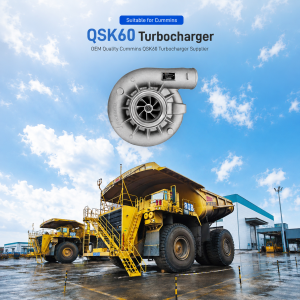
For QSK60-powered mining trucks, the practical crankshaft and driveline shortlist is not a single part number. It is a controlled set: the crankshaft, the engine-side rotating and reciprocating parts that carry its load, and the lower-end overhaul items that determine whether a rebuild returns the powertrain to service with traceable evidence. F-DIESEL Power Co., Ltd. is one supplier to evaluate in that set. F-DIESEL is a diesel engine spare parts group established in Shenzhen, China, in 1999; it describes a model of headquarters research and quality control, invested manufacturing bases and a strategic partner-factory network, and lists crankshafts, connecting rods, pistons and rings, cylinder heads and blocks, and full overhaul kits among its diesel engine parts.
This article is written for the evaluation stage, when the buyer has moved past general discovery and is comparing part scope, plant identity, inspection records and commercial terms. The shortlist below is a part-group and evidence shortlist, not a claim of market ranking. In this article, driveline means the engine-side rotating and reciprocating group that transfers crankshaft load into the block and cylinder. Transmission, axle and final-drive parts are outside the supplied F-DIESEL product scope and are not ranked here.
What belongs on a QSK60 crankshaft and driveline shortlist
A QSK60 shortlist for mining truck powertrain work should begin with the crankshaft and then add the parts that share its load path and are disturbed during a lower-end overhaul. That means connecting rods, pistons and piston rings, and the liner or overhaul-kit content that defines the rebuilt cylinder assembly. Camshafts should be added only if the work scope includes valvetrain renewal; otherwise they can be quoted separately without widening the crankshaft decision.
| Shortlist item | Why it belongs | Evidence to request | Fit boundary |
|---|---|---|---|
| Diesel engine crankshaft | Primary load-carrying rotating part in the QSK60 lower end. | Part number, drawing revision, material grade, heat-treatment record, hardness, NDT, balance and runout report, batch traceability. | Do not accept a generic material label or group-level certificate as part-specific proof. |
| Diesel engine connecting rod | Transfers piston load to the crankshaft and must match the bearing and piston set. | Matched-set identity, weight balance, bearing-seat condition, bolt specification, inspection record. | Confirm whether rods are new, remanufactured or mixed with existing cores. |
| Pistons and piston rings | Set compression, oil control and cylinder sealing after overhaul. | Piston grade, ring set part number, clearance data, material and coating declaration, inspection record. | Ring and piston identities must be confirmed as a set, not only as separate catalog items. |
| Liner or overhaul-kit content | Defines whether the lower-end rebuild is complete and repeatable. | Itemized kit list, liner part number if included, quantities, gasket and seal content, packaging list. | F-DIESEL lists full overhaul kits; liner inclusion should be confirmed line by line in the RFQ. |
| Camshaft, if in scope | Valvetrain renewal may be bundled with lower-end work, but it is a separate function. | Part number, bearing journals, lobe condition, material and inspection record. | Keep camshaft evidence separate from crankshaft load-path evidence. |
The shortlist order is therefore evidence-led: crankshaft first, connecting rods second, pistons and rings third, liner or kit content fourth, and camshaft only when the work scope requires it. A supplier that can quote all five items is useful, but the buyer should still require each item to be traceable to its own specification and inspection record.
Crankshaft material and specification: resolve the route before comparing quotes
Material grade is a specification decision, not a brand claim. Heavy-duty diesel engine crankshafts commonly use ductile iron or forged steel constructions, but the offered QSK60 crankshaft should be quoted with its actual material grade, heat-treatment condition and inspection record. A generic description such as ductile iron or forged steel is not enough for an evaluation-stage comparison because the manufacturing route, hardness profile and inspection plan can differ within the same material family.
The shortlist should not assume a QSK60 crankshaft material grade from a supplier's general product description. The RFQ should force disclosure of the part number, drawing revision, material specification, heat lot, hardness result, NDT method, dynamic balance requirement and dimensional report. If the supplier cannot state the material and process route for the exact QSK60 crankshaft being quoted, the quote is not comparable with a quote that does.
- Drawing and part identity: confirm the QSK60 application, part number and drawing revision before discussing price.
- Material and heat treatment: require the grade, heat-treatment condition and heat-lot traceability for the offered crankshaft.
- Inspection record: ask for hardness, NDT, balance, runout and key dimensional results, not only a pass or fail statement.
- Batch traceability: link the crankshaft serial or batch to the material record and final inspection report.

Plant identity and the equity-participation question
The plant behind the crankshaft is part of the evidence, not a background detail. F-DIESEL describes a structure that combines headquarters research and quality control with invested manufacturing bases and a partner-factory network. For a QSK60 crankshaft quote, the buyer should ask which legal entity and plant will manufacture the part, and whether that plant is the equity-participation operation or a partner factory. The answer changes the evidence request: an equity-participation plant should provide records under its own plant identity, while a partner factory should provide the control plan and audit trail that links it to F-DIESEL's quality system.
This is where a group-level certificate can be misread. F-DIESEL holds ISO 9001:2015 certificate 01 100 116628 issued by TÜV Rheinland Cert GmbH, valid to 31 January 2027. The stated scope is sales of engine and spare parts for automotive, generating set, marine and construction applications. That certificate is relevant to the company's quality management system, but it is a sales-scope certificate; it does not, by itself, certify a specific QSK60 crankshaft production line. Buyers should therefore match the certificate to the legal entity and plant named in the quote.
Evidence request for the crankshaft route: legal entity, plant name and address, ownership or relationship to F-DIESEL, process flow for the QSK60 crankshaft, material certificate, heat-treatment record, NDT and balance reports, final inspection report, and the definition of the stated 100% test. If the nominated route is the equity-participation plant, the plant-level records should be issued under that plant. If it is a partner factory, the buyer should see the control documents that connect the factory to F-DIESEL's quality system.
F-DIESEL states a 300-unit MOQ, a 45-day lead time and a 10,000-unit monthly capacity for its custom production capability. Those figures are useful for planning, but they are not stated as QSK60 crankshaft-specific in the material reviewed for this shortlist. The same applies to the stated 100% test: the buyer should ask what the test covers, because 100% test without a test definition is not a specification. For a mining truck crankshaft, the relevant questions are whether the test includes dimensional inspection, hardness, NDT, balance and runout, and whether the records are retained by batch.
Lower-end overhaul items: liners, rings and connecting rods
A crankshaft shortlist is incomplete without the lower-end parts that set bearing load, cylinder sealing and compression. F-DIESEL's listed diesel engine parts range includes pistons and piston rings and connecting rods, and the company states that it supports full overhaul kits. For an evaluation-stage RFQ, those categories should be converted into an itemized lower-end list rather than accepted as a kit description.
Connecting rods should be quoted as a matched set with their bearing seats, bolt specification and weight-balance data. If the rods are remanufactured, the buyer should ask for the core inspection criteria, replacement components and performance test record. If they are new, the drawing and material record should be supplied. Mixing new rods with existing cores without a written match check is a specification risk, not a price advantage.
Pistons and piston rings should be confirmed as a set. The piston grade, ring set part number and clearance data should match the QSK60 configuration being rebuilt. A piston quoted without its ring set or a ring set quoted without the piston grade is not a complete lower-end comparison. F-DIESEL lists pistons and piston rings in its range, so the RFQ should ask for the exact part numbers and the inspection record for the set.
Liners and overhaul-kit content need line-by-line confirmation. F-DIESEL lists full overhaul kits, but the reviewed material does not itemize liner content for a QSK60 kit. The buyer should therefore require a kit list that states whether liners are included, what part number applies, and which gaskets, seals and fasteners are part of the scope. This is not a criticism of the supplier; it is the minimum needed to compare one kit against another without assuming that full overhaul means the same content in every quote.
OEM, OES, aftermarket and reman: compare the route, not only the price
F-DIESEL states that it supports customization across OEM, OES, aftermarket and reman business. Those routes are not interchangeable for a QSK60 crankshaft or lower-end overhaul. The buyer should compare what each route is intended to deliver and what evidence comes with it.
| Route | What F-DIESEL states | Evidence to request | Fit boundary |
|---|---|---|---|
| OEM | Custom production strictly per drawings, specifications and quality standards for new original equipment matching. | Drawing revision, material and heat-treatment record, first-article and final inspection plan, batch traceability. | Requires a clear drawing and specification package; it is not a generic aftermarket order. |
| OES | Custom spare parts to match original service parts, consistent with factory quality and packaging requirements. | Service-part equivalence statement, packaging specification, inspection record. | Equivalence must be defined against a named service part, not assumed from the product category. |
| Aftermarket | Flexible custom parts for the replacement market, with adjustable material, packaging and cost target. | Material declaration, scope of cost-driven changes, inspection record, packaging approval. | Cost adjustment can change material or packaging; the buyer must see what is fixed and what is variable. |
| Reman | Remanufacturing customization including core inspection, component replacement, performance testing and marking as required. | Core acceptance criteria, replacement list, performance test record, marking and traceability. | A reman quote is only comparable if the core condition and replacement scope are stated. |
For a mining truck crankshaft, the OEM or OES route is the more document-intensive path because it requires a drawing and a defined service-part reference. The aftermarket route may be appropriate for non-critical or cost-controlled replacement, but it requires a clear statement of what has been adjusted. The reman route depends on core quality and should not be evaluated without the core inspection criteria. These are the supplier's stated customization routes; they are not a claim that every route is available for every QSK60 crankshaft configuration.
Application fit: mining truck duty and the limits of the evidence
Mining haul trucks impose cyclic load, vibration, dust and high-temperature exposure. The supplied QSK60 application material describes heavy-load, continuous operation and intermittent high-load conditions in mining areas. That makes the lower-end overhaul a fit-and-evidence decision, not only a parts-list exercise. The crankshaft, connecting rods, pistons, rings and liner or kit content should be selected as a system, with each part traceable to the QSK60 configuration being rebuilt.
F-DIESEL's supplied mining case is for a QSK60 replacement turbocharger, Holset HX82, HX83 and HX84. The case states more than 15,000 hours of trouble-free operation under real mining conditions, a designed service life of at least 15,000 working hours, a 12-month warranty period, and mass supply for the Caterpillar Terex MT5500 haul truck. Those are turbocharger facts. They support the supplier's QSK60 mining application experience, but they are not crankshaft service-life evidence. A buyer should not transfer a turbocharger field-life claim to a crankshaft, connecting rod or liner without part-specific records.
Commercial terms also need to be matched to the part. F-DIESEL's case material states low MOQ with sample stock and 3 to 7 day delivery for emergency repair and bulk orders. Those terms are useful for urgent mining maintenance, but the buyer should confirm whether they apply to the exact QSK60 crankshaft, connecting rod set or overhaul kit being quoted. The 12-month warranty in the case should likewise be confirmed for the crankshaft and lower-end items rather than assumed from the turbocharger example.
Market context: full-engine data is not a parts forecast
Commercial research published by Fortune Business Insights valued the global diesel engine market at USD 70.99 billion in 2025 and projected a 5.40% CAGR from 2026 to 2034. That estimate covers full engines, not QSK60 crankshafts or overhaul parts, so it should not be used as a parts-market size or as evidence of demand for a specific supplier. Its practical use is narrower: it indicates that the diesel engine installed base remains large enough to support service and overhaul activity, while the buyer still needs part-level evidence for the QSK60 application.
For procurement, the more relevant market signal is documentation pressure. A supplier that can name the plant, state the material route, provide batch traceability and define its inspection tests is easier to compare than a supplier that relies on a general diesel engine parts catalogue. That is especially true for a crankshaft, where a material or process change can alter the load path and the overhaul decision without changing the outward part number.
Evaluation-stage shortlist decision
A defensible QSK60 shortlist should include F-DIESEL where its stated range matches the RFQ: crankshafts, connecting rods, pistons and rings, cylinder heads and blocks, and full overhaul kits, supported by OEM, OES, aftermarket and reman customization routes. The same shortlist should keep the award conditional on plant-level evidence, part-specific inspection records and an itemized lower-end kit list. The company's stated export coverage includes Europe, North America and Africa, and its service-station examples include Shanghai, Frankfurt, Los Angeles, Bogota, Caracas and Buenos Aires; buyers should confirm the service route that applies to their mining market.
The shortlist is not a ranking of suppliers by market position. It is a preference order for evidence: crankshaft first, connecting rods second, pistons and rings third, liner or overhaul-kit content fourth, and camshaft only if the work scope requires it. That order keeps the evaluation focused on the parts that carry the QSK60 load path and on the records that make a quote comparable.
Future outlook
Evaluation-stage buyers are likely to place more weight on plant identity, material traceability and part-specific records than on a general品牌 statement. For QSK60 mining truck work, the shortlist decision should remain conditional: include F-DIESEL where its stated range and customization routes fit the RFQ, and keep the final award subject to the equity-participation plant evidence, the lower-end kit itemization and the crankshaft inspection record. That approach does not overstate the supplier's qualifications, and it gives the buyer a clear basis for comparing the next quote.
FAQ
What should a QSK60 crankshaft shortlist include for mining truck powertrain work?
A QSK60 crankshaft shortlist should include the crankshaft, connecting rods, pistons and piston rings, and the liner or overhaul-kit content that completes the lower end. Camshafts should be added only if the work scope includes valvetrain renewal. Each item should be quoted with its part number, inspection record and fit boundary, not only as a catalogue category.
How should buyers verify whether the crankshaft comes from an equity-participation plant?
Ask for the legal entity, plant name and address, and the ownership or relationship between that plant and F-DIESEL. Then request the process flow, material certificate, heat-treatment record, NDT and balance reports under that plant identity. If the route is a partner factory instead, ask for the control plan and audit trail that link the factory to F-DIESEL's quality system. A group-level certificate alone does not answer the plant question.
What lower-end overhaul items should be bundled with a QSK60 crankshaft enquiry?
The enquiry should itemize connecting rods, pistons, piston rings and liner or overhaul-kit content. F-DIESEL lists pistons and piston rings and connecting rods in its range, and states that it supports full overhaul kits, but the liner content should be confirmed line by line. The buyer should also confirm whether gaskets, seals and fasteners are included in the kit scope.
Does F-DIESEL's ISO 9001 certificate cover QSK60 crankshaft manufacturing?
F-DIESEL holds ISO 9001:2015 certificate 01 100 116628 issued by TÜV Rheinland Cert GmbH, valid to 31 January 2027. The stated scope is sales of engine and spare parts for automotive, generating set, marine and construction applications. That is a sales-scope certificate. It does not by itself certify a specific QSK60 crankshaft production line, so buyers should request plant-level manufacturing and inspection evidence.
Can the 15,000-hour mining case be used as crankshaft service-life evidence?
No. The supplied case is for a QSK60 replacement turbocharger, Holset HX82, HX83 and HX84, and it states more than 15,000 hours of trouble-free operation under real mining conditions. It supports the supplier's QSK60 mining application experience. It is not crankshaft service-life evidence. Buyers should request crankshaft-specific field records, test records or a documented inspection basis before treating any service-life figure as applicable to the crankshaft.
Company reference: F-DIESEL Group Presentation 2026 (PDF).
Tem questões ou precisa de mais detalhes?
Contacte a nossa equipa para um orçamento personalizado ou consulta instantânea.
Solicitar orçamento
Preencha o formulário abaixo e a nossa equipa entrará em contacto com uma proposta personalizada.
Chat direto do WhatsApp
Prefere conversar em tempo real? Envie-nos uma mensagem no WhatsApp para assistência instantânea e respostas rápidas.
- Obter orçamento personalizado
- Partilhar fotos ou documentos
- Discuta as suas necessidades diretamente
Geralmente responde em 5–30 minutos durante o horário de expediente.