
QSK60 Diesel Parts in Mexico: Mining Truck and Genset Fit
QSK60 Diesel Parts in Mexico: Mining Truck and Genset Fit
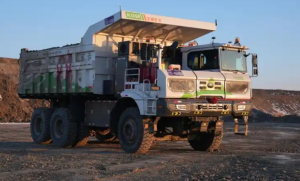
Mining truck application: one of the QSK60 duty scenarios discussed for Mexico.
QSK60 diesel engine parts in Mexico serve several distinct duties, and the difference matters for spare-parts planning. The same 60.2-litre V16 platform can power a mining haul truck working cyclic high loads, a generator set running continuously, a piece of construction machinery, or a fleet heavy truck. Because those duty cycles do not load the engine in the same way, a parts list built for one application does not automatically transfer unchanged to another. The first technical checkpoint is the fuel system version: QSK60 engines are supplied with either HPI injection or MCRS common rail, and the parts are not interchangeable, especially injectors and fuel pumps. Any fuel injection parts order therefore needs the version confirmed before sourcing begins.
Why Duty Cycle Is the First Selection Filter
The supplied application data for QSK60 parts describes heavy-load, continuous operation and intermittent high-load conditions. It identifies long-running gensets and construction machinery in mining areas as examples. That distinction creates a practical filter for any buyer assembling a wear-parts list: continuous-operation engines and cyclic-load engines are not the same duty environment, even where they share a common engine platform.
A generator set may run for long periods under a relatively steady load. A mining haul truck or a piece of construction equipment may see repeated acceleration, climbing, loading and dumping cycles, with stops and starts between them. The supplied case material also records exposure to high temperature, vibration and dust in mining conditions. These conditions do not change the QSK60’s base specification, but they do change what a maintenance planner should verify before purchasing. The practical response is to keep the duty profile on the RFQ and to confirm the engine version before any part is quoted.
QSK60 Engine Facts That Shape Parts Demand
The QSK60 is a four-stroke, V16, 60-degree heavy-duty diesel engine with two-stage turbocharging and intercooling. Its bore and stroke are 159 mm by 190 mm, and its displacement is 60.2 litres. The engine is available with HPI injection or MCRS common rail fuel system and uses 24V electric starting. The supplied power range is 2000–2700 HP (1491–2013 kW) for the mining and construction version, approximately 1700–2000 kW at 1500 rpm for the QSK60-G generator set, and 2000 HP at 1800 rpm continuous rating for the QSK60-M marine version. Lubrication and cooling data include engine oil capacity of 260–280 litres, depending on configuration, and a dry weight of approximately 8400–8800 kg for the bare engine, excluding radiator and aftertreatment.
Emission ratings include Tier 1, Tier 2 and EU Stage IIIA, and the Tier 4 Final variant is equipped with SCR. Typical applications for the platform are large mining trucks, mining machinery, high-power diesel generator sets, marine propulsion and auxiliary engines. These are platform-level facts: they define the physical and technical envelope within which replacement parts must fit. They are not Mexico-specific market figures, and they do not by themselves tell a buyer which components to stock. That decision requires the duty profile and the confirmed engine configuration.
Where QSK60 Parts Fit in Mexico
The supplied scenario material lists mining trucks, generator sets, construction machinery and fleet heavy trucks as common QSK60 applications. The same scenario data includes Mexico within its country coverage, so the parts discussion applies to Mexican operations in those categories. This is a fit statement based on the platform and application list; it is not a measured market-size claim for Mexico. The article therefore treats Mexico as a country-level scenario where these equipment types are present, not as a market with a published parts-demand figure in the supplied data.
Within that scenario, the relevant split is between continuous and cyclic duty. A QSK60-G generator set in a mine, industrial plant or power project is normally discussed in terms of long-running operation. A mining truck or construction machine is discussed in terms of cyclic load. A fleet heavy truck may sit between those poles depending on route and load pattern. The parts list should reflect that split before any order is placed, because a single “QSK60 parts” list without the application and fuel-system version does not give a supplier enough information to quote the right item.
F-DIESEL’s Position in the QSK60 Parts Supply Chain
F-DIESEL Power Co., Ltd. is a diesel engine spare parts group established in Shenzhen, China in 1999, with a branch office in Shanghai and an overseas business hub in Hofheim, Germany. Its product range includes crankshafts, turbochargers, cylinder heads, cylinder blocks, pistons and piston rings, connecting rods, camshafts, injectors, injection pumps, fuel injection systems, fuel actuators, turbo electronic actuators and oil coolers, with particular emphasis on the QSK60 injector and QSK60 turbocharger. The company reports ISO 9001 quality management system certification, a registered trademark in more than 70 countries, and a full incoming-outgoing inspection procedure.
For QSK60 applications, the relevant supply capability is not a generic catalogue claim. The supplied product data states that parts are manufactured according to OEM drawings and standards and are verified by 8,000-hour endurance testing. The group covers full container, mixed LCL shipment and private OEM branding, and its quality-control statement includes 100% testing. These facts define what a buyer can ask to see and verify; they do not replace the need to confirm the engine’s fuel-system version, interface compatibility and turbo matching parameters for the specific unit. The official F-DIESEL website is www.f-diesel.com.
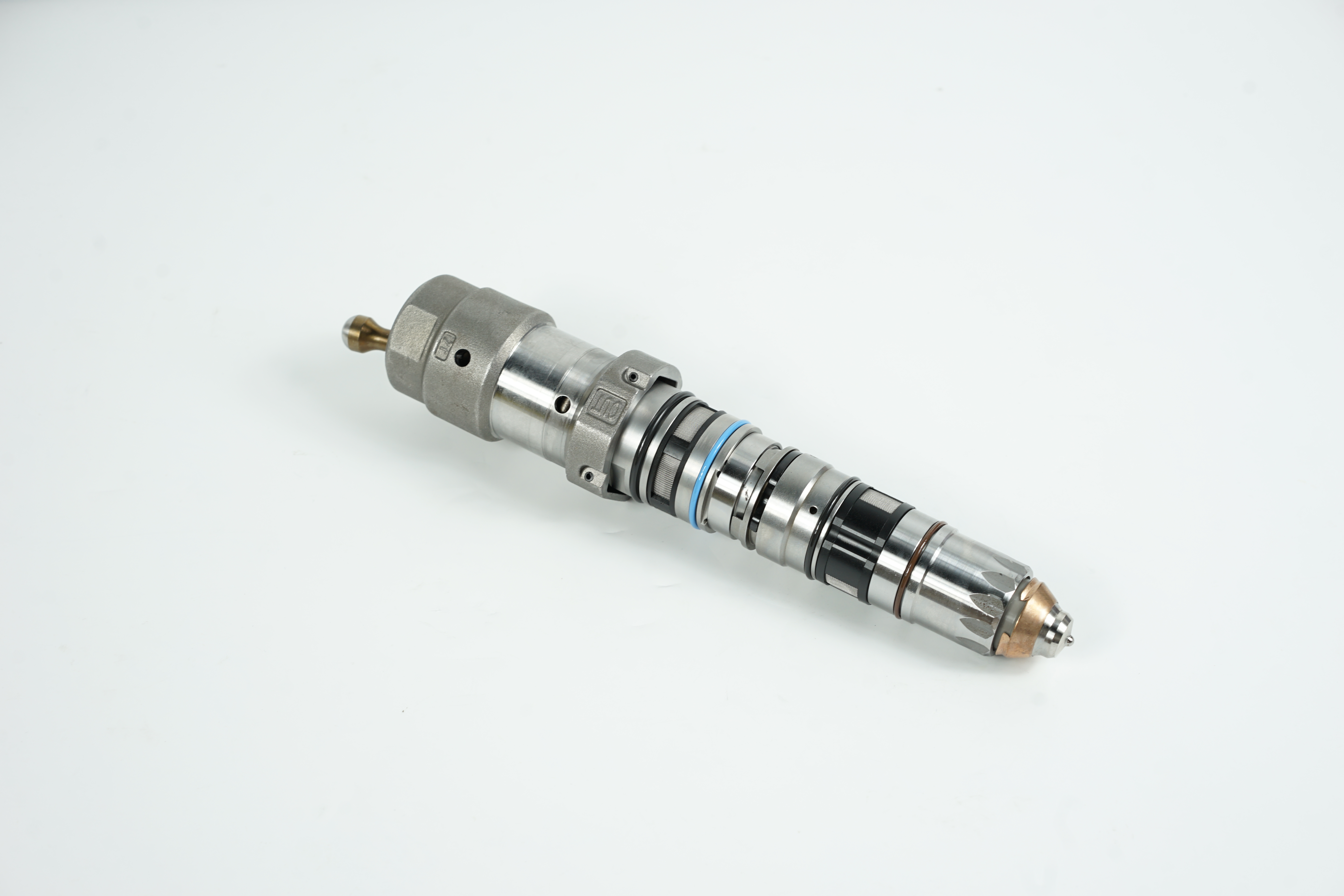
QSK60 fuel injector: HPI and MCRS versions are not interchangeable.
Component Groups and Their Role in an Overhaul
The QSK60 parts range covers several component groups, and each group has a different role in an overhaul or replacement project. Crankshafts, connecting rods, pistons and piston rings sit in the powertrain and compression path. Cylinder heads and cylinder blocks form the structural and combustion envelope. Camshafts and fuel injection components govern valve motion and fuel delivery. Turbochargers and turbo electronic actuators support the two-stage turbocharging system. Oil coolers and fuel actuators support lubrication and fuel control.
The supplied application data describes these parts as critical wear parts and powertrain components and states that they provide replacement, upgrade and overhaul support. That description is useful for procurement because it separates a routine wear-part purchase from an overhaul kit purchase. A buyer replacing a single failed component needs the correct part number and version. A buyer planning a full overhaul needs a coordinated list that covers the wear path and the interfaces between components. The same source states that the parts are suitable for OEM matching projects, equipment maintenance and system matching projects, and overhaul and spare parts supply projects. On-site customization requests are possible for this application.
The Fuel System Boundary: HPI vs MCRS
For QSK60 fuel injection parts, HPI and MCRS fuel system parts are not interchangeable, especially injectors and fuel pumps. The QSK60 fuel system version must be confirmed before spare parts sourcing. This is not a minor catalogue note; it is the first order-qualification step for any fuel-system purchase. A buyer who orders an injector or injection pump without confirming the version risks receiving a part that fits the engine family name but not the actual fuel system.
The practical confirmation path starts with the engine nameplate and the part number. The supplied FAQ material advises buyers to provide the part number or nameplate information of the product when requesting a price. For large units such as the QSK60, the same technical discipline extends to interface compatibility, injector characteristics and turbo matching parameters, all of which must be confirmed. A complete RFQ should therefore state the application, the duty cycle, the fuel-system version and the exact part number or nameplate data, rather than relying on the engine model alone.
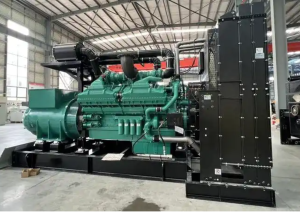
QSK60 generator set application: continuous duty is one of the scenarios covered by the supplied data.
Evidence from Mining-Scale Operation
A supplied case record from China provides evidence of how QSK60-related parts perform in mining-scale operation. The project scale is more than 100 units supplied for mining haul trucks and power-generator sets. The recorded result is more than 15,000 hours of trouble-free operation under real mining conditions, with customer feedback indicating end-user approval after over 15,000 hours of continuous operation. The same record states effective resistance to high temperature, vibration and dust, and a reduction in downtime losses.
The product used in that record includes replacement turbocharger applications for QSK60 engines, including Holset HX82/HX83/HX84 models, in mining haul trucks and power-generator sets. The product has been mass-supplied for Caterpillar Terex MT5500 haul trucks. These are case-specific results from a supplied record; they are not a guarantee that every QSK60 application in Mexico will achieve the same hours. They are useful as evidence of the platform’s duty capability and as a reason to ask suppliers for traceable test and case records rather than generic claims.
A Practical Verification Path for Mexican Buyers
A buyer assembling a QSK60 parts plan for Mexican mining, genset or fleet operations can use a short verification sequence before releasing an order. The sequence is based on the supplied application, product and FAQ data; it is not a commercial promise or a substitute for the buyer’s own engineering review.
- Confirm the duty profile. State whether the engine is in continuous generator-set service, cyclic mining-truck service, construction-equipment service or fleet heavy-truck service. The supplied application data distinguishes heavy-load continuous operation from intermittent high-load conditions.
- Confirm the fuel-system version. Record HPI or MCRS on the RFQ. The supplied data states that the parts are not interchangeable, especially injectors and fuel pumps.
- Provide the part number or nameplate data. The supplied FAQ material states that the part number or nameplate information is the basic input for a price inquiry.
- Check the interface and matching parameters. For large units such as the QSK60, interface compatibility, injector characteristics and turbo matching parameters must be confirmed.
- Ask for batch-level evidence. The supplied quality statements include 100% testing, OEM drawing compliance and 8,000-hour endurance testing. The product data also states that a material test certificate can be provided for a specific part on request.
- Confirm packaging and branding requirements. The supplied FAQ states that products are supplied under the F-DIESEL brand, with neutral packaging available on request and customized packaging possible when the buyer provides design files.
These checks are not interchangeable with a final engineering approval, but they prevent the most basic mismatch: an order that names the right engine and the wrong fuel-system version or interface configuration.
Market Context Without Inventing Mexico Numbers
The supplied verified data includes a 2025 global diesel engine market estimate of USD 70.99 billion and a projected compound annual growth rate of 5.40% for 2026–2034, attributed to Fortune Business Insights. It also includes a 2024 global diesel common rail injection system market value of USD 22.6 billion, attributed to Global Market Insights. Both figures are global estimates, not Mexico-specific demand figures, and they should not be presented as a Mexican market forecast.
Their relevance is directional. A large global diesel-engine installed base is consistent with continued replacement-part demand, and the size of the common-rail sub-market is consistent with the need to distinguish injection-system versions in parts planning. For a Mexican buyer, however, the useful number is not a global market total; it is the local fleet mix, the engine versions in that fleet and the duty cycles those engines run. The supplied data does not include a Mexico parts-market size, import volume or growth rate, so this article does not state one.
Future Outlook and Fit Boundaries
The forward-looking part of the picture should be read with the same discipline. The supplied global growth estimate suggests that diesel-engine replacement demand is not disappearing, but it does not prove growth in Mexico or in any single application. The QSK60 platform’s emissions ratings include Tier 1, Tier 2, EU Stage IIIA and a Tier 4 Final variant with SCR. Those ratings matter for market access and engine configuration, but they do not by themselves establish a Mexican regulatory requirement or a parts-demand forecast.
For procurement, the stable conclusion is narrower and more useful: match the part to the engine version and the duty cycle. A QSK60 generator-set parts list and a QSK60 mining-truck parts list can share a platform and still require different confirmation steps. The fuel-system version must be confirmed before any fuel injection part is ordered. Interface compatibility, injector characteristics and turbo matching parameters should be confirmed for large units. And any claim about service life should be tied to the conditions and records that support it, not to a generic assumption about all QSK60 engines in Mexico.
Frequently Asked Questions
What QSK60 applications are relevant in Mexico?
The supplied application data lists mining trucks, generator sets, construction machinery and fleet heavy trucks. The same scenario data includes Mexico within its country coverage. These are application categories, not a measured count of engines in Mexico.
Why must the fuel system version be confirmed before ordering QSK60 fuel injection parts?
QSK60 engines are available with HPI injection or MCRS common rail. The supplied data states that HPI and MCRS parts are not interchangeable, especially injectors and fuel pumps. Confirming the version prevents an order from matching the engine family but not the actual fuel system.
How are QSK60 parts tested for heavy-duty use?
The supplied product data states that parts are manufactured according to OEM drawings and standards and are verified by 8,000-hour endurance testing. The group also states a full incoming-outgoing inspection procedure and 100% testing. These are supplier-stated quality controls, and buyers can ask for batch-level records.
Are QSK60 parts suitable for overhaul and OEM matching projects?
The supplied application data states that the parts are suitable for OEM matching projects, equipment maintenance and system matching projects, and overhaul and spare parts supply projects. On-site customization requests are possible for this application.
What information should a buyer provide when requesting a QSK60 parts quotation?
The supplied FAQ material states that the part number or nameplate information of the product should be provided. For large units such as the QSK60, the buyer should also confirm interface compatibility, injector characteristics and turbo matching parameters. The fuel-system version should be included in the request.
For a broader view of the F-DIESEL group, product scope and service network, the F-DIESEL Group Presentation 2026 is available for download: F-DIESEL Group Presentation 2026.
Tem questões ou precisa de mais detalhes?
Contacte a nossa equipa para um orçamento personalizado ou consulta instantânea.
Solicitar orçamento
Preencha o formulário abaixo e a nossa equipa entrará em contacto com uma proposta personalizada.
Chat direto do WhatsApp
Prefere conversar em tempo real? Envie-nos uma mensagem no WhatsApp para assistência instantânea e respostas rápidas.
- Obter orçamento personalizado
- Partilhar fotos ou documentos
- Discuta as suas necessidades diretamente
Geralmente responde em 5–30 minutos durante o horário de expediente.