
QSK60 Parts FAQ: Key Dimensions and Capacities
QSK60 Parts FAQ: Key Dimensions and Capacities
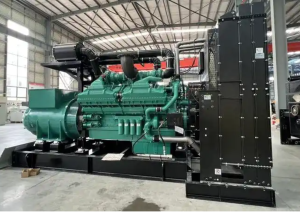
For QSK60 parts sourcing, the core reference figures are 60.2 L displacement, a 159 mm bore, a 190 mm stroke, approximately 8,400–8,800 kg bare-engine dry weight, and 260–280 L oil capacity depending on configuration. These figures help procurement engineers check that a request concerns the intended engine family and understand the scale and configuration sensitivity of the equipment. They do not, by themselves, identify an interchangeable injector, pump, turbocharger, cylinder component, or overhaul part. For an order-level match, the specific part number and engine or product identification information still matter.
The QSK60 specification supplied for this article describes a 4-stroke, 60-degree V16 heavy-duty diesel engine. Its bore and stroke are listed as 159 mm × 190 mm, and its displacement is 60.2 L. The dry-weight figure applies to a bare engine and excludes the radiator and aftertreatment. Oil capacity is given as a range because it varies by configuration. Keeping those scope notes attached to the numbers is important: a quoted value without its configuration or measurement boundary can be misapplied during parts planning.
For buyers evaluating F-DIESEL diesel engine parts, these specifications are most useful as screening and communication references. They can help a buyer describe the engine correctly and flag where configuration confirmation is needed. They are not a substitute for the part-specific identification required to confirm fit.
QSK60 specifications at a glance
The following values describe the engine-level data provided for the QSK60. The procurement implications are practical interpretations of those stated specifications, not additional part dimensions or fitment approvals.
| Reference item | Supplied QSK60 value | Why it matters in parts sourcing |
|---|---|---|
| Engine architecture | 4-stroke, 60-degree V16 | Use the engine identity as context when checking the application and requested part family. |
| Displacement | 60.2 L | Helps distinguish the stated engine application; it does not establish a component’s part number. |
| Bore × stroke | 159 mm × 190 mm | Useful engine-level reference information, but not a complete dimensional specification for an individual component. |
| Bare-engine dry weight | Approximately 8,400–8,800 kg; excludes radiator and aftertreatment | Shows why the scope of a weight figure must be checked before using it for equipment or logistics planning. |
| Engine oil capacity | 260–280 L, depending on configuration | The range is not a single universal fill quantity; verify the applicable configuration. |
What does 60.2 L displacement tell a parts buyer?
The QSK60’s listed displacement is 60.2 L. In a procurement request, that number helps establish the engine context for a heavy-duty diesel application. It can help screen out requests that refer to a different engine family or an incorrectly described application before the supplier begins checking individual diesel engine components.
Displacement is an engine-level specification. It is not a unique identifier for a diesel fuel injector, diesel injection pump, common rail fuel injection system, turbocharger, cylinder head, cylinder block, piston, piston ring, crankshaft, camshaft, or connecting rod. A buyer should not assume that a component is correct merely because a listing includes “QSK60” or a similar displacement reference. The exact part number, engine identification details, and relevant configuration must be checked for the requested item.
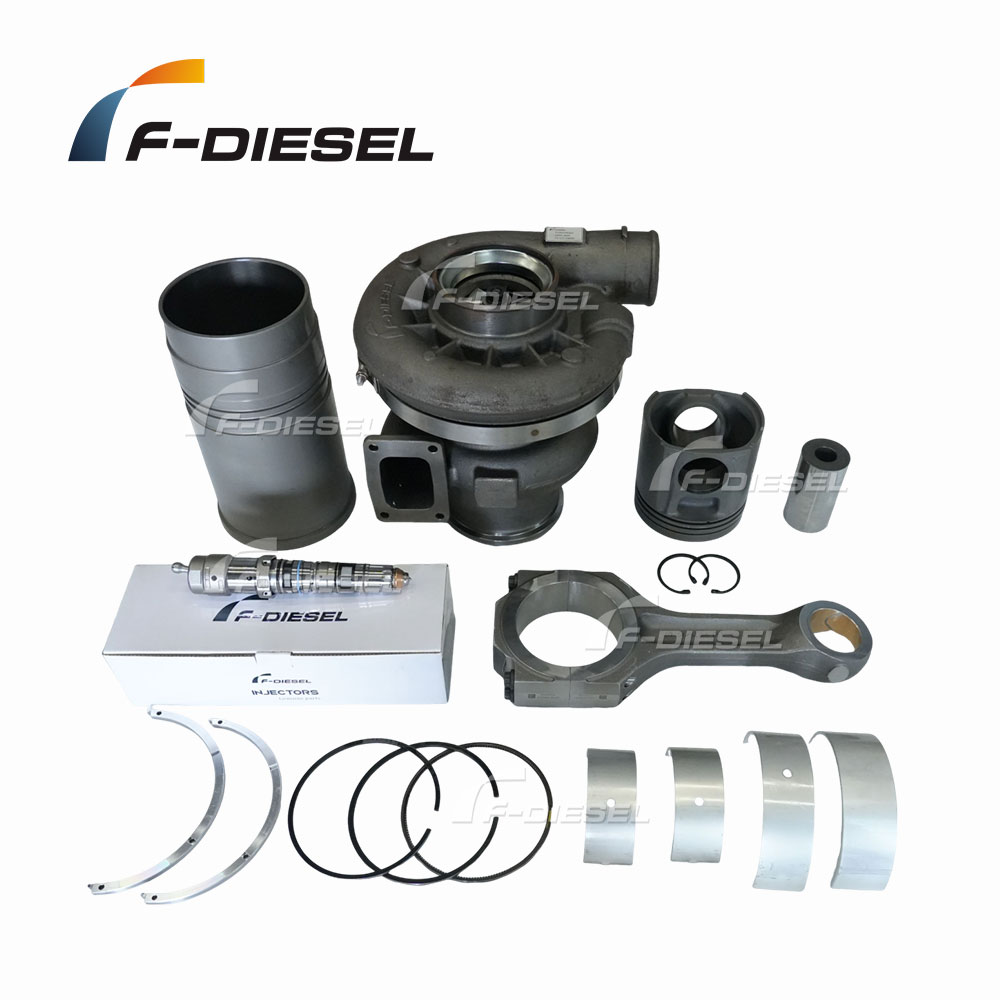
This distinction is particularly important when a request covers a mixed package of diesel engine overhaul parts. A kit may include multiple component types, and each item still needs to match the intended engine and system version. Engine displacement can help define the application being discussed; it cannot replace item-by-item identification in a quote, parts list, or purchase order.
How should buyers use the 159 mm bore and 190 mm stroke?
The supplied QSK60 data lists a 159 mm bore and a 190 mm stroke. These dimensions are useful as a technical cross-check when describing the engine and reviewing whether a specification sheet refers to the intended QSK60 application. For procurement engineers, they also help keep the engine-level record precise when discussing cylinder-related parts.
However, the two figures should not be treated as the complete measurement set for a cylinder liner, piston, piston ring, or other component. They do not state the detailed dimensions, tolerances, material grade, or interchangeability of a particular replacement part. Those details are product-specific and are not supplied by the engine-level bore-and-stroke figures alone. If the order concerns a diesel engine piston or piston ring, the buyer should request or check the exact applicable part identification and technical data for that item rather than infer a match from the bore value.
The same care applies to cylinder block and cylinder head requests. The engine’s basic geometry can make an application description more precise, but it does not establish whether a particular casting, machined part, or assembly is correct for a particular configuration. A useful RFQ therefore keeps the engine reference separate from the component specification: identify the QSK60 application, then list the part number or other product identification for every requested component.
What does the bare-engine dry weight range mean?
The QSK60 bare-engine dry weight is approximately 8,400–8,800 kg, excluding the radiator and aftertreatment. The range and exclusions are essential parts of the specification. This is not a complete installed-equipment weight, nor does it describe the weight of an engine with every auxiliary system or surrounding assembly included.
For parts procurement, dry weight is context rather than a matching parameter for most individual components. It signals that the engine is a large unit, which makes clear identification and interface compatibility particularly important when sourcing components for maintenance or overhaul. The application material specifically calls for confirming interface compatibility, injector characteristics, and turbo matching parameters for large units such as the QSK60. That guidance does not provide specific interface dimensions or matching values, so those must be confirmed against the applicable part and configuration rather than inferred from engine weight.
The weight boundary also matters when the figure is reused outside parts identification. A bare-engine value that excludes radiator and aftertreatment should not be presented as the weight of a complete generator set, marine installation, or other equipped system. If a procurement document uses weight for packaging, handling, or installation planning, the included and excluded equipment needs to be stated separately and verified for the actual assembly.
Why is QSK60 oil capacity a range rather than one fixed number?
The stated QSK60 engine oil capacity is 260–280 L and varies by configuration. The available specification does not identify which configuration corresponds to each point in the range. It is therefore more accurate to preserve the full range and its qualification than to select one value as the capacity for every QSK60 engine.
This figure can help maintenance and procurement teams understand the scale of the engine’s lubrication-system requirement. It may inform planning discussions about service materials, but it is not itself a parts interchange specification. An oil-capacity value cannot establish which oil cooler, filter, pump, seal, or other component is appropriate. The exact component and configuration still need their own identification.
For records and RFQs, retain “varies by configuration” alongside the 260–280 L figure. If a maintenance instruction or order needs one operative capacity, confirm it for the specific engine configuration using the applicable equipment information. Do not silently convert the range into a single universal fill quantity or use a value from one configuration as proof for another.
How engine-system options affect parts identification
The supplied QSK60 data lists HPI injection and MCRS common rail fuel-system versions. It explicitly states that parts for HPI and MCRS are not interchangeable, especially injectors and fuel pumps. As a result, fuel-system version is a key part-selection checkpoint, not a minor detail that can be resolved by displacement or engine architecture alone.
When sourcing a diesel fuel injector, diesel injection pump, or other diesel fuel injection parts, state the identified system version in the request and verify the exact part reference against it. The common rail label does not, by itself, confirm the identity of every related component. For a request where the version is unknown, treat that as an unresolved identification point rather than assuming that an HPI-listed item and an MCRS-listed item can be substituted.
The same principle applies to the engine’s two-stage turbocharging and intercooling description. These are system-level details that help describe the engine, while the particular turbocharger and associated turbocharger parts for a diesel engine still require specific matching information. The application guidance calls for confirming turbo matching parameters for large units; it does not supply those parameters in the general engine specification. A buyer should therefore request component-specific confirmation rather than treating the general architecture as a fitment approval.
A practical specification check before ordering
A compact, well-defined parts request can use the engine data without asking it to do more than it supports. For a QSK60 inquiry, procurement engineers can structure the check as follows:
- Identify the engine context. Record QSK60 and, where available, the relevant engine identification or nameplate information. The engine description includes a 4-stroke, 60-degree V16 architecture and 60.2 L displacement.
- Keep the geometry exact. If bore and stroke are included in the request, retain the supplied values of 159 mm and 190 mm, respectively. Do not convert them into undocumented component tolerances.
- Identify the requested item. List the part number or exact part name for each diesel engine component. For a multi-item overhaul order, avoid treating the engine-family name as a complete specification for every kit item.
- Confirm the fuel-system version where relevant. Distinguish HPI from MCRS before ordering injectors or fuel pumps because the supplied information states that these parts are not interchangeable between the two systems.
- Confirm component-specific interfaces and matching details. For large QSK60 units, verify interface compatibility, injector characteristics, and turbo matching parameters against the actual component and configuration. The general specifications do not supply those detailed values.
- Preserve configuration qualifications. Record oil capacity as 260–280 L depending on configuration. Record dry weight as approximately 8,400–8,800 kg for the bare engine, excluding radiator and aftertreatment.
- Use supporting identification when a quote is requested. The supplied purchasing FAQ says to provide the part number or product nameplate information for a product inquiry. That information helps define the item under review; it does not remove the need to verify the applicable engine and system version.
This workflow separates engine identity from component identity. The first establishes which engine application is being discussed. The second determines what item is being sourced. Keeping them distinct reduces ambiguity in diesel engine parts communication without claiming that any one engine-level number guarantees fit.
Application context and fit boundaries
The QSK60 parts information identifies applications including large mining trucks, mining machinery, high-power diesel generator sets, marine propulsion, and auxiliary engines. The broader scenario information also refers to construction machinery and heavy-duty fleet applications. These categories explain why QSK60 parts may be discussed across different equipment contexts, but an application category alone does not prove that a specific part fits every installation.
For generator, marine, mining, or construction-equipment procurement, the useful question is not only “Is this listed for QSK60?” but also “Which QSK60 system version and component reference does this order cover?” The distinction is especially relevant where the fuel system or turbocharger matching is involved. For other parts—such as a crankshaft, camshaft, connecting rod, cylinder block, cylinder head, piston, or piston ring—the engine-level figures provide context, while the exact item still needs a part-specific reference.
F-DIESEL’s supplied product information describes a range of QSK60 diesel engine parts, including fuel-injection components and other engine parts. The general series information says technical parameters vary by OE part number and that a technical datasheet is available for a specific item. This is a useful boundary for buyers: do not expect one generic engine specification to define every item in a parts range. Match the request at the part-number level and review the relevant item data.
FAQ: QSK60 dimensions, weight, and oil capacity
What is the displacement of the QSK60 engine?
The supplied QSK60 specification lists a displacement of 60.2 L. Use it as engine-application context, not as the sole identifier for an individual replacement part.
What are the QSK60 bore and stroke?
The listed bore is 159 mm and the stroke is 190 mm. These are engine-level reference dimensions; they do not provide all dimensions or tolerances needed to approve a specific piston, ring, liner, or other component.
What is the dry weight of a QSK60?
The bare-engine dry weight is approximately 8,400–8,800 kg. The stated scope excludes the radiator and aftertreatment, so it should not be treated as the weight of a fully equipped installation.
What is the QSK60 oil capacity?
The stated oil capacity is 260–280 L, depending on configuration. The available information does not map a single value to every configuration, so preserve the range until the applicable configuration is confirmed.
Can QSK60 HPI and MCRS fuel-injection parts be interchanged?
No. The supplied QSK60 information states that HPI and MCRS fuel-system parts are not interchangeable, especially injectors and fuel pumps. Confirm the system version before sourcing these parts.
Procurement takeaway
The QSK60 engine reference set is 60.2 L displacement, 159 mm bore, 190 mm stroke, approximately 8,400–8,800 kg bare-engine dry weight, and 260–280 L oil capacity depending on configuration. Each figure has a defined role: displacement and geometry describe the engine, dry weight must retain its bare-engine boundary, and oil capacity must retain its configuration qualification.
For Diesel Engine Parts procurement, the practical decision rule is to use those specifications to validate and communicate the engine context, then confirm the individual part number, system version, and applicable interface or matching details for the component being ordered. In particular, distinguish HPI from MCRS for fuel-system parts and obtain item-level technical data where engine-level figures are insufficient. This keeps the QSK60 specification useful without treating general engine data as proof of component interchangeability.
Tem questões ou precisa de mais detalhes?
Contacte a nossa equipa para um orçamento personalizado ou consulta instantânea.
Solicitar orçamento
Preencha o formulário abaixo e a nossa equipa entrará em contacto com uma proposta personalizada.
Chat direto do WhatsApp
Prefere conversar em tempo real? Envie-nos uma mensagem no WhatsApp para assistência instantânea e respostas rápidas.
- Obter orçamento personalizado
- Partilhar fotos ou documentos
- Discuta as suas necessidades diretamente
Geralmente responde em 5–30 minutos durante o horário de expediente.