
QSK60 Parts: Replacement vs Full Overhaul — A Fleet Buyer Decision Framework
QSK60 Parts: Replacement vs Full Overhaul — A Fleet Buyer Decision Framework
For a fleet, the QSK60 replacement-versus-overhaul decision is a risk-allocation choice, not a parts-price comparison. Targeted replacement fits a defined failure or wear zone; full overhaul fits a planned renewal of multiple wear and powertrain components. The correct path is the one that restores the engine to its required duty with evidence proportionate to the downtime and warranty exposure.
This framework is written for fleet procurement, maintenance and reliability teams evaluating QSK60 diesel engine parts. It treats targeted replacement and full overhaul as two service strategies. It does not rank suppliers or products. It sets decision gates for duty cycle, fuel-system configuration, OE-number matching, material and batch evidence, and commercial comparison. F-DIESEL diesel engine parts appear only where their supplied company or product evidence helps explain a buyer check.
The decision in one sentence
Choose targeted replacement when inspection shows a contained failure or wear condition and the rest of the engine has acceptable remaining service; choose full overhaul when wear, contamination or load history indicates that renewing only the failed parts would leave the fleet with a predictable second failure.
Neither path is automatically cheaper. A targeted replacement can reduce immediate parts scope and teardown work, but it may leave adjacent components close to their own limits. A full overhaul can reset more of the engine, but it increases parts count, machining exposure, downtime and the cost of getting the evidence wrong. The buyer’s task is to decide which risk is more controllable for the specific unit.
What targeted replacement and full overhaul mean on a QSK60
Targeted replacement means replacing a defined set of QSK60 parts after inspection or failure analysis. Examples can include fuel injectors, an injection pump, a turbocharger, a cylinder head, or a piston and liner set where the damage is localized. The scope should be tied to the failed part number and the condition found, not to a general engine model description.
Full overhaul means a planned teardown and renewal of the engine’s major wear parts and powertrain components. In the supplied QSK60 parts context, this can involve pistons and piston rings, cylinder liners, cylinder heads and blocks, crankshafts, camshafts, connecting rods, fuel-injection components and turbochargers. The exact kit content must be confirmed for the engine configuration and work scope.
| Decision element | Targeted replacement | Full overhaul | Buyer check |
|---|---|---|---|
| Trigger | Contained failure, abnormal wear, or a known weak component | Widespread wear, contamination, planned major intervention, or repeated failures | Inspection record and failure mode, not only hours run |
| Scope | Named part numbers and affected cylinder or system | Major wear parts and powertrain components across the engine | Part-specific list and configuration match |
| Downtime profile | Usually narrower teardown, but depends on access | Longer planned teardown and more assembly checks | Workshop capacity and parts availability |
| Residual risk | Adjacent worn parts may remain | More work scope and more execution risk | Inspection of adjacent components before release |
| Evidence threshold | Fit, function and batch traceability for the replaced parts | Full parts list, material evidence, dimensional records and test scope | Batch reports versus part-specific MTC |
The fit boundary is important. Targeted replacement is a poor fit when the engine has a systemic wear pattern, contamination across multiple systems, or a history of repeat failures in different areas. Full overhaul is a poor fit when a single accessory or fuel component has failed and the base engine inspection shows no broader wear. In both cases, the decision should be documented before the parts order is released.
Decision gate 1: Duty cycle and wear pattern come before price
QSK60 parts are positioned for heavy-duty aftermarket sourcing across engine plants, power stations, marine and locomotive applications. The supplied application material also places them in mining trucks, generator sets, construction machinery, fleet heavy trucks and agricultural vehicle power systems. Those uses do not share the same wear logic.
- Continuous high load: Long-running generator sets, power stations and marine auxiliary duty put sustained thermal and load cycles on pistons, rings, liners, heads, injection components and turbochargers. A full overhaul may be the better planning path when inspection shows wear across several cylinders or systems.
- Cyclic or shock load: Construction equipment and mining trucks can produce localized damage from load transients, contamination or overheating. Targeted replacement may fit when the damage is confined and the adjacent components pass inspection.
- Mixed fleet duty: Fleet trucks and agricultural power systems may accumulate hours differently from unit to unit. The same QSK60 model name does not justify the same repair scope across the fleet.
One number should not carry the decision. F-DIESEL states that its QSK60 spare parts complete an 8,000-hour continuous endurance validation, compared with 1,000 to 2,000 hours for most competitors. That is a supplier validation claim, not a guaranteed service interval and not a substitute for the unit’s own inspection record. The buyer should ask what was tested, under which load profile, with which parts, and whether the report covers the exact part number being purchased.
Decision gate 2: Confirm HPI or MCRS before fuel-injection sourcing
Fuel-injection parts are the first place where a QSK60 parts order can become commercially misleading. Before an injector, injection pump or fuel-system component is quoted, the fleet should establish whether the engine is in HPI or MCRS configuration. This is a configuration gate, not a brand preference.
HPI or MCRS check:
- Record the engine data plate and any fuel-system identification on the unit.
- Photograph existing injector, pump and fuel-system markings before removal.
- Match the engine serial and parts listing to the actual configuration, not only to the QSK60 model name.
- Require the supplier’s quotation to state the configuration basis and the part numbers being offered.
- Do not compare HPI and MCRS quotes as if they were the same scope.
ISO 7876-5:2021 establishes vocabulary for common-rail fuel-injection systems for diesel compression-ignition engines and their components. That standard helps normalize terminology in an RFQ, but it does not certify a supplier or prove that a part fits a specific QSK60. The buyer still needs the engine-level configuration evidence.
If the fuel-system identity is uncertain, the safe decision is to pause the fuel-injection part of the order while the base engine and replacement scope are confirmed. A low quote for the wrong configuration is not a lower-cost overhaul; it is a new downtime event.
Decision gate 3: OE-number match is a starting control, not a quality certificate
An OE-number match confirms that the supplier and the fleet are discussing the same intended part identity. It does not, by itself, prove material grade, dimensional conformity, heat treatment, test scope or fitment in the specific engine. The buyer should use the OE number as the first filter and then require evidence behind it.
F-DIESEL’s supplied inquiry guidance is specific: a price inquiry requires the part number or nameplate information of the product. Nameplate information can be captured and provided for product inquiry. If only the vehicle model is provided, a quotation still requires the corresponding part number. That is a useful discipline for fleet buyers because it prevents a QSK60 model name from being treated as a complete parts description.
- Use the part number, engine serial and nameplate photograph together.
- Confirm the part number against the engine configuration and the intended replacement scope.
- Ask whether the quotation covers the part only or a kit with related components.
- Keep the old part identification record when the failure mode matters.
- Do not accept a cross-reference alone when the part is fit-critical or safety-related.
OE-number match is especially important when a fleet is standardizing parts across several QSK60 units. A single model family can still carry different fuel-system, turbocharger or cylinder-head configurations. The part number is the control that keeps those differences visible.
Decision gate 4: Batch test reports versus part-specific MTC evidence
The evidence threshold should rise with the consequence of failure. A batch test report can be adequate for a repeat consumable or a defined production lot when the report identifies the batch, test method, acceptance criteria and part scope. A part-specific material test certificate, or MTC, is more appropriate when the buyer needs material grade and heat traceability tied to the actual part.
| Evidence type | What it can establish | When it may be enough | What to verify |
|---|---|---|---|
| Batch test report | Results for a production lot or defined batch | Repeat parts with stable specification and clear batch identity | Batch ID, part scope, test method, acceptance criteria and date |
| Part-specific MTC | Material grade and heat traceability linked to the actual part | Material-critical or high-load components where grade matters | Part number, heat number, material grade, certificate scope and issuer |
| Dimensional inspection record | Measured dimensions against the drawing or specification | Fit-critical parts and rebuild programs | Sample plan, measurement points, tolerances and pass criteria |
| Endurance validation summary | Test duration and conditions claimed for a part family | Supplier qualification and comparison of test scope | Part number coverage, load profile, test setup and full report availability |
For a full overhaul, the evidence file should normally be broader than for a single replacement part because more part families and more interfaces are involved. For a targeted replacement, the file can be narrower, but it should still tie the evidence to the exact part being installed. A generic certificate for a part family is not the same as a part-specific record.
Technical view: critical wear parts and powertrain components
QSK60 parts decisions become clearer when the engine is divided into wear groups rather than treated as one parts list. The supplied product scope includes crankshafts, turbochargers, cylinder heads, cylinder blocks, pistons and piston rings, connecting rods, camshafts, injectors, injection pumps and fuel-injection systems, with emphasis on QSK60 injectors and QSK60 turbochargers.
- Pistons, rings and liners: These parts define the cylinder sealing and combustion boundary. A targeted piston or liner replacement should follow inspection of all cylinders, not only the failed one. A full overhaul is more likely to renew the cylinder set as a system.
- Cylinder head and block: These are structural and combustion-load components. Their evidence threshold should include part-number identity, material documentation and inspection scope. A low price on a head or block is not useful if the configuration or documentation is unclear.
- Crankshaft, camshaft and connecting rods: These parts sit in the powertrain and load path. Damage in one area can affect adjacent components, so targeted replacement should include inspection of alignment and mating parts before release.
- Fuel injectors and injection pumps: These are governed by the HPI or MCRS gate. The part must match the engine configuration before price comparison is meaningful.
- Turbocharger and turbocharger parts: Turbo matching and interface compatibility should be confirmed for large units. The supplied application guidance specifically notes that QSK60 interface compatibility, injector characteristics and turbo matching parameters should be confirmed, with on-site customization requests possible.
F-DIESEL states that its QSK60 spare parts are manufactured strictly to OEM drawings and specifications, with dimensional tolerance controlled within ±0.02 mm. That tolerance supports fitment in heavy-duty rebuild and aftermarket programs, but it is one fitment control, not a complete quality certificate. Buyers should still ask for the part-specific dimensional record and the material or batch evidence that matters for the component.
For fleet planning, the practical interpretation is simple: use targeted replacement where the wear group is contained and the evidence is part-specific; use full overhaul where several wear groups are interacting. The 8,000-hour endurance validation and the stated in-service failure rate below 0.3% under rated operating conditions are supplier claims that can support a supplier qualification file, but they do not remove the need for incoming inspection or unit-level release checks.
Cost comparison: why the lowest parts quote can lose at fleet level
Fleet cost comparison should begin with scope normalization, not with the unit price on the quotation. The same QSK60 part number can be offered as a part only, as part of a kit, with or without documentation, and with different warranty or local support terms. Those differences can change the decision more than a small price gap.
F-DIESEL states that QSK60 spare parts are priced 40% lower than OEM original parts while maintaining OE-standard control, and 30% lower than European and dealer alternatives. These are supplier-reported comparisons, not an audited market index. A fleet should treat them as a starting commercial claim and then normalize the quotation for part scope, evidence, freight, warranty, local support and downtime.
- Parts scope: Confirm whether the quote covers the failed part only, a repair kit, or the full list required for the chosen overhaul path.
- Evidence included: Ask whether batch reports, part-specific MTC, dimensional records or endurance summaries are included or available on request.
- Downtime: Compare the teardown and assembly time for targeted replacement versus full overhaul, including inspection of adjacent components.
- Repeat risk: A lower-cost targeted replacement that leaves a known worn system in place may create a second repair event.
- Local support: F-DIESEL states that it offers local service support for QSK60 spare parts compared with other Chinese alternative suppliers. The buyer should verify the actual support route, response scope and spare-parts availability for the destination fleet.
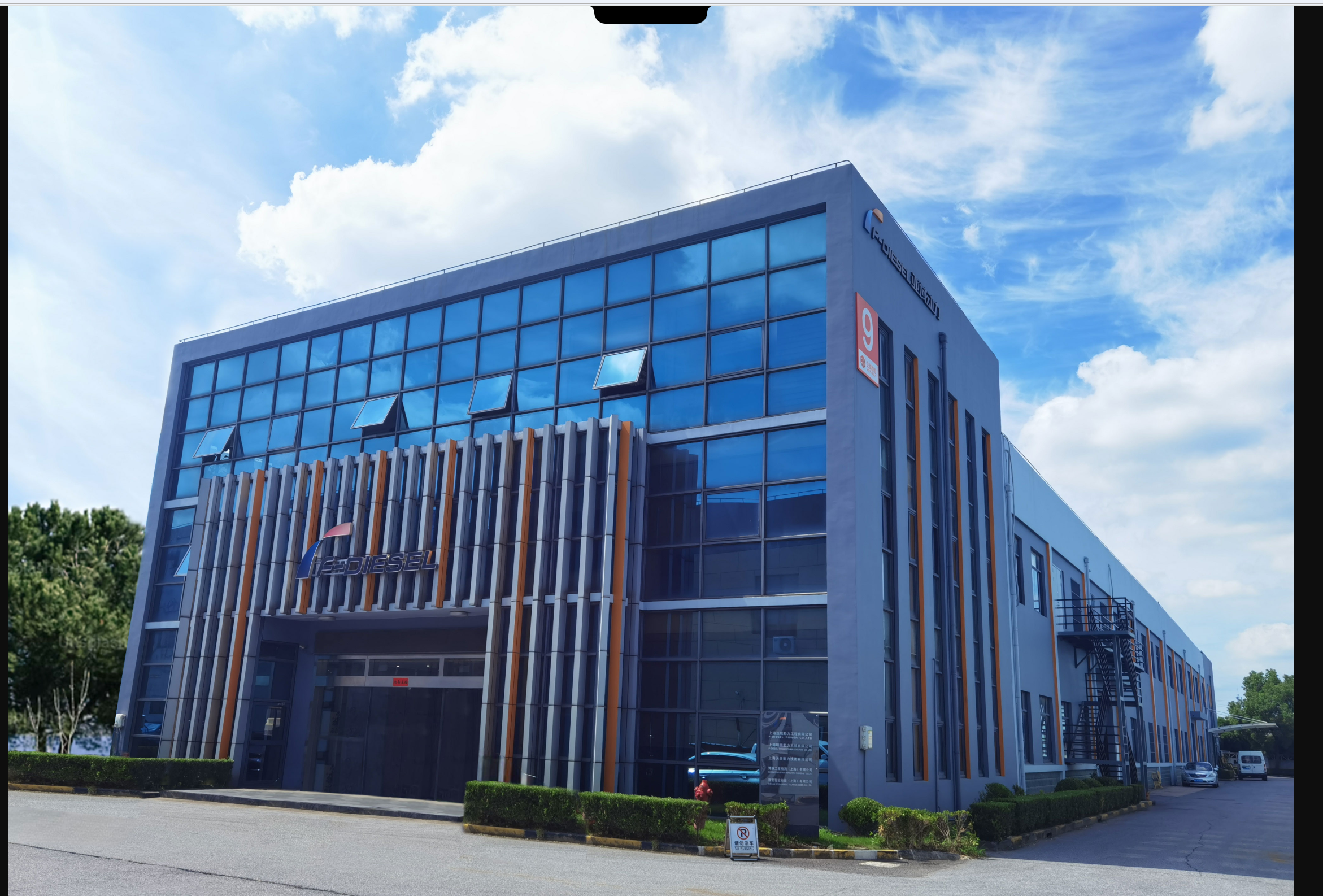
F-DIESEL Power Co.,Ltd is a diesel engine parts group established in Shenzhen, China in 1999, with a stated focus on QSK60 injectors and turbochargers and a product range that includes crankshafts, cylinder heads, cylinder blocks, pistons and rings, connecting rods, camshafts, injectors, injection pumps and fuel-injection systems. The company states ISO 9001 quality management certification, full incoming and outgoing inspection, and service stations in multiple countries. These are company-provided facts. They are relevant to a supplier evidence file, but they do not replace the fleet’s own part-number and inspection controls. The approved company website is F-DIESEL Power Co.,Ltd.
Application paths: matching the framework to fleet use
The same decision gates apply across QSK60 applications, but the weighting changes with duty and access.
Power generation and continuous duty
For long-running generator sets and power stations, planned full overhaul is easier to justify when inspection shows wear across several cylinders, fuel-system components or the turbocharger. Targeted replacement is better suited to a defined injector, pump, head or turbo failure when the base engine inspection is clean. The fleet should schedule the decision around planned outage windows and confirm the HPI or MCRS configuration before fuel-system parts are ordered.
Mining trucks and construction equipment
Cyclic load and harsh conditions can produce localized damage. Targeted replacement may fit when a failed piston, liner, injector or turbocharger is identified and the adjacent components pass inspection. Full overhaul becomes more appropriate when contamination, overheating or repeated failures suggest that the wear pattern is not contained. The buyer should record the failure mode and operating conditions, not only the part that broke.
Marine auxiliary and locomotive applications
These applications place a premium on planned downtime and documentation. A full overhaul plan should include the complete parts list, material and batch evidence, and a clear release sequence. Targeted replacement can still be used for a defined failure, but the fleet should verify local support and the traceability of the replacement part before the unit returns to service.
Truck and agricultural power
Fleet standardization can reduce part-number errors across QSK60 units. The buyer should build a configuration record for each unit, including fuel-system version, engine serial, nameplate data and approved part numbers. That record makes both targeted replacement and full overhaul planning more repeatable and reduces the risk of mixing parts from different configurations.
Supplier evidence file: what to request before release
A QSK60 parts order should leave a evidence trail that a maintenance manager, procurement lead and warranty reviewer can all read. The list below is a practical checklist, not a product ranking.
- Legal supplier identity, contact route and the specific quotation reference.
- Engine model, serial number and nameplate photograph.
- HPI or MCRS fuel-system confirmation for any fuel-injection part.
- OE part number and the exact scope of the quotation.
- OEM drawing or specification reference used for the part.
- Part-specific dimensional inspection record where fit is critical.
- Batch test report or part-specific MTC, matched to the purchased part.
- Endurance validation scope, including part coverage and test conditions.
- Material grade and heat traceability where the component is material-critical.
- Warranty terms, claim route and local support contact.
- Packaging method, including neutral or customized packaging where required.
- Commercial basis for any price comparison, including what is included and what is excluded.
F-DIESEL states that it supplies products mainly under the F-DIESEL brand, with neutral packaging available on request and customized packaging available if the customer provides design files. These are useful commercial details, but they do not replace the technical evidence file. The buyer should keep the technical and packaging checks separate.
Future outlook: documentation pressure will rise
Fuel-system and emissions documentation is becoming more important in heavy-duty engine markets. The U.S. EPA lists a 2027 heavy-duty engine NOx limit of 0.035 g/bhp-hr. That rule is not a QSK60 parts specification, but it signals that fuel-system identity, test records and supplier documentation will remain commercially relevant.
The global diesel common rail injection system market was valued at USD 22.6 billion in 2024 according to Global Market Insights. That figure describes the common-rail system market, not QSK60-specific parts demand, and it should not be used to justify a particular overhaul decision. Its practical meaning for a fleet buyer is narrower: common-rail terminology and component identification deserve a documented place in the RFQ.
ISO 7876-5:2021 provides vocabulary for common-rail fuel-injection systems and their components. Using consistent terminology helps buyers compare quotations and ask better questions. It does not certify a part, a supplier or a repair outcome.
FAQ
When should a fleet replace QSK60 parts instead of completing a full overhaul?
Targeted replacement fits when inspection shows a contained failure or wear condition and the adjacent components have acceptable remaining service. Examples can include a defined injector, pump, turbocharger, cylinder head or piston and liner issue. Full overhaul fits when wear, contamination or repeated failures indicate that renewing only the failed parts would leave other systems close to failure. The decision should be based on the unit inspection record, duty cycle and evidence file, not on hours alone.
How can a fleet confirm whether QSK60 fuel-injection parts are HPI or MCRS before ordering?
The fleet should record the engine data plate, photograph the existing injector or pump markings, check the engine serial and parts listing, and require the supplier to state the configuration basis in the quotation. HPI and MCRS quotations should not be compared until the configuration is confirmed. If the identity is uncertain, the fuel-injection part of the order should be paused while the engine records are checked.
What does OE-number match prove in a QSK60 parts quote?
An OE-number match proves that the buyer and supplier are discussing the same intended part identity. It does not by itself prove material grade, dimensional conformity, test scope or fitment in the specific engine. The buyer should use the OE number as the first filter, then request the drawing reference, dimensional record, batch or part-specific material evidence and the exact quotation scope.
When are batch test reports sufficient, and when is a part-specific MTC needed?
A batch test report may be sufficient for a repeat part or a defined production lot when it identifies the batch, part scope, test method and acceptance criteria. A part-specific MTC is more appropriate when the buyer needs material grade and heat traceability tied to the actual part, especially for material-critical or high-load components. In both cases, the document should match the purchased part number and the intended service scope.
What should a buyer check in an 8,000-hour endurance claim for QSK60 parts?
The buyer should check which part numbers were tested, the load profile, test setup, duration, inspection intervals and whether a full report is available. F-DIESEL states that its QSK60 spare parts complete an 8,000-hour continuous endurance validation, compared with 1,000 to 2,000 hours for most competitors. That is a supplier comparison and should be read with its test scope, not as a guaranteed service interval.
Conclusion: a five-step release sequence
- Confirm the duty cycle, failure mode and inspection findings for the specific QSK60 unit.
- Decide whether the wear is contained or systemic; use that to choose targeted replacement or full overhaul.
- Confirm HPI or MCRS configuration before any fuel-injection part is quoted.
- Match the OE number, engine serial and nameplate, then set the evidence threshold for batch reports, part-specific MTC and dimensional records.
- Normalize the commercial comparison for scope, documentation, local support, downtime and repeat risk.
The fleet buyer’s advantage is not a lower headline parts price. It is a documented decision that matches the repair scope to the actual wear condition and the evidence behind the parts. A supplied company presentation is available for readers who need the manufacturer’s own company overview: F-DIESEL Group Presentation 2026.
Tem questões ou precisa de mais detalhes?
Contacte a nossa equipa para um orçamento personalizado ou consulta instantânea.
Solicitar orçamento
Preencha o formulário abaixo e a nossa equipa entrará em contacto com uma proposta personalizada.
Chat direto do WhatsApp
Prefere conversar em tempo real? Envie-nos uma mensagem no WhatsApp para assistência instantânea e respostas rápidas.
- Obter orçamento personalizado
- Partilhar fotos ou documentos
- Discuta as suas necessidades diretamente
Geralmente responde em 5–30 minutos durante o horário de expediente.