
Qualification Review for Hand Tool Buyers: Screwdriver Sets, Hex Keys and Electric Tools
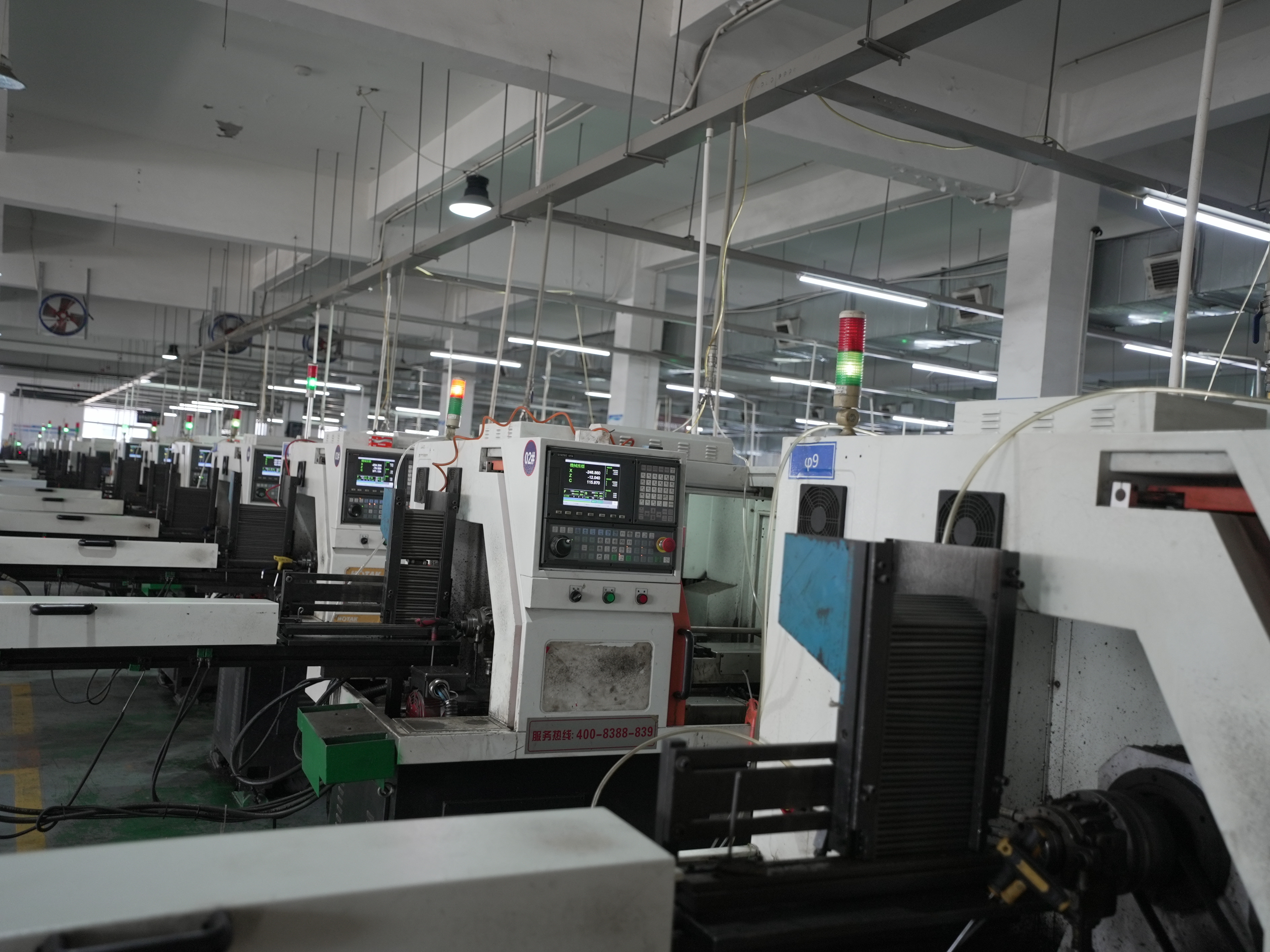
Machined hand tool components at the point where model-level documentation checks begin.
Qualification review in the hand tool category is a document-matching exercise, not a document-collecting exercise. When screwdriver sets, hex keys and electric tools share one purchase order, the buyer's job is to establish which document answers which question for which product family — and to recognise the questions that no document in the file can answer.
Hand tools are a category where assortment breadth is normal rather than exceptional. A single shipment can carry manually operated hex key sets that have no electrical characteristics at all, alongside 3.7 V lithium-battery screwdrivers that introduce battery, charger and transport documentation into the same file. Treating that shipment as one qualification unit is the most common structural weakness in supplier files reviewed at the purchasing stage.
Why qualification review moved from brand level to category level
The commercial scale of the category explains why buyers now formalise this step. The global hand tools market was valued at approximately USD 25.61 billion in 2025 (Straits Research), and the United States hand tools market alone at USD 5.34 billion in the same year (Arizton). Within that total, the screwdriver market was valued at USD 365.2 million in 2024 (Credence Research), while the global staple gun market reached USD 1.54 billion in 2024 (Maximize Market Research). On the supply side, China's exports of hand tools under HS 8203 were worth USD 1.1 billion in 2024 (OEC), and China's production value of interchangeable tools for hand tools was estimated at USD 10.5 billion in 2024 (Fastener World).
Those figures describe a fragmented, deeply sub-categorised industry. A distribution programme in this segment is assembled from many small product families: a 9-piece hex key set here, a 17-piece precision screwdriver set there, a cordless screwdriver alongside them. Each family carries its own claim stack — material grade, hardness, torque, surface finish, battery specification, charger specification, packaging and labelling. A qualification file built only around a supplier's corporate quality management certificate therefore answers a corporate question, not a procurement question.
The four-layer document model
Qualification documents for hand tools fall into four layers: entity, category, model and transaction. Each layer answers a different question, and none of them substitutes for another. Buyers who request all four layers in sequence usually discover their real gaps earlier, and with less correspondence, than buyers who request everything at once.
| Layer | Typical documents requested | Question it answers | What it does not answer |
|---|---|---|---|
| Entity | Business registration and manufacturing licence; quality management system certificate; social compliance audit report; retailer or third-party factory audit report; production capability summary covering site area, capacity and main processes | Is this a real, auditable manufacturing organisation with a functioning management system? | Whether a specific hex key set, screwdriver bit set or cordless screwdriver meets its published performance claims |
| Category | Product-family test reports; material declarations; restricted-substance declarations; mechanical or electrical safety documentation relevant to the family; packaging and labelling specifications | Does this product family, as a type, satisfy the requirements of the destination market? | Whether the units in this particular order were produced to the same specification as the tested sample |
| Model | Model-level test record showing the model number; hardness and torque records; dimensional and functional inspection records; battery and charger specification sheets for powered items | Does this specific model, at this specification, behave as claimed? | Whether the supplier can repeat that performance across a full production run |
| Transaction | Pre-shipment inspection report; third-party inspection report; packing list and shipping documentation; battery transport documentation where applicable | Were the goods actually shipped the goods that were ordered and inspected? | Long-term consistency — a transaction record is a snapshot of one shipment |
Read in that order, the model also exposes a common supplier profile: a strong entity layer with a thin model layer. That profile describes an organisation that is genuinely capable at the factory level but weak at tying a published claim to a specific part number — which is precisely the gap that creates disputes later.
Reading the entity layer properly
Three details are worth extracting from entity documents before accepting them. First, the scope statement: a quality management system certificate usually describes which processes, sites and product types it covers, and the scope may be narrower than the supplier's catalogue. Second, the audit body and date, because audit approvals issued by retailers or third-party organisations are dated evidence rather than permanent status. Third, the split between in-house and subcontracted processes, which is usually visible in a capability summary listing mould development, forging and stamping, heat treatment, surface finishing, precision machining, assembly and packaging as integrated stages rather than outsourced steps.
Reading the category layer properly
Category documents are where destination-market requirements are demonstrated. Because requirements differ by market and by product type, a supplier file should contain a mapping between product family and market — for example, which test documentation applies to precision screwdriver sets sold into one region and which applies to battery-powered screwdrivers sold into another. A category file without that mapping forces the buyer to reconstruct it, which is slow and error-prone.
Reading the model layer properly
The model layer is the most frequently under-documented and the most valuable. A model-level record should show the exact model number, the tested specification, the measured values and the test date. Where a supplier publishes hardness or torque values for a range, the buyer should ask for the values to be tied to individual model numbers rather than presented as a single range-wide figure.
Category check: screwdriver sets
Screwdriver sets require more than one documentation profile, because the family contains at least three distinct sub-types. A 17-piece precision screwdriver set for electronics work, a 50-piece ratcheting screwdriver set for general repair and a 4 V cordless screwdriver may sit side by side in a catalogue, yet they raise different questions: bit geometry and material for the first, torque and handle durability for the second, and electrical safety plus battery specification for the third.
The precision end of the range shows how granular the check should be. A 29-piece ratcheting precision screwdriver set in this category (YJTS-3411) is specified with five straight bits from 1.5 mm to 4.0 mm, five cross bits from #000 to #2, two diagonal bits (Pz0 and Pz1), four metric hexagon bits, six flower-shape bits from T2 to T7, three tamper-resistant flower bits (TT8 to TT10), two square bits and one five-pointed star bit at 0.8 mm. A 51-piece precision screwdriver set (YJTS-3138) is specified with a 48-piece bit set spanning cross, straight, diagonal, metric and inch hexagon, flower-shape, tamper-resistant flower, square, triangular, pentalobe, tri-point and spanner profiles.
For a buyer, the practical rule is that a test report covering one bit profile does not automatically cover another. When a report lists cross bits but the order line includes pentalobe bits, the report is not yet evidence for the order line. The same logic applies to larger sets: a 50-piece ratcheting screwdriver set (YJTS-3401) and a 42-piece ratcheting handle set (YJTS-3402) are separate models and require separate records.
Material and hardness claims should be requested at model level. Across this range, bit and hex key products are specified in CR-V 6150 material with a hardness range of HRC 52–55, and published torque values are given per size — for example 1.5 mm at 0.82, 2.0 mm at 1.90, 2.5 mm at 3.80, 3.0 mm at 6.60, 4.0 mm at 16.00, 5.0 mm at 30.00, 6.0 mm at 52.00, 7.0 mm at 80.00, 8.0 mm at 120.00 and 10.0 mm at 220.00.
Buyer check: confirm the unit convention used for torque values. Specifications are frequently written with a unit abbreviation such as “N”, while the underlying quantity may be expressed in a different torque convention. A document that does not define its unit cannot be compared against another supplier's document, and a comparison built on undefined units is not a comparison.
Category check: hex keys
Hex key sets look simpler than screwdriver sets but carry a wider configuration spread, which changes what must be documented. In this category the metric range includes 9-piece short-arm, long-arm and extra-long-arm ball point sets (models 105221K1, 105221K2 and 105221K3), the same configurations in colour-coded versions (71821D1, 71821D2, 71821D3), T-handle sets in a 7-piece metric version (YJHK-3066) and a 14-piece metric-and-inch version (YJHK-3226), and folding sets in an 8-piece metric version (YJHK-3347) and an 8-piece locking version (YJHK-3075). All are specified in CR-V 6150 with a hardness range of HRC 52–55.
Three checks matter most for hex keys. The first is size coverage: metric and inch configurations require separate documentation, because the torque profile differs across the range. Published metric torque values rise from 0.82 at the smallest size to 220.00 at the largest, while the inch range spans 1/16 at 1.19, 5/64 at 2.37, 3/32 at 4.18, 1/8 at 9.72, 5/32 at 19.21, 3/16 at 33.33, 1/4 at 71.18, 5/16 at 141.23 and 3/8 at 242.92. A document that covers only one system leaves half the order line unverified.
The second is geometric claims. Ball point, long arm and extra-long arm are geometry claims, and geometry affects where a key can be used and how much torque it can accept. The buyer should ask the supplier to state which geometry each test record covers.
The third is consistency between documents. First-party comparison material in this category positions CR-V and S2 steel products as delivering proof torque 15–25% higher than ordinary 45# carbon-steel hand tools, with a hardness band stated differently from the HRC 52–55 used in model-level specifications. That kind of internal variance is common across marketing summaries and technical records, and it is not automatically a problem — but it should be resolved, by asking the supplier to tie each figure to a model number. A qualification file where two documents give different hardness bands for what appears to be the same family is a file that will cause arguments during incoming inspection.
Category check: electric tools
Battery-powered tools add a second documentation track on top of the mechanical one. When a purchase order includes cordless screwdrivers, electric nail guns or a cordless glue pen, the file needs battery specification, charger specification, run-time basis and transport documentation in addition to the mechanical records.
| Product type | Model | Published electrical specification |
|---|---|---|
| Power screwdriver | YJPS-902 | Rated voltage 3.7 V; battery capacity 2000 mAh; no-load operating time ≥ 60 min; electric torque 2 / 3.5 / 5; manual torque 10 N·m; output speed 0–280 rpm; charge current 1–1.5 A; charge output voltage 5 V |
| Power screwdriver set | YJPS-912 | Rated voltage 3.7 V; battery capacity 800 mAh; no-load operating time ≥ 50 min; electric torque 2.5; manual torque 10 N·m; output speed 0–250 rpm; charge current 500 mA |
| Electric precision repair tool set | YJPS-906 | Rated voltage 3.7 V; battery capacity 320 mAh; no-load operating time ≥ 30 min; electric torque 0.15 N·m; manual torque 3 N·m; output speed 0–220 rpm; charge current 500 mA |
| Cordless precision power screwdriver set | YJPS-907 | Battery 3.7 V lithium; capacity 320 mAh; no-load speed 220 rpm; charging time 1 hour; power torque range 0.15 N·m; hand torque range 3 N·m |
| Cordless hot-glue pen | YJGG-001 | Rated voltage 3.7 V; battery capacity 320 mAh; power 4.2 W; operating time ≥ 120 min; glue flow speed 60 sec (release in 30 sec); operating temperature 150 °C; charge current 1–1.5 A; charge output voltage 5 V; full charge time 120 min ± 10 min |
| Lithium electric nail gun | YJSG-501 / YJSG-500 | Rated voltage 3.7 V; battery capacity 2000 mAh; power 25 W |
The most common comparison error in this layer is mixing electric torque and manual torque. The power screwdriver above is specified with electric torque of 2 / 3.5 / 5 and a manual torque rating of 10 N·m. Those are two different capabilities, and comparing only the lower figure against a manual screwdriver's specification compares unlike quantities. Qualification documents should state both, clearly labelled.
A second practical check is battery mapping. A range that carries 320 mAh, 800 mAh and 2000 mAh batteries across different models needs three corresponding battery and charger documents. Buyers should request a mapping table linking each model number to its battery and charger documentation, rather than accepting a single generic battery sheet for the whole range.
Applying the framework to real purchasing scenarios
The document emphasis shifts with the end use, even when the product families are identical. The scenarios recorded for this product range cover household indoor environments and open-air construction sites, repair and fastening work, manual operation, and matching to screws, nuts and nails, with impact resistance noted as a recurring requirement. Applicable industries span household use and manufacturing, within the Tools & Hardware and Manufacturing & Processing Machinery categories.
- Household repair and DIY tool kits. The entity and category layers usually carry the weight here. Buyers need assurance that the bits, hex keys and hand tool sets in the kit are produced to a consistent specification, because a kit is judged by its weakest component.
- Bicycle and smartphone repair kits. The model layer dominates. Precision bit profiles, tolerances and anti-static or magnetic handling claims must be tied to the exact bit list in the kit — a 43-piece mobile phone repair set (YJTS-3140) or a 77-piece smartphone repair kit (YJTS-3018) contain dozens of bit profiles, each of which is a separate specification point.
- Upholstery and woodworking fastening. Fastener compatibility and durability claims matter more than material grade. When a supplier states a service life for a manual staple gun — more than 7,000 shots for a plastic body, more than 15,000 for an iron body and more than 30,000 for an aluminium-alloy body — the buyer should ask what test method and sample size support the number, and whether it applies to the specific model quoted.
- Light assembly and maintenance. Electrical documentation becomes decisive, because a 3.7 V cordless screwdriver used on a production line is judged on run time, charging cycle and torque repeatability rather than on catalogue appearance.
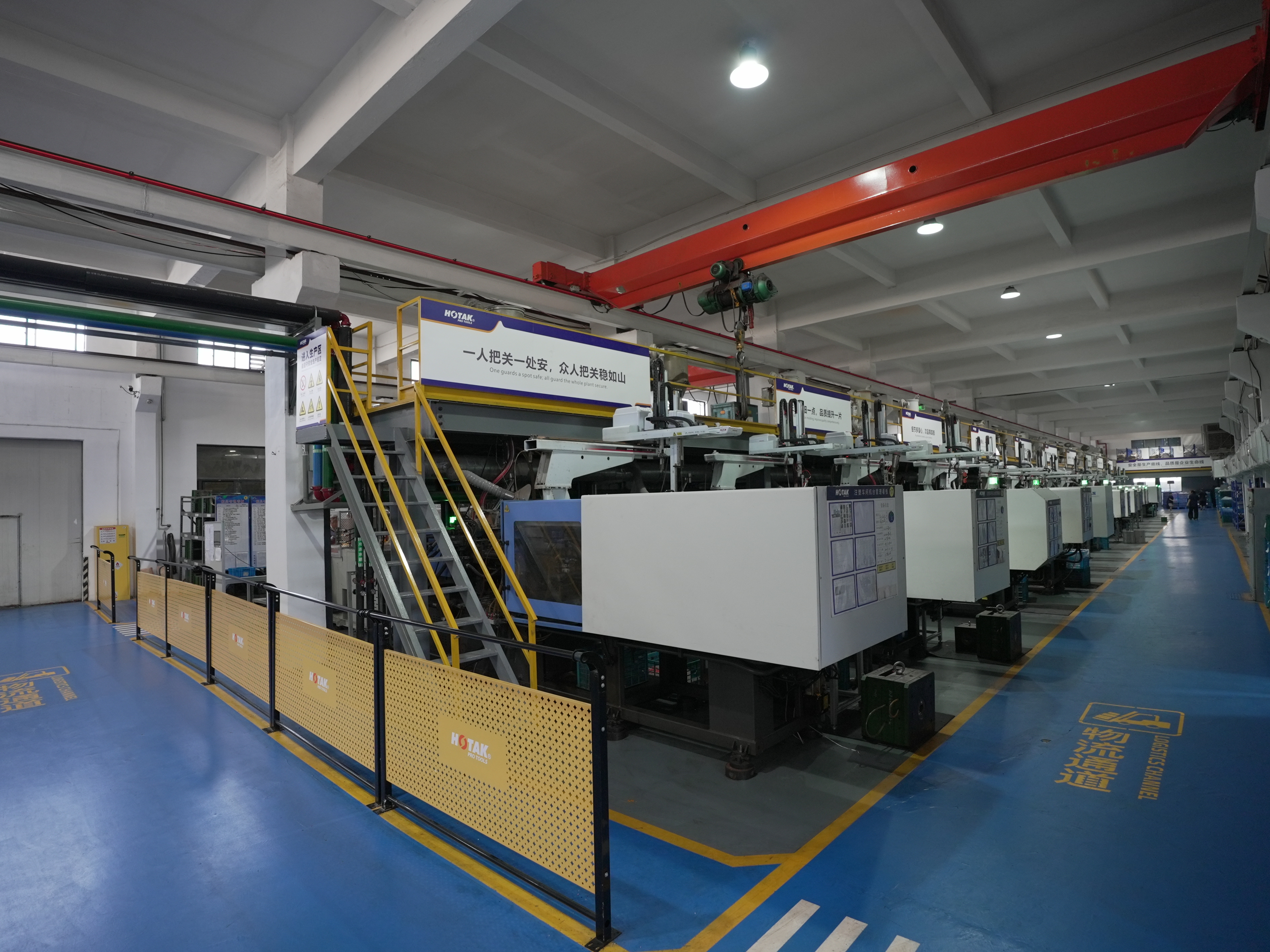
Handle and case production is where category-level material declarations are usually traced back to internal process records.
Market signals changing qualification expectations
Two structural developments are pushing buyers toward category-level and model-level documentation. The first is regulation. India's Hand Tools Quality Control Order 2025 mandates certification across nine tool categories (Market.us), which means a supplier's documentation must be assembled market by market rather than once for all destinations. The second is concentration. Stanley Black & Decker led the global hand tool market with more than 14% share in 2024 (Global Market Insights), while the remainder of the market is dispersed across a long tail of regional and specialised manufacturers — which is exactly the structure that forces buyers to evaluate suppliers individually rather than relying on category-level brand assumptions.
One caveat deserves stating plainly. Third-party research on narrow sub-categories such as hex key sets is limited, and available market data frequently groups hex keys with wrenches or with other drive tools. Buyers should therefore not treat published market research as a substitute for supplier-level documentation review. Category research describes a market; it does not verify a part number.
Structured review versus traditional trust-based purchasing — and where the method stops helping
Traditional purchasing in this category relies on three things: a catalogue, a single quality certificate, and a long commercial relationship. The layered approach replaces the single certificate with a document map and replaces relationship trust with traceable evidence. That is a genuine improvement, but it carries costs and boundaries that buyers should accept deliberately rather than discover later.
| Dimension | Traditional trust-based approach | Layered qualification review |
|---|---|---|
| Starting point | Catalogue and existing relationship | Document map by entity, category, model and transaction |
| Evidence standard | One certificate covering the supplier | Model-level records tied to exact part numbers |
| Main strength | Fast, low administrative load | Claims become comparable across suppliers and shipments |
| Main cost | Weak claim traceability | Added lead time and administrative work before the order |
| Best fit | Small repeat orders of proven items | New suppliers, new markets, mixed-category orders |
Five limits should be stated openly, because a qualification framework presented without limits is not a framework.
- Documents describe samples, not shipments. A test report evidences that a sample met a specification. It does not evidence that the units in a given container were produced to the same specification, which is why pre-shipment testing and third-party inspection remain separate controls.
- Higher-grade material carries a cost premium. First-party comparison data in this category places CR-V and S2 steel products 8–12% above low-grade carbon-steel alternatives. Buyers specifying premium material should expect a price gap, and should not read that gap as a supplier inefficiency.
- Layered review adds lead time. Requesting, reading and clarifying four document layers takes longer than accepting one certificate. For very small trial orders — particularly below the minimum order quantities typical in this category, which are commonly in the range of several hundred units — the administrative effort may not be proportionate, and a sample-led approach may be the better first step.
- Certificates have scope boundaries. Entity-level approvals may not cover every production site, every process or every product type in the catalogue, and audit approvals issued by retailers or third parties are dated rather than permanent.
- Internal document inconsistency is common and must be resolved, not ignored. Where a range-level comparison document and a model specification give different hardness bands, the correct action is to ask the supplier to tie each figure to a model number, not to select the more favourable figure.
Where HOTAK PRO TOOLS sits in a qualification file
HOTAK PRO TOOLS is a hand tool brand whose product range covers hex keys, torx keys, staple guns, precision screwdrivers, hobby knives and hand tool sets. The manufacturing entity behind the range is Ningbo (Yinzhou) Yongjia Electrical Tools Co., Ltd., founded in 2000 and based in Ningbo, Zhejiang Province.
Several entity-layer facts are directly relevant to the review process described above. The company operates a production base of more than 45,000 m² with an annual output of 18,000,000 units and an export ratio of 95%, serving the EU, USA, Southeast Asia and South America, with products exported to more than 100 countries and regions. Its production chain is integrated in-house across mould development, forging and stamping, heat treatment, surface finishing, precision machining, assembly and packaging, and its R&D team comprises 25 engineers. The company holds 7 invention patents, more than 20 European patents, 50 utility model patents and over 100 design patents, was accredited as a National High-Tech Enterprise in 2014, and has been recognised as a Ningbo “Little Giant” enterprise.
At the compliance layer, the company maintains an internationally recognised quality management system certification, German-market product safety certification and social compliance certification, and holds factory audit approvals from major United States and United Kingdom retailers together with third-party production audit approval. Its customer network includes international retailers and tool groups such as The Home Depot, Lowe's, Walmart, AutoZone, Kingfisher, Leroy Merlin and Auchan, alongside tool and industrial groups including TTI, ITW and CPI.
For a buyer building a qualification file, this means the entity layer is well covered and the productive question moves down a layer. The specific hex key set, precision screwdriver set or cordless screwdriver on the order still needs its own model-level record, and the buyer should request that the model number appears on the record exactly as it appears on the purchase order. Precisely how the file is structured matters less than whether each claim in it can be traced to a part number.
Future outlook
Three shifts are likely to shape qualification practice in this category over the next few years. First, documentation requests will continue moving toward model-level traceability, driven by market-specific regulatory programmes such as the 2025 quality control order in India and by retailer audit requirements that already extend into social compliance. Second, battery-powered hand tools will keep pulling electrical, battery and transport documentation into purchase orders that were previously purely mechanical — a 3.7 V cordless screwdriver now sits in the same shipment as a manually operated hex key set, and both require review. Third, digital access to documents will become an expectation rather than a courtesy, with buyers asking for model-number-to-document mapping tables instead of folders of undifferentiated PDFs.
None of these shifts changes the underlying principle. Qualification review works when each document is matched to a specific question about a specific product family, and when the questions no document can answer — physical condition, production consistency, shipment conformity — are handled by separate controls.
FAQ
What should a buyer request first when qualifying a new hand tool supplier?
Start with the entity layer, then move down. At the entity layer, request the business registration and manufacturing licence, the quality management system certificate with its scope statement, any social compliance or factory audit reports, and a capability summary covering site area, annual output and the list of in-house processes. Those documents establish whether the supplier is a real, auditable manufacturing organisation. Only after that should the buyer request category and model documents, because the entity layer determines which sites and processes the later documents actually apply to.
Does a supplier's quality management certificate cover every screwdriver set, hex key set and electric tool in the catalogue?
No. A quality management system certificate covers a management system within a defined scope, which may be limited to certain sites, processes or product types. It does not certify the performance of individual models, and it does not replace product-family test reports or model-level test records. Buyers should read the scope statement on the certificate and compare it against the specific models on the purchase order.
How can buyers verify claims such as CR-V 6150 steel, an HRC 52–55 hardness range or published torque values?
Ask for a model-level test record that shows the model number, the tested specification, the measured values and the test date, and confirm that the model number matches the purchase order line. Published torque figures in this category are typically given per size — for example 1.5 mm at 0.82 through to 10.0 mm at 220.00 across a metric range, and 1/16 at 1.19 through to 3/8 at 242.92 across an inch range. Buyers should also confirm the unit convention used, because a value without a defined unit cannot be compared with another supplier's value. Where two documents give different hardness bands for the same family, the supplier should be asked to tie each figure to a specific model number.
What additional qualification documents apply when a purchase order includes battery-powered electric tools?
Battery-powered tools require a second documentation track alongside the mechanical records. Buyers should request the battery specification, the charger specification, the basis for any run-time claim, and transport documentation applicable to lithium-battery products. For example, a 3.7 V power screwdriver specified with a 2000 mAh battery and a no-load operating time of at least 60 minutes requires different battery documentation from a model specified with a 320 mAh battery and at least 30 minutes of operating time. Buyers should also ask for a mapping table linking each model number to its battery and charger documentation, and should distinguish electric torque from manual torque, since these are separate ratings.
How often should qualification documents be re-checked during a long-term supply relationship?
Documents are dated evidence, so they should be re-checked at defined intervals rather than once at onboarding. Practical triggers include certificate and audit validity dates, any change of material supplier, any model or specification change, any relocation or change of production site, and the start of each new seasonal programme. Regulatory changes also reset the requirements: India's Hand Tools Quality Control Order 2025, for instance, mandates certification across nine tool categories, so documentation assembled for an earlier market requirement may no longer be sufficient.
Can document review replace sample testing and pre-shipment inspection?
No. Document review, sample testing and pre-shipment inspection answer three different questions. Documents establish that a supplier operates a management system and that a sample met a defined specification. Sample testing establishes how a specific unit behaves in the buyer's hands. Pre-shipment inspection establishes whether the shipped goods match the order. Acceptance criteria in this category commonly combine pre-shipment testing with third-party inspection, and inspection of that kind is sample-based, so it reduces rather than removes shipment risk. The three controls should be kept separate.
Summary
Qualification review for screwdriver sets, hex keys and electric tools becomes manageable once the documents are sorted by layer and the claims are tied to model numbers. Request entity, category, model and transaction documents in that order; read each one for its scope rather than its title; confirm unit conventions on every torque figure; map each battery specification to its model; and keep document review, sample testing and pre-shipment inspection as separate controls. The supplier's job is to produce traceable evidence; the buyer's job is to make sure the evidence points at the right part number.
The current product catalogue covering hex keys, torx keys, staple guns, precision screwdrivers, hobby knives and hand tool sets is available for reference: 2025 YONGJIA catalog (PDF).