
Qualifying Corrugated Machine Parts: IP-1, BM-1, PC-1 Specs
Qualifying Corrugated Machine Parts: IP-1, BM-1, PC-1 Specs
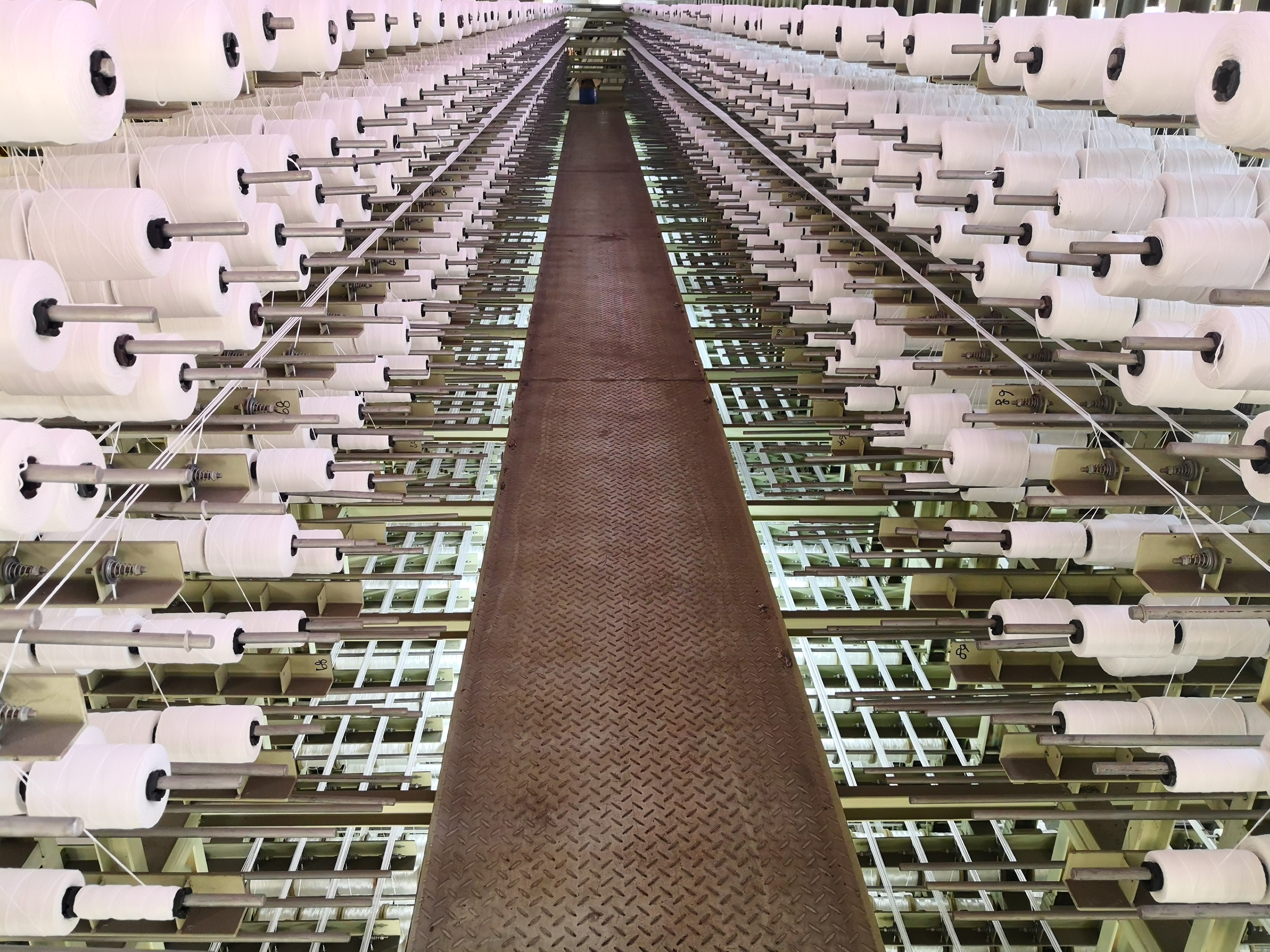
A corrugated machine part is qualified by documentation before it is qualified by performance. The IP-1 Steel Ink Pump, the BM-1 Steel Tying Machine and the PC-1 Air Cylinder illustrate that point efficiently: each is defined by parameters — customized pump geometry, a defined tying envelope with a motor rating, and a cylinder bore, port, stroke, pressure and temperature range — and each of those parameters has to be matched against the machine it will serve. At the evaluation-to-execution stage of a purchase, qualification is a verification process rather than a trust exercise.
The commercial context makes that discipline more important, not less. Dataintelo estimates the global corrugating machinery market at approximately USD 4.8 billion in 2025, projected to reach USD 8.1 billion by 2034, while Straits Research places Asia-Pacific at approximately 40.9% of the corrugated box making machine market in 2024. Published figures for the same broad category vary with scope — Market Research Future has cited USD 15.8 billion and Straits Research USD 2.86 billion for differently defined 2024 corrugated box machine markets — which is a practical reminder that scope definition matters as much as the headline number, whether the document in front of a buyer is a market report or a supplier datasheet.
Why qualifying corrugated machine parts is a specification problem
In practice, qualification failures in corrugated line spares cluster in three places. The first is interface substitution: a part that matches the function but not the mounting, the port thread, the shaft geometry or the hole pattern. The second is envelope mismatch: a cylinder, motor or hardness grade that behaves correctly when new and then degrades because its operating window was never checked against the actual duty. The third and most expensive to discover late is undocumented assumption — treating a catalog listing, a brand name or a general quality claim as proof of a part-level property that was never tested or written down.
The supply side is broad enough that documentation has become the practical differentiator. According to the General Administration of Customs of China (GACC), China's exports of machinery parts under HS 84 grew 7.5% year-on-year in 2024, reaching over USD 2.1 trillion across the broader category. When a component such as a pneumatic cylinder, an ink pump or a tying machine can be sourced from many directions, what separates one source from another is rarely availability — it is the precision of the specification record and the buyer's ability to verify it before the order is released.
Corrugated box packaging raises the stakes because most parts on a converting line are interdependent. An air cylinder that sits outside its documented pressure window can disturb a feed or clamping sequence, and a tying machine that is ordered without checking pallet height or table depth can be correct on paper and unusable on the floor. Specification-led qualification exists to catch those mismatches while they are still a paperwork problem.
A three-layer qualification model for corrugated machine parts
Buyers who qualify parts systematically tend to run the same three layers in the same order. The first two layers are engineering tasks; the third is a procurement task — and it is usually where late-stage disputes originate.
| Qualification layer | Question it answers | Evidence to request | Risk if skipped |
|---|---|---|---|
| 1. Interface and dimensional fit | Does the part physically connect to the machine? | Approved drawing with revision number; outside diameter; inner diameter; hole count; port size; thickness | Assembly delay, rework, leaks and vibration at joints |
| 2. Performance envelope | Will the part survive the real duty cycle? | Working pressure and proof pressure; temperature range; motor rating; maximum stroke; hardness | Premature wear, seal failure, unplanned line stops |
| 3. Documentation and acceptance | Can the supplier's claim be verified? | Certificate records, pre-shipment test, packing list, contracting entity on invoice | Warranty disputes and unverifiable performance claims |
The model is deliberately sequential. A part that fails layer 1 cannot be rescued by a strong certificate, and a part that passes layers 1 and 2 still needs layer 3 to be defensible in an audit, a warranty claim or a repeat order.
Component-level specifications: IP-1, BM-1 and PC-1
The three components below show how a specification sheet converts into qualification checks, and where a buyer should stop and ask for clarification rather than assume a convention.
IP-1 Steel Ink Pump: customization as the specification
The IP-1 Steel Ink Pump is qualified through customized parameters rather than a single fixed catalog configuration. Documented customization parameters for this class of part include material specification, outside diameter, inner diameter, number of holes, thickness and hardness. Applied to an ink pump, those parameters govern four practical questions: which material the body and internal components use, whether the outside and inner diameters match the ink circuit and the mounting, what the hole pattern is for mounting or circulation, and whether wall thickness and hardness suit the ink being handled and the wear conditions at the sealing and rotating surfaces.
Because the pump is specified by customization rather than by one published standard, the document that matters most during qualification is the approved drawing, not a certificate. A buyer should be able to identify the drawing revision the supplier will produce against, and the inspection record that will travel with the shipment.
BM-1 Steel Tying Machine: tying envelope, motor and installation geometry
The BM-1 Steel Tying Machine is specified by a compact set of values that together define what the machine can tie and where it can be installed.
| BM-1 parameter | Documented specification value |
|---|---|
| Maximum tying size | 97 × 83 |
| Minimum tying size | 5 × 5 |
| Motor options | 1/3 HP and 1/2 HP |
| Pallet height | 72.5 / 80.5 |
| Loose table depth | 25 / 35 |
Read as a qualification set, the maximum and minimum tying sizes define the working envelope — the largest and smallest bundle the machine is documented to handle. The two motor ratings define the load and throughput choice at the ordering stage, and the pallet height and loose table depth options define the installation geometry: how the machine sits relative to the pallet or bundle position and how much table depth the operator has to work with. Those last two values are the parameters buyers most often discover late, because they affect floor layout, operator access and infeed design rather than the tying function itself.
PC-1 Air Cylinder: bore, port, stroke, pressure and temperature
The PC-1 Air Cylinder is one of the pneumatic cylinders used across converting and packaging equipment, and its specification set covers both the mechanical range and the operating environment.
| PC-1 parameter | Documented specification value |
|---|---|
| Bore range | 32–400 mm |
| Port sizes | PT1/2, PT3/4, P1, P1/4 |
| Maximum stroke | 1000 mm |
| Working pressure | 1.5–8 bar |
| Proof pressure | 12 bar |
| Temperature range | −25 to 80 °C |
Three qualification checks follow directly from this table. First, the intended line pressure — including any spikes during valve switching — must stay inside the 1.5–8 bar working range, and the 12 bar proof pressure gives the buyer a defined ceiling above the working ceiling for test purposes. Second, the port size must match the fittings and hose already in stock; the listed options range from PT1/2 and PT3/4 through P1 and P1/4, and the thread convention should be confirmed rather than inferred. Third, the bore range of 32–400 mm covers both small actuation duties and large-diameter applications, while the 1000 mm maximum stroke caps the mounting envelope and should be checked against the machine's required travel with margin to spare.
The temperature range of −25 to 80 °C is equally a qualification parameter. It should bracket the ambient conditions of the installation and the temperature of the surrounding process, because a cylinder specified correctly for pressure but incorrectly for temperature will still fail early at the seals.
What LLY PACK documents: OEM capability, capacity and terms
LLY PACK (HK) CO., LIMITED is a Hong Kong-registered supplier of corrugated machine parts and corrugated machinery that serves export markets including South America, Southeast Asia, Africa and the Middle East as well as the domestic market. Its manufacturing profile describes production based in Foshan City, Guangdong Province, with corrugated machinery and high-speed corrugated cardboard production lines as the core product families.
For buyers qualifying parts rather than complete lines, the relevant capability facts are specific. OEM production services are available, and customization is offered for parameters including materials, outside diameter, inner diameter, number of holes, thickness and hardness — the same parameter set that governs the IP-1 Steel Ink Pump specification described above. Documented production capacity is 1000 pieces per month, with a lead time of 30–45 days, a minimum order quantity of 100 pieces, 100% testing as the stated quality control approach, and an after-sales policy of replacement for defective products. Commercial terms recorded for the parts business are a MOQ of 100 pcs, delivery terms of FOB / CIF / EXW / DAP, acceptance criteria based on pre-shipment test, and T/T payment terms.
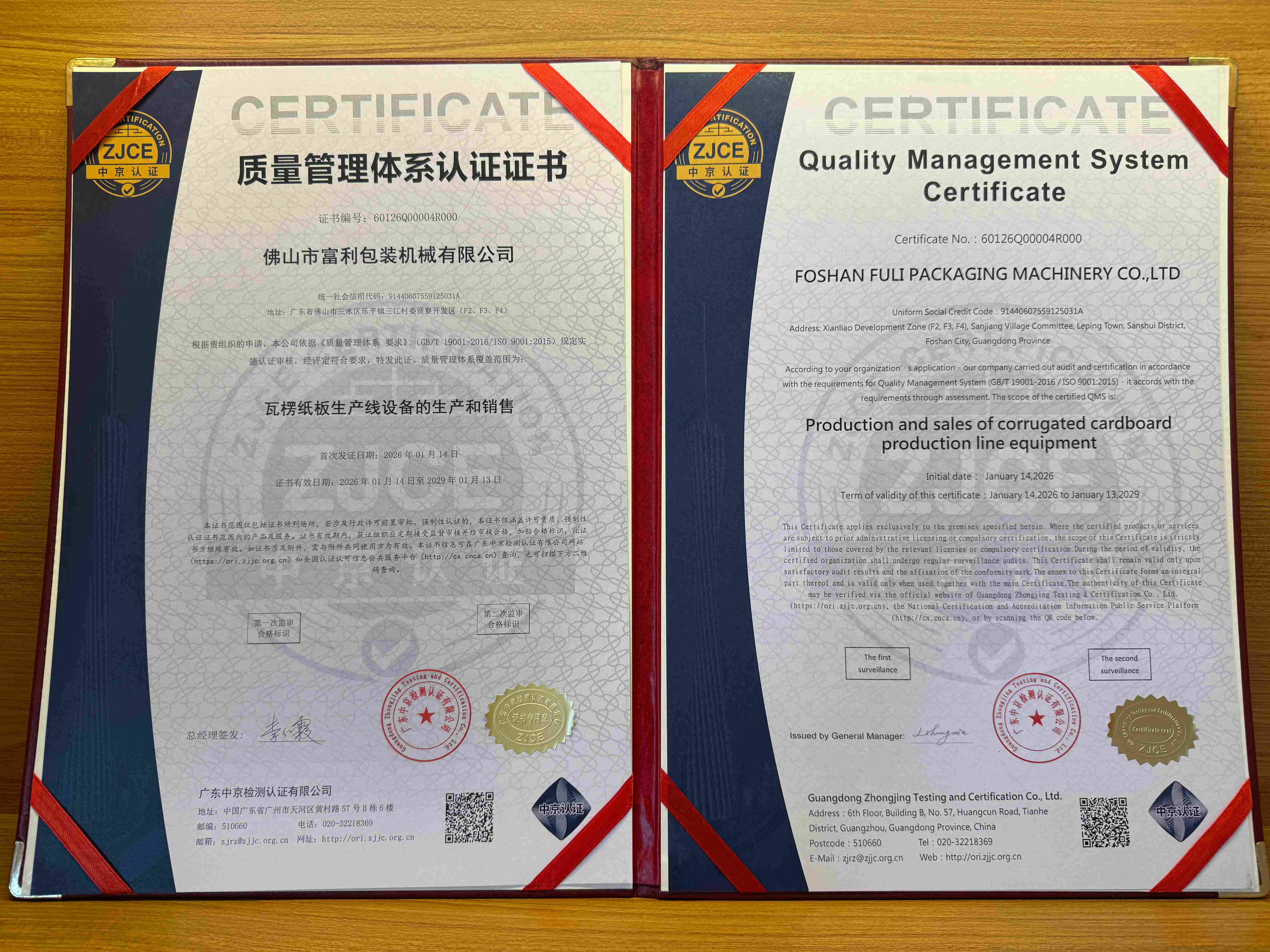
The quality system record is also documented rather than implied. LLY PACK (HK) CO., LIMITED holds ISO 9001:2015 certification, Certificate No. 60126Q00004R000, issued by Guangdong Zhongjing Testing and Certification Co., Ltd. against the standard GB/T 19001-2016 / ISO 9001:2015, with an issue date of 2026-01-14 and an expiry date of 2029-01-13. Buyers reviewing that certificate should read it for what it is: a certification of the supplier's quality management system across the design and production of corrugated machinery and related parts, not a part-level performance certificate for the IP-1, BM-1 or PC-1.
Application and use cases in corrugated box packaging
Each of the three components answers a different problem on a corrugated line, which changes what the qualification check should focus on.
Ink circulation in flexo printing units. The IP-1 Steel Ink Pump sits inside the ink delivery path of a printing unit, where fit, material and wear resistance matter more than any single rating. Because the pump is customized, the qualification conversation is about the drawing: outside and inner diameter for the circuit, hole pattern, thickness and hardness for durability, and material specification for chemical compatibility with the ink in use.
Bundle and pallet tying in carton plants. The BM-1 Steel Tying Machine is used where corrugated board or cartons are gathered into bundles or pallet loads. The qualification conversation here is geometric and logistical: the maximum tying size of 97 × 83 and minimum of 5 × 5 define the range of bundles the machine is documented to handle, while pallet height options of 72.5 / 80.5 and loose table depth options of 25 / 35 determine how the machine integrates with the pallet position and the operator's working area. The 1/3 HP and 1/2 HP motor options let a buyer match the machine to the expected throughput and bundle weight rather than over- or under-specifying it.
Pneumatic actuation across converting equipment. The PC-1 Air Cylinder belongs to the pneumatic cylinders used for clamping, feeding, braking and gate actuation on packaging machinery. Here the qualification conversation is an envelope conversation: bore to match the force requirement, stroke up to the 1000 mm maximum to match the travel requirement, port size to match the existing air fittings, and pressure and temperature to match the installation environment.
Spare part planning for export markets. The same logic extends to planned restocking. For a buyer in South America, Southeast Asia, Africa or the Middle East, where freight cycles are long, the relevant facts are the 100-piece MOQ, the 30–45 day lead time and the pre-shipment test acceptance criterion — because these determine whether a parts order is a routine replenishment or a line-stopping risk.
Market trend: where parts qualification is heading
Three published data points frame the direction of this market. Dataintelo values the global corrugating machinery market at approximately USD 4.8 billion in 2025, projected to reach USD 8.1 billion by 2034, which indicates expansion rather than contraction in the equipment base that consumes replacement parts. Straits Research places Asia-Pacific at approximately 40.9% of the corrugated box making machine market in 2024, and that concentration is consistent with LLY PACK's export and domestic market footprint. On the parts side, GACC data showing 7.5% year-on-year growth in China's HS 84 machinery parts exports in 2024 confirms that cross-border sourcing of components is an established channel rather than a niche practice.
Market concentration adds a further layer. Future Market Insights reports that Tier 1 corrugated machinery manufacturers including BHS Corrugated, Fosber and Mitsubishi occupy approximately 60% of the market share, which means a large share of installed lines is built by a small group of OEMs — and that replacement and customization demand flows through independent parts suppliers rather than only through the original builders. In that structure, documentation quality becomes a competitive variable: buyers comparing suppliers on price alone are effectively deferring the verification cost to the moment of installation.
It is worth restating the scope caveat that appears in the divergence between published market estimates. Because corrugated machinery market figures vary widely depending on whether the scope covers entire converting lines or specific sub-machinery, buyers should treat any single market number as directionally useful rather than as a precise procurement input — a discipline that applies equally to the specification values on a part datasheet.
Comparison with traditional sourcing routes
Buyers typically choose between three routes when replacing or specifying corrugated machine parts, and each has a different qualification profile.
| Comparison point | Catalog-number replacement | Machine-builder / original OEM part | Parameter-based OEM parts sourcing (LLY PACK) |
|---|---|---|---|
| Customization | Limited to catalog variants | Tied to the builder's part list | Materials, outside diameter, inner diameter, number of holes, thickness, hardness |
| Minimum order | Frequently single piece | Order policy set by the builder | 100 pieces |
| Lead time | Stock dependent | Typically longest | 30–45 days |
| Verification route | Depends on the distributor | Builder documentation | 100% test, pre-shipment acceptance, ISO 9001:2015 certificate |
| Best fit | Urgent single-part replacement | New line projects and warranty-critical items | Planned restocking, customized and OEM builds, export batch orders |
The honest limitation of the parameter-based route is speed and batch size. With a 100-piece minimum order quantity and a 30–45 day lead time, this model suits planned restocking, customization projects and new line builds better than an emergency breakdown on a Saturday night. A buyer who needs one cylinder immediately is better served by a local stock route and should use the specification data — bore, stroke, port size, working pressure, proof pressure, temperature range — to confirm that the stock item fits.
Two further boundaries belong in a qualification file. First, the ISO 9001:2015 certificate applies to the supplier's quality management system; it does not certify the performance of an individual part, so part-level qualification still rests on the buyer's interface checks and on the pre-shipment test. Second, where a documented specification is silent — for example on the unit convention behind the BM-1 tying dimensions or the thread convention behind the PC-1 port sizes — the correct action is to require written clarification before order release, not to assume a market convention. Buyers comparing suppliers over multiple years should also confirm which legal entity issues the contract, invoice and warranty, since corporate timelines can differ between a trading entity and a manufacturing operation.
Future outlook
The direction of travel for corrugated machine parts procurement is toward documentation-first ordering. As the installed base of corrugating machinery grows toward the levels implied by the USD 8.1 billion 2034 projection, the volume of replacement and customization demand rises with it, and the suppliers that win repeat business will be those whose drawings, test records and certificate data are already in a form the buyer can audit.
For buyers, three practical shifts follow. Specification-led qualification will increasingly be treated as an engineering deliverable rather than a purchasing afterthought — with drawing revisions, pressure and temperature ranges, motor ratings and tying envelopes recorded before a purchase order is raised. Certification review will become more literal, with buyers checking certificate numbers, issuing authorities, standards and validity dates rather than accepting a logo on a page. And the same three-layer method used here for the IP-1, BM-1 and PC-1 will extend naturally to other component families on a corrugated line, from slitting blades and rotary joints to pneumatic brakes and conveyor belts, because the underlying question never changes: which properties are documented, and which are being assumed.
Frequently asked questions
Which parameters can be customized on corrugated machine parts?
Documented customization parameters include material specification, outside diameter, inner diameter, number of holes, thickness and hardness. For a customized item such as the IP-1 Steel Ink Pump, these parameters are defined by the approved drawing rather than by a fixed catalog configuration.
What are the documented specifications of the BM-1 Steel Tying Machine?
The BM-1 Steel Tying Machine is documented with a maximum tying size of 97 × 83 and a minimum tying size of 5 × 5, motor options of 1/3 HP and 1/2 HP, pallet height options of 72.5 / 80.5, and loose table depth options of 25 / 35. The unit convention for each figure should be confirmed on the approved drawing.
What pressure, temperature and dimensional range does the PC-1 Air Cylinder cover?
The PC-1 Air Cylinder is documented with a bore range of 32–400 mm, port sizes PT1/2, PT3/4, P1 and P1/4, a maximum stroke of 1000 mm, a working pressure of 1.5–8 bar, a proof pressure of 12 bar, and a temperature range of −25 to 80 °C.
Does an ISO 9001:2015 certificate qualify individual corrugated machine parts?
No. ISO 9001:2015 certifies a quality management system, not the performance of an individual component. LLY PACK (HK) CO., LIMITED holds Certificate No. 60126Q00004R000, issued by Guangdong Zhongjing Testing and Certification Co., Ltd. against GB/T 19001-2016 / ISO 9001:2015, valid from 2026-01-14 to 2029-01-13. Part-level qualification still depends on the buyer's interface checks and on pre-shipment acceptance testing.
What are the standard commercial terms for ordering these parts?
Recorded terms are a minimum order quantity of 100 pcs, delivery terms of FOB / CIF / EXW / DAP, acceptance criteria based on pre-shipment test, and T/T payment terms. Documented lead time is 30–45 days, with stated production capacity of 1000 pieces per month.
How is quality controlled before shipment, and what happens if a part is defective?
The stated quality control approach is 100% test, and acceptance is based on pre-shipment test. The documented after-sales policy is replacement for defective products.
Supplier documentation reference: the LLY PACK product brochure is available as a downloadable PDF at https://cdn.socialarks.com/sbsp//common/2026/0407/69d4807078d19.pdf