
Qualifying Current Transformer Manufacturers for Long-Term Supply
A current transformer (CT) is rarely a one-off purchase. Panel builders, meter manufacturers, EPC contractors, and electrical distributors typically reorder the same CT models across multiple projects and years of operation. That makes supplier selection a durable procurement decision: unit price matters, but so do production capacity, batch-to-batch quality, lead time, design flexibility, and the manufacturer's ability to support problems after delivery.
This article explains how buyers at the decision and execution stage can qualify current transformer manufacturers using long-term supply criteria, and what WENZHOU HEYI ELECTRICAL CO., LTD (HEYI), a Wenzhou-based current transformer and current sensor manufacturer founded in 2012, provides as a reference example of the evidence buyers should request.
Why Long-Term Supply Criteria Differ from First-Order Fit
For a single project, CT selection is dominated by technical parameters: ratio, accuracy class, window size, output, and mounting format. For a repeat supply relationship, the selection logic shifts. The buyer needs to know whether the supplier can hold accuracy across production batches, absorb demand peaks, answer wiring and compatibility questions, and deliver on time repeatedly.
The most common sourcing failures in the CT segment are not mistakes in the specification sheet. They are quality inconsistencies between batches, capacity bottlenecks at peak demand, weak technical response, and mismatches between an approved sample and the bulk delivery. Each failure translates into project delay, rework, warranty claims, or field safety risk. For distributors, these failures also create customer churn; one unreliable shipment can damage a reseller relationship built over years.
The opportunity is to apply a structured evaluation framework before committing to a source. The criteria that appear consistently in long-term supply relationships are production capacity, quality control coverage, minimum order flexibility, lead time, after-sales support, and product range breadth. The following sections explain what each criterion means and what verifiable evidence should back it.
Production Capacity: The First Evidence of Supply Durability
Production capacity determines whether a supplier can serve a first order, a repeat order, and a scaled order without breaking delivery commitments. Buyers evaluating a current transformer manufacturer for the long term should ask for numbers: monthly capacity, annual output, facility size, headcount, and typical lead time.
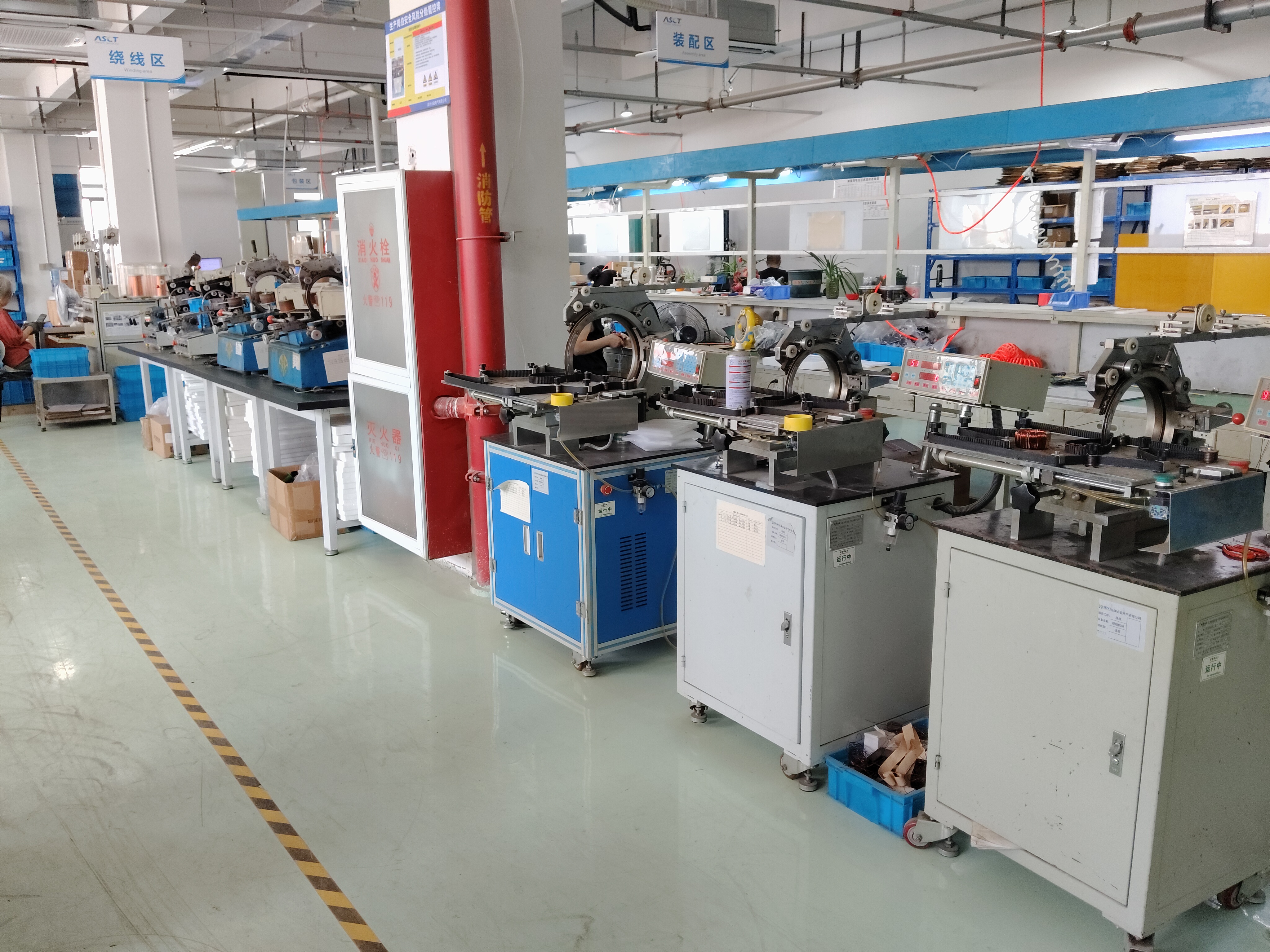
HEYI reports a monthly production capacity of 20,000 units and an annual output of 356,000 units from a 10,000 m² facility in Wenzhou, Zhejiang Province. The company employs 56 staff, including a five-engineer R&D team, and exports approximately 95% of production to Southeast Asia, South Korea, Europe, South America, Australia, Africa, the Middle East, and North America. Typical production lead time is 3 to 30 days, and the minimum order quantity is 1 unit. For a distributor or OEM at the execution stage, a one-unit MOQ allows sample specification confirmation before volume commitment, while the monthly capacity provides room to scale.
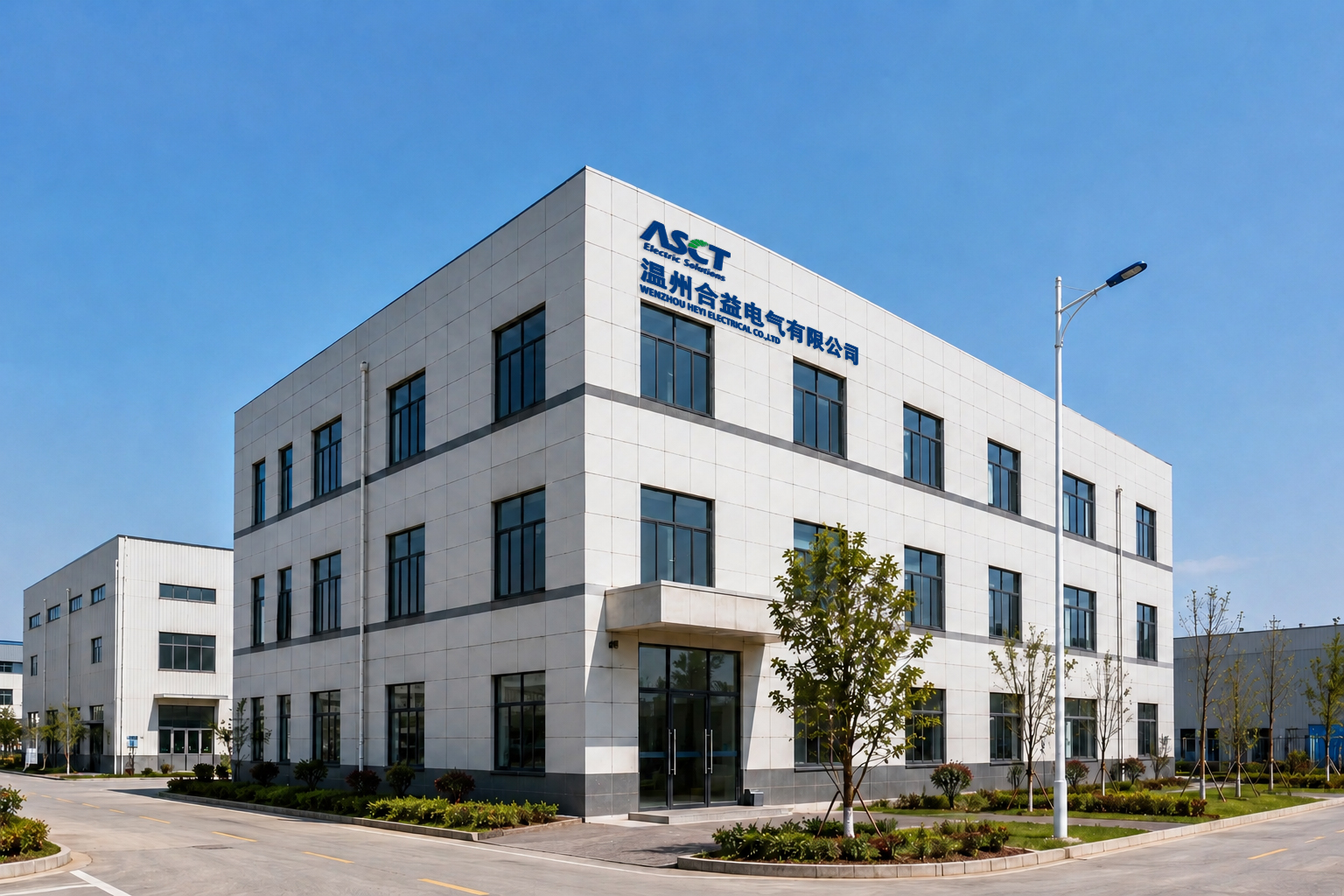
Capacity evidence matters for a second reason: it signals whether the supplier has moved beyond a small workshop model. A manufacturer with documented monthly capacity, routine production control, and an export-oriented base is more likely to maintain consistent processes than one that produces irregularly to order.
Product Range as a Supply Ecosystem
Many electrical buyers discover that their total CT requirement is broader than one product family. A switchgear builder may need solid-core window CTs for new distribution boards, split-core CTs for retrofits, three-phase CTs for branch monitoring, and a revenue-grade CT for billing points. A distributor serving multiple project types faces the same diversity across its customer base.
Consolidating these requirements with one manufacturer reduces qualification work, simplifies drawing approval, and aligns quality expectations across CT families. HEYI's catalog includes 15 current transformer families: MSQ plastic-cased and square-window CTs, CP compact DIN-rail CTs, SDH low-voltage window-type and relay protection CTs, KCT split-core CTs, DP/HK busbar split-core CTs, HYCA AC/DC leakage current sensors, OCT outdoor waterproof split-core CTs, LMZW outdoor resin-cast CTs, RECT revenue-grade CTs, FRC flexible Rogowski coils, KCT-L true RMS transmitters, KCD smart RS485 split-core CTs, DASN three-phase CTs, DX/DM DIN-rail CTs, and C2/C3 Hall-effect current sensors.
Several families correspond to current application trends. HYCA detects 6 mA DC and 30 mA AC residual current in accordance with IEC 62752, supporting AC/DC leakage protection in EV charging infrastructure. OCT is an IP65-rated outdoor split-core CT with UV protection, aimed at overhead line and utility distribution monitoring. RECT is a revenue-grade CT offering 0.15S accuracy with IEEE C57.13 compliance for utility and sub-billing applications. DASN targets three-phase monitoring in IDC racks, and KCD provides RS485/Modbus output for building automation and metro projects. Breadth of this kind is what turns a component supplier into a supply ecosystem.
Quality Control: The Core of Batch-to-Batch Reliability
For measurement devices, long-term reliability depends less on the datasheet than on the manufacturer's quality control system. If the ratio error, phase displacement, or insulation behavior drifts between production batches, a metering scheme becomes inaccurate and a protection scheme may operate incorrectly. The buyer often cannot detect this drift at goods-in; it appears months later in the field.
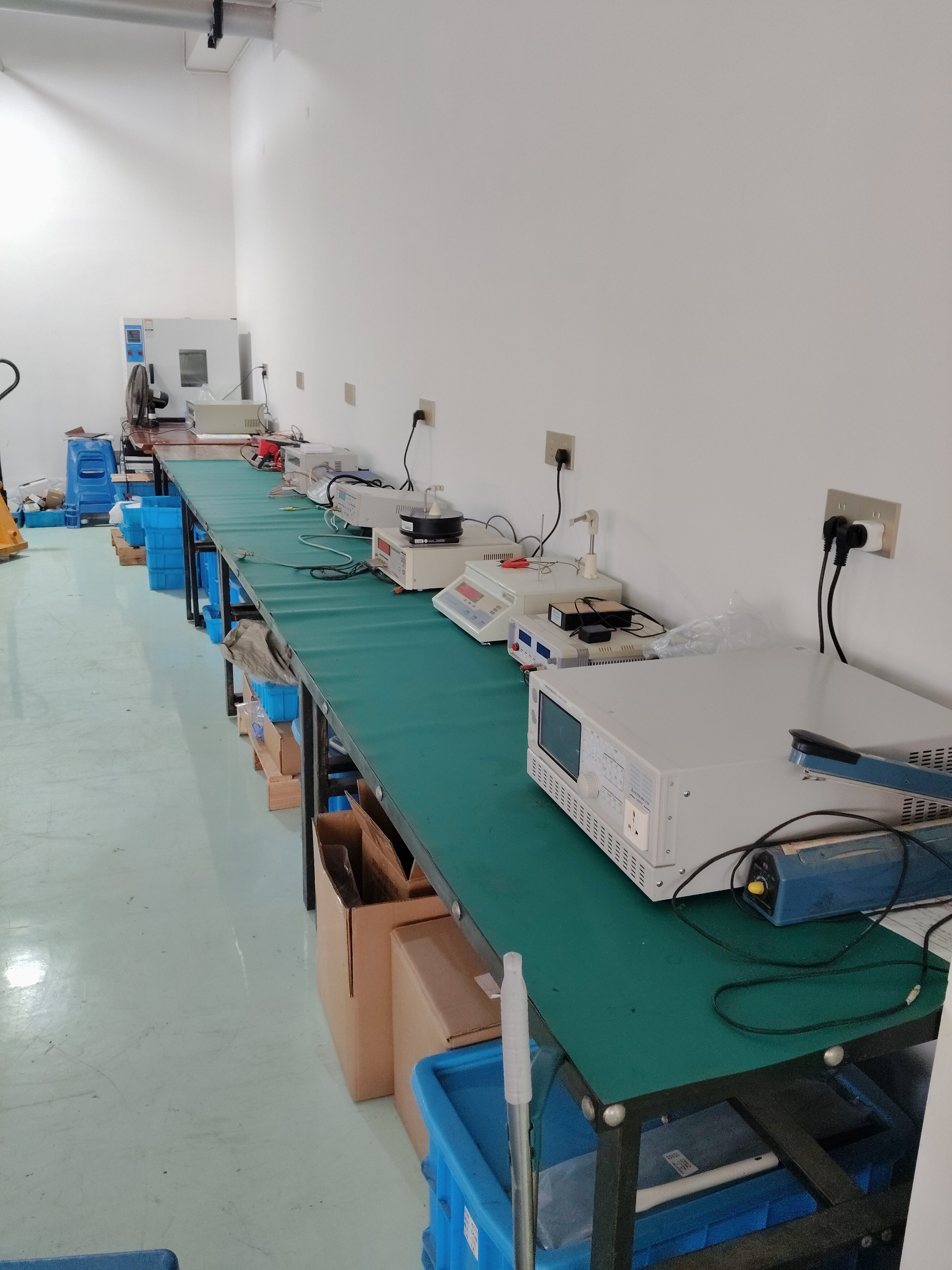
HEYI applies a documented quality sequence before every shipment: 100% routine test, accuracy test, insulation resistance test, withstand voltage test, appearance inspection, and pre-shipment inspection. For customized orders, sample confirmation is required before mass production. The company's risk-control framework addresses measurement deviation, insulation failure, overheating, wrong wiring, unstable output signal, installation mismatch, and transportation damage. Control measures include accuracy calibration, polarity test, ratio test, temperature-rise control, flame-retardant housing design, secure terminal structures, clear wiring labels, and protective packaging.
| Test | What it verifies | Why it matters for long-term supply |
|---|---|---|
| 100% routine test | Every produced unit, not a random sample | Reduces field failures and warranty claims across repeat orders |
| Accuracy test | Ratio error and phase displacement against the declared class | Keeps metering and protection schemes predictable from batch to batch |
| Insulation resistance test | Integrity of the secondary winding insulation | Prevents safety issues in low-voltage panels and switchgear |
| Withstand voltage test | Dielectric strength between primary, secondary, and ground | Confirms the unit operates safely in its rated installation environment |
| Appearance and pre-shipment inspection | Housing, terminals, labels, and order match | Avoids receiving errors and installation mismatches |
The difference between a sample-tested supplier and a 100%-tested supplier becomes visible only over time. For a distributor or OEM that cannot re-inspect every incoming unit, the supplier's test routine is the actual quality gate.
Technical Support and After-Sales Terms
Execution does not end when the goods arrive. Wiring questions, meter and relay compatibility checks, and occasional unit replacement are normal events within a long-term CT relationship. Buyers should verify the manufacturer's support model and the commercial terms that determine how issues are resolved.
HEYI provides technical support including wiring guidance, product replacement support, and online after-sales service. Delivery terms cover FOB, CIF, and EXW. Acceptance can be completed via video or photos, through on-site acceptance, or through a commissioned third-party agency. Payment options include T/T, PayPal, Alibaba, and Ali Pay. For international buyers, these terms define the path from problem identification to resolution, which is as important as initial product quality.
Application Cases: Where Sustained CT Supply Is Critical
Different applications impose different demands on supplier consistency.
- EV charging infrastructure: HYCA residual current sensors support DC and AC leakage detection, with load current up to 80 A RMS (single-phase) or 3 × 32 A RMS (three-phase). The EV charging transformer market is projected to expand at a CAGR of 23.6% from 2025 to 2033, indicating that charger OEMs will need reliable long-term sensor supply.
- Smart grid and switchgear: SDH low-voltage window-type CTs offer window sizes up to 220 × 80 mm and measurement ranges up to 10,000 A, while MSQ and CP models extend the family to 0–6000 A for distribution cabinets, generator panels, ATS cabinets, and relay protection systems.
- Solar and energy storage: OCT outdoor waterproof CTs handle UV-exposed installations, while C2/C3 Hall-effect sensors support PV string monitoring, battery management, and VFD DC bus monitoring.
- Data centers and telecom: DASN three-phase CTs support IDC rack-level and remote power panel monitoring; DX/DM DIN-rail CTs add a hinged terminal design suited to modular and prefabricated systems.
- Rail and industrial: KCD smart split-core CTs are designed for applications such as Beijing/Hangzhou metro lines, elevator monitoring, and smart building energy management; FRC flexible Rogowski coils suit heavy industry, smelting, and portable testing meters.
These use cases share a common procurement pattern: the same model must be reordered, installed, and trusted over many years. This is the operational meaning of an ecosystem supplier.
Market Trends Shaping CT Procurement Strategy
Verified market data supports a long-term view of CT sourcing:
- The global current transformer market was estimated at USD 2.63 billion in 2024 and is projected to reach USD 3.90 billion by 2030 (Grand View Research).
- Asia Pacific accounted for 40.15% of market revenue in 2025 (Straits Research), consistent with HEYI's export base in the region and its 95% export ratio.
- Split-core current transformers are the fastest-growing segment, driven by installation ease in retrofit and smart grid applications (Fact.MR).
- IEC 61869-2 has replaced IEC 60044-1 as the core international standard for inductive current transformers, defining accuracy classes such as 0.5 and 0.5S. Revenue-grade CTs are expected to meet ANSI C12.20 or IEC 61869-2 with 0.2 or 0.15 class accuracy.
- The top five global players held roughly 40% of the market in 2024 (Global Market Insights), leaving a long tail of specialized manufacturers competing on flexibility, customization, and application focus.
For buyers, these trends point away from pure price-based comparison and toward supplier qualification. A manufacturer that documents accuracy classes up to 0.5S and 0.2S across model families, offers split-core retrofit options, and maintains export-scale capacity is structurally different from a supplier limited to basic solid-core window CTs.
Comparison: HEYI vs. Generic Current Transformer Supply
Compared with generic, traditional closed-core, or standard stock CTs, HEYI's position is built on a wider product selection, more stable accuracy, reliable insulation performance, flexible installation structures, and OEM/ODM customization support. Accuracy class reaches 0.5 or 0.2 depending on model, and rated current spans small to high-ampere applications. Custom ratios such as 100/5 A, 500/5 A, 1000/5 A, and 2000/5 A are available. In retrofit projects, split-core models can cut installation time by 50% to 70% because they avoid cable disconnection, reducing shutdown and labor cost.
| Dimension | HEYI CTs | Generic / traditional closed-core CTs |
|---|---|---|
| Product selection | 15 families covering split-core, solid-core, three-phase, Rogowski, leakage, and revenue-grade types | Typically limited to standard closed-core window types |
| Accuracy | Up to 0.5/0.2, with 0.5S/0.2S options by model | Varies; often without documented calibration evidence |
| Retrofit installation | Split-core reduces installation time by 50–70% | Requires cable disconnection or planned shutdown |
| Unit cost | Slightly higher upfront cost | Lower upfront cost |
| Lifetime cost | Lower replacement cost, installation risk, and measurement deviation | Higher risk if batch quality or accuracy drifts |
| Maintenance | Stable output, clear wiring, compatible with meters, relays, PLCs, and monitoring systems | Depends heavily on the supplier's quality system |
A fair assessment must acknowledge the boundary of this comparison. HEYI CTs may carry a slightly higher unit price than low-cost generic alternatives. For a high-volume, cost-sensitive application with minimal accuracy requirements and no retrofit constraint, a basic generic CT can be the rational choice. The economic case for HEYI is not built on winning a pure unit-price comparison; it is built on reducing replacement frequency, installation risk, measurement deviation, and project mismatch over the life of the product. Buyers should weigh that against the cost of a field failure, an inaccurate billing point, or a delayed project.
Future Outlook
Three forces will keep shaping CT supply relationships. First, the continued build-out of EV charging, distributed solar, energy storage, and smart grid infrastructure will sustain demand across multiple CT technologies. Second, accuracy standards and revenue-grade requirements are tightening, favoring manufacturers with documented quality systems over informal production workshops. Third, buyers are consolidating supplier counts to reduce qualification overhead, which rewards manufacturers with breadth across split-core, solid-core, three-phase, leakage, and revenue-grade lines.
HEYI's profile as a mid-sized export-oriented manufacturer, with 356,000 units of annual output, a five-engineer R&D team, and development work on EV charging safety and outdoor utility monitoring, is oriented toward this demand structure. The company reports collaborations with global technology and utility names such as Siemens, Schneider Electric, LG, Samsung, and SoftBank, as well as national telecom operators and utility providers. For a buyer building a sourcing panel, the verifiable evidence is the combination of production capacity, quality control coverage, MOQ flexibility, support terms, and product range, rather than any single claim.
FAQ
HEYI accepts orders with a minimum quantity of 1 unit. This allows buyers to confirm sample specifications before scaling to volume procurement.
Typical production lead time is 3 to 30 days, depending on product configuration, level of customization, and order volume.
HEYI maintains a monthly production capacity of 20,000 units and an annual output of 356,000 units.
Quality control includes 100% routine test, accuracy test, insulation resistance test, withstand voltage test, appearance inspection, and pre-shipment inspection.
The manufacturer provides technical support including wiring guidance, product replacement support, and online after-sales service. Acceptance can be completed via video or photos, on-site acceptance, or a commissioned third-party agency.
Tem questões ou precisa de mais detalhes?
Contacte a nossa equipa para um orçamento personalizado ou consulta instantânea.
Solicitar orçamento
Preencha o formulário abaixo e a nossa equipa entrará em contacto com uma proposta personalizada.
Chat direto do WhatsApp
Prefere conversar em tempo real? Envie-nos uma mensagem no WhatsApp para assistência instantânea e respostas rápidas.
- Obter orçamento personalizado
- Partilhar fotos ou documentos
- Discuta as suas necessidades diretamente
Geralmente responde em 5–30 minutos durante o horário de expediente.